Know Your Rights at a DUI Checkpoint in Riverside County in 2026
Facing a DUI checkpoint in Riverside County, NC? Know your rights and how to protect them in 2026. Contact Vasquez Law for a free consultation today.
Vasquez Law Firm
Published on February 28, 2026
Have questions? Talk to an attorney — free evaluation.
Call 1-844-967-3536Know Your Rights at a DUI Checkpoint in Riverside County in 2026
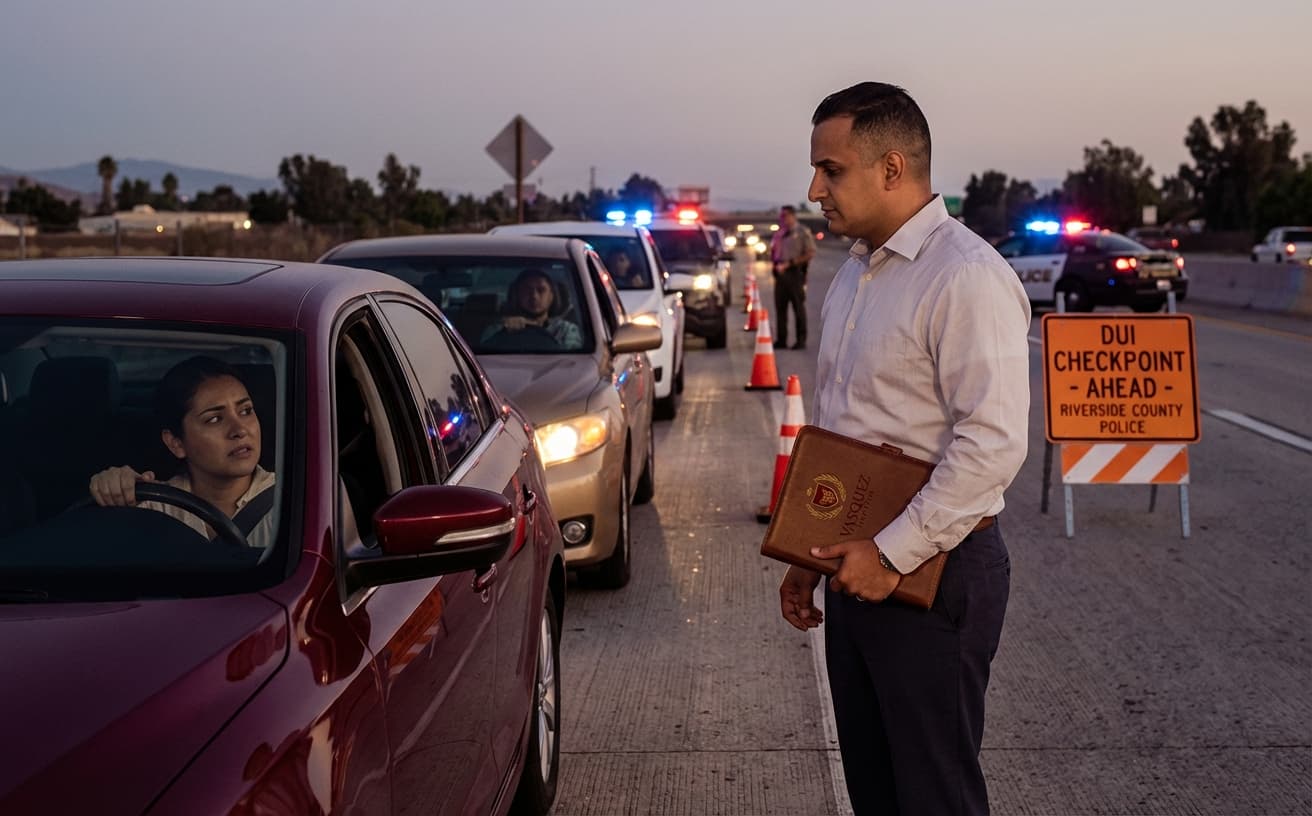
Encountering a DUI checkpoint in Riverside County, North Carolina, can be a stressful experience, especially if you are unsure of your legal rights. Understanding what law enforcement can and cannot do, and what you are required to do, is crucial for protecting yourself. This guide, updated for 2026, provides essential information for drivers in the Charlotte area and across North Carolina regarding DUI checkpoints, helping you navigate these situations confidently and lawfully.
Need help with your case? Our experienced attorneys are ready to fight for you. Se Habla Español.
Got a Traffic Ticket?
Don't let points pile up. Our traffic attorneys can help protect your license.
Schedule Your Free Consultation
Or call us now: 1-844-967-3536
Quick Answer
At a DUI checkpoint in Riverside County, NC, you must present your driver's license, registration, and proof of insurance upon request. You have the right to remain silent and refuse unconstitutional searches. However, refusing a breathalyzer or field sobriety test can lead to immediate license suspension and other penalties under North Carolina's implied consent laws.
- Always remain calm and polite.
- Have your documents ready.
- You can refuse to answer questions beyond identification.
- Do not consent to vehicle searches without a warrant or probable cause.
- Understand the consequences of refusing chemical tests.
- Contact a traffic ticket lawyer immediately if arrested.
Understanding DUI Checkpoints in North Carolina
DUI checkpoints, also known as sobriety checkpoints, are roadblocks set up by law enforcement agencies to detect impaired drivers. In North Carolina, these checkpoints are legal, but they must adhere to specific guidelines established by state law and court rulings to ensure they do not violate constitutional rights. These guidelines typically involve public notice, neutral selection of vehicles, and proper supervision.
The primary goal of a DUI checkpoint is to enhance public safety by deterring and apprehending individuals who drive under the influence of alcohol or drugs. While they are a common tool for law enforcement, drivers often feel anxious or confused when encountering one. Knowing your obligations and rights can significantly reduce stress and help you make informed decisions if stopped at a DUI checkpoint in Riverside County, or anywhere in North Carolina in 2026.
Law enforcement agencies must follow strict protocols when conducting these checkpoints. This includes providing advance public notice, such as through local media or press releases, though the exact location and time are not always disclosed. The selection of vehicles must be neutral, meaning officers cannot arbitrarily choose which cars to stop based on discriminatory factors. For example, they might stop every third car or all cars for a certain period. These measures are in place to prevent arbitrary enforcement and protect citizens' Fourth Amendment rights against unreasonable searches and seizures.
What to Do at a DUI Checkpoint: Step-by-Step
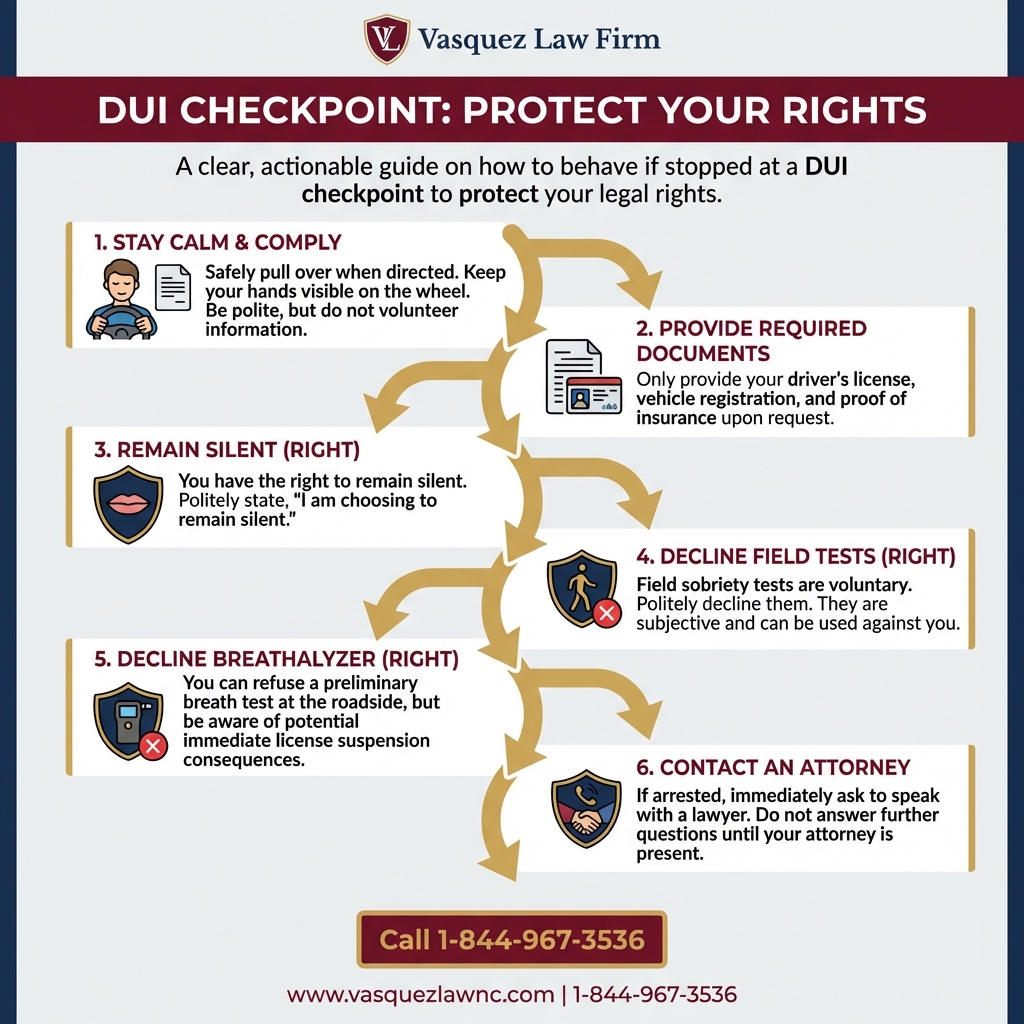
When approaching a DUI checkpoint in Riverside County, staying calm and following a clear set of steps can help protect your rights and ensure a smooth interaction with law enforcement. Your actions at this moment can significantly impact any potential legal proceedings. Remember that officers are observing your behavior from the moment you approach, so maintaining composure is key.
- Remain Calm and Pull Over Safely: As soon as you see signs of a checkpoint, reduce your speed, turn on your interior light if it's dark, and pull over as directed. Avoid any sudden or erratic movements that could raise suspicion.
- Have Documents Ready: Before the officer approaches, have your driver's license, vehicle registration, and proof of insurance easily accessible. This shows cooperation and can expedite the process.
- Interact Politely: When an officer approaches, be polite and respectful. You are required to provide your identification documents. You are not required to answer questions beyond your identity or participate in extended conversations.
- Understand Your Right to Remain Silent: You have the Fifth Amendment right to remain silent. You can politely state, "I choose not to answer any questions without my attorney present." Do not lie, but you are not obligated to incriminate yourself.
- Refuse Unlawful Searches: An officer cannot search your vehicle without probable cause, a warrant, or your consent. If asked to search your car, politely say, "I do not consent to any searches." If they proceed, do not resist physically, but clearly state that you are not consenting.
- Implied Consent Laws: In North Carolina, driving on public roads implies consent to chemical tests (breath, blood, or urine) if arrested for DUI. Refusing these tests after a lawful arrest can result in immediate license suspension, regardless of whether you are ultimately convicted of DUI. Field sobriety tests are voluntary, but refusing them might be used as evidence against you.
- Record the Interaction (If Safe): If it is safe and legal to do so, you may record your interaction with law enforcement. This can provide valuable evidence in case of a dispute. Ensure it does not interfere with the officer's duties.
- Contact an Attorney Immediately if Arrested: If you are arrested, contact a traffic violations lawyer like Vasquez Law Firm as soon as possible. Do not discuss your case with anyone until you have legal representation.
Can You Turn Around Before a DUI Checkpoint?
Many drivers wonder if they can legally avoid a DUI checkpoint by turning around or taking an alternate route. The answer is generally yes, as long as you do so legally and safely. If you make a legal turn or U-turn before entering the checkpoint, and you do not violate any traffic laws in doing so, law enforcement typically cannot stop you solely for avoiding the checkpoint. Law enforcement officers are trained to observe for suspicious behavior, and an illegal turn or sudden, erratic maneuver could give them probable cause to pull you over.
However, if you commit a traffic infraction, such as an illegal U-turn, running a stop sign, or driving erratically, an officer can then pull you over for that offense. Once stopped, they may then develop reasonable suspicion or probable cause to investigate whether you are driving under the influence. It's crucial to distinguish between legally avoiding a checkpoint and engaging in behavior that gives officers an independent reason to stop you. Always prioritize safety and adherence to traffic laws if you choose to take an alternate route around a DUI checkpoint.
Common Mistakes and How to Avoid Them at a Checkpoint
Navigating a DUI checkpoint can be tricky, and many drivers make common mistakes that can negatively impact their situation. Being aware of these pitfalls and understanding how to avoid them is essential for protecting your rights and minimizing potential legal consequences in Riverside County. Your actions and words can be used as evidence, so careful conduct is paramount during any interaction with law enforcement.
- Failing to Produce Documents Promptly: Fumbling for your license, registration, or insurance can be perceived as nervousness or an attempt to hide something. Keep these documents organized and easily accessible.
- Being Argumentative or Disrespectful: While you have rights, being confrontational or rude to officers can escalate the situation and may lead to additional charges, such as resisting arrest. Maintain a polite and cooperative demeanor.
- Admitting to Drinking or Drug Use: Any admission of consuming alcohol or drugs, even if minor, can provide officers with probable cause to conduct further investigation, including sobriety tests. Exercise your right to remain silent.
- Consenting to Vehicle Searches: Never consent to a search of your vehicle unless an officer has a warrant or probable cause. Politely but firmly state, "I do not consent to any searches."
- Refusing a Chemical Test After Arrest: While you can refuse field sobriety tests, refusing a chemical test (breath, blood, urine) after a lawful DUI arrest in North Carolina triggers automatic license suspension under implied consent laws. Understand the difference.
- Making Illegal Maneuvers to Avoid the Checkpoint: Turning around illegally or committing other traffic violations to avoid a checkpoint gives officers a valid reason to stop you. Always follow traffic laws.
- Not Knowing Your Rights: Ignorance of your rights can lead to inadvertently waiving them. Educate yourself on what is required and what is optional at a DUI checkpoint.
- Not Contacting an Attorney Promptly: If you are arrested, delaying contact with a qualified attorney can jeopardize your defense. Immediate legal counsel is crucial for navigating the legal process effectively.
If you only remember one thing: Always be polite and cooperative, but firmly assert your constitutional rights, especially your right to remain silent and refuse unwarranted searches. Immediately seek legal counsel if you are arrested.
North Carolina DUI Laws and Penalties
North Carolina has strict laws regarding driving while impaired (DWI), which is the term used in this state instead of DUI. The state's DWI laws are designed to deter impaired driving and impose significant penalties on those convicted. Understanding these laws is vital for anyone driving in Riverside County or elsewhere in North Carolina in 2026. The legal blood alcohol concentration (BAC) limit for most drivers is 0.08%. For commercial drivers, it's 0.04%, and for drivers under 21, any detectable amount of alcohol is illegal.
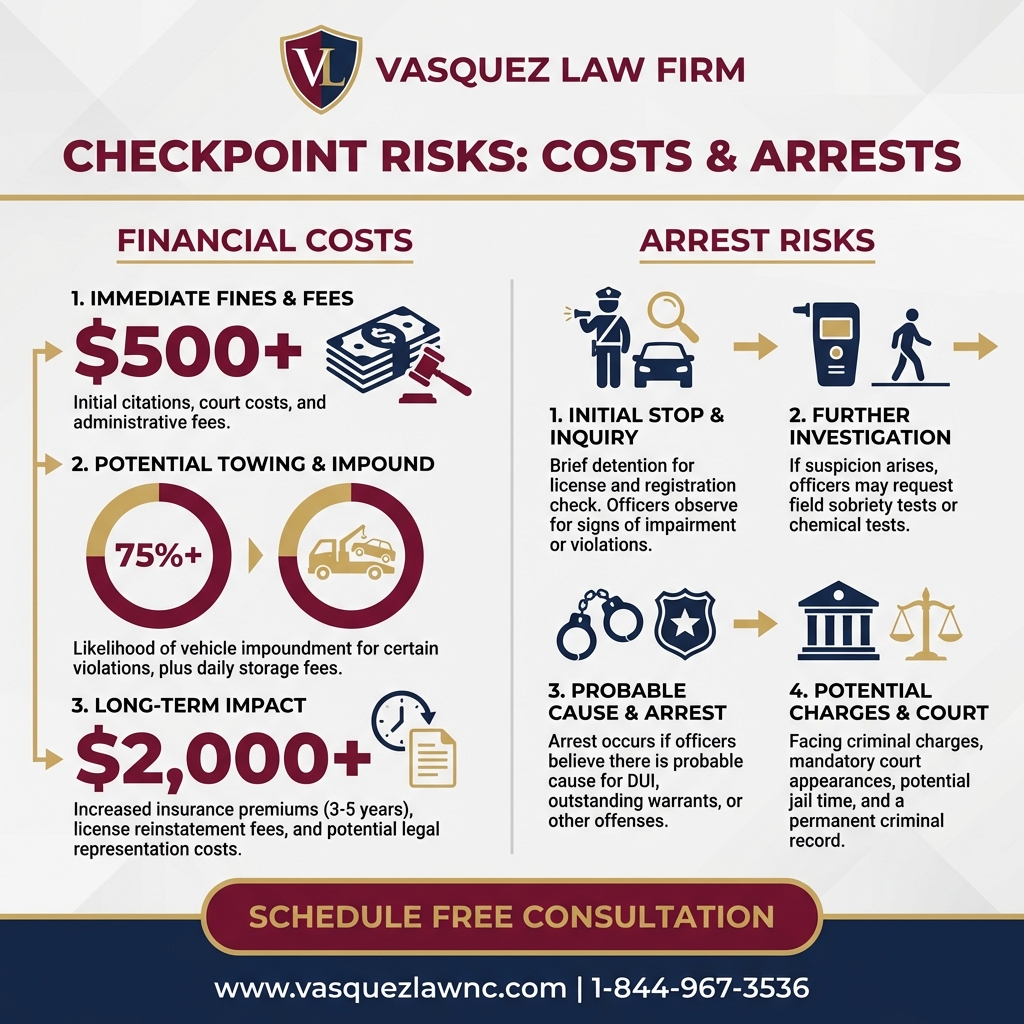
Penalties for a DWI conviction in North Carolina are severe and can include: license suspension, hefty fines, mandatory substance abuse assessment and treatment, jail time, and increased insurance premiums. The exact penalties depend on the level of impairment, prior convictions, and aggravating factors. For example, a Level 5 DWI, the least severe, still carries a minimum 24-hour jail sentence (which can sometimes be waived with community service) and fines up to $200. A Level 1 DWI, on the other hand, can result in a minimum of 30 days to 12 months in jail and fines up to $4,000. North Carolina General Statutes § 20-138.1 outlines the specifics of impaired driving offenses.
Beyond the immediate legal consequences, a DWI conviction can have long-lasting effects on your life, including employment difficulties, social stigma, and significant financial strain. This underscores the importance of knowing your rights at a DUI checkpoint and having experienced legal representation if you face charges. Attorney Vasquez and the team at Vasquez Law Firm are well-versed in North Carolina DWI laws and can provide the aggressive defense you need.
North Carolina Implied Consent Law
North Carolina operates under an implied consent law, meaning that by driving on the state's public roads, you automatically consent to chemical testing (breath, blood, or urine) if you are lawfully arrested for DWI. This is a critical distinction from field sobriety tests, which are voluntary. If you refuse a chemical test after a lawful arrest, your driver's license will be immediately revoked for a minimum of one year, regardless of the outcome of your DWI case. This revocation is administrative and separate from any penalties imposed by a criminal court. Understanding this law is paramount when interacting with law enforcement at a DUI checkpoint or traffic stop.
When to Call a Lawyer Now
The moments following a DUI checkpoint encounter or arrest can be confusing and overwhelming. Knowing when to seek legal counsel immediately can make a critical difference in the outcome of your case. Do not delay in contacting an experienced traffic violations attorney if any of the following situations apply to you in Riverside County or elsewhere in North Carolina in 2026:
- You were arrested at a DUI checkpoint.
- You refused a breathalyzer or field sobriety test.
- You consented to a search that resulted in charges.
- You believe your rights were violated during the stop or arrest.
- You are facing DWI charges for the first time.
- You have prior DWI convictions.
- You are facing charges that could impact your commercial driver's license (CDL).
- You provided a breath or blood sample and are awaiting results.
- You have questions about the legal process or potential penalties.
- You feel pressured to make statements or sign documents without understanding them.
About Vasquez Law Firm
At Vasquez Law Firm, we combine compassion with aggressive representation. Our motto "Yo Peleo" (I Fight) reflects our commitment to standing up for your rights. We understand the stress and uncertainty that come with legal challenges, especially those involving traffic violations and criminal defense. Our dedicated team is here to provide personalized attention and fight tirelessly for the best possible outcome in your case.
- Bilingual Support: Se Habla Español - our team is fully bilingual, ensuring clear communication and understanding.
- Service Areas: We proudly serve clients across North Carolina for traffic violations, personal injury, workers' compensation, criminal defense, and family law. We also offer nationwide immigration services.
- Experience: With over 15 years of dedicated legal experience, we have a proven track record of helping clients navigate complex legal matters.
- Results: We have successfully handled thousands of cases across multiple practice areas, always striving for favorable results for our clients.
Attorney Trust and Experience
Attorney Vasquez holds a Juris Doctor degree and is admitted to practice in both the North Carolina State Bar and Florida Bar. With over 15 years of dedicated legal experience, he has built a reputation for providing personalized attention and achieving favorable outcomes for his clients. His commitment to justice and his aggressive advocacy make him a trusted ally when you need legal representation most.
Don't face your legal challenges alone. Our team is here to help you every step of the way.
Call today: 1-844-967-3536 | Se Habla Español
Frequently Asked Questions
Can I turn around before a DUI checkpoint in NC?
Yes, you can legally turn around before a DUI checkpoint in North Carolina, provided you do so safely and without violating any traffic laws. Making an illegal U-turn or committing another traffic infraction to avoid a checkpoint could give officers probable cause to stop you, potentially leading to a DUI investigation. Always prioritize safe and legal maneuvers.
What are my rights if stopped at a DUI checkpoint in Riverside County, NC?
You have the right to remain silent and refuse to answer questions beyond providing your identification documents. You can also refuse consent to any vehicle searches. However, you must provide your driver's license, registration, and proof of insurance. Understand North Carolina's implied consent law regarding chemical tests if arrested.
Do I have to take a field sobriety test in North Carolina?
No, field sobriety tests (FSTs) are voluntary in North Carolina. You can politely refuse to participate in them. However, refusing FSTs might be used by an officer as a factor in establishing probable cause for arrest. It's important to differentiate FSTs from chemical tests, which have different legal implications under implied consent.
What happens if I refuse a breathalyzer at a NC checkpoint?
If you refuse a breathalyzer or other chemical test after a lawful arrest for DWI in North Carolina, your driver's license will be immediately revoked for a minimum of one year under the state's implied consent law. This administrative revocation is separate from any criminal penalties for DWI. It's a serious consequence to consider.
How often are DUI checkpoints conducted in Riverside County, NC?
The frequency of DUI checkpoints in Riverside County, and across North Carolina, varies. Law enforcement agencies typically announce upcoming checkpoints through local media or social media, though specific locations and times are often withheld. They are generally conducted at unpredictable intervals, often during holidays or peak traffic times, to maximize their deterrent effect.
Should I Fight My Traffic Ticket?
Find out if it's worth fighting
Question 1 / 3
What were you cited for?
Keep Reading
What is the legal BAC limit for DWI in North Carolina?
In North Carolina, the legal blood alcohol concentration (BAC) limit for most drivers is 0.08%. For commercial drivers, it's 0.04%, and for drivers under the age of 21, any detectable amount of alcohol in their system is illegal. Exceeding these limits while driving constitutes impaired driving (DWI) under state law.
Can I record police officers at a DUI checkpoint in NC?
Generally, yes, you have a First Amendment right to record police officers in public spaces, including at a DUI checkpoint, as long as you do not interfere with their official duties or create a safety hazard. This recording can serve as valuable evidence. However, be aware that some officers may react negatively, so proceed cautiously and respectfully.
What are the penalties for a first-time DWI in North Carolina?
Penalties for a first-time DWI in North Carolina vary based on the specifics of the case, but can include license suspension, fines up to $4,000, mandatory substance abuse assessment, and potential jail time. Even the lowest level DWI carries a minimum 24-hour jail sentence, though alternatives like community service may sometimes be available. These penalties are outlined in North Carolina General Statutes § 20-179.
Should I hire a lawyer for a DWI charge from a checkpoint?
Absolutely. Hiring an experienced DWI attorney is highly recommended if you face charges from a DUI checkpoint. An attorney can explain your rights, challenge the legality of the stop or arrest, negotiate with prosecutors, and represent you in court. They can help minimize penalties, protect your license, and potentially achieve a more favorable outcome than if you tried to handle the case alone.
How much does a DUI checkpoint cost to operate?
The exact cost of operating a DUI checkpoint can vary significantly based on factors like staffing levels, equipment used, duration, and location. While specific figures for Riverside County are not publicly detailed, such operations involve considerable resources, including officer salaries, vehicle expenses, and administrative overhead. The cost is generally viewed as an investment in public safety to deter impaired driving.
Sources and References
- North Carolina General Statutes § 20-138.1: Impaired Driving
- North Carolina General Statutes § 20-179: Sentencing for Impaired Driving
- North Carolina Department of Motor Vehicles (NCDMV)
Ready to take the next step? Contact Vasquez Law Firm today for a free, confidential consultation. We're committed to fighting for your rights and achieving the best possible outcome for your case.
Start Your Free Consultation Now
Call us: 1-844-967-3536
Se Habla Español - Estamos aquí para ayudarle.
Vasquez Law Firm
Legal Team
Our experienced attorneys at Vasquez Law Firm have been serving clients in North Carolina and Florida for over 30 years. We specialize in immigration, personal injury, criminal defense, workers compensation, and family law.
Related Legal Services
Need legal help? Learn more about speak with a traffic violation lawyer, or contact us for a free evaluation.