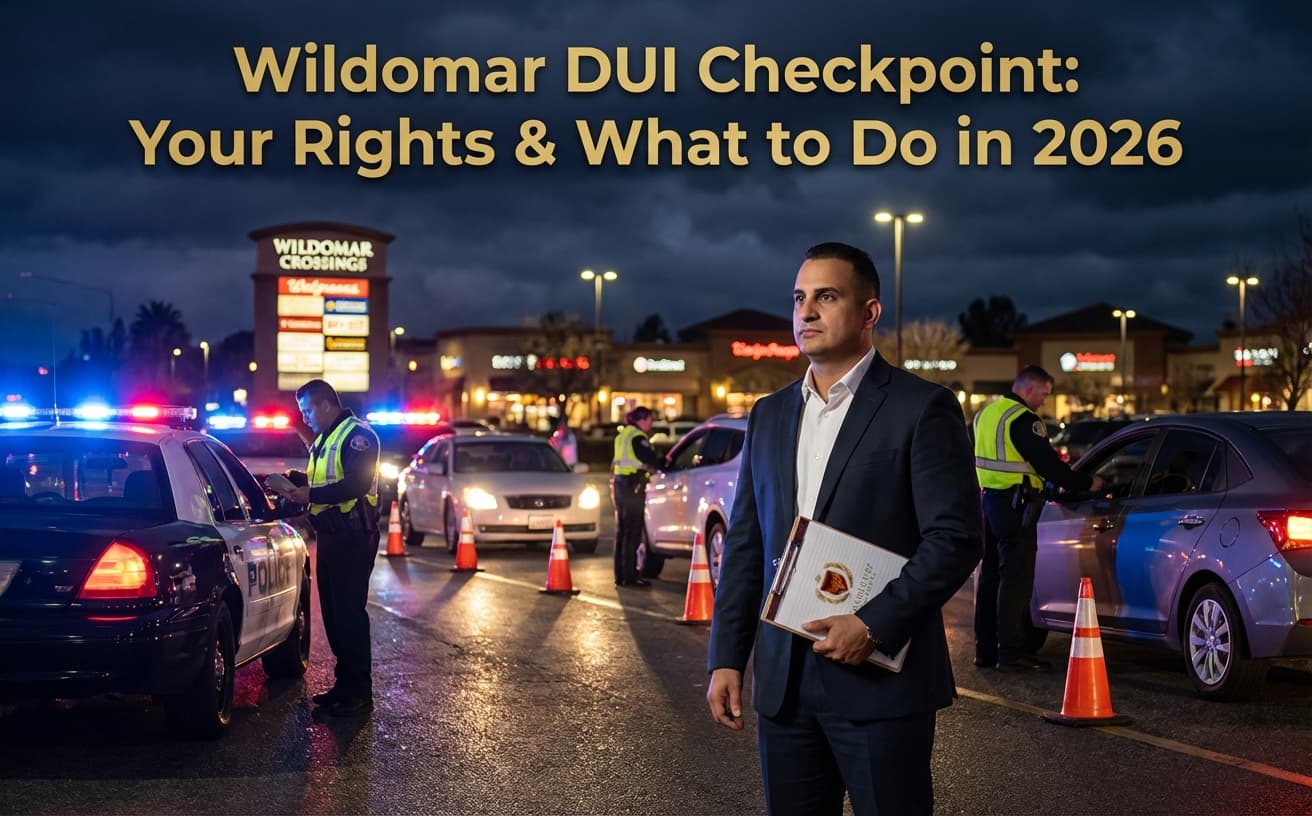
Know Your Rights at a Wildomar DUI Checkpoint in 2026
Facing a Wildomar DUI checkpoint in 2026? Understand your rights and how to protect yourself. Contact Vasquez Law for a free consultation today. Se Habla Español.
Vasquez Law Firm
Published on February 28, 2026
Have questions? Talk to an attorney — free evaluation.
Call 1-844-967-3536Know Your Rights at a Wildomar DUI Checkpoint in 2026
Encountering a Wildomar DUI checkpoint can be a stressful experience, even for sober drivers. In 2026, law enforcement agencies continue to use these checkpoints as a tool to deter impaired driving and ensure road safety. However, as a driver, you have specific constitutional rights that protect you during these encounters. Knowing what to do, what to say, and when to remain silent can significantly impact the outcome of your situation. This guide will walk you through the essential information to navigate a DUI checkpoint confidently and protect your legal interests.
Need help with your case? Our experienced attorneys are ready to fight for you. Se Habla Español.
Got a Traffic Ticket?
Don't let points pile up. Our traffic attorneys can help protect your license.
Schedule Your Free Consultation
Or call us now: 1-844-967-3536
Quick Answer
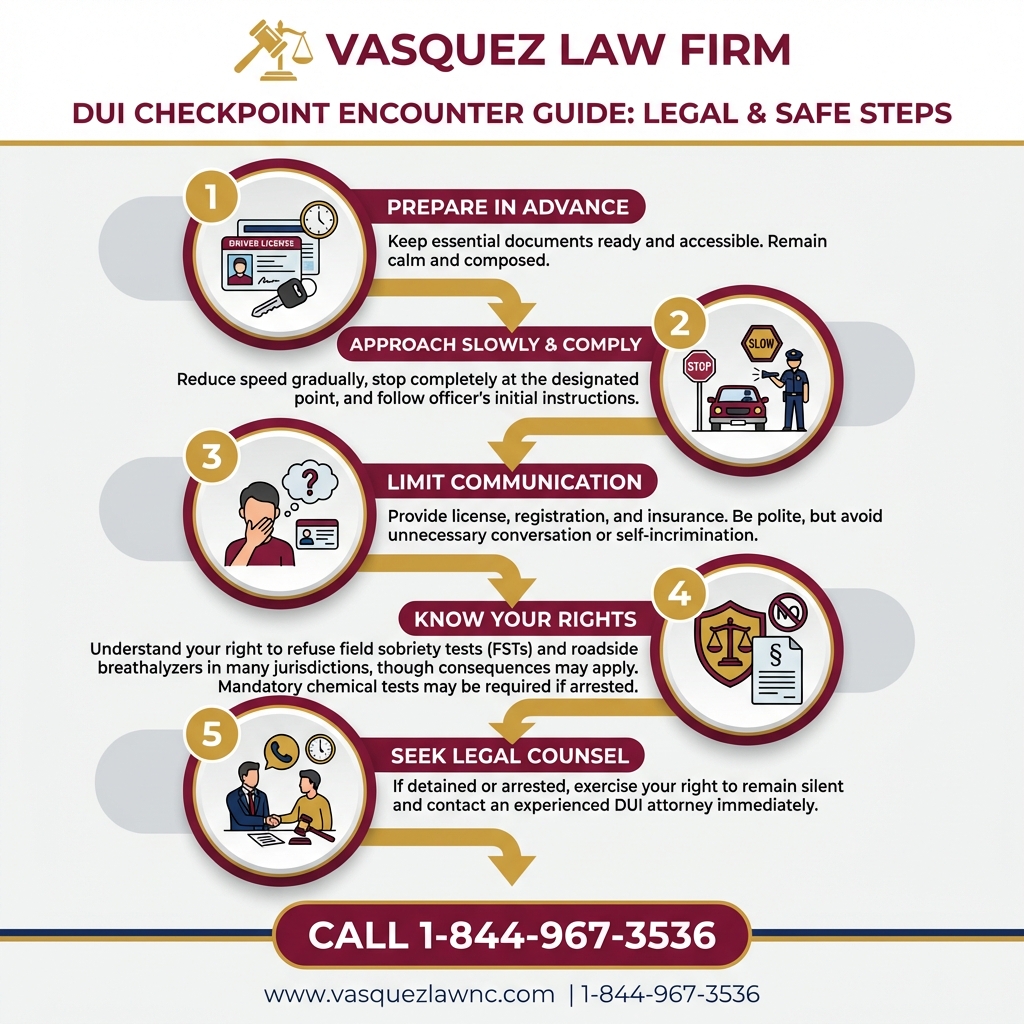
If you encounter a Wildomar DUI checkpoint, remain calm and comply with lawful instructions while asserting your rights. You may be asked for your license, registration, and proof of insurance. You generally have the right to refuse field sobriety tests and preliminary alcohol screening (PAS) tests, though refusal may lead to immediate license suspension if probable cause for DUI exists. Always be polite, but remember you can decline to answer self-incriminating questions.
- Have your documents ready: license, registration, insurance.
- Remain silent or state you wish to speak with an attorney.
- You can refuse field sobriety tests (FSTs) and PAS tests.
- Be aware of implied consent laws for chemical tests after arrest.
- Document the encounter if possible, safely.
- Contact an attorney immediately if you are arrested.
Understanding Wildomar DUI Checkpoints in 2026
DUI checkpoints, also known as sobriety checkpoints, are pre-announced or publicly disclosed locations where law enforcement stops vehicles to check drivers for signs of alcohol or drug impairment. These checkpoints are legal in many states, including North Carolina and Florida, provided they follow strict guidelines established by court rulings. The primary goal is to enhance public safety by removing impaired drivers from the road.
In Wildomar, like other areas in California, law enforcement agencies such as the California Highway Patrol (CHP) or local sheriff's departments conduct these operations. While the specific location of a Wildomar DUI checkpoint may vary, the procedures generally remain consistent. Officers are looking for visible signs of impairment, such as erratic driving, the smell of alcohol, or slurred speech, to establish probable cause for a DUI arrest.
It is important to remember that these checkpoints are not random stops. They must be set up in a way that minimizes discretion by individual officers and ensures public notice. This helps prevent arbitrary enforcement and protects your Fourth Amendment rights against unreasonable searches and seizures. Understanding these rules is your first line of defense.
Your Rights at a DUI Checkpoint in 2026
Knowing your rights is paramount when you approach a Wildomar DUI checkpoint. While officers have the authority to stop you and ask for your identification, your obligation to comply with further requests has limits. The Fourth Amendment protects you from unreasonable searches, and the Fifth Amendment protects you from self-incrimination.
You are required to provide your driver's license, vehicle registration, and proof of insurance. Beyond these documents, you are generally not obligated to answer questions that might incriminate you. You can politely state, "I do not answer questions without my attorney present." This is your right and should not be used against you as an admission of guilt. Refusing to answer questions is not the same as refusing to cooperate with a lawful order.
Refusing Field Sobriety Tests (FSTs)
Field sobriety tests (FSTs), such as the walk-and-turn or one-leg stand, are voluntary. You have the right to refuse these tests. FSTs are subjective and can be challenging to perform accurately even when sober, especially due to factors like medical conditions, footwear, or uneven ground. Refusal cannot be used as evidence of guilt in court, but it might strengthen an officer's suspicion if they already have other indicators of impairment.
Preliminary Alcohol Screening (PAS) Tests
A Preliminary Alcohol Screening (PAS) test is a breath test given at the scene using a handheld device. For most drivers, this test is also voluntary. However, if you are under 21 or on probation for a prior DUI, you may be legally required to take a PAS test under California's implied consent laws. Refusing a PAS test when not legally required usually carries no direct penalty, but it may lead to an officer forming probable cause for arrest based on other observations.
What to Do When Approaching a Wildomar DUI Checkpoint: Step-by-Step
Approaching a DUI checkpoint can be daunting, but a clear plan of action can help you navigate the situation effectively. Your composure and adherence to procedure are key.
- Remain Calm and Pull Over Safely: Once you see a Wildomar DUI checkpoint, slow down and follow any cones or instructions to pull into the designated area. Do not make any sudden turns or attempts to avoid the checkpoint, as this could give officers probable cause to stop you.
- Have Documents Ready: Before reaching the officer, have your driver's license, vehicle registration, and proof of insurance readily available. This demonstrates cooperation and efficiency.
- Keep Hands Visible: When an officer approaches, keep your hands on the steering wheel in plain sight. This helps the officer feel safe and reduces any potential misunderstandings.
- Answer Limited Questions: You are generally only required to provide your name and identification. If asked about your destination or whether you've been drinking, you can politely decline to answer, stating, "I prefer not to answer any questions without my attorney present."
- Know Your Rights on Tests: Remember your right to refuse FSTs and PAS tests (unless you are under 21 or on DUI probation). State clearly, "I am exercising my right to refuse field sobriety tests."
- Record if Possible (Safely): In many states, including North Carolina and Florida, you have the right to record police interactions in public spaces, provided it does not interfere with the officer's duties. If you choose to record, do so safely and without obstructing the officer.
- Do Not Argue: If an officer insists on a test or makes an arrest, do not argue or resist. Comply physically, but continue to assert your rights verbally. Your attorney can challenge the legality of the stop or arrest later.
- Contact an Attorney Immediately: If you are arrested for DUI at a Wildomar DUI checkpoint, your first call should be to an experienced traffic defense attorney. They can advise you on immediate steps and begin building your defense.
Common Mistakes to Avoid at a Wildomar DUI Checkpoint
Many drivers, even those who are sober, make critical errors at DUI checkpoints that can complicate their situation. Avoiding these pitfalls is crucial for protecting your rights and preventing unnecessary legal trouble.
- Attempting to Evade the Checkpoint: Making a U-turn or suddenly pulling off the road upon seeing a checkpoint can give officers reasonable suspicion to stop you, even if you haven't committed a traffic violation. This can lead to a lawful stop and subsequent DUI investigation.
- Being Argumentative or Disrespectful: While you have rights, being belligerent or uncooperative will only escalate the situation. Always be polite and respectful, even when asserting your right to remain silent or refuse tests.
- Admitting to Drinking: Any admission of alcohol consumption, even a small amount, can be used by an officer to establish probable cause for further investigation or arrest. It's best to politely decline to answer questions about your activities.
- Failing to Provide Documents: You are legally required to provide your driver's license, registration, and proof of insurance. Failing to do so can result in additional charges or prolong the stop.
- Voluntarily Taking FSTs or PAS Tests: Unless legally mandated (e.g., under 21), these tests are voluntary. Performing them, especially if you are nervous or have physical limitations, can provide officers with subjective evidence to justify an arrest.
- Not Knowing Implied Consent Laws: If you are lawfully arrested for DUI, refusing a chemical test (blood, breath, or urine) will result in an automatic license suspension in most states, including North Carolina. This is separate from the on-scene PAS test.
- Delaying Legal Counsel: Waiting to contact an attorney after a DUI arrest can jeopardize your defense. Evidence needs to be gathered quickly, and critical deadlines for challenging license suspension must be met.
If you only remember one thing: Always be polite and cooperative with lawful requests (like providing documents), but firmly assert your right to remain silent and refuse voluntary tests without an attorney present.
NC, Florida, and Nationwide DUI Checkpoint Notes
While the general principles of DUI checkpoints apply across the U.S., specific laws and procedures can vary by state. It's essential to understand the local nuances, especially if you travel between North Carolina and Florida or other states.
North Carolina DUI Checkpoints
In North Carolina, DUI checkpoints are legal and frequently conducted. The state's Supreme Court has upheld their constitutionality, provided they adhere to specific guidelines, including advance public notice, a neutral formula for stopping vehicles, and clear supervision. Drivers in North Carolina have similar rights regarding refusal of FSTs and PAS tests. However, NC's implied consent law means that if you are lawfully arrested for DWI (Driving While Impaired), refusal of a chemical test (breath or blood) will lead to an immediate 1-year license revocation. For more details on NC traffic violations, consider reading our guide on traffic ticket lawyers in NC.
Florida DUI Checkpoints
Florida also permits DUI checkpoints, and they are regularly implemented by agencies like the Florida Highway Patrol and local sheriff's offices. Similar to North Carolina, Florida's implied consent law dictates that refusal to submit to a chemical test after a lawful DUI arrest results in an automatic license suspension. The length of suspension increases for subsequent refusals. The Orlando area, for example, often sees these checkpoints, especially around holidays. Understanding these regulations is critical for drivers in Florida.
Nationwide Concepts (General, Rules Vary)
Across the United States, the legality of DUI checkpoints is determined by state law, influenced by the U.S. Supreme Court's ruling in Michigan Dept. of State Police v. Sitz (1990), which found them constitutional under the Fourth Amendment. However, some states, like Texas, Iowa, and Michigan, prohibit sobriety checkpoints by statute or state constitution. Always verify the specific laws regarding DUI checkpoints in any state you are driving through, as your rights and obligations can differ significantly. Generally, the right to refuse FSTs is universal, but implied consent for chemical tests post-arrest is widespread. For more information on traffic laws, you can refer to the North Carolina Department of Motor Vehicles.
When to Call a Lawyer Now After a Wildomar DUI Checkpoint Encounter
The aftermath of a DUI checkpoint encounter, especially if it leads to an arrest, is a critical time. Prompt legal action can significantly influence the outcome of your case. You should contact an attorney immediately if any of the following situations apply to you:
- You were arrested for DUI at a Wildomar DUI checkpoint.
- You refused a breath or blood test after being arrested.
- Your driver's license was suspended on the spot.
- You believe your rights were violated during the stop or arrest.
- You were charged with any traffic violation in connection with the checkpoint.
- You are facing multiple DUI charges or have a prior DUI history.
- You are unsure of the implications of your implied consent refusal.
- You need to understand the process for challenging a license suspension.
An experienced traffic defense attorney can review the details of your stop, identify any procedural errors or constitutional violations, and build a robust defense strategy tailored to your specific circumstances. Don't delay; the sooner you act, the better your chances of a favorable outcome. Learn more about our traffic violations services.
About Vasquez Law Firm
At Vasquez Law Firm, we combine compassion with aggressive representation. Our motto "Yo Peleo" (I Fight) reflects our commitment to standing up for your rights. We understand the stress and uncertainty that come with legal challenges, especially those involving traffic violations like a Wildomar DUI checkpoint stop. Our team is dedicated to providing personalized attention and strategic advocacy for every client.
- Bilingual Support: Se Habla Español - our team is fully bilingual and ready to assist clients in both English and Spanish, ensuring clear communication and understanding.
- Service Areas: We proudly serve clients across North Carolina and Florida, offering comprehensive legal representation in traffic violations, personal injury, criminal defense, and immigration nationwide.
- Experience: With over 15 years of dedicated legal experience, Attorney Vasquez has a proven track record of helping clients navigate complex legal matters and achieving favorable outcomes.
- Results: Our firm has successfully handled thousands of cases, consistently fighting for our clients' best interests and protecting their futures.
Attorney Trust and Experience
Attorney Vasquez holds a Juris Doctor degree and is admitted to practice in both the North Carolina State Bar and Florida Bar. With over 15 years of dedicated legal experience, he has built a reputation for providing personalized attention and achieving favorable outcomes for his clients. His extensive knowledge of traffic laws, including those surrounding DUI checkpoints, makes him a formidable advocate. You can learn more about Attorney Vasquez and our team.
Don't face your legal challenges alone. Our team is here to help you every step of the way.
Call today: 1-844-967-3536 | Se Habla Español
Frequently Asked Questions
Is it illegal to turn around if you see a DUI checkpoint?
Generally, it is not illegal to turn around or avoid a DUI checkpoint if you do so before reaching the actual checkpoint and without violating any traffic laws. However, if an officer observes you making an illegal maneuver or if your actions give them reasonable suspicion of another crime, they may have grounds to stop you. It's crucial to ensure any evasive action is legal and safe.
Can you refuse a checkpoint in Ohio?
Ohio is one of the states where DUI checkpoints are legal. While you cannot physically refuse to stop at a lawful checkpoint, you do have rights regarding what you must do once stopped. You can generally refuse field sobriety tests and preliminary alcohol screening tests. However, refusing a chemical test after a lawful arrest will result in license suspension under Ohio's implied consent law.
What is the 2 hour rule for DUI?
The "2-hour rule" for DUI, or more commonly, the "3-hour rule" in some states, refers to the time limit within which a chemical test (blood, breath, or urine) must be administered after driving to accurately determine a driver's blood alcohol content (BAC) at the time of driving. If a test is taken outside this window, the prosecution may have a harder time proving BAC at the time of the offense.
How much does a DUI checkpoint cost?
The cost of operating a DUI checkpoint can vary significantly depending on factors like staffing, equipment, and duration. These operations are typically funded by grants from federal agencies like the National Highway Traffic Safety Administration (NHTSA) or state traffic safety programs. The goal is to justify the expense through increased public safety and deterrence of impaired driving. For example, some sources estimate costs can range from thousands to tens of thousands of dollars per operation.
Should I Fight My Traffic Ticket?
Find out if it's worth fighting
Question 1 / 3
What were you cited for?
Keep Reading
What documents do I need to show at a DUI checkpoint?
When stopped at a DUI checkpoint, you are legally required to provide your valid driver's license, vehicle registration, and proof of insurance. Having these documents readily accessible can help expedite the process and demonstrate your cooperation with law enforcement. Failure to present these documents can lead to additional citations or prolong the stop.
Can an officer search my car at a DUI checkpoint?
An officer cannot search your car at a DUI checkpoint without probable cause or your consent. They may ask for consent to search, but you have the right to refuse. Probable cause for a search could arise if they observe illegal items in plain view, smell marijuana, or have other specific reasons to believe a crime is being committed.
What happens if I refuse all tests at a checkpoint?
Refusing field sobriety tests (FSTs) and preliminary alcohol screening (PAS) tests at a checkpoint is generally your right and does not carry direct penalties. However, if an officer has other observations (like odor of alcohol, slurred speech) that give them probable cause to arrest you for DUI, and you then refuse a chemical test (blood or breath) after arrest, your license will be automatically suspended under implied consent laws.
Do DUI checkpoints have to be announced in advance?
In many states, including North Carolina and Florida, law enforcement agencies are required to provide advance public notice of DUI checkpoints. This notice typically includes the general location and time frame, often shared through local media or press releases. This requirement helps ensure the checkpoint's constitutionality by reducing arbitrary stops and promoting public awareness.
What is the difference between a DUI checkpoint and a traffic stop?
A DUI checkpoint involves stopping vehicles at a predetermined location to check for impairment, often with advance notice. Traffic stops, on the other hand, occur when an officer observes a specific traffic violation (e.g., speeding, broken taillight) or has reasonable suspicion of criminal activity. Checkpoints are considered a brief, suspicionless stop, while traffic stops require individualized suspicion.
Sources and References
- North Carolina Department of Motor Vehicles (NCDMV)
- Florida Department of Highway Safety and Motor Vehicles (FLHSMV)
- Michigan Dept. of State Police v. Sitz, 496 U.S. 444 (1990)
Ready to take the next step? Contact Vasquez Law Firm today for a free, confidential consultation. We're committed to fighting for your rights and achieving the best possible outcome for your case.
Start Your Free Consultation Now
Call us: 1-844-967-3536
Se Habla Español - Estamos aquí para ayudarle.
Vasquez Law Firm
Legal Team
Our experienced attorneys at Vasquez Law Firm have been serving clients in North Carolina and Florida for over 30 years. We specialize in immigration, personal injury, criminal defense, workers compensation, and family law.
Related Legal Services
Need legal help? Learn more about NC traffic violation legal team, or contact us for a free evaluation.