What Happens If You Are Involved in Distracted Driving in 2026
Learn how distracted driving causes accidents and what to do after a crash in 2026. Get expert help from Vasquez Law with a free case evaluation.
Published on April 21, 2026
Injured? Get what your case is worth
Free review.
Free & confidential · Se habla espanol · 24/7
Have questions? Talk to an attorney - free evaluation.
Call 1-844-967-3536Get What Your Injury Is Worth
Schedule your consultation.
What Happens If You Are Involved in Distracted Driving in 2026
Distracted driving causes thousands of accidents each year in North Carolina and Florida. Understanding distracted driving, including the three main types and the penalties that come with it, can help survivors protect their legal rights. This article explains common distracted driving causes, offers a checklist of what to do after a crash, and details the legal steps survivors in Charlotte and other areas should take.
Need help with your case? Our experienced attorneys are ready to fight for you. Se Habla Español.
Or call us now: 1-844-967-3536
Quick Answer
Distracted driving means paying attention to anything other than driving, including texting, eating, or adjusting controls. These distractions cause accidents and injuries every day in Charlotte and beyond. After an accident, gather evidence, seek medical help, and contact a personal injury attorney to protect your rights.
- Distracted driving includes visual, manual, and cognitive distractions
- Texting is one of the most dangerous distracted driving examples
- Penalties include fines, points on license, and possible suspension
- Take photos and document the crash scene immediately
- Consult with a Charlotte personal injury attorney promptly
Understanding Distracted Driving Causes and Facts
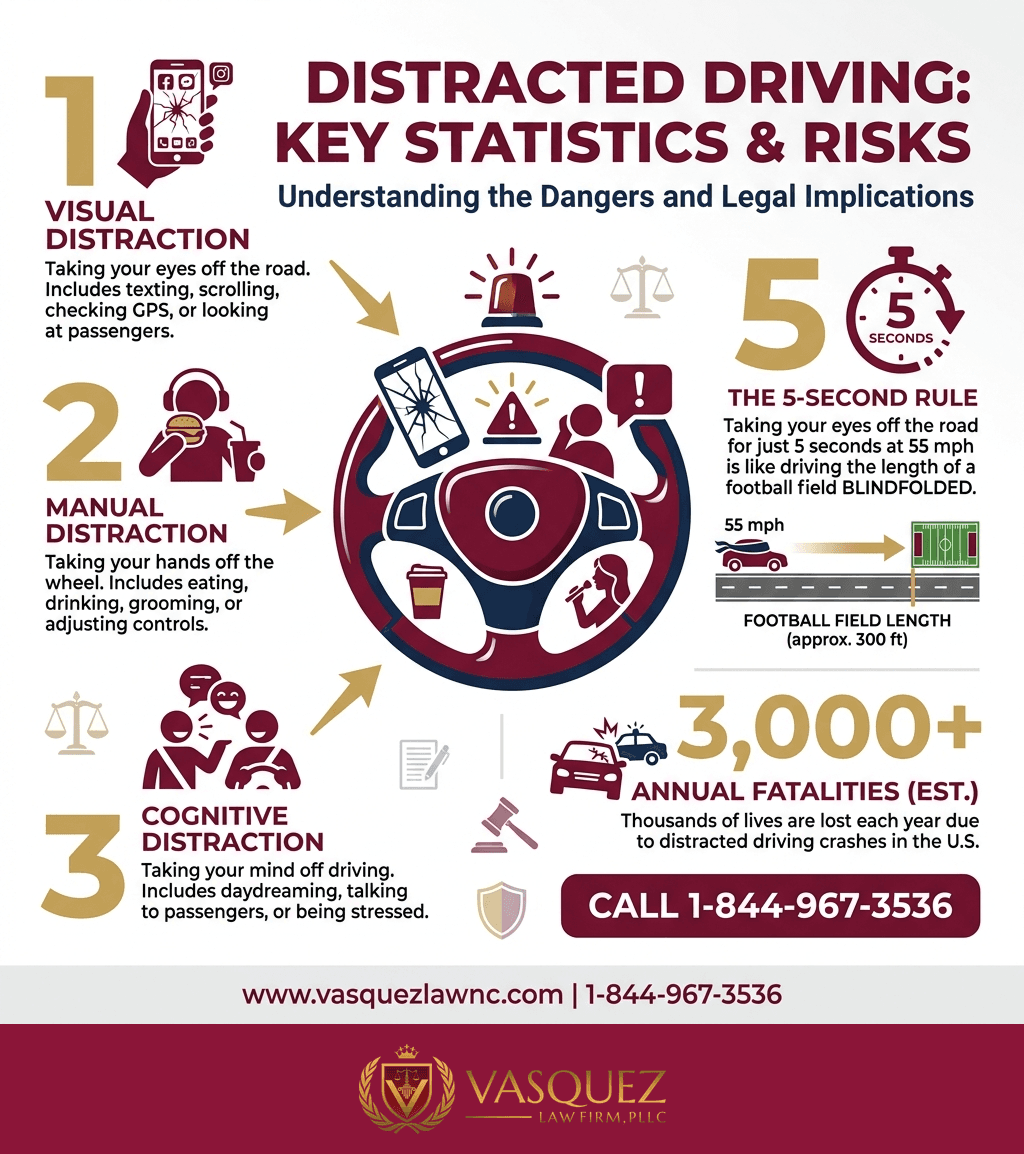
More than 3,000 people died in distracted driving crashes nationwide in 2024, and tens of thousands were injured. In North Carolina and Florida, distracted driving remains a leading cause of crashes, according to the National Highway Traffic Safety Administration. Drivers take their eyes off the road for many reasons, including mobile device use, eating, or daydreaming.
Distracted driving falls into three types of distraction. Visual distraction happens when a driver looks away from the road, like checking a text message. Manual distraction means taking your hands off the wheel, for example, adjusting the radio. Cognitive distraction means your mind is not focused on driving, even if your eyes and hands are on the task.
Understanding these categories is vital for legal cases. Courts assess whether the distraction contributed to the accident. Common distracted driving examples include texting, phone calls, texting, eating, grooming, navigation system use, and interacting with passengers.
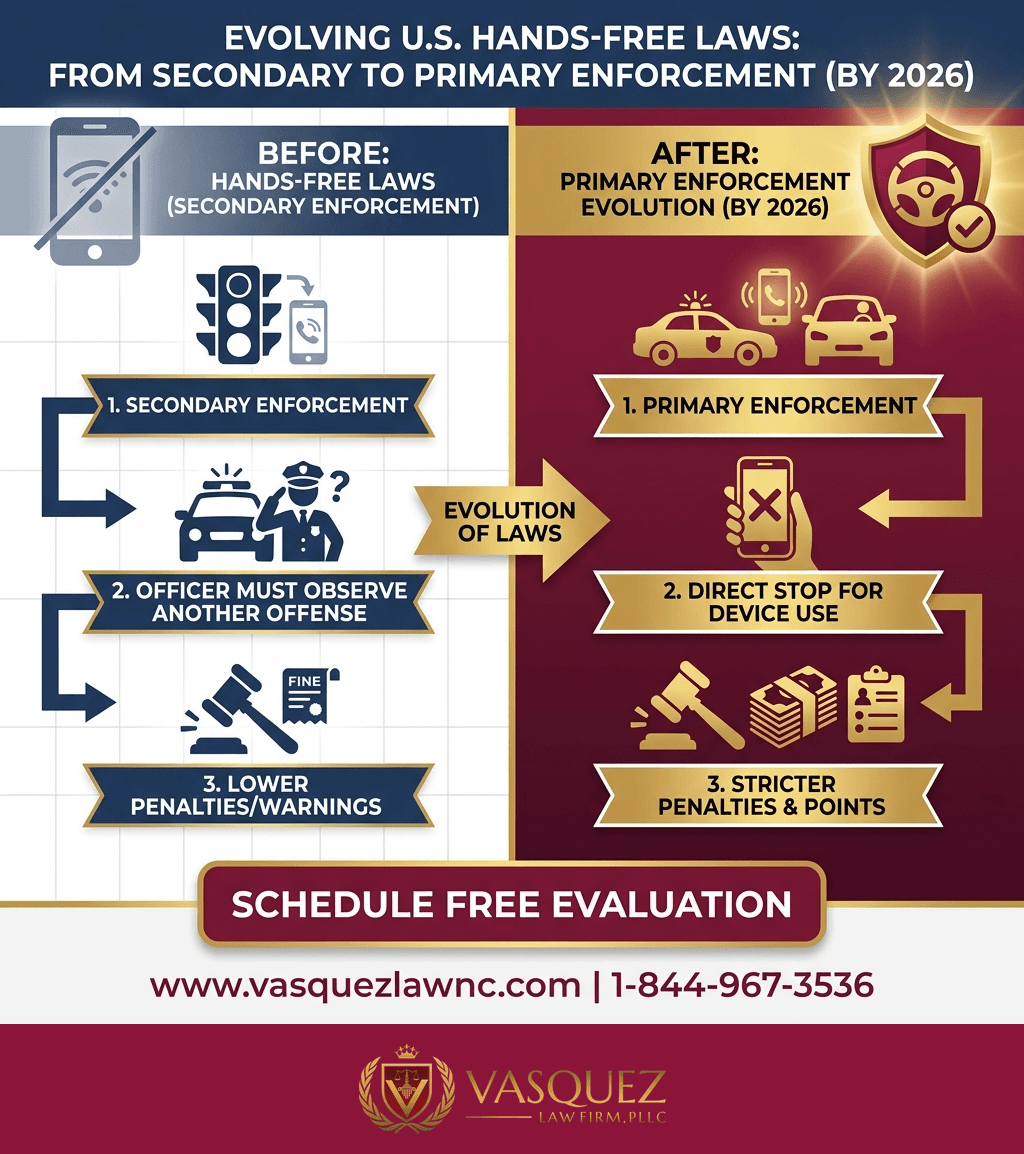
Penalties for distracted driving differ in North Carolina and Florida but commonly include fines and points on your driving record. Repeat offenders or causing injury can face harsher punishments. Check the North Carolina Department of Transportation for state-specific laws and penalties: NCDOT.
Learning about distracted driving facts helps victims in Charlotte understand their rights. According to the North Carolina Courts, injured parties can file personal injury claims to seek compensation for medical costs, lost wages, and pain and suffering.
It is important to note the "three-second rule" often used in safe driving to keep a safe following distance. This rule helps avoid rear-end crashes caused by distractions and delayed reactions.
Common Scenarios Involving Distracted Driving
- A driver sending a text message rear-ends another car stopped at a red light.
- A distracted driver eating while merging onto a highway loses control and hits a guardrail.
- A driver distracted by cellphone conversation misses a stop sign, causing a side-impact crash.
- Adjusting controls on a navigation system causes a driver to drift into another lane.
Step-by-Step: What to Do After a Distracted Driving Accident
- Stop your vehicle safely and check for injuries. Call 911 immediately if anyone is hurt.
- Move to a safe location if possible to avoid further danger on the road.
- Call the police and report the crash. Obtain the official accident report, which is critical for claims.
- Exchange contact and insurance details with the other driver(s) involved in the crash.
- Document the scene with photos of vehicle damage, skid marks, traffic signs, and road conditions.
- Collect witness names and contact information, as testimonies can support your case.
- Seek medical attention even if you feel fine. Injuries from crashes may show symptoms later.
- Notify your insurance company of the accident but avoid giving detailed statements without legal advice.
- Contact a Charlotte personal injury lawyer experienced with distracted driving cases for guidance.
Documents or Evidence Checklist
- Official police accident report
- Medical reports and treatment records
- Photographs of damages and injuries
- Witness contact information and statements
- Insurance information from all parties
- Correspondence with insurance companies
- Medical bills and pay stubs for lost wages
Timeline and What to Expect in Your Case
- Immediately after crash: Gather evidence and seek medical care.
- First few days: File insurance claims and consult a personal injury attorney.
- Within weeks: Medical treatment and documentation of injuries.
- Up to 6 months: Negotiation with insurance or filing a lawsuit if necessary.
- 1 year or more: Possible resolution through settlement or trial.
Costs and Fees: What Impacts the Price of Legal Help
- Complexity of the case and evidence collection needs
- Severity and type of injuries requiring expert medical opinions
- Insurance coverage and whether liability is disputed
- Legal fees often contingency-based, meaning no upfront costs
- Potential for settlements or need for extended litigation
Common Mistakes and How to Avoid Them
- Failing to call the police: Always get an official report to document the incident.
- Not seeking prompt medical care: Some injuries appear days later but require early documentation.
- Admitting fault at the scene: Avoid giving statements that may be used against your claim.
- Ignoring witness information: Witnesses can provide critical unbiased accounts.
- Delaying contact with an attorney: Early legal advice helps preserve evidence and claim value.
- Failing to document damages: Photos and records are essential proof in your case.
- Settling too quickly with insurance companies: Insurance may offer low settlements before full injury costs are known.
If you only remember one thing: Document everything carefully and seek legal guidance early.
North Carolina and Nationwide Notes
North Carolina Notes
NC law strictly prohibits texting while driving and enforces penalties through the DMV, including points and fines. The state allows personal injury claims for distracted driving accidents, requiring proof the driver was negligent. Vasquez Law Firm’s personal injury attorneys in Charlotte understand these state-specific rules and help survivors gather evidence.
Nationwide Concepts (General Only)
Distracted driving laws vary by state but generally focus on banning texting and handheld device use. Many states recognize the three distraction types. Federal statistics track distracted driving crashes and urge safer habits. Victims across the U.S. can seek legal help but must know local laws. Personal injury claims require establishing fault by proving the driver's distraction caused the crash.
When to Call a Lawyer Now
- Your accident caused serious injury or permanent disability
- Insurance company denies your claim or offers a low settlement
- You face disputes about who caused the crash
- Your medical bills are high and you cannot work
- You want help gathering evidence and witness statements
- You need advice on negotiating with insurers or third parties
- You are unclear about your legal rights or deadlines to file
About Vasquez Law Firm
At Vasquez Law Firm, we combine compassion with aggressive representation. Our motto "Yo Peleo" (I Fight) reflects our commitment to standing up for your rights. Our experienced personal injury attorneys fight to obtain fair compensation for victims of distracted driving crashes in Charlotte and throughout North Carolina.
- Bilingual Support: Se Habla Español - our team is fully bilingual
- Service Areas: Personal injury in North Carolina; immigration nationwide, including Florida
- Experience: Over 30 years helping clients navigate complex legal matters
- Results: Thousands of successful cases across multiple practice areas
Attorney Trust and Experience
Attorney Vasquez holds a Juris Doctor degree and is admitted to practice in both the North Carolina State Bar and Florida Bar. With over 15 years of dedicated personal injury experience, he has built a reputation for providing personalized attention and helping clients secure the compensation they deserve.
Don't wait to get the help you deserve. Call us now for immediate assistance.
Se Habla Español
Frequently Asked Questions
What exactly is distracted driving?
Distracted driving means operating a vehicle while your attention is divided. This can include texting, eating, or looking away. Even moments of distraction increase crash risk drastically, making it a leading cause of accidents.
What are the three main types of distracted driving?
The three main types are visual (eyes off road), manual (hands off wheel), and cognitive (mind off driving). Combining these increases risk, especially with texting.
Is the three-second rule the same as the distracted driving rule?
The three-second rule helps keep safe following distance. Distracted driving slows reaction time making this extra important but the rules are not the same.
Can I eat a sandwich while driving without violating distracted driving laws?
Eating is a distraction but isn’t always legally banned. However, if it impacts your control, it may be used in legal cases to show negligence.
What penalties exist for distracted driving in North Carolina and Florida?
Penalties include fines, points on licenses, and possible suspensions. Both states take these violations seriously, especially when accidents occur.
How do distracted driving laws apply at the DMV level?
The DMV can impose points or require safety courses for distracted driving violations, affecting insurance and legal standing.
What are common distracted driving examples to avoid?
Avoid texting, calling, eating, or any activity that diverts your attention from the road to minimize crash risk.
When should I contact an attorney after a distracted driving accident?
Contact a lawyer quickly if injured, facing insurance issues, or if liability is disputed. Early advice can protect your rights and improve outcomes.
Sources and References
- U.S. Citizenship and Immigration Services
- North Carolina Courts
- National Highway Traffic Safety Administration
Take the first step toward justice today. Our team is standing by to help.
Start Your Free Evaluation Now
Call us: 1-844-967-3536
Se Habla Español - Estamos aquí para ayudarle.
If you need legal assistance, learn more about learn about our personal injury practice, or call us at 1-844-967-3536 for a free evaluation.


William Vasquez
Founder & CEO, Vasquez Law Firm, PLLC
William Vasquez is the founder and CEO of Vasquez Law Firm, PLLC, a results-driven firm specializing in immigration, criminal defense, personal injury, and workers' compensation. A U.S. Air Force veteran and recipient of the Joint Service Achievement Medal, William is dedicated to fiercely fighting for his clients' rights.
Related Legal Services
Need legal help? Learn more about learn about our personal injury practice, or contact us for a free evaluation.
You can also visit statewide personal injury attorneys for more information.