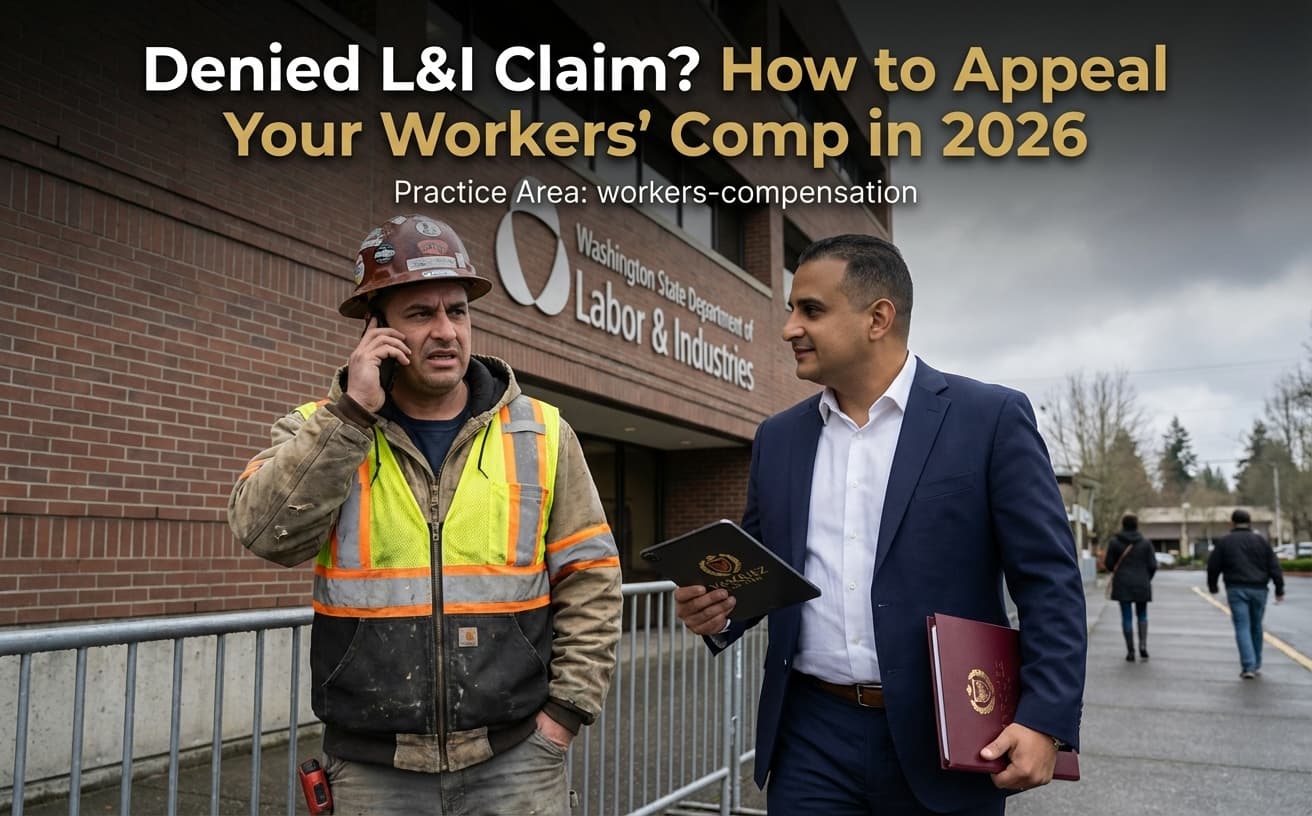
Denied L&I Claim? How to Appeal Your Workers' Comp in 2026
Was your workers' comp claim denied in NC? Learn the reasons for denial and crucial steps to appeal. Contact Vasquez Law Firm for a free consultation today.
Published on March 10, 2026
Hurt on the job?
Free review of your workers' comp claim.
Free & confidential · Se habla espanol · 24/7
Have questions? Talk to an attorney - free evaluation.
Call 1-844-967-3536Hurt on the Job? Claim What You Are Owed
A review of your workers' comp claim - we handle the fight.
Denied L&I Claim? How to Appeal Your Workers' Comp in 2026
Receiving a denial for your workers' compensation claim in North Carolina can be a devastating blow, leaving you worried about medical bills and lost wages. Many injured workers in Raleigh and across NC find themselves in this challenging situation, uncertain of their next steps. Understanding why your denied L&I claim occurred and what legal avenues are available to appeal it is crucial. This guide provides essential information for 2026, outlining the process to challenge a denial and protect your rights to workers' compensation benefits.
Need help with your case? Our experienced attorneys are ready to fight for you. Se Habla Español.
Schedule Your Free Case Evaluation
Or call us now: 1-844-967-3536
Quick Answer
If your workers' compensation claim is denied in North Carolina, you have the right to appeal the decision. The appeal process typically involves filing a Form 33 Request for Hearing with the North Carolina Industrial Commission (NCIC) within two years of the denial. Seeking legal counsel immediately can significantly improve your chances of overturning the denial and securing the benefits you deserve.
- Identify the specific reason for denial from the insurance company.
- Gather all relevant medical records and employment documentation.
- File a Form 33 Request for Hearing with the NC Industrial Commission.
- Attend mediation and a formal hearing if necessary.
- Consider legal representation from an experienced workers' compensation attorney.
Understanding Denied L&I Claims in North Carolina
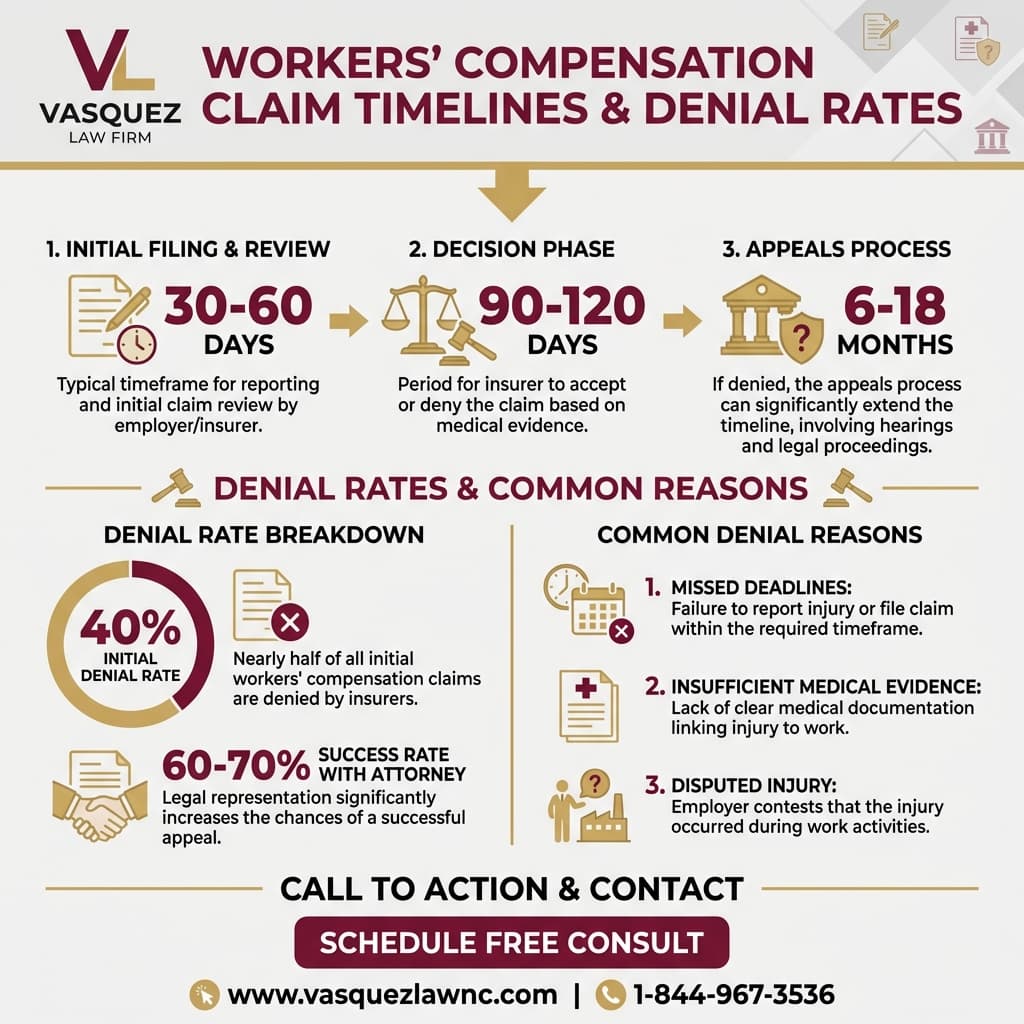
Approximately 1 in 4 workers' compensation claims are initially denied, leaving many injured workers in North Carolina feeling overwhelmed. A denied L&I claim, often referred to as a denied workers' compensation claim, means the insurance company has refused to pay for your medical treatment or lost wages. This denial can stem from various reasons, such as disputes over whether the injury occurred during employment, lack of sufficient medical evidence, or procedural errors in filing the claim.
When you receive a denial, the insurance company typically sends a formal letter explaining their decision. This letter is critical as it outlines the specific reasons for the denial, which you will need to address in your appeal. Understanding these reasons is the first step in building a strong case to overturn the denial. Without proper guidance, deciphering legal jargon and navigating the complex appeals process can be incredibly difficult for an injured worker.
Many individuals mistakenly believe that a denial is the final word, but it is often just the beginning of a legal battle. It is important to remember that the insurance company's primary goal is to minimize payouts, and they will use any available reason to deny a claim. This is where the expertise of a seasoned workers' compensation attorney becomes invaluable, as they can help identify weaknesses in the denial and strategically prepare your appeal.
Common Reasons for Denying a Workers' Compensation Claim
When an insurance company issues a denied L&I claim, it's usually based on specific criteria or perceived deficiencies in the claim. One of the most frequent reasons is a dispute over whether the injury arose out of and in the course of employment. For example, if you injure your back at home and then claim it happened at work, the insurance company will likely deny the claim, arguing it's not a work-related injury.
Another common reason is a lack of sufficient medical evidence to support the injury or its connection to your work. Insurers may argue that your medical records do not clearly demonstrate the extent of your injury, or that your condition is pre-existing. Sometimes, they might claim you failed to provide timely notice of the injury to your employer, which is a critical requirement under North Carolina workers' compensation law. The North Carolina Industrial Commission (NCIC) emphasizes the importance of timely reporting.
Furthermore, procedural errors, such as missing deadlines or incomplete forms, can also lead to a denial. For instance, if you do not file your claim within the statutory time limits, your claim could be barred. Insurance companies might also allege that you were intoxicated or under the influence of drugs at the time of the injury, which can disqualify you from receiving benefits. Understanding these specific reasons is crucial for effectively challenging a denied L&I claim.
Step-by-Step: Appealing a Denied Workers' Comp Claim
If your workers' compensation claim has been denied, taking immediate and decisive action is essential. The appeals process in North Carolina follows a structured path, designed to provide injured workers with an opportunity to challenge adverse decisions. The first critical step is to carefully review the denial letter from the insurance company. This letter will clearly state the reasons for the denial, which will form the basis of your appeal strategy.
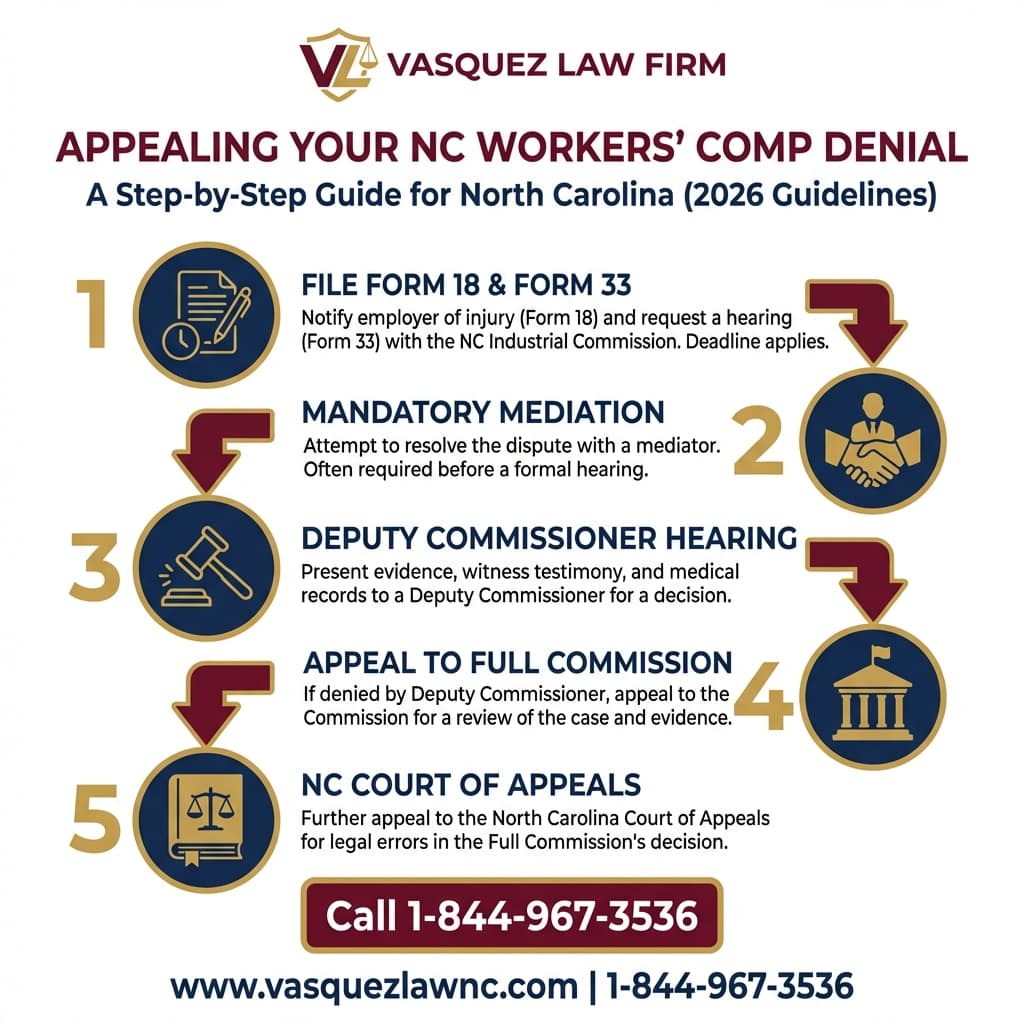
Next, you must file a Form 33 Request for Hearing with the North Carolina Industrial Commission (NCIC). This form officially initiates the appeal process. It is vital to file this form within the statutory timeframe, which is generally two years from the date of the injury or the last payment of compensation. Missing this deadline can permanently bar your claim. Once filed, the NCIC will assign your case to a Deputy Commissioner, and the discovery phase will begin, where both sides exchange information.
The process often includes a mandatory mediation session, where a neutral third party attempts to help both sides reach a settlement. If mediation is unsuccessful, your case will proceed to a formal hearing before a Deputy Commissioner. This hearing is similar to a trial, where evidence is presented, and witnesses testify. An attorney can be invaluable throughout these steps, especially when dealing with a denied L&I claim.
North Carolina Workers' Comp Appeal Process
In North Carolina, the appeal of a denied L&I claim begins with filing a Form 33. After filing, the NCIC will schedule a pre-hearing conference or a mediation session. Mediation aims to resolve the dispute amicably without the need for a formal hearing. If a resolution is not reached, the case moves to a formal hearing before a Deputy Commissioner. During this hearing, both parties present evidence, including medical records, witness testimonies, and expert opinions.
The Deputy Commissioner will then issue a decision. If either party disagrees with this decision, they can appeal to the Full Commission, which reviews the record of the initial hearing. Further appeals can be made to the North Carolina Court of Appeals and, if necessary, to the North Carolina Supreme Court. Each stage has strict deadlines and procedural rules, making legal representation highly advisable to successfully navigate the complexities of a denied L&I claim appeal.
Understanding the specific regulations is key. For example, North Carolina General Statute § 97-83 outlines the process for hearings and appeals before the Industrial Commission. Adhering to these regulations is crucial for a successful outcome. For more detailed information, consider reading our blog post on workers' compensation settlements.
Documents and Evidence Checklist for Your Appeal
To successfully appeal a denied L&I claim, thorough documentation is paramount. You need to present compelling evidence that refutes the insurance company's reasons for denial. Start by gathering all medical records related to your injury, including doctor's notes, diagnostic test results (X-rays, MRIs), treatment plans, and prescriptions. These documents help establish the nature and extent of your injury, as well as its causal link to your work duties.
- Medical Records: All reports, diagnoses, treatment notes, and bills from every healthcare provider involved in your care.
- Wage Records: Pay stubs, tax returns, and any other documentation proving your earnings before and after the injury.
- Employer Incident Report: A copy of the initial accident report filed with your employer.
- Witness Statements: Contact information and statements from coworkers or others who witnessed your injury or can attest to your work conditions.
- Denial Letter: The official letter from the insurance company detailing the reasons for your claim's denial.
- Correspondence: All written communication with your employer, the insurance company, and the NC Industrial Commission.
- Job Description: A detailed outline of your work duties and physical requirements.
Collecting this evidence can be a daunting task, especially when you are recovering from an injury. An experienced attorney can assist you in subpoenaing records, interviewing witnesses, and organizing your case file. This meticulous preparation is vital for presenting a strong argument against a denied L&I claim.
Timeline: What to Expect After a Denied L&I Claim
The timeline for appealing a denied L&I claim can vary significantly depending on the complexity of your case and the caseload of the North Carolina Industrial Commission (NCIC). Generally, after receiving a denial, you have two years from the date of injury or last compensation payment to file a Form 33 Request for Hearing. This is a strict deadline, and missing it can result in the permanent loss of your right to benefits.
- Within 30 Days of Denial: Review the denial letter thoroughly and consult with a workers' compensation attorney. This initial period is crucial for understanding your options.
- Within 2 Years of Injury/Last Payment: File Form 33 Request for Hearing with the NCIC. This formally initiates the appeals process.
- 3-6 Months Post-Filing: Discovery phase, where both parties exchange information, conduct depositions, and gather evidence.
- 6-12 Months Post-Filing: Mandatory mediation session, attempting to settle the case. Many cases resolve at this stage.
- 12-18 Months Post-Filing: Formal hearing before a Deputy Commissioner if mediation fails. This is where evidence is presented and testimony is given.
- 18-24+ Months Post-Filing: Decision by the Deputy Commissioner, followed by potential appeals to the Full Commission, Court of Appeals, or Supreme Court.
This timeline is an estimate; individual cases may proceed faster or slower. Delays can occur due to scheduling conflicts, the need for additional medical evaluations, or the volume of cases at the NCIC. Patience and persistent follow-up are key, but having an attorney manage this process can alleviate much of the stress and ensure deadlines are met.
Don't face your legal challenges alone. Our team is here to help you every step of the way.
Call today: 1-844-967-3536 | Se Habla Español
Common Mistakes and How to Avoid Them After a Denied L&I Claim
When dealing with a denied L&I claim, many injured workers inadvertently make mistakes that can jeopardize their appeal. One of the most critical errors is failing to act quickly. North Carolina workers' compensation law imposes strict deadlines for appeals, and delaying action can result in your claim being permanently barred. As soon as you receive a denial, you should consult with a lawyer to understand your appeal options.
- Missing Deadlines: Failing to file Form 33 Request for Hearing within the two-year statute of limitations. Ensure all forms are submitted promptly.
- Not Seeking Medical Attention: Delaying medical treatment or failing to follow doctor's orders. This can be used by the insurer to argue your injury is not severe or not work-related.
- Ignoring the Denial Letter: Not carefully reading and understanding the specific reasons for denial. This letter provides the roadmap for your appeal.
- Communicating Directly with the Insurer Without Counsel: Insurance adjusters are not on your side. Any statements you make can be used against you. Let your attorney handle all communications.
- Providing Inconsistent Information: Giving different accounts of your injury or symptoms to various medical providers or the insurance company. Consistency is key to credibility.
- Underestimating the Complexity: Believing you can navigate the legal system alone. Workers' comp law is complex, and an attorney's expertise is invaluable.
- Failing to Gather All Evidence: Not collecting comprehensive medical records, witness statements, or wage documentation. Strong evidence supports your case.
If you only remember one thing: Do not delay in seeking legal counsel after your claim is denied. Early intervention by an experienced attorney can make a significant difference in the outcome of your denied L&I claim appeal.
When to Call a Lawyer Immediately for Your Denied L&I Claim
If you've received a denied L&I claim letter, the urgency of contacting a legal professional cannot be overstated. The moments immediately following a denial are critical for preserving your rights and building a strong appeal. For instance, if the denial letter cites a lack of medical evidence, an attorney can help you gather the necessary documentation and potentially arrange for independent medical examinations to bolster your case.
Furthermore, if the insurance company is disputing that your injury is work-related, an attorney can investigate the circumstances of your accident, interview witnesses, and compile evidence to prove the connection. Many injured workers in Raleigh and surrounding areas find themselves confused by legal terminology and procedural requirements. A lawyer can demystify these complexities and represent your best interests before the North Carolina Industrial Commission. For more information on what to expect, check out our article on NC workers' compensation payouts.
- You receive a formal denial letter for your workers' compensation claim.
- The insurance company is delaying payments or denying authorization for necessary medical treatment.
- Your employer disputes that your injury occurred at work or blames you for the accident.
- You are unsure how to complete or file the Form 33 Request for Hearing.
- You need help gathering medical records, witness statements, or other crucial evidence.
- You are asked to attend a deposition or a hearing before the NC Industrial Commission.
- You believe the settlement offer from the insurance company is too low.
- Your injury prevents you from working, and you are losing wages.
Attorney Vasquez has over 15 years of experience handling workers' compensation cases in North Carolina. He understands the tactics insurance companies use to deny claims and is prepared to fight aggressively on your behalf. Don't let a denied L&I claim prevent you from getting the compensation you deserve.
About Vasquez Law Firm
At Vasquez Law Firm, we combine compassion with aggressive representation. Our motto "Yo Peleo" (I Fight) reflects our commitment to standing up for your rights. We understand the physical, emotional, and financial toll a work injury can take, especially when your workers' compensation claim is denied. Our dedicated team is here to provide the unwavering legal support you need.
- Bilingual Support: Se Habla Español - our team is fully bilingual, ensuring clear communication and understanding for all our clients.
- Service Areas: We primarily serve clients in North Carolina for workers' compensation and personal injury cases, with immigration services available nationwide.
- Experience: With over 15 years of experience, Attorney Vasquez has a proven track record of successfully challenging insurance companies and securing favorable outcomes.
- Results: We have helped thousands of clients navigate complex legal matters, achieving significant victories in various practice areas, including challenging a denied L&I claim.
Attorney Trust and Experience
Attorney Vasquez holds a Juris Doctor degree and is admitted to practice in both the North Carolina State Bar and Florida Bar. With over 15 years of dedicated legal experience, he has built a reputation for providing personalized attention and achieving favorable outcomes for his clients. He is committed to thoroughly investigating every denied L&I claim and fighting tirelessly to ensure his clients receive the justice and compensation they are entitled to. His aggressive approach, combined with a compassionate understanding of client needs, sets Vasquez Law Firm apart.
Frequently Asked Questions
What happens immediately after my workers' comp claim is denied?
Upon denial, the insurance company will send a letter detailing the reasons. It is crucial to review this letter carefully, as it outlines the specific grounds for denial. Your immediate next step should be to consult with an experienced workers' compensation attorney in North Carolina to discuss your appeal options and understand the deadlines involved. Do not attempt to negotiate with the insurer alone.
What are the most common reasons for a denied L&I claim in NC?
Common reasons include the employer or insurer claiming the injury is not work-related, insufficient medical evidence to support the claim, failure to provide timely notice of the injury, or allegations of drug/alcohol use. Sometimes, procedural errors like missing deadlines can also lead to a denial. An attorney can help identify and counter these arguments effectively.
How long do I have to appeal a denied workers' comp claim in North Carolina?
In North Carolina, you generally have two years from the date of your injury or the last payment of compensation to file a Form 33 Request for Hearing with the North Carolina Industrial Commission. This deadline is strict, so acting promptly after receiving a denial is essential to preserve your right to appeal your denied L&I claim.
What is a Form 33 Request for Hearing?
Form 33 is the official document used to formally request a hearing before the North Carolina Industrial Commission. It signifies your intent to appeal the insurance company's denial of your workers' compensation claim. Filing this form correctly and on time is a critical step in initiating the legal process to challenge a denied L&I claim.
Will I need to go to court for my denied L&I claim appeal?
Not necessarily. Many denied claims are resolved through mediation, where both parties attempt to reach a settlement with a neutral third party. If mediation fails, your case will proceed to a formal hearing before a Deputy Commissioner, which is similar to a court trial. Further appeals could lead to higher courts.
Can I still get medical treatment if my claim is denied?
If your claim is denied, the insurance company will likely stop authorizing or paying for your medical treatment. You may have to use your private health insurance or pay out-of-pocket while your appeal is pending. If your appeal is successful, you may be reimbursed for these expenses. Your attorney can advise on managing medical care during this period.
What evidence is important for appealing a denied workers' comp claim?
Crucial evidence includes comprehensive medical records, diagnostic test results, employer incident reports, witness statements, wage records, and all correspondence with the insurance company. A detailed job description and any surveillance footage can also be vital. The more evidence you have supporting your injury and its work-relatedness, the stronger your appeal will be.
How can a workers' compensation lawyer help with a denied L&I claim?
A lawyer can help by reviewing your denial letter, identifying the best appeal strategy, gathering crucial evidence, filing all necessary forms and documents, representing you in mediation and hearings, and negotiating with the insurance company. They protect your rights and work to maximize your compensation, significantly improving your chances of success for a denied L&I claim.
What percentage of workers' comp claims are denied?
While statistics vary by state and year, it's commonly estimated that around 10-25% of initial workers' compensation claims are denied across the United States. In North Carolina, this percentage can fluctuate, but it underscores the importance of a well-prepared claim and swift action if your claim is initially denied. Many denials are overturned with proper legal intervention.
Can I be fired for filing a workers' compensation claim in NC?
North Carolina law prohibits employers from retaliating against employees for filing a workers' compensation claim. This means you cannot be fired solely for seeking workers' compensation benefits. If you believe you have been fired in retaliation, you may have grounds for a separate wrongful termination lawsuit. Consult an attorney if you suspect retaliation.
Sources and References
- North Carolina Industrial Commission (NCIC)
- North Carolina General Statutes Chapter 97 (Workers' Compensation Act)
Hurt at work? Our workers' compensation attorneys can review your claim.
Ready to take the next step? Contact Vasquez Law Firm today for a free, confidential consultation. We're committed to fighting for your rights and achieving the best possible outcome for your case.
Start Your Free Case Evaluation Now
Call us: 1-844-967-3536
Se Habla Español - Estamos aquí para ayudarle.

William Vasquez
Founder & CEO, Vasquez Law Firm, PLLC
William Vasquez is the founder and CEO of Vasquez Law Firm, PLLC, a results-driven firm specializing in immigration, criminal defense, personal injury, and workers' compensation. A U.S. Air Force veteran and recipient of the Joint Service Achievement Medal, William is dedicated to fiercely fighting for his clients' rights.
Related Legal Services
Need legal help? Learn more about how our work injury attorneys can help, or contact us for a free evaluation.
You can also visit North Carolina workers compensation lawyers for more information.