What Happens During a Custody Battle in Raleigh in 2026
Facing a custody battle in Raleigh? Learn what to expect, common mistakes, and how to protect your rights. Contact Vasquez Law for a free evaluation in 2026.
Published on April 10, 2026

Have questions? Talk to an attorney - free evaluation.
Call 1-844-967-3536What Happens During a Custody Battle in Raleigh in 2026
Facing a custody battle in Raleigh can be challenging and emotional. Understanding the legal process, common mistakes to avoid, and steps to protect your parental rights are essential. This guide explains custody battle meaning, the role of courts in North Carolina, what to expect, and how Vasquez Law Firm can assist you in 2026.
Need help with your case? Our experienced attorneys are ready to fight for you. Se Habla Español.
Or call us now: 1-844-967-3536
Quick Answer
A custody battle involves disputes over who will have legal and physical custody of a child. In Raleigh and throughout North Carolina, courts prioritize the best interests of the child, focusing on safety, stability, and parental fitness.
- Document all parenting activities and communications.
- Attend custody battle meetings prepared with evidence.
- Avoid mistakes that can jeopardize your case.
- Consult experienced family law attorneys to guide you.
- Understand and follow North Carolina custody laws closely.
Understanding Custody Battle Meaning
Imagine parents in Raleigh who cannot agree on who should care for their child after separation. This dispute results in a custody battle, a legal process where both parties present their claims to a judge. North Carolina courts define custody as the legal and physical responsibility for a minor's care.
The term custody battle meaning includes both the conflict and the legal procedures involved in deciding custody. Courts focus on the child’s welfare, reviewing factors like each parent's home environment, emotional stability, and willingness to cooperate with the other parent.
Custody can be sole or joint. Sole custody means one parent makes decisions and has primary care, while joint custody allows both parents shared rights and responsibilities. Understanding these terms helps you grasp what’s at stake in your custody battle.
For parents in Raleigh, working with knowledgeable family law experts helps navigate this complex area. Our family law services are focused on helping you protect your rights in custody disputes.
Additional scenarios often arise in custody battles, such as disputes over relocation. For example, if one parent wishes to move out of Raleigh with the child, the court will carefully examine the reasons, impact on the child's relationship with the other parent, and the feasibility of maintaining visitation schedules. Understanding how relocation requests are handled can be critical in planning your strategy.
Another common issue involves allegations of parental alienation, where one parent accuses the other of undermining the child's relationship with them. Courts scrutinize such claims and may order counseling or supervised visitation to protect the child's emotional wellbeing. Recognizing these complexities early helps parents approach custody battles with realistic expectations and preparation.
In high-conflict cases, courts may appoint a Guardian ad Litem (GAL) to represent the child's interests. The GAL investigates the family situation and submits recommendations to the judge. Knowing the role and influence of a GAL can help parents understand additional steps in the custody determination process.
Step-by-Step: What to Do in a Custody Battle
- File the Custody Petition: Start by filing the appropriate forms with the court. North Carolina provides free custody forms needed for this process.
- Prepare Evidence: Collect documents such as communication records, photos, school reports, and financial affidavits to build your case.
- Attend the Custody Battle Meeting: This informal meeting allows parents to discuss custody and visitation. It can sometimes lead to agreements without court hearings.
- Engage in Mediation: Courts often order mediation to resolve disputes outside trial. A neutral professional helps parents reach a mutually acceptable plan.
- Attend Court Hearings: If mediation fails, your case proceeds to court. Present your evidence clearly and respectfully.
- Receive the Custody Order: The judge issues an order based on evidence and legal standards, guiding custody and visitation arrangements.
At every stage, keeping a clear record and working with an attorney is invaluable. Attorney Vasquez brings expertise and strategic advice for custody battle mtgs and court sessions in Raleigh.
During the evidence preparation phase, consider including witness statements from teachers, doctors, or childcare providers who can attest to your parenting abilities and your child's wellbeing. For example, a teacher’s letter noting the child's positive environment and progress while in your care can strengthen your case.
When attending custody battle meetings, it is important to remain calm and focused on the child’s best interests. Even if emotions run high, demonstrating maturity and willingness to cooperate with the other parent can positively influence the court's perception.
In the mediation phase, parents often explore creative custody arrangements tailored to the child's unique needs. For instance, parents might agree on alternating weeks or specific holiday schedules. Mediation not only saves time and legal costs but also promotes more amicable co-parenting relationships going forward.
Common Mistakes to Avoid During Custody Battles
- Avoid ignoring court deadlines; missing these can result in dismissal or unfavorable rulings.
- Do not post negative comments about the other parent online; judges often review social media and dislike hostile behavior.
- Never violate visitation orders, even if frustrated; such violations harm credibility.
- Don’t assume you can manage without an attorney; legal complexities require expert navigation.
- Failing to bring all required documents can weaken your position substantially.
- Poor communication with your ex-spouse can escalate conflict instead of resolving it.
- Not focusing on the child's best interests can lead to negative judgments.
If you only remember one thing: Custody battles often turn on how well you show your commitment to the child’s wellbeing through your actions and legal compliance.
Another mistake to avoid is attempting to use the child as a messenger or bargaining chip between parents. This can create confusion and emotional stress for the child, which courts view very negatively. For example, telling your child to deliver messages or disparaging the other parent in front of them can damage your case.
Additionally, failing to maintain consistent routines and stability for the child during the custody battle can be detrimental. Courts value a stable environment, so sudden changes in schooling, extracurricular activities, or living arrangements without valid reasons may be questioned.
Lastly, disregarding the child's preferences without valid reasons can hurt your position, especially if the child is older and capable of expressing reasonable opinions. Courts often consider the wishes of children aged 12 and above, so listening and respecting your child's feelings is important.
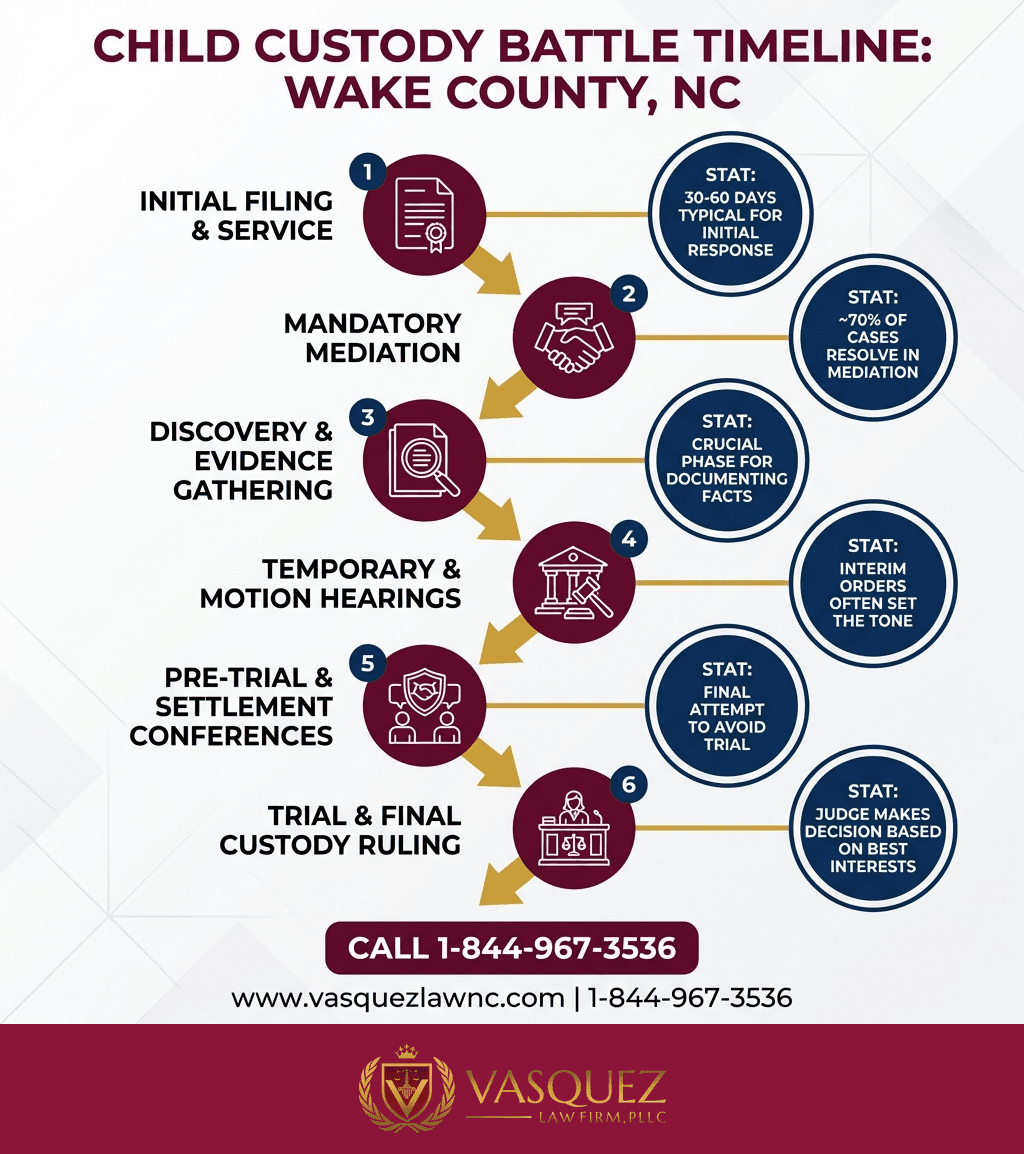
Timeline and What to Expect in Raleigh Custody Battles
Custody cases vary in length depending on complexity and cooperation. Simple agreed orders might resolve in a few months. Contentious disputes often take 6 to 12 months or more.
- Weeks 1-4: Filing and service of custody papers.
- Weeks 5-8: Custody battle meetings and mediation sessions.
- Weeks 9-20: Evidence gathering and potential court hearings.
- Weeks 21+: Final hearings and court orders.
Keep in mind each case is unique and timeline can be affected by scheduling, backlog, or emergency filings like an emergency custody order if a child's safety is at risk.
For example, if both parents agree to a temporary parenting plan during the initial stages, the case may move faster. However, if allegations of abuse arise, the court may expedite hearings or order emergency custody arrangements, extending the process with additional evaluations and testimony.
It is also common for courts to schedule periodic reviews of custody orders, especially when circumstances change, such as relocation, changes in the child's needs, or parental conditions. Being prepared for these potential follow-ups can help parents maintain or adjust custody arrangements appropriately.
Additionally, delays can occur due to the availability of expert witnesses or the court’s calendar. Parents should maintain patience and stay in close contact with their attorney to navigate these timing challenges efficiently.
Costs and Fees: What Impacts the Price of Custody Battles
- Attorney fees: Hourly rates and complexity affect costs.
- Court filing fees: Usually a few hundred dollars for custody petitions.
- Mediation costs: Variable, sometimes subsidized or required.
- Expert witnesses: May be needed for psychological evaluations or home studies.
- Document preparation: Costs for gathering and organizing evidence can add up.
Many clients choose Vasquez Law Firm because of transparent pricing and strategic guidance. Contact us for a free consultation to discuss your case specifics and potential costs.
For instance, if your case requires hiring a child psychologist to evaluate the child’s best interests, this can significantly increase expenses, sometimes costing thousands of dollars. Planning for such possibilities helps avoid unexpected financial strain.
Additionally, cases involving relocation disputes or allegations of abuse often necessitate more court appearances and expert involvement, increasing fees. Conversely, amicable mediation agreements can substantially reduce costs by avoiding lengthy trials.
Some clients qualify for legal aid or fee waivers based on income, so exploring all available financial assistance options with your attorney is recommended. Early budgeting and understanding fee structures contribute to smoother case management.
NC, FL, and Nationwide Notes
North Carolina Notes
North Carolina law requires courts to prioritize the best interests of the child under Chapter 50. Custody forms and processes are available on NC Courts official site. The court balances factors like parental fitness, the child's relationships, and home environment.
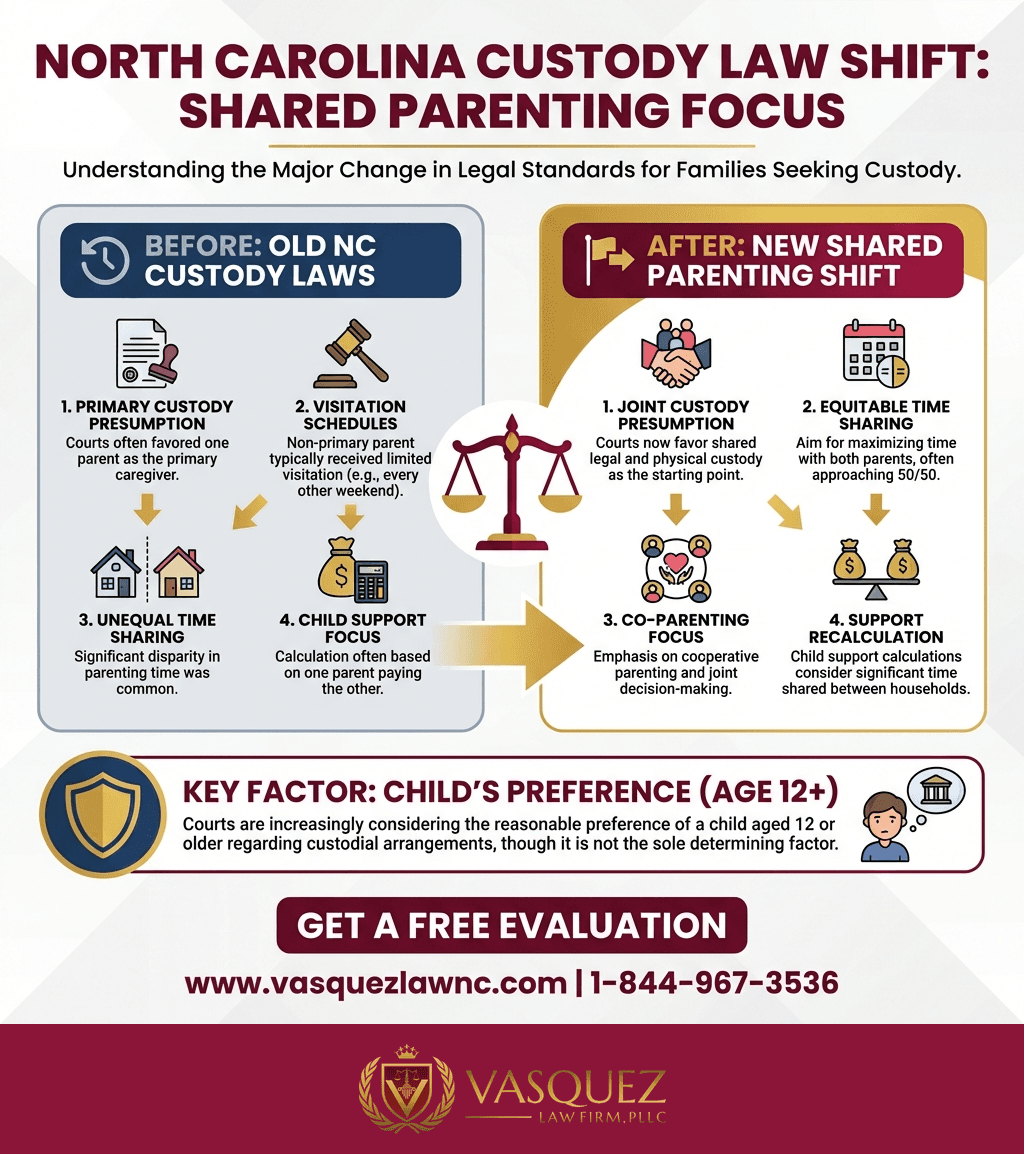
In North Carolina, the court may also consider the child's preference if the child is of sufficient age and maturity. This adds an important dimension to custody cases, as children’s voices can influence outcomes, particularly in contested situations.
Furthermore, North Carolina encourages both parents to maintain a meaningful relationship with the child. The law supports parenting plans that facilitate cooperation and shared decision-making when possible.
Florida Notes
In Florida, custody is referred to as "parental responsibility," with emphasis on shared parental rights when possible. Courts hold hearings considering the child’s welfare. Laws differ from NC meaning parents moving between states should seek specialized advice.
Florida law also distinguishes between timesharing schedules and parental responsibility, focusing on maximizing the child's contact with both parents. The state strongly encourages mediation and parenting courses to reduce conflict.
It is important for parents with ties to both North Carolina and Florida to understand the Uniform Child Custody Jurisdiction and Enforcement Act (UCCJEA), which governs jurisdiction issues and enforces custody orders across state lines.
Nationwide Concepts (General Only, Rules Vary)
Every state prioritizes child best interests but definitions, forms, and procedures vary. Courts always consider the child’s health, safety, and stability. Hiring lawyers familiar with local laws is critical especially for interstate custody matters.
For example, some states give more weight to the child's preference or allow more liberal visitation rights. Others may require mandatory parenting classes or supervised visitation under certain circumstances.
When custody disputes cross state lines, federal laws and interstate compacts come into play. Parents should work with attorneys experienced in such complexities to avoid jurisdictional conflicts or enforcement problems.
When to Call a Lawyer Now
- If you receive a custody petition or legal notice.
- When you have concerns about the other parent's behavior or safety.
- If you want to file emergency custody orders.
- Before attending custody battle meetings or hearings.
- If you need help gathering or presenting evidence.
- When unsure about filling out legal custody forms.
- If negotiations or mediation fail.
- When social media or communication issues might impact the case.
Early legal consultation can prevent costly mistakes and help you understand your rights and options. For example, if you suspect your child may be in danger, an attorney can expedite emergency custody orders to protect your child quickly.
Attorneys also assist in building a strong case by advising on evidence collection and effective communication strategies. Waiting too long to seek help may limit your ability to influence the outcome positively.
About Vasquez Law Firm
At Vasquez Law Firm, we combine compassion with aggressive representation. Our motto "Yo Peleo" (I Fight) reflects our commitment to standing up for your rights.
- Bilingual Support: Se Habla Español - our team is fully bilingual
- Service Areas: North Carolina, Florida, and nationwide immigration services
- Experience: Over 30 years helping clients navigate complex legal matters
- Results: Thousands of successful cases across multiple practice areas
Attorney Trust and Experience
Attorney Vasquez holds a Juris Doctor degree and is admitted to practice in both the North Carolina State Bar and Florida Bar. With over 15 years of dedicated legal experience, he has built a reputation for providing personalized attention and achieving favorable outcomes for his clients.
His extensive courtroom experience includes handling complex custody disputes, emergency custody orders, and interstate custody cases. Clients appreciate his strategic approach and clear communication throughout the legal process.
Attorney Vasquez also regularly conducts community seminars on family law topics, helping parents better understand their rights and the nuances of custody battles in Raleigh and beyond.
Don't wait to get the help you deserve. Call us now for immediate assistance. Se Habla Español.
Frequently Asked Questions
What is the biggest mistake in a custody battle?
The biggest mistake is underestimating preparation and legal advice. Missing deadlines or neglecting evidence hurts your case. For example, failing to provide critical documents or proof of your involvement in your child's life can weaken your position. Always consult a skilled Raleigh family law attorney to avoid these pitfalls and to ensure you present a well-organized, compelling case that focuses on your child’s best interests.
Who normally wins a custody battle?
Custody decisions depend on the child’s best interests rather than any predetermined winner. Either parent can prevail if they prove they offer a safe, stable home, demonstrate emotional and financial capability, and cooperate with the other parent. Courts also consider the child’s needs and preferences, which means victory is about showing your commitment and ability to provide the best environment for your child rather than “winning” against the other parent.
What will hurt me in a custody battle?
Evidence of neglect, abuse, substance misuse, or disobeying court orders can strongly damage your custody case. For example, if you violate visitation schedules or fail a drug test, the court may question your fitness as a parent. Negative social media posts or hostile behavior toward the other parent can also undermine your credibility. Maintaining a responsible, child-centered approach is crucial to avoiding harm to your case.
What not to do during a custody battle?
Avoid breaking visitation rules, insulting the other parent, or ignoring legal processes. For instance, withholding the child from scheduled visits or publicly disparaging the other parent can be used against you. Focus on cooperation and clear communication for your child’s sake. Demonstrating respect for court orders and the other parent reflects positively on your ability to co-parent effectively.
How can I prepare for a custody battle meeting?
Bring all relevant documents, such as school records, medical reports, and communication logs. Outline a detailed parenting plan that addresses custody and visitation schedules, showing your willingness to cooperate. Be ready to discuss your child’s needs, routines, and how you support their wellbeing. Attorney Vasquez can help you prepare by reviewing your plan and advising on how to present your case effectively and calmly during the meeting.
What documents are needed for a custody battle in NC?
Documents include the custody complaint, financial affidavits, proposed parenting plans, and any evidence supporting your parental fitness, such as school records, medical records, or character references. Additionally, communication records with the other parent and proof of involvement in the child’s life are important. Organizing these documents carefully enhances your ability to present a strong case to the court.
Can I file for child custody in NC without a lawyer?
You can use free state forms to file for custody, but custody law is complex and involves many procedural and substantive rules. Having an attorney improves your chances of success by ensuring all paperwork is correctly completed, deadlines are met, and a strategic plan is in place. An attorney also advocates for your rights and helps navigate negotiations or court hearings effectively.
What is an emergency custody order in NC?
It’s a temporary court order granted quickly to protect a child’s safety in urgent situations such as abuse, neglect, or imminent harm. This order can change custody and visitation arrangements immediately, pending a full hearing. Emergency custody orders require clear evidence of danger and are designed to ensure the child’s immediate protection while the court investigates further.
Sources and References
- North Carolina Courts Child Custody Information
- North Carolina Child Custody Forms
- North Carolina General Statutes on Custody
Take the first step toward justice today. Our team is standing by to help. Se Habla Español.
Start Your Free Evaluation Now
Call us: 1-844-967-3536
Se Habla Español - Estamos aquí para ayudarle.


William Vasquez
Founder & CEO, Vasquez Law Firm, PLLC
William Vasquez is the founder and CEO of Vasquez Law Firm, PLLC, a results-driven firm specializing in immigration, criminal defense, family law, personal injury, and workers' compensation. A U.S. Air Force veteran and recipient of the Joint Service Achievement Medal, William is dedicated to fiercely fighting for his clients' rights.