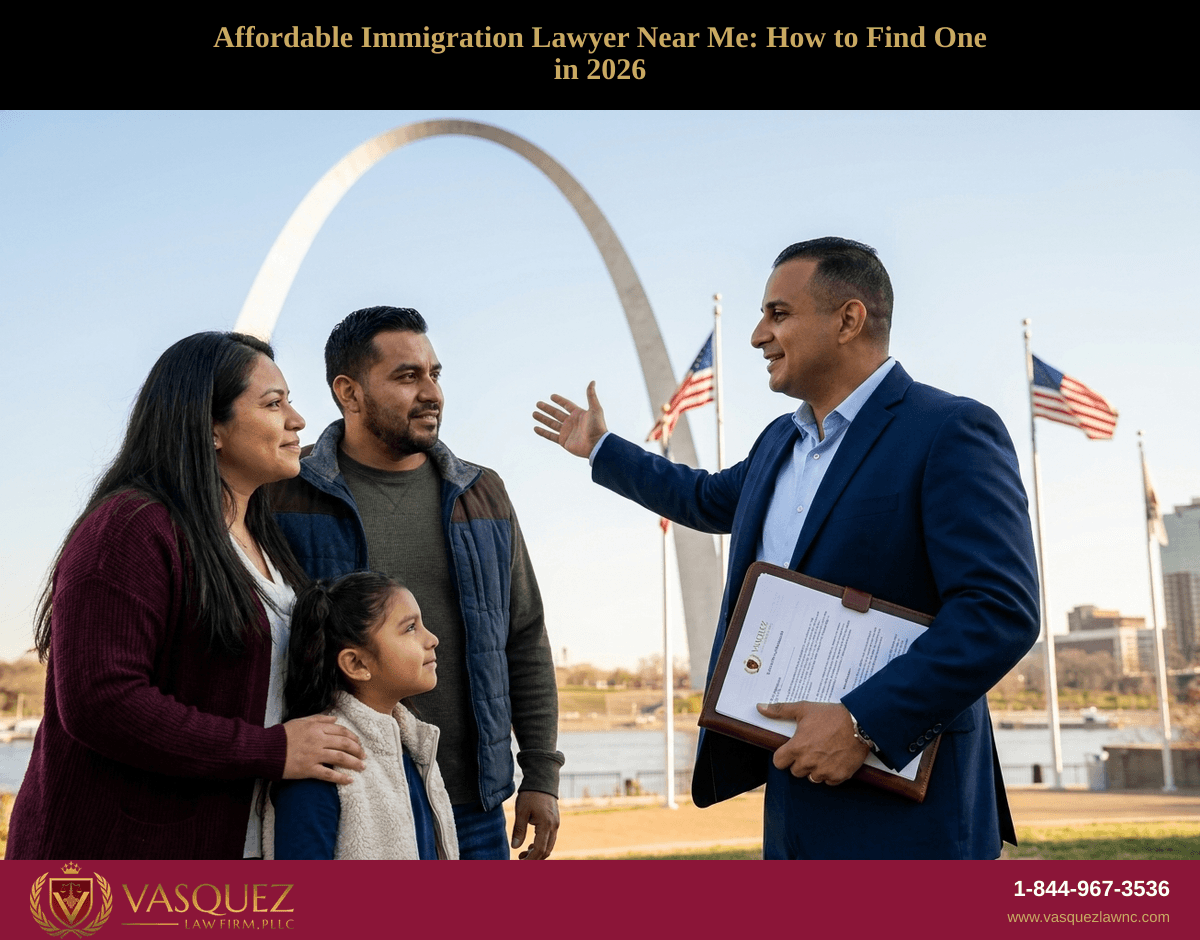
What Are Catholic Clergy Called and Their Role in 2026?
Wondering what Catholic clergy are called and their roles? Learn about Catholic priests, deacons, and bishops in 2026. Contact Vasquez Law Firm for help.
Published on May 16, 2026
Have questions? Talk to an attorney - free evaluation.
Call 1-844-967-3536Worried how the latest immigration news affects you?
Get a free, confidential case review with an immigration attorney - know exactly where you stand.
What Are Catholic Clergy Called and Their Role in 2026?
Understanding what Catholic clergy are called can clarify many questions about the Church's religious leadership. Catholic clergy, including priests, deacons, and bishops, play vital roles in spiritual guidance, sacraments administration, and church governance. Updated for 2026, this guide explores who makes up the Catholic clergy, their hierarchy, and what the recent legal agreements mean for clergy ministry within ICE facilities in Orlando, Florida, and North Carolina. Whether you are a Dreamer or an immigrant seeking insight into religious roles related to immigration issues, learn how this affects our communities today.
Need help with your case? Our experienced attorneys are ready to fight for you. Se Habla Español.
Or call us now: 1-844-967-3536
Quick Answer
Catholic clergy include priests, deacons, and bishops responsible for spiritual leadership and church governance. They serve vital roles in communities including ministry within ICE detention facilities under recent legal agreements affecting Orlando, FL and NC immigrants.
- Includes priests, deacons, bishops
- Hierarchical structure guides authority
- They administer sacraments and provide support
- Recent agreements allow ministry in detention centers
- Affect immigrant communities in FL and NC
Understanding Catholic Clergy and Their Roles
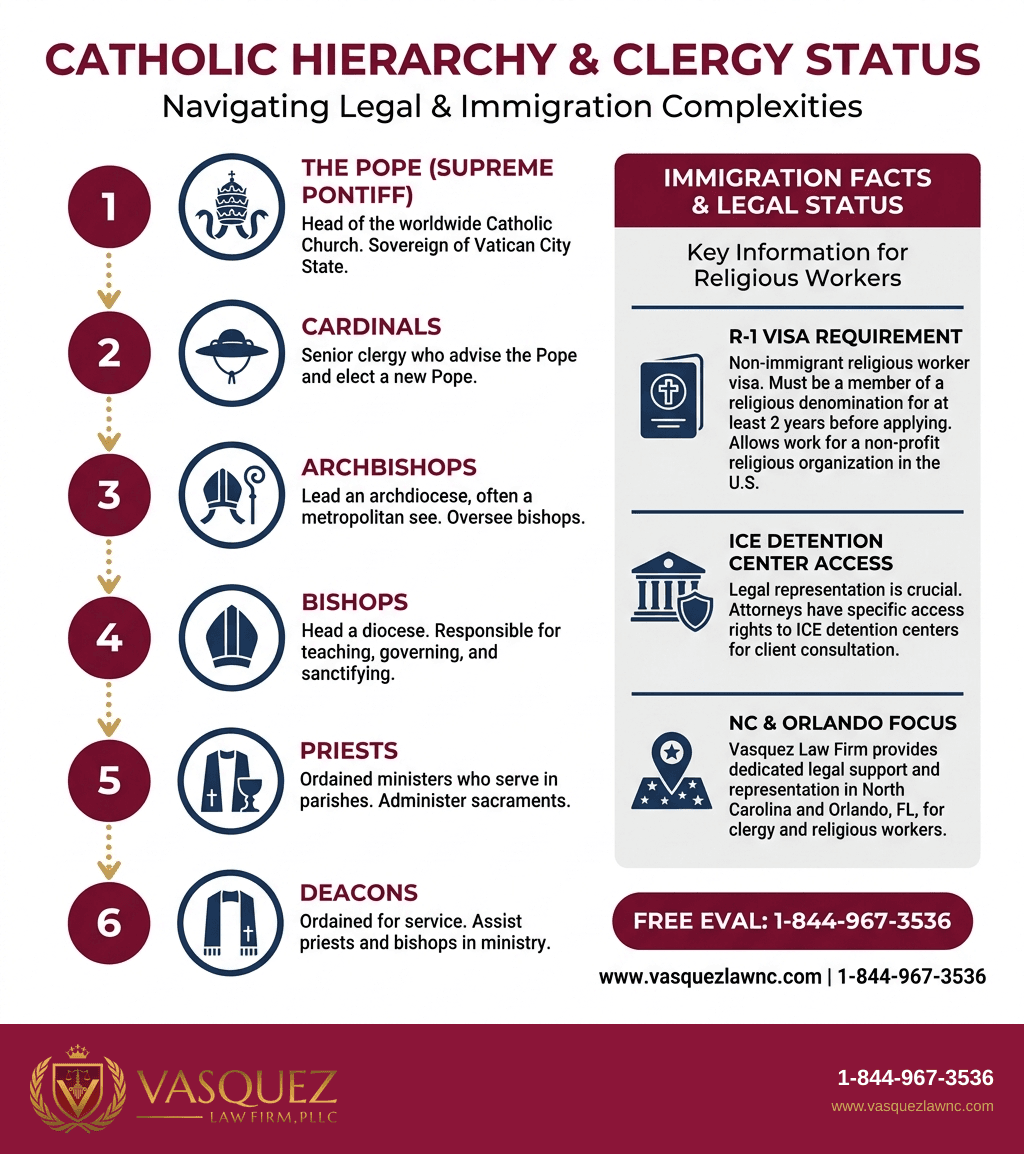
A common question is, "What are Catholic clergy called?" In Catholicism, clergy are ordained individuals who have specific roles in the religious community. The three main types are deacons, priests, and bishops. Deacons are the first level of ordained ministry; they assist in service and charitable work and can perform baptisms and weddings. Priests typically lead parishes, celebrate Mass, and administer most sacraments. Bishops oversee large territories called dioceses and have the authority to ordain new clergy. This hierarchy has been a part of the Catholic Church for centuries, reflecting the order established by canon law and tradition.
Priests and Their Role
Priests are often the most visible clergy members to the public. They perform sacraments such as the Eucharist, confession, and anointing of the sick. In Orlando, FL, and throughout North Carolina, priests serve as spiritual guides at local churches and also offer counseling and community services. Many priests come from immigrant communities and face immigration challenges themselves.
Including Deacons and Bishops
Deacons assist priests and serve community needs but cannot consecrate the Eucharist. Bishops have broader roles managing dioceses and representing the Church at high levels. Both deacons and bishops play important roles in religious and administrative duties. Bishops are part of the Church's teaching authority and make key decisions involving church law.
Hierarchy of the Catholic Church
The hierarchy begins with deacons, moves to priests, then bishops, archbishops, and culminates with the Pope as leader of the worldwide Church. This hierarchy helps guide religious decisions, ensures doctrinal consistency, and supports parishioners' spiritual needs. Understanding this structure clarifies how responsibilities are distributed among Catholic clergy.
Key Steps to Recognize Clergy Roles in Your Community
If you live in or near Orlando, FL, or Raleigh, NC, you may encounter various Catholic clergy. To recognize their roles accurately, start by observing their titles and duties in the community. Priests usually wear clerical collars and lead Mass. Deacons may wear a diagonal sash called a stole. Bishops often wear distinctive miters and carry a staff called a crosier.
Step 1: Identify the Role by Dress and Title
Recognizing clergy depends on identifying their official garments and titles. Priests often are called "Father" while bishops are called "Your Excellency" or "Bishop." Deacons may simply be referred to as "Deacon [Name]." Knowing these formalities helps in respectful communication.
Step 2: Understand Their Ministry Scope
Clergy members have different sacraments and duties they can perform. Familiarize yourself with which roles administer what. For example, only priests can say Mass and hear confessions, while deacons can preach and conduct baptisms.
Step 3: Learn About Their Immigration Status
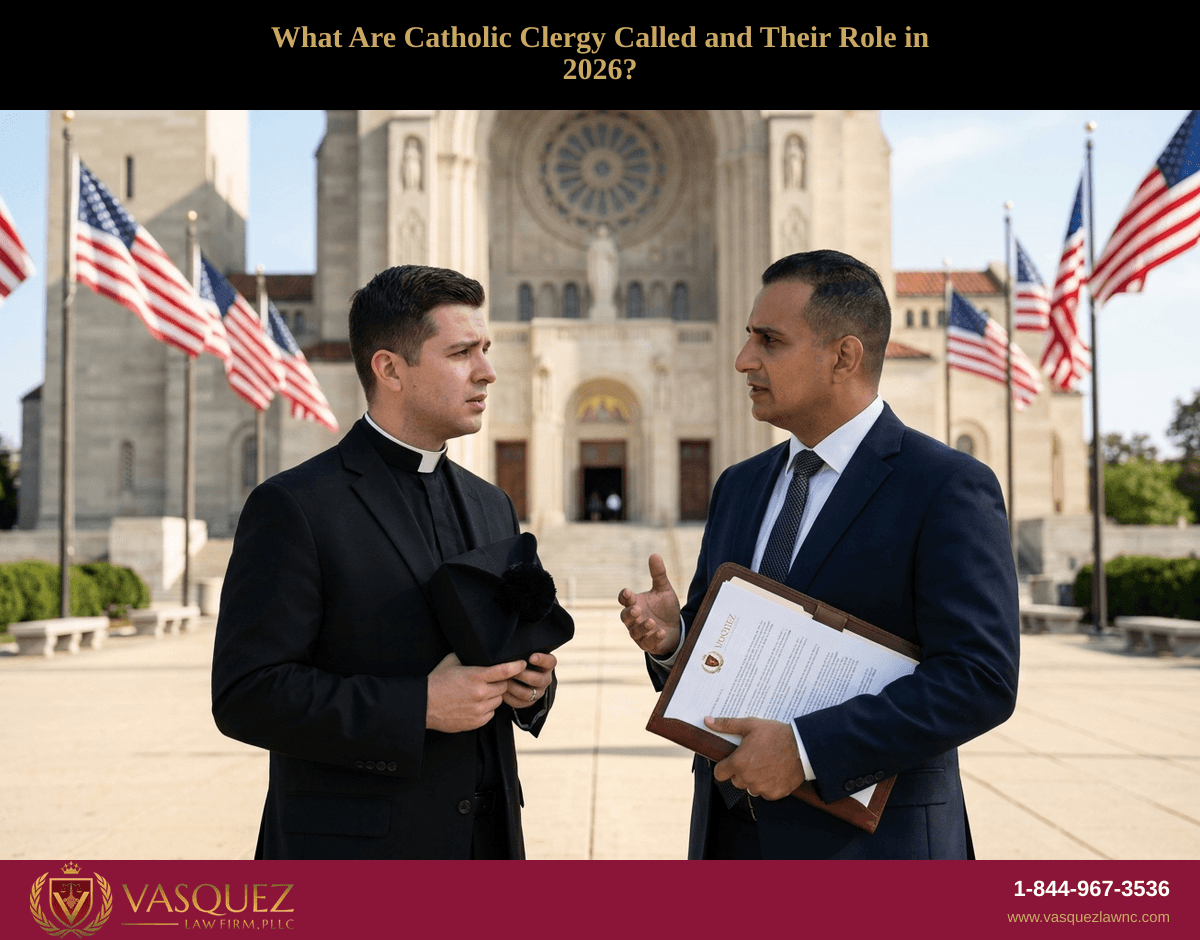
For immigrant communities, knowing a clergy member’s immigration status and rights can be important. Religious workers from abroad must have proper visas, such as the R-1 visa, to work lawfully in the U.S. Our immigration services assist clergy with visas and status adjustments relevant to their ministry.
Common Mistakes About Catholic Clergy to Avoid
- Assuming all clergy are priests; not all are ordained for all sacraments.
- Confusing deacons with priests due to similar attire without noting the stole placement.
- Not respecting personal boundaries such as physical greetings; hug only when appropriate.
- Believing clergy can perform all sacraments; only priests and bishops can perform certain rites.
- Overlooking immigration issues clergy may face; faithful support requires legal awareness.
- Assuming the Church hierarchy operates uniformly without regional variations in duties.
- Failing to understand the legal agreements that permit clergy to access ICE detention in Orlando and NC.
If you only remember one thing: Catholic clergy roles are distinct and legally significant, especially for immigrant communities requiring spiritual and legal support.
Timeline and What to Expect in Clergy Ministry
The journey of becoming clergy varies by role. Deacons typically undergo months to years of formation before ordination. Priests follow several years of seminary training. Bishops are selected from experienced priests by the Pope. Ministry access to ICE detention centers like those in Orlando and NC follows a legal approval process involving credential verification and facility clearance. This process can take several weeks to months depending on jurisdiction and cooperation.
ICE Facility Ministry Timeline
- Submit church credentials and background checks — Week 1-2
- Request approval from ICE officials — Week 2-4
- Receive clearance and receive ministry access — Week 4-8
- Commence regular visits to detainees for ministry — Week 8 onward
Religious Worker Visa Timeline
- File R-1 visa petition with USCIS — month 0
- USCIS processing time ranges 6-9 months (USCIS processing times, Form I-129)
- Once approved, apply for visa at consulate — 1-2 months
- Begin ministry work upon visa issuance
Frequently Asked Questions About Catholic Clergy
What are Catholic clergy called?
Catholic clergy include priests, deacons, and bishops whose roles vary by ordination level. Priests administer sacraments, deacons assist, and bishops oversee dioceses and ordain new members. Each title reflects a defined function within the Church hierarchy.
Is it okay to hug a priest?
Hugging a priest depends on cultural norms and personal comfort. Many priests welcome respectful hugs, especially after Mass or during pastoral counseling, but always be attentive to their response and the context to avoid discomfort.
What is the most Catholic city in the world?
Vatican City serves as the Catholic Church’s center, but large Catholic populations reside in cities like Mexico City, Manila, and São Paulo. These cities showcase vibrant Catholic communities with active clergy presence.
What is the oldest church in the world?
The Church of the Nativity in Bethlehem, dating to the 4th century, stands as one of the world's oldest churches. It commemorates Jesus’s birth and remains a pilgrimage site for Catholics globally.
Can Catholic clergy minister within ICE detention centers?
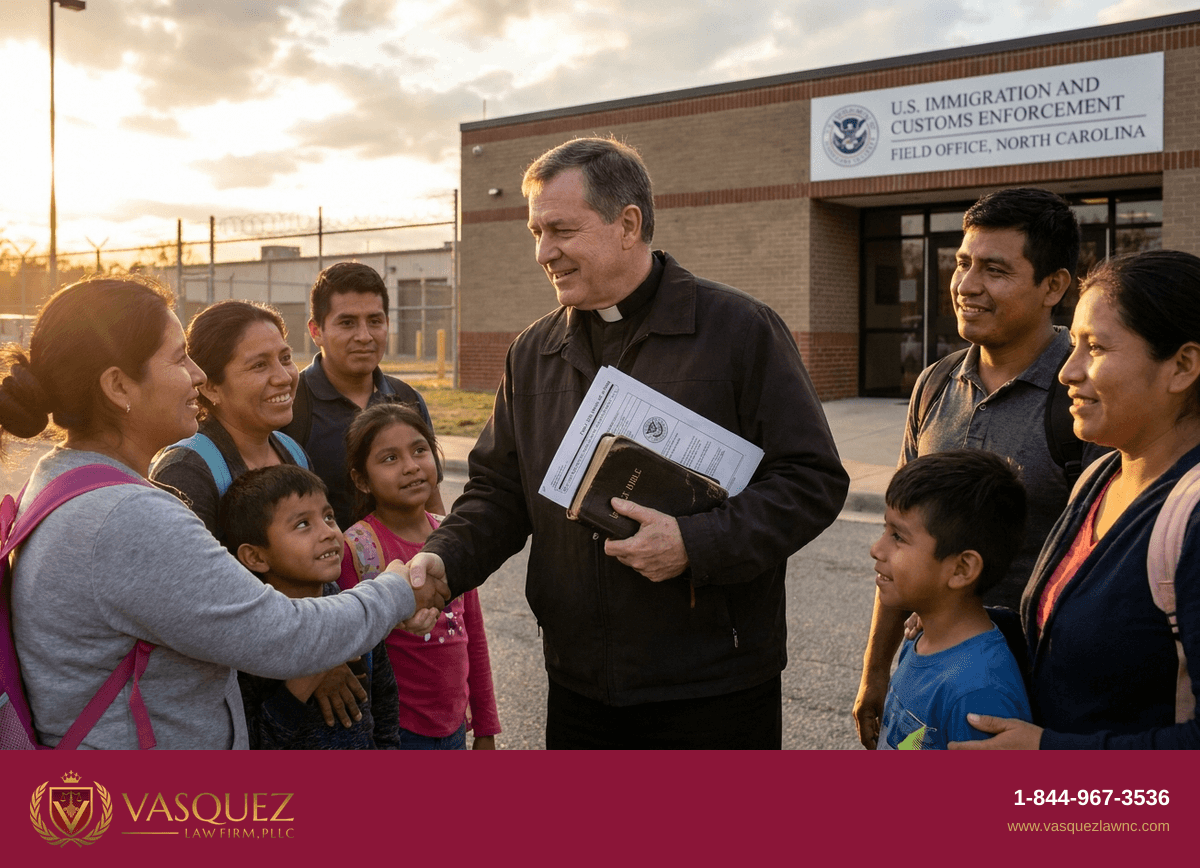
Yes, as of 2026, clergy are legally permitted to minister in ICE detention centers in Orlando and North Carolina. This enables detainees to receive spiritual support during their legal processes.
How does immigration law affect Catholic clergy?
Immigration law governs visas and work authorization for foreign-born clergy. Visas like the R-1 are specifically for religious workers. Navigating status adjustments and detention scenarios requires legal expertise in immigration matters.
What is the hierarchy of the Catholic Church?
The Church’s hierarchy moves from deacons to priests, bishops, archbishops, and the Pope. Each level carries specific authorities and responsibilities guiding church governance and spiritual care.
Are deacons considered Catholic clergy?
Deacons are ordained clergy who assist priests and bishops. They have distinct roles such as baptizing and preaching but cannot celebrate Mass. They are an important part of the clergy along with priests and bishops.
About Vasquez Law Firm
At Vasquez Law Firm, we combine compassion with aggressive representation. Our motto "Yo Peleo®" (I Fight) reflects our commitment to standing up for your rights. We specialize in immigration law across North Carolina and Orlando, Florida, including religious worker immigration and detainee rights.
- Bilingual Support: Se Habla Español — Spanish-speaking attorneys and staff available
- Service Areas: North Carolina, Orlando, FL, and nationwide immigration services
- Experience: Over 30 years helping clients navigate complex legal matters
- Results: Thousands of successful cases across multiple practice areas
Attorney Trust and Experience
William J. Vásquez, JD, is admitted to the North Carolina State Bar and Florida Bar, with 15 years of experience specializing in immigration law, including cases involving religious workers and detainees. Our team serves clients throughout North Carolina and Orlando, ensuring personalized legal guidance.
Don't wait to get the help you deserve. Call us now for immediate assistance. Se Habla Español.
Sources and References
- U.S. Citizenship and Immigration Services
- Executive Office for Immigration Review
- Legal Information Institute
Take the first step toward justice today. Our team is standing by to help. Se Habla Español.
Start Your Free Evaluation Now
Call us: 1-844-967-3536
William Vasquez
Founder & CEO, Vasquez Law Firm, PLLC
William Vasquez is the founder and CEO of Vasquez Law Firm, PLLC, a results-driven firm specializing in immigration, criminal defense, personal injury, and workers' compensation. A U.S. Air Force veteran and recipient of the Joint Service Achievement Medal, William is dedicated to fiercely fighting for his clients' rights.
Related Legal Services
Need legal help? Learn more about learn about our immigration practice, or contact us for a free evaluation.
You can also visit statewide immigration attorneys for more information.