Workers-compensation5 min read

What Are H-2A Workers and Their Rights in 2026?

Learn about H-2A workers in 2026, their visa requirements, pay, and protections. Get expert advice from Vasquez Law. Schedule your free consultation today.

Vasquez Law Firm

Published on May 9, 2026

0 views

Have questions? Talk to an attorney — free evaluation.

Call 1-844-967-3536

What Are H-2A Workers and Their Rights in 2026?

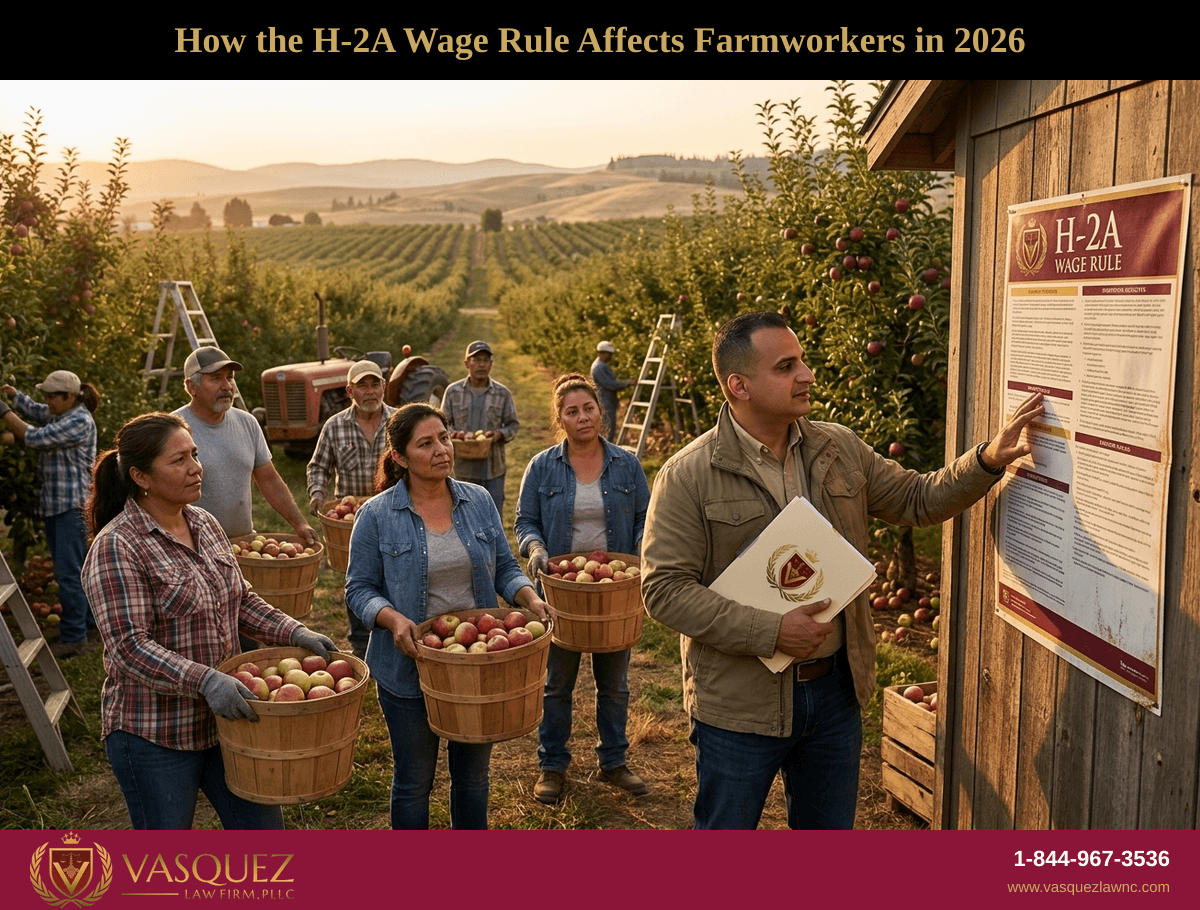
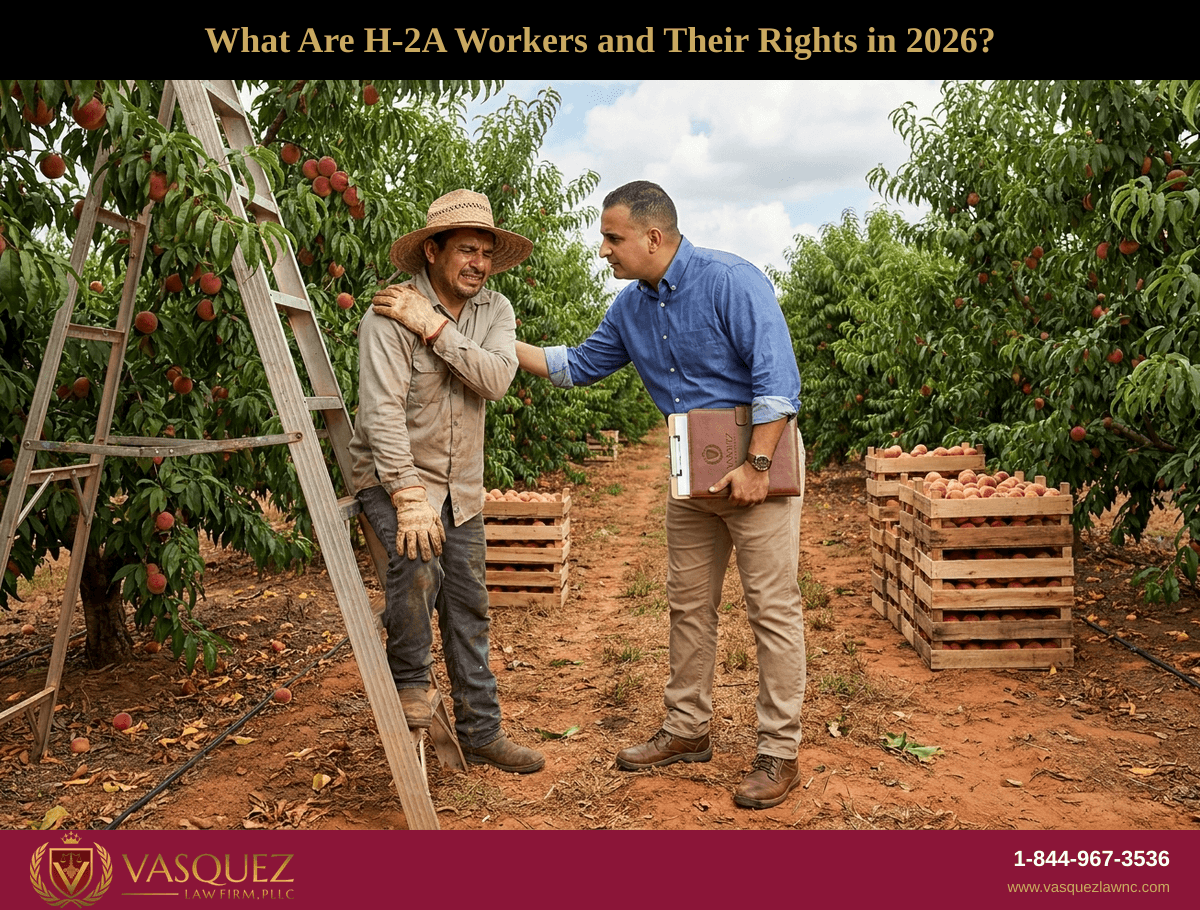
H-2A workers are temporary agricultural employees who come to the United States under a specialized visa program. In 2026, these workers face unique conditions and protections, especially in Smithfield and surrounding North Carolina and Florida areas. This article explains who H-2A workers are, their visa requirements, wages, typical job roles, and essential workers' compensation rights in 2026.

Need help with your case? Our experienced attorneys are ready to fight for you. Se Habla Español.

Need legal help?

Free 15-minute consultation. We handle immigration, traffic, family, criminal, and personal injury matters in NC and FL.

Free & confidential. No obligation.or call now 1-844-967-3536
Disclaimer: This article is for informational purposes only and does not constitute legal advice. Laws vary by jurisdiction and individual circumstances. For advice specific to your situation, please consult with a qualified attorney.

Quick Answer

H-2A workers are foreign temporary agricultural workers authorized under 8 U.S.C. § 1101(a)(15)(H)(ii)(a) to perform seasonal farming jobs in the U.S. They must be paid prevailing wages, have safe housing, and usually qualify for workers' compensation in North Carolina and Florida if injured on the job.

  • They hold visas for temporary farm work
  • Employers must meet federal recruitment and wage rules
  • Workers’ compensation applies to work injuries in NC and FL
  • Visas typically last up to one year, with possible extensions
  • OSHA sets safety standards their employers must follow

Understanding H-2A Workers

In 2026, the H-2A program remains vital for agricultural employers in Smithfield, North Carolina, and throughout Florida. This visa allows farm employers to bring foreign national temporary workers to fill labor shortages during peak planting and harvesting seasons. Under the Immigration and Nationality Act, specifically 8 U.S.C. § 1101(a)(15)(H)(ii)(a), the H-2A classification authorizes seasonal agricultural laborers from abroad.

These workers perform tasks like planting, cultivating, harvesting crops, and maintaining nurseries. By law, employers must attempt to hire U.S. workers first and follow strict recruitment and wage requirements. The program also includes provisions for housing, transportation, and safety that protect workers during their stay. This makes H-2A a program for temporary workers critical to the agricultural economy but also carefully regulated.

Our workers' compensation services in North Carolina help H-2A workers understand their rights if injured on the job. H-2A workers are entitled to compensation benefits, including medical care and partial lost wages for covered injuries while working in Smithfield or elsewhere in NC and FL.

Step-by-Step: How H-2A Works

  1. Employer Recruitment: Employers must first recruit local U.S. workers and document recruitment efforts before applying.
  2. Temporary Labor Certification: The employer files an application with the U.S. Department of Labor showing the need and compliance with program rules.
  3. USCIS Petition: Following certification, the employer submits Form I-129 to USCIS to petition for H-2A workers.
  4. Visa Issuance: Approved foreign workers apply for visas at U.S. consulates and prepare for travel.
  5. Job Start: Upon arrival, workers begin temporary agricultural duties under agreed terms.
  6. Duration and Extension: Initial stay is typically up to one year, with possible extensions up to three years total.

This process is closely monitored by government agencies to ensure both labor needs and workers' rights are protected. H-2A visa recruitment agencies often help employers navigate this complex procedure.

Documents and Employer Requirements

  • Proof of Agricultural Job Need: Employer must show temporary or seasonal labor demand.
  • Recruitment Records: Evidence of attempts to hire U.S. workers including advertisements and interviews.
  • Housing Certification: Employers must provide free, safe housing meeting OSHA standards.
  • Transportation: Employers cover worker travel expenses to and from home country.
  • Wage Agreement: Must pay at least the highest prevailing wage or minimum wage.
  • Safety Training: Required training on hazards, chemical handling, and injury reporting.
  • Workers' Compensation Insurance: Must carry insurance covering injuries occurring during employment.

Meeting these employer requirements protects both workers and companies from legal penalties and ensures fair working conditions under federal and state law.

Timeline and What to Expect

  • Recruitment Phase: 30 to 60 days before employment starts for U.S. worker outreach.
  • Labor Certification Review: Up to 60 days for Department of Labor to approve the temporary labor certification.
  • USCIS Petition Processing: Approximately 2 to 4 months for Form I-129 approval, depending on service center.
  • Visa Application: 1 to 3 weeks for consular processing of visa issuance at U.S. embassies.
  • Employment Duration: Usually 3 to 11 months, aligned with agricultural season contracts.

This timeline can vary due to workload, policy updates, or case specifics. Staying informed helps employers and workers plan accordingly.

Costs and Fees Considerations

  • Employer Fees: Filing fees for Department of Labor certification and USCIS petition can total several hundred dollars per worker.
  • Travel and Housing: Employers bear costs for worker transportation and free housing as required by H-2A program rules.
  • Legal Assistance: Employers and workers may engage attorneys for application preparation or workers' comp claims, affecting costs.
  • Workers' Compensation Premiums: Employers pay insurance premiums which vary by claims history and risk level.

Costs fluctuate depending on farm size, number of workers needed, and legal complexities. Legal guidance can minimize errors that cause delays and extra expenses.

Common Mistakes and How to Avoid Them

  • Failing to Document Recruitment: Fix: Keep detailed records of all efforts to hire U.S. workers.
  • Underpaying Workers: Fix: Verify wage rates against Department of Labor prevailing wage data.
  • Ignoring Housing Standards: Fix: Ensure lodging complies with OSHA safety and health regulations.
  • Missing Insurance Coverage: Fix: Maintain valid workers' compensation insurance covering H-2A employees.
  • Not Reporting Injuries: Fix: Train workers on prompt injury reporting and comply with OSHA reporting requirements.
  • Delays in Filing Applications: Fix: Plan recruitment and filings early to avoid processing bottlenecks.
  • Not Providing Safety Training: Fix: Conduct thorough safety and chemical hazard training sessions for workers.

If you only remember one thing: full compliance with recruitment, wage, housing, and safety rules protects workers and employers alike.

Key Statistics and Data for What Are H-2A Workers and Their Rights in 2026?

Jurisdictional Notes: NC and FL Workers' Comp

North Carolina Notes

North Carolina's workers' compensation laws cover H-2A workers who suffer injuries on the job, including during agricultural work in Smithfield. The NC Industrial Commission administers claims. Injured workers may receive medical treatment, vocational rehabilitation, and partial wage benefits if disabled. Employers must carry workers' compensation insurance for their H-2A workforce.

Florida Notes

In Florida, workers' compensation coverage is generally required for agricultural employers who meet certain employee thresholds. H-2A workers who qualify and sustain work injuries should receive medical care and wage benefits. The Florida Division of Workers' Compensation oversees these claims and enforces employer obligations.

Nationwide Concepts (General Only, Rules Vary)

The H-2A visa program is federally regulated, but workers' compensation is state-based and varies widely. Workers injured while employed under H-2A may have different coverage depending on state laws. Anyone working outside NC or FL should consult local experts for specific rights and processes.

When to Call a Lawyer

  • If your H-2A workers’ compensation claim is denied or delayed.
  • After a serious workplace injury requiring ongoing care.
  • If your employer fails to provide wage or housing benefits.
  • When facing retaliation for injury reporting.
  • If you need help navigating complex visa or immigration requirements.
  • When unsure about employer obligations or safety violations.
  • If you encounter language barriers or documentation issues.
  • For assistance with settlement or wage disputes.
  • If injured on the job in Smithfield or elsewhere in North Carolina or Florida.

About Vasquez Law Firm

At Vasquez Law Firm, we combine compassion with aggressive representation. Our motto "Yo Peleo®" (I Fight) reflects our commitment to standing up for your rights. We understand the challenges H-2A workers and their employers face, especially in Smithfield and the surrounding North Carolina and Florida regions.

  • Bilingual Support: Se Habla Español — Spanish-speaking attorneys and staff available
  • Service Areas: North Carolina, Florida, and nationwide immigration services
  • Experience: Over 30 years helping clients navigate complex legal matters
  • Results: Thousands of successful cases across multiple practice areas

Attorney Trust and Experience

William J. Vásquez, JD, is admitted to the North Carolina State Bar and has 15 years of experience representing workers. Our firm is dedicated to advocating for the rights of H-2A workers injured in the workplace. For assistance with workers' compensation claims or immigration-related questions, Attorney Vasquez and team provide trusted guidance.

Don't wait to get the help you deserve. Call us now for immediate assistance.

Call Now: 1-844-967-3536

Se Habla Español

Frequently Asked Questions

Who are H-2A workers?

H-2A workers are foreign nationals admitted temporarily to the U.S. to perform seasonal agricultural labor. They work planting, cultivating, and harvesting crops under a specific visa program regulated federally by 8 U.S.C. § 1101(a)(15)(H)(ii)(a).

How much do H-2A workers get paid?

H-2A workers must be paid at least the highest prevailing local wage or the federal/state minimum wage, whichever is greater. Employers must comply with Department of Labor wage determinations ensuring fair pay during agricultural work.

How long can H-2A workers stay?

Typically, H-2A workers’ stay is limited to the agricultural job contract length, initially up to one year with possible extensions up to three years. Workers must return home for a minimum of three months before renewing their visa.

What jobs can H-2A workers do?

H-2A workers are authorized to perform temporary agricultural labor—planting, harvesting, cultivating, and nursery work. Non-agricultural jobs are excluded from the program scope.

What are H2A employer requirements?

Employers must recruit U.S. workers first, pay required wages, provide free housing and transportation, ensure safe working conditions, and maintain workers' compensation coverage.

Am I Eligible for Workers' Comp?

3 quick questions to check your eligibility

Question 1 / 3

Where were you injured?

Process Timeline for What Are H-2A Workers and Their Rights in 2026?

Are H-2A workers eligible for workers' compensation?

Yes. In NC and FL, injured H-2A workers on the job typically qualify for workers' compensation benefits, including medical treatment and partial wage replacement, as per state law.

How to apply for H-2A workers?

Employers file for temporary labor certification with the DOL, then petition USCIS using Form I-129. Following approval, workers apply for visas at U.S. consulates to begin employment.

Can H-2A workers be paid less than local workers?

No. They must be paid the highest prevailing wage or minimum wage plus benefits, preventing wage undercutting and protecting labor standards.

Sources and References

Take the first step toward justice today. Our team is standing by to help. Se Habla Español.

This article provides general legal information and is not intended as legal advice. Every case is unique, and outcomes depend on specific facts and circumstances. Contact an attorney for advice about your particular situation.

Start Your Free Evaluation Now

Call us: 1-844-967-3536

Se Habla Español - Estamos aquí para ayudarle.

VLF

Vasquez Law Firm

Legal Team

Our experienced attorneys at Vasquez Law Firm have been serving clients in North Carolina and Florida since 2011, with 70+ years of combined attorney experience. We specialize in immigration, personal injury, criminal defense, workers compensation, and family law.

Related Legal Services

Need legal help? Learn more about speak with a workers comp lawyer, or contact us for a free evaluation.

You can also visit our North Carolina workers comp practice for more information.