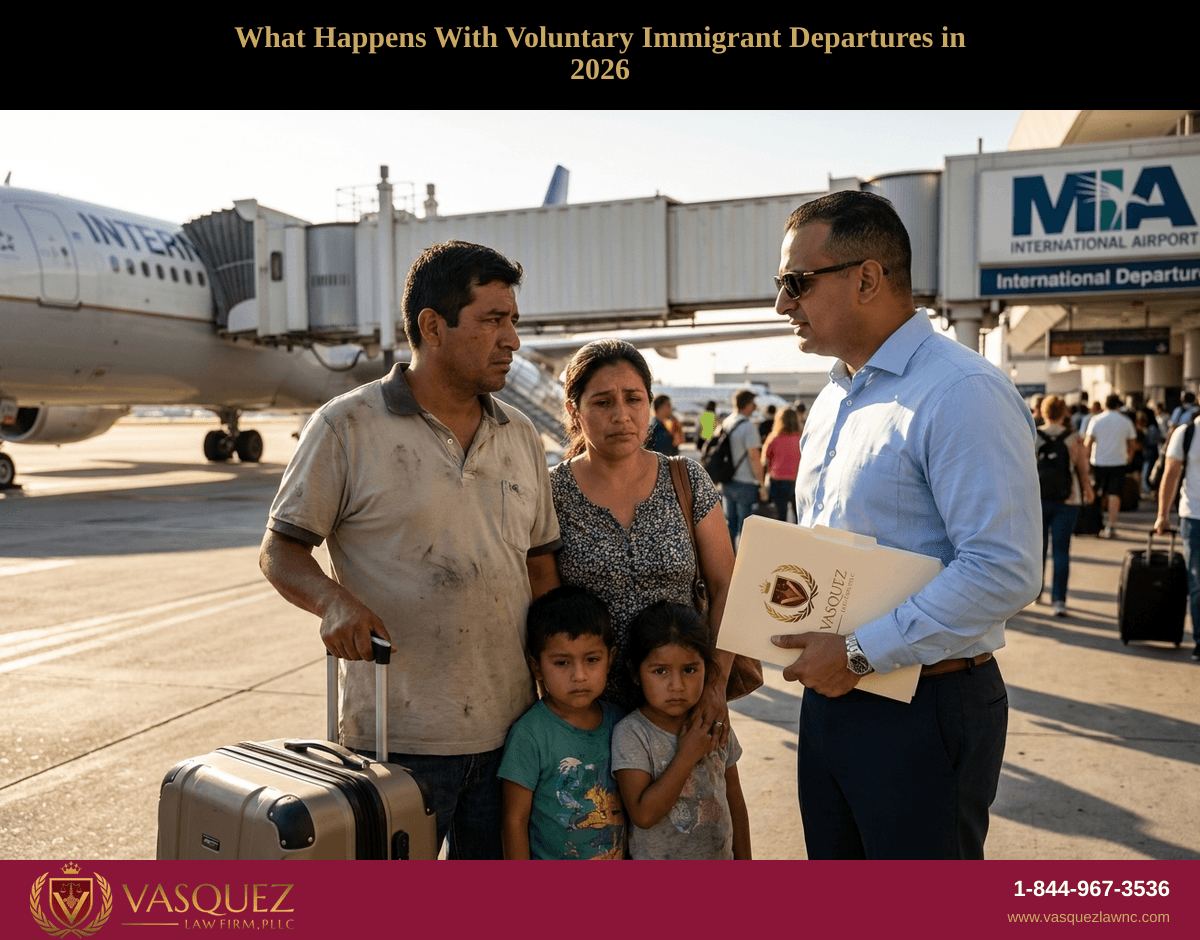
What Happens With Voluntary Immigrant Departures in 2026
Learn about voluntary immigrant departures in 2026. Find out who qualifies, risks, and how to apply. Contact Vasquez Law for a free consultation.
Published on May 12, 2026
Talk to an immigration attorney
Free call. A clear plan for your case.
Free & confidential · Se habla espanol · 24/7
Have questions? Talk to an attorney - free evaluation.
Call 1-844-967-3536Worried how the latest immigration news affects you?
Schedule a confidential case review with an immigration attorney - know exactly where you stand.
USCIS Case Status
Check your USCIS case status
Enter your receipt number and get the official status. Free, no registration.
What Happens With Voluntary Immigrant Departures in 2026
Voluntary immigrant departures allow certain individuals to leave the U.S. without formal removal orders, avoiding harsher penalties. In 2026, understanding this option is vital for immigrants facing deportation in Orlando or across Florida and North Carolina. This article explains eligibility, the process, risks, and how to apply, with detailed guidance from the Vasquez Law Firm's immigration attorneys.
Need help with your case? Our experienced attorneys are ready to fight for you. Se Habla Español.
Or call us now: 1-844-967-3536
Quick Answer
Voluntary immigrant departure lets certain immigrants leave the U.S. voluntarily instead of formal removal. It offers legal benefits like avoiding removal orders but requires meeting strict deadlines and eligibility rules. You may be able to apply if ICE or an immigration judge offers you this option, but consulting a lawyer in Orlando or Florida is essential to understand the risks and benefits.
- Offers alternative to formal deportation
- Requires approval and deadlines
- Can prevent 10-year reentry ban if timely
- Uses forms like I-210 for ICE cases
- Legal advice increases chances of success
Understanding Voluntary Immigrant Departures
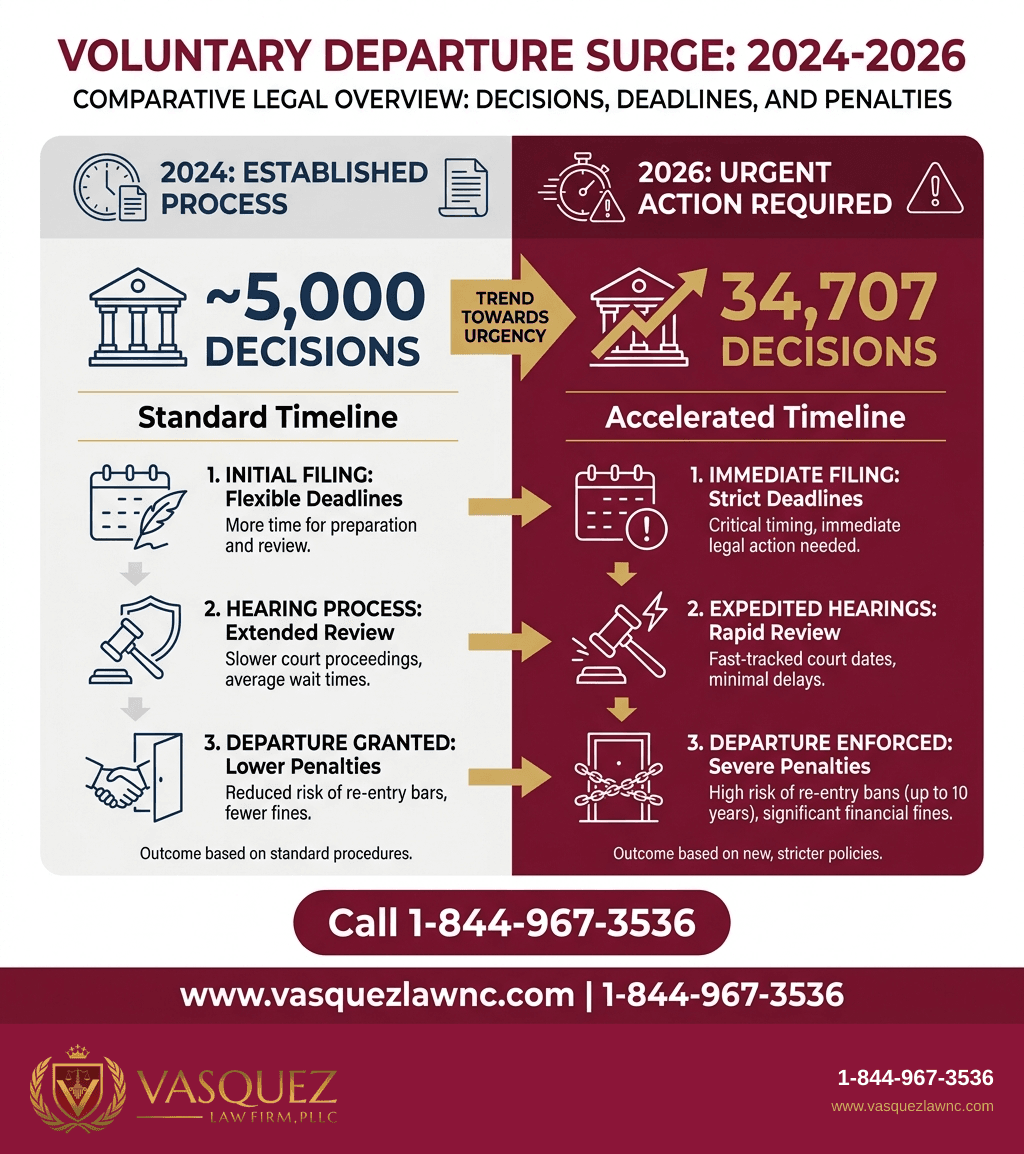
A 2025 report noted a 1,000% increase in voluntary immigrant departures nationwide, reflecting growing interest in this alternative to removal. Voluntary departure in immigration law allows certain noncitizens to leave the U.S. at their own cost and timeline within limits, avoiding formal removal orders. This helps avoid harsher consequences such as bars to future entry or mandatory detention.
Under INA § 240B (8 U.S.C. § 1229c), voluntary departure is a discretionary relief given either by ICE or immigration judges during removal proceedings. Those who accept it avoid formal deportation but must leave within a specific timeframe, often 60 or 120 days, depending on the case.
The option applies to people who entered without inspection, overstayed visas, or otherwise are removable but have no serious criminal convictions or prior removals that disqualify them. ICE often extends this option during detention or hearings if the person cooperates.
One important risk is the "voluntary departure 10-year bar." If a person fails to depart timely, they face a 10-year ban from reentering the U.S., which is a severe penalty under INA § 240B(d).
Our immigration services include helping clients in Orlando and North Carolina understand if they qualify, how to apply, and how to comply to avoid penalties.
Key Terms Related to Voluntary Departure
- I-210 Form: An ICE form used to document voluntary departure agreements.
- Self-deportation: Leaving without official permission or orders. Different from voluntary departure.
- Removal Order: Formal deportation issued by an immigration judge. Voluntary departure avoids this.
Who Decides Eligibility?
ICE officers may offer voluntary departure during detention, or immigration judges may grant or deny it during hearings. Factors include the individual’s immigration history, ties to the community, and overall case specifics.
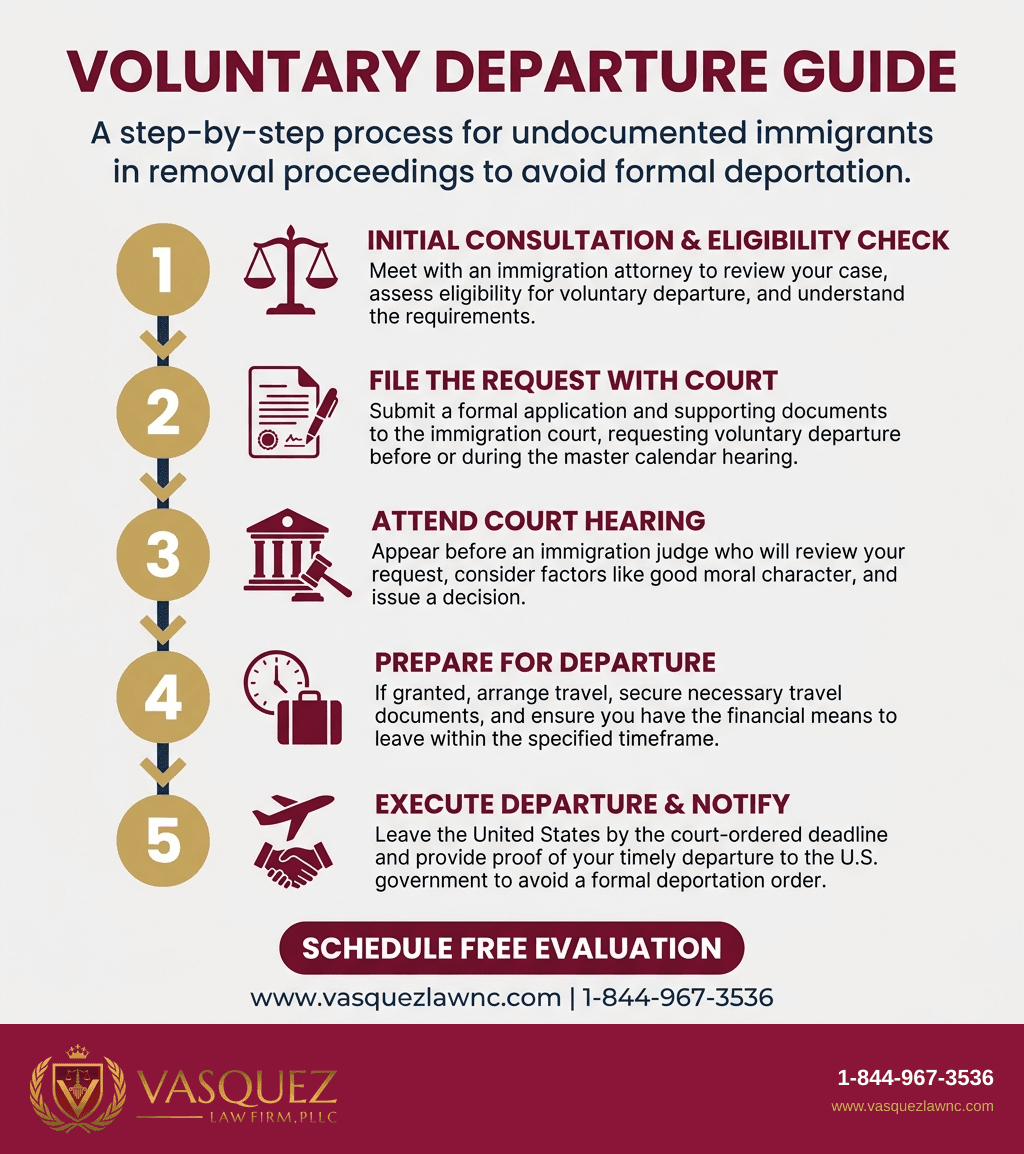
Step-by-step: How to Apply for Voluntary Departure
- Assessment of Eligibility: Consult with an immigration attorney to review your case history and identify if voluntary departure is possible.
- ICE Offer or Judge Grant: ICE may offer voluntary departure while detained using the I-210 form. Alternatively, an immigration judge may grant it during removal proceedings.
- Review and Sign Agreement: Carefully read and sign the voluntary departure agreement, understanding deadlines and conditions.
- Prepare Departure Documents: Gather necessary documents such as passports or travel papers for leaving the U.S.
- Meet the Departure Deadline: Leave the U.S. within the specified time, typically 60 or 120 days, to avoid penalties.
- Keep Proof of Departure: Obtain travel records or receipts to prove you left as required to avoid future reentry issues.
Throughout this process, working with an experienced firm like Vasquez Law Firm supports timely paperwork and compliance with immigration regulations.
Role of the I-210 Form in Voluntary Departures
The ICE voluntary departure form, also known as the I-210, formalizes the voluntary departure agreement by documenting the terms, departure deadline, and consequences of failure. Signing this form is crucial if ICE offers voluntary departure outside of court proceedings.
Voluntary Departure While Detained
If detained in Orlando or Florida, ICE may offer voluntary departure as an alternative to formal removal. It's essential to understand the risks, especially the requirement to leave timely. Legal counsel can negotiate terms and clarify implications.
Common Mistakes to Avoid When Taking Voluntary Departure
- Missing the Departure Deadline: Leaving late triggers a 10-year bar and removal orders. Set reminders and plan early.
- Not Consulting an Attorney: Without legal help, applicants risk misunderstanding terms or missing nuances that affect eligibility.
- Confusing Self-Deportation with Voluntary Departure: Self-deportation has no legal protections and may complicate future immigration applications.
- Failing to Keep Departure Proof: Without evidence, future U.S. entries or immigration benefits may be denied.
- Ignoring Criminal History Implications: Certain convictions disqualify applicants from voluntary departure.
- Assuming Voluntary Departure cancels all immigration issues: The underlying removal grounds remain unless separately addressed.
- Accepting Voluntary Departure After Prior Denials: This can limit options and trigger harsher penalties.
If you only remember one thing: Voluntary departure requires careful legal guidance and strict compliance to avoid serious consequences.
Timeline and What to Expect During Voluntary Departure
- Day 1-10: Eligibility assessment, legal consultation, and voluntary departure offer or motion.
- Day 10-30: Review and sign voluntary departure agreement; start preparing documents.
- Day 30-60 (or 120): Meet departure deadline. Many cases allow up to 60 days; some extended to 120.
- Post-departure: Keep records and monitor any notifications from USCIS or immigration courts.
The entire process requires active legal monitoring to ensure compliance. Failure at any stage can result in automatic removal orders and reentry bars.
Costs and Fees: What Impacts the Price
- Attorney fees vary depending on case complexity and location (Orlando, Florida).
- Form filing fees may apply if related immigration benefits are sought.
- Costs for travel and documents to leave the U.S. must be considered.
- Potential future applications after departure will have their own fees.
NC, FL, and Nationwide Notes
Florida Notes
In Orlando, voluntary immigrant departures are common for detainees at ICE local offices. Florida has seen a rise in voluntary departures in 2026, possibly due to increased immigration enforcement. Local counsel like Vasquez Law Firm assist with navigating ICE offers and immigration court cases.
North Carolina Notes
While voluntary departure is federal, North Carolina residents facing removal may apply through immigration courts such as in Charlotte or Raleigh. Local support groups and attorneys help understand federal processes executed nationwide.
Nationwide Concepts
Voluntary departure is federally regulated but enforcement policies vary by region. All applicants must abide by INA § 240B and 8 C.F.R. § 1240.26. Processing and offers come from ICE district offices or immigration judges wherever the case is located.
When to Call a Lawyer Now
- If you receive a removal notice or ICE detention.
- If offered voluntary departure by ICE or a judge.
- If you have missed any immigration court hearings.
- If unsure about your departure deadline or paperwork.
- If you have prior deportations or criminal convictions.
- If you want to contest removal and explore relief options.
- If you do not understand self-deportation vs voluntary departure differences.
- To prepare for immigration court hearings in NC or FL.
- If you want help returning after voluntary departure.
About Vasquez Law Firm
At Vasquez Law Firm, we combine compassion with aggressive representation. Our motto "Yo Peleo®" (I Fight) reflects our commitment to standing up for your rights.
- Bilingual Support: Se Habla Español — Spanish-speaking attorneys and staff available
- Service Areas: North Carolina, Florida, and nationwide immigration services
- Experience: Over 30 years helping clients navigate complex legal matters
- Results: Thousands of successful cases across multiple practice areas
Attorney Trust and Experience
William J. Vásquez is admitted to the North Carolina State Bar (2011) and to the U.S. Courts of Appeals for the 4th, 5th, 6th, and 11th Circuits. Florida-jurisdiction matters at the firm are handled by Florida Bar attorney Alekssandra Lopez. The firm has provided dedicated legal representation since 2011, with personalized attention to each client's case.
Don't wait to get the help you deserve. Call us now for immediate assistance.
Se Habla Español
Frequently Asked Questions
What is voluntary immigrant departure?
Voluntary immigrant departure is a legal option allowing certain individuals facing removal to leave the U.S. on their own without formal deportation orders. It helps avoid penalties but requires approval and compliance with departure deadlines.
Who is eligible for voluntary departure?
Eligibility depends on factors like immigration and criminal history, stage in removal proceedings, and previous voluntary departure attempts. ICE or immigration judges review eligibility on a case-by-case basis.
What is the 10-year bar related to voluntary departure?
If a person does not leave within the voluntary departure period, they face a 10-year ban on reentry under federal law, one of the major risks if deadlines are missed.
How do I apply for voluntary departure?
Applications start with ICE or immigration judge offers during removal proceedings. You may need to complete and sign form I-210 if ICE is involved, and legal help is crucial.
Can I take voluntary departure while detained?
Yes, ICE may offer voluntary departure to detainees, but accepting it holds risks, including strict deadlines. Always consult an attorney before agreeing.
What is the difference between self-deportation and voluntary departure?
Self-deportation is leaving without legal permission or orders. Voluntary departure is a court or ICE-approved option that offers protections but has conditions and deadlines.
Can I return to the U.S. after voluntary departure?
If you comply with voluntary departure, you may apply to return legally. Failure to leave timely triggers bars that prevent lawful return for years.
What are common mistakes in voluntary departure cases?
Common errors include missed deadlines, not hiring counsel, confusing voluntary departure with self-deportation, or lacking documentation of departure.
Sources and References
- U.S. Citizenship and Immigration Services
- Executive Office for Immigration Review
- Legal Information Institute
Take the first step toward justice today. Our team is standing by to help.
Start Your Free Evaluation Now
Call us: 1-844-967-3536
Se Habla Español - Estamos aquí para ayudarle.


William Vasquez
Founder & CEO, Vasquez Law Firm, PLLC
William Vasquez is the founder and CEO of Vasquez Law Firm, PLLC, a results-driven firm specializing in immigration, criminal defense, personal injury, and workers' compensation. A U.S. Air Force veteran and recipient of the Joint Service Achievement Medal, William is dedicated to fiercely fighting for his clients' rights.
Related Legal Services
Need legal help? Learn more about immigration case consultation, or contact us for a free evaluation.
You can also visit statewide immigration attorneys for more information.