What Happens Under an ICE Directive in 2026?
Learn what an ICE directive means for you in 2026. Discover your rights and steps to take if detained. Contact Vasquez Law for a free consultation.
Published on May 7, 2026
Talk to an immigration attorney
Free call. A clear plan for your case.
Free & confidential · Se habla espanol · 24/7

Have questions? Talk to an attorney - free evaluation.
Call 1-844-967-3536Worried how the latest immigration news affects you?
Schedule a confidential case review with an immigration attorney - know exactly where you stand.
USCIS Case Status
Check your USCIS case status
Enter your receipt number and get the official status. Free, no registration.
What Happens Under an ICE Directive in 2026?
An ICE directive impacts many immigrants and families in both North Carolina and Florida as of 2026. These directives govern how Immigration and Customs Enforcement (ICE) enforces immigration laws, including detaining parents and applying parole. Understanding how these rules work today can protect you from unexpected detention or family separation. This article explains what an ICE directive is, highlights the new ICE Parental Directive, details what to do if detained, and provides practical advice for immigrants living in Orlando and beyond. Vasquez Law Firm offers trusted immigration legal help to guide you through these updates with bilingual support.
Need help with your case? Our experienced attorneys are ready to fight for you. Se Habla Español.
Or call us now: 1-844-967-3536
Quick Answer
An ICE directive is an official policy guiding immigration enforcement priorities and processes. In 2026, new directives focus on humane treatment, family unity, and parole options. Knowing your rights and required documents can help you respond promptly if detained by ICE in Orlando or nearby areas.
- ICE directives shape detention and parole decisions.
- The ICE Parental Directive protects families from separation.
- Parole eligibility is often documented via ICE Form 71 076.
- Knowing your rights can reduce detention impact.
- Legal counsel is crucial when facing ICE action.
Understanding the ICE Directive
Imagine you or a loved one suddenly receive a notice from ICE or face detention without much explanation. This often happens because ICE follows formal directives that guide when and how agents act.
An ICE directive is a written instruction from the agency’s leadership that informs officers about priorities, procedures, and limits in enforcement. These directives can affect who ICE targets, how parole is granted, and protections for families.
For example, the widely known "ICE Parental Directive" (sometimes called the Detained Parents Directive) governs situations where parents are detained. It tries to avoid separating children from their parents unnecessarily, promoting family unity as a priority during enforcement actions.
This directive in 2026 remains critical for immigrants living in Orlando, Florida, and in North Carolina, where Vasquez Law Firm provides support. Knowing this policy helps prevent surprises and prepares families for what may happen if ICE initiates an enforcement action.
Our immigration services can help you understand directives like ICE Form 71 076, parole rules, and how these affect your case.
Background on ICE and Its Authority
ICE operates under federal law granted by Congress, mainly through the Immigration and Nationality Act. The agency’s job is to enforce immigration laws, including detention and removal of unauthorized immigrants.
Directives issued by ICE leadership explain how agents carry out their duties, balancing law enforcement with humanitarian concerns.
ICE Parole and Form 71 076
Parole is a temporary release from detention so certain immigrants can remain in the community during their immigration case. ICE uses Form 71 076 to document parole decisions and conditions.
Parole is not an immigration status but allows individuals to stay legally while their case proceeds. The ICE Parental Directive uses parole options to protect detained parents and keep families intact when possible.
Recent ICE Rebrand and Funding Changes
In 2026, ICE continues evolving its public identity and operational funding. This rebrand aims to emphasize compliance with legal standards and improve community relations. Understanding these changes lets immigrants anticipate shifts in enforcement focus and resources.
Step-by-step: What to do If You Are Detained
- Stay calm and collect information: If detained by ICE, ask politely for their name and badge number.
- Ask for legal representation: You have the right to speak with an attorney before answering questions.
- Present documentation: If you are a U.S. citizen or have valid immigration status, provide proof.
- Contact family or legal help: Give ICE the number of a trusted attorney or family member.
- Do not sign anything without review: Avoid signing papers until you consult a lawyer.
- Prepare your documents in advance: Keep immigration papers, ID, and contact info accessible.
Following these steps may reduce detention time and prepare you for possible parole or removal hearings.
Documents or Evidence Checklist
- Valid identification (passport, state ID)
- Immigration documents (visa, green card, work permit)
- Proof of family ties (birth certificates, custody paperwork)
- Evidence of ties to the community (employment letters, leases)
- Any notices or forms from ICE (including Form 71 076)
- Medical records if health is a concern
Having these documents ready is key for parole requests and legal defenses.
Timeline: What to Expect During ICE Proceedings
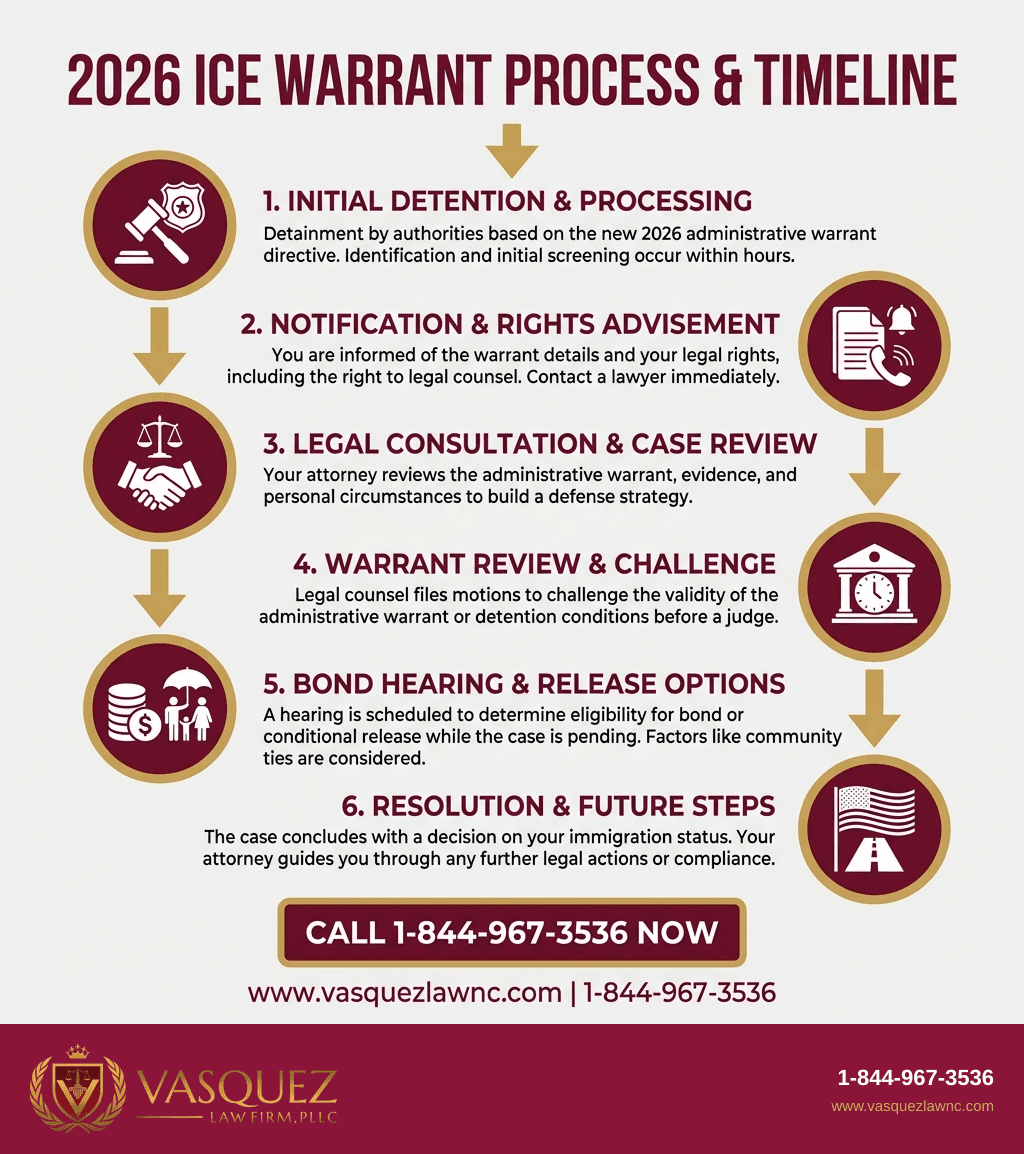
- Day 0 to 3: Initial detention or notice to appear; ICE may interview you.
- Week 1 to 2: Potential parole hearing or bond hearing.
- Weeks 3 to 6: Immigration court hearing with possible relief applications.
- Months 2 to 6: Court orders or appeals on removal or release.
- Ongoing: Possible detention or parole until case resolution.
Timelines can vary, but understanding this helps reduce anxiety and prepare accordingly.
Costs and Fees: What Impacts the Price
- Attorney fees vary based on case complexity and location.
- Filing fees may apply for immigration forms or bond hearings.
- Costs for obtaining necessary documents (translations, notarizations).
- Payment plans or pro bono options might be available.
Discuss cost estimates early with your attorney. Vasquez Law Firm offers transparent fees and flexible payment options for clients in Orlando and beyond.
Common Mistakes and How to Avoid Them
- Not knowing your rights: Always understand your legal rights under ICE directives.
- Sharing too much information: Avoid volunteering information without legal counsel.
- Missing deadlines: Timely responses to ICE notices are critical.
- Ignoring legal paperwork: Keep all immigration and enforcement documents safe and accessible.
- Assuming parole is guaranteed: Meet eligibility criteria and prepare evidence.
- Delaying legal help: Early consultation improves your case outcome.
- Failing to update address: ICE requires current contact info for notices.
- Using unreliable legal advice: Consult licensed immigration attorneys only.
If you only remember one thing: Contact an immigration lawyer as soon as you face an ICE directive or detention to protect your rights and family.
NC, FL, and Nationwide Notes
North Carolina Notes
In North Carolina, ICE enforcement follows federal directives but also faces local policies and cooperation levels that vary by county. Vasquez Law Firm offers in-person support in Raleigh and across NC to help navigate state-specific nuances.
Florida Notes
Florida, including Orlando, is a hotspot for ICE enforcement. The new ICE Parental Directive and related policies are especially relevant given the diverse immigrant population. Vasquez Law Firm's Orlando office provides bilingual legal guidance tailored to this environment.
Nationwide Concepts
ICE directives are issued nationally but how they apply can differ based on local agreements and resources. Nationwide, emphasis on parole and family unity is increasing in 2026, reflecting a shift toward more humane enforcement.
When to Call a Lawyer Now
- If ICE visits your home or workplace.
- If you receive a Notice to Appear or a detainer notice.
- If you are detained or know a loved one is detained.
- If you are unsure about ICE documents or forms you receive.
- If you need help applying for parole or bond.
- If you face criminal charges impacting immigration status.
- If family separation is a risk and you want protection plans.
- If you want to understand how recent ICE directives affect you.
About Vasquez Law Firm
At Vasquez Law Firm, we combine compassion with aggressive representation. Our motto "Yo Peleo®" (I Fight) reflects our commitment to standing up for your rights.
- Bilingual Support: Se Habla Español — Spanish-speaking attorneys and staff available
- Service Areas: North Carolina, Florida, and nationwide immigration services
- Experience: Over 30 years helping clients navigate complex legal matters
- Results: Thousands of successful cases across multiple practice areas
Attorney Trust and Experience
William J. Vásquez is admitted to the North Carolina State Bar (2011) and to the U.S. Courts of Appeals for the 4th, 5th, 6th, and 11th Circuits. Florida-jurisdiction matters at the firm are handled by Florida Bar attorney Alekssandra Lopez. The firm has provided dedicated legal representation since 2011, with personalized attention to each client's case.
Don't wait to get the help you deserve. Call us now for immediate assistance.
Se Habla Español
Frequently Asked Questions
What is an ICE directive?
An ICE directive is a policy issued by Immigration and Customs Enforcement to guide enforcement priorities and procedures. It shapes how and when ICE detains or releases immigrants, including using parole and considering family unity.
What is the ICE Parental Directive?
The ICE Parental Directive is a policy aimed at minimizing family separation by setting procedures for detaining parents with children. It prioritizes alternatives to detention and promotes parole where possible.
Can ICE take children from school during enforcement?
ICE generally does not apprehend individuals, especially children, at schools to protect their safety and education. Enforcement efforts typically focus on parents or adults outside school grounds.
What legal status does ICE have when enforcing immigration law?
ICE operates under federal statutes like the Immigration and Nationality Act with authority to detain, deport, or parole individuals in the U.S. Its actions must comply with established legal procedures and directives set by leadership.
What should I do if detained by ICE and I am a U.S. citizen?
If you are a U.S. citizen detained by ICE, remain calm, present proof such as a passport or birth certificate, and request legal representation immediately. Your rights to due process and counsel still apply.
What is ICE Form 71 076?
ICE Form 71 076 is a parole document that outlines the conditions under which an immigrant is temporarily released from detention while their case proceeds. It helps regulate parole law enforcement in line with ICE directives.
How have ICE directives changed in 2026?
In 2026, ICE directives focus more strongly on humanitarian concerns, parole options, and family unity while continuing enforcement. These changes affect enforcement and detention practices particularly in Florida and North Carolina.
Can I apply for parole under an ICE directive?
Yes, parole is available to some detainees, allowing temporary release under specific conditions. Understanding eligibility and applying correctly is critical. Legal advice from experienced immigration attorneys is highly recommended.
Sources and References
- U.S. Citizenship and Immigration Services
- Executive Office for Immigration Review
- Legal Information Institute
Take the first step toward justice today. Our team is standing by to help.
Start Your Free Evaluation Now
Call us: 1-844-967-3536
Se Habla Español - Estamos aquí para ayudarle.

William Vasquez
Founder & CEO, Vasquez Law Firm, PLLC
William Vasquez is the founder and CEO of Vasquez Law Firm, PLLC, a results-driven firm specializing in immigration, criminal defense, personal injury, and workers' compensation. A U.S. Air Force veteran and recipient of the Joint Service Achievement Medal, William is dedicated to fiercely fighting for his clients' rights.
Related Legal Services
Need legal help? Learn more about NC immigration legal team, or contact us for a free evaluation.
You can also visit statewide immigration legal services for more information.