How Trump Administration Immigration Policies Impact You in 2026
Learn how Trump administration immigration policies affect your status in 2026. Contact Vasquez Law Firm for expert help and a free consultation today.
Published on March 16, 2026
Talk to an immigration attorney
Free call. A clear plan for your case.
Free & confidential · Se habla espanol · 24/7
Have questions? Talk to an attorney - free evaluation.
Call 1-844-967-3536Worried how the latest immigration news affects you?
Schedule a confidential case review with an immigration attorney - know exactly where you stand.
USCIS Case Status
Check your USCIS case status
Enter your receipt number and get the official status. Free, no registration.
How Trump Administration Immigration Policies Impact You in 2026
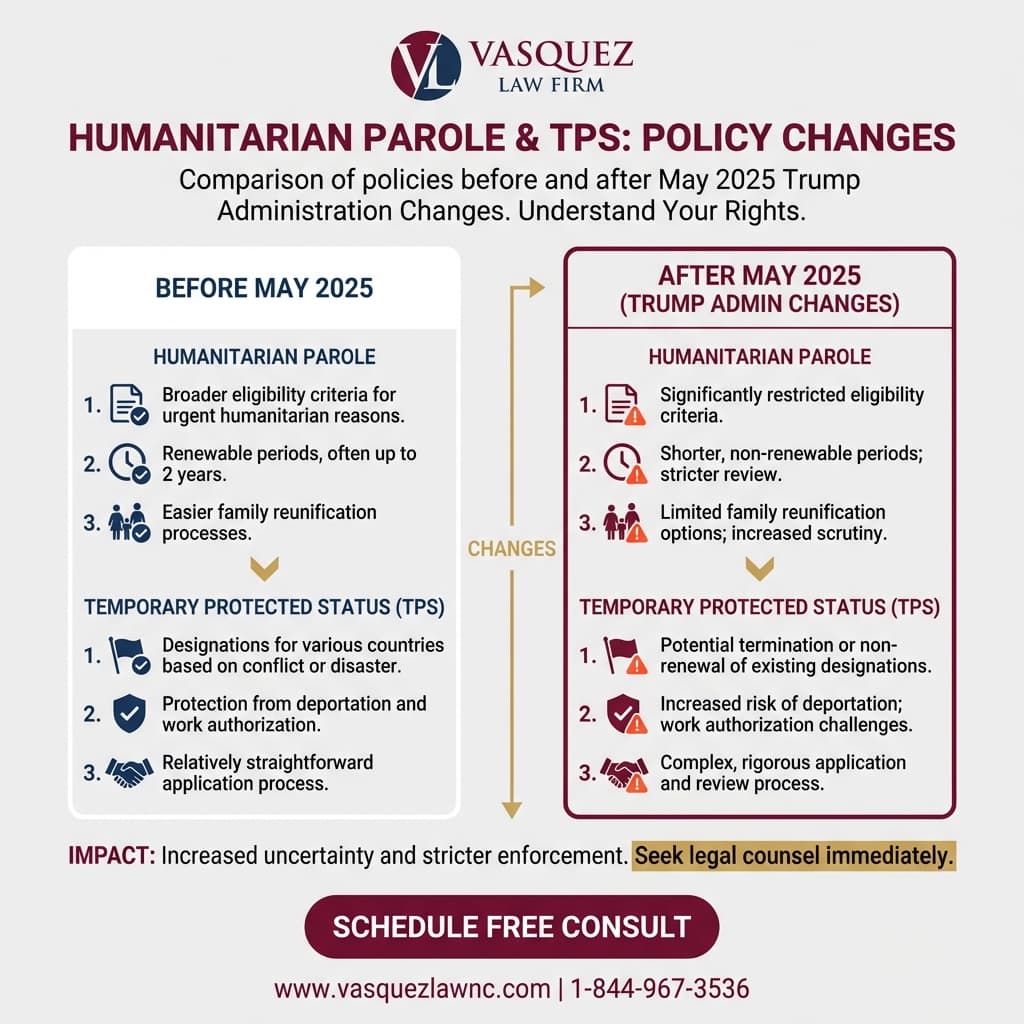
Trump administration immigration policies have shaped the U.S. immigration landscape over the past decade. Understanding how these policies affect your status is critical in 2026, especially if you are a Dreamer or immigrant residing in Charlotte or Florida. This article covers key policy areas, executive orders, updates, and what you need to know to protect your rights and navigate changes with confidence.
Need help with your case? Our experienced attorneys are ready to fight for you. Se Habla Español.
Schedule Your Free Case Evaluation
Or call us now: 1-844-967-3536
Quick Answer
Trump administration immigration policies continue to influence green card eligibility, enforcement priorities, and legal immigration pathways in 2026. Key executive orders and policy updates affect USCIS processing times, deportation decisions, and eligibility rules for immigrants, including Dreamers. Consulting an experienced immigration lawyer can help you understand your options and protect your status.
- Changes impact green card and visa processing
- Executive orders shape immigration enforcement
- Policies affect Dreamer eligibility and protections
- Legal updates create new application requirements
- Experienced lawyers improve outcomes for immigrants
Impact of Trump Immigration Policy on Green Card Applications
Since 2016, Trump administration immigration policies have introduced stricter eligibility requirements and longer processing times for green card applications. For example, many applicants face additional scrutiny through more detailed background checks and requests for extensive documentation.
This heightened focus means that immigrants in Charlotte or Florida who seek to adjust their status must prepare for more complex application processes. The "public charge" rule impacts applicants by evaluating whether they might rely on government assistance, which can affect approval.
Additionally, the Trump administration's policies emphasized eliminating perceived "fraudulent" applications, leading to more frequent Requests for Evidence (RFEs) and Notices of Intent to Deny (NOIDs). For example, applicants with gaps in employment history or unclear financial records often face intense scrutiny, sometimes requiring legal intervention to clarify their situations and avoid denials.
For immigrants in Charlotte and Florida, local USCIS offices have reported increased backlog and delays, further complicating timely approvals. This can be particularly challenging for families relying on green card status to secure stable employment and access to benefits.
Changes to Adjustment of Status Process
The administration revised USCIS guidelines under 8 U.S.C. § 1255, tightening the standards for green card applicants. This includes closer review of employment and financial histories. Applicants now often encounter extended delays and interview requirements.
For example, adjustment of status applicants who previously could rely on self-attestation of income now need to provide tax returns, pay stubs, employer letters, and sometimes affidavits from community members. These demands increase preparation time and require careful document management.
Moreover, interview waivers, once common for certain categories, have become less frequent, meaning more applicants must appear in person. This shift has logistical implications, especially for applicants balancing work and family obligations.
Effects on Dreamers
The Deferred Action for Childhood Arrivals (DACA) program faced policy challenges during the Trump years. Still, as of 2026, DACA remains active but under constant legal review. Dreamers must stay vigilant about policy changes and renew their protections timely.
While DACA recipients continue to receive work authorization and protection from deportation, the administration's attempts to rescind the program created uncertainty. Many Dreamers have sought legal help to navigate renewal deadlines and gather the required evidence to demonstrate continuous residency and eligibility.
For instance, a Dreamer in Florida who failed to renew on time due to confusion over policy changes risked losing work authorization and healthcare access, underscoring the importance of staying informed and acting promptly.
Practical Tips for Applicants
- Gather complete financial and employment records
- Consult with an immigration lawyer before filing
- Stay updated on USCIS processing updates
- Prepare for potential interviews
- Maintain copies of all submitted documents and correspondence
- Set reminders for renewal deadlines and application follow-ups
Understanding Trump Executive Orders Affecting Immigration
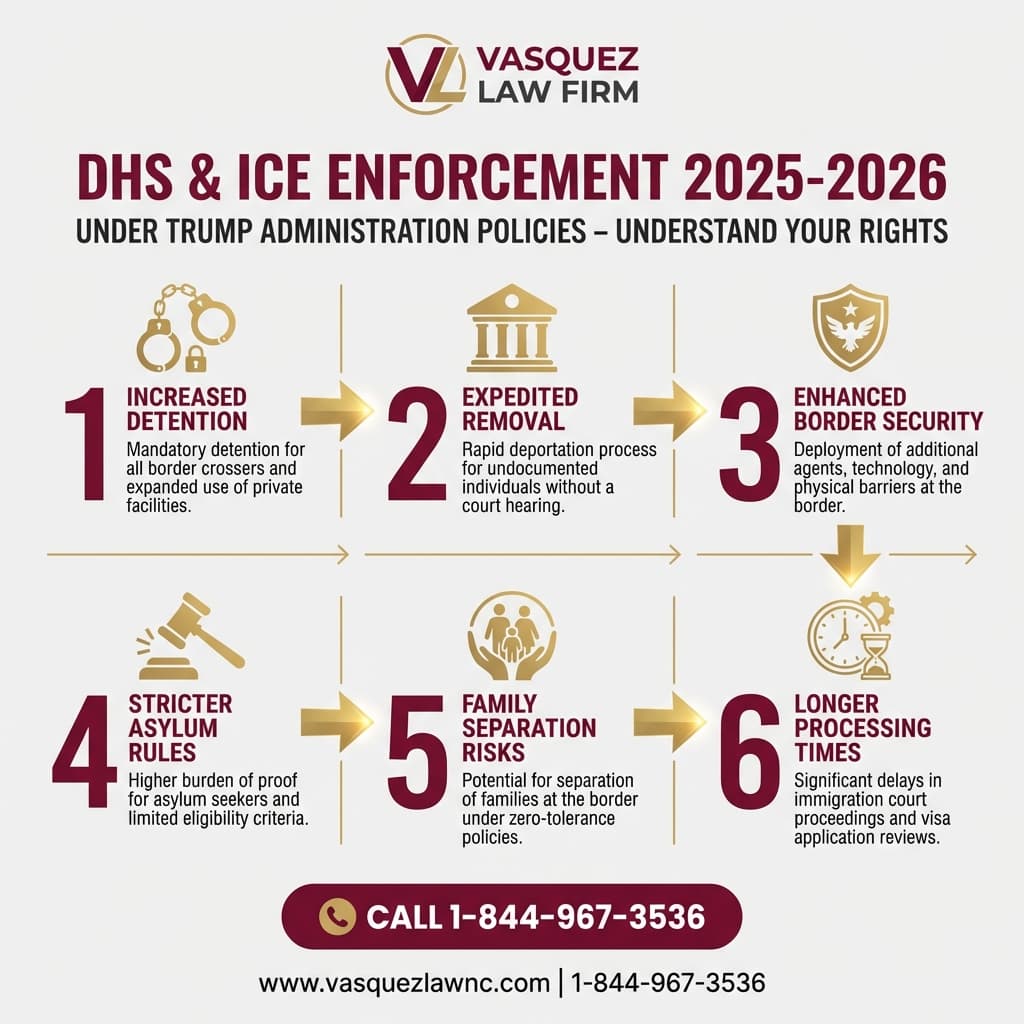
Several executive orders issued during the Trump administration have lasting effects into 2026. For example, the orders increased immigration enforcement through targeted ICE raids and expanded grounds for deportation.
Charlotte and Florida immigrant communities have felt the impact, including increased scrutiny of immigration statuses and visa restrictions.
These executive orders also affected the eligibility for asylum seekers, requiring higher burdens of proof and limiting the categories of individuals who qualify for protection. This has led to increased removals and prolonged detention for many asylum applicants.
Furthermore, the expansion of ICE enforcement priorities means that even individuals with minor infractions or outdated documentation may face deportation proceedings. This has heightened fear within immigrant communities and emphasizes the need for legal preparedness.
Key Executive Orders to Know
- Border security enhancements
- Limitations on asylum eligibility
- Increased ICE enforcement priorities
- Travel bans targeting specific countries (though partially overturned)
- Expansion of expedited removal procedures
Legal Challenges and Ongoing Effects
Many of the executive orders sparked court challenges, some resulting in changes or delays. However, the enforcement priorities set by these orders remain influential. Immigration court case backlogs have increased, causing longer wait times.
For example, the expanded grounds for detention led to more individuals held in immigration detention centers while awaiting hearings, impacting their ability to prepare effective defenses. Legal aid organizations in Charlotte and Florida have worked to provide representation, but resource constraints remain a challenge.
Additionally, some travel bans imposed under these orders were blocked or limited by federal courts, but the initial disruption caused prolonged uncertainty for visa applicants from affected countries.
How to Prepare
- Keep documentation of your immigration status up to date
- Understand your rights if confronted by immigration officers
- Consult a skilled immigration lawyer in Charlotte or Florida
- Attend all scheduled immigration court hearings promptly
- Prepare emergency contact plans in case of detention or raids
Navigating Immigration Policy Updates in 2026
Though the Trump administration ended in 2021, many policies remain active or have been modified. As of 2026, it is critical to understand ongoing USCIS and EOIR updates that stem from Trump-era policies.
Applicants should watch for changes in fee structures, eligibility rules, and processing timelines, all of which impact application success.
For example, recent policy adjustments have introduced stricter evidentiary standards for certain family-based petitions, requiring more detailed proof of bona fide relationships. This affects couples applying for marriage-based green cards, often leading to longer interview wait times and additional documentation requests.
Meanwhile, USCIS has implemented new digital filing options and online case tracking, which can improve transparency but also require applicants to maintain accurate electronic records.
Recent USCIS Processing Updates
USCIS has adjusted fees and handling times. For example, Form I-485 now often requires additional evidence due to prior policy changes.
In addition to increased fees, applicants should be prepared for longer processing delays due to staffing shortages and increased case volumes. For instance, a green card applicant in Florida might wait several months longer than before, affecting employment authorization and travel plans.
Applicants are encouraged to submit complete and well-organized applications to avoid RFEs that can cause further delays.
Changes Affecting Marriage-Based Immigration
Trump policies added stricter scrutiny of marriage applications to prevent fraud. Interview requirements and evidence thresholds have increased, affecting many immigrants in relationships.
Couples must now provide substantial proof of shared life together, such as joint bank accounts, leases, photographs, and affidavits from friends and family. Failure to provide convincing evidence can result in denials or requests for additional interviews.
For example, a couple in Charlotte where one spouse is a U.S. citizen and the other is applying for a green card may face multiple interviews if USCIS suspects the marriage is primarily for immigration benefits.
Federal Court Impacts
Federal immigration courts continue to process increased caseloads delayed by policies prioritizing faster deportations of priority cases.
Backlogs have grown, especially in busy jurisdictions like Florida, leading to long waits for hearings. This can create anxiety and uncertainty for immigrants facing removal proceedings.
Legal representation has become more critical as judges increasingly require detailed evidence and legal arguments to decide cases under evolving policies. Pro bono legal services and community organizations play a key role in supporting affected individuals.
Common Mistakes in Responding to Trump Immigration Policies
Many immigrants face challenges navigating complex rules shaped by Trump administration policies. Common mistakes include submitting incomplete applications, missing deadlines for renewals like DACA, and underestimating the importance of legal counsel.
- Missing evidence: Failing to include updated financial documents can cause delays or denials.
- Ignoring policy changes: Not checking for new eligibility requirements leads to rejected filings.
- Delaying legal help: Trying to handle complex situations alone often results in mistakes.
- Failure to respond to USCIS: Not answering Requests for Evidence (RFEs) harms chances of approval.
- Overlooking interview preparation: Lack of readiness for interviews can cause denials.
- Not maintaining continuous status: Allowing work permits or DACA status to lapse can lead to loss of protections.
- Underestimating travel risks: Traveling abroad without proper advance parole or authorization can result in inadmissibility upon return.
If you only remember one thing: always work with an experienced immigration lawyer to avoid costly errors.
When to Contact an Immigration Lawyer in Charlotte or Florida
Recognizing when to seek legal help can protect your immigration status and offer peace of mind.
- Your green card application has been delayed beyond normal processing times
- You receive an RFE or Notice of Intent to Deny from USCIS
- You face a removal or deportation proceeding
- Your DACA status or work permit is expiring soon
- You are unsure how recent policy changes affect your case
- You experience increased ICE enforcement activity in your area
- You are applying for marriage-based immigration benefits and need guidance
- You want to understand your eligibility under current laws
- You need assistance preparing for immigration interviews or hearings
- You have questions about traveling abroad during pending immigration applications
About Vasquez Law Firm and Our Immigration Services
At Vasquez Law Firm, we combine compassion with aggressive representation. Our motto "Yo Peleo" (I Fight) reflects our commitment to standing up for your rights.
- Bilingual Support: Se Habla Español - our team is fully bilingual and culturally sensitive
- Service Areas: We serve clients across North Carolina and Florida, with nationwide immigration coverage
- Experience: Over 15 years helping clients navigate complex immigration laws and policies
- Results: Thousands of successful immigration cases, including status adjustments, green cards, and DACA renewals
- Community Involvement: We actively participate in local immigrant advocacy groups and provide educational workshops
Attorney Trust and Experience
Attorney Vasquez holds a Juris Doctor degree and is admitted to practice in both the North Carolina State Bar and Florida Bar. With over 15 years of dedicated legal experience, he offers personalized attention and strives for the best outcomes for each client.
His expertise includes successfully challenging denials, negotiating with USCIS on complex cases, and defending clients in immigration court. The firm's commitment to transparency and client education helps individuals understand their rights and options throughout the immigration process.
Don't wait to get the help you deserve. Call us now for immediate assistance. Se Habla Español.
Frequently Asked Questions
What were the immigration policies of the first Trump administration?
The Trump administration initially focused on stricter enforcement, increased deportations of undocumented immigrants, limiting asylum eligibility, and tightening legal immigration rules, including changes to green card criteria and expanded grounds for inadmissibility. These policies aimed to reduce overall immigration levels and prioritize national security, resulting in increased ICE operations and more rigorous vetting of applicants. Many of these policies continue to influence immigration enforcement and adjudications in 2026.
What is the 7 year rule for immigrants?
The 7 year rule often refers to a federal regulation requiring immigration applicants to wait seven years outside the United States before applying for certain benefits if they previously accrued unlawful presence. This affects eligibility for adjustment of status under 8 U.S.C. § 1255 and can bar applicants from filing unless they qualify for a waiver. Understanding this rule is essential for immigrants planning to adjust their status, as failing to comply may lead to application denials or removal proceedings.
Which president passed the Immigration Act?
The Immigration and Nationality Act (INA) was passed in 1952 under President Harry S. Truman. It serves as the foundational statute governing U.S. immigration laws, amended by later administrations including policies by Trump. The INA codified many immigration provisions still in use today, such as visa categories, grounds for inadmissibility, and enforcement procedures, forming the legal basis for modern immigration policy.
What did Trump do to USCIS?
The Trump administration implemented new guidelines, increased application fees, changed adjudication policies, and prioritized enforcement practices affecting USCIS processing and immigrant eligibility for benefits. These changes led to longer processing times, increased Requests for Evidence, and stricter interpretations of eligibility requirements. The administration also focused on reducing perceived fraud and abuse, impacting how USCIS evaluates petitions and applications.
How do Trump immigration policies affect Dreamers?
Trump policies attempted to end DACA protections, but legal challenges kept the program active. Dreamers still face uncertainty and must renew status timely. Policies continue to influence eligibility and enforcement priorities in 2026, requiring Dreamers to maintain continuous residence and remain vigilant for any regulatory changes. The ongoing legal battles highlight the fragile nature of these protections and the importance of qualified legal assistance.
Can my green card application be denied under current policies?
Yes. Stricter background checks and evidence requirements mean applications may be denied for insufficient documentation, failure to meet eligibility, or violations such as unauthorized employment. Applicants must carefully prepare their submissions, respond to Requests for Evidence promptly, and ensure compliance with all USCIS standards to improve their chances of approval.
What should I do if I receive a USCIS Request for Evidence?
Respond promptly and thoroughly. Consult an immigration lawyer to assemble strong evidence and meet deadlines to avoid denial of your application or petition. Ignoring or delaying a response can lead to automatic denials. Properly addressing each requested item and providing clear, organized documentation is critical for a successful outcome.
How can an immigration lawyer help with Trump-era policies?
Lawyers interpret complex policy changes, assist with correct documentation, help with interviews, represent clients in court, and keep clients informed of their rights under evolving rules. They can navigate the heightened scrutiny and enforcement priorities stemming from Trump-era policies, providing strategic advice tailored to individual circumstances, which greatly increases the likelihood of favorable results.
Sources and References
- U.S. Citizenship and Immigration Services (USCIS)
- Executive Office for Immigration Review
- U.S. Department of State Visa Information
Need immigration help? Our immigration attorneys can review your case.
Take the first step toward justice today. Our team is standing by to help. Se Habla Español.
Start Your Free Case Evaluation Now
Call us: 1-844-967-3536
Se Habla Español - We're here to help.

William Vasquez
Founder & CEO, Vasquez Law Firm, PLLC
William Vasquez is the founder and CEO of Vasquez Law Firm, PLLC, a results-driven firm specializing in immigration, criminal defense, personal injury, and workers' compensation. A U.S. Air Force veteran and recipient of the Joint Service Achievement Medal, William is dedicated to fiercely fighting for his clients' rights.
Related Legal Services
Need legal help? Learn more about immigration lawyers in North Carolina, or contact us for a free evaluation.
You can also visit NC immigration legal help for more information.