Voting Rights and Immigration: What Dreamers Should Know in 2026
Learn how voting rights affect immigrants and Dreamers in 2026. Discover key facts and get help. Contact Vasquez Law Firm for a free consultation today.
Published on April 30, 2026
Talk to an immigration attorney
Free call. A clear plan for your case.
Free & confidential · Se habla espanol · 24/7
Have questions? Talk to an attorney - free evaluation.
Call 1-844-967-3536Worried how the latest immigration news affects you?
Schedule a confidential case review with an immigration attorney - know exactly where you stand.
USCIS Case Status
Check your USCIS case status
Enter your receipt number and get the official status. Free, no registration.
Voting Rights and Immigration: What Dreamers Should Know in 2026
Voting rights remain a vital issue in 2026, especially for Dreamers and immigrants in Raleigh and beyond. Understanding how voting laws intersect with immigration status helps protect your rights and future. This article explains the Voting Rights Act, recent limits on voting, and what immigrants in North Carolina and Florida need to know while navigating these changes. Learn how Vasquez Law Firm's experienced immigration attorneys can support you in protecting your voting and immigration rights.
Need help with your case? Our experienced attorneys are ready to fight for you. Se Habla Español.
Or call us now: 1-844-967-3536
Quick Answer
Voting rights are protected under the Voting Rights Act of 1965, but recent Supreme Court decisions have limited some protections. Immigrants and Dreamers cannot vote in federal elections unless naturalized, but understanding these laws helps safeguard your rights and future opportunities.
- The Voting Rights Act outlawed discrimination in voting.
- Supreme Court limits affect some local protections.
- Noncitizens generally cannot vote in federal elections.
- Immigration status impacts voting eligibility.
- Vasquez Law Firm in Raleigh helps protect immigrant rights.
Understanding Voting Rights and Immigration
For decades, the Voting Rights Act of 1965 was a cornerstone law that broadly outlawed discrimination in voting practices. This federal law works to ensure all eligible citizens can cast votes without barriers based on race or ethnicity. However, the Supreme Court has placed limits on key provisions, notably the coverage formula and Section 5 preclearance, which have weakened some protections in recent years.
Immigrants, including Dreamers in Raleigh and throughout North Carolina and Florida, face unique challenges when it comes to voting rights. While lawful permanent residents can live and work in the U.S., only U.S. citizens can vote in federal elections. Dreamers, who often lack full citizenship, must understand these distinctions to avoid legal risks.
North Carolina and Florida have specific voter ID laws and registration requirements that immigrant communities should familiarize themselves with. These laws, coupled with federal immigration policies, shape how immigrants can engage in civic processes. For up-to-date assistance and to understand your voting rights, our experienced immigration services team at Vasquez Law Firm can guide you.
How the Voting Rights Act Protects You
The Voting Rights Act includes several provisions, like Section 2, which prohibits voting practices or procedures that discriminate on the basis of race, color, or membership in a language minority group. Despite Supreme Court limits, Section 2 remains a key tool for challenging discriminatory laws.
Dreamers and Voting Eligibility
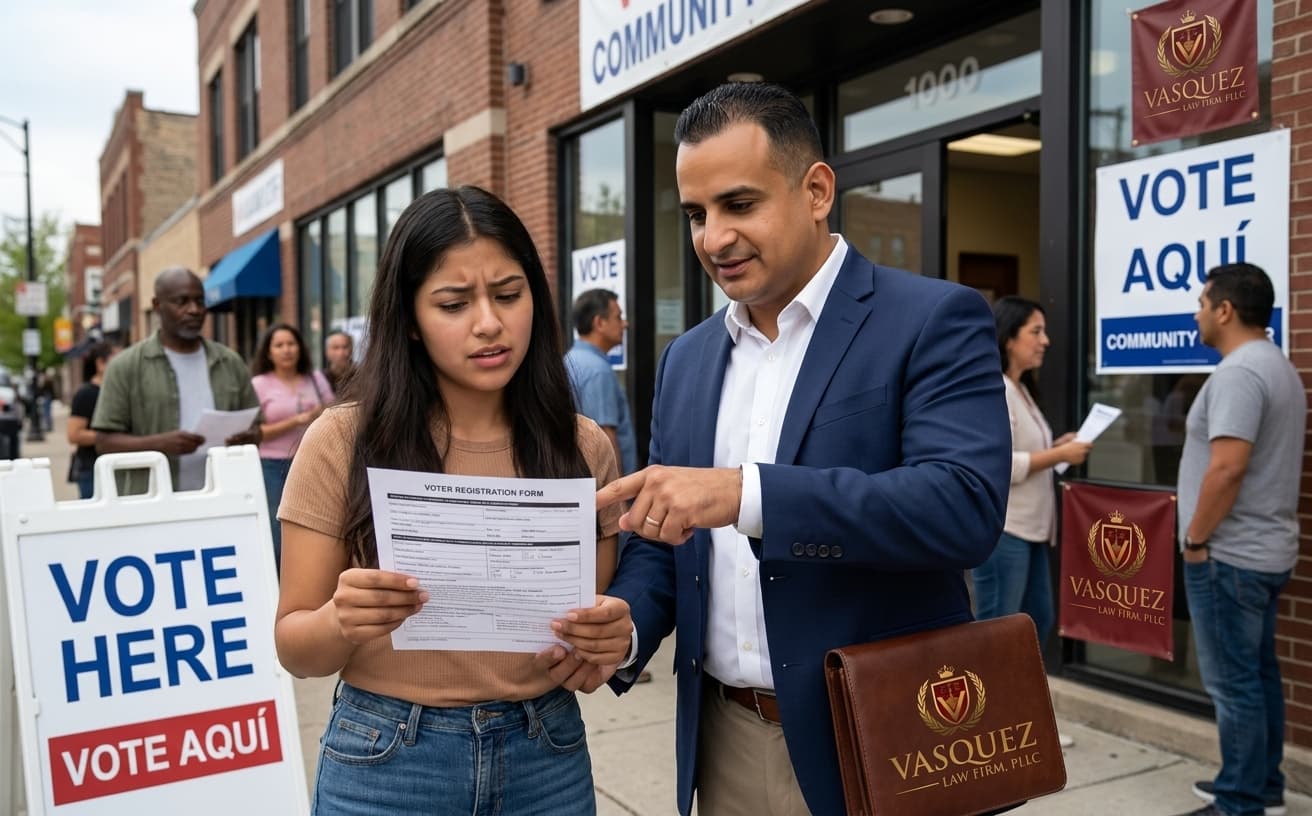
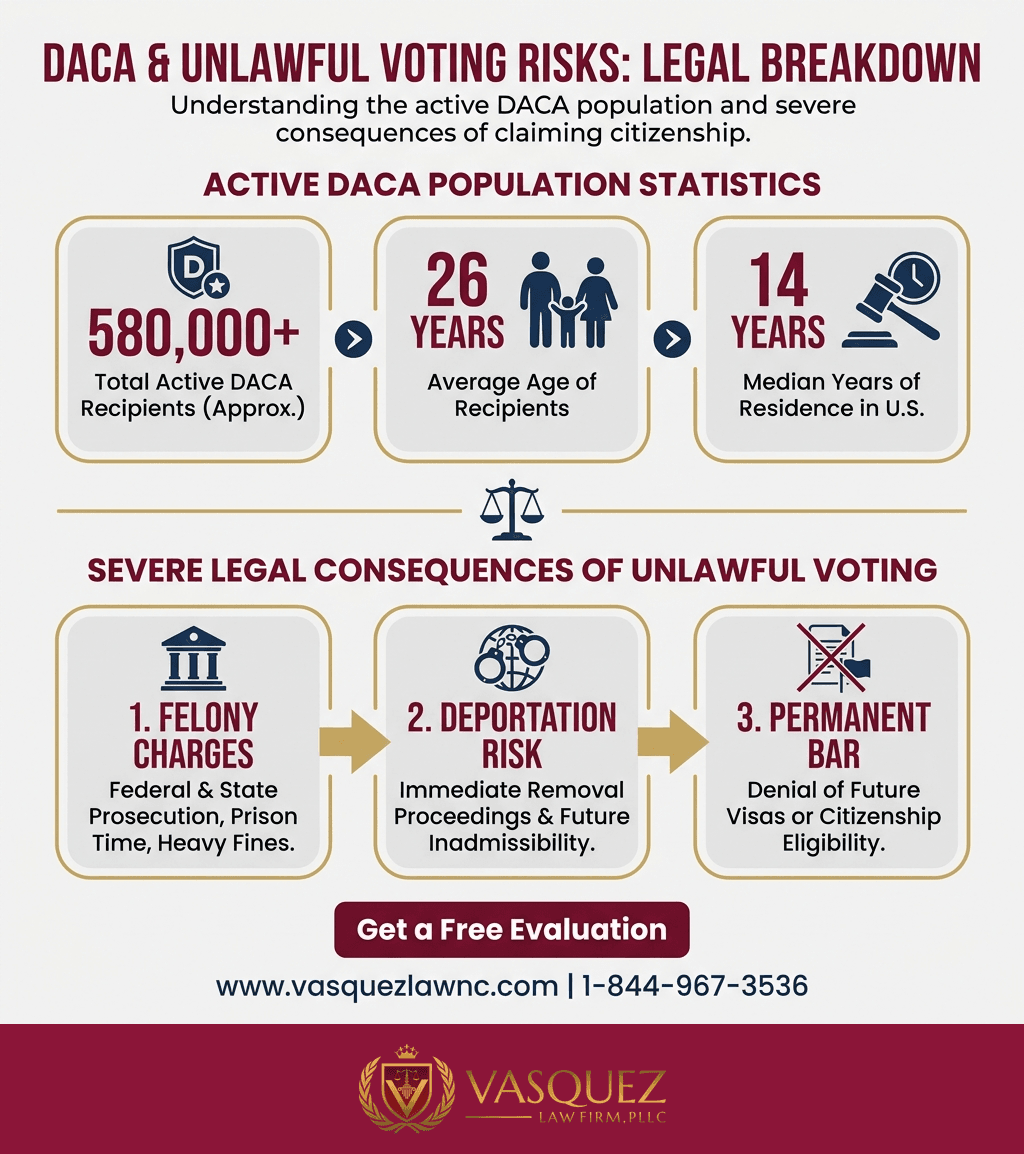
Dreamers, often protected under programs like DACA, do not have federal voting rights unless they become naturalized. Attempting to vote without citizenship can have severe immigration consequences. Thus, it is critical to understand eligibility before participating in elections.
Voting Rights News and Current Developments
Keeping current with voting rights news is essential. The last day of oral argument before the Supreme Court raised new racial considerations affecting both voting rights and immigration policy nationally. These rulings may redefine how protections apply in 2026 and beyond.
Key Steps for Immigrants To Protect Voting Rights
- Confirm Citizenship Status: Verify your citizenship before registering to vote to avoid legal issues.
- Register Properly: Use official channels and provide required documentation in Raleigh or your local jurisdiction.
- Understand Local Laws: North Carolina and Florida may require specific voter IDs or proof of residency.
- Attend Voter Education: Learn about your rights and responsibilities as a voter or prospective voter.
- Consult an Attorney: If unsure about your eligibility, speak with an immigration attorney to avoid unintended consequences.
Step-by-Step for Dreamers
Dreamers should follow these steps cautiously. While protected under immigration relief, they remain noncitizens and must not attempt unauthorized voting. Instead, focus on legal pathways to citizenship and participation in community advocacy.
Documentation Checklist
- Proof of U.S. citizenship (naturalization certificate, birth certificate)
- Government-issued photo ID (driver’s license, state ID card)
- Voter registration card or confirmation
- Residency documents (utility bills, leases)
Common Mistakes That Affect Voting Rights
- Trying to Vote Without Citizenship: Noncitizens, including Dreamers, are prohibited from voting in federal elections. This can lead to serious immigration consequences.
- Not Checking State-Specific Rules: Ignoring North Carolina or Florida’s voter ID requirements can lead to denied ballots.
- Failing to Register on Time: Late registration misses can prevent you from voting in key elections.
- Using Incorrect Documentation: Submitting wrong or outdated documents can cause disqualification.
- Relying on Outdated Information: Voting laws frequently change; staying updated is crucial.
- Not Seeking Legal Help: Misunderstanding complex voting rights can jeopardize immigration status.
- Sharing Misleading Voting Information: Spread only verified voting facts within your community.
If you only remember one thing: Always confirm your eligibility and seek legal guidance before participating in any voting activity.
Timeline of Voting Rights Act and Recent Changes
- 1965: Voting Rights Act passed, outlawing discrimination based on race or minority status.
- 1982: Important amendments strengthened the Act’s protections.
- 2013: Supreme Court in Shelby County v. Holder limits the coverage formula, weakening enforcement.
- 2026: Ongoing legal battles over voting rights with implications for immigrant voters.
Costs and Fees: What Impacts Legal Assistance Pricing
- Complexity of the voting rights issue tied to immigration status.
- Legal representation needs for naturalization or status adjustment.
- Urgency of the case and upcoming elections.
- Documentation review and filing assistance.
- Consultation and potential appeals if voting rights are challenged.
NC, FL, and Nationwide Notes
North Carolina Notes
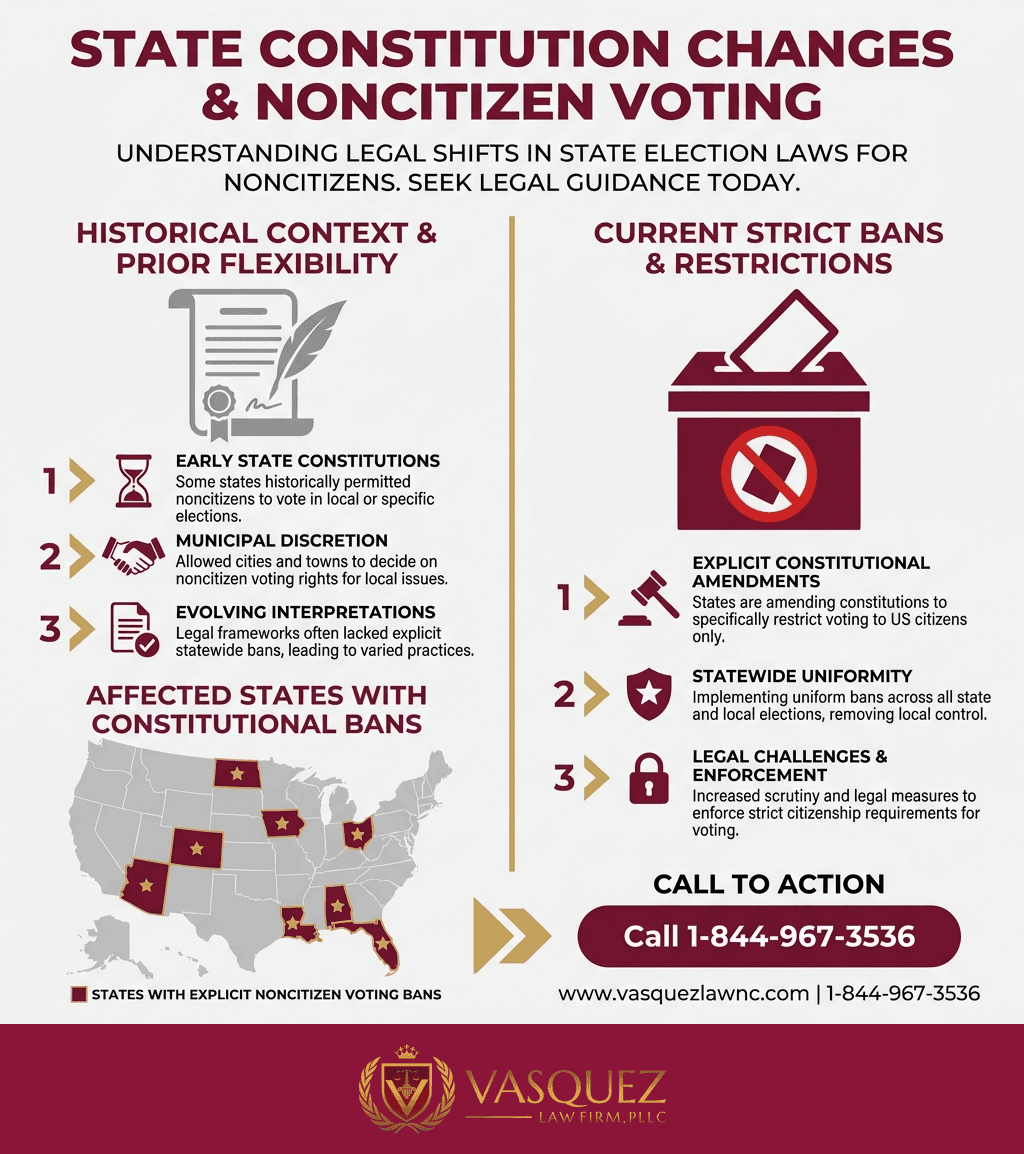
North Carolina requires voter ID at the polls and has strict registration deadlines. Noncitizens cannot register, and local election boards enforce these rules strictly. Stay informed about any changes with state election authorities.
Florida Notes
Florida enforces similar voter ID laws. In addition, Florida automatically restores voting rights to persons with felony convictions after completion of sentences, but immigration status still governs eligibility for noncitizens.
Nationwide Concepts (General Only)
Federal law prohibits noncitizen voting in federal elections across all states. The Voting Rights Act provides protections but is subject to recent Supreme Court rulings that have limited enforcement in some states. Immigrants should always verify local and federal rules.
When to Call a Lawyer Now
- If you are unsure about your citizenship or voting eligibility status.
- If you receive a notice challenging your voter registration.
- If you encounter discrimination or vote denial at the polls.
- If you are a Dreamer considering naturalization and want to understand voting rights.
- If you face complex immigration issues related to voting.
- If you need help navigating state voter ID laws in North Carolina or Florida.
- If you want to protect your right to vote without risking immigration status.
About Vasquez Law Firm
At Vasquez Law Firm, we combine compassion with aggressive representation. Our motto "Yo Peleo®" (I Fight) reflects our commitment to standing up for your rights.
- Bilingual Support: Se Habla Español - our team is fully bilingual
- Service Areas: North Carolina, Florida, and nationwide immigration services
- Experience: Over 30 years helping clients navigate complex legal matters
- Results: Thousands of successful cases across multiple practice areas
Attorney Trust and Experience
Attorney Vasquez holds a Juris Doctor degree and is admitted to practice in both the North Carolina State Bar and Florida Bar. With over 30 years of dedicated legal experience, he has built a reputation for providing personalized attention and achieving favorable outcomes for his clients.
Don't wait to get the help you deserve. Call us now for immediate assistance.
Se Habla Español
Frequently Asked Questions
Can noncitizens vote in local or federal elections in North Carolina?
Noncitizens, including Dreamers, are not allowed to vote in federal elections. Some local jurisdictions allow noncitizen voting in certain municipal elections, but North Carolina does not currently permit this. Always verify local election laws and consult an immigration attorney before attempting to vote.
What are the risks if an immigrant votes without citizenship?
Voting unlawfully can lead to serious immigration consequences, including denial of naturalization, removal proceedings, or inadmissibility. Dreamers and noncitizens should never vote federally unless they are naturalized U.S. citizens. Legal advice is essential to understand these risks.
How did the Supreme Court limit the Voting Rights Act?
In 2013, the Supreme Court’s Shelby County decision struck down the coverage formula for preclearance under Section 5, reducing federal oversight in certain states. This limits protections against discriminatory voting laws, affecting vulnerable populations, including minorities and immigrants.
Do Dreamers have the right to vote under DACA?
DACA protection does not grant voting rights. Dreamers must be U.S. citizens to vote in federal and state elections. Voting without citizenship risks deportation and loss of immigration benefits.
What documentation must I present to vote in North Carolina?
Voters need a government-issued photo ID, such as a driver’s license or state ID. Noncitizens cannot obtain proper voter registration. Always check local updates in Raleigh or your county for required forms and deadlines.
How can immigration status affect voting eligibility?
Federal law requires voters in federal elections to be U.S. citizens. Immigration status such as lawful permanent residence or DACA does not confer voting rights. Trying to vote without citizenship can jeopardize your immigration case.
Can an immigration attorney help with voting rights questions?
Yes. Immigration attorneys can clarify whether you are eligible to vote based on your status, help you avoid legal risks, and assist with naturalization applications to gain voting rights legally.
What should I do if I face discrimination when trying to vote?
Report any discrimination to local election boards and seek legal assistance immediately. The Voting Rights Act protects against racial discrimination, and legal remedies are available. Contact experts like Vasquez Law Firm for guidance.
Sources and References
- U.S. Citizenship and Immigration Services (USCIS)
- Executive Office for Immigration Review
- Legal Information Institute
Take the first step toward justice today. Our team is standing by to help. Se Habla Español.
Start Your Free Evaluation Now
Call us: 1-844-967-3536
Se Habla Español - Estamos aquí para ayudarle.

William Vasquez
Founder & CEO, Vasquez Law Firm, PLLC
William Vasquez is the founder and CEO of Vasquez Law Firm, PLLC, a results-driven firm specializing in immigration, criminal defense, personal injury, and workers' compensation. A U.S. Air Force veteran and recipient of the Joint Service Achievement Medal, William is dedicated to fiercely fighting for his clients' rights.
Related Legal Services
Need legal help? Learn more about immigration lawyers in North Carolina, or contact us for a free evaluation.
You can also visit statewide immigration legal services for more information.