What Happens When You File Sanctions Motions in 2026
Learn what sanctions motions mean and how they affect your case in 2026. Understand key rules and options. Contact Vasquez Law for free help.
Published on March 23, 2026
Get a free case review
One quick call and you'll know where you stand.
Free & confidential · Se habla espanol · 24/7

Have questions? Talk to an attorney - free evaluation.
Call 1-844-967-3536What Happens When You File Sanctions Motions in 2026
Sanctions motions are a legal tool used to penalize parties or attorneys for misconduct during litigation. In 2026, understanding how to respond to or file a sanctions motion is vital to protecting your rights in personal injury cases, especially in Charlotte. This article explains sanctions motions, common mistakes to avoid, what to expect during the process, and when you should call a lawyer. Vasquez Law Firm provides expert guidance with bilingual support to help you every step of the way.
Need help with your case? Our experienced attorneys are ready to fight for you. Se Habla Español.
Schedule Your Free Case Evaluation
Or call us now: 1-844-967-3536
Quick Answer
A sanctions motion is a formal request to a court seeking penalties for unethical or improper conduct by a party or attorney during litigation.
- Sanctions deter frivolous claims and abuse
- Common under Rule 11 in North Carolina
- Potential penalties include fines and dismissal
- Respond carefully to avoid harsher consequences
- Consult a lawyer immediately if involved
Understanding Sanctions Motions
Imagine you are in a personal injury lawsuit in Charlotte, and the opposing party files a sanctions motion accusing you of submitting false evidence. This motion seeks to punish you for conduct the court considers abusive or improper. Sanctions motions are legal filings that ask the court to impose penalties on a party or their attorney for violating rules of professional conduct or court procedures.
The most common grounds involve filing frivolous claims, submitting misleading documents, spoliating evidence, or otherwise acting in bad faith. In North Carolina and Florida, Rule 11 sanctions frequently apply. Rule 11 requires that all pleadings, motions, and other court papers be signed by an attorney who certifies that the filing is not for an improper purpose and that the legal contentions are justified by law and fact.
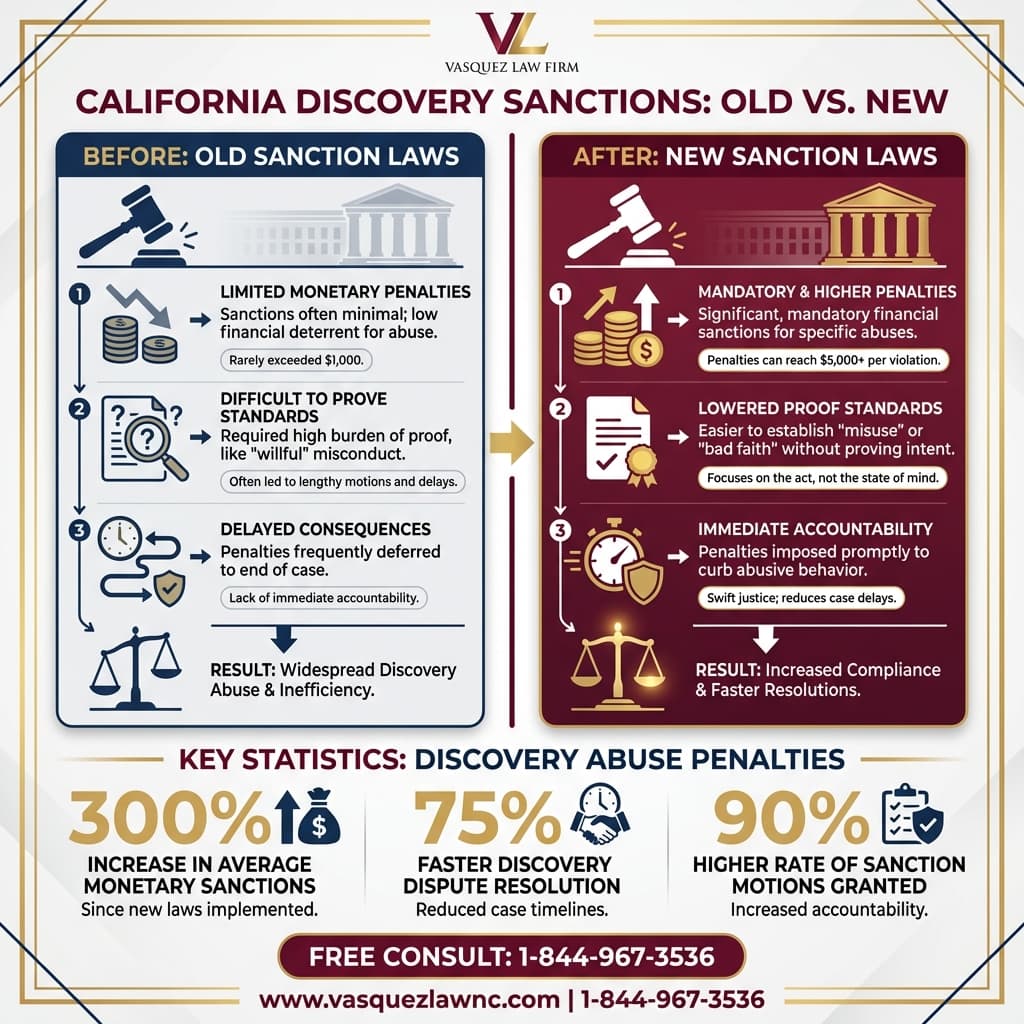
Sanctions motions serve to protect judicial integrity and reduce abuse that wastes court time and resources. Penalties can include monetary fines, payment of the opposing party's attorney fees, dismissal of claims, or even suspension of an attorney's license in extreme cases.
Learn more about our personal injury services.
Step-by-step: How to Respond
- Receive the motion: The opposing party files the sanctions motion with the court and serves you a copy.
- Review carefully: Read the motion thoroughly and assess the accusations. Identify the evidence and rules cited.
- Consult your attorney: Contact your lawyer immediately to discuss the allegations and craft a response strategy.
- Prepare your response: Your attorney will draft a written opposition or explanation addressing the claims, showing why sanctions are unwarranted.
- Submit evidence: Provide supporting facts, affidavits, or documents that refute the allegations of misconduct.
- Hearing: The court may hold a hearing where both sides present arguments before deciding whether to grant the sanctions motion.
- Court ruling: If granted, the court will specify penalties and deadlines for compliance.
- Appeal options: You may have the right to challenge the sanctions decision through appellate courts.
Documents and Evidence Checklist
- Copies of all pleadings or motions involved in the dispute
- Correspondence with opposing counsel related to the issue
- Any evidence proving the legitimacy of your claims or defenses
- Relevant court rules or statutes cited in the sanctions motion
- Legal opinions or research supporting your position
- Affidavits from witnesses or experts if relevant
- Documentation of case timelines and filings to demonstrate procedural compliance
Attorney Vasquez can guide you on collecting the right documents.
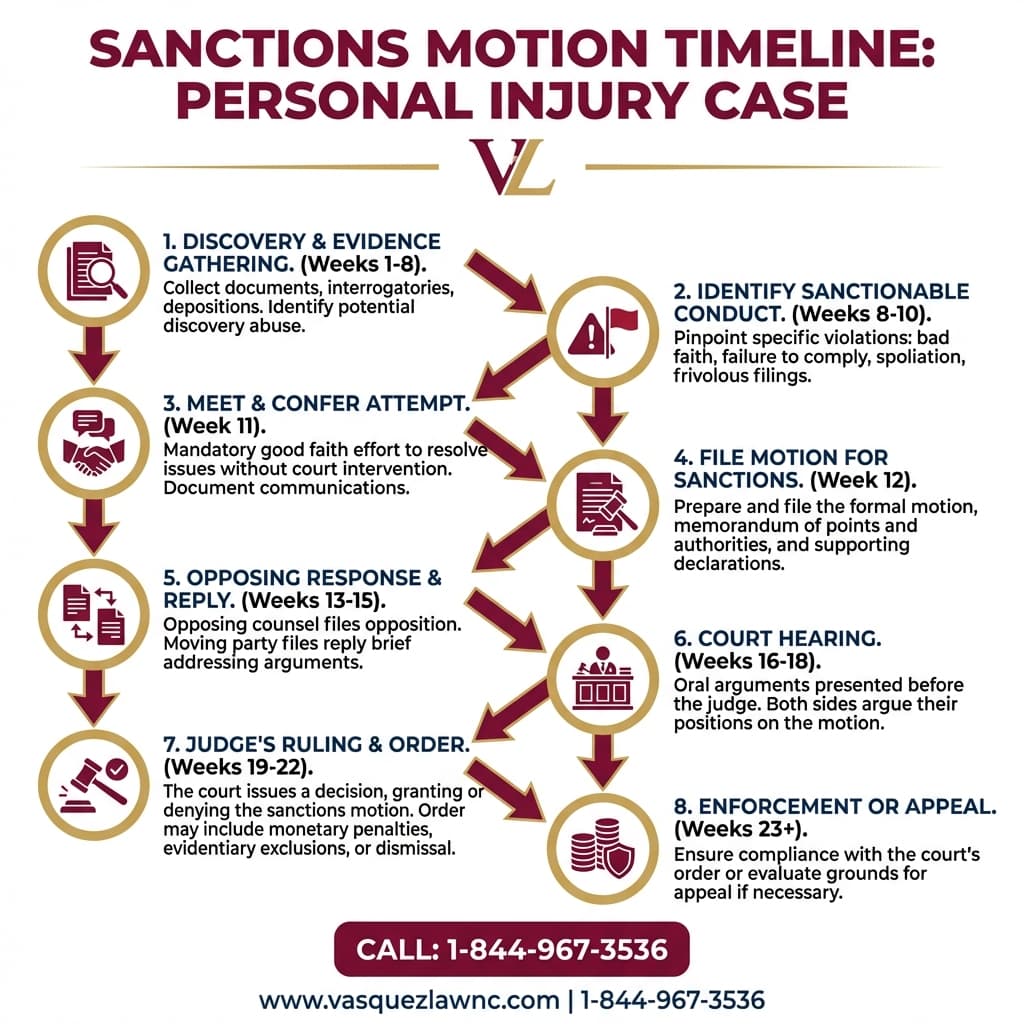
Timeline and What to Expect
- Day 1-5: Receive and review the sanctions motion.
- Week 1: Consult with your attorney and start gathering evidence.
- Week 2-3: Prepare and file your written response to the motion.
- Week 4-6: Court schedules a hearing to consider arguments.
- Week 7-8: Court issues a decision granting, denying, or modifying sanctions.
- After decision: Comply with sanctions or file an appeal if applicable.
Delays or failure to respond can increase penalties, so keep close communication with your lawyer.
Costs and Fees Factors
- Attorney fees: Responding to sanctions motions requires experienced legal counsel, which affects costs.
- Court fines or penalties: If the court grants the motion, monetary sanctions may be ordered.
- Opposing party’s attorney fees: You might be ordered to pay their legal costs.
- Severity of accusations: More serious misconduct leads to higher penalties and possibly increased legal expenses.
- Appeals process: Challenging sanctions decisions adds to legal costs.
Understanding these cost factors early can help you plan your defense.
Common Mistakes to Avoid
- Ignoring or delaying response: Always respond timely to avoid default sanctions.
- Failing to consult an attorney: Legal expertise is crucial in these complex motions.
- Providing incomplete evidence: Submit all relevant documentation to support your position.
- Misunderstanding court rules: Study applicable rules like Rule 11 to avoid improper filings.
- Making frivolous counter-motions: Don’t file retaliatory sanctions motions without merit.
- Lack of communication with opposing counsel: Try to resolve disputes before escalating to motions.
- Failing to prepare for hearings: Present clear, organized arguments if a court hearing is scheduled.
If you only remember one thing: respond quickly and get qualified legal help to protect your case.
North Carolina and Nationwide Notes
North Carolina Notes
North Carolina utilizes Rule 11 of its Rules of Civil Procedure, which mirrors the federal rule. It requires attorneys and parties to certify that filings are not frivolous, are supported by evidence, and are made for proper purposes. Sanctions can include attorney fees and court costs if the court finds misconduct.
The North Carolina courts also consider motions for sanctions in family law and personal injury cases, making it important to comply with local rules and deadlines.
Nationwide Concepts
Sanctions motions are a common tool across U.S. courts to maintain fair litigation. While federal courts follow Federal Rule of Civil Procedure 11, states have similar but distinct rules. The core idea is preventing abuse of the legal system and ensuring parties act in good faith.
Always review local rules and seek legal counsel knowledgeable about your jurisdiction.
When to Call a Lawyer Now
- You receive your first sanctions motion or warning letter.
- You’re unsure if your filings might trigger sanctions.
- You want to file a sanctions motion against opposing counsel to protect your rights.
- The court schedules a hearing on the sanctions motion.
- You fear potential dismissal or monetary penalties.
- You suspect opposing counsel submitted false or misleading documents.
- You want to prevent sanctions in complex personal injury cases.
- You need help understanding state-specific rules in NC or FL.
About Vasquez Law Firm
At Vasquez Law Firm, we combine compassion with aggressive representation. Our motto "Yo Peleo" (I Fight) reflects our commitment to standing up for your rights.
- Bilingual Support: Se Habla Español - our team is fully bilingual
- Service Areas: Immigration nationwide, including Florida; all other practice areas North Carolina only
- Experience: Over 15 years helping clients navigate complex legal matters
- Results: Thousands of successful cases across multiple practice areas
Attorney Trust and Experience
Attorney Vasquez holds a Juris Doctor degree and is admitted to practice in the North Carolina State Bar. With over 15 years of dedicated legal experience, he has built a reputation for providing personalized attention and achieving favorable outcomes for his clients.
Don't wait to get the help you deserve. Call us now for immediate assistance.
Se Habla Español
Frequently Asked Questions
What is a sanctions motion?
A sanctions motion is a formal request a party makes to the court seeking penalties against another party or lawyer for improper conduct such as filing frivolous claims or violating court rules. It helps maintain fairness in litigation.
What are the common types of sanctions?
Sanctions may include fines, payment of attorney fees, dismissal of claims, or attorney discipline. Their goal is to deter abuse and remedy wrongful conduct during litigation.
How does North Carolina handle sanctions motions?
North Carolina uses Rule 11 of its Rules of Civil Procedure to impose sanctions for filings without legal basis, bad faith, or for harassment. Courts review motions carefully before issuing penalties.
Can sanctions motions be filed against opposing counsel?
Yes. If opposing counsel engages in misconduct such as filing frivolous motions, a sanctions motion can be filed to seek penalties and protect your legal rights.
What is a frivolous motion for sanctions?
This is a sanctions request that lacks legal merit and is usually filed to harass or delay. Courts typically sanction those filing frivolous sanctions motions themselves.
How can I protect myself from sanctions motions?
Make sure your filings have a solid legal basis and evidence. Avoid exaggeration or misrepresentations. Work with an attorney to respond effectively to any sanctions motions.
Are there different rules for sanctions in Florida?
Florida has its own rules for sanctions, similar to North Carolina’s rules, but with some procedural and penalty differences. Always review state-specific guidelines.
When should I call a lawyer about a sanctions motion?
Immediately upon receiving or considering filing a sanctions motion. Early legal advice is crucial to avoid harsh penalties and to navigate the process properly.
Sources and References
- North Carolina Courts
- North Carolina Department of Transportation
- Federal Rule of Civil Procedure 11
Take the first step toward justice today. Our team is standing by to help.
Start Your Free Case Evaluation Now
Call us: 1-844-967-3536
Se Habla Español - Estamos aquí para ayudarle.


William Vasquez
Founder & CEO, Vasquez Law Firm, PLLC
William Vasquez is the founder and CEO of Vasquez Law Firm, PLLC, a results-driven firm specializing in immigration, criminal defense, personal injury, and workers' compensation. A U.S. Air Force veteran and recipient of the Joint Service Achievement Medal, William is dedicated to fiercely fighting for his clients' rights.