What Happens with Illegal Reentry Charges in 2026
Facing illegal reentry charges? Learn penalties, defenses, and legal options in 2026. Contact Vasquez Law Firm for a free consultation today.
Published on March 23, 2026
Talk to an immigration attorney
Free call. A clear plan for your case.
Free & confidential · Se habla espanol · 24/7

Have questions? Talk to an attorney - free evaluation.
Call 1-844-967-3536Worried how the latest immigration news affects you?
Schedule a confidential case review with an immigration attorney - know exactly where you stand.
USCIS Case Status
Check your USCIS case status
Enter your receipt number and get the official status. Free, no registration.
What Happens with Illegal Reentry Charges in 2026
Illegal reentry laws can impact many immigrants in Orlando and across North Carolina and Florida. In 2026, understanding illegal reentry charges is critical to protect your rights and future. This article breaks down what illegal reentry means, possible penalties, legal defenses, and steps you should take to secure your immigration status with help from trusted attorneys at Vasquez Law Firm.
Need help with your case? Our experienced attorneys are ready to fight for you. Se Habla Español.
Schedule Your Free Case Evaluation
Or call us now: 1-844-967-3536
Quick Answer
Illegal reentry means entering the United States unlawfully after being deported. It is a serious federal offense with penalties ranging from months to years in prison depending on your history. Legal help is essential to protect your rights and explore possible defenses or waivers.
- Federal crime under 8 U.S.C. § 1326
- Penalties depend on prior convictions
- Legal waivers may allow lawful return
- Defense requires skilled immigration lawyer
Understanding Illegal Reentry in 2026
Imagine Juan, deported several years ago from Orlando, attempts to come back without permission. This act is illegal reentry — entering or attempting to enter the U.S. without federal authorization after removal. In 2026, illegal reentry remains a key enforcement focus under federal law (8 U.S.C. § 1326).
Illegal reentry applies regardless of how someone crossed the border—by land, air, or sea—if done without clearance after deportation or removal. The law aims to prevent repeated unauthorized entries, especially from individuals with criminal backgrounds.
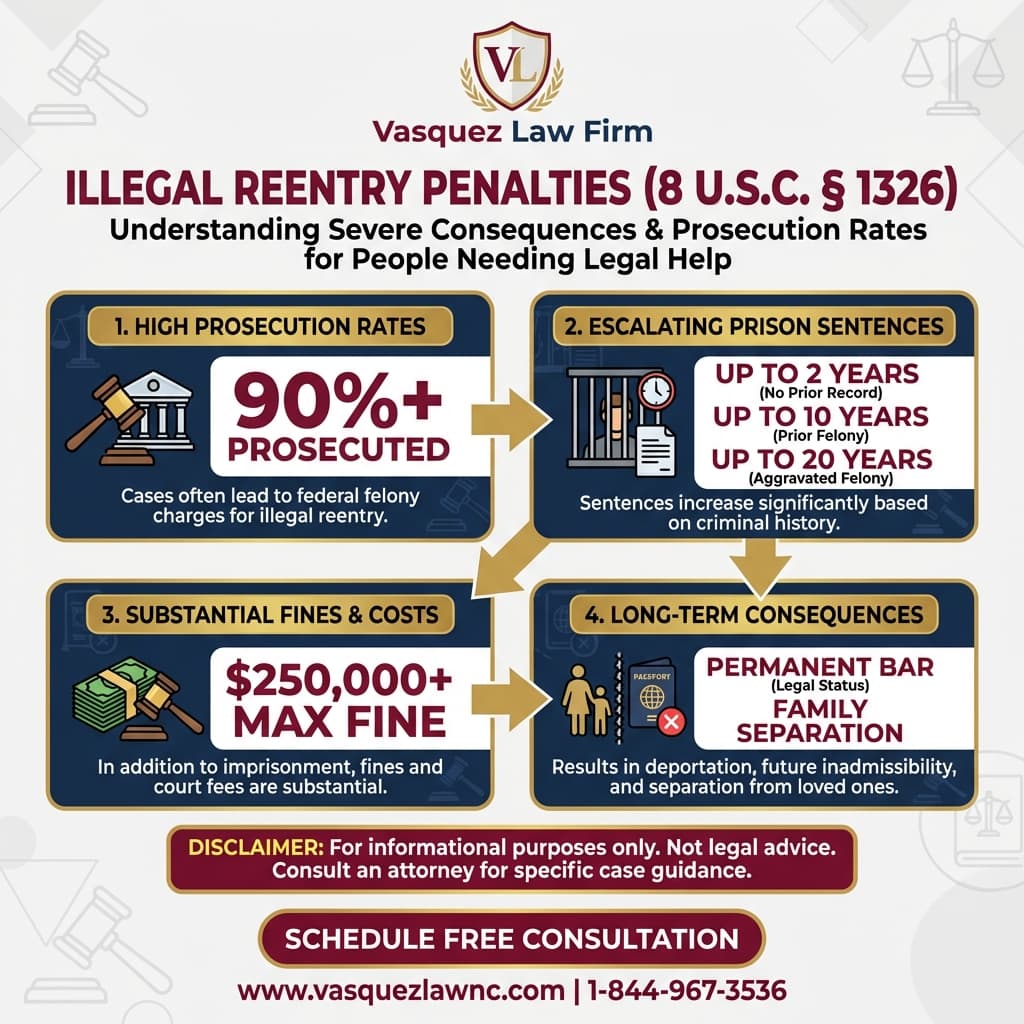
Penalties vary notably. A first-time offense can be charged as a misdemeanor or a felony, depending on the circumstances. Repeat offenders and those with aggravated felonies face higher penalties including longer prison terms—sometimes up to 20 years.
Understanding your rights and the law’s impact is crucial if you or a loved one face illegal reentry charges in North Carolina or Florida, including Orlando.
Additionally, illegal reentry charges may carry collateral consequences beyond criminal penalties. For example, a conviction can affect future immigration benefits, including eligibility for naturalization or lawful permanent residency. It can also trigger mandatory detention during removal proceedings and limit your ability to apply for relief from removal.
Practical Example: Consider Maria, who was deported after a prior conviction. She reentered the U.S. without permission to reunite with her children. Her case illustrates how prior criminal history complicates an illegal reentry charge and underscores the importance of legal counsel to navigate potential waivers and defenses.
In 2026, immigration enforcement agencies continue to prioritize illegal reentry cases, sometimes coordinating with local law enforcement. This means individuals charged with illegal reentry should be prepared for both criminal and immigration court proceedings. Legal strategies must account for both arenas to protect clients effectively.
Step-by-Step: How to Handle Illegal Reentry Charges
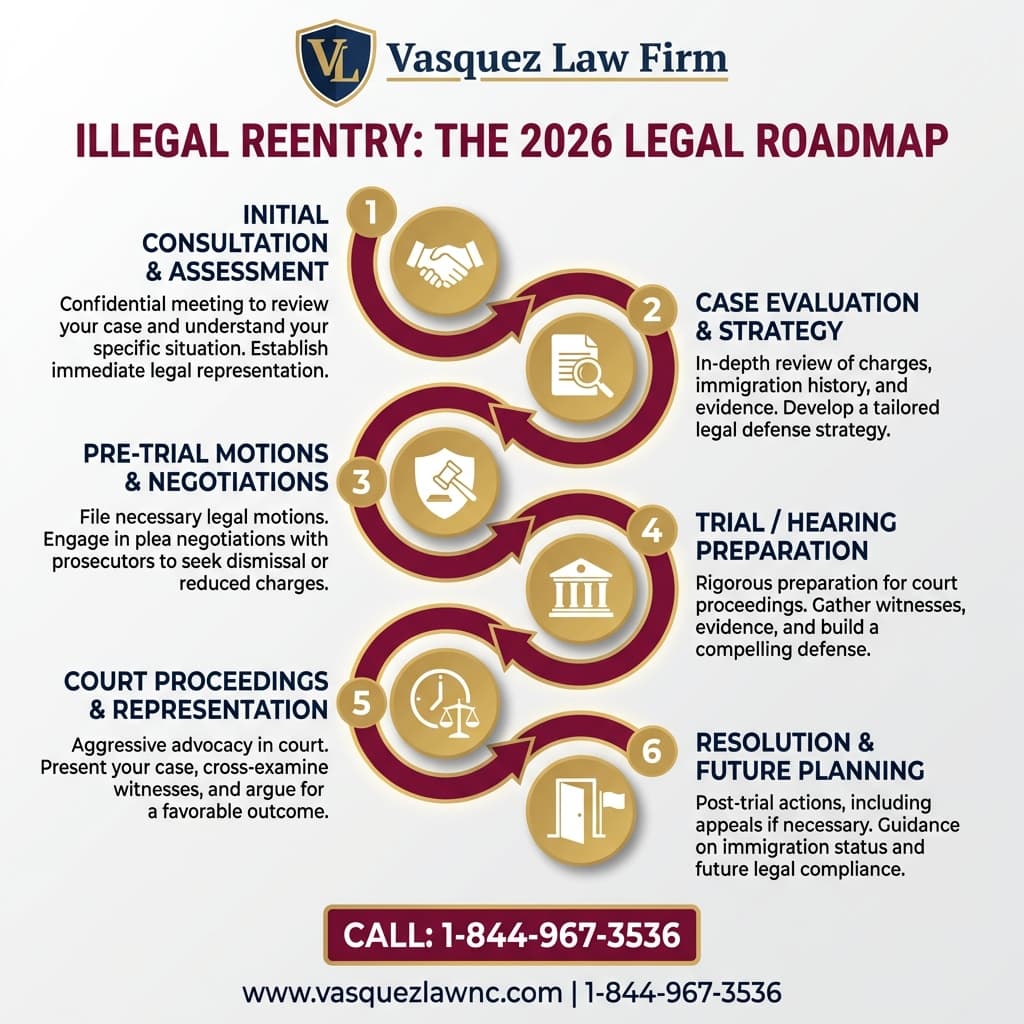
- Seek legal representation immediately. Contact an experienced immigration attorney to evaluate your case and rights.
- Do not speak to ICE or law enforcement without a lawyer. Anything you say could affect your case negatively.
- Gather all documents. Collect immigration paperwork, deportation orders, prior records, and any proof of ties to family or community.
- Ask about waiver eligibility. Some clients may qualify for deportation waivers or other forms of relief that can help avoid harsh penalties.
- Attend all immigration court hearings. Missing court dates can result in deportation orders by default.
- Prepare for possible sentencing. Your lawyer will help present evidence and mitigation to the court if convicted.
- Consider appeal options. If convicted, appeals may provide additional chances to contest charges or improve your situation.
It is also important to maintain open communication with your attorney throughout the process. Keeping your lawyer informed about any changes in your circumstances or new contacts with law enforcement allows them to adjust your defense strategy promptly.
For example, if you are detained, your attorney can work to request a bond hearing to seek your release while the case proceeds. Additionally, early legal intervention can help identify whether you qualify for alternative forms of relief such as asylum, Cancellation of Removal, or Temporary Protected Status.
Scenario: Carlos was charged with illegal reentry but had strong family ties and no serious criminal history. His attorney helped him apply for a waiver based on hardship to his U.S. citizen children, significantly improving his chances of avoiding deportation.
Documents and Evidence Checklist for Your Case
- Government-issued ID or passport copies
- Deportation or removal orders
- Prior immigration applications and responses
- Proof of residency and family ties in US (e.g., leases, birth certificates)
- Criminal record documents (if applicable)
- Any prior waiver or relief applications
- Police or court records related to any arrests or charges
Having thorough documentation can be the difference between a successful defense and a harsh penalty. For instance, affidavits from family members, community leaders, or employers can demonstrate your positive ties to the community, which may be persuasive in court.
Additionally, gathering evidence of rehabilitation, such as certificates from counseling programs or proof of steady employment, can support mitigating factors during sentencing or immigration hearings.
Example: Ana's attorney used her stable employment records and volunteer work to argue for leniency during sentencing after an illegal reentry conviction, resulting in a reduced prison term and eligibility for future legal relief.
Timeline and What to Expect in Your Case
- Week 1-2: Initial consultation and case review with your attorney.
- Week 3-6: Preparation and submission of motions or waivers, gathering evidence.
- Week 7-12: Immigration court hearings and possible bond hearings.
- Week 13-20: Possible resolution through settlement, waiver approval, or trial.
- After Week 20: Sentencing if convicted or deportation order, followed by potential appeal phase.
The timeline may vary depending on case complexity and court schedules. Some cases may move faster if you are detained, while others could extend for months or years if appeals or additional relief applications are involved.
During this timeline, it is critical to meet all deadlines, including filing motions and attending hearings. Failure to comply can result in default judgments or denial of relief.
Real-life Scenario: Luis’s case took over a year to resolve due to multiple appeals and an application for a hardship waiver. His attorney’s diligent management of deadlines and filings was key to securing a favorable outcome.
Costs and Fees for Illegal Reentry Defense
- Attorney Fees: Vary based on case complexity—may range from $3,000 to $10,000 or more.
- Filing Fees: Court and application fees for waivers or relief, often several hundred dollars.
- Bail or Bond: Possible payment required if detained.
- Additional Costs: Expert witnesses, translators, or investigator fees can increase costs.
- Free Case Evaluation: Vasquez Law Firm offers free initial case evaluations to discuss your options.
Some clients may be eligible for payment plans or pro bono assistance depending on financial circumstances. It is important to discuss fees upfront with your attorney to avoid surprises and plan accordingly.
Example: When Rosa was detained, her family was concerned about bond costs and legal fees. Her attorney helped negotiate lower bond and provided guidance on applying for fee waivers for certain immigration forms.
Remember that investing in skilled legal representation often saves money and stress in the long term by improving the chances of a successful defense and avoiding costly deportation consequences.
Common Mistakes to Avoid With Illegal Reentry
- Talking to ICE without a lawyer—this can harm your case.
- Missing court dates—always attend to avoid automatic deportation.
- Ignoring possible waivers—many qualify but do not apply.
- Failing to collect evidence proving ties and hardship.
- Assuming all cases are the same—every case differs and needs expert analysis.
- Delaying legal help—early legal intervention improves outcomes.
- Providing false information—can lead to more severe penalties.
If you only remember one thing: Contact a qualified attorney immediately if you face illegal reentry charges.
Another common mistake is trying to represent yourself in immigration or criminal court. The complexities of immigration law demand specialized knowledge that can affect the outcome of your case significantly.
Practical Scenario: Miguel attempted to handle his illegal reentry charge alone and missed critical deadlines, resulting in deportation. With legal assistance, many of these pitfalls can be avoided, and options for relief explored effectively.
NC, FL, and Nationwide Legal Notes
North Carolina Notes
North Carolina residents facing illegal reentry charges can expect federal prosecution since immigration enforcement is federal. Local attorneys in North Carolina, including Orlando office support, handle these matters with knowledge of both federal law and the local court environment.
North Carolina's immigration courts and federal district courts have unique procedural rules and local customs that experienced attorneys understand. This local knowledge can influence case strategy and outcomes.
Example: An attorney familiar with North Carolina’s federal courts may better navigate bond hearings and coordinate with local ICE offices to advocate for client release or relief.
Florida Notes
Orlando is part of Florida’s districts served by federal immigration courts. Florida’s large immigrant community means awareness of illegal reentry penalties is essential. Local attorneys offer bilingual support and have experience with ICE presence.
Florida’s immigration courts often have heavy caseloads, which can affect scheduling and case processing times. Attorneys experienced in Florida understand how to optimize case management under these conditions.
Scenario: In Orlando, an attorney’s bilingual skills and community connections helped a client navigate complex hearings and access local resources for support during removal proceedings.
Nationwide Concepts (General Only)
Illegal reentry is prosecuted federally across all states under 8 U.S.C. § 1326. Sentencing guidelines and eligibility for relief are determined by federal statutes and courts, but outcomes differ case by case. Always consult a lawyer licensed where you live.
Federal courts may apply sentencing enhancements for prior aggravated felonies or terrorism-related offenses, which significantly increase penalties. Knowing these nuances is critical for defense planning.
Nationally, immigration enforcement policies may shift depending on administration priorities. Staying informed about current policies and local enforcement trends is important for clients facing illegal reentry charges.
When to Call a Lawyer Now
- After an ICE detention or arrest
- When you receive a Notice to Appear (NTA) in immigration court
- If charged federally with illegal reentry
- Before attending any immigration court hearings
- If you think you may qualify for a waiver of inadmissibility
- If you are a DACA recipient facing reentry challenges
- When family members have been detained or deported
- If employer or community contacts mention ICE enforcement activity
Timely legal advice can prevent missteps that jeopardize your case. Early involvement of an attorney ensures your rights are protected from the outset and that all potential relief avenues are explored.
For example, DACA recipients may face unique challenges if charged with illegal reentry, requiring specialized legal strategies. Similarly, families affected by detention or deportation need legal support to navigate complex procedures and maintain family unity.
Delaying lawyer contact until after a conviction or deportation order can severely limit your options and increase risks of permanent removal from the U.S.
About Vasquez Law Firm
At Vasquez Law Firm, we combine compassion with aggressive representation. Our motto "Yo Peleo" (I Fight) reflects our commitment to standing up for your rights.
- Bilingual Support: Se Habla Español - our team is fully bilingual
- Service Areas: North Carolina, Florida, and nationwide immigration services
- Experience: Over 15 years helping clients navigate complex legal matters
- Results: Thousands of successful cases across multiple practice areas
Attorney Trust and Experience
Attorney Vasquez holds a Juris Doctor degree and is admitted to practice in the North Carolina State Bar. With over 15 years of dedicated legal experience, he has built a reputation for providing personalized attention and achieving favorable outcomes for his clients.
His expertise includes complex immigration defense cases, including illegal reentry charges, deportation defense, and appeals. Attorney Vasquez remains current on changing immigration laws and policies to provide the most effective representation possible.
Client testimonials highlight his dedication, thorough preparation, and compassionate approach, making him a trusted advocate for individuals facing immigration challenges.
Don't wait to get the help you deserve. Call us now for immediate assistance.
Se Habla Español
Frequently Asked Questions
What is illegal reentry?
Illegal reentry is a federal crime when someone comes back to the US without permission after being deported. It carries penalties that depend on criminal history and offense type. Understanding this charge is important to defend your rights. If charged, it is critical to consult an experienced immigration attorney who can assess your options, including possible waivers or defenses that may apply to your situation.
Is illegal reentry a felony?
Depending on prior offenses, illegal reentry can be charged as a felony or misdemeanor. Prior felonies or repeat entries increase penalties and risks of felony charges. For example, a first-time illegal reentry without aggravating factors might be treated more leniently, while multiple prior deportations or criminal convictions often result in felony charges and longer prison sentences.
How much jail time is typical for illegal reentry?
First offenses often lead to several months to two years. Repeat or aggravated cases can result in sentences up to 20 years. Sentencing is case-specific and depends on factors such as criminal history, prior deportations, and whether the offense involved violence or drug trafficking. Judges consider these when determining the length of imprisonment.
Can you come back legally after deportation?
Yes, if you obtain legal waivers or authorization through federal processes. This requires meeting strict requirements and is subject to approval. For instance, individuals may apply for a waiver of inadmissibility based on hardship to U.S. citizen relatives or other qualifying factors. The process is complex, and legal assistance is essential to maximize chances of success.
What is an illegal reentry deportation waiver?
This is permission granted to overcome bans that block reentry after deportation. Waivers are complex and require legal help to apply. They often involve proving extreme hardship to qualifying relatives in the U.S. and demonstrating rehabilitation. Successfully obtaining a waiver can allow lawful return despite prior removal orders.
Can ICE legally ask for ID during an encounter?
ICE can request ID during enforcement activities. However, you have the right to remain silent and ask for an attorney before answering any questions. You are not required to carry immigration documents at all times, but refusing to provide ID under certain circumstances may escalate enforcement actions. Knowing your rights and having legal counsel available is crucial.
What are common defenses against illegal reentry charges?
Defenses include lack of intent, procedural errors, and eligibility for waivers or relief from removal. For example, if the government cannot prove you knowingly reentered without permission, or if there were errors in your prior removal proceedings, these defenses may apply. An attorney will analyze your case to identify the best defense strategy.
What steps should I take if charged with illegal reentry?
Protect yourself by contacting a lawyer immediately, avoiding self-incrimination, collecting documents, and attending all court hearings. Do not speak to ICE or law enforcement without an attorney present. Gather evidence of your ties to the community, prior immigration history, and any hardship that could support your defense or waiver application.
Sources and References
- U.S. Citizenship and Immigration Services (USCIS)
- Executive Office for Immigration Review (EOIR)
- 8 U.S. Code § 1326 - Illegal Reentry
Need immigration help? Our immigration attorneys can review your case.
Take the first step toward justice today. Our team is standing by to help.
Start Your Free Case Evaluation Now
Call us: 1-844-967-3536
Se Habla Español - Estamos aquí para ayudarle.

William Vasquez
Founder & CEO, Vasquez Law Firm, PLLC
William Vasquez is the founder and CEO of Vasquez Law Firm, PLLC, a results-driven firm specializing in immigration, criminal defense, personal injury, and workers' compensation. A U.S. Air Force veteran and recipient of the Joint Service Achievement Medal, William is dedicated to fiercely fighting for his clients' rights.
Related Legal Services
Need legal help? Learn more about our immigration legal services, or contact us for a free evaluation.
You can also visit North Carolina immigration lawyers for more information.