What Are Occupational Diseases and How They Affect You in 2026
Discover what occupational diseases are, their causes, and how you can get workers compensation in 2026. Contact Vasquez Law for a free consultation.
Published on March 31, 2026
Hurt on the job?
Free review of your workers' comp claim.
Free & confidential · Se habla espanol · 24/7
Have questions? Talk to an attorney - free evaluation.
Call 1-844-967-3536Hurt on the Job? Claim What You Are Owed
A review of your workers' comp claim - we handle the fight.
What Are Occupational Diseases and How They Affect You in 2026
Occupational diseases impact thousands of workers each year in Smithfield and across North Carolina. These conditions arise from workplace exposures to harmful substances or environments. Understanding occupational diseases is crucial if you suspect your illness is work-related. Our guide explains examples of occupational diseases, causes, and how workers compensation laws in North Carolina protect employees. If you face illness from your job in 2026, learn the steps to take and avoid common mistakes with help from Vasquez Law Firm’s experienced team.
Need help with your case? Our experienced attorneys are ready to fight for you. Se Habla Español.
Schedule Your Free Case Evaluation
Or call us now: 1-844-967-3536
Quick Answer
Occupational diseases are illnesses caused by exposure to harmful conditions or substances at work. Common examples include asbestosis, silicosis, and occupational asthma. These diseases can take years to develop but qualify for workers compensation in North Carolina if proven work-related.
- Long-term exposure typically causes these illnesses
- Protective equipment and safe practices prevent disease
- Your employer and state laws may cover your claim
- Document symptoms and exposures carefully
- Legal help improves claim success chances
Understanding Occupational Diseases
Imagine a Smithfield factory worker who develops severe breathing problems after years of working around asbestos. This worker likely suffers from an occupational disease. In 2026, thousands of workers in North Carolina experience illness caused by their jobs. These occupational diseases differ from workplace injuries because they often develop gradually. They result from repeated exposure to dust, chemicals, noise, or repetitive motions.
Examples of occupational diseases include asbestosis, silicosis, occupational asthma, noise-induced hearing loss, carpal tunnel syndrome, and skin diseases from chemical exposure. According to the CDC’s NIOSH, these conditions arise after hazardous substances accumulate or damage the body over months or years. The key is linking the illness to workplace exposures or activities.
Workers in industries like construction, manufacturing, mining, and healthcare face the highest risk. Workplaces without adequate safety measures see more cases. In Smithfield, where manufacturing is prominent, awareness is critical. Workers should understand that occupational diseases qualify for workers compensation if they can prove their disease relates to the job and meet state legal requirements.
Safety measures can help prevent occupational diseases. Employers must comply with OSHA rules, provide protective equipment, and train workers on hazards. Employees who suspect symptoms should seek medical attention promptly. Early detection helps manage diseases better and supports compensation claims.
Common Examples of Occupational Diseases
- Asbestosis and Mesothelioma: Lung diseases from asbestos exposure common in construction and shipbuilding.
- Silicosis: Lung disease caused by breathing silica dust.
- Occupational Asthma: Triggered by workplace chemicals or dust.
- Noise-Induced Hearing Loss: Due to repeated exposure to loud machinery.
- Carpal Tunnel Syndrome: Caused by repetitive hand or wrist motions.
- Skin Diseases: Resulting from contact with harmful substances like solvents or irritants.
Causes of Occupational Diseases
In Smithfield and across North Carolina, occupational diseases emerge from constant contact with harmful agents such as toxic chemicals, dust, biological pathogens, or extreme work environments. For example, inhaling asbestos fibers in an old building leads to lung scarring. Chemical exposure can cause skin disorders or respiratory problems.
Repeated physical strain, like frequent lifting or typing in awkward positions, may cause musculoskeletal disorders. Loud industrial noise damages hearing over time. Some causes require prolonged exposure before symptoms present, which complicates diagnosis and filing timely claims.
Prevention includes reducing exposure levels, proper ventilation, using personal protective equipment, and enforcing safety protocols. Employers in North Carolina must follow state and federal regulations to limit these risks. Workers who experience early symptoms should report them quickly to document illness onset.
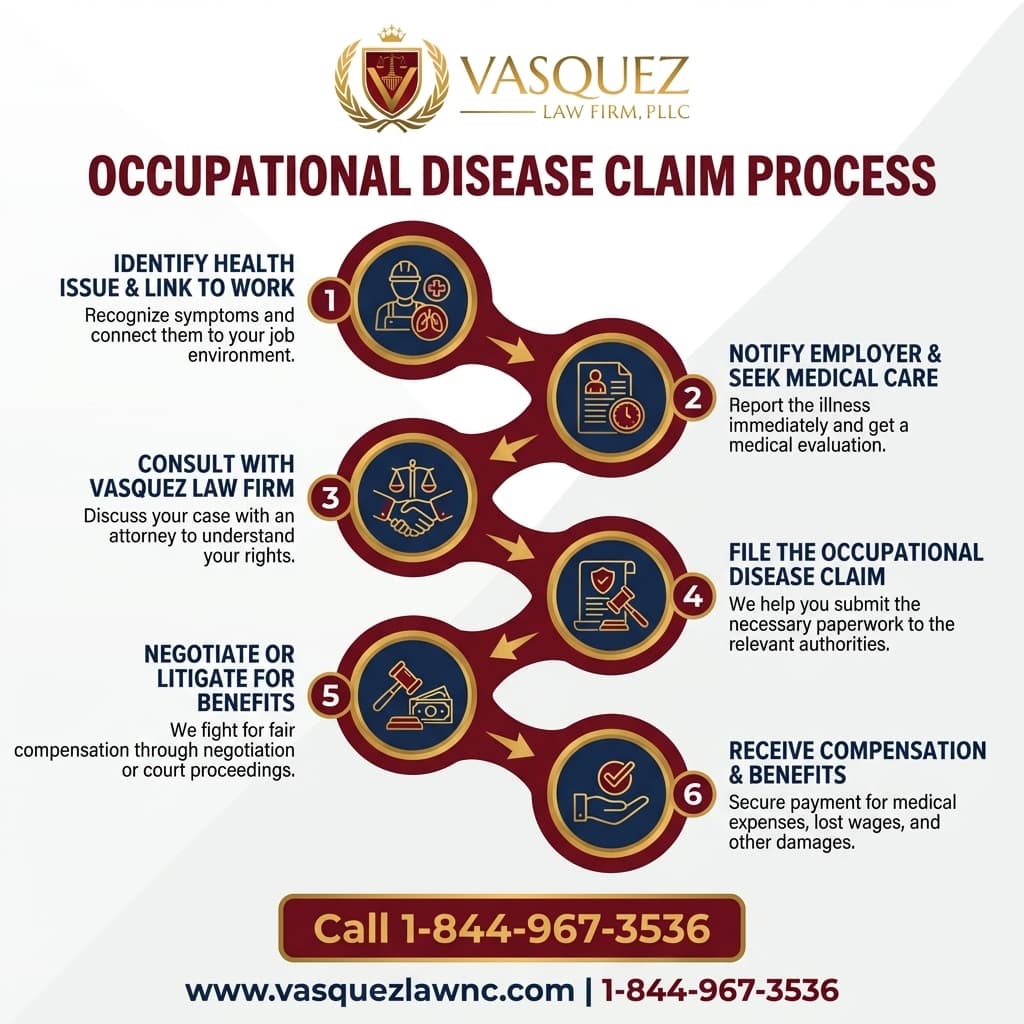
Step-by-step: What to Take If You Suspect an Occupational Disease
- Recognize Symptoms: Monitor for signs like breathing problems, skin rash, or pain related to your job exposures.
- Seek Medical Diagnosis: Obtain thorough medical evaluations from doctors knowledgeable about occupational illnesses.
- Notify Your Employer: Report your condition and possible work-related cause promptly in writing.
- Document Everything: Keep records of medical reports, workplace conditions, and communications.
- File a Workers Compensation Claim: Work with your employer’s insurance carrier or directly with the North Carolina Industrial Commission.
- Consult an Attorney: Contact experienced workers compensation lawyers like Attorney Vasquez for guidance.
- Follow Legal Procedures: Meet deadlines, attend hearings if necessary, and appeal denials with legal help.
Documents or evidence checklist
- Medical reports diagnosing the occupational disease
- Work history showing exposure to hazards
- Employer incident reports or safety records
- Witness statements from coworkers
- Any OSHA violation reports for your workplace
- Correspondence related to your claim
- Personal notes on symptoms and their work connection
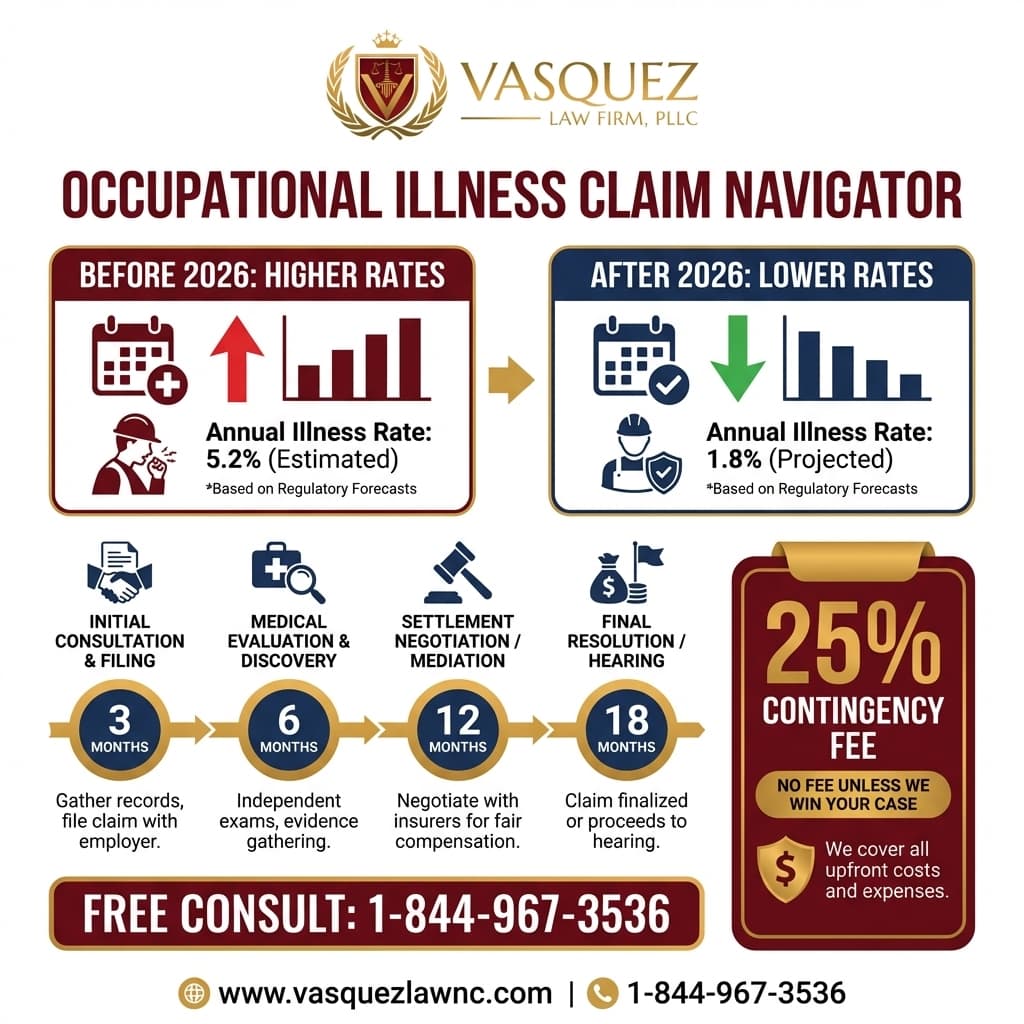
Timeline: What to expect in your occupational disease claim
- 0-3 Months: Seek medical diagnosis and notify employer.
- 3-6 Months: Gather evidence, file workers compensation claim.
- 6-12 Months: Claim review and possible medical evaluations arranged.
- 12-18 Months: Potential hearing or settlement discussions.
- 18-24 Months: Final decisions or appeals may occur.
Claims can take over a year due to the complexity of proving occupational diseases. Early action is key to avoid missing filing deadlines.
Costs and fees: What impacts the price of legal assistance
- Attorney Fees: Most workers compensation lawyers charge on a contingency basis, usually 20%-25% of benefits received.
- Medical Exams: Independent medical evaluations may be needed and are typically paid by the insurer or legal counsel initially.
- Filing Fees: North Carolina workers compensation claims generally do not require filing fees.
- Additional Expenses: Expert witnesses or document acquisition can increase costs if your case is complex.
Consult with your attorney upfront about any fees and costs. At Vasquez Law Firm, transparency is a priority as we fight for your rights.
Common mistakes and how to avoid them
- Delay Reporting: Notify your employer and seek medical care immediately to avoid claim denials.
- Ignoring Symptoms: Early medical diagnosis improves claim strength and recovery options.
- Not Documenting: Keep a detailed record of exposures, symptoms, and communication.
- Failing to File on Time: Missing deadlines in North Carolina can bar your claim.
- Not Hiring a Lawyer: Workers compensation laws are complex; legal help improves chances of success.
- Accepting Low Settlements: Consult an attorney before agreeing to any offers.
- Not Following Medical Treatment: Complete recommended care to support your claim and health.
If you only remember one thing: act quickly, document well, and get experienced legal help.
North Carolina and Nationwide Notes
North Carolina Notes
North Carolina workers compensation law covers many occupational diseases if you prove the condition is causally related to your job. Per N.C. Gen. Stat. § 97-53, specified occupational diseases require meeting certain exposure or diagnosis criteria. The NC Industrial Commission administers claims here. It's vital to file promptly since statutes of limitations apply.
Nationwide Concepts (General only, rules vary)
Across the U.S., occupational diseases are generally covered by workers compensation systems, but specifics vary by state. OSHA standards and federal laws influence workplace safety nationwide. Always check state regulations and consult local counsel if claiming occupational diseases outside NC or FL.
When to call a lawyer now
- If your claim is denied or delayed without clear explanation
- If you have difficulty proving your illness is work-related
- When employers or insurers fail to provide medical treatment
- If your symptoms worsen and you fear job loss or retaliation
- Before signing any settlement agreements
- If you need help navigating complicated paperwork or hearings
- If you experience retaliation or discrimination after reporting illness
- To understand your rights under North Carolina workers compensation law
About Vasquez Law Firm
At Vasquez Law Firm, we combine compassion with aggressive representation. Our motto "Yo Peleo" (I Fight) reflects our commitment to standing up for your rights.
- Bilingual Support: Se Habla Español - our team is fully bilingual
- Service Areas: Workers compensation in North Carolina; immigration nationwide, including Florida
- Experience: Over 15 years helping clients navigate complex legal matters
- Results: Thousands of successful cases across multiple practice areas
Attorney Trust and Experience
Attorney Vasquez holds a Juris Doctor degree and is admitted to practice in the North Carolina State Bar. With over 15 years of dedicated legal experience, he has built a reputation for providing personalized attention and achieving favorable outcomes for his clients.
Don't wait to get the help you deserve. Call us now for immediate assistance. Se Habla Español.
Frequently Asked Questions
What are examples of occupational diseases?
Examples of occupational diseases include asbestosis, silicosis, occupational asthma, noise-induced hearing loss, and other conditions caused by prolonged workplace exposures. Understanding these examples helps you identify if your illness could qualify for workers compensation benefits in Smithfield and North Carolina.
What is the meaning of occupational disease?
An occupational disease is an illness that arises specifically because of exposure to hazardous substances, environments, or activities related to your job. Unlike injuries from accidents, these diseases usually develop over months or years and are recognized under workers compensation laws if proven work-related.
What are specified occupational diseases?
Specified occupational diseases are those formally recognized by law as caused by certain workplace exposures, such as asbestos-related diseases or silicosis. These diseases have defined eligibility criteria in workers compensation claims, making them easier to establish in a claim.
What are the most common types of occupational diseases?
Common occupational diseases in 2026 include respiratory illnesses (asbestosis, silicosis), skin disorders from chemical contact, hearing loss from noise exposure, and repetitive strain injuries such as carpal tunnel syndrome.
How can occupational diseases be prevented in the workplace?
Preventing occupational diseases involves wearing protective gear, following safety protocols, minimizing exposure to hazardous substances, and participating in regular workplace safety training. Employers must ensure OSHA compliance and maintain safe environments.
What is the difference between occupational and work-related diseases?
Occupational diseases are caused directly by workplace exposures and covered under workers compensation laws. Work-related diseases may be aggravated by work but could have other causes, complicating compensation claims.
How long do I have to file a workers compensation claim for an occupational disease?
In North Carolina, you generally have two years from discovering your illness is work-related to file a claim. Filing promptly is crucial to avoid losing your right to benefits.
What should I do if my occupational disease claim is denied?
If your claim is denied, contact an experienced workers compensation attorney immediately to file an appeal. Gathering strong medical and employment evidence greatly improves your chances of a successful appeal.
Sources and References
- North Carolina Industrial Commission
- Occupational Safety and Health Administration (OSHA)
- CDC NIOSH on Occupational Diseases
- N.C. Gen. Stat. § 97-53
- 29 C.F.R. § 1904 OSHA Recordkeeping
Take the first step toward justice today. Our team is standing by to help. Se Habla Español.
Start Your Free Case Evaluation Now
Call us: 1-844-967-3536
Se Habla Español - Estamos aquí para ayudarle.
If you need legal assistance, learn more about our workers compensation legal services, or call us at 1-844-967-3536 for a free case evaluation.


William Vasquez
Founder & CEO, Vasquez Law Firm, PLLC
William Vasquez is the founder and CEO of Vasquez Law Firm, PLLC, a results-driven firm specializing in immigration, criminal defense, personal injury, and workers' compensation. A U.S. Air Force veteran and recipient of the Joint Service Achievement Medal, William is dedicated to fiercely fighting for his clients' rights.
Related Legal Services
Need legal help? Learn more about get workers comp legal help today, or contact us for a free evaluation.
You can also visit North Carolina workers compensation firm for more information.