New Mexico Immigration Statistics Reveal Key Trends in 2026
Discover 2026 New Mexico immigration statistics and what they mean for residents and Dreamers. Get help understanding your rights. Start with a free consult.
Published on March 31, 2026
Talk to an immigration attorney
Free call. A clear plan for your case.
Free & confidential · Se habla espanol · 24/7
Have questions? Talk to an attorney - free evaluation.
Call 1-844-967-3536Worried how the latest immigration news affects you?
Schedule a confidential case review with an immigration attorney - know exactly where you stand.
USCIS Case Status
Check your USCIS case status
Enter your receipt number and get the official status. Free, no registration.
New Mexico Immigration Statistics Reveal Key Trends in 2026
New Mexico immigration statistics in 2026 reveal significant shifts in demographics, undocumented population, and immigration law impacts. This article explains key ethnicity data, age groups, recent legislative changes, and what these trends mean for immigrants, including Dreamers living in orlando and beyond. Whether you want to understand the state’s immigrant profile or stay updated on New Mexico immigration news and laws, this guide provides reliable insights and practical next steps. Start protecting your immigration status with Vasquez Law Firm’s bilingual experts.
Need help with your case? Our experienced attorneys are ready to fight for you. Se Habla Español.
Schedule Your Free Case Evaluation
Or call us now: 1-844-967-3536
Quick Answer
In 2026, New Mexico hosts roughly 57,000 undocumented immigrants, mostly Hispanic origin. New Mexico immigration laws continue to provide protections and access despite challenges. Understanding state immigration data and laws helps Dreamers and all immigrants know their rights and what steps to take next.
- Approx. 2.9% of New Mexico population is undocumented
- Hispanic immigrants make up over 85% in the state
- Recent laws expand driver's licenses and tuition access
- Immigration court cases follow federal guidelines
- Legal help can clarify immigration options
Understanding New Mexico Immigration Statistics
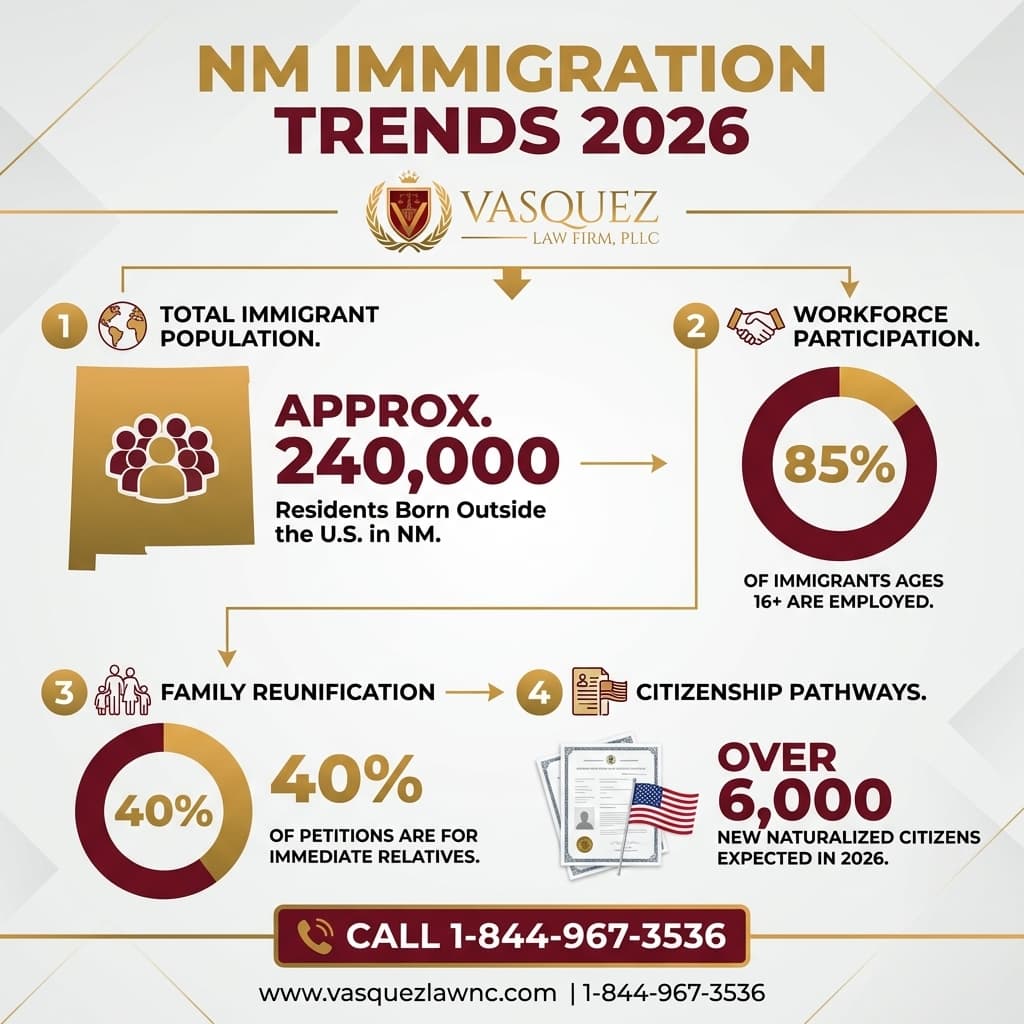
New Mexico immigration statistics for 2026 show a nuanced picture of the immigrant population’s size, composition, and status. According to the Migration Policy Institute, the total immigrant population in New Mexico numbers about 134,000, which is roughly 6.8% of the state’s overall population.
Of these, an estimated 57,000 are undocumented immigrants, representing about 2.9% of all residents. The undocumented population has fluctuated with changes in federal immigration enforcement and economic conditions.
The state's immigrant community significantly contributes to the local economy, labor market, and cultural diversity. Many immigrants originate from Mexico, Central America, and increasingly from Asia.
Tracking these numbers helps policymakers and communities understand needs and tailor services effectively. For individuals, knowing these statistics provides context when navigating immigration law or applying for status.
For personalized guidance, our immigration legal services offer expert assistance for residents in North Carolina, Florida, and nationwide.
Understanding the distribution of immigrant populations across New Mexico’s diverse regions reveals important insights. Urban centers such as Albuquerque and Santa Fe attract the majority of immigrants due to employment opportunities and established communities. Meanwhile, rural areas experience slower growth but still benefit from immigrant labor in agriculture and service industries.
Moreover, the dynamic changes in immigration patterns over recent years reflect both economic push and pull factors. For instance, tighter border enforcement has led to shifts in migration routes, while economic recovery post-pandemic encourages new arrivals seeking work in industries like construction, hospitality, and healthcare.
Community organizations and local governments utilize this data to develop programs supporting immigrant integration, such as language access services, workforce training, and legal aid clinics. These efforts demonstrate how accurate statistics are instrumental in fostering inclusive and resilient communities across New Mexico.
Key Data Points on Demographics
- Total immigrant population: 134,000 (6.8% of NM residents)
- Undocumented immigrants: approximately 57,000
- Majority origin: Mexico and Central America
- Secondary origins: Asia and other regions
Why These Numbers Matter
Understanding immigration statistics reveals who immigrants are, their impact on state services, and legal challenges they face. Dreamers and other immigrants in orlando and beyond benefit by learning these trends to make informed decisions about their rights and applications.
For example, knowing that a large portion of the immigrant population is young or part of mixed-status families can inform advocates and policymakers about the need for education and healthcare access. Similarly, awareness of undocumented population sizes helps immigrants evaluate risks and opportunities when seeking legal pathways to status adjustment.
Additionally, businesses and employers use this data to plan recruitment and compliance with labor laws. For immigrants themselves, understanding these demographic patterns can empower community connections and participation in civic life, fostering a sense of belonging and security.
Current Trends in Ethnicity and Age
Ethnicity data reveals that Hispanic or Latino immigrants represent over 85% of New Mexico’s immigrant population. This predominance shapes community culture, language use, and social services demand.
Asian immigrants hold smaller but growing percentages, reflecting increased migration from Asia in the last decade.
Age distribution favors younger immigrants: about 40% are under 30 years old, reflecting family reunification and workforce participation trends. Dreamers, many under age 30, are a significant part of this demographic.
Older immigrant populations face different legal challenges, including access to healthcare benefits and retirement security.
The predominance of Hispanic immigrants influences New Mexico’s educational systems, where bilingual programs and culturally relevant curricula are vital. For instance, schools in Albuquerque often provide Spanish language services to accommodate students from immigrant families, helping improve academic outcomes and community engagement.
In addition to cultural impacts, age demographics affect labor participation. Younger immigrants frequently work in sectors such as hospitality, retail, and construction, contributing significantly to New Mexico’s economy. Conversely, older immigrants may rely more heavily on public health resources and social support programs, highlighting the importance of accessible healthcare and legal protections.
Community organizations often tailor services to these demographic patterns, offering youth mentorship programs and senior legal aid. For example, Dreamers benefit from scholarships and DACA renewal assistance, while older immigrants may require guidance on Social Security eligibility or Medicaid enrollment.
Ethnicity Breakdown
- Hispanic or Latino: 85%+
- Asian: 7%
- White Non-Hispanic: 5%
- Other ethnicities: 3%
Age Group Distribution
- Under 18 years: 25%
- 18 to 29 years: 40%
- 30 to 49 years: 25%
- 50 years and older: 10%
New Mexico Immigration Laws and Impact
New Mexico has enacted several laws in 2026 to improve immigrant protections and access to state resources. These laws reflect a growing trend toward integrating immigrants into community and economic life.
Key statutes allow undocumented individuals to obtain driver's licenses and qualify for in-state tuition, which previously posed major barriers. These steps improve safety, education prospects, and economic mobility for immigrants.
However, immigration enforcement remains a federal responsibility. The state’s Immigration Detention Center holds individuals ordered for removal or awaiting hearings.
Understanding how New Mexico immigration laws interact with federal policies is essential. Attorney Vasquez provides expert advice to help you navigate complex immigration law and protect your rights.
One practical example is how expanded driver’s license eligibility reduces the risk of unlicensed driving citations, which can have cascading immigration consequences. Immigrants who obtain licenses gain safer mobility for work, school, and family needs.
Similarly, in-state tuition laws open doors for undocumented students to pursue higher education affordably. This access creates pathways to better employment and community contributions, which benefit both immigrants and the state economy.
Yet, challenges persist. Federal immigration enforcement policies may still lead to detentions and deportations despite state protections. Therefore, maintaining legal counsel and staying informed on both state and federal law changes remain critical for immigrant communities.
State-Level Laws
- Driver's Licenses Access expanded for undocumented
- In-State Tuition for DACA and undocumented students
- Support services for immigrant families and children
Federal Enforcement and Detention Center
Federal immigration authorities oversee enforcement, including detentions in New Mexico facilities. Knowing your rights if detained and legal options is critical.
The New Mexico immigration detention center operates under federal jurisdiction but collaborates with local legal aid groups to ensure detainees receive access to counsel and due process. For example, detainees can request bond hearings or seek asylum claims with proper representation.
Understanding the detention process helps immigrants and families prepare for court proceedings and avoid common pitfalls, such as missing hearings or failing to provide necessary documentation. Legal support is vital to navigate these complex environments and protect individual rights.
Common Mistakes and How to Avoid Them
- Failing to keep immigration documents updated - remedy with timely renewals
- Ignoring changes in state laws - stay informed via reliable sources
- Missing deadlines for applications and renewals - use reminders and legal help
- Relying on unverified legal advice - consult licensed attorneys
- Not preparing for immigration court hearings - seek legal representation
- Sharing private info with unauthorized parties - protect your data
- Assuming local laws apply to federal immigration cases - know jurisdiction limits
If you remember one thing: Work with a qualified immigration attorney to guide your case and avoid costly errors.
For example, many immigrants unintentionally let their DACA status expire, causing loss of work authorization and driving privileges. Setting calendar reminders or using legal services can prevent such oversights.
Furthermore, relying on inaccurate information from informal sources like social media or unauthorized consultants can lead to application denials or deportation risks. Always seek advice from accredited legal professionals familiar with New Mexico’s specific laws and federal immigration procedures.
Lastly, failure to appear for scheduled court hearings or to respond promptly to Requests for Evidence (RFEs) can result in removal orders. Being proactive, organized, and legally prepared maximizes chances for successful case outcomes.
Timeline: What to Expect with Your Case
- Weeks 1-2: Organize documents and gather evidence for your case
- Weeks 3-5: Submit applications or petitions to USCIS
- Weeks 6-12: Biometrics appointment and interviews
- Weeks 13-24: Await decision and prepare for possible requests for additional information
- Month 6+: Receive decision or attend immigration court if needed
This timeline may vary based on case complexity and current USCIS and EOIR processing times.
For instance, DACA renewals typically follow a similar schedule, but delays can occur due to increased application volume or policy changes. Staying in regular contact with your attorney and USCIS online accounts helps track progress and respond timely to any updates.
In removal proceedings, timelines may be less predictable. Court dates can be rescheduled, and hearings may extend over months or years depending on case details. Early consultation with counsel enables better case management and preparation for all eventualities.
Understanding this timeline also helps families plan financially and emotionally during the process. Knowing when to expect interviews or decisions reduces uncertainty and supports mental well-being during immigration proceedings.
Frequently Asked Questions
How many undocumented immigrants are in New Mexico?
As of 2026, an estimated 57,000 undocumented immigrants live in New Mexico, around 2.9% of the state's population. These figures can fluctuate due to policy changes and enforcement efforts. Knowing your immigration status options and getting legal advice can protect your future and rights. For example, some undocumented immigrants may qualify for relief programs or legal status adjustments, and consulting an attorney can clarify eligibility and application processes.
Which ethnicity has the highest immigrant population in New Mexico?
The largest ethnic group among New Mexico immigrants is Hispanic or Latino, making up over 85%. This shapes many areas such as education, labor market, and community services across the state. This predominance influences language access programs and cultural competency initiatives in public institutions, ensuring immigrant needs are met effectively.
What state has the highest immigration population overall?
California leads the nation with the highest immigrant population. Texas and Florida follow. New Mexico’s immigrant population is smaller but notable for its demographic percentage relative to total population. This highlights how even smaller states have vibrant immigrant communities that contribute culturally and economically, warranting tailored policies and legal support.
Are more people moving to or leaving New Mexico?
Recent trends show more people leaving New Mexico than moving in, particularly young adults looking for jobs. However, immigrant communities tend to remain stable or grow due to family reunification and migration from nearby states. For instance, immigrants often relocate within the Southwest seeking work or community ties, which sustains population levels in many New Mexico cities.
What recent changes in New Mexico immigration laws affect residents?
New Mexico expanded access to driver's licenses for undocumented immigrants and in-state tuition eligibility for DACA recipients in 2026. These laws help immigrants access education and mobility rights but require proper applications. These changes reduce barriers and enhance opportunities for immigrants to integrate and contribute economically and socially within the state.
How does the New Mexico immigration detention center operate?
The detention center holds immigrants pending court hearings or deportation. While under federal jurisdiction, legal rights apply, and detained individuals should seek legal guidance to protect their interests. Access to counsel, visitation rights, and due process are critical components, and detainees can request bond hearings or pursue relief options with attorney assistance.
What is the process for Dreamers in New Mexico to apply for legal status?
Dreamers apply through the DACA program using USCIS Form I-821D and supporting documents. Local aid organizations and attorneys in New Mexico can offer important assistance with these complex applications. Ensuring complete and accurate submissions improves approval chances, while timely renewals maintain work authorization and protection from removal.
Can undocumented immigrants in New Mexico receive COVID-19 vaccinations and health services?
Yes, undocumented immigrants can receive COVID-19 vaccines and certain health services without fear of immigration consequences in New Mexico. This policy promotes public health across communities by ensuring broad vaccine access and preventing disease spread. It also demonstrates the state's commitment to inclusive healthcare regardless of immigration status.
About Vasquez Law Firm
At Vasquez Law Firm, we combine compassion with aggressive representation. Our motto "Yo Peleo" (I Fight) reflects our commitment to standing up for your rights.
- Bilingual Support: Se Habla Español - our team is fully bilingual
- Service Areas: North Carolina, Florida, and nationwide immigration services
- Experience: Over 15 years helping clients navigate complex legal matters
- Results: Thousands of successful cases across multiple practice areas
Attorney Trust and Experience
Attorney Vasquez holds a Juris Doctor degree and is admitted to practice in the North Carolina State Bar. With over 15 years of dedicated legal experience, he has built a reputation for providing personalized attention and achieving favorable outcomes for his clients.
His extensive background includes handling complex immigration cases such as asylum claims, family-based petitions, and deportation defense. Clients benefit from his thorough understanding of both federal and state immigration laws, enabling strategic case management tailored to individual needs.
Moreover, Attorney Vasquez is known for his community engagement and advocacy, participating in workshops and legal clinics to educate immigrants about their rights and options. This commitment ensures clients receive not only legal representation but also empowering guidance throughout their immigration journey.
Don't wait to get the help you deserve. Call us now for immediate assistance.
Se Habla Español
Sources and References
- U.S. Citizenship and Immigration Services (USCIS)
- Executive Office for Immigration Review (EOIR)
- 8 U.S.C. § 1255 - Adjustment of Status
Take the first step toward justice today. Our team is standing by to help.
Start Your Free Case Evaluation Now
Call us: 1-844-967-3536
Se Habla Español - Estamos aquí para ayudarle.

William Vasquez
Founder & CEO, Vasquez Law Firm, PLLC
William Vasquez is the founder and CEO of Vasquez Law Firm, PLLC, a results-driven firm specializing in immigration, criminal defense, personal injury, and workers' compensation. A U.S. Air Force veteran and recipient of the Joint Service Achievement Medal, William is dedicated to fiercely fighting for his clients' rights.
Related Legal Services
Need legal help? Learn more about learn about our immigration practice, or contact us for a free evaluation.
You can also visit statewide immigration attorneys for more information.