Immigration Cases: How to Check Status and What to Know in 2026
Wondering how to check your immigration cases status in 2026? Learn the steps, rights, and issues. Contact Vasquez Law for a free consultation.
Published on March 28, 2026
Talk to an immigration attorney
Free call. A clear plan for your case.
Free & confidential · Se habla espanol · 24/7
Have questions? Talk to an attorney - free evaluation.
Call 1-844-967-3536Worried how the latest immigration news affects you?
Schedule a confidential case review with an immigration attorney - know exactly where you stand.
USCIS Case Status
Check your USCIS case status
Enter your receipt number and get the official status. Free, no registration.
Immigration Cases: How to Check Status and What to Know in 2026
If you're involved in immigration cases, understanding how to check your status and what to expect during the process is crucial in 2026. This guide covers the different types of immigration cases, common issues faced, rights you have throughout the process, and how to track your case status online or with an EOIR case number. Whether you're in Smithfield, North Carolina, or Florida, our experts explain key facts and steps to protect your immigration rights.
Need help with your case? Our experienced attorneys are ready to fight for you. Se Habla Español.
Schedule Your Free Case Evaluation
Or call us now: 1-844-967-3536
Quick Answer
Immigration cases in 2026 involve various types such as removal, asylum, or adjustment of status. You can check your immigration court case status online using the EOIR case number or your USCIS receipt number. Understanding your rights helps you navigate issues that arise during the process.
- Use EOIR online tools to check case status
- Different types of immigration cases have different procedures
- Legal rights include representation and appeal
- Tracking your case helps meet deadlines
- Vasquez Law Firm can assist with all immigration cases
Understanding Different Types of Immigration Cases
For example, Maria from Smithfield filed an asylum application after fleeing persecution in her home country. Her case falls under removal proceedings because the government is reviewing whether she qualifies for protection. Meanwhile, John applied for adjustment of status through a family petition in Florida. Understanding these different types explains why their court processes vary significantly.
In addition to asylum and adjustment of status, immigration cases often include deportation defense, naturalization applications, and waivers of inadmissibility. Each category has its own legal standards and procedural steps. For instance, naturalization applicants must meet residency and good moral character requirements, while waiver petitions often require demonstrating hardship to qualifying relatives.
Real-life examples help clarify these distinctions. For example, Ana in Florida is facing deportation but is eligible to apply for cancellation of removal due to her long-term residence and family ties. Meanwhile, Luis is pursuing naturalization after years as a lawful permanent resident. Recognizing the nuances in these cases is vital to selecting the correct legal strategy.
Removal Proceedings
Removal proceedings decide if an individual can stay in the U.S. or must leave. These cases involve an immigration judge and procedural hearings. Missing deadlines can result in deportation orders.
For example, if an individual misses a master calendar hearing without notifying their attorney, an immigration judge may issue an in absentia removal order. This underscores the importance of understanding hearing schedules and deadlines. Removal cases also often require gathering evidence to challenge deportability or to apply for relief from removal.
Additionally, removal proceedings can be complex when multiple grounds for removal exist or when the individual has prior criminal convictions. In such scenarios, legal expertise is critical to explore all available defenses and relief options.
Asylum Cases
Individuals who fear persecution may apply for asylum. This type requires gathering evidence of danger and participating in hearings where a judge assesses credibility and eligibility.
Practical scenarios include those fleeing political oppression, religious persecution, or gang violence. The applicant must provide credible testimony and corroborate evidence, such as country conditions reports or affidavits. For example, Maria submitted detailed affidavits explaining her fear of returning home, which was crucial in her asylum approval.
Asylum cases can also involve complex legal arguments, such as whether persecution is on protected grounds like race or political opinion. Timely filing within one year of arrival is important, though exceptions may apply for changed circumstances.
Adjustment of Status
This process lets eligible immigrants apply to become lawful permanent residents while in the U.S. It involves submitting forms like I-485 and attending interviews.
For example, John in Florida filed an I-485 application based on his marriage to a U.S. citizen. His process included an interview to verify the authenticity of the marriage and background checks. Successful adjustment leads to a green card granting lawful permanent resident status.
Adjustment of status can also be based on employment, asylum grants, or special immigrant categories. Applicants must ensure they meet eligibility requirements, including maintaining lawful status in many cases, to avoid denials or complications.
How to Check Your Immigration Case Status Online
Imagine Carlos who wants to know the progress of his immigration case filed in North Carolina. He can check online by entering his EOIR case number at the official immigration court website. The Executive Office for Immigration Review (EOIR) provides a free, updated case status system accessible nationwide.
Regularly checking case status is essential, especially when receiving notices or preparing for hearings. For example, if Carlos notices a change in hearing dates or new case activity, he can promptly notify his attorney and adjust his preparations accordingly. Many clients find peace of mind by tracking their cases digitally to avoid missing critical deadlines or surprises.
Additionally, checking status online helps identify if additional documents or responses are required. For example, if a Request for Evidence (RFE) is issued, timely submission is required to avoid delays or denials. By using official portals, applicants stay informed directly from government sources rather than relying on third-party updates.
Find Your EOIR Case Number
Your EOIR number is typically on notices from the immigration court. It usually starts with three letters followed by numbers (e.g., A123456789).
If you cannot locate your EOIR number, contact your attorney or the court clerk’s office. Having this number ready is critical before checking your case online. For detained individuals, the number is often listed on bond hearing notices or detention facility documents.
Knowing your EOIR case number also helps when communicating with the court or government agencies. Always keep copies of notices and maintain organized records for quick reference.
Use EOIR Case Status Online
Visit EOIR's website and enter your number to see upcoming hearings, decisions, or continuances. This tool helps you stay informed.
The online system provides hearing schedules, case updates, and decisions issued by immigration judges. For example, if a hearing is rescheduled, the system reflects the new date, allowing you to adjust your plans accordingly. This reduces the risk of missing hearings due to outdated information.
Keep in mind that some case details might not be immediately updated online. If in doubt, contact your attorney or the court directly for confirmation.
USCIS Case Status Online Tool
For applications made through the U.S. Citizenship and Immigration Services, use your receipt number on the USCIS website (uscis.gov) to track processing status, receive updates, and see estimated timeframes.
For example, if you filed Form I-765 for employment authorization, checking the online status lets you know if your card has been issued or if additional evidence is requested. This transparency helps reduce anxiety and ensures timely responses.
USCIS also provides estimated processing times based on your form type and service center, which can help you set realistic expectations. Signing up for email or text alerts through the USCIS site provides automatic updates as your case progresses.
Common Issues in Immigration Cases and Your Rights
Many immigrants face delays due to administrative backlogs or incomplete paperwork. For example, Ana's family petition was delayed because a required document was missing. Knowing this, she contacted her attorney to resolve the issue quickly.
Another common challenge is changes in immigration policy or law that affect pending cases. For instance, shifts in asylum eligibility criteria or public charge rules can impact how your case is reviewed. Staying informed and working with legal counsel ensures you can adapt to these changes promptly.
Additionally, language barriers or misunderstanding legal notices can lead to missed deadlines or incorrect filings. Utilizing bilingual legal support, such as provided by Vasquez Law Firm, helps prevent such pitfalls and ensures all communications are clearly understood and properly addressed.
Processing Delays
Government agencies often experience caseload backlogs. Some cases take months or years to resolve, especially asylum and removal cases.
For example, asylum seekers may wait several years for a hearing date due to high demand. During this time, applicants must maintain eligibility and comply with reporting requirements. Delays can be frustrating but are common due to resource constraints and policy changes.
Tracking your case status online and staying in contact with your attorney can help you respond quickly if additional information or action is required to move your case forward.
Missing or Incorrect Documentation
One common cause for delays or denials is incomplete filings. Double-checking records and legal advice can prevent these errors.
For example, submitting an I-130 family petition without proof of relationship, such as marriage certificates or birth certificates, can cause denial or long delays. Similarly, missing signatures or fees on forms can result in rejection.
Legal professionals often review applications before submission to catch these errors. If you receive a Request for Evidence or Notice of Intent to Deny, timely and accurate response is crucial to avoid case dismissal.
Your Rights Throughout Your Case
You have the right to legal representation, to be informed about your hearings, and to appeal adverse rulings if eligible. These protect your ability to participate and defend yourself.
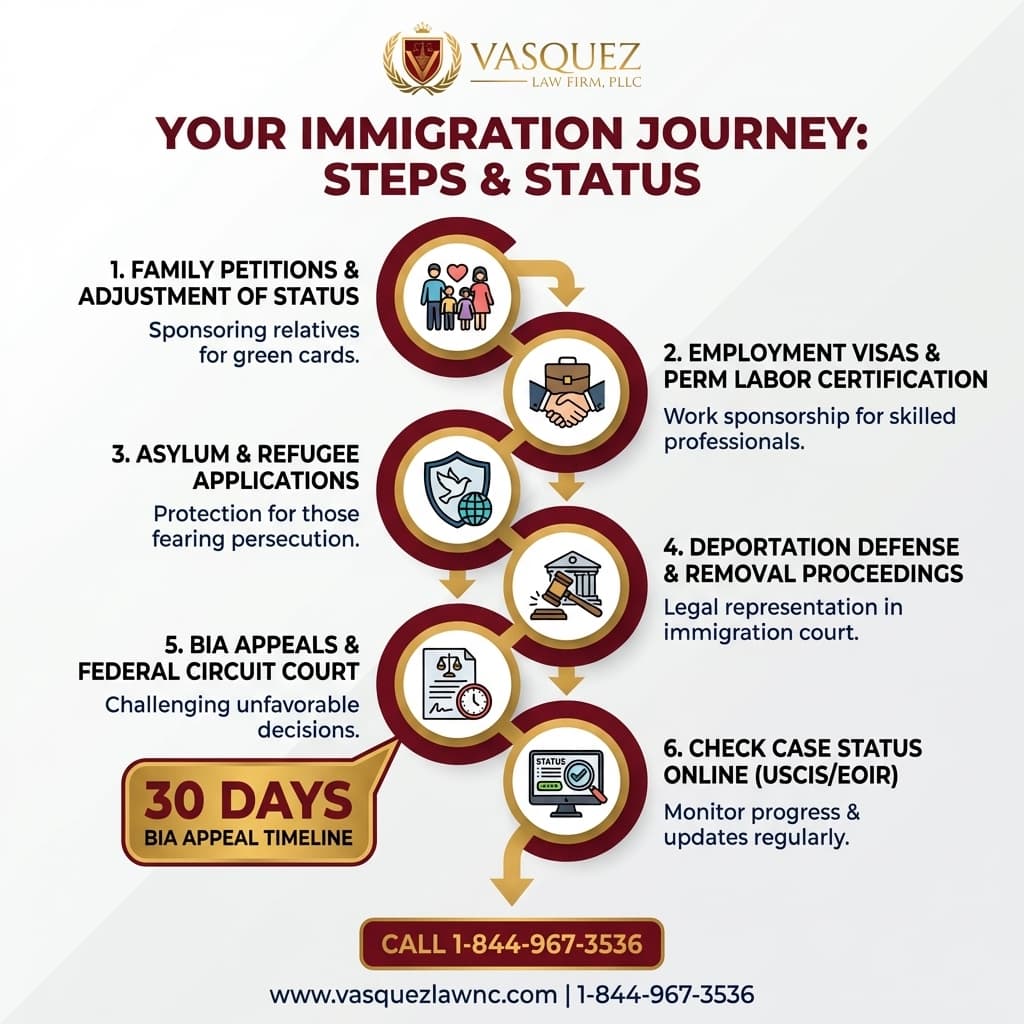
For example, if you disagree with an immigration judge’s decision, you can file an appeal with the Board of Immigration Appeals (BIA) within 30 days. Having an attorney familiar with appeals increases the likelihood of success.
Other important rights include the right to a translator if you do not speak English well and the right to request continuances if more time is needed to prepare your case. Knowing and exercising these rights ensures fair treatment throughout the process.
Timeline: What to Expect in an Immigration Case
Javier applied for adjustment of status in Smithfield in early 2026. His application took about 8 months for processing, including biometrics, interview, and final decision. Immigration timelines vary, but knowing key phases helps you prepare.
Timelines can fluctuate widely depending on case complexity, service center workload, and individual circumstances. For example, asylum cases often take longer due to security checks and hearing backlogs, while family-based petitions may proceed faster if all documents are in order.
Understanding the process also helps manage expectations and plan accordingly. For instance, if your case is expected to take over a year, you may need to make arrangements for work, travel, or family obligations during that period.
- 0-3 months: Case receipt and initial processing (biometrics appointments)
- 3-6 months: Background checks and possible request for evidence
- 6-12 months: Interview scheduling and hearings
- 12+ months: Final decision or appeal
Stay in touch with your attorney and monitor your immigration court case status to avoid surprises in your timeline.
When to Call a Lawyer About Your Immigration Case
If you experience any of these triggers, it is time to seek legal advice:
- Your hearing notice arrives, and you do not understand it
- You miss any court date or receive a removal order
- You're unsure how to respond to Requests for Evidence or Notices of Intent to Deny
- You want to appeal a denial or removal order
- You are detained or arrested by immigration authorities
- You need help understanding your rights or forms
- You face criminal charges impacting your immigration status
Additionally, consulting a lawyer early can help you evaluate eligibility for relief such as asylum, cancellation of removal, or waivers. Legal experts can also guide you through complex procedures, ensure timely filings, and represent you at hearings or interviews.
Waiting too long to get legal assistance can limit your options and increase the risk of unfavorable outcomes. For example, missing a deadline to file an appeal may close the door on challenging a removal order. Therefore, proactive legal support is vital at every stage.
About Vasquez Law Firm
At Vasquez Law Firm, we combine compassion with aggressive representation. Our motto "Yo Peleo" (I Fight) reflects our commitment to standing up for your rights.
- Bilingual Support: Se Habla Español - our team is fully bilingual
- Service Areas: North Carolina, Florida, and nationwide immigration services
- Experience: Over 15 years helping clients navigate complex legal matters
- Results: Thousands of successful cases across multiple practice areas
We understand that immigration cases can be stressful and confusing. That's why we prioritize clear communication and personalized attention. Whether you need help with family petitions, deportation defense, or naturalization, our team provides tailored strategies to maximize your chances of success.
Furthermore, Vasquez Law Firm stays updated on the latest legal developments and policy changes, ensuring your case benefits from current knowledge and best practices. Our clients trust us to provide honest assessments and vigorous representation throughout their immigration journey.
Attorney Trust and Experience
Attorney Vasquez holds a Juris Doctor degree and is admitted to practice in the North Carolina State Bar. With over 15 years of dedicated legal experience, he has built a reputation for providing personalized attention and achieving favorable outcomes for his clients.
His extensive experience includes successfully handling removal defense, asylum claims, family-based adjustments, and appeals. Clients appreciate his proactive approach, attention to detail, and dedication to protecting their rights at every step.
Attorney Vasquez also offers community education and outreach, helping immigrants understand their rights and options. His bilingual skills enable him to connect deeply with Spanish-speaking clients, bridging cultural and language gaps effectively.
Don't wait to get the help you deserve. Call us now for immediate assistance. Se Habla Español.
Frequently Asked Questions
What are the different types of immigration cases?
Immigration cases include asylum requests, family petitions, deportation defense, adjustment of status, and naturalization applications. Each type follows specific procedures and requirements. Knowing which type applies to you will help you understand the process and prepare the correct documentation. For example, asylum cases require proving fear of persecution, while family petitions involve proving a qualifying relationship. Understanding these distinctions enables better case preparation and strategy.
How can I check the status of my immigration case?
You can check your case status online using your USCIS receipt number for applications or your EOIR case number for court cases. Both USCIS and EOIR provide official online portals for up-to-date information on your case progress. These tools allow you to view hearing dates, decisions, or requests for evidence. Staying updated helps you meet deadlines and respond promptly to government communications, which is critical to avoid delays or negative outcomes.
What are common issues faced in immigration cases?
Common issues include delays, missing documents, changes in eligibility, and challenges in proving your case. For example, delays may arise from agency backlogs or security checks. Missing paperwork such as birth certificates or proof of relationship can lead to denials. Changes in law or policy may impact eligibility during processing. Understanding these potential problems early and consulting an experienced attorney can help you address them proactively and improve your chances of a successful outcome.
What rights do individuals have during immigration cases?
You have the right to legal representation, to receive notices, to submit evidence, and to appeal decisions. These rights help ensure fair hearings and opportunities to defend your immigration status. For instance, you can request a translator if you do not speak English. If you disagree with a decision, you may file an appeal within a specified time frame. Exercising these rights is essential to protect yourself and navigate the complex immigration system effectively.
How long does the immigration case process take on average?
Processing times vary widely by case type and government workload. Some cases take months, while others such as asylum or removal proceedings may take several years. For example, adjustment of status applications often process within 8 to 12 months, but asylum hearings may be delayed due to backlogs. Tracking your case status helps set realistic expectations and plan accordingly. Working with an attorney can also help you navigate timing issues and respond to any requests promptly.
Can I check my immigration court case status by name?
Checking by name is limited and less reliable. It's better to use your EOIR case number for accurate and updated status via EOIR's online case status tool. Name searches may return multiple results or incomplete information, leading to confusion. Your EOIR number is unique to your case and ensures you access the most current updates on hearings, decisions, or continuances. If you do not have your case number, contact your attorney or the court for assistance.
What happens if I miss a hearing date in an immigration case?
Missing a hearing can result in a removal order issued in your absence. It's critical to attend all hearings or contact your attorney for rescheduling. Legal help is available if you miss a date to reopen your case. For example, you may file a motion to reopen within a limited time if you had a valid reason such as illness. However, missing hearings without explanation severely limits your options and can lead to deportation. Staying informed and communicating proactively with your lawyer is essential.
How can Vasquez Law Firm help with my immigration case in Smithfield?
Vasquez Law Firm provides knowledgeable, bilingual immigration representation in Smithfield, NC, and Florida. We help with case status checks, document preparation, hearings, and protecting your rights throughout the process. Our attorneys guide you through complex procedures, respond to government requests, and advocate aggressively at court proceedings. With over 15 years of experience, we understand local and federal immigration laws and tailor strategies to your unique situation to achieve the best possible outcomes.
Sources and References
- U.S. Citizenship and Immigration Services (USCIS)
- Executive Office for Immigration Review (EOIR)
- U.S. Department of State Visa Information
Take the first step toward justice today. Our team is standing by to help. Se Habla Español.
Start Your Free Case Evaluation Now
Call us: 1-844-967-3536
Se Habla Español - Estamos aquí para ayudarle.
If you need legal assistance, learn more about get immigration legal help today, or call us at 1-844-967-3536 for a free case evaluation.

William Vasquez
Founder & CEO, Vasquez Law Firm, PLLC
William Vasquez is the founder and CEO of Vasquez Law Firm, PLLC, a results-driven firm specializing in immigration, criminal defense, personal injury, and workers' compensation. A U.S. Air Force veteran and recipient of the Joint Service Achievement Medal, William is dedicated to fiercely fighting for his clients' rights.
Related Legal Services
Need legal help? Learn more about get immigration legal help today, or contact us for a free evaluation.
You can also visit our NC immigration team for more information.