How a Legalization Program Can Help You in 2026
Learn how a legalization program works in 2026. Discover your options to legalize your status in Smithfield. Contact Vasquez Law Firm for a free consultation.
Published on March 14, 2026

Have questions? Talk to an attorney - free evaluation.
Call 1-844-967-3536Worried how the latest immigration news affects you?
Get a free, confidential case review with an immigration attorney - know exactly where you stand.
How a Legalization Program Can Help You in 2026
Legalization programs offer a vital path for many undocumented immigrants in Smithfield seeking to adjust their immigration status in 2026. These programs can allow eligible individuals to apply for legal residency by meeting certain requirements such as continuous presence or humanitarian grounds. Understanding how these programs work is essential to protect your rights and explore your options. This article explains key aspects of legalization programs, including eligibility, application steps, common mistakes, timelines, and costs, plus practical notes for North Carolina and Florida residents.
Need help with your case? Our experienced attorneys are ready to fight for you. Se Habla Español.
Schedule Your Free Consultation
Or call us now: 1-844-967-3536
Quick Answer
A legalization program provides a pathway for undocumented immigrants in Smithfield to seek legal status by fulfilling eligibility criteria such as continuous residence, absence of serious crimes, and application submission. These programs may include provisions like the registry rule or Dignity Act proposals. The process involves documentation, USCIS filing, and possible interviews or biometrics.
- Eligibility depends on residency duration and legal history
- Applications require proof of continuous presence and identity
- USCIS sets fees and processes biometric appointments
- Legal representation can increase success chances
- Programs vary for North Carolina and Florida residents
What is a Legalization Program
Imagine living in Smithfield for over a decade without legal status but wanting to work and live without fear of deportation. A legalization program provides a legal way to obtain lawful status under U.S. immigration law. It usually requires you to have been physically present in the country for a set continuous period, demonstrate good moral character, and pass various background checks. Programs like these have been proposed and implemented in some form since the Registry Act of 1929, which allowed those living in the U.S. before June 28, 1921, to adjust status.
In 2026, discussions around broader legalization programs, including bills like the Dignity Act, aim to extend similar protections to a wider group of undocumented immigrants. These programs help individuals avoid deportation and gain work authorization, social security benefits, and, eventually, lawful permanent residency (green card).
Legalization programs differ from other immigration relief like asylum or visas because they are specifically designed for undocumented immigrants who meet predefined residency and eligibility criteria that federal law defines. Understanding these conditions is critical to determine if you or your family qualify and how to apply.
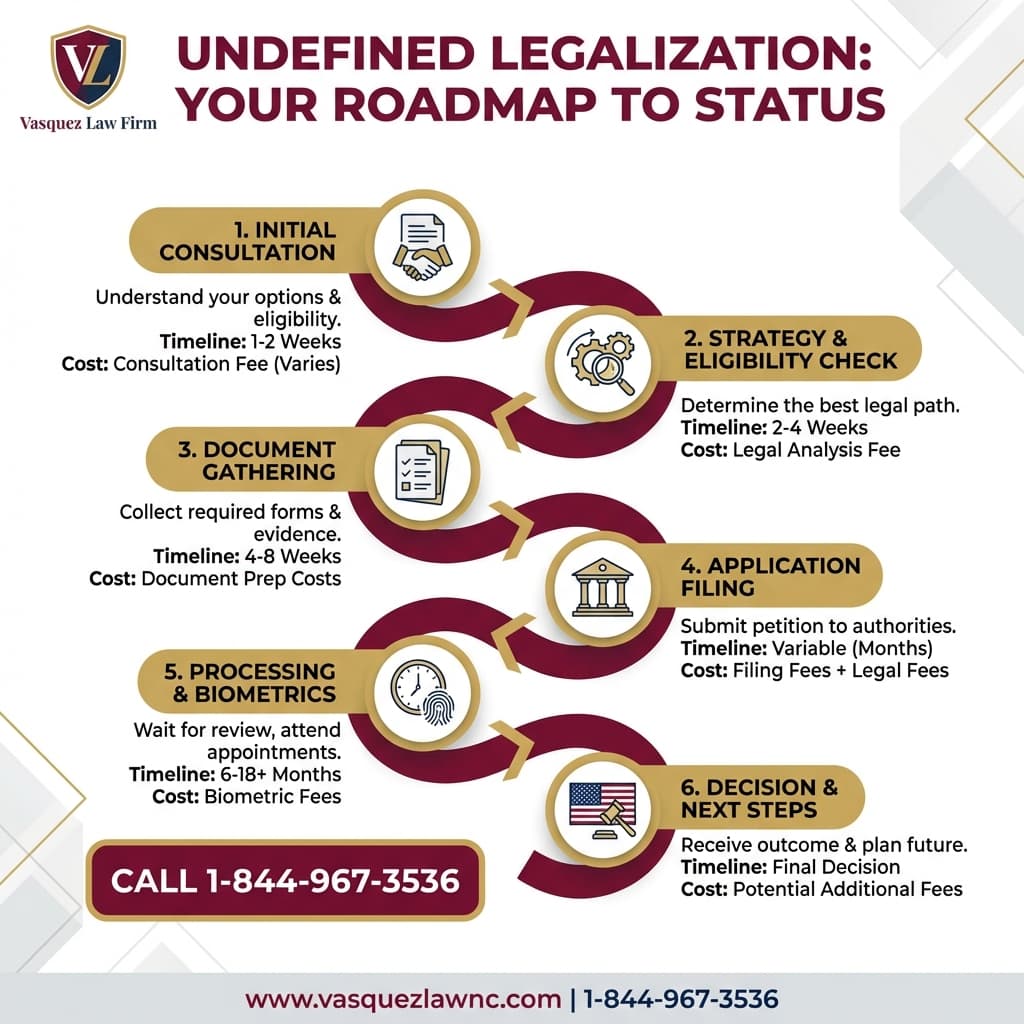
Step-by-Step Application Process
Juan, living undocumented in Smithfield, wants to apply under a legalization program. Here are the practical steps he will follow:
- Verify Eligibility: Confirm continuous physical presence, residency duration (e.g., 10 years), and lack of disqualifying criminal history.
- Gather Documents: Collect evidence like lease agreements, employment records, school records, or affidavits proving your stay and character.
- Complete Application Forms: Usually filed with USCIS. This includes forms such as I-485 Adjustment of Status if available under the program rules.
- Pay Fees: Pay filing fees, biometric fees, and any associated costs. Fee waivers may be available for eligible applicants.
- Attend Biometrics Appointment: USCIS schedules fingerprinting and photograph appointment to conduct background checks.
- Interview: In some cases, USCIS requires an in-person interview to verify the application information.
- Receive Decision: USCIS approves or denies the application. If approved, you receive a lawful status and possibly a work permit.
Each step has specific documents and details. Delays can occur due to incomplete evidence or background issues, so proper preparation is key.
Required Documents and Evidence Checklist
- Proof of continuous residence (bills, rent receipts, mail)
- Government-issued IDs or passports
- Birth certificates or family records
- Evidence of employment or schooling
- Criminal and immigration history documentation
- Police clearances or court records
- Medical or emergency records, if applicable
- Form-specific supporting documentation depending on program
Organize everything clearly before filing. Missing or inconsistent documents are the main reason for application delays or denials.
Timeline and What to Expect
- Week 1-4: Gather documents, review eligibility
- Week 5-8: Complete application form and submit with fees
- Week 9-12: USCIS processes receipt, schedules biometrics
- Week 13-16: Attend biometrics appointment
- Month 4-9: Possible interview scheduled; wait for decision
- Month 10+: Receive decision and next steps
Processing times vary by USCIS workload and case complexity. Applicants in Smithfield should plan for at least 6 to 12 months for full adjudication under most legalization programs currently under discussion.
Costs and Fees Factors
- Filing fee for form I-485 Adjustment of Status: around $1,225 (as of early 2026)
- Biometrics fee: approximately $85
- Legal fees vary based on case complexity and attorney experience
- Costs for document translations and medical exams
- Additional fees for appeal or motions if initial application is denied
Sometimes fee waivers or reductions are available based on financial hardship. Budget carefully and consult with a legal expert to understand expected expenses for your case.
Common Mistakes and How to Avoid Them
- Incomplete Applications: Use checklists and double-check each document before filing.
- Missed Deadlines: Track filing deadlines carefully; late applications are often rejected.
- Failing to Report Criminal History: Disclose accurately to avoid later denial for misrepresentation.
- Incorrect Filing Fees: Pay exact fees to prevent application delays.
- Skipping Legal Help: Legal advice increases chances of success and avoids costly errors.
- Unorganized Evidence: Organize documents clearly and logically.
- Relying on Outdated Information: USCIS rules and executive orders may change; stay updated.
If you only remember one thing: Preparation and accuracy improve your odds dramatically.
North Carolina and Florida Notes
North Carolina Notes
In Smithfield and throughout North Carolina, you can apply for federal legalization programs through USCIS offices and local legal assistance providers. The state offers limited public benefits for undocumented immigrants but accessing legal status can increase eligibility. Local attorneys like those at Vasquez Law Firm specialize in helping residents navigate legalization programs within the federal immigration framework.
Florida Notes
Florida residents benefit from similar federal legalization programs and face unique challenges due to high immigrant populations and immigration enforcement activity. Legal aid organizations and firms like Vasquez Law Firm focus on bilingual support and community outreach to support applicants across the state. State resources for undocumented individuals vary and do not grant legal status.
Nationwide Concepts
Legalization programs are federally administered. USCIS governs eligibility and processing across the U.S. including Smithfield. Although proposals like the Dignity Act aim to expand eligibility, actual implementation depends on Congress and the Executive Branch. Knowing federal law and possible regional enforcement trends is essential.
When to Call a Lawyer Now
- If you are unsure about eligibility for a legalization program
- If you have a criminal record that might impact your application
- If you have received removal or deportation notices
- If you need help gathering or organizing your application documents
- If your application was denied or delayed without explanation
- If you face potential enforcement actions or ICE raids
- If you want to explore all immigration relief avenues beyond legalization
- If you need guidance on fee waivers or reducing application costs
About Vasquez Law Firm
At Vasquez Law Firm, we combine compassion with aggressive representation. Our motto "Yo Peleo" (I Fight) reflects our commitment to standing up for your rights.
- Bilingual Support: Se Habla Español - our team is fully bilingual
- Service Areas: North Carolina, Florida, and nationwide immigration services
- Experience: Over 15 years helping clients navigate complex legal matters
- Results: Thousands of successful cases across multiple practice areas
Attorney Trust and Experience
Attorney Vasquez holds a Juris Doctor degree and is admitted to practice in both the North Carolina State Bar and Florida Bar. With over 15 years of dedicated legal experience, he has built a reputation for providing personalized attention and achieving favorable outcomes for his clients.
Don't wait to get the help you deserve. Call us now for immediate assistance.
Se Habla Español
Frequently Asked Questions
What is a legalization program?
A legalization program allows undocumented immigrants to apply for lawful status under certain conditions. These programs require continuous presence in the U.S., background checks, and other eligibility criteria. They offer a path to lawful permanent residency and legal work authorization, though details depend on the specific program and current law.
Can an illegal immigrant become legal after 10 years?
Yes, some legalization programs feature a 10-year residency rule allowing eligible immigrants who have lived in the U.S. continuously for 10 years to apply for legal status, provided other conditions like no serious criminal history are met. Legal advice is important to navigate eligibility properly.
How much does it cost to legalize an immigrant?
Costs vary by application type and legal support, with USCIS fees often totaling over $1,000. Additional costs include biometrics, medical exams, and attorney fees. Fee waivers are available for low-income applicants. Budgeting and legal consultation are recommended.
What is the process of legalization?
The process involves submitting applications to USCIS with supporting documents proving eligibility, paying fees, attending biometrics appointments, and possibly interviews. Approval leads to lawful status and work authorization. Timing depends on program and case details.
Do undocumented immigrants have legal rights?
Yes, they have rights such as protection from unlawful searches and access to emergency services. While some benefits require lawful status, knowing legal rights helps during interactions with law enforcement and immigration officials.
What is the registry for undocumented people?
The registry is an immigration rule from the Registry Act of 1929 for undocumented immigrants present before a certain date to adjust status legally. Modern legislative proposals seek to update these rules to benefit more immigrants under legalization programs.
When will the Dignity Act pass?
As of 2026, the Dignity Act is pending legislation aiming to expand legalization options. Its passage depends on Congressional action. Applicants should explore current options while monitoring legislative developments.
What are critical steps to prepare for legalization?
Key steps include gathering proof of presence and identity, reviewing criminal history, organizing documents, and consulting an attorney early. Accurate and complete preparation reduces risks of denials or delays.
Sources and References
- U.S. Citizenship and Immigration Services (USCIS)
- Executive Office for Immigration Review (EOIR)
- U.S. Department of State Visa Information
Take the first step toward justice today. Our team is standing by to help.
Start Your Free Consultation Now
Call us: 1-844-967-3536
Se Habla Español - Estamos aquí para ayudarle.

William Vasquez
Founder & CEO, Vasquez Law Firm, PLLC
William Vasquez is the founder and CEO of Vasquez Law Firm, PLLC, a results-driven firm specializing in immigration, criminal defense, personal injury, and workers' compensation. A U.S. Air Force veteran and recipient of the Joint Service Achievement Medal, William is dedicated to fiercely fighting for his clients' rights.
Related Legal Services
Need legal help? Learn more about how our immigration attorneys can help, or contact us for a free evaluation.
You can also visit our North Carolina immigration practice for more information.