What Are Deportation Judges and How They Impact Your Case in 2026
Wondering who deportation judges are and how they affect your case? Learn the facts, the process, and your rights in 2026. Call Vasquez Law for help.
Published on April 27, 2026
Talk to an immigration attorney
Free call. A clear plan for your case.
Free & confidential · Se habla espanol · 24/7

Have questions? Talk to an attorney - free evaluation.
Call 1-844-967-3536Check your case status now
Look up your immigration case below, then talk to an attorney about what it means — free.
Questions about your result?
Talk to an attorney about your case — free, no obligation.
What Are Deportation Judges and How They Impact Your Case in 2026
Deportation judges play a crucial role in immigration cases involving removal from the United States. In 2026, understanding who these judges are, how they operate, and what to expect during your deportation case in Raleigh or other areas of North Carolina and Florida can make a big difference. This guide explains what deportation judges do, the job qualifications, the court process, and your rights if facing deportation. If you are a Dreamer or any immigrant worried about your case, knowing how deportation judges impact your situation is critical. Vasquez Law Firm offers bilingual immigration legal help to protect your rights and offer strong representation.
Need help with your case? Our experienced attorneys are ready to fight for you. Se Habla Español.
Or call us now: 1-844-967-3536
Quick Answer
Deportation judges are federal officials who decide removal cases in immigration courts. They hear evidence, assess eligibility for relief, and issue deportation decisions. In 2026, knowing their role helps you prepare your defense.
- Appointed by the Attorney General
- Make decisions on removal proceedings
- Have varying experience and approval rates
- Your legal rights include a hearing before a judge
- Legal assistance improves your chances
Understanding Deportation Judges and Their Role
Imagine facing the possibility of removal from the U.S. without fully understanding who decides your case. Deportation judges, also called immigration judges, preside over removal proceedings in immigration courts across the nation, including Raleigh. They are the decision-makers who hear your case, listen to evidence, and ultimately decide if you must leave the country or can remain legally.
These judges operate under the Executive Office for Immigration Review (EOIR), part of the U.S. Department of Justice. Unlike traditional judges, deportation judges do not have lifetime appointments but serve as federal employees. They balance enforcing immigration laws with ensuring due process for individuals facing removal.
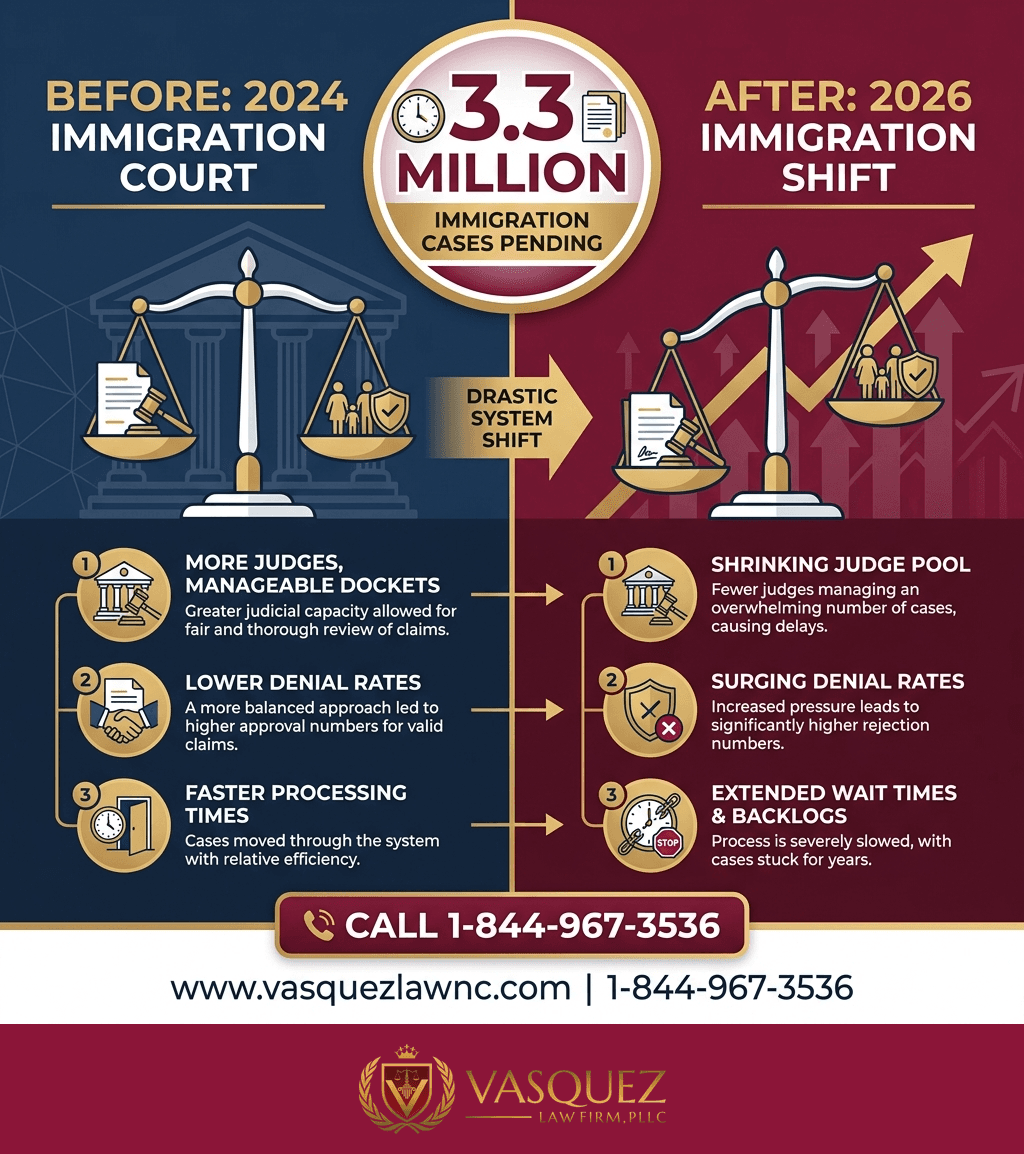
In 2026, the landscape of deportation judges is more complex. Recent policy changes and staffing shifts have influenced how cases proceed. Understanding the judge's role can empower you to actively participate and prepare for your hearing.
For anyone facing deportation in North Carolina or Florida, our immigration legal services team can guide you through this process and offer representation tailored to your needs.
How Deportation Judges Are Selected and Their Qualifications
Deportation judges are selected through a federal hiring process overseen by EOIR. Candidates must have a law degree and legal experience. Typically, these judges are licensed attorneys familiar with immigration law and courtroom procedures.
However, recent reports highlight concerns that some new hires possess less experience or training due to expedited hiring measures starting in 2020. This shift affects the quality of decisions in some proceedings. For example, a 2026 article in The Washington Post emphasized that less-trained deportation judges could lead to unfair or rushed decisions.
The immigration judge list is available publicly through EOIR's website, showing active judges and their assigned courts. Salaries for these judges generally range between $120,000 and $160,000 annually depending on seniority and location. The job involves managing heavy case loads and complex legal issues related to deportation and relief eligibility.
Brian Counihan Immigration Judge Example
Brian Counihan is an example of a well-known immigration judge who has handled numerous cases in the past decade. His experience and rating among stakeholders often demonstrate the variability in judicial approaches within immigration courts. Knowing your judge’s background can provide insight for your legal team.
Immigration Judge Ratings and Approval Rates
Immigration judge ratings, although unofficial, are sometimes shared by advocacy groups to highlight patterns in decision-making. The approval rate indicates how often judges grant relief to immigrants. These rates vary widely but tend to fall between 20% and 40%. This variability is crucial when planning your defense strategy.
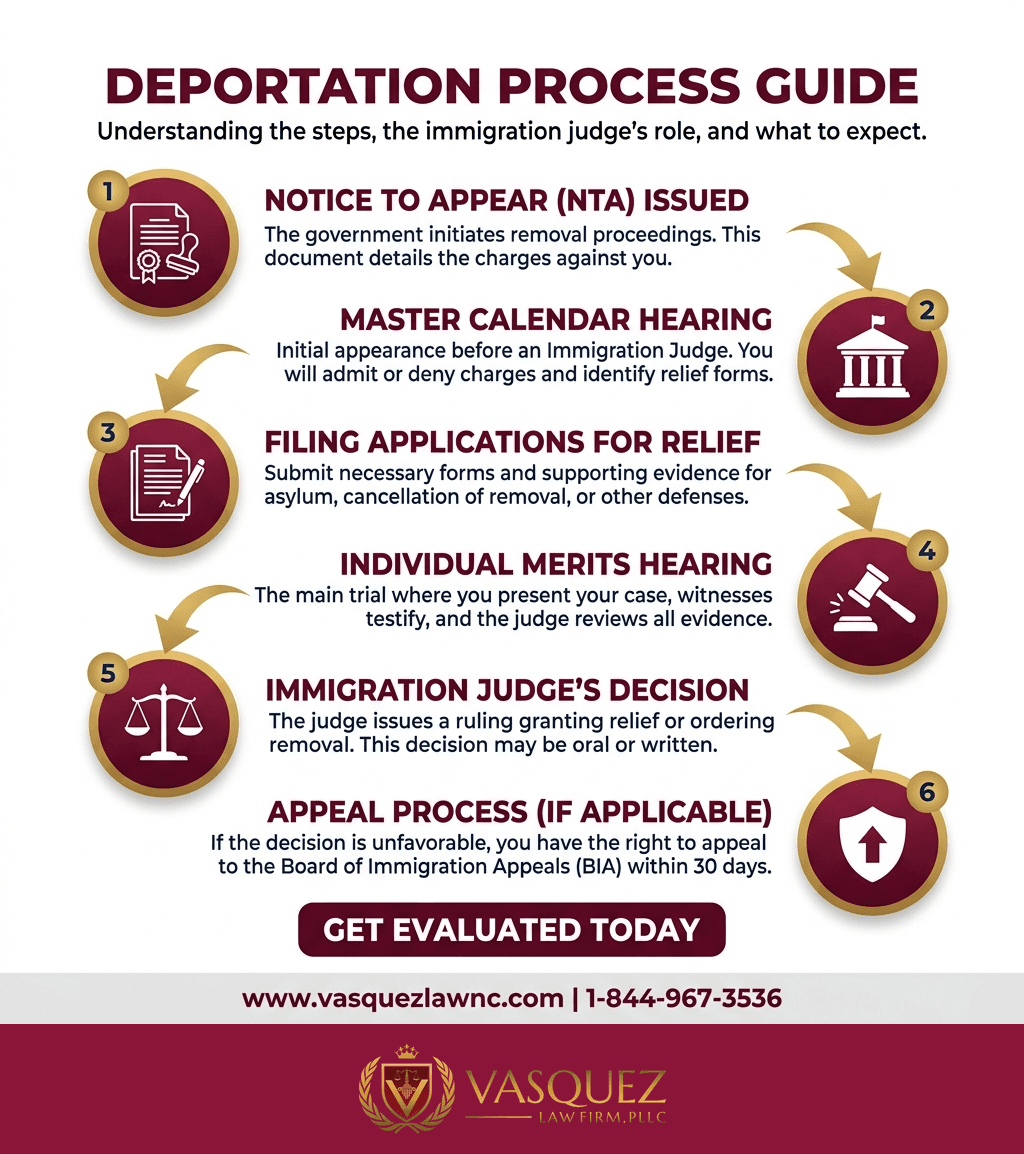
Step-by-Step: What to Expect in Your Deportation Case
- Notice to Appear (NTA): You receive a formal notice from ICE stating the government's intent to remove you.
- Master Hearing: This initial hearing covers your identity, eligibility for relief, and plea to charges.
- Individual Hearing: A more detailed hearing where evidence is presented, witnesses may testify, and legal arguments are made.
- Judge’s Decision: After hearings, the deportation judge issues a ruling allowing or denying relief.
- Appeal Possibilities: If your case is denied, you may appeal to the Board of Immigration Appeals (BIA).
Throughout these steps, deportation judges play the central role in evaluating your case, reviewing evidence, and enforcing federal immigration laws. Having proper legal representation can ensure your rights are protected at every stage.
Why Preparation Matters
Meeting filing deadlines and gathering documents, such as employment records or family ties, supports your defense. The judge will consider these elements to assess eligibility for relief like asylum, cancellation of removal, or adjustment of status.
Common Mistakes to Avoid During Deportation Hearings
- Missing Hearings: Not appearing can lead to automatic removal orders. Always attend or notify your attorney if you cannot.
- Lack of Legal Representation: Proceeding without an attorney greatly reduces chances of favorable outcomes.
- Failing to Submit Evidence Timely: Provide supporting documents before hearings to avoid rejection.
- Overlooking Relief Options: Not applying for possible forms of relief can result in removal despite eligibility.
- Inadequate Communication with Your Attorney: Keep your legal team informed of changes or concerns.
- Assuming All Judges Are the Same: Understand your specific judge’s tendencies for better case strategy.
- Ignoring Language Needs: Request interpreter services if English is not your first language.
If you only remember one thing: Engage a qualified immigration lawyer immediately after receiving a Notice to Appear.
Timeline of a Deportation Case in 2026
- Week 1-4: Receive Notice to Appear and prepare for master hearing.
- Month 1-3: Master hearing scheduled; enter plea and outline case.
- Month 3-12: Individual hearing preparation; gather evidence and witnesses.
- Month 6-14: Individual hearing takes place.
- Month 7-18: Expect judge’s decision and possible appeals.
This timeline can vary by court backlog, judge availability, and case complexity. In Raleigh and Florida, wait times have fluctuated but knowing the typical progression helps plan your defense.
Costs and Fees Associated with Deportation Cases
- Attorney Fees: Depend on case complexity but often range from $3,000 to $10,000 or more.
- Filing Fees: Some forms such as adjustment of status have federal fees, typically between $495 and $1,225.
- Additional Costs: Interpreter services or expert witness fees may add to expenses.
- Free or Low-Cost Services: Some organizations and nonprofit legal aid provide assistance if you qualify.
Vasquez Law Firm offers transparent fee structures and flexible payment plans. Contact us early to learn options and avoid costly delays.
Jurisdiction Notes for Raleigh, North Carolina, and Florida
North Carolina Notes
In Raleigh and across North Carolina, deportation cases fall under the Charlotte Immigration Court. Local courts impact hearing schedules and procedural nuances. North Carolina’s diverse immigrant population means judges handle various cases, requiring specialized legal knowledge.
Florida Notes
Florida hosts several immigration courts, including Miami and Orlando. Because the state has a large immigrant community, judges may have heavier caseloads. Representation is especially critical in Florida due to frequent policy changes impacting immigration proceedings.
Nationwide Concepts (General Only, Rules Vary)
Deportation judges nationwide operate under federal law but individual practices differ by court. Appellate review is by the Board of Immigration Appeals and ultimately federal courts. Always confirm local court procedures for the best legal approach.
When to Call a Lawyer About Your Deportation Case
- Immediately upon receiving a Notice to Appear
- If detained by ICE and awaiting hearing
- When you face an expedited removal order
- If facing criminal charges that could trigger deportation
- When seeking asylum or special relief options
- Before the first master hearing
- If the judge denies your claim
- If you need help filing appeals or motions
- To explore alternatives to removal such as cancellation of removal
About Vasquez Law Firm
At Vasquez Law Firm, we combine compassion with aggressive representation. Our motto "Yo Peleo®" (I Fight) reflects our commitment to standing up for your rights.
- Bilingual Support: Se Habla Español - our team is fully bilingual
- Service Areas: North Carolina, Florida, and nationwide immigration services
- Experience: Over 30 years helping clients navigate complex legal matters
- Results: Thousands of successful cases across multiple practice areas
Attorney Trust and Experience
Attorney Vasquez holds a Juris Doctor degree and is admitted to practice in both the North Carolina State Bar and Florida Bar. With over 15 years of dedicated legal experience, he has built a reputation for providing personalized attention and achieving favorable outcomes for his clients.
Don't wait to get the help you deserve. Call us now for immediate assistance.
Se Habla Español
Frequently Asked Questions
Who is the judge on a deportation case?
The judge in a deportation case is an Immigration Judge appointed by the Attorney General. These judges work in immigration courts and decide whether an individual can be removed from the U.S. or allowed to stay based on immigration law. They oversee hearings, examine evidence, and issue decisions.
How are deportation judges selected?
Deportation judges are selected through a competitive federal hiring process under the Executive Office for Immigration Review. Candidates must meet education and experience requirements and pass exams. However, recent concerns about hiring less experienced judges have emerged, affecting case outcomes.
Can I be deported without seeing a judge?
Generally, immigrants have a right to a hearing before a deportation judge. However, in some expedited removal cases, individuals can be deported without a formal hearing. Knowing your rights and having legal representation can help protect you in these situations.
What is the immigration judge approval rate?
The immigration judge approval rate refers to how often judges grant relief or cancellation of removal to immigrants. Approval rates vary by judge and location but typically range from 20% to 40%. Factors such as case facts and legal representation impact outcomes.
What is the average salary of a deportation judge?
As of 2026, immigration judges typically earn salaries ranging from $120,000 to $160,000 per year, depending on seniority and location. The position is a federal judicial role within the Executive Office for Immigration Review.
Where can I find a list of immigration judges?
A current list of immigration judges is maintained by the Executive Office for Immigration Review (EOIR) and is available on their website. This list includes judge names, locations, and contact information for immigration courts.
How does a deportation judge make decisions?
Deportation judges make decisions based on immigration laws, evidence presented during hearings, and legal standards. They consider eligibility for relief, credibility of testimony, and whether removal is justified. Judges issue rulings after careful review.
Can an immigration judge overrule ICE decisions?
Yes. While ICE (Immigration and Customs Enforcement) decides to initiate removal proceedings, immigration judges have the authority to grant relief or dismissal during hearings. Judges can override ICE’s requests by allowing immigrants to remain legally.
Sources and References
- U.S. Citizenship and Immigration Services (USCIS)
- Executive Office for Immigration Review
- Legal Information Institute
Take the first step toward justice today. Our team is standing by to help.
Start Your Free Evaluation Now
Call us: 1-844-967-3536
Se Habla Español - Estamos aquí para ayudarle.

William Vasquez
Founder & CEO, Vasquez Law Firm, PLLC
William Vasquez is the founder and CEO of Vasquez Law Firm, PLLC, a results-driven firm specializing in immigration, criminal defense, personal injury, and workers' compensation. A U.S. Air Force veteran and recipient of the Joint Service Achievement Medal, William is dedicated to fiercely fighting for his clients' rights.
Related Legal Services
Need legal help? Learn more about get immigration legal help today, or contact us for a free evaluation.
You can also visit immigration lawyers serving all of North Carolina for more information.