New US Immigration Law Changes 2026: What You Must Know
Stay informed on the latest immigration law changes in 2026. Understand new policies and how they impact you. Contact Vasquez Law Firm for a free consultation.
Published on February 25, 2026· Updated October 14, 2026
Talk to an immigration attorney
Free call. A clear plan for your case.
Free & confidential · Se habla espanol · Mon-Fri 8am-7pm, Sat 9am-2pm (ET)
Have questions? Talk to an attorney - free evaluation.
Call 1-844-967-3536Worried how the latest immigration news affects you?
Schedule a confidential case review with an immigration attorney - know exactly where you stand.
USCIS Case Status
Check your USCIS case status
Enter your receipt number and get the official status. Free, no registration.
What You Need to Act On With 2026 Immigration Law Changes
Staying informed about immigration law changes is crucial for individuals, families, and businesses navigating the complex U.S. immigration system. As of 2026, new policies, court rulings, and legislative proposals continue to reshape the landscape for immigrants nationwide, including those in North Carolina and Florida. Understanding these updates can significantly impact your legal strategy and outcomes. This comprehensive guide from Vasquez Law Firm provides critical insights into the latest developments, helping you prepare for what's ahead. We're committed to keeping you informed and advocating for your rights in an ever-evolving legal environment.
Need help understanding the latest immigration law changes? Our experienced attorneys are ready to fight for you. Se Habla Español.
Schedule Your Free Case Evaluation
Or call us now: 1-844-967-3536
Quick Answer: What are the key immigration law changes in 2026?
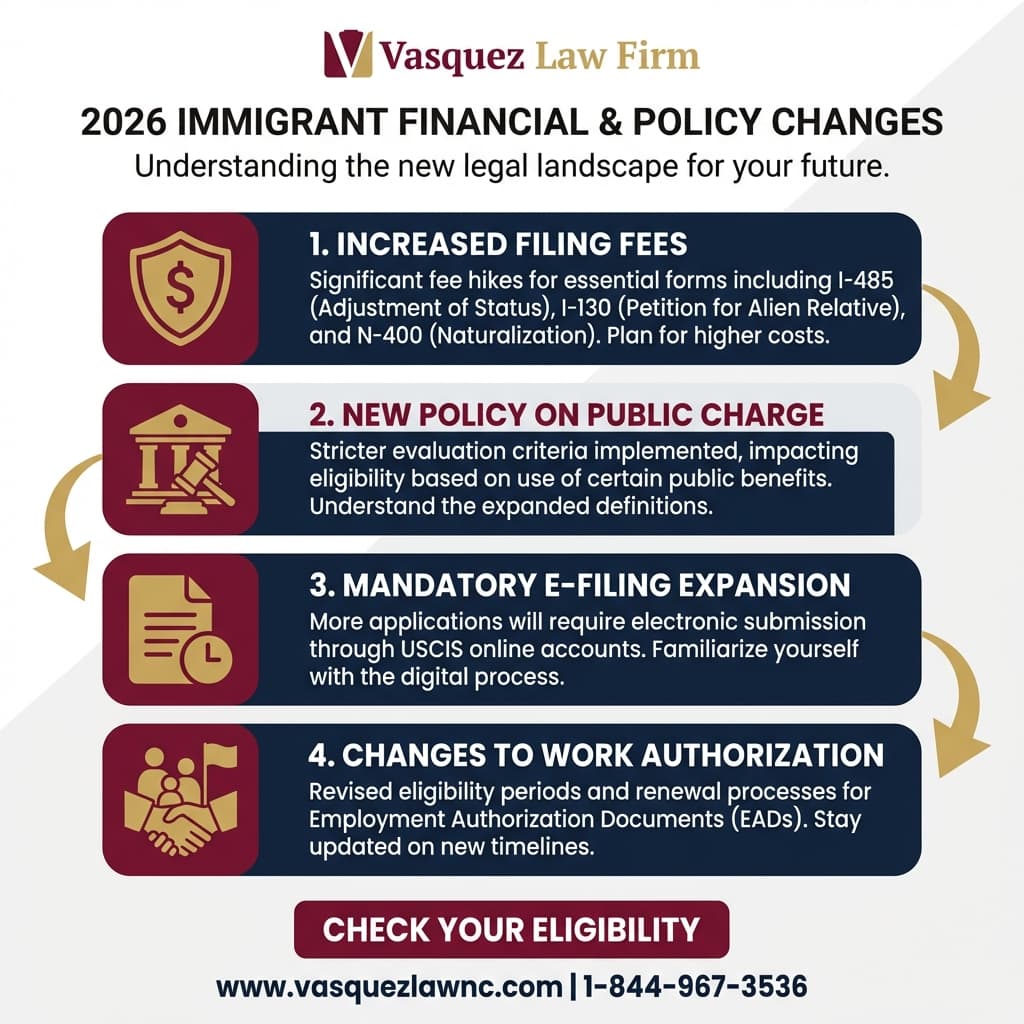
In 2026, significant immigration law changes focus on border security measures, updates to visa processing, and shifts in asylum policy. These include adjustments to H-1B visa lottery procedures, increased enforcement priorities for certain immigrant groups, and potential reforms to family-based immigration. Staying abreast of these developments is vital for anyone affected by U.S. immigration laws.
- Stricter border enforcement and asylum eligibility criteria.
- Changes to employment-based visa programs, including H-1B.
- Potential legislative efforts addressing undocumented populations.
- Increased scrutiny in family-based petitions and adjustment of status.
- Emphasis on technology and data for immigration processing.
Understanding Recent Immigration Law Changes in 2026
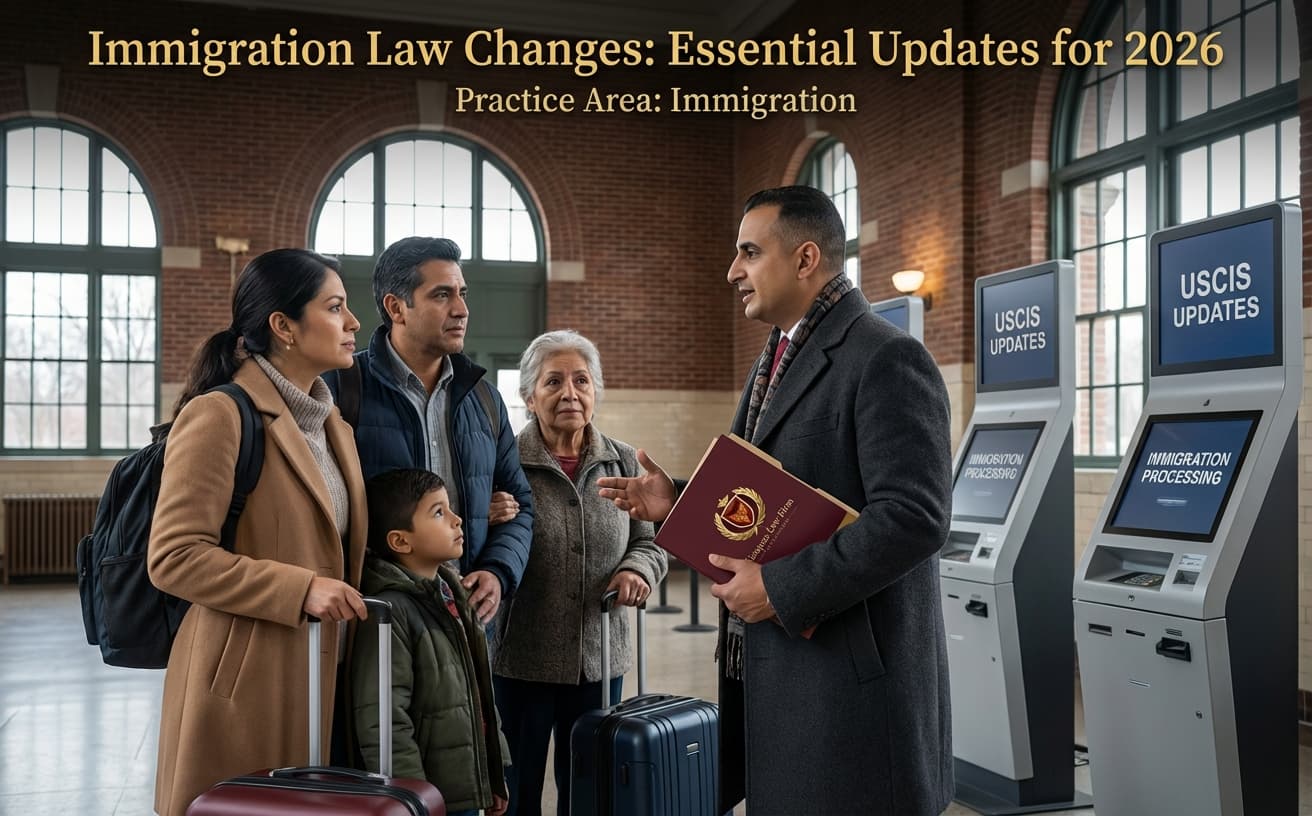
The year 2026 has brought a series of notable immigration law changes that impact various facets of the U.S. immigration system. These changes are often a response to evolving political landscapes, economic pressures, and humanitarian concerns. For instance, recent executive orders have focused on enhancing border security, leading to new protocols for asylum seekers at the U.S.-Mexico border. These policies can create significant hurdles for individuals seeking protection, emphasizing the need for expert legal guidance.
Beyond border issues, there have been adjustments to employment-based immigration categories. Businesses in Charlotte, North Carolina, and across Florida that rely on foreign talent for specialized roles, such as those utilizing H-1B visas, must now navigate revised application processes and increased scrutiny. These changes aim to balance domestic workforce protection with the demand for skilled international workers. Family-based immigration, a cornerstone of U.S. policy, has also seen administrative tweaks, particularly concerning processing times and documentation requirements for spouses and children.
Furthermore, court decisions in 2026 continue to shape how immigration laws are interpreted and applied. Several federal court rulings have addressed issues ranging from detention policies to the rights of long-term residents, contributing to a dynamic legal environment. These judicial interventions can sometimes override or modify executive actions, adding another layer of complexity to understanding current immigration law. For anyone with an ongoing or prospective immigration case, staying updated on these multifaceted changes is not just advisable, it's essential for a successful outcome.
Key Areas of Impact from Immigration Law Changes
The ripple effects of recent immigration law changes are felt across several critical areas, influencing different immigrant populations and their pathways to legal status. One major area is asylum and refugee status. New regulations have introduced stricter eligibility criteria and expedited removal processes, making it increasingly difficult for individuals to claim asylum at the border without proper preparation and legal representation. These changes often require asylum seekers to demonstrate a higher burden of proof and navigate complex procedural requirements, sometimes within short timelines.
Employment-based immigration is another sector significantly affected. The administration has signaled a preference for high-skilled workers and has adjusted the cap and lottery system for certain visas, such as the H-1B. This means companies in North Carolina and Florida seeking to hire foreign professionals may face longer processing times or more competitive application cycles. Additionally, there's been an increased focus on preventing visa fraud and ensuring compliance with labor laws, leading to more rigorous vetting for both employers and applicants.
Family-based immigration, while generally protected, has also experienced changes, particularly in how petitions are processed and prioritized. Delays in processing can be exacerbated by new administrative requirements, affecting families waiting to reunite. These immigration law changes emphasize the importance of meticulous documentation and adherence to all deadlines. Understanding these specific areas of impact is crucial for anyone considering an immigration petition, whether for themselves or a loved one, and underscores the value of experienced legal counsel.
Navigating the New Landscape: Practical Steps for Immigrants
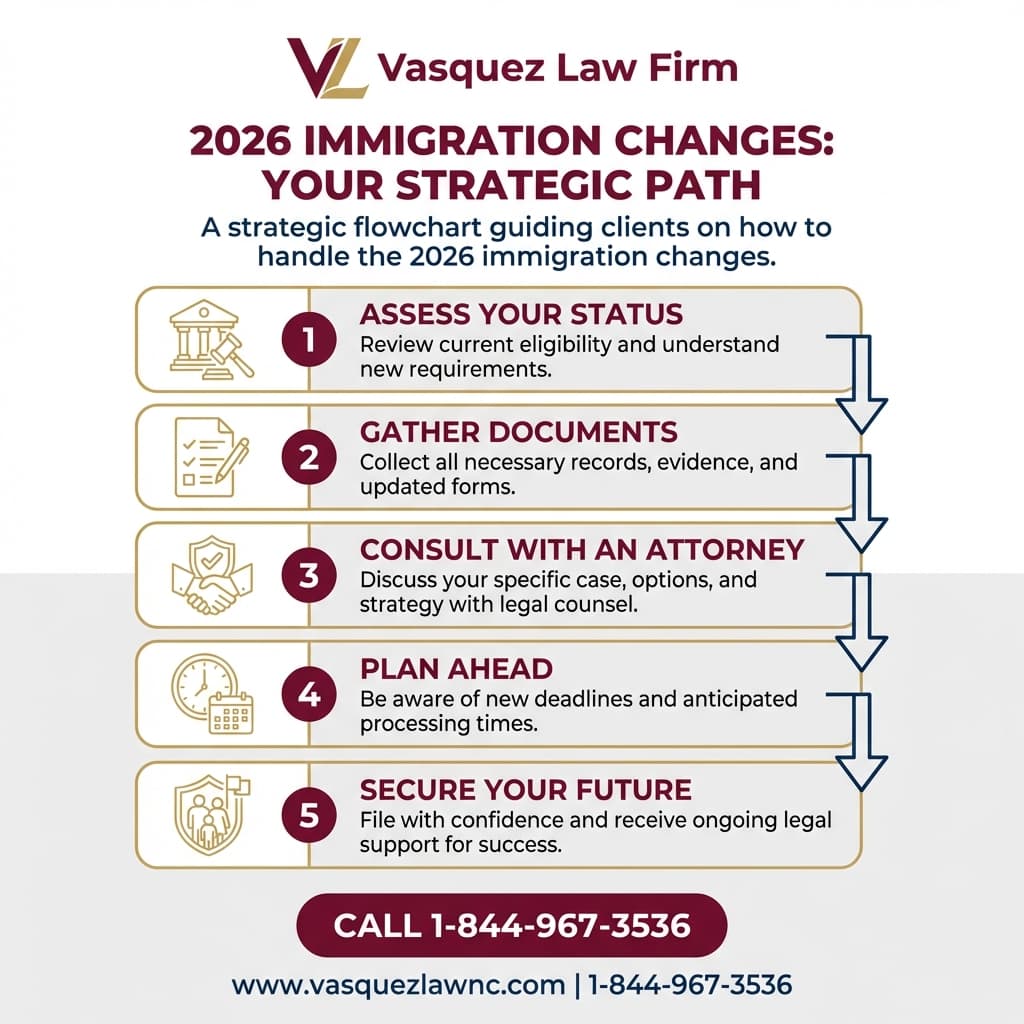
Successfully navigating the new immigration landscape requires a proactive and informed approach. The first practical step is to seek immediate legal counsel from an experienced immigration attorney. Given the constant immigration law changes, what was true yesterday might not be true today. An attorney can provide personalized advice based on your specific circumstances, ensuring you understand how new policies affect your case and what options are available to you. This is especially vital for individuals in North Carolina and Florida, where local interpretations of federal law can sometimes add complexity.
Secondly, meticulous documentation is more important than ever. Ensure all your immigration-related documents, including passports, visas, birth certificates, marriage certificates, and any correspondence from USCIS or other government agencies, are organized and up-to-date. Any discrepancies or missing information can cause significant delays or even lead to denials under stricter new rules. Creating certified copies and keeping originals secure is a wise practice.
Finally, stay informed through reliable sources. While an attorney is your primary guide, understanding the general climate of immigration law can help you ask the right questions and prepare for potential challenges. Regularly check official government websites like USCIS (U.S. Citizenship and Immigration Services) and the Department of State (U.S. Department of State) for updates. However, always verify information with your legal counsel before taking any action, as legal interpretations can be nuanced and specific to your case. The Vasquez Law Firm is dedicated to helping clients through these complex processes.
Common Mistakes to Avoid with Immigration Law Changes
When dealing with dynamic immigration law changes, several common mistakes can jeopardize your case. The most critical error is failing to seek legal advice promptly. Many individuals attempt to navigate the system alone, relying on outdated information or advice from non-attorneys. This can lead to incorrect filings, missed deadlines, or misunderstanding critical legal nuances that an experienced immigration attorney would identify.
Another frequent mistake is providing incomplete or inaccurate information on applications. Under heightened scrutiny, even minor errors can trigger requests for evidence (RFEs), delays, or outright denials. It's essential to be completely transparent and accurate, providing all requested documentation. Do not assume that an agency will overlook small omissions; they often will not.
Ignoring deadlines is also a significant pitfall. Immigration processes are time-sensitive, and failing to respond to requests or submit applications by the specified date can lead to the closure of your case or loss of eligibility. Keep a meticulous calendar and work closely with your attorney to ensure all deadlines are met. Finally, avoid making assumptions about your eligibility based on past laws or anecdotes from others; always verify your current status and options with a qualified legal professional, especially when significant immigration law changes are in effect.
If you only remember one thing: Never assume your case is straightforward or that you can handle it without legal help, especially with the constant immigration law changes in 2026. Consult an attorney immediately.
Don't face your legal challenges alone. Our team is here to help you every step of the way.
Call today: 1-844-967-3536 | Se Habla Español
Jurisdiction Notes: Immigration Law Changes in NC, FL, and Nationwide
Immigration law in the United States is primarily federal, meaning the core statutes and regulations apply nationwide. However, the practical application and impact of immigration law changes can vary significantly depending on your location, including North Carolina and Florida. Different USCIS field offices, immigration courts, and ICE enforcement priorities can lead to distinct experiences for immigrants in various states.
North Carolina Notes
In North Carolina, recent immigration law changes have particularly impacted agricultural workers and those in manufacturing sectors, where a significant immigrant workforce resides. Local ICE field offices in NC might have specific enforcement directives, influencing detention and deportation proceedings. Additionally, state-level policies, while not directly federal immigration law, can indirectly affect immigrants, such as driver's license policies or access to state services. Vasquez Law Firm assists clients throughout North Carolina, including Charlotte, navigating these local nuances in federal immigration matters.
Florida Notes
Florida, with its large immigrant population and proximity to the Caribbean, often sees unique challenges and priorities stemming from immigration law changes. The state has been at the forefront of debates regarding state-level immigration enforcement and has its own set of policies that can interact with federal law. For instance, recent state legislation in Florida has impacted undocumented residents and those transporting them, creating a complex legal environment. Our firm proudly serves clients across Florida, understanding the specific considerations for immigrants in the Sunshine State.
Nationwide Concepts (General Only, Rules Vary)
While the federal framework of immigration law, such as the Immigration and Nationality Act (INA) (8 U.S.C. § 1101 et seq.) and corresponding regulations (8 C.F.R.), governs all states, the implementation can vary. Nationwide immigration law changes often involve broad policy shifts, such as those related to visa categories, border security, or naturalization requirements. These changes are uniformly applied but can have disproportionate effects based on local demographics and economic conditions. It is crucial to remember that while the law is federal, its application is often localized, making expert legal advice essential for anyone, anywhere in the U.S.
When to Call a Lawyer Now Regarding Immigration Law Changes
Given the constant flux of immigration law changes, knowing when to seek legal counsel is paramount. Do not delay if you experience any of the following:
- You receive a Notice to Appear (NTA) in immigration court.
- USCIS issues a Request for Evidence (RFE) or Notice of Intent to Deny (NOID).
- You are detained by ICE or other law enforcement agencies.
- You are considering applying for any immigration benefit (visa, green card, citizenship).
- Your existing immigration application is experiencing unusual delays or unexpected issues.
- You have been denied an immigration benefit and need to understand your options.
- There are new policies or executive orders that directly affect your current immigration status or application.
- You are unsure if recent immigration law changes impact your eligibility for a specific benefit.
- You have a deportation or removal order against you.
- You are a U.S. citizen or lawful permanent resident seeking to petition for a family member.
Prompt legal intervention can often prevent minor issues from escalating into major problems, especially with the complexities introduced by 2026's immigration law changes.
About Vasquez Law Firm
At Vasquez Law Firm, we combine compassion with aggressive representation. Our motto "Yo Peleo" (I Fight) reflects our commitment to standing up for your rights. We understand the profound impact that immigration law changes can have on your life and future, which is why we approach every case with dedication and a fierce commitment to justice.
- Bilingual Support: Se Habla Español - our team is fully bilingual, ensuring clear communication and understanding.
- Service Areas: We proudly offer comprehensive immigration services across North Carolina, Florida, and nationwide, addressing the unique needs of diverse communities.
- Experience: With over 15 years of focused experience, Attorney Vasquez has a proven track record of helping clients navigate complex legal matters successfully.
- Results: Our firm has achieved thousands of successful outcomes across multiple practice areas, providing peace of mind and positive results for our clients.
Attorney Trust and Experience
Attorney Vasquez holds a Juris Doctor degree and is admitted to practice in the North Carolina State Bar. With over 15 years of dedicated legal experience, he has built a reputation for providing personalized attention and achieving favorable outcomes for his clients. He is a veteran-founded leader who understands the importance of fighting for what is right, ensuring that every client receives the zealous advocacy they deserve. His deep understanding of immigration law changes makes him a formidable advocate.
Need immigration help? Our immigration attorneys can review your case.
Ready to take the next step? Contact Vasquez Law Firm today for a free, confidential consultation. We're committed to fighting for your rights and achieving the best possible outcome for your case.
Start Your Free Case Evaluation Now
Call us: 1-844-967-3536
Se Habla Español - Estamos aquí para ayudarle.
Frequently Asked Questions About Immigration Law Changes
How do new border policies affect asylum seekers in 2026?
New border policies in 2026 have introduced stricter eligibility criteria and expedited removal processes for asylum seekers. This means individuals arriving at the border may face immediate screening and potentially be returned to their home country or a third country more quickly if they do not meet the higher burden of proof. Legal counsel is essential to navigate these complex procedures effectively.
Are there changes to the H-1B visa program this year?
Yes, in 2026, the H-1B visa program has seen adjustments, including potential modifications to the lottery selection process and increased scrutiny during application reviews. These changes aim to refine the program's focus on high-skilled labor and ensure compliance. Employers and prospective H-1B applicants should consult with an attorney to understand the latest requirements and strategies for successful petitions.
What impact do these changes have on family-based immigration?
Family-based immigration has been affected by administrative changes primarily related to processing times and documentation requirements. While the core principles remain, families may experience longer waits or face more rigorous requests for evidence. Meticulous preparation and consistent follow-up are crucial. An immigration attorney can help streamline the process and address any challenges arising from these new rules.
How do state laws in North Carolina interact with federal immigration changes?
While federal law governs immigration, state laws in North Carolina can indirectly affect immigrants, particularly concerning local law enforcement interactions, driver's license eligibility, and access to state benefits. Recent federal immigration law changes may also influence local enforcement priorities. It's vital to understand these intersections, as state and federal policies can create a complex legal environment for immigrants.
What should I do if my immigration application is delayed due to new policies?
If your immigration application faces delays due to new policies, the first step is to consult an experienced immigration attorney. They can investigate the cause of the delay, communicate with USCIS or other agencies on your behalf, and explore potential legal remedies, such as filing a mandamus action if the delay is unreasonable. Proactive engagement with legal counsel is key.
Are there any new pathways to legal status introduced in 2026?
While major new pathways to legal status are rare and typically require legislative action, 2026 has seen some administrative adjustments that might slightly expand or refine existing categories. These often involve specific programs or parole options. An attorney can assess if any of these nuanced changes might apply to your unique circumstances and offer guidance on eligibility and application.
How do immigration law changes affect DACA recipients?
DACA recipients continue to face uncertainty due to ongoing legal challenges and potential policy shifts. While no definitive legislative changes have occurred in 2026 to fully resolve DACA's future, administrative actions and court rulings can impact renewal processes and eligibility. DACA recipients should consult legal counsel for the latest updates and to ensure their renewals are timely and accurate.
Can I appeal a denial if it's based on a new immigration law change?
Yes, you generally have the right to appeal a denial, especially if it's based on new immigration law changes. The appeals process is highly complex and requires a thorough understanding of legal arguments and procedural rules. Consulting an immigration attorney immediately after a denial is crucial to determine the best course of action and file a timely appeal or motion to reopen/reconsider.
What are the implications for employers hiring foreign workers in 2026?
Employers hiring foreign workers in 2026 face stricter compliance requirements and potential changes to visa availability and processing. Increased scrutiny from government agencies means employers must ensure all documentation is impeccable and that they adhere to all labor laws. Consulting with an immigration attorney specializing in business immigration is essential to navigate these complexities and avoid penalties.
Sources and References


William Vasquez
Founder & CEO, Vasquez Law Firm, PLLC
William Vasquez is the founder and CEO of Vasquez Law Firm, PLLC, a results-driven firm specializing in immigration, criminal defense, personal injury, and workers' compensation. A U.S. Air Force veteran and recipient of the Joint Service Achievement Medal, William is dedicated to fiercely fighting for his clients' rights.
Related Legal Services
Need legal help? Learn more about get immigration legal help today, or contact us for a free evaluation.
You can also visit North Carolina immigration law firm for more information.