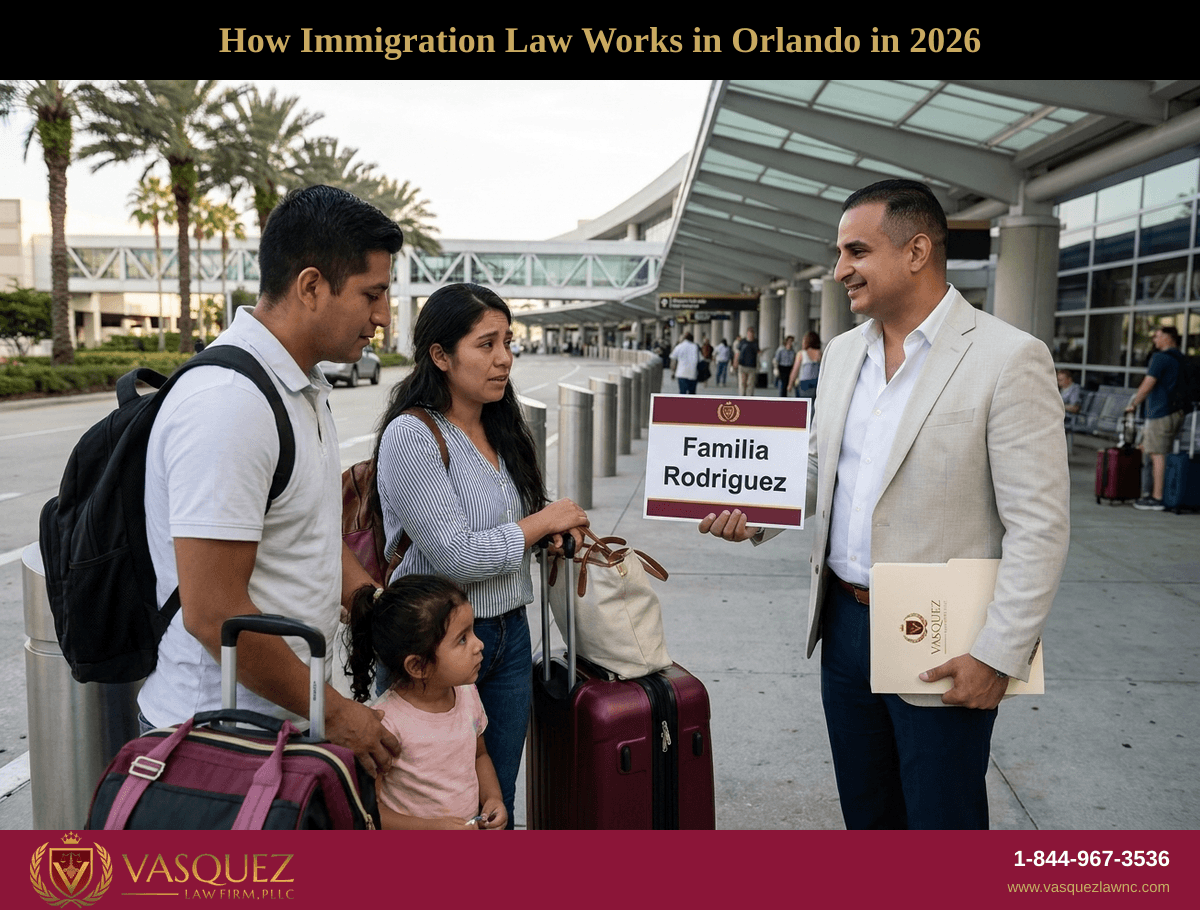
How Immigration Law Works in Orlando in 2026
Learn how immigration law works in Orlando in 2026. Discover your rights and consequences of violations. Contact Vasquez Law for a free consultation today.
Published on May 7, 2026
Talk to an immigration attorney
Free call. A clear plan for your case.
Free & confidential · Se habla espanol · 24/7
Have questions? Talk to an attorney - free evaluation.
Call 1-844-967-3536Worried how the latest immigration news affects you?
Schedule a confidential case review with an immigration attorney - know exactly where you stand.
USCIS Case Status
Check your USCIS case status
Enter your receipt number and get the official status. Free, no registration.
How Immigration Law Works in Orlando in 2026
Navigating immigration law in Orlando can be complex, especially in 2026 with ongoing regulatory changes. This guide explains current immigration laws in the United States, what violations mean, and how an immigration lawyer can assist. Whether you are a Dreamer or seeking permanent residency, understanding the legal process through reliable advice from Vasquez Law Firm can protect your rights and future.
Need help with your case? Our experienced attorneys are ready to fight for you. Se Habla Español.
Or call us now: 1-844-967-3536
Quick Answer
Immigration law in Orlando as of 2026 follows federal rules under the Immigration and Nationality Act, with local USCIS offices and immigration courts involved. Violating these laws can result in deportation or denial of benefits. Partnering with an immigration lawyer can protect your rights and improve your chances of success.
- Federal laws apply nationwide, including Orlando
- USCIS processes applications and petitions locally
- ICE enforces removal actions when laws are violated
- Legal representation helps navigate complex procedures
Understanding Immigration Law in Orlando
Imagine Maria, a Dreamer living in Orlando without formal status. She wants to understand the immigration law that affects her ability to stay and work legally in the United States. Immigration law governs who can come to the country, the documentation required, and the consequences of breaking rules.
The primary federal law is the Immigration and Nationality Act (INA), enacted in 1952. This law outlines visa categories, green card eligibility, naturalization procedures, and grounds for removal. USCIS (U.S. Citizenship and Immigration Services), ICE (Immigration and Customs Enforcement), and immigration courts all enforce and interpret this law nationwide, including Orlando.
In Orlando, immigrants interact mostly with USCIS offices that process forms, interviews, and biometrics. Any enforcement or court proceedings take place under federal jurisdiction but can vary locally in how hearings are scheduled and processed.
Current immigration laws in the United States also include provisions for Deferred Action for Childhood Arrivals (DACA), Temporary Protected Status (TPS), work visas, family sponsorships, and humanitarian relief. These laws are constantly under review and subject to change based on federal policies and court rulings, so staying informed in 2026 is essential.
Understanding these elements helps individuals know their rights and the steps needed to comply with immigration law or defend against removal actions.
Learn more about our immigration services for personalized legal help in Orlando.
Key Federal Agencies
- USCIS: Handles applications for visas, green cards, and naturalization.
- ICE: Enforces immigration laws including detention and deportation.
- EOIR (Immigration Courts): Conducts removal hearings and appeals.
Important Laws and Policies
- Immigration and Nationality Act (INA): Core statutes regulating immigration.
- DACA and TPS: Protection programs for qualifying individuals.
- Visa categories: Including H-1B for work, family-based, and humanitarian visas.
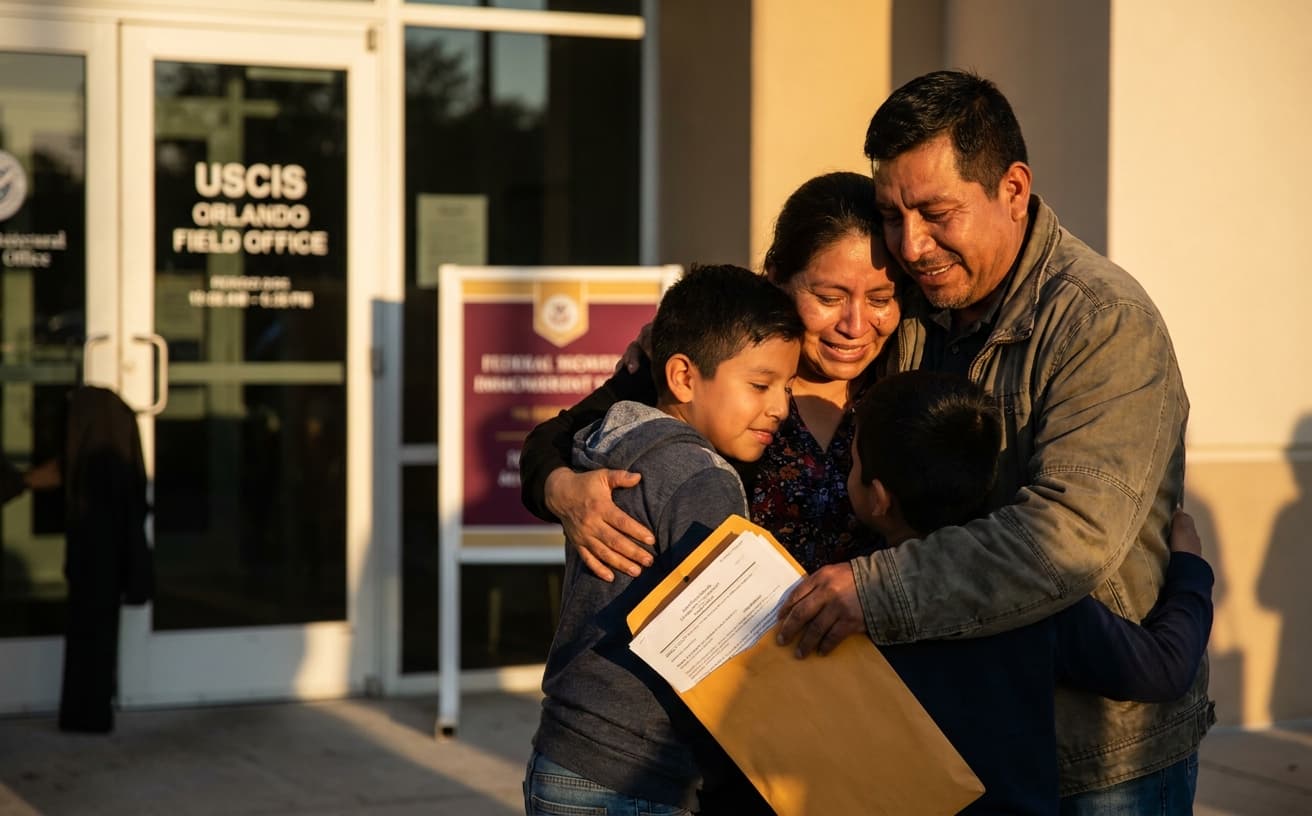
Local USCIS Offices in Orlando
Orlando applicants visit USCIS offices for interviews or biometrics appointments. These local events are crucial steps in most immigration processes.
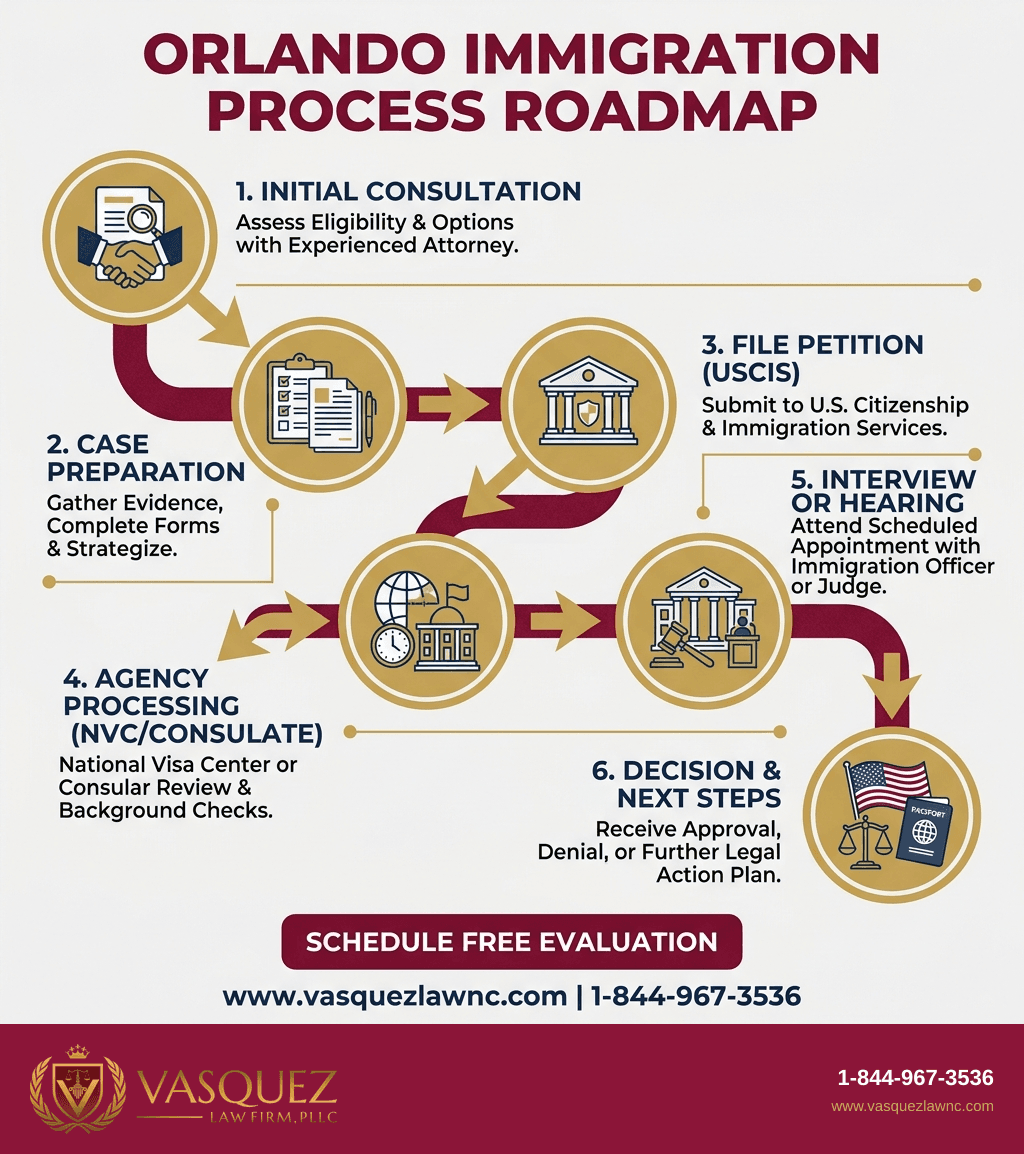
Step-by-Step Process for Immigration Cases
Consider the example of Carlos, a foreign national seeking adjustment of status in Orlando. His immigration case will follow several critical steps that anyone should understand:
- Determine Eligibility: Verify which visa or adjustment category applies based on your situation.
- Gather Required Documents: Collect passports, birth certificates, proof of relationship, employment letters, and other evidence.
- File Petition or Application: Submit forms like I-485 (adjustment of status) or I-130 (family petition) to USCIS.
- Biometrics Appointment: USCIS schedules fingerprinting and photo for background checks.
- Attend Interview or Hearing: Answer questions, provide additional evidence, or appear before an immigration judge.
- Receive Decision: USCIS or the immigration court issues approval, denial, or request for further information.
- Appeal if Needed: If denied, file appeals or motions as recommended by your lawyer.
Each case is unique, and timelines can vary greatly. Working with an experienced immigration lawyer can ensure each step is handled correctly and deadlines are met.
Our Attorney Vasquez and legal team specialize in this process for Orlando clients.
Virtual Consultations for Business Visas
For business immigration such as H-1B or L-1 visas, Vasquez Law Firm offers virtual consultations via Zoom to assist clients nationwide efficiently and safely.
Importance of Timely Filing
Failing to file forms on time can result in lost opportunities or removal proceedings. The INA specifies strict deadlines and USCIS rejection criteria.
Post-Interview Steps
After an interview, USCIS may approve, request additional evidence, or schedule another appointment. Legal advice is critical at this stage.
Common Mistakes to Avoid in Immigration Cases
Jose was denied a green card because he missed an interview notice. This is a common yet avoidable mistake. To protect your case, avoid these frequent errors:
- Ignoring or missing deadlines for filing or responding to USCIS requests.
- Submitting incomplete or incorrect forms that cause delays or denials.
- Failing to attend required biometrics appointments or interviews.
- Working or traveling without proper authorization during pending cases.
- Not updating USCIS with changes in address or employment.
- Misunderstanding grounds of inadmissibility or deportation triggered by criminal convictions.
- Relying on informal advice or inaccurate internet resources instead of consulting a lawyer.
If you only remember one thing: Always respond timely and accurately to USCIS notices, and seek legal help if unsure about your case status.
Checklist to Avoid Mistakes
- Keep track of all USCIS deadlines.
- Double-check all paperwork before submission.
- Maintain organized copies of your case file.
- Attend all appointments and notify of conflicts immediately.
- Discuss any criminal or immigration issues with your lawyer beforehand.
Legal Consequences of Errors
Errors can lead to case denial, removal proceedings, or loss of eligibility. An immigration lawyer prevents costly mistakes and explains complex requirements.
Timeline and What to Expect in Your Case
Immigration processes vary: for example, family-based green cards often take between 8 months to 3 years depending on category and USCIS backlog. Work visas like H-1B depend on lottery selection and processing dates.
A general timeline for an adjustment of status case in Orlando might include:
- Weeks 1-4: File application and pay fees.
- Weeks 5-8: USCIS schedules biometrics appointment.
- Months 3-12: Attend interview and submit any requested evidence.
- Month 12+: USCIS issues a decision or requests appeal.
These timelines are approximate and can be affected by changes in law or USCIS policies. Clients should prepare for waiting periods and potential delays during 2026.
Tips to Manage the Timeline
- Submit complete and accurate applications to avoid RFEs (Requests for Evidence).
- Respond quickly to all USCIS communications.
- Stay in contact with your immigration lawyer for updates.
Appeal and Motion Timing
Decisions can often be appealed within 30 days. Motions to reopen or reconsider can extend timelines but may save your case from denial consequences.
Frequently Asked Questions About Immigration Law
What are the current immigration laws in the United States?
The United States immigration laws in 2026 are primarily governed by the Immigration and Nationality Act (INA), which creates categories for visas, green cards, and citizenship. The laws regulate who can enter, stay, or be removed from the country, and set requirements for lawful admission. Changes to policies and enforcement may affect applications and deportation risks.
What happens if you violate U.S. immigration laws?
Violating immigration laws can result in consequences such as detention, removal proceedings, or being barred from future entry. For example, overstaying a visa or working without authorization can lead to penalties. It is important to consult an immigration lawyer to understand how violations affect your case and possible remedies.
What is the Immigration and Nationality Act (INA)?
The INA is the primary federal law governing immigration in the United States. Enacted in 1952, it provides the framework for visas, green cards, deportation procedures, and naturalization. It also sets eligibility criteria and enforcement rules that immigration courts and USCIS follow.
Can ICE deport permanent residents?
Yes, ICE can initiate removal proceedings against permanent residents for certain criminal convictions or immigration violations. Deportation is not automatic but follows a legal process where a lawyer can provide defense options, including cancellation of removal or waivers.
What are common immigration law mistakes to avoid?
Common mistakes include missing deadlines for applications, providing incomplete or incorrect information, not attending hearings, and ignoring legal notices. These errors can delay your case or cause denial. Working with an immigration lawyer can help avoid these costly errors.
What documents are needed for immigration cases?
The required documents vary by case type but typically include passports, birth certificates, proof of residency, employment records, and any prior immigration paperwork. It is crucial to gather accurate evidence to support your application or defense.
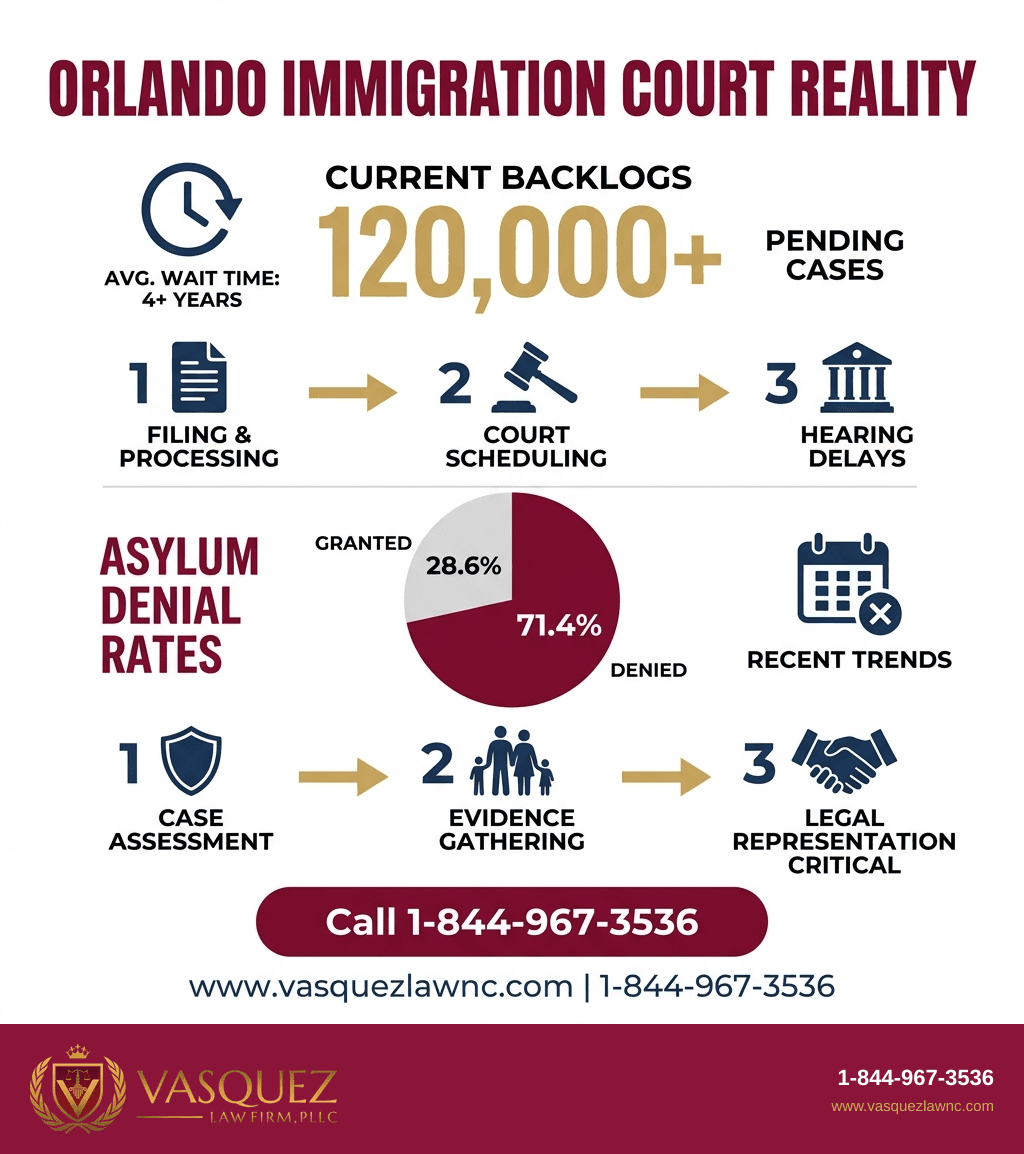
How long does the immigration process take in Orlando?
Processing times can range from several months to years, depending on the application type and backlog at USCIS or immigration court. Some visas or green card applications may be expedited, but most require patience and legal guidance to navigate.
Why should I hire an immigration lawyer in Orlando?
An immigration lawyer understands complex laws, deadlines, and potential risks. In Orlando, local experience helps handle USCIS offices and immigration courts efficiently. Lawyers protect rights, provide advice, and improve the chances of success by preparing strong cases.
About Vasquez Law Firm
At Vasquez Law Firm, we combine compassion with aggressive representation. Our motto "Yo Peleo®" (I Fight) reflects our commitment to standing up for your rights.
- Bilingual Support: Se Habla Español — Spanish-speaking attorneys and staff available
- Service Areas: North Carolina, Florida, and nationwide immigration services
- Experience: Over 30 years helping clients navigate complex legal matters
- Results: Thousands of successful cases across multiple practice areas
Attorney Trust and Experience
Attorney Vasquez, JD, is admitted to the North Carolina State Bar with over 15 years of immigration law experience. Our firm values personalized attention and aggressive advocacy for our clients.
Don't wait to get the help you deserve. Call us now for immediate assistance.
Sources and References
- U.S. Citizenship and Immigration Services (USCIS)
- Executive Office for Immigration Review
- Legal Information Institute
Take the first step toward justice today. Our team is standing by to help.
Start Your Free Evaluation Now
Call us: 1-844-967-3536
Se Habla Español - Estamos aquí para ayudarle.

William Vasquez
Founder & CEO, Vasquez Law Firm, PLLC
William Vasquez is the founder and CEO of Vasquez Law Firm, PLLC, a results-driven firm specializing in immigration, criminal defense, personal injury, and workers' compensation. A U.S. Air Force veteran and recipient of the Joint Service Achievement Medal, William is dedicated to fiercely fighting for his clients' rights.
Related Legal Services
Need legal help? Learn more about NC immigration legal team, or contact us for a free evaluation.
You can also visit NC immigration legal help for more information.