What Happens After Immigration Arrests in Orlando in 2026?
Facing immigration arrests in Orlando? Learn your rights, what to do, and how our team can help. Contact Vasquez Law for a free consultation in 2026.
Published on May 5, 2026
Talk to an immigration attorney
Free call. A clear plan for your case.
Free & confidential · Se habla espanol · 24/7

Have questions? Talk to an attorney - free evaluation.
Call 1-844-967-3536Worried how the latest immigration news affects you?
Schedule a confidential case review with an immigration attorney - know exactly where you stand.
USCIS Case Status
Check your USCIS case status
Enter your receipt number and get the official status. Free, no registration.
What Happens After Immigration Arrests in Orlando in 2026?
Immigration arrests can be overwhelming, especially in Orlando where families face uncertainty daily. In 2026, understanding what happens after an immigration arrest—including detention, legal rights, and the process—is critical. This guide explains how to perform an immigration jail inmate lookup, the role of ICE, and what steps to take immediately after someone is detained. Whether you or a loved one faces detention, knowing your options helps protect your rights and plan for the future.
Need help with your case? Our experienced attorneys are ready to fight for you. Se Habla Español.
Or call us now: 1-844-967-3536
Quick Answer
After an immigration arrest in Orlando, individuals are usually taken to a detention center where their case is processed. You can perform an immigration jail inmate lookup online to find someone detained. Knowing your rights, gathering documents, and seeking legal help early improves your chances during detention and removal proceedings.
- ICE arrests involve detention pending immigration court hearings
- You can use ICE inmate list resources to locate detainees
- Family and attorneys should prepare documents and evidence
- Legal representation helps protect rights throughout the process
- Detention timelines vary based on individual circumstances
Understanding Immigration Arrests
An ICE (Immigration and Customs Enforcement) arrest often begins with officers detaining a person suspected of violating immigration laws. For example, in Orlando in 2026, ICE may conduct targeted operations resulting in arrests at homes, workplaces, or public spaces. Arrests can disrupt family life and bring uncertainty.
After being arrested, individuals are transported to an immigration detention center. These centers are secure facilities where detainees wait for removal proceedings or bond hearings. It is important to understand the difference between criminal arrests and immigration arrests, as many detainees have no criminal record. ICE arrests non criminals frequently, including those with pending applications or orders of supervision.
To find out if someone is detained, you can perform an immigration jail inmate lookup through the ICE Detainee Locator System online. This tool allows searches by name or Alien Registration Number (A-Number). Knowing the location is key for arranging visits or legal representation.
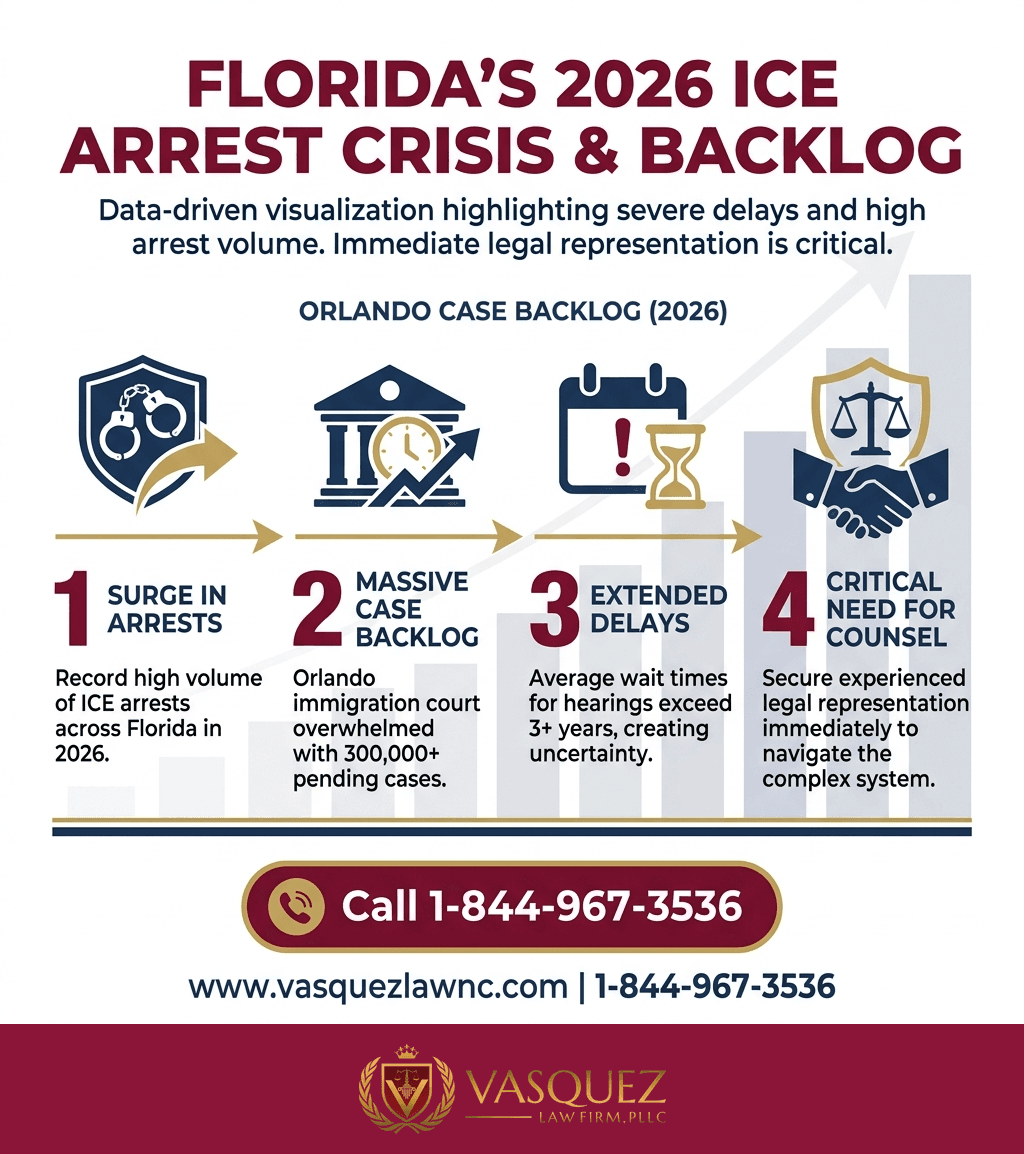
Learning about ICE arrests by state helps families understand local enforcement priorities. Florida and North Carolina see significant ICE activity, with arrests numbers fluctuating based on policy and enforcement shifts. Understanding these numbers and trends prepares detainees and families for what comes next.
Our immigration legal services team in Orlando provides tailored support to families affected by immigration arrests. We guide clients through complicated processes, including navigating detention centers and court appearances.
ICE Arrests Numbers and Statistics
According to federal reports, ICE arrests numbers nationwide averaged around 150 daily in 2026. Many believe these statistics understate the real impact on families. The Executive Office for Immigration Review (EOIR) handles tens of thousands of immigration cases per year stemming from arrests nationwide, including Orlando.
Understanding ICE immigration arrests statistics gives context to enforcement scope but does not provide details about individual cases. Your circumstances and legal rights are what count most.
What Is an Immigration Detention Center?
Immigration detention centers hold people after arrest while removal cases are decided. These centers differ from criminal jails—they focus on immigration, not punishment. Conditions can be tough, and access to legal counsel may be limited. Many families feel the strain during this time.
You or someone you know may be detained in a local center in Florida or a central facility elsewhere. It is critical to discover the exact location quickly using tools like the ICE inmate list or immigration jail inmate lookup.
ICE Arrests By State: Focus on Florida and North Carolina
In Florida, ICE conducts regular enforcement actions due to its large immigrant population. Orlando is a focal point for arrests because of its size and immigration demographics. North Carolina has seen an increase in ICE activity in recent years, especially around urban centers.
Knowing ICE arrests by state helps families and individuals prepare for possible detention and seek legal assistance promptly. Our immigration lawyers in Orlando and Raleigh are familiar with local detention policies and can offer reliable support.
Step-by-step: What to Do After an Arrest
- Stay Calm and Gather Information: If a family member or someone you know is arrested, write down any details you receive about the arrest location, time, and officer names if possible.
- Perform an Immigration Search By Name: Use the ICE Detainee Locator System online to find where the person is detained. This system is updated regularly to show current detainees.
- Contact an Experienced Immigration Attorney: An attorney familiar with immigration arrests can help navigate detention proceedings, bond requests, and removal defenses.
- Prepare and Collect Documents: Gather identification documents, immigration paperwork, and proof of ties to the community for use during hearings.
- Attend Bond or Detention Hearings: With attorney counsel, request bond if eligible in immigration court to gain release while awaiting case adjudication.
- Communicate with ICE Detention Center: Stay in touch with the facility to monitor the detainee’s status and provide necessary support.
- Plan for Immigration Court Proceedings: Understand court dates and prepare evidence for defense against removal.
Important Tips During the Process
- Do not sign any documents without legal advice.
- Always keep a copy of any paperwork or notices from ICE.
- Stay in regular contact with the detained individual and their attorney.
Documents and Evidence Checklist
- Valid identification (passport, national ID, driver's license)
- Immigration paperwork (visa, green card, I-94, work permits)
- Proof of residency (lease agreements, utility bills)
- Proof of family ties (birth certificates, marriage certificates)
- Evidence of community involvement (employment letters, school records)
- Criminal records or police clearance certificates (if applicable)
- Correspondence and notices from ICE or immigration courts
Timeline: What to Expect During Detention
- Day 1-3: Initial processing at detention center after arrest.
- Week 1: First bond or detention hearing typically scheduled.
- Weeks 2-6: Possible bond hearings, master calendar court appearances.
- Month 2-6: Individual merit hearings to determine deportation eligibility.
- Month 6+: Decision by immigration judge; appeals may follow.
Timelines can vary widely by case, location, and legal representation quality.
Costs and Fees: What Affects Your Case
- Attorney Fees: Vary based on case complexity and trial length.
- Bail or Bond Amounts: Can range from a few thousand to tens of thousands of dollars.
- Filing Fees: Immigration court or USCIS applications may require fees.
- Travel Costs: To and from detention centers and courts, especially if remote.
- Document Preparation: Translation, notarization, and obtaining records incur costs.
Common Mistakes and How to Avoid Them
- Not hiring a qualified immigration attorney early — fix: contact our team immediately.
- Failing to perform an immigration jail inmate lookup promptly — fix: use online tools or get legal help.
- Signing documents without understanding consequences — fix: always get legal advice first.
- Missing court dates or hearings — fix: note all dates and arrange transportation in advance.
- Ignoring communication from ICE or courts — fix: read all correspondence carefully and respond timely.
- Not gathering sufficient documentation — fix: start document collection early with attorney guidance.
- Believing misinformation about rights — fix: consult trusted sources and legal professionals.
If you only remember one thing: Seek legal help promptly and do not try to handle immigration arrests alone.
North Carolina and Florida Jurisdiction Notes
North Carolina Notes
Immigration arrests in North Carolina fall under federal jurisdiction, with enforcement by ICE offices in Raleigh and Charlotte. Detainees may be held in state-run or private detention centers. Our immigration attorneys in North Carolina understand local ICE office policies and can coordinate legal defenses in Raleigh and other cities.
Florida Notes
Florida is home to multiple ICE detention facilities, including in Orlando, where arrests and detentions are frequent. Families often face challenges accessing detainees far from home. We provide localized expertise in Orlando to handle immigration arrests and detention matters with personal attention.
Nationwide Concepts (General Only, Rules Vary)
Immigration arrests are governed by federal laws like the INA (Immigration and Nationality Act). Enforcement policies and detention procedures may vary by region and administration priorities. Regardless of location, all detainees have rights to due process, legal counsel, and humane treatment under federal regulations.
When to Call a Lawyer Now
- If you or a loved one is arrested by ICE or suspected of being detained
- Before agreeing to any interviews or signing documents
- If ICE requests your presence or interrogates you
- Upon receiving notices related to immigration court or detention status
- When you need help locating someone detained using immigration jail inmate lookup
- If bond hearings or removal proceedings are scheduled
- To assess eligibility for relief from removal or deferred action
- If you experience discrimination or mistreatment during detention or arrest
About Vasquez Law Firm
At Vasquez Law Firm, we combine compassion with aggressive representation. Our motto "Yo Peleo®" (I Fight) reflects our commitment to standing up for your rights.
- Bilingual Support: Se Habla Español — Spanish-speaking attorneys and staff available
- Service Areas: North Carolina, Florida, and nationwide immigration services
- Experience: Over 30 years helping clients navigate complex legal matters
- Results: Thousands of successful cases across multiple practice areas
Attorney Trust and Experience
William J. Vásquez is admitted to the North Carolina State Bar (2011) and to the U.S. Courts of Appeals for the 4th, 5th, 6th, and 11th Circuits. Florida-jurisdiction matters at the firm are handled by Florida Bar attorney Alekssandra Lopez. The firm has provided dedicated legal representation since 2011, with personalized attention to each client's case.
Don't wait to get the help you deserve. Call us now for immediate assistance.
Se Habla Español
Frequently Asked Questions
How can I find out if someone is detained by immigration?
To find out if someone is detained by immigration in Orlando or North Carolina, you can perform an immigration jail inmate lookup online through the ICE Detainee Locator System. This search requires the person’s name or A-Number. Our immigration attorneys can also assist with this search to ensure accuracy and provide guidance on the next steps.
Can ICE legally ask for my ID during an encounter?
Yes, ICE agents can ask for identification during an immigration enforcement encounter. However, whether you must provide it depends on the situation. If you are stopped in public and ICE suspects you are undocumented, you may be asked for ID, but you have rights to remain silent and seek legal counsel before answering.
How many immigration arrests happen per day in Florida?
In 2026, ICE arrests numbers fluctuate but in Florida, hundreds of immigration arrests are conducted monthly. Exact daily counts vary with enforcement priorities and operations. ICE immigration arrests statistics can be reviewed on official reports or through community organizations tracking detention trends.
Are there cases where ICE arrests non criminals?
Yes, ICE arrests non criminals frequently. Many detainees have no criminal history but face detention due to immigration violations such as undocumented status or previous deportation orders. Understanding this is critical for families facing sudden detention of loved ones with no criminal record.
What happens at an immigration detention center?
After an immigration arrest in Orlando or beyond, detainees are taken to an immigration detention center where they remain while their cases are processed. Detention centers provide basic living needs but limit freedoms. Detainees have rights to legal counsel, hearings, and humane treatment under federal law.
How can I perform an immigration search by name?
You can perform an immigration search by name through the ICE Detainee Locator online. Entering the full legal name or Alien Number (A-Number) helps locate detainees in custody. Our immigration lawyers in Orlando provide assistance if you encounter difficulties accessing or understanding the results.
What rights do I have if I'm stopped by ICE in North Carolina?
If stopped by ICE in North Carolina, you have the right to remain silent and the right to legal counsel. You are not required to sign documents without advice from an attorney. It is important to stay calm, ask if you are free to leave, and seek legal help immediately to protect your rights.
How long can someone be detained after an immigration arrest?
Detention length varies by case complexity, bond eligibility, and case backlog. Some detainees are released within days while others may remain months. Understanding the timeline helps families prepare and seek legal support for bond hearings or case resolution.
Sources and References
- U.S. Citizenship and Immigration Services
- Executive Office for Immigration Review
- Legal Information Institute
Take the first step toward justice today. Our team is standing by to help. Se Habla Español.
Start Your Free Evaluation Now
Call us: 1-844-967-3536
Se Habla Español - Estamos aquí para ayudarle.

William Vasquez
Founder & CEO, Vasquez Law Firm, PLLC
William Vasquez is the founder and CEO of Vasquez Law Firm, PLLC, a results-driven firm specializing in immigration, criminal defense, personal injury, and workers' compensation. A U.S. Air Force veteran and recipient of the Joint Service Achievement Medal, William is dedicated to fiercely fighting for his clients' rights.
Related Legal Services
Need legal help? Learn more about immigration case consultation, or contact us for a free evaluation.
You can also visit immigration attorneys across North Carolina for more information.