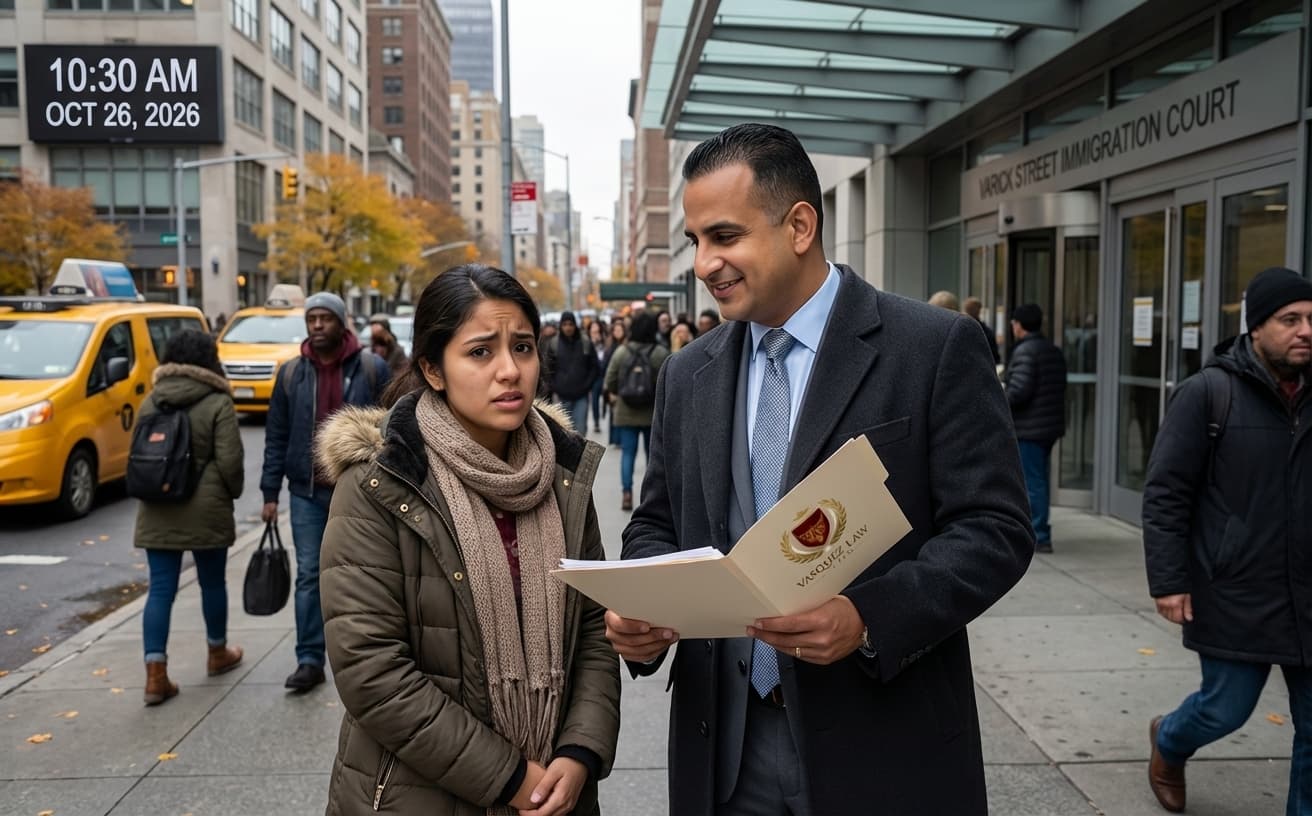
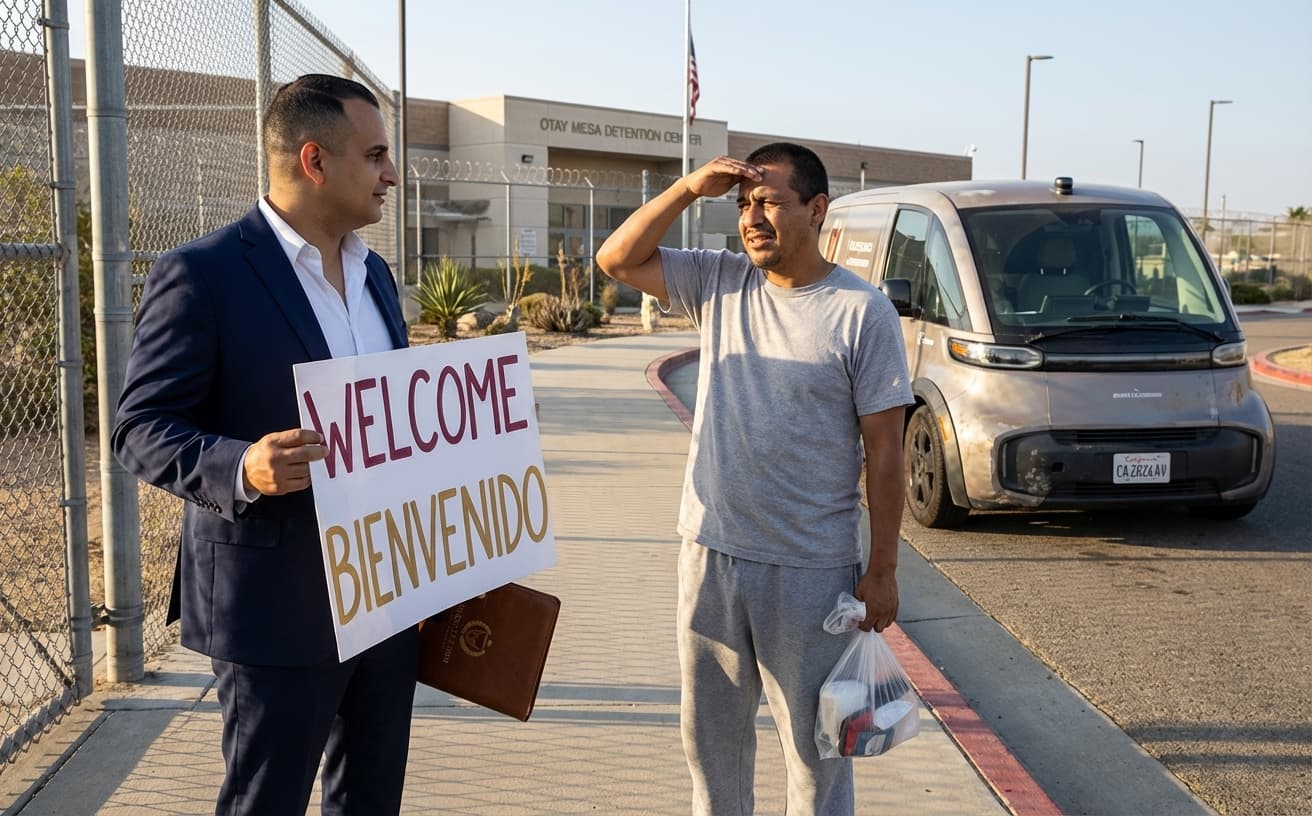
ICE Arrests Massachusetts: What Immigrants Must Know in 2026
Facing ICE arrests in Massachusetts? Understand your rights and what to do if detained. Contact Vasquez Law Firm today for a free immigration consultation.
Published on March 10, 2026

Have questions? Talk to an attorney - free evaluation.
Call 1-844-967-3536Worried how the latest immigration news affects you?
Get a free, confidential case review with an immigration attorney - know exactly where you stand.
ICE Arrests Massachusetts: What Immigrants Must Know in 2026
In 2026, news reports continue to highlight the complexities surrounding ICE arrests in Massachusetts, leaving many immigrant communities in Boston, Worcester, and across the state feeling uncertain about their rights and legal options. When federal immigration authorities conduct operations, understanding your legal protections is paramount. This guide provides critical information for individuals and families in Massachusetts concerning ICE arrests, detention, and the steps you can take to protect yourself and your loved ones. Knowing your rights can make a significant difference in the outcome of an immigration case.
Need help with your case? Our experienced attorneys are ready to fight for you. Se Habla Español.
Schedule Your Free Consultation
Or call us now: 1-844-967-3536
Quick Answer
If you or a loved one faces ICE arrests in Massachusetts, you have constitutional rights, including the right to remain silent and to speak with an attorney. Do not open your door unless agents have a warrant signed by a judge. Seek legal counsel immediately to assess your situation and explore all available defenses.
- Remain silent and do not answer questions.
- Do not open your door without a judicial warrant.
- Request to speak with an attorney immediately.
- Do not sign any documents without legal review.
- Memorize or carry your attorney's contact information.
Understanding ICE Authority and Operations in Massachusetts
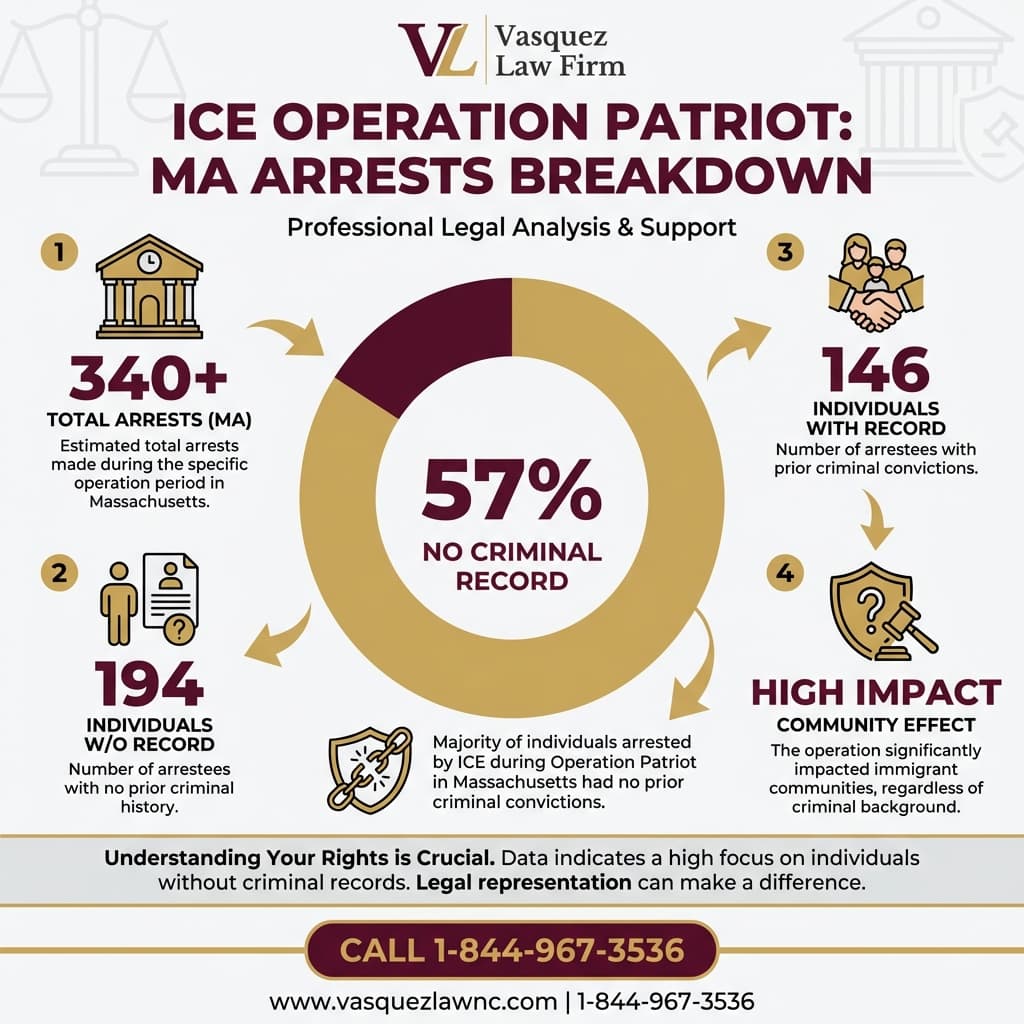
Immigration and Customs Enforcement (ICE) is a federal agency responsible for enforcing immigration laws within the United States. In Massachusetts, ICE conducts various operations, including arrests at homes, workplaces, and public spaces. These actions often target individuals with outstanding deportation orders or those who have committed certain criminal offenses, but sometimes individuals without criminal records are also swept up in these operations. Understanding the scope of ICE's authority is essential for protecting your rights.
For instance, if an ICE agent approaches you, they must identify themselves. However, you are not required to answer their questions without a lawyer present. The Fourth Amendment to the U.S. Constitution protects individuals from unreasonable searches and seizures. This means ICE agents generally need a warrant signed by a judge to enter your home. An administrative warrant, often referred to as a Form I-200 or Form I-205, is not sufficient for agents to enter your residence without your consent, as clarified by federal courts.
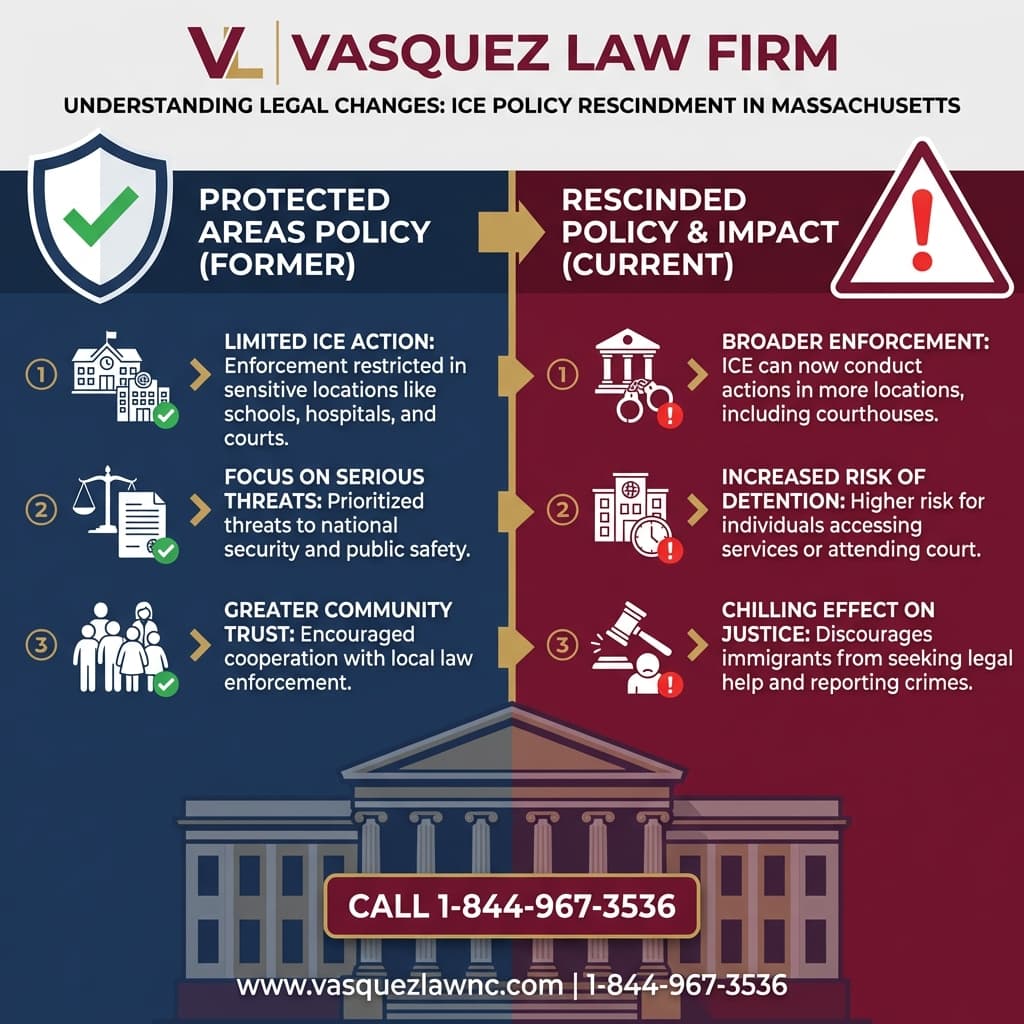
Recent reports, such as Governor Healey's demands for transparency regarding ICE arrests in MA in 2026, underscore the ongoing scrutiny of these operations. While ICE maintains its right to enforce federal law, communities and advocates are increasingly demanding accountability and respect for civil liberties. Knowing the difference between an administrative warrant and a judicial warrant is crucial. Always ask to see a warrant and check for a judge's signature before allowing entry.
Your Rights During an ICE Encounter or Arrest
Being confronted by an ICE agent can be frightening, but remembering your constitutional rights is vital. Many people in Massachusetts, especially in cities like Boston and Worcester, are unsure of what to do if ICE agents appear at their door or approach them in public. Your rights apply regardless of your immigration status, as established by the Supreme Court in cases like Miranda v. Arizona and further defined for non-citizens.
Firstly, you have the right to remain silent. You do not have to answer questions about your immigration status, where you were born, or how you entered the U.S. Simply state, "I wish to remain silent and speak with my attorney." This right is enshrined in the Fifth Amendment. Secondly, you have the right to speak with an attorney. Do not sign any documents, waive any rights, or make any decisions until you have consulted with a qualified immigration lawyer. Signing documents without understanding their implications can have severe consequences for your immigration case.
If ICE agents come to your home, do not open the door unless they show you a warrant signed by a judge. An immigration warrant (Form I-200 or Form I-205) is an administrative warrant and does not grant them permission to enter your home without your consent or a judicial warrant. If they claim to have a warrant, ask them to slide it under the door or hold it up to a window so you can inspect it. If they do not have a judicial warrant, you can keep your door closed and decline entry.
What to Do If Detained by ICE
If you are detained following an ICE arrest in Massachusetts, the first thing to do is remain calm. Do not resist arrest, even if you believe it is unlawful. Your primary focus should be on asserting your rights. Ask to speak with an attorney immediately. You have a right to legal representation, though the government is not obligated to provide one at no cost in immigration proceedings, unlike criminal cases. It is crucial to contact a trusted immigration lawyer as soon as possible.
Try to remember as many details as you can about the arrest, including the agents' names or badge numbers, the time and location, and any documents they showed you. This information will be vital for your attorney. Inform your family or a trusted contact about your detention, providing them with your attorney's contact details if possible. Early legal intervention can significantly impact your case, potentially leading to release on bond or other forms of relief.
Common Scenarios and How to Respond to ICE
ICE arrests in Massachusetts can occur in various settings, each requiring a specific response to protect your rights. For example, if ICE agents stop you in a public place, like a street or park, you are not required to answer questions about your immigration status. You can politely state that you wish to remain silent and will not answer any questions without your attorney present. You are not required to carry immigration documents, but if you do, present them only if requested.
At your workplace, if ICE agents conduct a raid, remember that you have the same rights as at home or in public. Do not flee, as this can be seen as obstruction. Instead, remain calm, do not speak, and request to speak with your attorney. Employers cannot prevent you from asserting your rights or contacting legal counsel. If you are a U.S. citizen and detained by ICE, you can sue ICE for detaining you as a citizen, but this requires proving your citizenship and demonstrating that the detention was unlawful and caused damages. This is a complex legal area where an attorney's guidance is indispensable, as outlined in cases addressing wrongful detention under federal law.
Another scenario involves traffic stops. If a local police officer stops you and then calls ICE, you still have your rights. You are generally required to provide your driver's license and registration, but you do not have to answer questions about your immigration status. Never consent to a search of your vehicle without a warrant. These situations highlight the importance of understanding the interplay between local law enforcement and federal immigration agencies, especially in a state like Massachusetts.
Navigating the Detention and Deportation Process
Once an individual is subjected to ICE arrests in Massachusetts, they are typically taken to an ICE detention facility. Here, they will undergo processing and likely be placed into removal proceedings before an immigration judge. The exact facility depends on factors like where the arrest occurred and bed availability. For those detained, understanding the steps involved in the detention and deportation process is critical for their legal strategy.
The first step after detention is usually a bond hearing, where an immigration judge determines if the individual can be released on bond. Factors considered include ties to the community, criminal history, and flight risk. An experienced immigration attorney can argue for a lower bond amount or for release without bond. If bond is set, family members or friends can pay it to secure the individual's release. For more details on this, you can review our article on ICE custody release.
If release on bond is not possible, the individual will remain in detention while their removal proceedings continue. This process can be lengthy and involves multiple hearings, including master calendar hearings and individual merits hearings. During these hearings, the immigration judge will hear arguments from both the detained individual's attorney and the government's attorney. The goal is to present a defense against deportation, which could involve seeking various forms of relief, such as asylum, cancellation of removal, or adjustment of status. Understanding these steps can be overwhelming, which is why legal counsel is so important.
Appealing an Immigration Decision
If an immigration judge orders an individual removed, that decision is not always final. There are avenues for appeal. The first level of appeal is usually to the Board of Immigration Appeals (BIA), an administrative body within the Executive Office for Immigration Review (EOIR). The BIA reviews decisions made by immigration judges. This process involves submitting written briefs outlining legal errors or factual misinterpretations in the judge's decision. For more information, please see our guide to the immigration appeals process in 2026.
If the BIA affirms the immigration judge's decision, further appeals can be made to the federal circuit courts of appeals and, in rare cases, to the U.S. Supreme Court. Each level of appeal has strict deadlines and specific procedural requirements. Navigating these complex appellate processes requires a deep understanding of immigration law and federal court procedures. An experienced attorney can identify grounds for appeal and effectively present your case.
How an Immigration Lawyer Can Help After ICE Arrests
Facing ICE arrests in Massachusetts without legal representation can be an isolating and terrifying experience. An experienced immigration lawyer is your most crucial advocate, providing guidance and representation throughout the entire process. From the moment of arrest through detention, bond hearings, and removal proceedings, an attorney ensures your rights are protected and that you have the best possible chance to remain in the U.S.
A lawyer can immediately work to verify detention, locate you, and communicate your rights. They can also assess the legality of the ICE arrest and detention, identifying any procedural errors or constitutional violations that could be used in your defense. For example, if ICE agents entered your home without a valid judicial warrant, your attorney might file a motion to suppress any evidence obtained unlawfully, potentially leading to the termination of removal proceedings. This proactive approach is critical.
Furthermore, an immigration attorney can represent you in bond hearings, advocating for your release and negotiating a reasonable bond amount. They will also prepare and present your case in immigration court, arguing for forms of relief such as asylum, cancellation of removal, or adjustment of status. They understand the nuances of federal immigration law, including the Immigration and Nationality Act (INA), and can navigate the complex legal landscape. For example, Attorney Vasquez has over 15 years of experience in these complex matters.
Don't face your legal challenges alone. Our team is here to help you every step of the way.
Call today: 1-844-967-3536 | Se Habla Español
About Vasquez Law Firm
At Vasquez Law Firm, we combine compassion with aggressive representation. Our motto "Yo Peleo" (I Fight) reflects our commitment to standing up for your rights. We understand the fear and uncertainty that come with immigration challenges, especially for those facing ICE arrests in Massachusetts or other states.
- Bilingual Support: Se Habla Español - our team is fully bilingual and ready to assist you in your preferred language.
- Service Areas: We provide dedicated legal services for immigration cases in North Carolina, Florida, and nationwide.
- Experience: With over 15 years of experience, Attorney Vasquez has a proven track record of helping clients navigate complex legal matters.
- Results: We are committed to achieving favorable outcomes, having handled thousands of successful cases across multiple practice areas.
Attorney Trust and Experience
Attorney Vasquez holds a Juris Doctor (JD) degree and is admitted to practice in both the North Carolina State Bar and Florida Bar. With over 15 years of dedicated legal experience, he has built a reputation for providing personalized attention and achieving favorable outcomes for his clients. He is passionate about defending the rights of immigrants and ensuring they receive fair treatment under the law.
Frequently Asked Questions
Can you track ICE arrests?
It is generally not possible for the public to track individual ICE arrests in real-time. ICE operations are not publicly announced, and information about specific arrests and detentions is often limited to family and legal representatives. An attorney can help locate a detained individual and verify their status. You can use the ICE Online Detainee Locator System if you have the individual's A-Number or biographical information.
What should I do if ICE agents come to my home in Massachusetts?
Do not open your door unless agents present a warrant signed by a judge. Ask them to slide the warrant under the door or hold it up to a window. An administrative warrant (Form I-200 or I-205) is not sufficient for entry without your consent. Assert your right to remain silent and state that you wish to speak with an attorney.
Can I be detained by ICE if I am a U.S. citizen?
While rare, U.S. citizens can be mistakenly detained by ICE. If this happens, immediately state that you are a U.S. citizen and demand to speak with a lawyer. Provide proof of citizenship if available. If wrongfully detained, you may have grounds to sue ICE for damages, though this is a complex legal process requiring expert legal representation.
What are my rights if I am stopped by ICE in public?
If stopped in public, you have the right to remain silent and do not have to answer questions about your immigration status. You can ask if you are free to leave. If you are, calmly walk away. If you are not, state that you wish to remain silent and speak with an attorney. Do not resist physically.
What is the difference between an administrative warrant and a judicial warrant?
An administrative warrant (like ICE Form I-200 or I-205) is issued by an immigration official and only authorizes arrest, not entry into a home without consent. A judicial warrant is signed by a court judge and authorizes both arrest and entry. Always check for a judge's signature before allowing entry.
How can an immigration lawyer help after an ICE arrest in Massachusetts?
An immigration lawyer can immediately work to locate the detained individual, explain their rights, and represent them in bond hearings to seek release. They can also prepare a defense against deportation, identify grounds for relief, and navigate the complex immigration court system, ensuring the best possible outcome for your case.
What happens after an ICE arrest in Massachusetts?
After an ICE arrest, individuals are typically taken to a detention center and placed into removal proceedings before an immigration judge. They may have a bond hearing to determine if they can be released. The process involves multiple court hearings to present a defense against deportation, which an attorney can guide you through.
How can I find an immigrant in ICE custody in Massachusetts?
You can use the ICE Online Detainee Locator System (ODLS) to search for individuals detained by ICE. You will need their A-Number (Alien Registration Number) or their full name, country of birth, and date of birth. An immigration attorney can also assist with locating detained individuals.
Which cities in Massachusetts have higher immigrant populations?
Massachusetts has significant immigrant populations in several cities. Boston, Worcester, Springfield, and Lowell are among the cities with diverse and substantial immigrant communities. These areas often experience higher rates of ICE activity due to the concentration of non-citizen residents, making awareness of rights crucial for residents.
Can I appeal an immigration judge's decision if I am ordered deported?
Yes, you can appeal an immigration judge's decision. The first step is typically an appeal to the Board of Immigration Appeals (BIA). If the BIA affirms the decision, you may be able to appeal to the federal circuit courts of appeals. These processes have strict deadlines and require experienced legal counsel.
Sources and References
- U.S. Citizenship and Immigration Services (USCIS)
- Executive Office for Immigration Review (EOIR)
- 8 U.S. Code § 1229a - Removal proceedings
Ready to take the next step? Contact Vasquez Law Firm today for a free, confidential consultation. We're committed to fighting for your rights and achieving the best possible outcome for your case.
Start Your Free Consultation Now
Call us: 1-844-967-3536
Se Habla Español - Estamos aquí para ayudarle.


William Vasquez
Founder & CEO, Vasquez Law Firm, PLLC
William Vasquez is the founder and CEO of Vasquez Law Firm, PLLC, a results-driven firm specializing in immigration, criminal defense, personal injury, and workers' compensation. A U.S. Air Force veteran and recipient of the Joint Service Achievement Medal, William is dedicated to fiercely fighting for his clients' rights.
Related Legal Services
Need legal help? Learn more about NC immigration legal team, or contact us for a free evaluation.
You can also visit statewide immigration attorneys for more information.