What ICE Officers Do in Charlotte Airports Explained in 2026
Learn what ICE officers do at Charlotte airports in 2026. Understand their role, rights, and get help. Contact Vasquez Law for a free consultation.
Published on March 24, 2026
Talk to an immigration attorney
Free call. A clear plan for your case.
Free & confidential · Se habla espanol · 24/7
Have questions? Talk to an attorney - free evaluation.
Call 1-844-967-3536Worried how the latest immigration news affects you?
Schedule a confidential case review with an immigration attorney - know exactly where you stand.
USCIS Case Status
Check your USCIS case status
Enter your receipt number and get the official status. Free, no registration.
What ICE Officers Do in Charlotte Airports Explained in 2026
If you have wondered what ICE officers do at Charlotte airports in 2026, you are not alone. These officers play a significant role in immigration enforcement, yet many questions remain about their responsibilities, authority, and your rights. This article explains what ICE officers do, how their presence affects airport security, and what Dreamers and other immigrants need to know in North Carolina and Florida. Whether you’re seeking protection or facing enforcement actions, understanding ICE officers can help you navigate complex situations with confidence.
Need help with your case? Our experienced attorneys are ready to fight for you. Se Habla Español.
Schedule Your Free Case Evaluation
Or call us now: 1-844-967-3536
Quick Answer
ICE officers are federal immigration agents who enforce immigration laws at U.S. airports like Charlotte. They screen travelers, detain individuals suspected of immigration violations, and work closely with TSA for airport security. Understanding their authority and your rights is essential to protect yourself during interactions in 2026.
- ICE enforces immigration laws at airports.
- They coordinate with TSA but have distinct roles.
- They can detain and deport unauthorized immigrants.
- You have rights when approached by ICE officers.
- Legal help is crucial if facing ICE enforcement.
Understanding ICE Officers and Their Role
ICE officers belong to U.S. Immigration and Customs Enforcement, a federal agency under the Department of Homeland Security. In 2026, their role includes enforcing immigration laws at airports, borders, and within the U.S. interior, especially in locations like Charlotte’s airport, a major travel hub in North Carolina.
These agents identify individuals who may be unlawfully present or violating immigration terms. Unlike local police, ICE officers focus exclusively on federal immigration enforcement. Their authority allows them to arrest, detain, and begin deportation procedures whenever they find unauthorized immigrants or those with immigration violations.
In airports, ICE officers often work near customs areas, checking passenger documents to detect fraud or unauthorized entry. This presence has increased in recent years to tighten border security and deter illegal immigration.
What ICE Officers Stand For
The name ICE means Immigration and Customs Enforcement. Established post-9/11, ICE combines immigration law enforcement with customs investigations. Their goal is to prevent illegal entry, human trafficking, and protect public safety by ensuring immigration laws are followed. This makes them distinct from traditional police forces, focusing solely on immigration and related crimes.
Coordination with Other Agencies
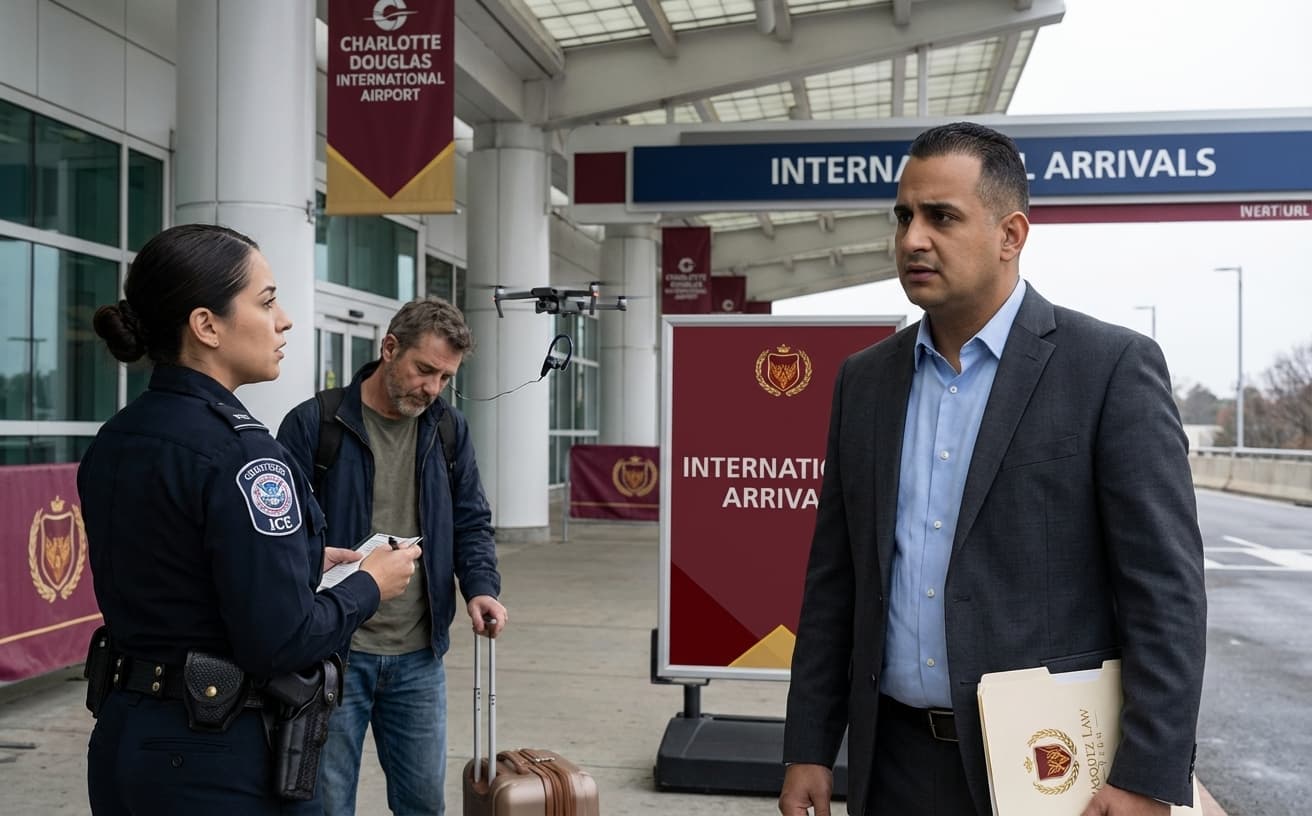
ICE officers frequently coordinate with the Transportation Security Administration (TSA), where TSA concentrates on airport security screening, while ICE handles immigration status verification and enforcement. At Charlotte airport, this collaboration ensures that passengers comply with both security and immigration laws.
Typical Job Duties of ICE Officers in Airports
- Checking traveler documents for valid visas and passports.
- Detaining individuals with suspected immigration violations.
- Interviewing passengers with questionable status.
- Processing individuals to begin deportation if needed.
Key Actions Taken by ICE Officers in Airports
When ICE officers are present at airports like Charlotte, they primarily enforce immigration checks on arriving passengers. In 2026, this includes looking out for overstayed visas, fraudulent documentation, or travelers with legal removal orders.
ICE officers may also be involved in targeting persons with criminal records or those appearing on watchlists. Their authority lets them arrest and detain individuals for questioning and possible deportation proceedings.
Their activities are carefully regulated by federal law to balance enforcement with individual rights. For example, ICE officers require legal warrants or probable cause before entering private areas or taking enforcement actions.
Typical ICE Procedures at Airports
- Verification of travel documents and immigration status during or after customs processing.
- Request for additional information if irregularities are found.
- Detention of individuals suspected of violating immigration laws.
- Transportation to detention facilities for processing.
- Possible initiation of deportation proceedings through Immigration Courts.
What Happens After Detention?
Once detained, individuals are given an opportunity to present their case in immigration court. This process can take weeks or months depending on case complexity. It is critical to get legal assistance immediately to explore relief options, such as asylum or cancellation of removal.
ICE Officer Salary and Job Requirements
In 2026, ICE officers earn salaries ranging from $50,000 to $90,000 depending on location and seniority. Becoming an ICE officer requires passing background checks, training at the Federal Law Enforcement Training Center, and meeting physical and educational standards. This demanding role requires attention to detail and understanding of immigration law.
Common Mistakes When Interacting with ICE Officers
Many people in Charlotte and Florida make errors when approached by ICE officers, which can affect their immigration outcomes. Knowing what not to do helps protect your rights and future.
Talking without a Lawyer Present
One mistake is answering questions without legal representation. Anything you say can be used against you. Request to speak with an attorney before answering questions.
Providing False or Incomplete Documents
Presenting fake or doctored documents can lead to criminal charges and deportation. Always provide truthful information and bring original documents where possible.
Failing to Know Your Rights
Not maintaining silence or refusing to sign papers blindly are common errors. You have the right to remain silent and the right to legal counsel. Exercise these rights to avoid self-incrimination.
Not Seeking Help Promptly
Delaying legal help often causes missed opportunities for relief. If you or a family member encounter ICE, contact an experienced immigration attorney immediately.
Common Scenario: Being Stopped While Traveling
Imagine flying into Charlotte and ICE stops you for questioning. Panic can lead to mistakes like oversharing. Remaining calm, asking for an attorney, and cooperating without volunteering information is the best approach.
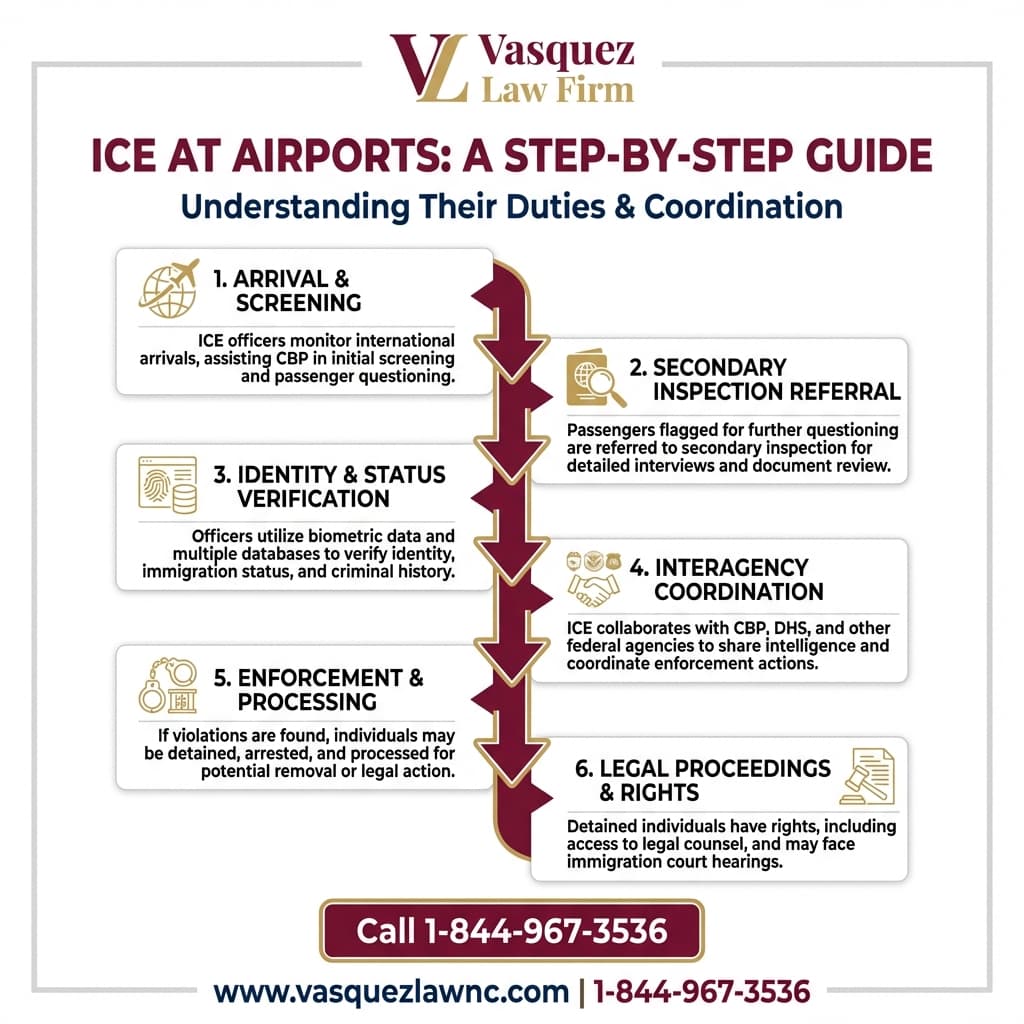
Timeline: What Happens When ICE Officers Are Involved
Your experience with ICE at Charlotte or other airports follows a typical timeline in 2026, with several key phases.
- Arrival and Screening: Upon arriving, passengers undergo document screening by ICE agents and TSA staff.
- Initial Detention: If issues arise, ICE may detain individuals for further questioning or processing.
- Case Review: ICE reviews records to decide whether to detain for removal or release under supervision.
- Immigration Court Hearings: Cases are scheduled before immigration judges, which can take weeks or months.
- Possible Outcomes: Deportation, voluntary departure, or relief granted depending on individual circumstances and legal counsel.
Understanding this timeline helps individuals prepare for each stage and seek help where needed.
Frequently Asked Questions About ICE Officers
What does the term ICE officers mean?
ICE officers are federal agents who enforce immigration laws in the United States. They work for U.S. Immigration and Customs Enforcement, a branch of the Department of Homeland Security. These officers conduct investigations, make arrests, and deport individuals who violate immigration laws. Their role includes both border enforcement and interior enforcement within the U.S.
Are ICE officers the same as police officers?
ICE officers are not local police but are federal agents with specific immigration enforcement authority. Although they can arrest individuals for immigration violations, their jurisdiction is limited to immigration laws and related criminal offenses. They are separate from local police departments and have no general law enforcement powers outside immigration issues.
What is the typical salary of an ICE deportation officer in 2026?
As of 2026, ICE deportation officers generally earn between $50,000 and $90,000 annually, depending on experience, location, and rank. Salaries may include federal benefits such as health insurance and retirement plans. Entry-level officers start at lower pay grades but can advance with additional training and years of service.
Why are ICE officers stationed at airports like Charlotte?
ICE officers are stationed at airports to enforce immigration laws and ensure that travelers comply with legal entry requirements. They screen passengers arriving from foreign countries for possible immigration violations, detain suspected undocumented immigrants, and coordinate with Transportation Security Administration (TSA) agents for security purposes.
How hard is it to become an ICE officer?
Becoming an ICE officer requires passing a competitive federal hiring process, which includes background checks, physical fitness tests, interviews, and training at the Federal Law Enforcement Training Center. Candidates must meet citizenship requirements and often have education or prior law enforcement experience. The process is rigorous to ensure qualified individuals.
Are ICE officers considered federal police?
While ICE officers have law enforcement powers within immigration law, they are not general federal police officers like FBI agents or U.S. Marshals. Their authority is specifically focused on immigration enforcement, including arresting, detaining, and deporting individuals violating immigration laws.
What should you do if approached by ICE officers at an airport?
If approached by ICE officers, remain calm and respectful. You have the right to remain silent and ask to speak with an attorney. Avoid providing false information or documents. It is important to know your rights and seek legal help immediately, especially if you are a Dreamer or have pending immigration relief applications.
How do ICE officers' roles differ from TSA agents?
TSA agents focus on airport security and passenger screening for weapons and prohibited items, while ICE officers enforce immigration laws, detain unauthorized individuals, and carry out deportation procedures. ICE officers have specific legal authority related to immigration that TSA agents do not have. Both agencies sometimes work closely at airports.
About Vasquez Law Firm
At Vasquez Law Firm, we combine compassion with aggressive representation. Our motto "Yo Peleo" (I Fight) reflects our commitment to standing up for your rights. Our experienced team focuses on immigration law and understands the unique challenges Dreamers and immigrant communities face in North Carolina and Florida.
- Bilingual Support: Se Habla Español - our team is fully bilingual.
- Service Areas: North Carolina, Florida, and nationwide immigration services.
- Experience: Over 15 years helping clients navigate complex legal matters.
- Results: Thousands of successful cases across multiple practice areas.
Attorney Trust and Experience
Attorney Vasquez holds a Juris Doctor degree and is admitted to practice in the North Carolina State Bar. With over 15 years of dedicated legal experience, he has built a reputation for providing personalized attention and helping clients pursue their immigration goals under challenging circumstances.
Don't wait to get the help you deserve. Call us now for immediate assistance.
Se Habla Español
Sources and References
- U.S. Citizenship and Immigration Services (USCIS)
- Executive Office for Immigration Review
- U.S. Department of Transportation
Facing immigration issues in Charlotte? Our Charlotte immigration lawyers can review your case.
Take the first step toward justice today. Our team is standing by to help. Se Habla Español.
Start Your Free Case Evaluation Now
Call us: 1-844-967-3536
Se Habla Español - Estamos aquí para ayudarle.


William Vasquez
Founder & CEO, Vasquez Law Firm, PLLC
William Vasquez is the founder and CEO of Vasquez Law Firm, PLLC, a results-driven firm specializing in immigration, criminal defense, personal injury, and workers' compensation. A U.S. Air Force veteran and recipient of the Joint Service Achievement Medal, William is dedicated to fiercely fighting for his clients' rights.
Related Legal Services
Need legal help? Learn more about NC immigration legal team, or contact us for a free evaluation.
You can also visit immigration legal services throughout NC for more information.