What Happens During ICE Immigration Raids in 2026
Learn what ICE immigration raids involve and your rights in 2026. Get trusted help from Vasquez Law Firm. Contact us for a free consultation today.
Published on March 13, 2026
Talk to an immigration attorney
Free call. A clear plan for your case.
Free & confidential · Se habla espanol · 24/7
Have questions? Talk to an attorney - free evaluation.
Call 1-844-967-3536Worried how the latest immigration news affects you?
Schedule a confidential case review with an immigration attorney - know exactly where you stand.
USCIS Case Status
Check your USCIS case status
Enter your receipt number and get the official status. Free, no registration.
What Happens During ICE Immigration Raids in 2026
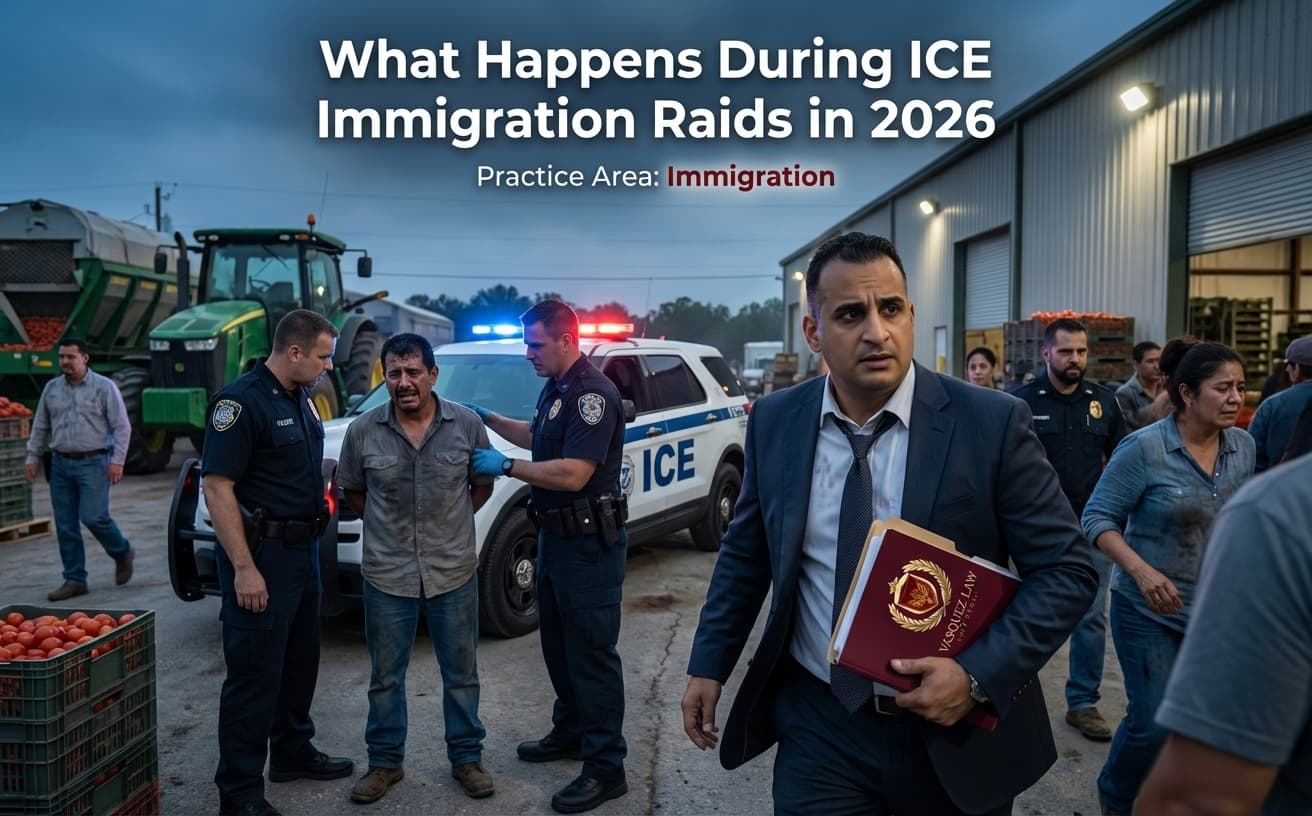
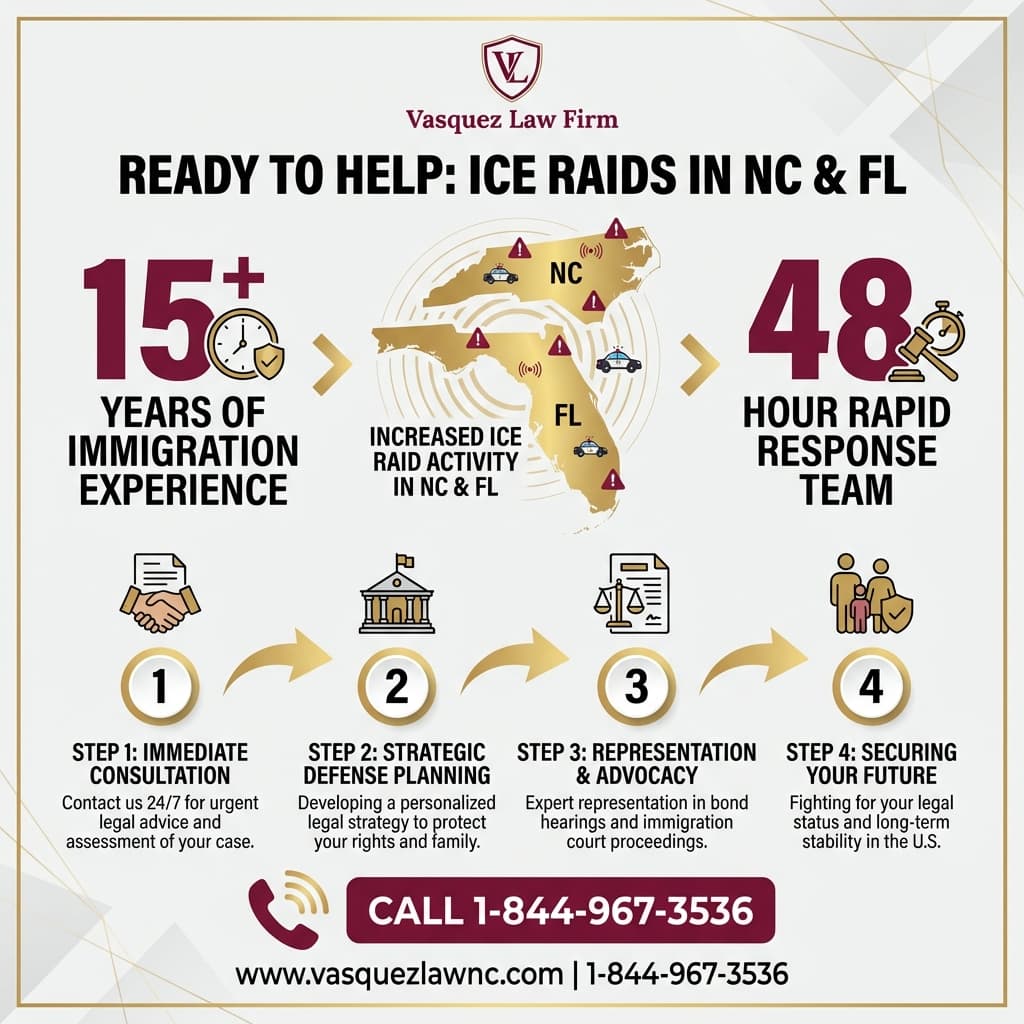
ICE immigration raids have increased in Orlando and throughout North Carolina and Florida in 2026. Knowing what these raids involve and how to protect yourself is crucial if you are a Dreamer or immigrant. This article explains what ICE raids are, who they target, and what actions to take if ICE immigration agents come to your workplace or home. Learn the warning signs, common mistakes, and your legal rights under federal immigration law. Vasquez Law Firm stands ready to help you with bilingual support and over 15 years of experience guiding immigrants through these difficult situations. Se Habla Español.
Need help with your case? Our experienced attorneys are ready to fight for you. Se Habla Español.
Schedule Your Free Case Evaluation
Or call us now: 1-844-967-3536
Quick Answer
ICE immigration raids are enforcement operations where agents arrest immigrants suspected of violating federal immigration laws. During these raids, agents may target workplaces or homes, detain individuals, and initiate removal proceedings. In areas like Orlando, NC, and FL, knowing your rights and acting quickly can protect you from adverse consequences.
- Raids involve ICE officers carrying warrants or legal permission.
- They often target workplaces and residential homes.
- Individuals have rights to remain silent and request legal counsel.
- Legal representation is key to responding effectively.
- Awareness of local protections in NC and FL is important.
Understanding ICE Immigration Raids
In 2026, ICE immigration raids continue to be a key enforcement tool used by U.S. Immigration and Customs Enforcement. These operations typically involve agents identifying individuals in workplaces, homes, or other locations suspected of being in the country unlawfully. For example, in Orlando, Florida, communities have reported an increase in ICE actions targeting undocumented workers in industries such as construction, hospitality, and landscaping.
ICE raids can be sudden and intimidating. Agents may arrive early in the morning or late at night, sometimes using surveillance technology to monitor suspected locations, as recent court testimony in Oregon revealed. The goals of these raids are to detain unauthorized immigrants and initiate removal proceedings if applicable.
Key features of ICE raids include:
- Legal Authorization: ICE must have a warrant or administrative order to enter private property, although public areas can be entered without one.
- Workplace Focus: Employers and workers in sectors with large immigrant populations are frequent targets.
- Detentions and Processing: Individuals may be detained on-site or taken into custody for further processing.
Why Are ICE Raids Happening Now?
ICE raids today reflect federal priorities aimed at enforcing immigration compliance more aggressively in 2026. Political shifts and increased funding for enforcement offices have influenced the frequency and locations of raids. Additionally, evolving technology and community reports often shape ICE strategies.
Are ICE Raids Illegal?
ICE raids are legal under federal law when done with proper warrants and adherence to constitutional protections. However, illegal or unconstitutional raids can be challenged in court. For instance, if ICE officers enter a home without a warrant and detain someone without probable cause, the detainee may have grounds to contest the enforcement action.
Who ICE Is Deporting
ICE primarily targets undocumented immigrants, people with criminal convictions disqualifying them from relief, and those with expired or fraudulent documents. Even Dreamers under DACA have faced risks depending on shifting policies. Understanding if you or someone you know could be at risk is essential to prepare and act.
Step-by-step: What to Do During a Raid
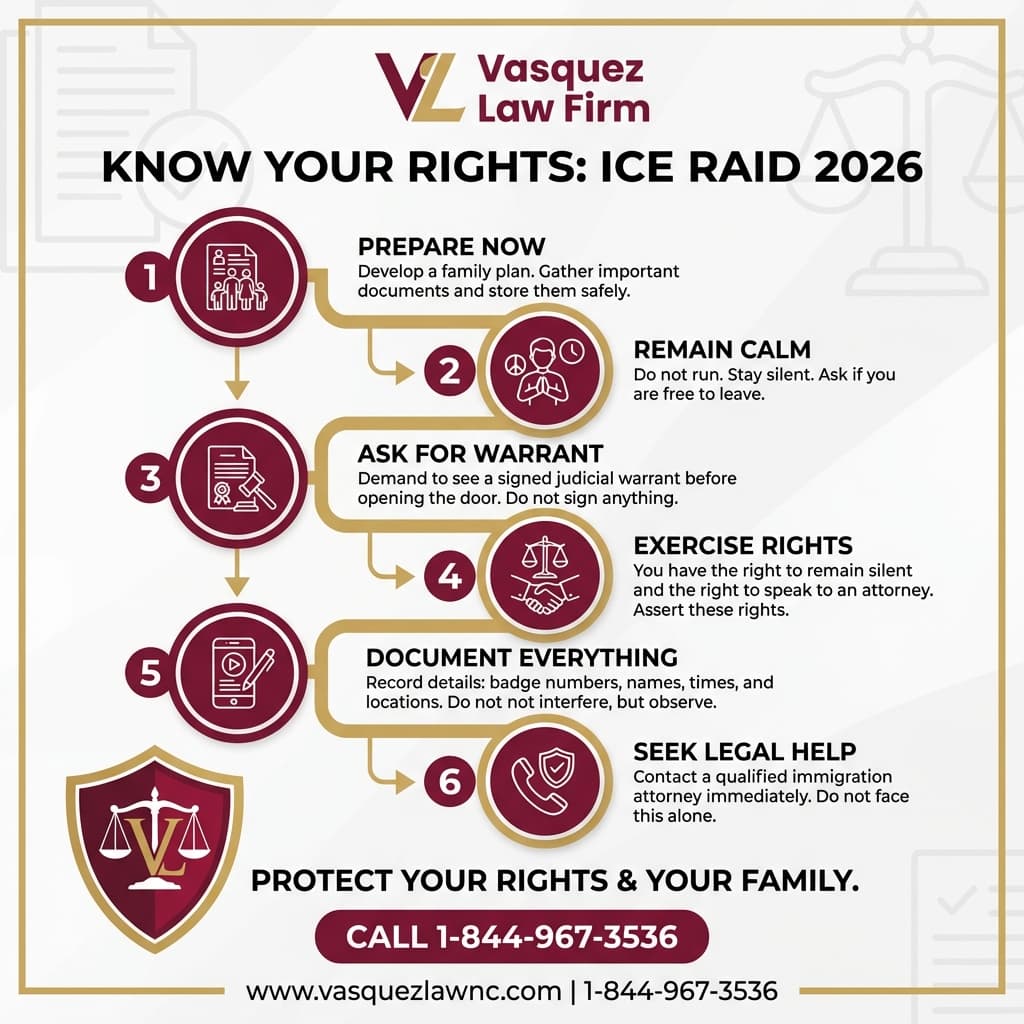
- Stay Calm: Keep composure to avoid escalating the situation.
- Ask for Identification: Request to see official ICE credentials and a signed warrant.
- Do Not Consent to Entry Without a Warrant: Politely refuse if no warrant is presented to enter your home.
- Exercise Your Right to Remain Silent: You do not have to answer questions without your attorney present.
- Contact a Lawyer Immediately: Call Attorney Vasquez at 1-844-967-3536 or your trusted legal representative.
- Inform Family or Friends: Make sure someone you trust knows your situation.
- Do Not Sign Anything: Avoid signing documents until reviewed by your lawyer.
When ICE Often Conducts Raids
Raids commonly occur during early mornings or late evenings to catch individuals off guard. Being aware of these times can improve preparedness.
Worker Rights During Workplace Raids
If ICE agents arrive at your workplace, you have the right to not answer questions that may incriminate you and to ask for a warrant. Employers can also be held responsible for violating workers’ rights during these raids.
Importance of Legal Help
Legal representation increases your chances of avoiding detention or securing release pending immigration hearings. Early attorney contact preserves your rights and increases possible relief options.
Documents and Evidence Checklist
- Identification Documents: Passport, driver's license, or government-issued ID.
- Immigration Papers: Visa, EAD cards, DACA approval notices, or any USCIS correspondence.
- Work Authorization Proof: Pay stubs, employer letters, or tax returns.
- Criminal Records: Any records of past convictions or police reports.
- Family Ties Documentation: Birth certificates of U.S. citizen children or relatives.
- Medical Records: If health issues affect your case.
- Contact Information: Phone numbers of your attorney and trusted contacts.
Keeping this documentation organized helps your attorney build the strongest possible defense after a raid.
Timeline: What to Expect After a Raid
- Day 1: ICE agents execute the raid and detain targeted individuals.
- Within 48 Hours: Detainees undergo initial processing and possible bond hearings.
- 1–2 Weeks: Immigration court hearings begin; individuals may be released or remain detained.
- Months: Deportation proceedings continue; legal defense and appeals may take place.
- Possible Outcomes: Removal orders, bond release, cancellation, asylum applications, or adjustment of status.
The timeline varies based on specific case factors and jurisdiction.
Costs and Fees: What Impacts the Price
- Attorney Fees: Legal representation costs depend on case complexity and services needed.
- Filing Fees: USCIS and immigration court fees for applications or bonds.
- Bond Costs: If bond is granted, payment is required to secure release.
- Translation and Notary Fees: For documents needed in legal proceedings.
- Additional Expenses: Travel to court hearings or detention centers.
Consulting early with Vasquez Law Firm helps estimate potential expenses and plan your defense.
Common Mistakes and How to Avoid Them
- 1. Talking to ICE Without a Lawyer: Always exercise your right to remain silent and ask for legal representation.
- 2. Letting ICE Into Home Without a Warrant: Politely refuse entry without a valid warrant.
- 3. Signing Documents Under Pressure: Never sign deportation papers or waivers without attorney review.
- 4. Ignoring Raids or Notices: Respond promptly to any ICE communications or court documents.
- 5. Failing to Prepare Documents: Keep up-to-date copies of immigration and ID papers ready.
- 6. Missing Court Dates: Delays or failures can result in deportation orders.
- 7. Believing Social Media Rumors: Rely on trusted legal sources and professionals.
If you only remember one thing: Contact an experienced immigration attorney immediately after an ICE raid or notice.
NC, FL, and Nationwide Notes
North Carolina Notes
North Carolina residents may face ICE raids at workplaces or homes, especially in industries like agriculture and manufacturing. State laws do not provide sanctuary protections, so federal law governs. Vasquez Law Firm offers bilingual legal support focused on navigating NC immigration enforcement risks.
Florida Notes
Florida, including Orlando, has seen increased ICE activity in 2026 targeting large immigrant communities across several sectors. While the state lacks sanctuary laws, local advocacy groups work to inform residents of their rights during immigration raids. Knowing these rights and having legal counsel is vital.
Nationwide Concepts
ICE enforcement operates under federal authority nationwide according to statutes such as 8 U.S.C. § 1357. The legal framework requires warrants for private property entry and respects constitutional protections. However, enforcement intensity and local enforcement cooperation vary.
When to Call a Lawyer Now
- If ICE agents come to your home or workplace
- If you or a family member is detained by immigration authorities
- If you receive a Notice to Appear in immigration court
- If you do not understand your immigration status or rights after a raid
- If you are a Dreamer worried about future enforcement
- If ICE requests documents or interviews you
- If you fear deportation or removal proceedings may begin
- If you have criminal charges or convictions affecting immigration
- If you need help gathering evidence or filing relief applications
- If you want to protect your family and avoid costly mistakes
About Vasquez Law Firm
At Vasquez Law Firm, we combine compassion with aggressive representation. Our motto "Yo Peleo" (I Fight) reflects our commitment to standing up for your rights.
- Bilingual Support: Se Habla Español—our team is fully bilingual
- Service Areas: North Carolina, Florida, and nationwide immigration services
- Experience: Over 15 years helping clients navigate complex legal matters
- Results: Thousands of successful cases across multiple practice areas
Attorney Trust and Experience
Attorney Vasquez holds a Juris Doctor degree and is admitted to practice in both the North Carolina State Bar and Florida Bar. With over 15 years of dedicated legal experience, he has built a reputation for providing personalized attention and achieving favorable outcomes for his clients.
Don't wait to get the help you deserve. Call us now for immediate assistance.
Se Habla Español
Frequently Asked Questions
What are ICE immigration raids?
ICE immigration raids are enforcement actions where U.S. Immigration and Customs Enforcement agents arrest individuals suspected of violating immigration laws. These raids occur at workplaces, homes, and other locations to identify and detain unauthorized immigrants. Knowing your rights during these operations is vital in 2026.
Who exactly is ICE deporting?
ICE focuses on individuals without legal immigration status, those with criminal convictions, or expired visas. Dreamers protected under DACA may still face risks due to policy changes. Deportation proceedings often follow arrests made during raids.
What to do if ICE raids your workplace?
Remain calm, ask for a warrant, exercise your right to remain silent, and contact an immigration attorney like Attorney Vasquez immediately. Do not sign anything without legal advice.
Are ICE raids legal in 2026?
Yes, when conducted under proper warrants and federal authority. Illegal raids may be challenged, but ICE agents generally have broad enforcement powers under immigration law.
What does ICE do to immigrants after raids?
ICE may detain individuals, start removal proceedings, or release them on bond. Legal representation is critical to challenge detention or removal and apply for relief if eligible.
How can I track ICE raids locations?
Online trackers and legal groups maintain lists of recent ICE raids to inform communities. Vasquez Law Firm helps clients stay informed about local ICE activity in NC and FL.
Who is at risk for an ICE raid?
People without valid immigration status, expired visas, or criminal convictions. Workplaces with undocumented workers are frequent targets. Dreamers under DACA still face some risk.
Can I refuse ICE entry without a warrant?
Yes. ICE generally must have a valid warrant to enter private property. You can politely refuse entry if no warrant is shown, but they can enter public areas without one. Knowing this protects your rights.
Sources and References
- U.S. Citizenship and Immigration Services (USCIS)
- Executive Office for Immigration Review
- U.S. Department of State Visa Information
Need immigration help? Our immigration attorneys can review your case.
Take the first step toward justice today. Our team is standing by to help.
Start Your Free Case Evaluation Now
Call us: 1-844-967-3536
Se Habla Español - Estamos aquí para ayudarle.


William Vasquez
Founder & CEO, Vasquez Law Firm, PLLC
William Vasquez is the founder and CEO of Vasquez Law Firm, PLLC, a results-driven firm specializing in immigration, criminal defense, personal injury, and workers' compensation. A U.S. Air Force veteran and recipient of the Joint Service Achievement Medal, William is dedicated to fiercely fighting for his clients' rights.
Related Legal Services
Need legal help? Learn more about our immigration law practice, or contact us for a free evaluation.
You can also visit North Carolina immigration lawyers for more information.

![Ninth Circuit Rejects Rehearing in TPS Case [2026]](/_next/image?url=https%3A%2F%2Fvuuyorlsmhunqektprqy.supabase.co%2Fstorage%2Fv1%2Fobject%2Fpublic%2Fblogs%2Fimmigration-header-1782501344661.png&w=1920&q=75)