How a Government Shutdown Affects Immigration in 2026
Understand how a government shutdown impacts immigration services in 2026. Protect your case. Contact Vasquez Law Firm for a free consultation.
Published on February 15, 2026
Have questions? Talk to an attorney - free evaluation.
Call 1-844-967-3536Worried how the latest immigration news affects you?
Get a free, confidential case review with an immigration attorney - know exactly where you stand.
How a Government Shutdown Affects Immigration in 2026
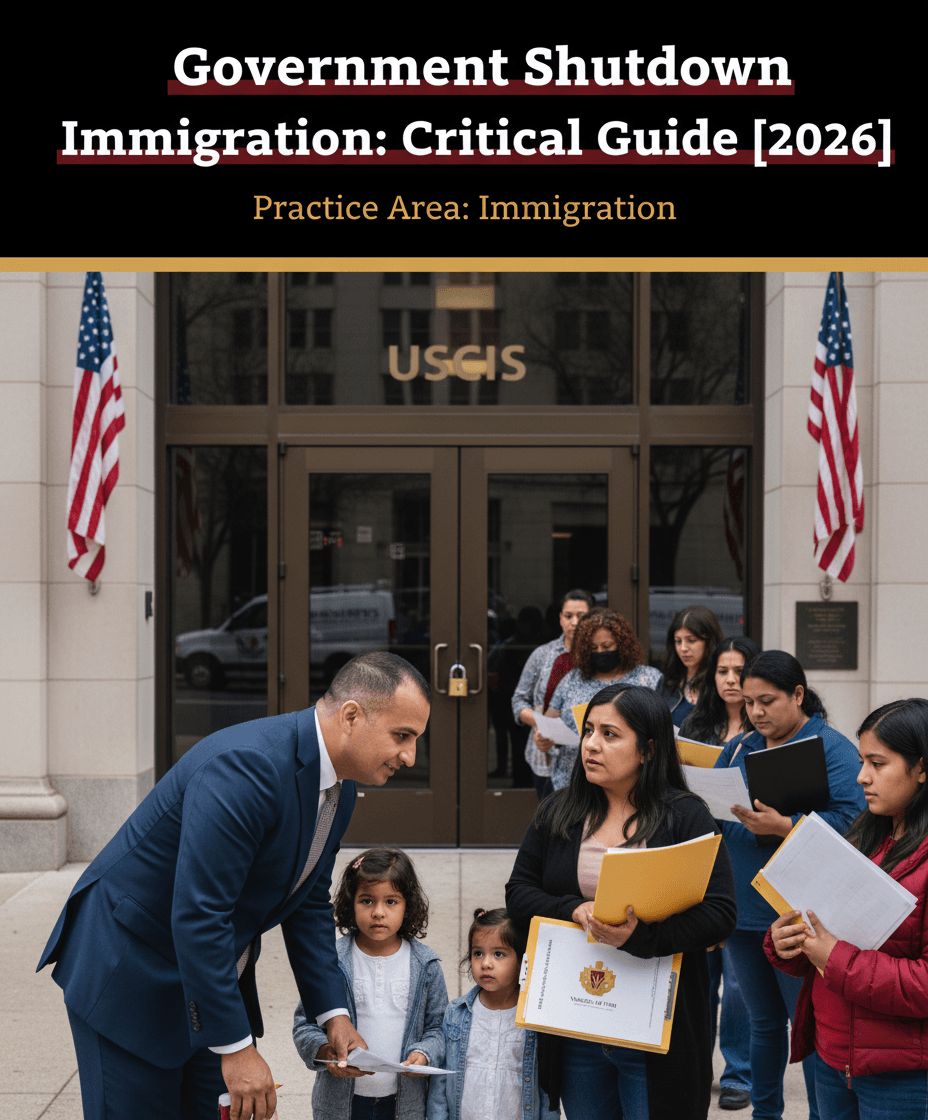
The prospect of a government shutdown can bring significant uncertainty and anxiety, particularly for individuals navigating the complex U.S. immigration system. In 2026, understanding how a potential government shutdown impacts immigration services, courts, and processing times is crucial for anyone with an active or pending case. Vasquez Law Firm is here to provide clarity on these challenging situations, offering expert guidance and aggressive representation to protect your interests. We understand the urgency and fear a shutdown can cause for Dreamers, families, and workers alike, and we are committed to helping you understand the potential effects on your immigration journey.
Need help with your case? Our experienced attorneys are ready to fight for you. Se Habla Español.
Schedule Your Free Consultation
Or call us now: 1-844-967-3536
Quick Answer: Government Shutdown Immigration Impact
A government shutdown in 2026 can significantly disrupt immigration services, though the impact varies by agency and funding source. Fee-funded agencies like USCIS may continue limited operations, while others like Immigration Courts or ICE enforcement could face severe cutbacks, leading to delays and cancellations. Essential services related to national security or public safety typically continue.
- USCIS operations may continue with fee-funded applications.
- Immigration Courts often experience significant closures and rescheduled hearings.
- ICE enforcement and CBP operations may be prioritized for essential functions.
- Visa processing at consulates could be affected, causing delays.
- Passport services might be limited to emergencies.
- Seek legal advice immediately if a shutdown is imminent to assess your specific case.
Understanding Government Shutdowns and Immigration in 2026
A government shutdown occurs when Congress fails to pass appropriations bills or continuing resolutions to fund federal government operations. While the term sounds absolute, the reality is more nuanced. Essential services, especially those related to national security, public safety, or constitutional duties, typically continue. However, many non-essential functions are curtailed, leading to furloughs of federal employees and significant disruptions.
For the immigration system, the impact of a government shutdown can be widespread. Agencies like U.S. Citizenship and Immigration Services (USCIS), U.S. Immigration and Customs Enforcement (ICE), Customs and Border Protection (CBP), and the Executive Office for Immigration Review (EOIR), which oversees immigration courts, all rely on federal funding. The exact effects depend on the nature and duration of the shutdown, as well as the specific funding mechanisms of each agency.
In 2026, as in previous years, the potential for a government shutdown requires careful monitoring. Individuals with pending immigration applications, court dates, or travel plans must stay informed and prepare for possible disruptions. Understanding which parts of the immigration system are most vulnerable can help you plan proactively. Vasquez Law Firm is dedicated to keeping clients informed about these developments and their potential implications.
Impact on Key Immigration Agencies During a Shutdown
The various federal agencies handling immigration matters are affected differently during a government shutdown. This distinction is critical for understanding what services might continue and which will be paused. Knowing these differences can help you anticipate potential delays or changes to your case.
USCIS: Fee-Funded Operations and Potential Delays
U.S. Citizenship and Immigration Services (USCIS) is primarily funded by application and petition fees, not congressional appropriations. This means that USCIS operations are generally less impacted by a government shutdown than other agencies. Most fee-funded services, such as processing Green Card applications, naturalization petitions, and various visa petitions, typically continue.
However, even USCIS is not entirely immune. Some USCIS employees whose salaries are paid through appropriated funds, rather than fees, may be furloughed. This can include staff involved in E-Verify, SAVE (Systematic Alien Verification for Entitlements), or certain humanitarian programs. While core processing continues, you might still experience some delays due to reduced staff or related federal agency closures impacting necessary background checks or inter-agency coordination. For example, if FBI background checks are delayed, USCIS processing can slow down. USCIS provides official guidance on operations during a lapse in appropriations.
Immigration Courts (EOIR): Widespread Closures and Rescheduling
The Executive Office for Immigration Review (EOIR), which oversees immigration courts, is funded by congressional appropriations. Consequently, immigration courts are among the most significantly affected components during a government shutdown. Most non-detained immigration court hearings are typically postponed, leading to widespread rescheduling.
Judges, court staff, and attorneys for the Department of Homeland Security (DHS) are usually furloughed, except for a minimal number deemed essential for detained cases. This means that if you have a non-detained hearing scheduled in Orlando or anywhere in North Carolina, it is highly likely to be canceled and rescheduled, potentially adding months or even years to already lengthy court backlogs. Detained cases, especially those involving individuals in ICE custody, often continue on a limited basis due to public safety concerns, as outlined in 8 U.S.C. § 1229a. This often leads to a two-tiered system during a shutdown.
ICE and CBP: Essential Functions Prioritized
U.S. Immigration and Customs Enforcement (ICE) and Customs and Border Protection (CBP) are also appropriation-funded agencies. During a government shutdown, their operations are generally scaled back, but essential functions related to national security, border enforcement, and public safety continue. This means that border patrol activities, customs inspections at ports of entry, and detention operations are likely to proceed.
However, non-essential administrative tasks, some forms of interior enforcement, and certain support services may be reduced or paused. For individuals in ICE custody, court proceedings might still occur on a limited basis. For those at the border, processing of asylum claims or other entries could face delays, but immediate enforcement actions typically remain in effect. It's crucial to understand that even during a shutdown, immigrants have rights, and enforcement agencies are still bound by legal limits.
Key Steps to Take During a Government Shutdown
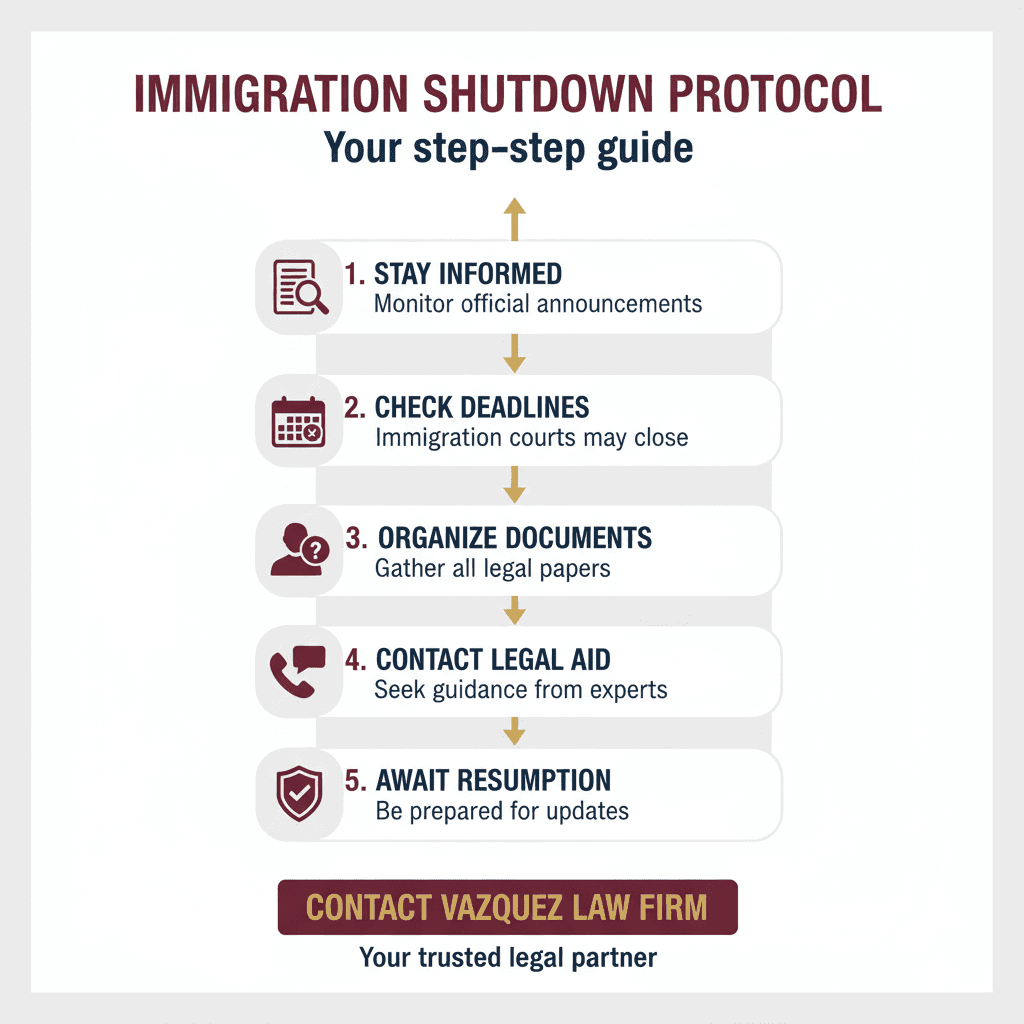
Proactive preparation and swift action can help mitigate the disruptions caused by a government shutdown. If you are an immigrant in North Carolina, Florida, or anywhere in the U.S. with an active case, consider these steps to protect your interests.
- Stay Informed: Monitor official government websites (like USCIS.gov, Justice.gov/eoir, and Travel.state.gov) and reputable legal news sources for updates. A government shutdown immigration impact can change rapidly.
- Consult an Attorney: Speak with an experienced immigration lawyer, like those at Vasquez Law Firm, immediately. We can assess how a shutdown might specifically affect your case and advise on necessary actions or precautions.
- Gather Documents: Ensure all your important immigration documents are organized and accessible. If a deadline approaches or an unexpected appointment arises, having your paperwork ready is crucial.
- Prepare for Delays: Assume that processing times will be extended, and plan accordingly. This might involve delaying travel or making contingency plans for work or family matters.
- Attend Scheduled Appointments (Unless Notified Otherwise): Do not assume your appointment or hearing is canceled without official notification. Always confirm directly with the relevant agency or your attorney.
- Understand Filing Deadlines: Strict deadlines often remain in effect, even during a shutdown. Missing a deadline can have severe consequences, so consult with your attorney about any upcoming dates.
Common Scenarios and How They Are Affected
A government shutdown can manifest in various ways, impacting different immigration processes uniquely. Here are some common scenarios and their likely outcomes during a shutdown in 2026:
Pending Green Card or Visa Applications
If you have a pending Green Card application (Form I-485) or a visa petition (e.g., I-130, I-140) with USCIS, processing generally continues because USCIS is fee-funded. However, if your case requires inter-agency coordination, such as background checks from the FBI or interviews at a State Department consular office, you may experience delays. Delays can also occur if other federal agencies that support USCIS are affected.
Immigration Court Hearings
For individuals with non-detained immigration court hearings, expect cancellations and rescheduling. This can prolong the legal process significantly. If you are in detention, your hearings are more likely to proceed, though the court's capacity might be reduced. Always confirm your court status with the EOIR automated information system or your attorney.
Naturalization Ceremonies and Interviews
Naturalization interviews and ceremonies conducted by USCIS are typically fee-funded and should continue. However, if the local USCIS office relies on appropriated funds for certain staff or resources, there could be minor disruptions. It's always best to confirm your appointment status directly with USCIS.
Travel and Border Crossings
CBP operations at ports of entry and along the border are considered essential for national security. Therefore, border crossings and customs inspections will continue. However, staffing levels might be adjusted, potentially leading to longer wait times. If you are traveling internationally, be prepared for potential delays and ensure all your travel documents are current and readily accessible.
Documents Checklist for Immigration Preparedness
Having your essential documents readily available can prevent further stress and delays during a government shutdown. This checklist is vital for anyone with an active immigration case, whether in North Carolina, Florida, or elsewhere.
- Passport and Visa: Ensure these are current and copies are kept separately.
- Green Card (if applicable): Keep your Permanent Resident Card safe and accessible.
- Work Authorization Document (EAD): Verify its expiration date.
- Notice of Action (I-797): Copies of all notices from USCIS.
- Birth Certificates, Marriage Certificates: Original and certified copies.
- Financial Documents: Proof of income, tax returns, bank statements.
- Medical Records: Especially those related to immigration physicals.
- Court Notices: Any notices of hearing or orders from immigration court.
- Receipts for Fees Paid: Proof of payments to USCIS or other agencies.
- Attorney Contact Information: Keep your lawyer's details handy.
Timeline: What to Expect During a Shutdown
The duration and specific details of a government shutdown can vary, but here's a general timeline of what to expect regarding immigration services in 2026:
- Week 1: Initial Disruptions. Non-essential federal employees are furloughed. Immigration courts for non-detained cases begin canceling hearings. USCIS generally continues fee-funded operations, but some appropriated-funded services may pause.
- Weeks 2-4: Extended Delays. Backlogs grow as cancellations mount. USCIS processing, while mostly operational, may slow down due to reduced inter-agency support. Consular services for visas may become severely limited, impacting travel plans.
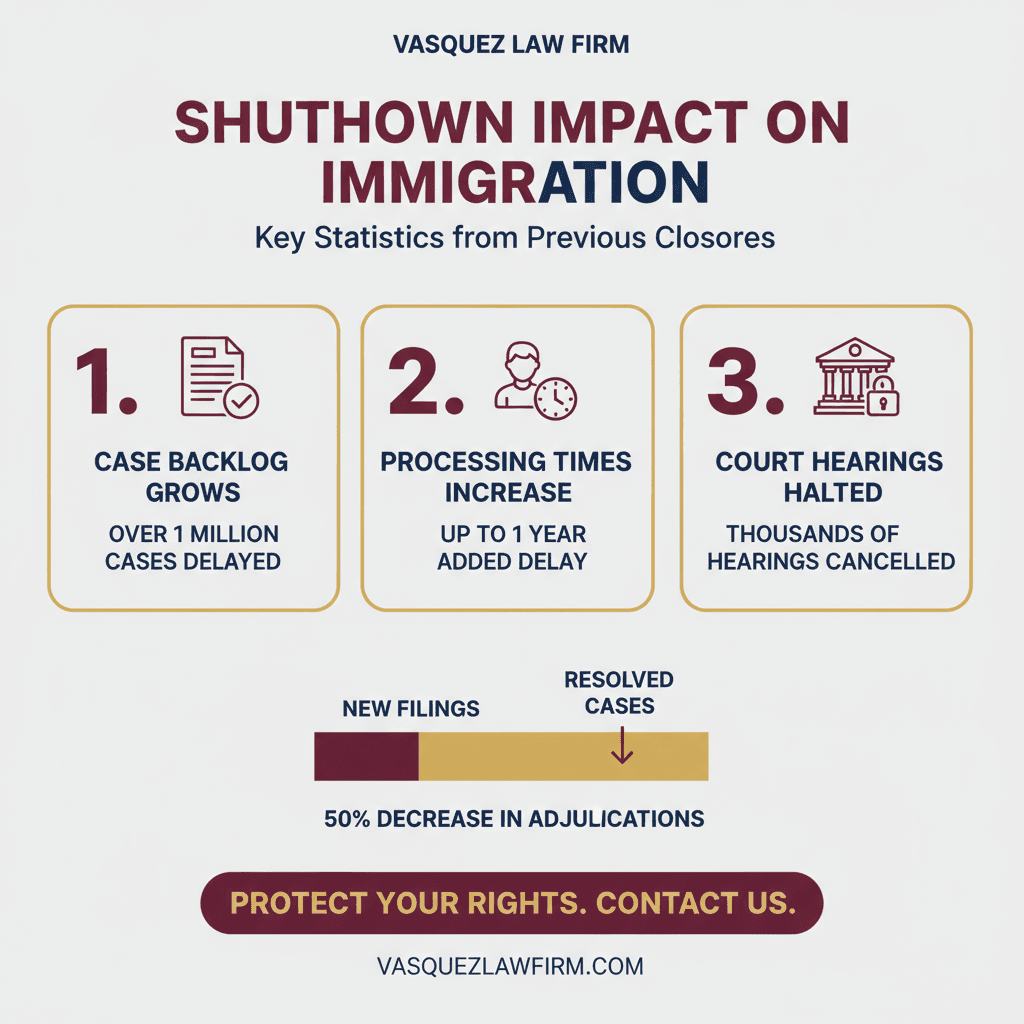
- Month 2+: Significant Backlogs. If a shutdown extends, the cumulative effect on the immigration system becomes severe. Rescheduling court dates could take months or years. USCIS processing times might increase substantially due to the volume of cases that were delayed or could not be processed fully.
- Post-Shutdown: Recovery Phase. Once funding is restored, agencies face the daunting task of clearing backlogs. This recovery period can itself be lengthy. Prioritization often goes to critical cases, but many individuals will experience prolonged waits.
Costs and Fees: What Impacts the Price
While a government shutdown primarily affects the operational capacity of immigration agencies, it can indirectly impact the financial aspects of your case. Understanding these potential cost factors is important for planning.
- Filing Fees: USCIS filing fees generally remain the same and are still required, as these fund the agency's operations. A shutdown does not typically waive these fees.
- Attorney Fees: Legal fees for your immigration attorney will continue as your case still requires active management, even if government processing is paused. Delays caused by a shutdown might necessitate additional legal work, potentially increasing overall costs if new filings or extensive rescheduling are required.
- Travel Costs: If a scheduled interview or court hearing is canceled due to a shutdown, you might incur additional travel expenses for rescheduled appointments, especially if you live far from the processing center or court.
- Document Renewal Costs: Delays in processing could mean that certain supporting documents, like medical exams or foreign police certificates, expire, requiring you to obtain new ones and pay associated fees again.
- Lost Income: For some, delays in receiving work authorization or travel documents could result in lost income or missed job opportunities.
Planning for these potential costs and working closely with your legal team can help mitigate the financial impact of a prolonged government shutdown on your immigration journey.
Common Mistakes and How to Avoid Them During a Shutdown
Navigating the immigration system during a government shutdown is challenging, and certain missteps can have serious consequences. Avoid these common mistakes:
- Assuming All Services Stop: Not all immigration services halt. USCIS, being fee-funded, often continues many operations. Always verify the status of your specific agency or service.
- Missing Deadlines: Critical legal deadlines, especially those set by statute or regulation, may still be in effect. Do not assume extensions are automatic. Missing a deadline can lead to denial or even deportation proceedings.
- Not Confirming Appointments: Never assume an interview or court hearing is canceled without official notification. Always check with your attorney or the relevant agency's website/hotline.
- Panicking and Making Rash Decisions: Emotional responses can lead to poor choices. Consult your attorney before making any significant changes to your plans or case strategy.
- Ignoring Legal Advice: An experienced immigration attorney can provide tailored advice for your unique situation during a shutdown. Failing to follow their guidance can jeopardize your case.
- Relying on Unofficial Information: Only trust information from official government sources or your legal counsel. Social media rumors can be misleading and harmful.
- Delaying Communication with Your Attorney: If you receive any notices or have concerns, contact your attorney immediately. Timely communication is vital.
If you only remember one thing: During a government shutdown, always confirm the status of your specific case and deadlines with an experienced immigration attorney. Do not make assumptions that could negatively impact your immigration future.
Don't face your legal challenges alone. Our team is here to help you every step of the way.
Call today: 1-844-967-3536 | Se Habla Español
North Carolina, Florida, and Nationwide Immigration Notes
Immigration law is primarily federal, meaning the rules and procedures are generally consistent across the United States. However, the practical impact of a government shutdown can have local nuances, particularly concerning court scheduling and local office operations. Vasquez Law Firm serves clients across North Carolina and Florida, as well as nationwide for immigration matters.
Federal Framework and Nationwide Impact
The laws governing immigration, such as the Immigration and Nationality Act (INA), are federal. A government shutdown impacts federal agencies like USCIS, ICE, CBP, and EOIR uniformly across the country. Therefore, the general principles discussed regarding fee-funded versus appropriated-funded agencies apply nationwide. All federal immigration courts, from Orlando to Raleigh, will experience similar disruptions for non-detained cases, and USCIS processing will follow national guidelines.
Practical Notes for North Carolina and Florida
While the federal rules apply, the practical effects of a government shutdown immigration situation can vary by local court dockets and office backlogs. For example, an immigration court in Charlotte, NC, or Miami, FL, might have a different number of cases to reschedule, leading to varying wait times for new court dates. Similarly, local USCIS field offices in cities like Orlando or Raleigh will follow national directives but may have unique staffing levels that influence minor local delays. Vasquez Law Firm, with its strong presence in both states, is uniquely positioned to monitor these local impacts and advise clients accordingly.
When to Call an Immigration Lawyer Now
The uncertainty of a government shutdown, especially concerning immigration, makes timely legal counsel invaluable. You should contact Vasquez Law Firm immediately if:
- You have an upcoming immigration court hearing that might be affected.
- You have a critical deadline approaching for filing an application or response.
- Your work authorization or visa is nearing expiration, and processing may be delayed.
- You have international travel planned and are concerned about re-entry or visa processing.
- You are in immigration detention and need to understand your court status.
- You received a notice about your case during a shutdown and are unsure what it means.
- You want to proactively understand how a shutdown could impact your specific immigration path.
- You are a Dreamer or have DACA status and are concerned about renewals during potential closures.
About Vasquez Law Firm
At Vasquez Law Firm, we combine compassion with aggressive representation. Our motto "Yo Peleo" (I Fight) reflects our commitment to standing up for your rights. We understand the profound impact that immigration matters have on individuals and families, and we are dedicated to providing personalized, effective legal solutions.
- Bilingual Support: Se Habla Español - our team is fully bilingual, ensuring clear communication and understanding.
- Service Areas: We proudly serve clients across North Carolina, Florida, and nationwide for all immigration services.
- Experience: With over 15 years of dedicated experience, Attorney Vasquez has a proven track record of helping clients navigate complex legal challenges.
- Results: We are committed to achieving favorable outcomes, having successfully handled thousands of cases across various practice areas.
Attorney Trust and Experience
Attorney Vasquez holds a Juris Doctor degree and is admitted to practice in both the North Carolina State Bar and Florida Bar. With over 15 years of dedicated legal experience, he has built a reputation for providing personalized attention and achieving favorable outcomes for his clients. He understands the intricacies of immigration law and the importance of fighting tirelessly for those seeking a better life in the United States.
Frequently Asked Questions About Government Shutdowns and Immigration
Is USCIS closed due to government shutdown in 2026?
USCIS is primarily fee-funded, meaning most of its operations, including processing applications for Green Cards, naturalization, and visas, typically continue during a government shutdown in 2026. However, some services funded by congressional appropriations, such as E-Verify or certain humanitarian programs, may be impacted. Always check the official USCIS website for the latest updates on specific service availability.
How does a government shutdown affect immigration court cases?
Immigration courts (EOIR) are heavily affected by government shutdowns because they rely on congressional appropriations. Most non-detained immigration court hearings are usually canceled and rescheduled, leading to significant delays. Detained cases, particularly those involving individuals in ICE custody, may continue on a limited basis due to public safety mandates. Consult your attorney for your specific court date status.
Can I still file immigration applications during a shutdown?
Yes, you can generally still file immigration applications with USCIS during a government shutdown, as the agency is funded by user fees. However, it is crucial to confirm the specific filing procedures and potential mailing address changes. Be prepared for possible delays in processing times due to reduced staffing or impacts on other federal agencies involved in background checks or inter-agency coordination.
Will my visa interview at an embassy or consulate be affected?
Visa interviews at U.S. embassies and consulates abroad, overseen by the Department of State, can be significantly affected by a government shutdown. These operations are appropriation-funded, and non-essential services may be suspended, leading to cancellations and rescheduling. It is vital to check the U.S. Department of State's website or contact the specific embassy/consulate for current operational status before your scheduled appointment.
What happens if my work permit (EAD) expires during a shutdown?
If your work permit (Employment Authorization Document, EAD) expires during a government shutdown, and your renewal application is pending with USCIS, the normal automatic extension rules may still apply if you filed on time. However, processing delays could prolong the wait for your new card. Consult an attorney immediately to understand your options and avoid unauthorized employment.
Are border and customs operations affected by a shutdown?
Border and customs operations, managed by Customs and Border Protection (CBP), are considered essential for national security and public safety. Therefore, these operations typically continue during a government shutdown. While staffing levels might be adjusted, leading to longer wait times at ports of entry, border enforcement and inspections remain active. Travelers should still expect full scrutiny upon entry.
Can I still get a passport if the government shuts down?
Passport services, provided by the U.S. Department of State, can be severely limited during a government shutdown. While emergency passport services for urgent humanitarian or life-or-death situations may continue, routine passport applications and renewals are often suspended or significantly delayed. It is advisable to apply for or renew your passport well in advance of any planned international travel.
How do I check the status of my immigration case during a shutdown?
To check your immigration case status during a shutdown, use official online tools such as the USCIS Case Status Online tool for applications or the EOIR Automated Case Information System for court cases. Additionally, contact your immigration attorney, who can provide the most current information and guidance. Do not rely on unofficial sources for critical updates.
Are DACA renewals impacted by a government shutdown in 2026?
DACA renewals, processed by USCIS, are generally fee-funded and should continue to be accepted and processed during a government shutdown in 2026. However, as with other USCIS processes, potential delays could arise from reduced appropriated-funded staff or impacts on supporting federal agencies. It is always recommended to file DACA renewals as early as possible.
What should immigrants in North Carolina or Florida do during a shutdown?
Immigrants in North Carolina, Florida, or any state should immediately consult an experienced immigration attorney like Vasquez Law Firm. They should gather all important documents, stay informed through official channels, and prepare for potential delays in court hearings or application processing. Do not miss any legal deadlines without clear guidance from your lawyer.
Sources and References
- U.S. Citizenship and Immigration Services (USCIS)
- Executive Office for Immigration Review (EOIR)
- U.S. Department of State - Bureau of Consular Affairs
- 8 U.S. Code § 1229a - Hearings
- 8 C.F.R. § 245.1 - Adjustment of Status Eligibility
Ready to take the next step? Contact Vasquez Law Firm today for a free, confidential consultation. We're committed to fighting for your rights and achieving the best possible outcome for your case.
Start Your Free Consultation Now
Call us: 1-844-967-3536
Se Habla Español - Estamos aquí para ayudarle.


William Vasquez
Founder & CEO, Vasquez Law Firm, PLLC
William Vasquez is the founder and CEO of Vasquez Law Firm, PLLC, a results-driven firm specializing in immigration, criminal defense, personal injury, and workers' compensation. A U.S. Air Force veteran and recipient of the Joint Service Achievement Medal, William is dedicated to fiercely fighting for his clients' rights.
Related Legal Services
Need legal help? Learn more about NC immigration legal team, or contact us for a free evaluation.
You can also visit immigration attorneys across North Carolina for more information.