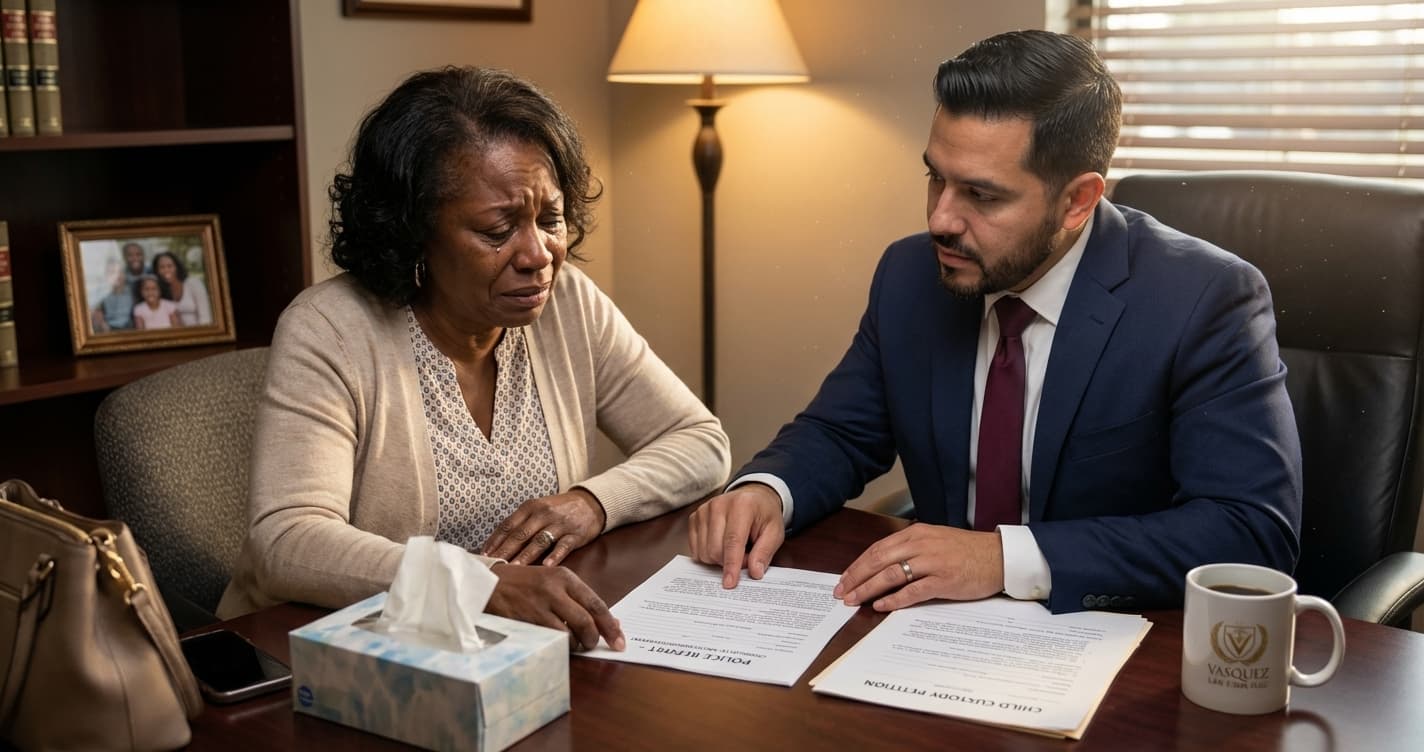
Free Mediation Program for High-Conflict Child Custody in Mecklenburg County
Mecklenburg County has launched a new program that expands free mediation services for high-conflict custody and divorce cases in Charlotte, aiming to reduce court burdens. Learn how this impacts your family law matters.
Published on December 22, 2025· Updated May 22, 2026
Have questions? Talk to an attorney - free evaluation.
Call 1-844-967-3536Free Mediation Program for High-Conflict Child Custody in Mecklenburg County
As families navigate the often tumultuous waters of divorce and child custody disputes, the introduction of a new program in Mecklenburg County offers a glimmer of hope. The Mecklenburg County Courts have announced an expansion of court-connected mediation services for high-conflict custody and divorce cases in Charlotte. This initiative is designed to provide no-cost mediation sessions, co-parenting education, and referrals to parenting coordinators, significantly changing the landscape for families involved in domestic relations disputes.
Going Through a Divorce in Charlotte?
NC requires 1 year of separation. We protect your assets, custody rights, and future.
Understanding the New Mediation Program
This innovative pilot program aims to reduce the number of emergency motions and trials that often overwhelm the court system. Judges now have the discretion to order participation in this program for parties in high-conflict divorce and child custody cases. Those who refuse to engage in the mediation process may face adverse scheduling or cost consequences. For many, this means that the court is recognizing the importance of resolving disputes amicably, rather than through protracted litigation.
Why Mediation Matters
Mediation offers a confidential and less adversarial forum for resolving conflicts. It enables parents to communicate openly about their concerns and work towards a mutually beneficial arrangement that prioritizes the well-being of their children. This can be especially important in high-conflict cases where emotions often run high, and communication has broken down.
Legal Context and Implications
In North Carolina, the legal framework surrounding child custody and divorce is complex. Child custody determinations are made based on the best interests of the child, and the court often favors arrangements that allow for ongoing parental involvement. By promoting mediation, the Mecklenburg County program aligns with North Carolina's emphasis on collaborative and constructive conflict resolution.
The implications of this program are significant. It not only alleviates the burden on the court system but also encourages parents to develop co-parenting skills that will serve them long after the divorce is finalized. Furthermore, successful mediation can lead to more sustainable agreements, reducing the likelihood of future modifications or legal disputes.
Client Rights and Options
As a client navigating divorce or custody disputes, understanding your rights is crucial. You have the right to seek mediation and should be informed of this option by your attorney. If ordered to participate in mediation, it's essential to approach the process with an open mind and a willingness to compromise. This can ultimately lead to a more favorable outcome for both you and your children.
Step-by-Step Process for Engaging in Mediation
- Consult with a Charlotte Divorce Lawyer: Before entering mediation, consult with an experienced attorney who understands North Carolina family law.
- Understand the Mediation Process: Familiarize yourself with how mediation works, the role of the mediator, and what to expect.
- Prepare for Mediation: Gather relevant documentation, and outline your concerns and desired outcomes.
- Attend Mediation Sessions: Approach the sessions with an open mind, aiming for collaboration.
- Finalize Agreements: If an agreement is reached, ensure it is documented and legally binding.
Common Mistakes to Avoid
- Failing to Prepare: Going into mediation without preparation can hinder your ability to advocate for your interests.
- Letting Emotions Override Logic: Keeping emotions in check is crucial to making rational decisions.
- Ignoring Legal Advice: Always consult your attorney before making decisions during mediation.
How Vasquez Law Firm Can Help
At Vasquez Law Firm, we understand the intricacies of North Carolina family law. Scope of representation: We handle contested custody and divorce litigation in Johnston, Harnett, Wayne, and Wake Counties — Mecklenburg County litigation is outside our service area. For Mecklenburg custody/divorce litigation, contact the Mecklenburg County Bar Lawyer Referral Service (704-375-0120). We provide uncontested family law services (separation agreements, simple divorce paperwork, parenting agreements, POAs) statewide in North Carolina. If your case is venued in one of our four-county litigation areas (Johnston, Harnett, Wayne, Wake) and you face mediation, we can help you prepare. For Mecklenburg-venued cases, the program's own mediator pool will be your primary resource.
Additionally, we offer bilingual services for our Spanish-speaking clients. Se Habla Español.
Frequently Asked Questions (FAQ)
1. What should I do if my spouse refuses to participate in mediation?
If your spouse refuses to engage in mediation, it’s crucial to consult your attorney. The court may still order participation in some cases, and your lawyer can guide you on the next steps.
2. Can I request mediation even if the court hasn’t ordered it?
Yes, you can request mediation at any time during your divorce or custody proceedings. It’s often beneficial to explore this option early on.
3. What happens if we reach an agreement during mediation?
If you reach an agreement, it will be documented and may need to be approved by the court to become legally binding. Your attorney can assist you with this process.
4. How does mediation affect child support and alimony?
Mediation can address child support and alimony as part of the overall agreement. It allows for more flexible arrangements that meet the needs of both parties.
5. Is mediation suitable for all divorce cases?
While mediation can be beneficial, it may not be appropriate in all situations, especially in cases involving domestic violence or severe power imbalances. Consult with your attorney to determine the best approach for your situation.
Contact Us for a Free Consultation
If you’re facing a high-conflict custody or divorce case in Mecklenburg County, the new mediation program could be the key to resolving your issues effectively. Contact Vasquez Law Firm today at (phone) for a free consultation. Our experienced attorneys are here to help you navigate this process with confidence. Se Habla Español.
What Are My Options in Family Court?
Answer 3 questions to understand your rights
Question 1 / 3
What family legal issue are you facing?
Divorce in North Carolina: Understanding Your Legal Rights
Divorce is never easy, but understanding your legal rights and the process can help you navigate this difficult time with greater confidence. North Carolina's divorce laws are designed to ensure fair and equitable outcomes, though the specific facts of your case will determine what "fair" looks like for you.
North Carolina Divorce Basics
North Carolina requires a one-year separation period before granting an absolute divorce. During this period:
- You and your spouse must live in separate residences
- At least one of you must intend the separation to be permanent
- The separation need not be mutual—one spouse initiating it suffices
- Reconciliation resets the one-year clock
Keep Reading
Related divorce matters—property division, alimony, child custody, and child support—are legally separate from the divorce itself and must be pursued separately (or agreed upon in a separation agreement before the divorce is finalized).
Division of Marital Property
North Carolina divides marital property under the equitable distribution standard, which means fair rather than necessarily equal. The court considers:
- Each spouse's income and earning capacity
- Duration of the marriage
- Contributions to the marital estate, including non-financial contributions
- Each spouse's economic circumstances following the divorce
- Custodial parent's need to use or own the family home
Child Custody and Support
North Carolina courts decide child custody based exclusively on the best interests of the child. Judges evaluate the quality of each parent's relationship with the child, each parent's ability to provide stability and meet the child's needs, the child's preferences (given appropriate weight based on maturity), and any history of domestic violence or substance abuse. Child support is calculated using NC's Child Support Guidelines, which consider each parent's income, number of children, and childcare and health insurance costs.
Alimony in North Carolina
Alimony is available to a dependent spouse—one who is substantially dependent on the supporting spouse for maintenance. Courts consider the marital standard of living, each spouse's income and assets, contributions to the marriage (including homemaking and child-rearing), and marital misconduct (which can bar alimony for a dependent spouse who committed adultery). Alimony can be permanent, term-limited, or rehabilitative.
Protecting Your Interests During Divorce
Taking proactive steps to protect yourself during divorce proceedings is critical:
- Consult with a family law attorney before taking any significant action
- Document all marital assets and debts with financial statements and account records
- Avoid major financial decisions during the divorce process without consulting your attorney
- Maintain detailed records of all communications with your spouse about property, children, and finances
- Be cautious about social media activity, which can be used as evidence in custody and property proceedings
Frequently Asked Questions About Divorce in NC
Can I speed up the divorce process in North Carolina?
The one-year separation requirement cannot be waived. However, once the year has passed, an uncontested divorce can proceed relatively quickly—sometimes in as little as 60-90 days after filing, depending on the court's schedule.
What is a Separation Agreement and do I need one?
A Separation Agreement is a legally binding contract between spouses that resolves all or some of the issues arising from the breakdown of the marriage. While not required, a well-drafted Separation Agreement can provide certainty, privacy, and efficiency compared to litigating all issues in court. An attorney can help draft an agreement that fully protects your rights and interests.
Vasquez Law Firm: Divorce and Family Law in North Carolina
Whether your divorce is straightforward or involves complex property, custody, or support disputes, Vasquez Law Firm's family law attorneys are here to guide you through every step. We serve clients throughout North Carolina including Raleigh, Charlotte, Smithfield, and Durham. Se Habla Español. Contact us for a free consultation.
Related Topics

William Vasquez
Founder & CEO, Vasquez Law Firm, PLLC
William Vasquez is the founder and CEO of Vasquez Law Firm, PLLC, a results-driven firm specializing in immigration, criminal defense, family law, personal injury, and workers' compensation. A U.S. Air Force veteran and recipient of the Joint Service Achievement Medal, William is dedicated to fiercely fighting for his clients' rights.