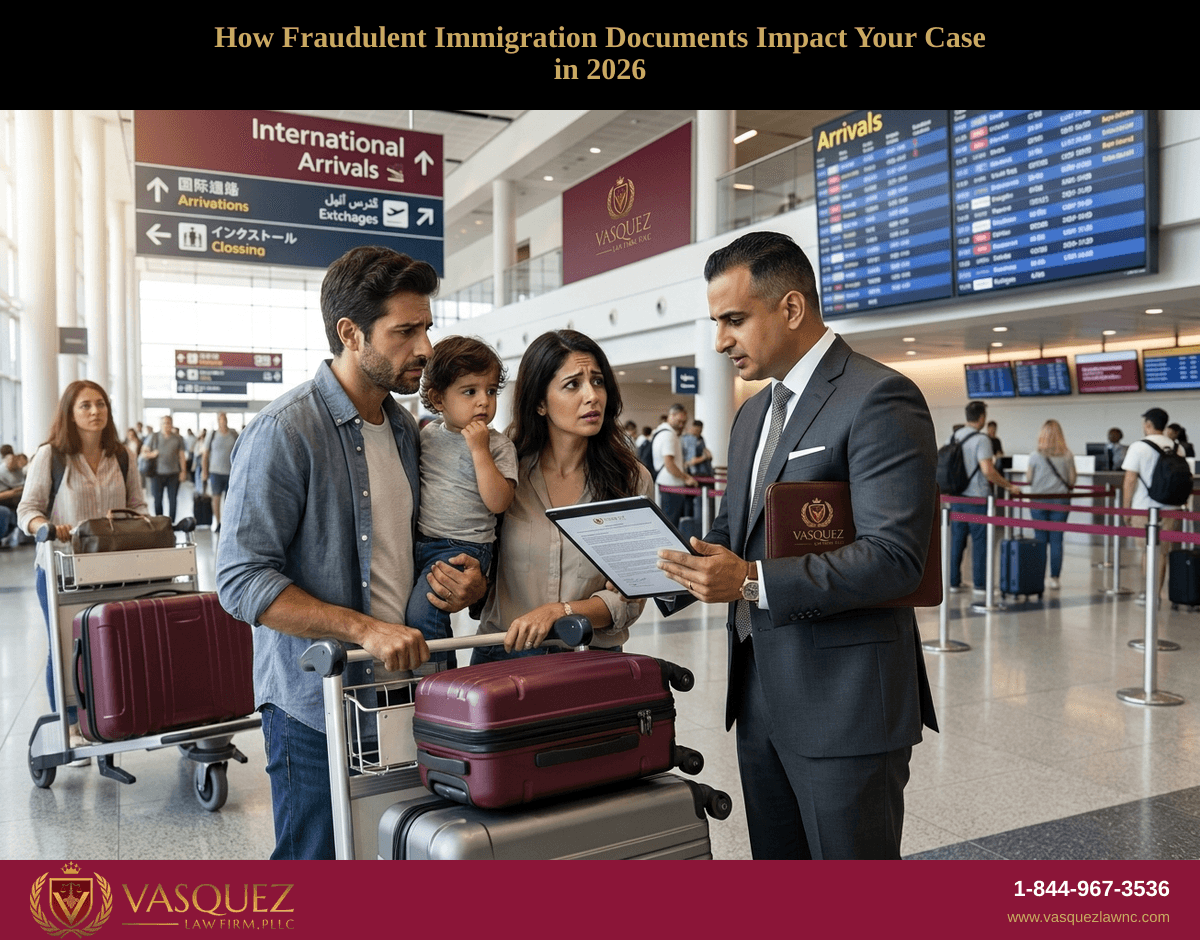
How Fraudulent Immigration Documents Impact Your Case in 2026
Learn about fraudulent immigration documents, penalties, and how to protect your rights in 2026. Contact Vasquez Law for a free immigration consultation.
Published on May 7, 2026
Talk to an immigration attorney
Free call. A clear plan for your case.
Free & confidential · Se habla espanol · 24/7
Have questions? Talk to an attorney - free evaluation.
Call 1-844-967-3536Worried how the latest immigration news affects you?
Schedule a confidential case review with an immigration attorney - know exactly where you stand.
USCIS Case Status
Check your USCIS case status
Enter your receipt number and get the official status. Free, no registration.
How Fraudulent Immigration Documents Impact Your Case in 2026
Fraudulent immigration documents pose serious legal risks in 2026, especially for immigrants in Raleigh, NC, and Florida. This article explains what fraudulent documents are, common forms of misuse, the penalties under federal law including 18 U.S.C. 1546, and what you should do if involved. Understanding these issues is critical to protecting your immigration status and avoiding criminal consequences. Vasquez Law Firm offers bilingual support and expert guidance for those facing these challenges.
Need help with your case? Our experienced attorneys are ready to fight for you. Se Habla Español.
Or call us now: 1-844-967-3536
Quick Answer
Fraudulent immigration documents involve falsified or altered documents submitted to U.S. immigration authorities, which can lead to serious penalties including criminal charges and deportation. If you suspect fraud or are accused, report it through the USCIS online tip form and consult an immigration lawyer promptly.
- Falsifying or using fake visas, permits, or certificates violates federal law
- Penalties include fines, imprisonment, and loss of immigration benefits
- Material misrepresentation can result in permanent inadmissibility
- Use the USCIS online tip form to report suspected fraud anonymously
- Consult with a knowledgeable immigration lawyer to protect your rights
Understanding Fraudulent Immigration Documents
In 2026, fraudulent immigration documents remain a significant concern in Raleigh and across the U.S. These documents include forged visas, fake green cards, counterfeit work permits, and fraudulent marriage certificates used to gain immigration advantages unlawfully. A recent case involved a Mexican man sentenced federally for using fraudulent immigration documents, signaling strong enforcement of laws like 18 U.S.C. 1546 that specifically criminalize such actions.
Willful misrepresentation is central to fraudulent immigration claims. This means knowingly submitting false information or forged evidence to immigration officials. Examples of willful misrepresentation include submitting a fake marriage certificate to obtain a green card or altering a visa application. Our immigration services team in Raleigh helps clients understand how these actions impact their cases and the potential penalties involved.
What 18 U.S.C. 1546 Says
Section 18 U.S.C. 1546 criminalizes the fraud and misuse of visas, permits, and other immigration documents. It applies to cases including falsifying, counterfeiting, or altering immigration papers or using fraudulent ones knowingly. Penalties can include imprisonment for up to 10 years and fines. This federal statute is actively enforced in courts nationwide, including North Carolina and Florida.
Material Misrepresentation Immigration Consequences
Material misrepresentation refers to false statements or document submission that affect immigration decisions. If USCIS finds material misrepresentation, applicants may be permanently barred from relief such as adjustment of status or other visas. For example, using fake documents to prove eligibility can trigger a 10-year inadmissibility bar under 212(a)(6)(C)(i) of the Immigration and Nationality Act (INA).
Immigration Telefraud Explained
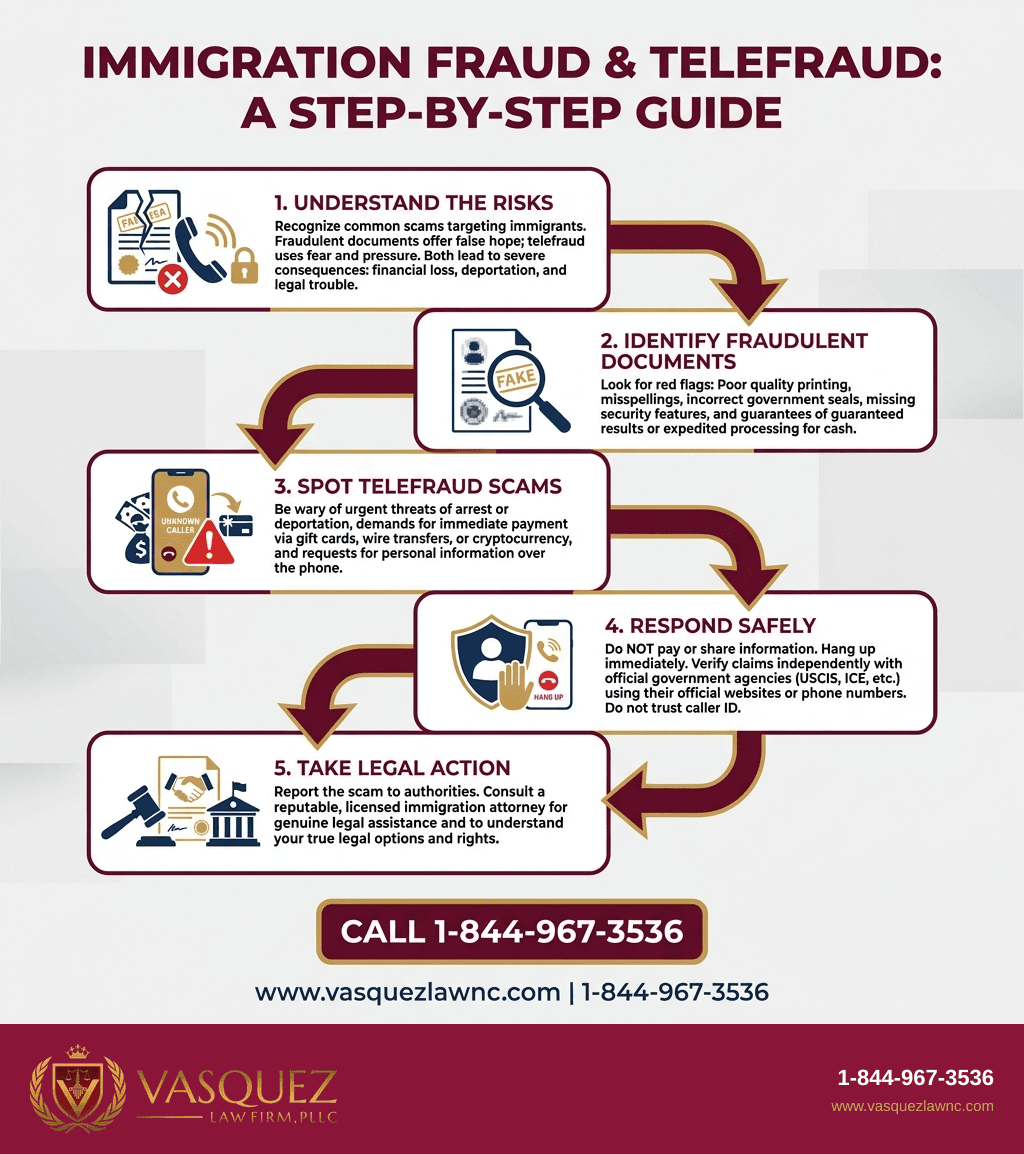
Immigration telefraud involves scams conducted over the phone or internet, where fraudsters offer fake visas, green cards, or naturalization services. Victims often pay large sums and receive counterfeit or invalid documents. Recognizing and reporting telefraud is critical in Raleigh and Florida to prevent criminal charges and protect genuine immigrants from falling victim.
Key Steps to Take If You Encounter Fraud
- Verify Document Authenticity: Use trusted methods to assess your documents, including consulting official USCIS resources or a qualified immigration attorney.
- Report Suspected Fraud: File an anonymous complaint via the USCIS online tip form to report fraudulent documents or telefraud.
- Seek Legal Advice Immediately: Contact an immigration attorney skilled in handling fraudulent document cases for confidential advice and defense.
- Do Not Alter or Falsify Your Own Documents: Avoid attempts to correct problems by submitting altered papers, which can worsen legal consequences.
- Keep Records and Evidence: Maintain copies of all documents and communications related to the case for your lawyer’s review.
- Stay Informed About Your Case Status: Monitor USCIS notifications and court proceedings with your attorney’s guidance.
Don't wait to get the help you deserve. Call us now for immediate assistance. Se Habla Español.
Common Mistakes to Avoid
- Using or Submitting Fake Documents: This triggers criminal prosecution and immigration penalties. Always verify document genuineness before submission.
- Not Reporting Known Fraud: Failure to report suspected fraudulent actions can complicate your legal standing and trustworthiness with USCIS.
- Ignoring Legal Counsel: Trying to handle fraud allegations alone risks legal mistakes. Early attorney involvement improves outcome chances.
- Altering Your Own Documents: Alterations, even if intended to correct, may be viewed as falsifying, leading to serious penalties.
- Relying on Unverified Immigration Services: Beware telefraud or scams promising quick immigration relief using fake papers. Confirm credentials first.
- Failing to Keep Copies: Not maintaining records of submissions and receipts can handicap your defense or reporting efforts.
- Misunderstanding Penalty Severity: Penalties like up to 10 years imprisonment under 18 U.S.C. 1546 are harsh. Don’t underestimate the risks.
If you only remember one thing: Never use or submit fraudulent immigration documents. The legal and personal consequences can be severe and long-lasting.
Timeline: What to Expect
- Initial Suspicion or Discovery: Within days to weeks, you may be flagged during application processing or inspection.
- USCIS or ICE Investigation: Can last weeks to months, involving verification and possible interviews or document requests.
- Formal Charges or Notices: May occur months after discovery, with potential removal proceedings or criminal charges.
- Legal Defense and Hearings: Can extend from several months to over a year depending on case complexity and court schedules.
- Final Resolution: Settlement, dismissal, removal order, or criminal sentencing happens once all hearings conclude.
Costs and Fees: What Impacts the Price
- Legal Fees: Cases involving fraudulent documents typically require specialized legal services, increasing costs.
- Investigation Support: Expert document examiners or forensic specialists might be necessary.
- Court Costs: If criminal charges arise, court fees and potential bail must be considered.
- Consequences Costs: Loss of employment or travel rights due to case outcomes can affect indirectly.
- Consultation Availability: Many firms, including Vasquez Law Firm, provide free initial evaluations to discuss your options without upfront cost risk.
Jurisdiction Notes: Raleigh, NC and Florida
Raleigh, North Carolina Notes
North Carolina hosts multiple immigration courts and USCIS offices that handle cases involving fraudulent documents federally. Local enforcement can vary, but federal laws under 18 U.S.C. 1546 apply statewide. Our immigration attorneys in Raleigh stay updated on NC-specific trends affecting immigrant communities.
Florida Notes
Florida has a large immigrant population and multiple USCIS service centers and immigration courts. Federal prosecutions for document fraud are common due to port entries and fraud schemes. The principles of federal immigration law remain consistent, but local resources and coordination with ICE differ. The firm assists Florida clients virtually for business immigration and locally for other services.
Nationwide Concepts (General Only, Rules Vary)
Federal immigration fraud laws like 18 U.S.C. 1546 apply across the U.S. but enforcement priorities and procedural processes may differ by jurisdiction. Nationwide, USCIS encourages reporting fraud through the online tip form. It's vital to consult an attorney familiar with local nuances and federal standards to guide you effectively.
When to Call a Lawyer Now
- If you receive a notice or interview request from USCIS or ICE concerning your documents
- If you suspect someone submitted fraudulent documents on your behalf
- When contacted about potential criminal charges linked to immigration fraud
- If you are unsure whether your documents are genuine or may have been forged
- When you want to report fraud but need legal guidance on how to do it safely
- If you are a victim of immigration telefraud and need help recovering losses
- If you have been accused of material misrepresentation and face inadmissibility
- When you have received any legal complaint or summons questioning your immigration papers
- If you need help filing an appeal or waiver for a 212(a)(6)(C)(i) inadmissibility bar
- Before submitting any documents that you suspect may have issues to USCIS or federal authorities
About Vasquez Law Firm
At Vasquez Law Firm, we combine compassion with aggressive representation. Our motto "Yo Peleo®" (I Fight) reflects our commitment to standing up for your rights in immigration and related legal matters. We offer specialized support for individuals facing issues with fraudulent immigration documents in Raleigh and Florida.
- Bilingual Support: Se Habla Español — Spanish-speaking attorneys and staff available
- Service Areas: North Carolina, Florida, and nationwide immigration services
- Experience: Over 15 years helping clients navigate complex immigration challenges
- Results: Thousands of successful cases across multiple practice areas
Attorney Trust and Experience
Attorney Vasquez, JD, is licensed in North Carolina and Florida bars with 15 years of immigrant rights experience. He has represented many clients accused of or affected by fraudulent immigration documents. You can review his profile and credentials at our attorney page.
Take the first step toward justice today. Our team is standing by to help. Se Habla Español.
Start Your Free Evaluation Now
Call us: 1-844-967-3536
Se Habla Español - Estamos aquí para ayudarle.
Frequently Asked Questions
What is the penalty for falsifying immigration documents?
Under 18 U.S.C. 1546, penalties for falsifying immigration documents can include fines and imprisonment up to 10 years. Additionally, those involved may face deportation or permanent inadmissibility from the U.S. It is a serious federal offense with lasting consequences impacting immigration benefits.
How can I tell if an immigration document has been forged?
Signs include inconsistent information, poor quality printing, incorrect seals or signatures, and mismatched dates or identifying numbers. Consulting with an immigration attorney or using official USCIS verification methods can help determine document authenticity.
What is material misrepresentation in immigration cases?
Material misrepresentation occurs when a person knowingly provides false information or documents that affect immigration decisions. This can lead to denial of benefits, removal proceedings, and bars to future immigration relief.
How do I report suspected immigration document fraud anonymously?
You can use the USCIS online tip form available at their official website. This tool allows anyone to submit reports about fraud or abuse related to immigration documents and processes without revealing their identity.
What is immigration telefraud and how can I avoid it?
Immigration telefraud is a scam where criminals falsely offer visas or green cards via phone or online. To avoid it, verify the credentials of any immigration service provider, never pay upfront for suspicious offers, and report fraud attempts immediately.
Can I get a waiver for inadmissibility due to fraudulent documents?
Some waivers exist for ineligibility under INA section 212(a)(6)(C)(i), but approval depends on complex factors including the nature of the fraud and applicant’s circumstances. Legal counsel is vital to navigate waiver applications successfully.
What should I do if my identity has been cloned for immigration purposes?
If you suspect your identity has been used fraudulently in immigration processes, report it immediately to USCIS and ICE. Contact an immigration attorney to protect your rights and correct the record.
How does using a fraudulent document affect my immigration case?
Using fraudulent documents can lead to criminal charges, denial of applications or petitions, removal proceedings, and permanent bars from obtaining immigration benefits. Even unintentional use can cause serious consequences, so immediate legal advice is recommended.
Sources and References

William Vasquez
Founder & CEO, Vasquez Law Firm, PLLC
William Vasquez is the founder and CEO of Vasquez Law Firm, PLLC, a results-driven firm specializing in immigration, criminal defense, personal injury, and workers' compensation. A U.S. Air Force veteran and recipient of the Joint Service Achievement Medal, William is dedicated to fiercely fighting for his clients' rights.
Related Legal Services
Need legal help? Learn more about our immigration law practice, or contact us for a free evaluation.
You can also visit our North Carolina immigration practice for more information.