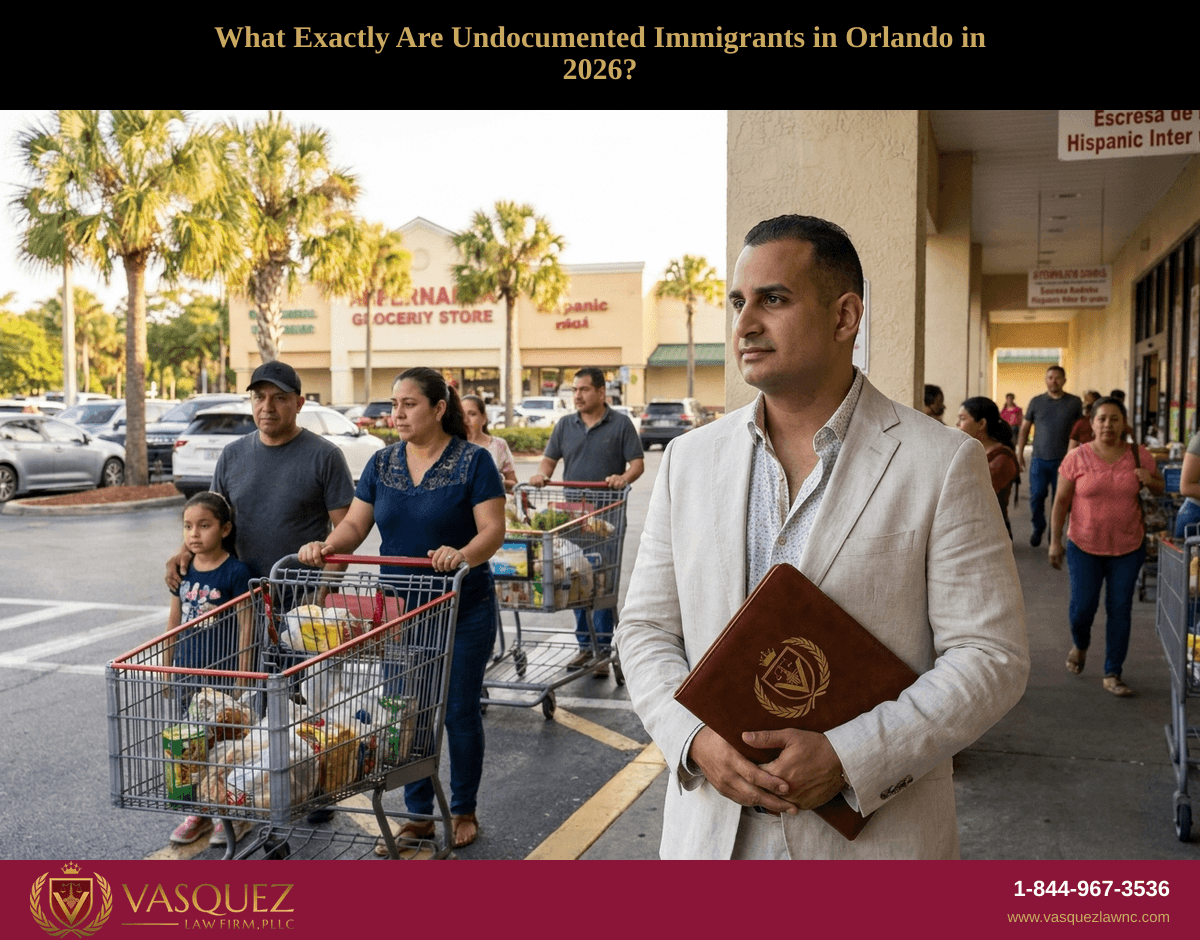
What Exactly Are Undocumented Immigrants in Orlando in 2026?
What exactly are undocumented immigrants? Learn about their rights, benefits, and challenges in Orlando in 2026. Contact Vasquez Law for help today.
Published on May 7, 2026
Talk to an immigration attorney
Free call. A clear plan for your case.
Free & confidential · Se habla espanol · 24/7
Have questions? Talk to an attorney - free evaluation.
Call 1-844-967-3536Worried how the latest immigration news affects you?
Schedule a confidential case review with an immigration attorney - know exactly where you stand.
USCIS Case Status
Check your USCIS case status
Enter your receipt number and get the official status. Free, no registration.
What Exactly Are Undocumented Immigrants in Orlando in 2026?
Undocumented immigrants often face complex legal and social challenges in Orlando and nationwide. This 2026 guide explains exactly who undocumented immigrants are, their rights, and how immigration law impacts them. Whether you are seeking relief or want to understand the key differences between undocumented and illegal status, this article offers clear facts and practical steps.
Need help with your case? Our experienced attorneys are ready to fight for you. Se Habla Español.
Or call us now: 1-844-967-3536
Quick Answer
Undocumented immigrants are foreign-born individuals living in the U.S. without legal immigration status. They may lack valid visas or have overstayed authorized periods. While "undocumented" emphasizes status rather than criminality, such immigrants face legal risks including possible deportation. Knowing your rights and options is critical for undocumented immigrants in Orlando to protect their future.
- Undocumented means lacking lawful status, not criminality
- Many have lived in the U.S. for years contributing to communities
- Access to basic rights varies and is legally limited
- Legal relief options exist but require timely action
Understanding Undocumented Immigrants Exactly
In Orlando and across the U.S., undocumented immigrants consist of individuals who do not have legal permission to reside or work. They may have entered without inspection, overstayed a visa, or violated immigration terms. According to Pew Research Center estimates in 2026, about 10.5 million undocumented immigrants live in the U.S., representing roughly 3% of the population.
It is important to distinguish between "undocumented" and "illegal." The term "undocumented" focuses on the lack of immigration status without labeling the person a criminal. This distinction matters in legal contexts because unauthorized presence is a civil violation, not a criminal offense under the U.S. Code.
Moreover, the term “undocumented immigrants” includes categories such as Deferred Action for Childhood Arrivals (DACA) recipients who lack permanent status but have temporary relief. Being undocumented does not mean a person is without rights. For example, the U.S. Supreme Court ruling in Plyler v. Doe (1982) established that states cannot deny public education to children based on unauthorized status.
Alternatively, the Immigration and Nationality Act (INA) outlines the deportation grounds and immigration violations but recognizes the complex legal status of noncitizens without lawful entry or authorization. For example, INA § 1227(a)(1)(B) deals with unlawful presence and removal grounds. Being aware of these laws helps clarify the protections and risks undocumented individuals face.
If you or a loved one is undocumented in Orlando, it is essential to understand the nuance behind these terms and the protections available. Engaging with our immigration services at Vasquez Law Firm can provide clarity on your specific case and legal options.
Undocumented Immigrants by State: Florida and North Carolina
In 2026, Florida is home to an estimated 850,000 undocumented immigrants, largely concentrated in metropolitan areas like Orlando and Miami. North Carolina has approximately 300,000 undocumented immigrants, with many in urban centers such as Raleigh and Charlotte. State and local policies impact enforcement and access to services differently in these states.
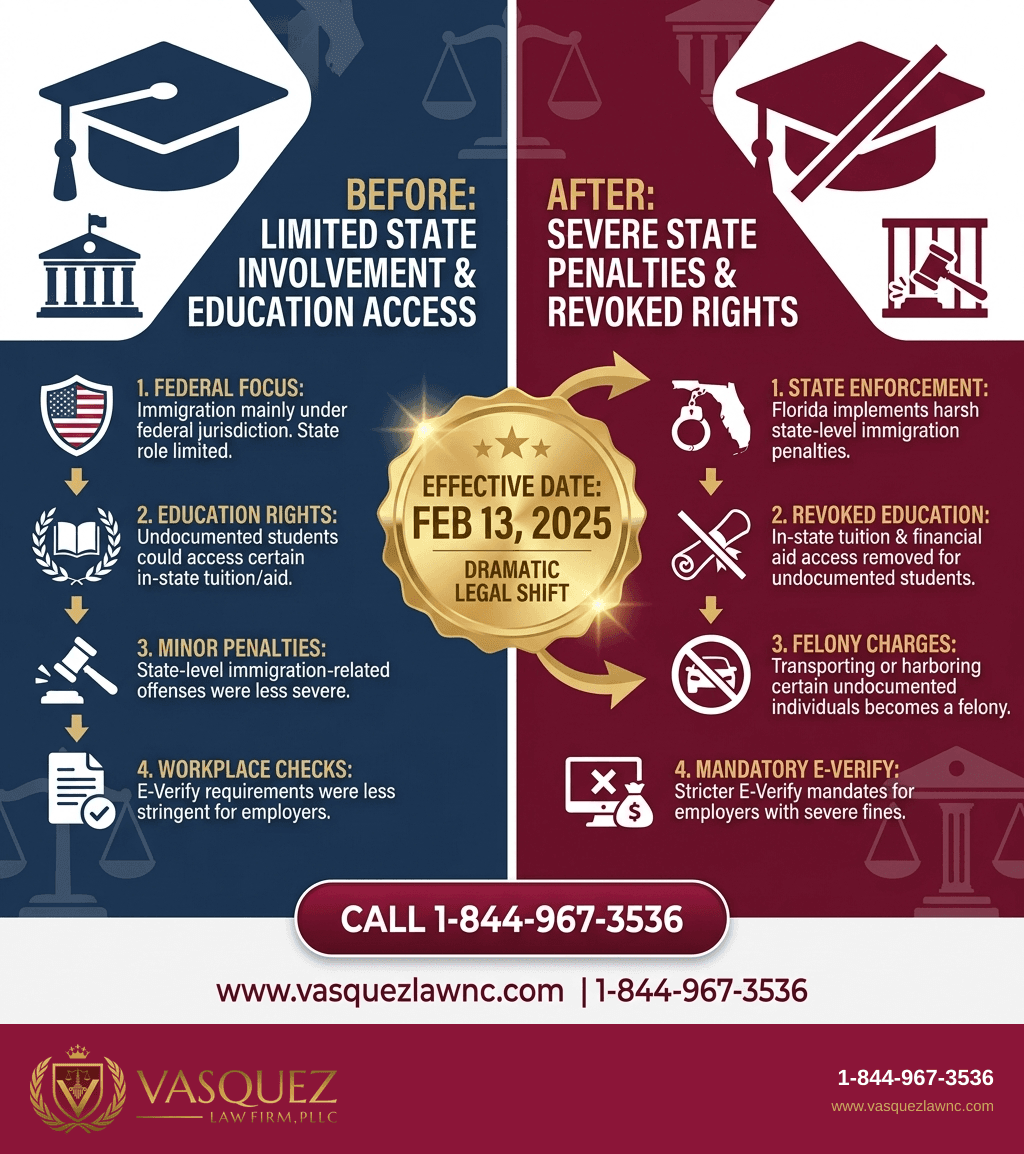
Both Florida and North Carolina lack state-level legalization for undocumented residents but offer varying emergency services. For instance, Florida provides emergency Medicaid but restricts broader benefits. North Carolina similarly limits eligibility for state-funded programs. These realities shape the lives of undocumented immigrants daily.
Step-by-step: What to do if You Are Undocumented
- Consult an Immigration Attorney: Speak with a qualified immigration lawyer in Orlando who understands your rights and potential relief options.
- Gather Identity Documents: Collect identification, affidavits, school records, or employment documents demonstrating your presence and character.
- Assess Eligibility for Relief: Explore programs such as DACA, TPS, U visas, or cancellation of removal eligibility under INA § 240A(b).
- File Applications on Time: Prevent delays by submitting required forms accurately, such as Form I-821D for DACA, within USCIS-allowed periods. Current estimated processing times for DACA renewals are between 9 to 14 months according to USCIS processing times.
- Avoid Fraudulent Documents: Using fake papers may lead to deportation or criminal charges. Seek lawful routes and legal counsel.
- Stay Informed on Policy Changes: Immigration regulations can change quickly, so monitor updates especially from USCIS.
Documents or Evidence Checklist
- Passport or Foreign ID
- Birth certificates (U.S. or foreign)
- School or Employment Records
- Lease agreements or utility bills
- Affidavits from family, employers, or community leaders
- Immigration court notices or USCIS correspondence
- Medical or insurance records
- Police or other official reports, if applicable
Proper documentation improves chances of relief and defense against deportation. Consult closely with an attorney for a detailed checklist tailored to your case.
Timeline: What to Expect in Immigration Processes
- Initial Consultation: Within days to weeks, schedule an appointment with an immigration lawyer.
- Gathering Documents: Typically 2-4 weeks depending on records availability.
- Filing Applications: Submit forms like Form I-821D (DACA) or Form I-765 (work authorization) — processing times vary from 9 to 14 months as per latest USCIS data.
- Biometric Appointment: Usually 6-8 weeks after filing.
- Decision Issued: Can occur 6-12 months after biometric, depending on case complexity and USCIS workload.
- Appeals or Motions: If denied, appeals can take additional months or years.
Understanding the realistic timeline helps reduce anxiety and plan ahead while pursuing status adjustments or relief.
Costs and Fees: What Impacts the Price
- USCIS filing fees (ranges from $410 to over $1000, depending on the form)
- Attorney fees based on case type and complexity
- Costs for obtaining supporting documents (translation, copies)
- Potential additional fees for appeals or motions
- Travel and time costs for appointments in Orlando or remote hearings
Consult with Vasquez Law Firm for transparent fee structures and possible payment plans.
Common Mistakes and How to Avoid Them
- Missing Filing Deadlines: File applications promptly to avoid losing protections.
- Using Fake Documents: Never submit fraudulent evidence; this risks deportation.
- Ignoring Immigration Notices: Always respond timely to USCIS or court communications.
- Self-representation Without Legal Help: Immigration law is complex. Lawyers improve outcomes.
- Failing to Update Address: Notify USCIS of address changes to keep case active.
- Misunderstanding Eligibility: Check current laws and consult attorneys rather than relying on rumors.
- Not Preparing for Court Hearings: Attend all hearings and bring complete evidence.
If you only remember one thing: Work with an experienced immigration attorney to avoid pitfalls and protect your future in Orlando.
NC, FL, and Nationwide Immigration Notes
North Carolina Notes
North Carolina has a growing undocumented immigrant population but limited state benefits. Local resources may include community health clinics that serve immigrants. Deportation proceedings are federal but local law enforcement policies affect community interactions. Vasquez Law Firm’s Raleigh office specializes in North Carolina immigration matters helping clients navigate federal and state nuances.
Florida Notes
In Orlando and Florida generally, the immigrant community is large and diverse. Florida does not provide state-funded benefits for undocumented immigrants but emergency services are available. The state is proactive in immigration enforcement, making legal representation critical. Vasquez Law Firm’s Orlando attorneys are deeply familiar with Florida immigration policies and federal enforcement trends.
Nationwide Concepts (General Only, Rules Vary)
Immigration law is federal under the Department of Homeland Security (DHS) and the Executive Office for Immigration Review (EOIR). Practices can vary by jurisdiction and local policies. Undocumented immigrants may face deportation hearings, detention, or removal orders. Eligibility for legal relief depends on federal statutes such as INA § 240A(b). Nationwide, legal protections continue evolving with changing administrations.
When to Call a Lawyer Now
- If you receive an Immigration Notice to Appear (NTA)
- If you are arrested or detained by ICE
- If you want to apply for DACA or TPS
- If you need help responding to USCIS Requests for Evidence
- If you are considering using or have been approached about fake documents
- If you want to apply for work authorization
- If you have a criminal charge that could affect immigration status
- If you need help understanding your rights during an ICE raid
About Vasquez Law Firm
At Vasquez Law Firm, we combine compassion with aggressive representation. Our motto "Yo Peleo®" (I Fight) reflects our commitment to standing up for your rights.
- Bilingual Support: Se Habla Español — Spanish-speaking attorneys and staff available
- Service Areas: North Carolina, Florida, and nationwide immigration services
- Experience: Over 30 years helping clients navigate complex legal matters
- Results: Thousands of successful cases across multiple practice areas
Attorney Trust and Experience
William J. Vásquez is admitted to the North Carolina State Bar, providing trusted legal counsel in immigration law. His team’s experience spans federal immigration courts and USCIS proceedings. Our client-focused approach helps immigrants in Orlando and across North Carolina protect their futures.
Don't wait to get the help you deserve. Call us now for immediate assistance.
Se Habla Español
Frequently Asked Questions
What exactly are undocumented immigrants?
Undocumented immigrants lack legal authorization to reside in the U.S. They may have entered without inspection or overstayed visas. The term “undocumented” focuses on immigration status rather than criminal guilt. Knowing this distinction helps understand legal rights and challenges faced especially in Orlando.
What is the difference between undocumented and illegal immigrants?
Undocumented means lacking lawful immigration status but does not imply criminality. Illegal is a term with criminal connotations. U.S. law treats unauthorized presence as a civil matter. Using “undocumented” respects nuance and affects legal defense strategy.
Do undocumented immigrants have rights in the U.S.?
Yes, all persons in the U.S., including undocumented immigrants, have constitutional protections like due process and equal protection. They can access emergency medical care and public education but face limits on some federal benefits.
What health care options are available for undocumented immigrants?
Undocumented immigrants in Orlando can use emergency medical services and some community health centers. They are usually ineligible for Medicaid or ACA marketplace insurance. Planning for health care involves knowing these restrictions.
How many undocumented immigrants live in Florida and North Carolina?
Estimates indicate around 850,000 undocumented immigrants in Florida and 300,000 in North Carolina in 2026. Orlando has a significant portion of Florida's immigrant community, influencing local laws and services.
What legal options exist for undocumented immigrants in Orlando?
Options include DACA, Temporary Protected Status, U visas for crime victims, or cancellation of removal under INA § 240A(b). Eligibility is fact-specific, so consulting an immigration lawyer is key.
Can undocumented immigrants receive public benefits?
Most federal benefits are off-limits, but some states offer limited assistance programs. Emergency health services and education access remain available generally.
What is the risk of using fake immigration documents?
Using fraudulent documents can lead to criminal prosecution and deportation. Federal enforcement under Trump-era policies remains strict. Seeking legal advice avoids these dangers.
Sources and References
- U.S. Citizenship and Immigration Services
- Executive Office for Immigration Review
- Legal Information Institute
Take the first step toward justice today. Our team is standing by to help.
Start Your Free Evaluation Now
Call us: 1-844-967-3536
Se Habla Español - Estamos aquí para ayudarle.
William Vasquez
Founder & CEO, Vasquez Law Firm, PLLC
William Vasquez is the founder and CEO of Vasquez Law Firm, PLLC, a results-driven firm specializing in immigration, criminal defense, personal injury, and workers' compensation. A U.S. Air Force veteran and recipient of the Joint Service Achievement Medal, William is dedicated to fiercely fighting for his clients' rights.
Related Legal Services
Need legal help? Learn more about learn about our immigration practice, or contact us for a free evaluation.
You can also visit statewide immigration attorneys for more information.