Florida Tort Reform Changes What Accident Survivors Face in 2026
Learn how Florida tort reform affects injury claims in 2026. Understand changes, deadlines, and your rights. Contact Vasquez Law for a free consultation.
Published on April 12, 2026

Have questions? Talk to an attorney - free evaluation.
Call 1-844-967-3536Get What Your Injury Is Worth
Free case review, and no fee unless we win.
Florida Tort Reform Changes What Accident Survivors Face in 2026
Florida tort reform has changed the way personal injury claims are handled, especially for accident survivors in places like Smithfield. This article explains what Florida tort reform means in 2026, including recent law updates, timelines, and key steps you should take after an accident. Understanding these reforms is essential to protect your rights and claim the compensation you deserve.
Need help with your case? Our experienced attorneys are ready to fight for you. Se Habla Español.
Or call us now: 1-844-967-3536
Quick Answer
Florida tort reform in 2026 limits damages and changes filing deadlines for personal injury cases. This means accident survivors must act quickly and understand new rules to maximize compensation.
- Tightens statute of limitations
- Caps damages on pain and suffering
- Limits recovery of medical bills
- Requires strong evidence for claims
What is Florida Tort Reform
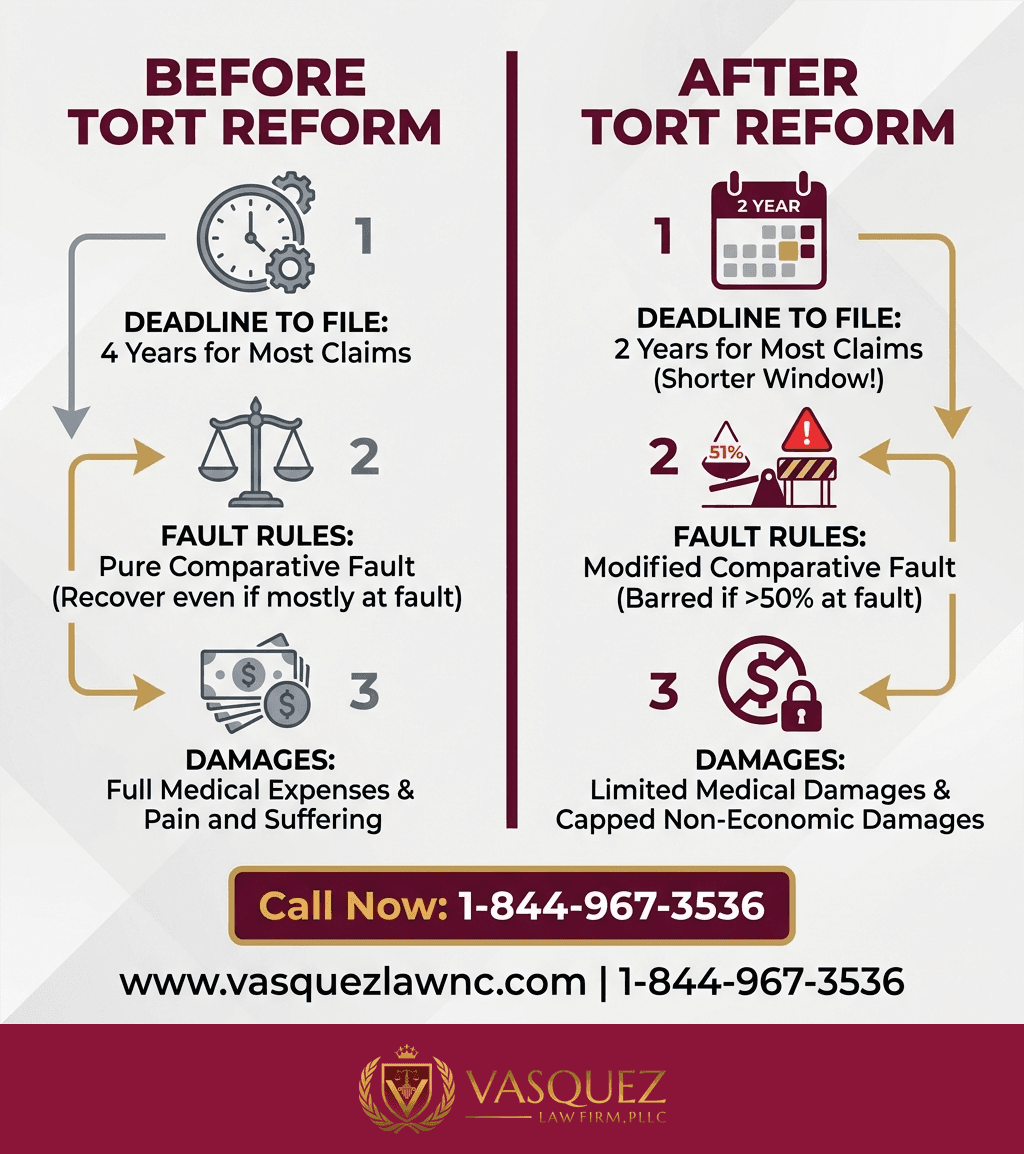
In 2023, Florida passed significant tort reform legislation, including House Bill 837, which introduced changes affecting personal injury claims. These laws aim to reduce litigation costs and insurance premiums by capping damages and shortening claim deadlines.
An accident survivor in Smithfield, who was injured in a Florida car crash, noticed that the new law limited the amount they could recover for non-economic damages such as pain or emotional distress. Additionally, the statute of limitations for filing a claim was shortened, forcing victims to act faster.
Florida tort reform focuses on controlling costs for insurers but also imposes restrictions for injury victims. Understanding these changes is vital for anyone pursuing a claim under Florida law.
- Damage Caps: Limits on non-economic damages like pain and suffering.
- Statute of Limitations: Shortened time to file injury claims.
- Medical Bills: Stricter proof requirements to recover medical expenses.
- Effective Dates: Reforms became fully effective by 2025 and remain in force in 2026.
To protect your rights, it is recommended to consult with our personal injury services as early as possible.
Moreover, the reforms have introduced more stringent requirements for proving causation and damages. For example, accident survivors must now provide detailed medical records and expert testimony to substantiate claims for pain and suffering, which were previously more loosely defined. This shift underscores the importance of thorough documentation and timely legal action.
Another key aspect of Florida tort reform is the impact on settlement negotiations. Insurance companies are now more likely to adhere strictly to the caps and new limitations, which may influence the settlement amounts offered. Victims must be prepared to negotiate with this framework in mind, emphasizing the importance of experienced legal representation.
Finally, these reforms have sparked ongoing debates in Florida’s legal community and among policymakers. While proponents argue the changes help lower insurance premiums and reduce frivolous lawsuits, critics contend they limit fair compensation for genuine injury victims. Staying informed about further legislative developments is crucial for anyone involved in personal injury claims.
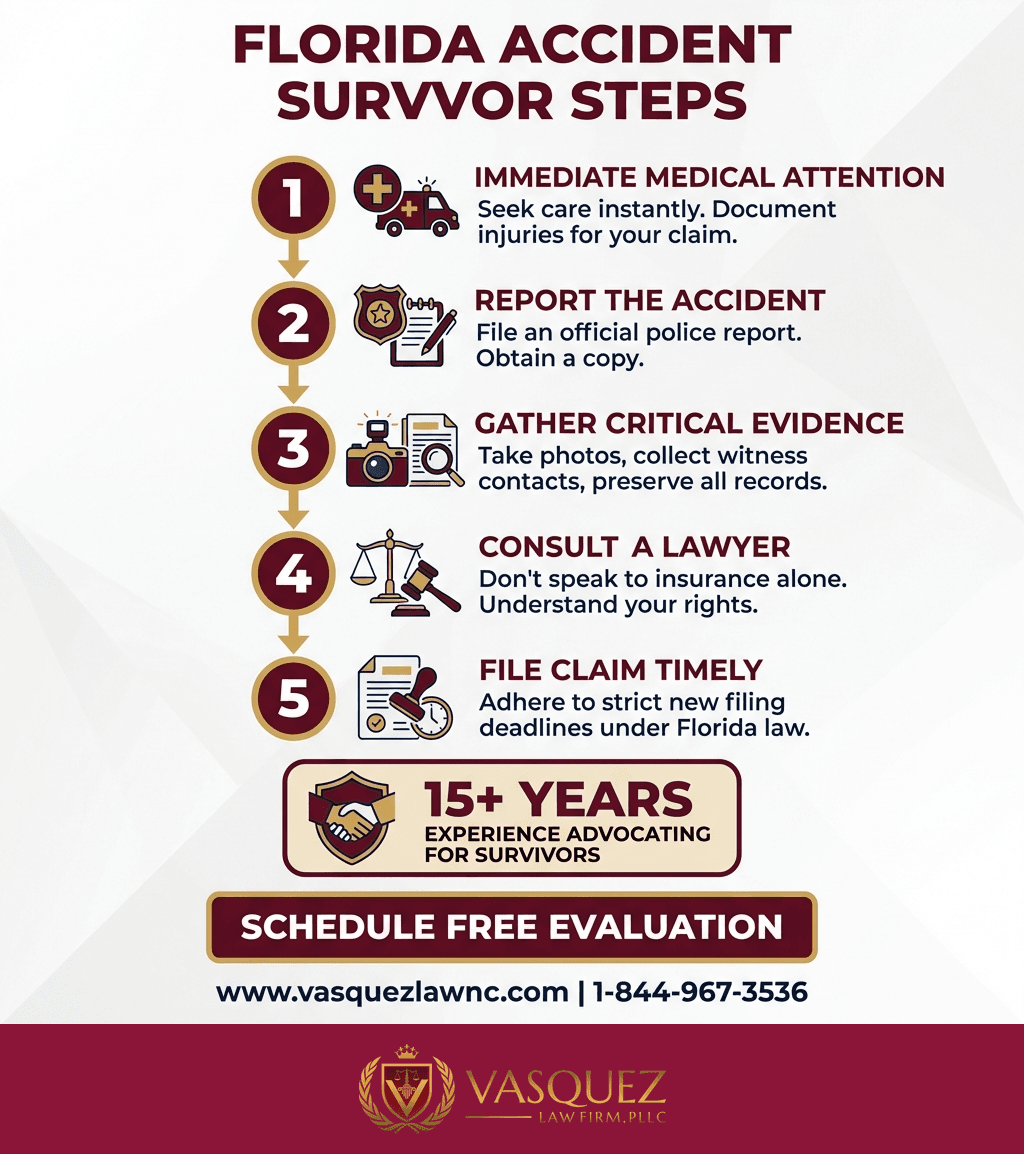
Key Steps for Accident Survivors
After an accident, the clock starts ticking faster under Florida tort reform rules. Survivors must be aware of new deadlines and prepare their case carefully.
1. Report the Incident Promptly
Notify law enforcement and document the accident details immediately. Maintaining clear records of the event supports your claim and meets legal requirements.
For example, taking photos of the accident scene, vehicle damage, and any visible injuries can be invaluable later. Additionally, obtaining a copy of the police report early ensures accuracy and can prevent disputes about the facts of the incident.
Failing to report the incident promptly may not only jeopardize your claim but also affect insurance coverage. Some policies require timely notification as a condition for benefits, so acting quickly is essential.
2. Seek Medical Treatment
Even if injuries seem minor, get prompt medical evaluation and keep all treatment records. These are critical in proving damages later.
Medical documentation should include initial emergency care, follow-up visits, diagnostic tests, and prescribed treatments or therapies. This comprehensive record helps establish the extent and cause of injuries.
Consider how delayed treatment might be viewed under the new tort reform rules. Insurance companies and courts may challenge claims if there is a significant gap between the accident and medical care, arguing that injuries may not be related or are exaggerated.
3. Understand Statute of Limitations
Florida tort reform often shortens the time you have to file a lawsuit. Missing these deadlines can bar your claim entirely.
For instance, some claims may now require filing within 18 months instead of the traditional two years, depending on the injury type. It is important to clarify which deadline applies to your situation as soon as possible.
Deadlines also apply to notifying insurance companies and submitting claims, which can be shorter than the statute of limitations. Being proactive ensures you do not lose your rights due to procedural errors.
4. Gather Evidence
Collect witness statements, photos, and police reports. Strong supporting evidence is crucial given stricter rules on medical bill recovery and damages.
Interview witnesses while memories are fresh and ask them to provide written or recorded statements. This can help counteract disputes about fault or circumstances of the accident.
Additionally, preserve any physical evidence, such as damaged property or clothing, which may be relevant. In some cases, expert analysis of accident reconstruction or medical causation may strengthen your claim under the new reforms.
If you need guidance, our experienced Attorney Vasquez has helped many clients navigate these complex changes.
Common Mistakes After Florida Tort Reform
Many accident survivors face avoidable challenges following the 2023 reforms. Here's what to watch out for:
- Missing Filing Deadlines: Claims must be filed within shorter legal timeframes.
- Incomplete Medical Documentation: Insufficient records can limit compensation.
- Ignoring Damage Caps: Expect limits on pain and suffering awards.
- Delayed Legal Advice: Acting late decreases chances for fair settlements.
- Underestimating Evidence Needed: Hard proof of causation and expenses required.
If you only remember one thing: Act quickly and get professional legal help to protect your claim under Florida tort reform.
Another frequent error is failing to communicate effectively with insurance adjusters. Survivors sometimes provide incomplete or inconsistent statements, which insurers may use to deny or reduce claims. Being cautious and consulting an attorney before giving recorded statements can prevent this problem.
Additionally, some victims mistakenly assume that the new damage caps apply only to future claims, when in fact they affect all claims arising after the effective date, regardless of when the accident occurred. This misunderstanding can lead to unrealistic expectations about compensation.
Finally, many survivors underestimate the importance of legal strategy under the reformed laws. For example, negotiating a settlement without considering the caps or evidence requirements may result in accepting less than what you deserve. Skilled legal counsel can help you navigate these complexities.
Timeline and Important Deadlines
After a personal injury in Florida, timelines for filing claims are now tighter. For example, the statute of limitations to file a civil lawsuit is generally two years from the date of injury but can be shorter under tort reform provisions.
- First 72 hours: Report accident and seek medical care.
- Within 1 week: Gather evidence and notify your insurance provider.
- Within 2 years: File the personal injury claim or lawsuit.
- Damage caps effective: Limits on pain and suffering apply as of the injury date.
Missing these deadlines can result in lost rights to compensation. Therefore, early action is critical.
For example, if you experience a car accident in Florida, waiting beyond the 72-hour window to seek medical treatment may raise doubts about the legitimacy of your injuries. Similarly, failing to notify your insurance company within a reasonable timeframe could lead to denial of coverage.
It is also important to note that certain types of claims, such as medical malpractice or claims against government entities, may have different or shorter deadlines. Understanding these distinctions and acting accordingly can prevent your case from being dismissed on procedural grounds.
Lastly, injury survivors should be aware that while filing a lawsuit may be possible within two years, initiating settlement discussions or alternative dispute resolution sooner can often expedite compensation. This proactive approach aligns with the goals of Florida tort reform to resolve cases efficiently.
When to Contact a Personal Injury Lawyer
Recognizing when to get legal help can make all the difference. Consider contacting a lawyer if you:
- Experience significant injury or loss
- Have trouble with insurance claims or denials
- Need help understanding Florida tort reform changes
- Face disputes over liability or damages
- Want to maximize your compensation under new laws
- Are unsure about filing deadlines or required evidence
Our personal injury lawyers in Florida and North Carolina have years of experience helping accident survivors like you navigate these challenges with skill and compassion.
For example, if you have been involved in a complex accident involving multiple parties or insurance companies, a lawyer can help untangle liability and ensure that all responsible parties are held accountable. This is particularly important under new tort reform rules where evidence standards are higher.
Additionally, legal counsel can assist in negotiating with insurers who may attempt to minimize payouts by citing damage caps or disputing medical expenses. Having an attorney present during these discussions can level the playing field and protect your interests.
Furthermore, attorneys can provide guidance on whether your claim qualifies for any exceptions or additional remedies under Florida law, such as claims for punitive damages in cases of gross negligence, which may not be subject to the same caps.
Don't wait to get the help you deserve. Call us now for immediate assistance.
Se Habla Español
About Vasquez Law Firm
At Vasquez Law Firm, we combine compassion with aggressive representation. Our motto "Yo Peleo" (I Fight) reflects our commitment to standing up for your rights.
- Bilingual Support: Se Habla Español - our team is fully bilingual
- Service Areas: North Carolina, Florida, and nationwide immigration services
- Experience: Over 30 years helping clients navigate complex legal matters
- Results: Thousands of successful cases across multiple practice areas
Attorney Trust and Experience
Attorney Vasquez holds a Juris Doctor degree and is admitted to practice in both the North Carolina State Bar and Florida Bar. With over 15 years of dedicated legal experience, he has built a reputation for providing personalized attention and achieving favorable outcomes for his clients.
His approach involves carefully analyzing each case in light of recent legal changes, such as Florida tort reform, to develop tailored strategies that maximize client recovery. Attorney Vasquez is also known for his accessibility and clear communication, ensuring clients understand their rights and options at every stage.
Clients benefit from his extensive courtroom experience as well as his skills in negotiation and mediation, which often lead to timely and satisfactory settlements. His bilingual capabilities further enable him to serve a diverse clientele effectively.
Frequently Asked Questions
What is the new tort reform law in Florida?
Florida's tort reform law, including HB 837 from 2023, limits damages and shortens the time to file personal injury claims. These changes affect compensation and require survivors to act promptly to meet stricter deadlines. The law caps non-economic damages like pain and suffering, imposes stricter proof requirements for medical expenses, and reduces the statute of limitations, making timely legal action essential.
How has tort reform affected Florida injury cases?
Tort reform caps damages for pain and suffering, affects medical bill recovery, and shortens filing deadlines. This speeds case resolution but may reduce the amount victims can claim. Additionally, the reforms require more detailed evidence to prove causation and injury severity, making it harder for some plaintiffs to secure full compensation without strong legal support.
When did Florida tort reform start?
Major tort reform legislation started passing in 2023, with full implementation by 2025, shaping the legal landscape for injury claims as of 2026. These reforms represent a significant shift from previous laws, emphasizing cost control and faster case resolution while imposing new procedural requirements on claimants.
Is Florida tort reform conservative or liberal?
Florida tort reform is generally seen as a conservative measure aimed at reducing lawsuits and lowering insurance costs, though it has critics concerned with victim compensation limits. Supporters argue it helps stabilize insurance markets, while opponents feel it restricts fair recovery for injured parties, making the debate complex and ongoing.
What does Florida tort reform mean for Smithfield residents?
Smithfield residents involved in accidents that include Florida parties must understand new deadlines and damage caps that affect how injury claims are handled under the law. This means acting quickly, gathering strong evidence, and consulting experienced attorneys to navigate the changed legal environment and protect compensation rights effectively.
How do tort reform changes affect medical bill payments?
The reforms restrict recovery of some medical bills by capping damages and requiring strict evidence that expenses are related to the injury. Claimants must provide detailed medical records, bills, and expert testimony to prove that treatments were necessary and caused by the accident, making thorough documentation more critical than ever.
What are common mistakes accident survivors make after tort reform?
Common errors include missing deadlines, inadequate medical documentation, and delaying legal consultation, which can jeopardize compensation under the new rules. Additionally, some victims underestimate the need for strong evidence or misunderstand damage caps, leading to unrealistic expectations and weaker claims.
How can an attorney help with Florida tort reform cases?
An attorney helps by guiding you through filing timelines, evidence requirements, damage limits, and negotiating with insurers, improving your chances of fair compensation. Legal counsel can also identify exceptions, gather necessary documentation, and advocate aggressively to overcome challenges posed by the reformed laws.
Sources and References
- North Carolina Courts
- North Carolina Department of Transportation
- National Highway Traffic Safety Administration
Take the first step toward justice today. Our team is standing by to help. Se Habla Español.
Start Your Free Evaluation Now
Call us: 1-844-967-3536
Se Habla Español - Estamos aquí para ayudarle.


William Vasquez
Founder & CEO, Vasquez Law Firm, PLLC
William Vasquez is the founder and CEO of Vasquez Law Firm, PLLC, a results-driven firm specializing in immigration, criminal defense, family law, personal injury, and workers' compensation. A U.S. Air Force veteran and recipient of the Joint Service Achievement Medal, William is dedicated to fiercely fighting for his clients' rights.
Related Legal Services
Need legal help? Learn more about learn about our personal injury practice, or contact us for a free evaluation.
You can also visit statewide personal injury attorneys for more information.