How Ergonomic Risk Assessments Help Workers in 2026
Learn how ergonomic risk assessments protect workers in 2026. Discover key steps and resources. Contact Vasquez Law for a free consultation today.
Published on May 3, 2026
Hurt on the job?
Free review of your workers' comp claim.
Free & confidential · Se habla espanol · 24/7

Have questions? Talk to an attorney - free evaluation.
Call 1-844-967-3536Hurt on the Job? Claim What You Are Owed
A review of your workers' comp claim - we handle the fight.
How Ergonomic Risk Assessments Help Workers in 2026
Ergonomic risk assessments in Raleigh and across North Carolina identify workplace hazards that can cause injuries like carpal tunnel and back strain. In 2026, understanding how to conduct these assessments can prevent costly workers compensation claims. This guide offers practical steps, checklists, and legal insights for workers to protect themselves and ensure safer environments. Whether you work in an office or manufacturing setting, conducting a workplace ergonomic risk assessment is vital for your health and rights.
Need help with your case? Our experienced attorneys are ready to fight for you. Se Habla Español.
Or call us now: 1-844-967-3536
Quick Answer
Ergonomic risk assessments identify workplace hazards that could cause injuries like strain or carpal tunnel. They involve checklists and observations to improve safety. Workers in Raleigh should consider these assessments to prevent injuries and protect their rights under North Carolina workers compensation laws.
- Identify ergonomic hazards at work
- Use OSHA and employer checklists
- Apply the 30/30 rule to reduce strain
- Document symptoms and report injuries
- Consult a workers compensation lawyer if injured
What Are Ergonomic Risk Assessments?
Imagine a Raleigh office worker suffering wrist pain after months at a poorly arranged desk. Ergonomic risk assessments aim to catch these hazards before injuries happen. They evaluate factors like posture, repetitive movements, and workstation design to find and reduce risks.
These assessments can be formal or informal. For workers, understanding the process helps in reporting issues and seeking necessary adjustments. Employers use tools like the OSHA ergonomic assessment checklist to comply with safety regulations and prevent claims.
In North Carolina, workplace ergonomics is becoming a greater focus due to the number of injuries linked to poor workstation setups. Conducting regular ergonomic risk assessments supports injury prevention and workers compensation claims if injuries occur.
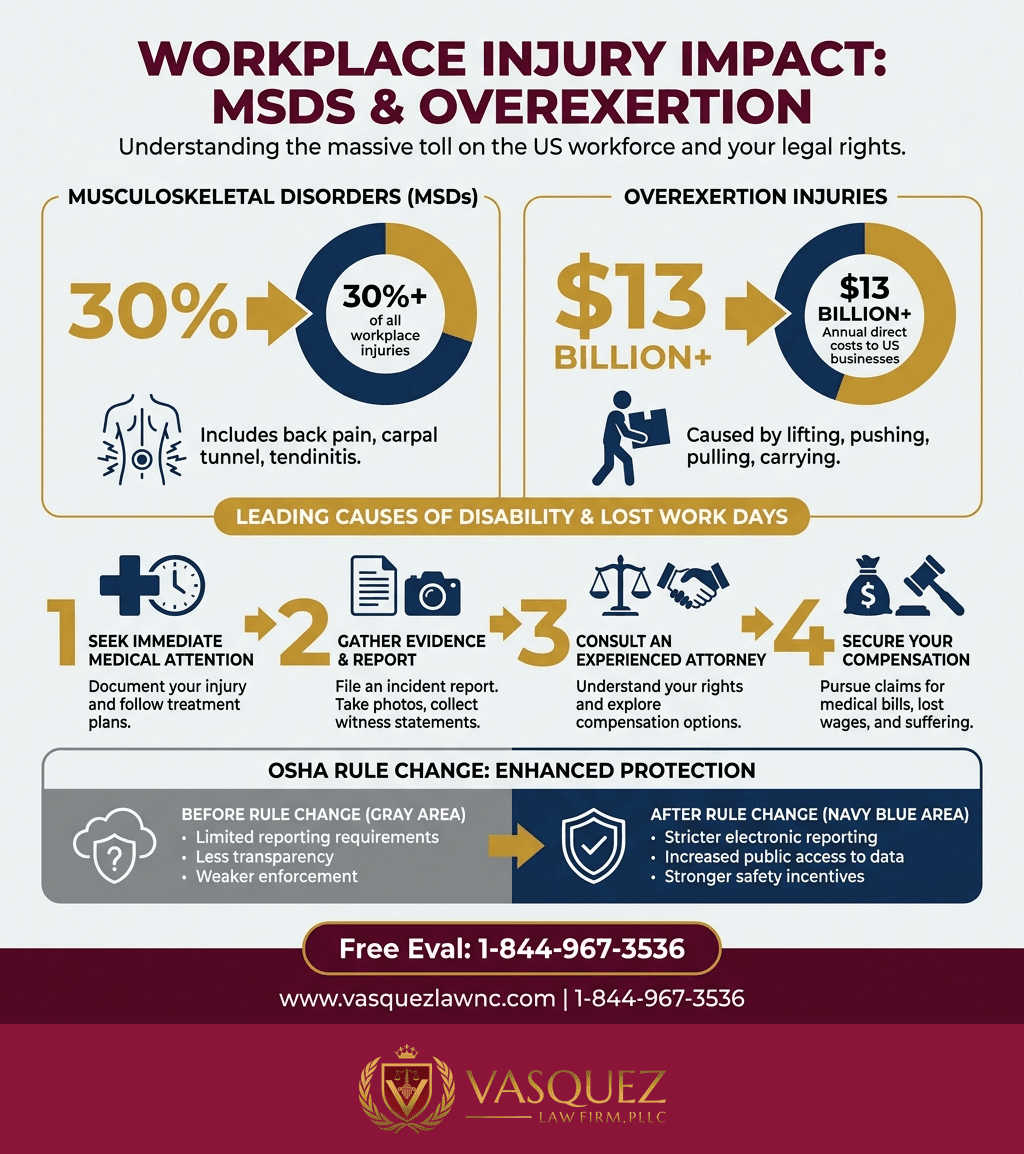
According to the U.S. Department of Labor, 1 in 5 workplace injuries is related to musculoskeletal disorders, many of which could be avoided with proper ergonomic practices.
Step-by-Step Guide to Conducting Assessments
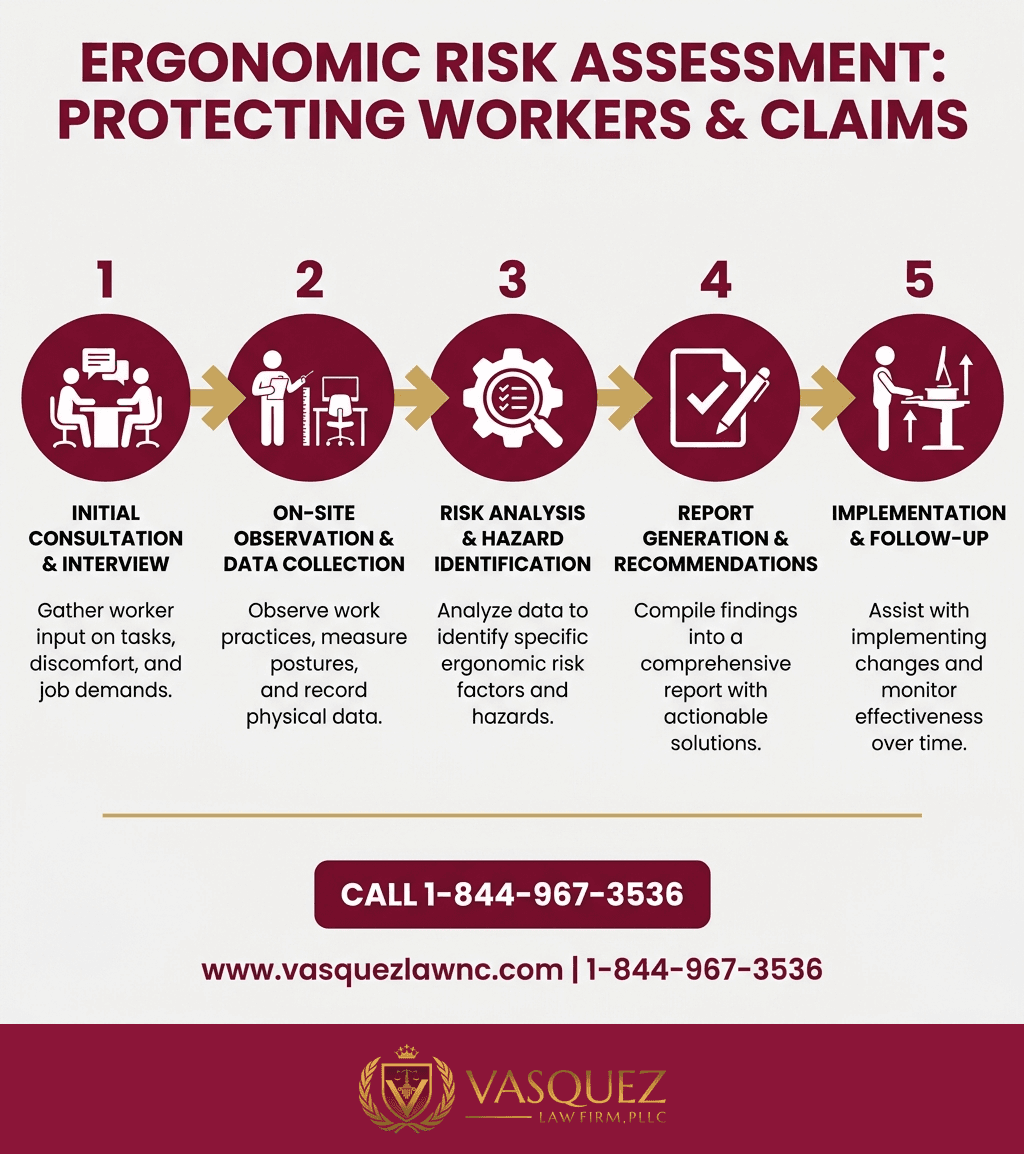
Performing an ergonomic risk assessment involves concrete steps. Consider Rachel, a Raleigh factory worker who noticed back pain from heavy lifting. A step-by-step evaluation can identify what causes the injury and what can change.
1. Identify High-Risk Tasks
Begin by listing tasks that involve awkward postures, repetitive actions, or forceful exertions. For example, assembly-line work or long hours typing at a computer.
2. Use an Ergonomic Assessment Checklist
Apply a checklist like the OSHA ergonomic checklist or a tailored ergonomic risk assessment template to systematically evaluate work areas and practices.
3. Observe and Collect Data
Observe workers performing tasks, noting posture, motion frequency, and workstation setup. Use free ergonomic assessment tools or apps to gather data.
4. Analyze Risks and Prioritize
Identify which risk factors have the highest injury potential and prioritize them for correction. Common problems include poorly aligned keyboards or lifting without support.
5. Implement Controls
Recommend workplace changes such as ergonomic chairs, adjustable desks, or training on safe movements. Follow up to monitor effectiveness.
Documents and Checklists for Assessments
Using the right documents is critical. OSHA provides an accessible ergonomic assessment checklist you can download as a PDF. This checklist covers key areas such as workstation setup, posture, task analysis, and environmental concerns like lighting.
An ergonomics risk assessment PDF or checklist template helps employers and workers document findings clearly. In manufacturing, specialized ergonomic assessment checklists exist for repetitive production tasks.
Keep a copy of all assessments and reports. Proper documentation supports workers compensation claims if injuries develop. Employers in Raleigh are encouraged to train staff on how to use these checklists effectively.
Timeline: What to Expect During Assessments
The process of a workplace ergonomic risk assessment can take days or weeks, depending on the size of your workplace and the number of tasks evaluated. Here's what a typical timeline looks like:
- Week 1: Planning and identifying high-risk jobs or workstations.
- Week 2: Conducting observations and collecting ergonomic data.
- Week 3: Reviewing findings with workers and management.
- Week 4: Recommending and implementing changes to reduce risks.
- Ongoing: Monitoring and reassessing to ensure safety improvements are effective.
Timely assessments help catch risks before injuries occur and increase the chance of successful workers compensation claims if they do.
Costs and Fees Involved in Ergonomic Assessments
The price of conducting an ergonomic risk assessment varies. Some assessments can be performed in-house using free tools like the OSHA ergonomic checklist. Hiring consultants or occupational therapists to do comprehensive evaluations in North Carolina may cost from a few hundred to several thousand dollars, based on workplace size.
Employers tend to invest in these assessments to reduce future workers compensation payouts. For workers, understanding the assessment process helps avoid expensive medical bills by preventing injuries.
Common Mistakes and How to Avoid Them
- Ignoring early symptoms: Don’t dismiss aches; report them early.
- Skipping the 30/30 rule: Take breaks every 30 minutes to reduce strain.
- Failing to keep records: Document injuries and assessments carefully.
- Relying on guesswork: Use checklists and data, not assumptions.
- Neglecting worker input: Involve employees in identifying hazards.
- Delay in implementing changes: Act promptly to correct risks.
- Not consulting a lawyer: Seek legal advice to secure fair compensation.
If you only remember one thing: Early reporting and documentation can protect your health and rights.
North Carolina and Nationwide Notes
North Carolina Notes
In North Carolina, the workers compensation system covers musculoskeletal injuries from ergonomic hazards. The N.C. Gen. Stat. § 97-2 defines compensable workplace injuries, including repetitive strain. Employers must maintain safe workplaces and allow ergonomic assessments, which are beneficial in injury claims. Vasquez Law Firm’s workers compensation attorneys in Raleigh assist injured workers navigating claims processes under these laws.
Nationwide Concepts
Ergonomic risk assessment principles generally apply across states but specific workers compensation rules vary. Always check your state’s guidance and consider legal counsel for claim assistance.
When to Call a Lawyer for Ergonomic Injuries
- If your employer denies an ergonomic injury claim
- If your injury worsens or medical treatment is delayed
- If you feel pressured to return to work too soon
- If you are unsure about your benefits and rights
- If your case involves permanent impairment or high medical costs
- If you experience retaliation after reporting injuries
- If the insurance company offers a low settlement
- If your employer refuses ergonomic improvements after injury
About Vasquez Law Firm
At Vasquez Law Firm, we combine compassion with aggressive representation. Our motto "Yo Peleo®" (I Fight) reflects our commitment to standing up for your rights.
- Bilingual Support: Se Habla Español - our team is fully bilingual
- Service Areas: Workers compensation in North Carolina; immigration nationwide, including Florida
- Experience: Over 30 years helping clients navigate complex legal matters
- Results: Thousands of successful cases across multiple practice areas
Attorney Trust and Experience
Attorney Vasquez holds a Juris Doctor degree and is admitted to practice in both the North Carolina State Bar and Florida Bar. With over 15 years of dedicated legal experience, he has built a reputation for providing personalized attention and achieving favorable outcomes for his clients.
Don't wait to get the help you deserve. Call us now for immediate assistance.
Se Habla Español
Frequently Asked Questions
What is an ergonomic risk assessment?
An ergonomic risk assessment is a process that identifies risks in the workplace that could cause musculoskeletal injuries. It evaluates posture, repetitive motions, and workstation setup to find hazards. This helps employers make changes that protect workers from strains and other injuries.
What is the 30/30 rule in ergonomics?
The 30/30 rule advises workers to take a short break or change position every 30 minutes for at least 30 seconds. This helps reduce muscle fatigue and prevents repetitive strain injuries, especially in jobs requiring long periods of sitting or repetitive movements.
What are the main types of ergonomic risk assessments?
There are four main types: observational, quantitative, qualitative, and participatory. Observational involves watching workers, quantitative measures forces, qualitative uses surveys, and participatory engages workers in identifying risks.
What are common ergonomic risk factors?
Common factors include awkward postures, repetitive tasks, forceful exertions, static positions, contact stress, vibration, and environmental conditions like lighting and temperature.
Why are ergonomic risk assessments important in Raleigh?
They help employers and workers identify and correct risks that cause injuries in offices and factories, reducing workers compensation claims and improving health and safety.
How can I get free ergonomic assessment tools?
Free tools and checklists are offered by OSHA and the U.S. Department of Labor. These resources help with evaluating and improving workplace conditions.
What should I do if I have an ergonomic injury at work?
Report symptoms to your employer, seek medical care, and document everything. A workers compensation attorney can assist with claims and protect your rights.
What does an OSHA ergonomic assessment checklist include?
It includes workstation setup, posture, repetitive tasks, lifting methods, and environmental factors. This helps employers improve safety and comply with regulations.
Sources and References
- Occupational Safety and Health Administration
- U.S. Department of Labor
- North Carolina Industrial Commission
Take the first step toward justice today. Our team is standing by to help.
Start Your Free Evaluation Now
Call us: 1-844-967-3536
Se Habla Español - Estamos aquí para ayudarle.


William Vasquez
Founder & CEO, Vasquez Law Firm, PLLC
William Vasquez is the founder and CEO of Vasquez Law Firm, PLLC, a results-driven firm specializing in immigration, criminal defense, personal injury, and workers' compensation. A U.S. Air Force veteran and recipient of the Joint Service Achievement Medal, William is dedicated to fiercely fighting for his clients' rights.
Related Legal Services
Need legal help? Learn more about workers comp lawyers in North Carolina, or contact us for a free evaluation.
You can also visit statewide workers compensation attorneys for more information.