What to Do After a Workplace Injury Claim in Smithfield 2026
Learn how to file a workplace injury claim in Smithfield in 2026. Get clear steps to protect your rights and compensation. Contact Vasquez Law for help.
Published on April 25, 2026
Hurt on the job?
Free review of your workers' comp claim.
Free & confidential · Se habla espanol · 24/7
Have questions? Talk to an attorney - free evaluation.
Call 1-844-967-3536Hurt on the Job? Claim What You Are Owed
A review of your workers' comp claim - we handle the fight.
What to Do After a Workplace Injury Claim in Smithfield 2026
A workplace injury claim is a critical step for employees hurt on the job in Smithfield, North Carolina. Understanding how workers' compensation NC works, what documents you need, and when to call a lawyer can protect your rights and help you get the compensation you deserve. This guide offers a clear process for filing your claim, mistakes to avoid, and what to expect in 2026.
Need help with your case? Our experienced attorneys are ready to fight for you. Se Habla Español.
Or call us now: 1-844-967-3536
Quick Answer
If you have a workplace injury claim in Smithfield, report your injury to your employer immediately, seek proper medical care, and follow filing steps with NC workers' compensation benefits. Documentation and legal advice can protect your rights and help you receive compensation.
- Report the injury as soon as possible
- Gather medical and workplace documents
- Follow your employer's claim process
- Keep track of your medical care and lost wages
- Contact a workers' compensation attorney in Smithfield for help
Why a Workplace Injury Claim Matters
In Smithfield and across North Carolina, workplace injuries affect thousands of employees every year. For example, in 2025, the NC Industrial Commission reported over 50,000 workplace injury claims. Many workers are unsure if they qualify for benefits or how to start a claim. Without a proper workplace injury claim, you risk losing access to medical treatment, wage replacement, and disability benefits offered through workers' compensation NC.
Workers' compensation benefits cover the cost of medical care, provide partial income replacement, and help if injuries lead to permanent disabilities. Filing a claim timely and correctly is critical to access these protections.
Our workers' compensation legal services team strives to help Smithfield workers understand their rights and procedures.
Step-by-step: How to File a Workplace Injury Claim
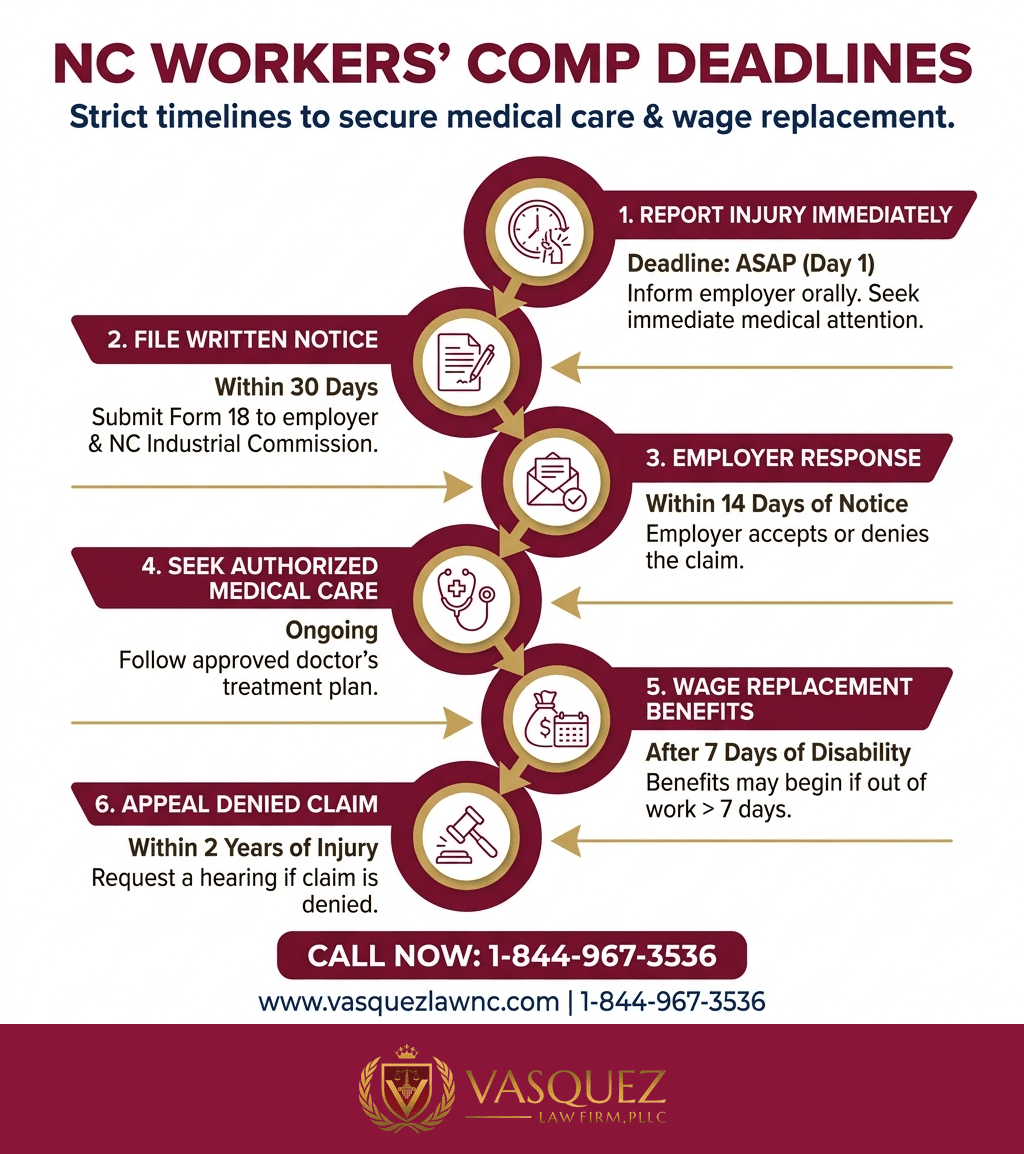
- Report Your Injury Immediately: Notify your employer in writing as soon as the injury happens or as soon as you realize it is work-related. North Carolina law requires prompt reporting to preserve your claim rights.
- Seek Medical Care: Get prompt medical treatment. Use your employer's preferred providers if possible because this affects compensation benefits.
- Complete Claim Forms: Your employer will provide a Form 18 (Employee's Claim), which you must fill out and return. This form starts the official claim process with the NC Industrial Commission.
- Keep Documentation: Maintain records of all medical bills, doctor visits, wage loss, and communication related to your injury and claim.
- Stay in Contact: Follow up on your claim status. Respond to requests from your employer, the insurance company, or the NC Industrial Commission promptly.
- Consult an Attorney: Contact a Smithfield workers' compensation attorney, like Attorney Vasquez, early if you face claim denials, delays, or complex injuries.
Common Scenarios for Workplace Injuries
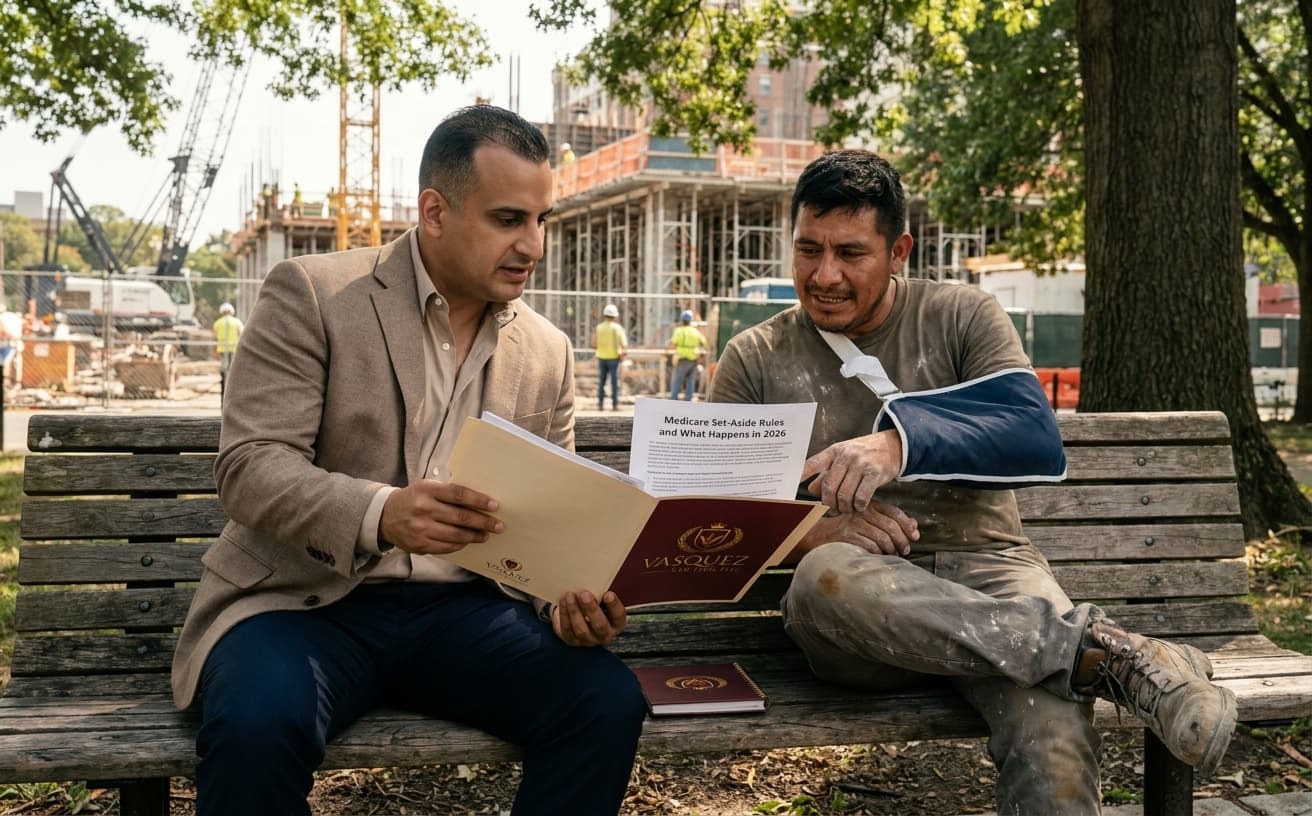
- A construction worker in Smithfield falls from scaffolding and breaks a leg. They report the accident and file a claim for medical and wage benefits.
- An office employee develops carpal tunnel syndrome from repetitive computer work. They submit a claim for repetitive stress injury benefits.
- A nurse contracts an occupational illness after exposure to hazardous materials and files a workers' comp claim for medical coverage.
Understanding the step-by-step process helps protect your rights under workers' compensation NC laws.
Documents and Evidence Checklist
- Written injury report to employer
- Medical records and diagnosis reports
- Receipts for medical expenses and prescriptions
- Wage statements or pay stubs before and after injury
- Incident reports or witness statements from coworkers
- Employer's workers' compensation claim forms (Form 18)
- Communication records with insurance adjusters or NC Industrial Commission
- Any related correspondence or denial letters
Having organized documents speeds up claim processing and supports your case.
Timeline: What Happens After You File
- Within 7 Days: Employer must file the claim with the NC Industrial Commission.
- 15 to 30 Days: You may receive medical treatment coverage and temporary wage benefits as your claim is reviewed.
- 1 to 3 Months: The insurance company investigates the claim. You may be asked for additional information.
- 3 to 6 Months: A decision is made to accept, modify, or deny your claim. If denied, you have the right to appeal.
- 6 Months to 1 Year: Ongoing treatment, permanent partial disability ratings, or settlement negotiations may occur.
Claims can take months depending on complexity, so patience and careful documentation are critical.
Costs and Fees That Affect Your Claim
- Attorney Fees: Workers' compensation attorneys typically work on a contingency fee basis, taking a percentage only if you recover benefits.
- Medical Costs: Covered under workers' comp, including treatments, diagnostics, therapy, and prescriptions related to your injury.
- Lost Wages: Compensation covers about two-thirds of your average weekly wage, subject to state caps.
- Disability Benefits: Permanent disability can increase compensation depending on severity and impact on ability to work.
- Dispute Costs: If your claim is contested, hearings or appeals may lead to additional legal fees or expenses, usually covered by the responsible party if you prevail.
Knowing these costs helps you plan for the financial impact of your injury and claim process.
Common Mistakes to Avoid with Your Claim
- Delaying Reporting: Fix: Report your injury immediately to preserve your claim rights.
- Not Seeking Prompt Medical Care: Fix: See a doctor right away and follow prescribed treatments.
- Poor Documentation: Fix: Keep copies of all records, bills, and correspondence related to your injury.
- Talking Too Much to Adjusters: Fix: Provide factual answers only; consult an attorney before detailed discussions.
- Ignoring Claim Deadlines: Fix: File within legal deadlines (usually 2 years in NC).
- Failing to Follow Employer Instructions: Fix: Complete forms promptly and attend required medical appointments.
- Settling Too Early: Fix: Understand your injury's long-term impact before accepting settlements.
- Not Hiring an Attorney When Denied: Fix: Get legal help immediately if your claim faces denials or disputes.
If you only remember one thing: Timely reporting, proper documentation, and legal advice significantly improve your chances for fair compensation.
North Carolina and Nationwide Notes
North Carolina Notes
In North Carolina, workers' compensation claims are governed by the NC Industrial Commission. Injuries must arise out of employment and occur during the course of work duties. Temporary total disability benefits provide about two-thirds of your wages, and claims generally must be filed within two years. The NC Industrial Commission strongly enforces timelines and documentation requirements.
Learn more from the NC Industrial Commission.
Nationwide Concepts (General Only - Rules Vary)
Workers' compensation laws vary significantly state-by-state. Most states provide medical benefits and wage replacement for work injuries but differ on claim procedures, benefit amounts, and deadlines. Federal workers, railroad employees, and maritime workers may have separate programs. Always consult an attorney familiar with your state's laws.
When to Call a Lawyer Immediately
- Your claim is denied or delayed beyond reasonable timeframes.
- You suffer a permanent or serious injury affecting long-term employment.
- You experience wage or benefit cuts after initial claims approval.
- Your employer disputes that the injury arose from work duties.
- Insurance adjusters pressure you to settle quickly or sign forms without explanation.
- You have legal questions or do not understand your rights and options.
- You face retaliation or discrimination at work after filing a claim.
- You need help appealing a workers' compensation decision.
About Vasquez Law Firm
At Vasquez Law Firm, we combine compassion with aggressive representation. Our motto "Yo Peleo" (I Fight) reflects our commitment to standing up for your rights.
- Bilingual Support: Se Habla Espaol - our team is fully bilingual
- Service Areas: Workers compensation in North Carolina; immigration nationwide, including Florida
- Experience: Over 30 years helping clients navigate complex legal matters
- Results: Thousands of successful cases across multiple practice areas
Attorney Trust and Experience
Attorney Vasquez holds a Juris Doctor degree and is admitted to practice in both the North Carolina State Bar and Florida Bar. With over 15 years of dedicated legal experience, he has built a reputation for providing personalized attention and guiding clients through workers' compensation claims efficiently and effectively.
Don't wait to get the help you deserve. Call us now for immediate assistance. Se Habla Espa.
Or call us: 1-844-967-3536 | Se Habla Espa
Frequently Asked Questions
How much compensation can you get for an injury at work?
Compensation amounts for workplace injuries vary based on your injury's severity, wages, and medical costs. In North Carolina, workers' compensation covers medical bills, a portion of lost wages, and disability benefits if applicable. Permanent injuries may qualify for additional compensation. Each claim is unique, so consulting an attorney helps determine your potential benefits.
What are the three types of workplace injuries?
The three common types of workplace injuries are traumatic injuries, occupational illnesses, and repetitive stress injuries. Traumatic injuries result from sudden accidents like falls, cuts, or fractures. Occupational illnesses develop over time due to workplace exposure, such as to chemicals. Repetitive stress injuries come from repeated motions causing strain, like carpal tunnel syndrome.
Is bursitis covered under workers' compensation?
Bursitis may be covered if it is work-related. This condition involves inflammation of fluid-filled sacs near joints and can result from repetitive motions or overuse on the job. To qualify, the injury must arise out of employment duties. A medical examination and proper claim filing can determine if bursitis qualifies for workers' compensation benefits.
How do I file a workers' compensation claim in North Carolina?
To file a workers' compensation claim in North Carolina, report the injury immediately to your employer, seek medical care, and complete your employer's claim forms. Your employer must submit a report to the NC Industrial Commission. Retain all medical records and document lost wages. Early reporting is vital to protect your benefits and legal rights.
What should I not say to a workers' comp adjuster?
Avoid admitting fault or downplaying your injury to a workers' comp adjuster. Stick to factual statements without speculating or volunteering unnecessary details. Never agree to sign documents without legal advice. Your words can influence the claim outcome, so consult an attorney before detailed discussions with adjusters.
How long do I have to file a workplace injury claim in NC?
In North Carolina, you generally have two years from the date of your injury to file a workers' compensation claim. If the injury results in death, the claim deadline is generally two years from the date of death. Reporting the injury quickly is essential to avoid missing these deadlines and losing benefits.
Can I get workers' compensation benefits if I was partially at fault?
Yes. North Carolina uses a contributory negligence system, so if you contributed to your injury, you may still receive benefits. However, if your fault was the main cause, benefits could be reduced or denied. Each case is fact-specific; legal advice can clarify your position under NC workers' compensation rules.
What types of injuries does workers' compensation cover?
Workers' compensation covers injuries that happen during work or result from job duties. This includes physical injuries like fractures, cuts, burns, repetitive strain injuries, and occupational diseases caused by workplace exposure. It does not typically cover injuries from misconduct or non-job-related incidents.
Sources and References
- NC Industrial Commission
- Occupational Safety and Health Administration
- United States Department of Labor
Take the first step toward justice today. Our team is standing by to help. Se Habla Español.
Start Your Free Evaluation Now
Call us: 1-844-967-3536
Se Habla Español - Estamos aquí para ayudarle.


William Vasquez
Founder & CEO, Vasquez Law Firm, PLLC
William Vasquez is the founder and CEO of Vasquez Law Firm, PLLC, a results-driven firm specializing in immigration, criminal defense, personal injury, and workers' compensation. A U.S. Air Force veteran and recipient of the Joint Service Achievement Medal, William is dedicated to fiercely fighting for his clients' rights.
Related Legal Services
Need legal help? Learn more about experienced work injury attorneys in Charlotte, or contact us for a free evaluation.
You can also visit workers compensation services throughout NC for more information.