What Happens When You Encounter ICE in Raleigh in 2026?
Learn what ICE means for Raleigh immigrants in 2026. Protect your status with trusted advice. Contact Vasquez Law for a free consultation.
Published on March 23, 2026
Talk to an immigration attorney
Free call. A clear plan for your case.
Free & confidential · Se habla espanol · 24/7

Have questions? Talk to an attorney - free evaluation.
Call 1-844-967-3536Worried how the latest immigration news affects you?
Schedule a confidential case review with an immigration attorney - know exactly where you stand.
USCIS Case Status
Check your USCIS case status
Enter your receipt number and get the official status. Free, no registration.
What Happens When You Encounter ICE in Raleigh in 2026?
If you encounter ICE in Raleigh in 2026, understanding your rights and the process can protect you. ICE (Immigration and Customs Enforcement) enforces immigration laws nationwide but knowing what to do during interactions is crucial. This guide explains ICE’s role, your protections, and important steps to take if you face an ICE agent. Whether you are a Dreamer or residing lawfully, awareness can make a difference in your outcome. Vasquez Law Firm offers bilingual support and compassionate help for immigrants navigating ICE encounters.
Need help with your case? Our experienced attorneys are ready to fight for you. Se Habla Español.
Schedule Your Free Case Evaluation
Or call us now: 1-844-967-3536
Quick Answer
When ICE approaches you in Raleigh, they are enforcing federal immigration laws. You have the right to remain silent, ask if you are free to leave, and seek legal counsel. Avoid sharing unnecessary information and never sign documents without a lawyer’s advice.
- ICE cannot enter your home without a warrant
- You are not required to answer all questions
- Request to see ICE identification and documents
- Stay calm and do not resist arrest if applicable
- Contact a qualified immigration attorney immediately
Understanding ICE and Its Role
In 2026, Immigration and Customs Enforcement (ICE) continues as a key federal agency responsible for enforcing immigration laws across the United States. ICE operates under the Department of Homeland Security and handles investigations, arrests, detention, and removal of individuals who violate immigration regulations.
ICE agents can be present at airports, workplaces, or other locations enforcing laws related to immigration status. For example, in Raleigh, ICE works in cooperation with local, state, and federal officials to enforce immigration policies. In recent news, ICE involvement at airports assisting TSA has raised legal questions about authority and detainee rights.
Many immigrants, including Dreamers, fear ICE encounters due to possible detention or deportation. Knowing ICE’s legal limits and how it operates can help protect your rights during an interaction. ICE generally has authority to arrest individuals without a warrant if they suspect illegal presence. However, entering private homes typically requires a judicial warrant.
ICE's Enforcement Priorities in 2026
ICE focuses on individuals with criminal convictions, recent border crossings, and immigration fraud. Policies can vary with administration changes, but prioritizing high-risk targets remains consistent. Understanding if you fall into a priority group can inform your legal strategy.
Interaction with Other Agencies
ICE has cooperative agreements with agencies such as TSA, local police, and border patrol. Recently, ICE agents assisting TSA at airports in 2026 has caused legal concerns. This cooperation means ICE presence can increase in unexpected places, making it essential to remain informed about your rights in such environments.
Legal Definitions and Terms
- Removal: Formal deportation of an individual from the United States.
- Detention: Temporary custody for immigration violation investigations.
- Deferred Action: Temporary protection from deportation but not legal status.
How to Respond: Step-by-Step
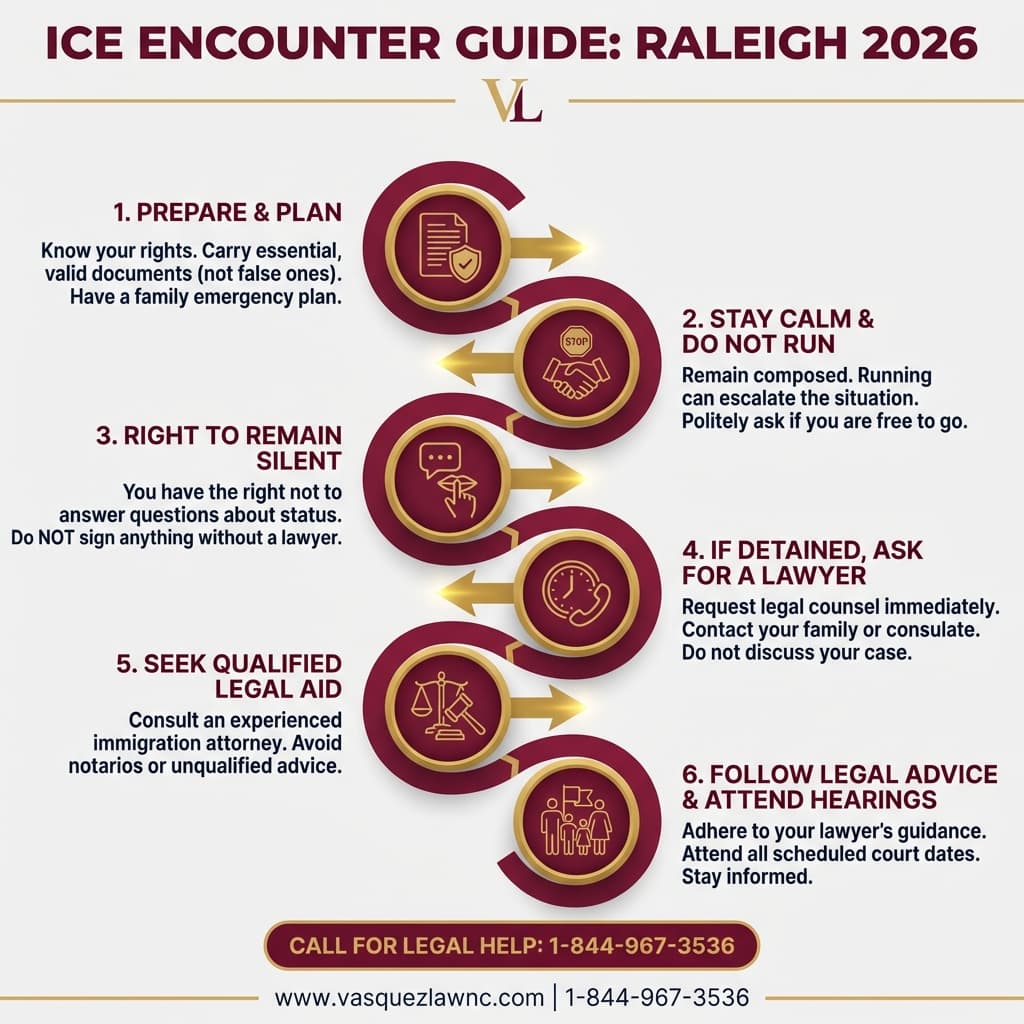
If you encounter ICE, taking the right steps can protect your legal rights and limit harm. Below is a clear step-by-step guide for what to do during an ICE encounter in Raleigh or elsewhere.
- Stay Calm: Take deep breaths and remain composed. Showing agitation can escalate the situation.
- Ask for Identification: Politely request ICE agents to show their badges and warrant if entering your home.
- Know Your Rights: You have the right to remain silent except to give your name and date of birth. You do not have to answer questions about your immigration status without a lawyer present.
- Do Not Consent to Searches: You can refuse ICE agents permission to enter your home or vehicle without a warrant.
- Ask if You Are Free to Leave: If ICE is detaining you, this determines if you have to stay or can walk away.
- Do Not Sign Documents: Never sign paperwork without legal advice. Some papers may waive your rights inadvertently.
- Contact a Lawyer Immediately: If detained or questioned, ask to speak with an immigration attorney. Calling Vasquez Law Firm can provide crucial legal support.
Example Scenario
Maria was stopped by ICE agents at an airport in Raleigh assisting TSA. She stayed calm, asked for identification, gave her name but declined to answer further questions. After ICE confirmed her immigration status, she was allowed to leave. She later contacted Vasquez Law Firm to review her options and avoid future issues.
Documents and Evidence Checklist
Having the right documents and evidence can protect your case if you face immigration enforcement. Keep these records accessible and secure:
- Valid passport and visas
- Employment authorization documents (EAD cards)
- Any notices from USCIS or immigration courts
- Copies of prior applications and receipts
- Identification such as state-issued ID or driver’s license
- Proof of residence such as utility bills or lease agreements
- Contact information of your immigration lawyer
Do not carry false documents as that can lead to further legal issues. Keep originals safe and share copies only with trusted legal representatives.
Key Records to Provide an Attorney
- Any correspondence with immigration authorities
- Criminal records or court documents if applicable
- Documentation of family relationships or hardship
Timeline: What to Expect After an ICE Encounter
The process after meeting ICE can vary depending on your situation. Generally, here is a typical timeline after initial contact:
- Day 1-3: ICE may detain or release pending investigation. You may be taken to a detention facility.
- Week 1-2: Initial immigration court hearing scheduled. Bond may be set.
- Month 1-3: Prepare and file applications for relief or adjustment of status.
- Month 4-12: Court hearings and ICE interviews take place. Legal motions may be filed.
- Beyond Year 1: Final court decision or settlement. Deportation or continued status may result.
Timelines can be longer depending on case complexity and court backlog. Having reliable legal counsel expedites and improves your chances for a positive outcome.
Costs and Fees: What Impacts the Price
Legal representation involving ICE encounters may have varying costs. Factors influencing fees include:
- Case complexity and documentation required
- Whether removal proceedings or bond hearings are involved
- Experience and credentials of the immigration attorney
- Urgency and availability of necessary filings
Vasquez Law Firm offers competitive rates and flexible payment options. We provide upfront fee arrangements and free case evaluations to discuss cost expectations. Avoiding legal help risks costing more later in deportation or lost benefits.
Common Mistakes to Avoid When Encountering ICE
- Talking too much: Only provide your name; other information can be used against you.
- Not asking for a warrant: ICE must have a valid warrant to enter private property.
- Signing without reading: Documents can waive your rights or admit to violations.
- Ignoring court dates: Failure to appear can cause automatic deportation.
- Not contacting a lawyer: Legal guidance early on is essential for defense.
- Hiding or running: This can lead to criminal charges and worsen your case.
- Using fake documents: This results in immediate removal and bans.
If you only remember one thing: Stay calm, assert your right to remain silent, and call an attorney before doing anything else.
Notes for North Carolina and Florida Residents
North Carolina Notes
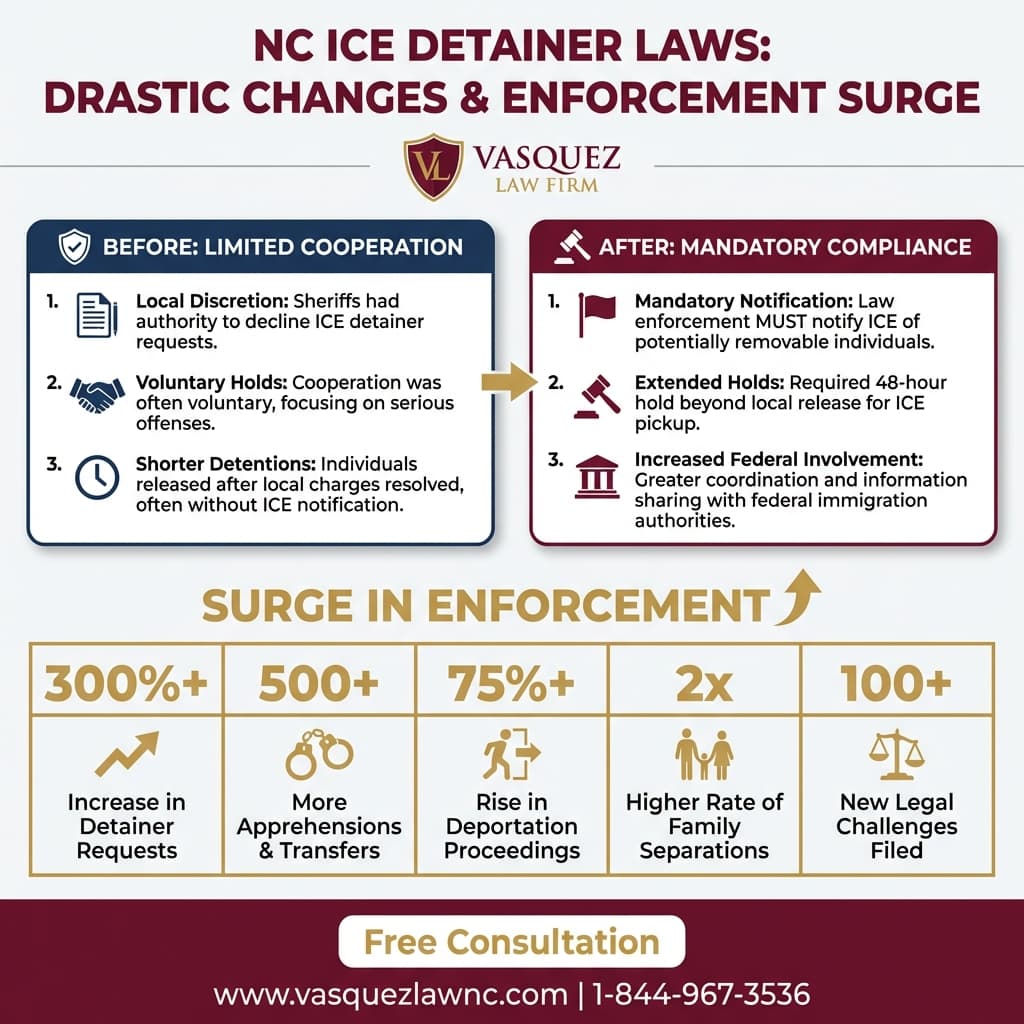
North Carolina is home to a growing immigrant population. Legal services like Vasquez Law Firm help residents understand local and federal immigration enforcement. ICE presence has increased in cities like Raleigh, making community legal education critical. State laws sometimes intersect with federal immigration, but removal proceedings are controlled federally. Contact local legal aid groups if you need immediate support or legal clinics.
Florida Notes
Florida has a major immigrant population with significant ICE activity due to ports and airports. Similar to North Carolina, residents should know their rights and seek proper counsel immediately. Florida laws provide certain protections but cannot override federal immigration requirements. Vasquez Law Firm’s bilingual attorneys serve the state and provide personalized immigration advice in areas like Miami and Orlando.
Nationwide Concepts (General Only, Rules Vary)
Immigration enforcement is federally controlled but policies and priorities may vary by region. Always check current administration announcements and local legal resources. Federal immigration courts oversee removal proceedings nationwide. Federal statutes such as 8 U.S.C. § 1226 provide the basis for ICE detention and enforcement authority, while regulations in 8 C.F.R. sections guide procedural rules.
When to Call a Lawyer Now
- You are approached by ICE agents at home or work
- You receive a Notice to Appear or arrest warrant from ICE
- You or a family member are detained by ICE
- You receive a court summons for immigration hearings
- You are uncertain about your immigration status
- You want to apply for asylum, DACA, or adjustment of status
- You face potential deportation or removal proceedings
- Your documents were seized or questioned by ICE
About Vasquez Law Firm
At Vasquez Law Firm, we combine compassion with aggressive representation. Our motto "Yo Peleo" (I Fight) reflects our commitment to standing up for your rights.
- Bilingual Support: Se Habla Español - our team is fully bilingual
- Service Areas: North Carolina, Florida, and nationwide immigration services
- Experience: Over 15 years helping clients navigate complex legal matters
- Results: Thousands of successful cases across multiple practice areas
Attorney Trust and Experience
Attorney Vasquez holds a Juris Doctor degree and is admitted to practice in the North Carolina State Bar. With over 15 years of dedicated legal experience, he has built a reputation for providing personalized attention and achieving favorable outcomes for his clients.
Don't wait to get the help you deserve. Call us now for immediate assistance.
Se Habla Español
Frequently Asked Questions
What does ICE stand for and what is its role?
ICE stands for Immigration and Customs Enforcement. It is a federal agency responsible for enforcing immigration laws, investigating illegal immigration, and detaining individuals. Knowing ICE’s role helps immigrants understand when they might be contacted and what to expect during enforcement actions.
Am I required to answer questions from ICE agents?
You have the right to remain silent except for providing basic identifying information. You do not have to answer questions about your immigration status without a lawyer. It is important to remain polite but cautious and always ask if you are free to leave.
How does ICE determine someone's immigration status?
ICE uses databases, document checks, and interviews to verify immigration status. They may review your passport, visa, or other identification. If you are unsure about your status, avoid sharing information until speaking with an attorney.
What are my rights if ICE shows up at my home or work?
ICE must usually have a judicial warrant to enter your home. At work, they can verify documents but cannot detain you without cause. You have the right to remain silent and speak with a lawyer before answering questions.
Who is ICE currently deporting in 2026?
ICE prioritizes deporting those with serious criminal records, recent border crossers, and repeated violators of immigration laws. Policies vary, so staying informed and connected to legal services is vital.
Are ICE agents considered law enforcement officers?
Yes, ICE agents are federal law enforcement officers authorized to carry out immigration enforcement, arrests, and investigations. They carry badges and firearms and have certain legal authorities granted by federal law.
What common mistakes should I avoid when interacting with ICE?
Avoid volunteering information, signing documents without advice, not asking for warrants, and ignoring court appearances. Remain calm and contact a lawyer immediately if approached by ICE.
How can Vasquez Law Firm help if I have an ICE encounter?
Vasquez Law Firm provides bilingual, experienced attorneys who protect your rights, explain the process, represent you in court, and keep you informed about your options in Raleigh and beyond.
Sources and References
- U.S. Citizenship and Immigration Services (USCIS)
- Executive Office for Immigration Review
- Department of Homeland Security Immigration Enforcement
Facing immigration issues in Raleigh? Our Raleigh immigration lawyers can review your case.
Take the first step toward justice today. Our team is standing by to help. Se Habla Español.
Start Your Free Case Evaluation Now
Call us: 1-844-967-3536

William Vasquez
Founder & CEO, Vasquez Law Firm, PLLC
William Vasquez is the founder and CEO of Vasquez Law Firm, PLLC, a results-driven firm specializing in immigration, criminal defense, personal injury, and workers' compensation. A U.S. Air Force veteran and recipient of the Joint Service Achievement Medal, William is dedicated to fiercely fighting for his clients' rights.
Related Legal Services
Need legal help? Learn more about our immigration legal services, or contact us for a free evaluation.
You can also visit our NC immigration team for more information.