How the Discovery Process Works in Personal Injury Cases in 2026
Understand the discovery process in personal injury cases in 2026. Learn key steps, timelines, and how to protect your rights. Contact Vasquez Law for help.
Published on May 2, 2026
Injured? Get what your case is worth
Free review.
Free & confidential · Se habla espanol · 24/7
Have questions? Talk to an attorney - free evaluation.
Call 1-844-967-3536Get What Your Injury Is Worth
Schedule your consultation.
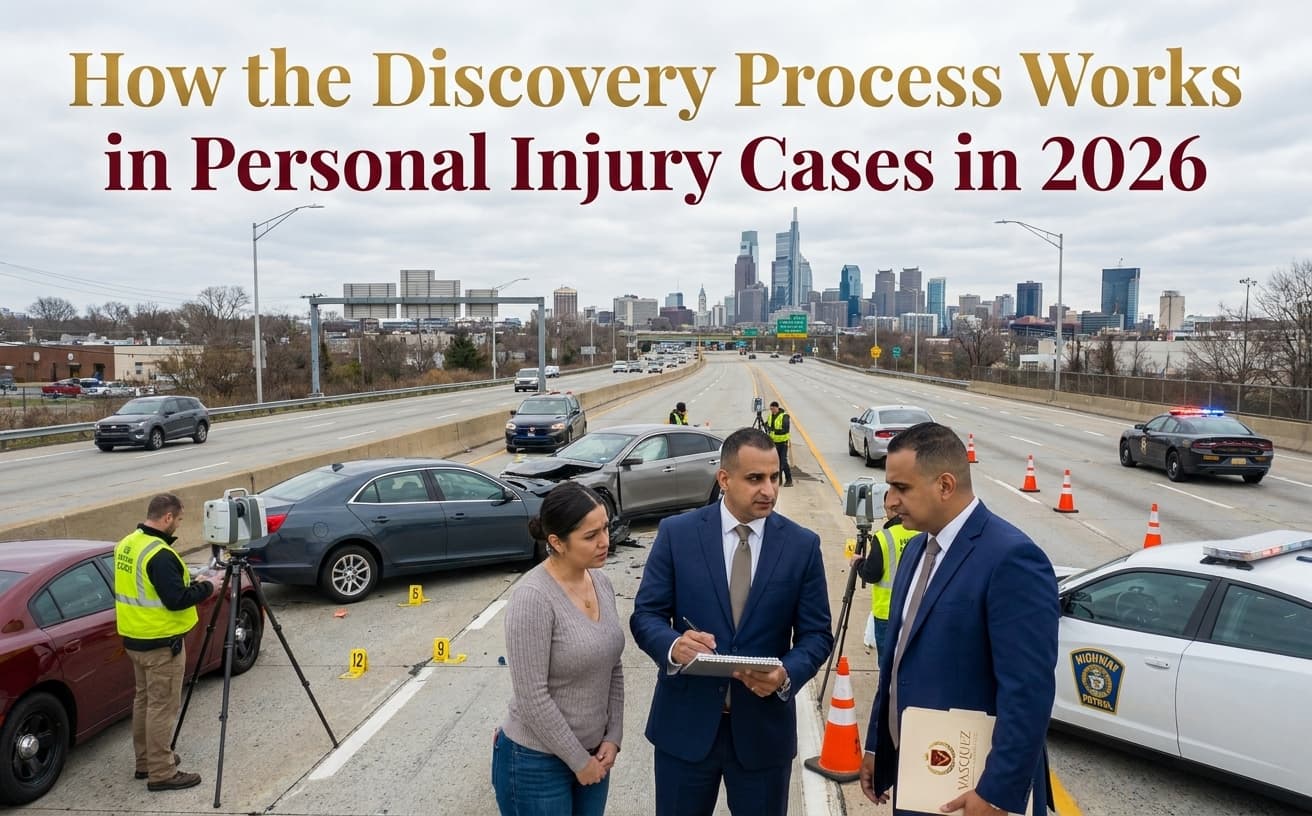
How the Discovery Process Works in Personal Injury Cases in 2026
The discovery process is a key phase in personal injury lawsuits in North Carolina and Florida. It involves gathering evidence from all parties to build your case. In 2026, understanding the legal discovery process can help survivors protect their rights and increase the chance of a fair settlement. This article explains what happens during discovery, key steps to take, common mistakes, timelines, and when to call a lawyer. Whether you were injured in a car accident in Orlando or a slip and fall in Charlotte, knowing how discovery works is essential to your case’s success.
Need help with your case? Our experienced attorneys are ready to fight for you. Se Habla Español.
Or call us now: 1-844-967-3536
Quick Answer
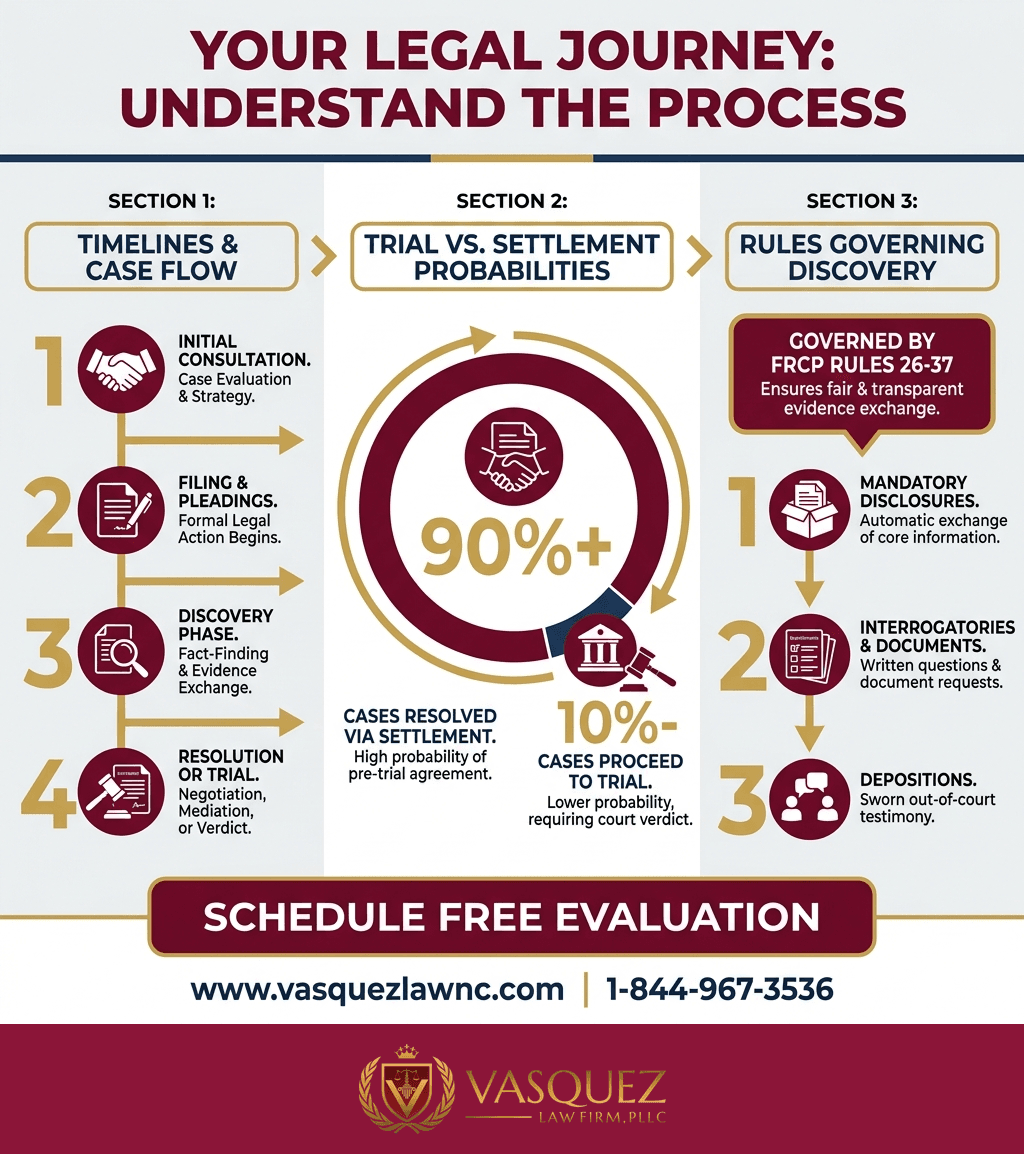
The discovery process in a personal injury case is when both parties exchange information and evidence relevant to the lawsuit. It includes document requests, depositions, and interrogatories. This stage helps build your case and settle or prepare for trial.
- Parties exchange medical records and accident reports
- Depositions record witness testimonies under oath
- Discovery helps uncover facts and clarify issues
- It often influences settlement discussions
- Non-compliance can lead to court orders and penalties
What Is the Discovery Process?
Imagine you were hurt in a car crash in Orlando. To prove your case and damages, you need to gather evidence. The discovery process allows both sides to legally request this information from each other. This stage aims to prevent surprises at trial by openly sharing facts.
Discovery involves asking for documents, written answers to questions (interrogatories), and sworn oral statements (depositions). The court sets deadlines and rules to ensure fairness. This process applies to personal injury cases in North Carolina and Florida and helps both plaintiff and defendant build their arguments.
Understanding discovery marketing tactics helps you recognize how insurance companies prepare their defense. They use the information you provide to minimize payout offers. Knowing this, survivors must prepare carefully with experienced personal injury lawyers.
During discovery, the transparency between parties can sometimes foster more amicable negotiations, as both sides gain a clearer picture of the strengths and weaknesses of the case. For example, if medical records clearly show severe injuries and ongoing treatment, the defendant’s insurance company might be more inclined to offer a fair settlement early. Conversely, if the evidence suggests disputes about fault, discovery can highlight these issues, allowing both sides to strategize accordingly.
In some cases, discovery can also reveal previously unknown facts. For instance, if a surveillance video from a nearby business surfaces during discovery, it might show the accident’s circumstances more clearly than initial reports. This can significantly affect how a case proceeds, either strengthening your claim or identifying challenges to address. Therefore, thorough and strategic discovery is crucial for uncovering all relevant evidence.
Additionally, the discovery process is not just about exchanging documents and testimonies. It also serves as a tool for attorneys to assess the credibility of witnesses and the reliability of evidence. Depositions, for example, can reveal inconsistencies in statements that may impact trial outcomes. By understanding the discovery process, personal injury survivors can collaborate with their attorneys to build a robust case and avoid surprises that could jeopardize their claim.
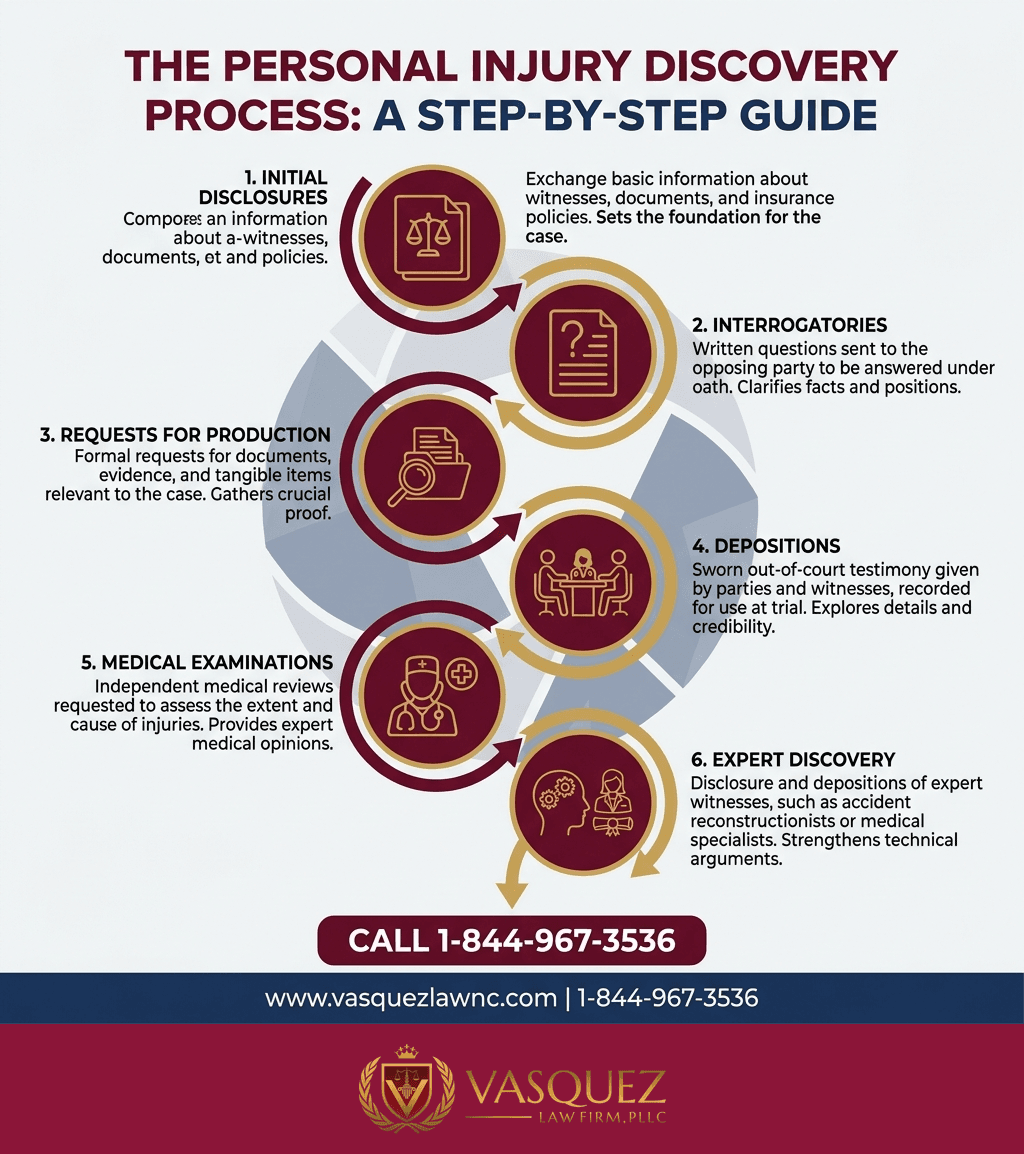
Step-by-Step: How Discovery Works
- Initial Disclosures: Each side shares basic case information early, such as contact info, injury details, and insurance.
- Written Discovery: Requests for documents and interrogatories allow detailed fact-finding. You may be asked about medical history, accident circumstances, and expenses.
- Depositions: Lawyers question witnesses and parties under oath, commonly recorded on video or transcript. You should prepare thoroughly with your lawyer.
- Discovery Motions: If the other party withholds evidence or acts improperly, lawyers may file motions to compel or protective orders with the court.
- Conclusion of Discovery: After exchanging evidence, parties often enter settlement talks or prepare for trial.
Each of these steps requires careful attention and collaboration with your attorney. For example, during initial disclosures, failing to provide complete injury descriptions or omitting insurance information can weaken your position. Being thorough and transparent at this stage sets the tone for the rest of discovery.
Written discovery, including interrogatories and document requests, often uncovers critical details about the case. For example, insurance companies may request your full medical history related to the injury to assess damages. Your attorney will help you respond accurately and protect your privacy where appropriate.
Depositions are a particularly important part of discovery. Imagine a slip and fall case where the property owner’s employee is deposed. Their testimony about maintenance schedules or hazard warnings can significantly influence liability determinations. Preparing for depositions by reviewing facts and practicing answers with your lawyer can reduce anxiety and improve your confidence during questioning.
Discovery motions can arise if one party refuses to provide requested documents or tries to limit questioning. For example, if the defendant refuses to produce surveillance footage from the accident site, your lawyer can file a motion to compel the court to order its release. Conversely, protective orders may be sought to prevent overly intrusive or irrelevant discovery requests.
At the conclusion of discovery, both parties have a clearer understanding of the evidence, which often leads to settlement discussions. For instance, after reviewing all medical records and depositions, the insurance company might increase their settlement offer, recognizing the strength of your case. If a fair agreement cannot be reached, the case proceeds to trial, armed with comprehensive evidence gathered during discovery.
Common Documents in Discovery
- Medical records and bills detailing your injuries and treatment
- Accident and police reports documenting the incident
- Insurance policies relevant to the claim
- Communication records such as emails and text messages
- Photographs or video evidence from the accident scene
- Witness statements and expert reports
Carefully organizing these documents with your attorney strengthens your position during discovery and beyond.
For practical example, medical records not only prove the extent of your injuries but also establish a timeline of treatment that can correlate with lost wages and emotional distress claims. Detailed bills help quantify economic damages accurately.
Accident and police reports often contain immediate observations from law enforcement, including citations or fault determinations, which can be pivotal in personal injury claims. Obtaining these early in the discovery process ensures your attorney can address any discrepancies or inaccuracies promptly.
Communication records, such as texts or emails with insurance adjusters or witnesses, can reveal offers, admissions, or contradictory statements that influence settlement negotiations or trial strategy. For example, a text message admitting fault by the other party could significantly bolster your claim.
Photographs or video evidence from the accident scene provide visual context that written documents cannot. For instance, images showing hazardous road conditions or the layout of a slip and fall area can clarify liability questions. Your attorney might also consult experts who analyze these visuals to support your case.
Expert reports, such as those from medical professionals or accident reconstruction specialists, are often introduced during discovery to explain complex issues. These reports help the court understand injuries’ impact or how the accident occurred, facilitating fair adjudication or settlement.
Timeline and What to Expect
- Months 1-3 – Initial disclosures and written document requests start.
- Months 3-5 – Depositions are scheduled and taken with witnesses and parties.
- Months 5-6 – Discovery motions get resolved by the court if needed.
- Month 6+ – Discovery closes; settlement negotiations or trial preparation begins.
The discovery timeline in personal injury cases can vary based on case complexity and court schedules. Your lawyer will keep you updated on key deadlines.
In cases involving multiple parties or extensive medical treatment, discovery may take longer. For example, a multi-vehicle accident with several injured parties can require coordinating numerous depositions and exchanging vast amounts of documentation, potentially extending the timeline beyond six months.
Conversely, relatively straightforward cases, such as minor slip and falls with clear liability, may have an expedited discovery process. Courts may encourage faster resolution to reduce backlog and costs.
Unexpected delays can occur if disputes arise over the scope of discovery or if parties fail to comply with requests. For instance, if an insurance company refuses to produce requested documents, filing a motion to compel can add weeks or months to the timeline. Your attorney’s proactive management of discovery schedules is essential to keep your case on track.
Throughout the discovery period, it is important to remain responsive and organized. Promptly providing your attorney with requested information and documents will help avoid delays. Regular communication with your lawyer ensures you understand upcoming steps and deadlines, reducing stress and helping you make informed decisions as your case progresses toward resolution.
Common Mistakes to Avoid in Discovery
- Providing incomplete or inaccurate documents: always double-check what you submit.
- Volunteering unnecessary information during depositions: answer only what is asked.
- Ignoring deadlines for responding to requests: late submissions can hurt your case.
- Missing deposition appointments without notice: this can cause court sanctions.
- Failing to communicate with your attorney about discovery issues promptly.
- Not preparing adequately for depositions: practice with your lawyer beforehand.
- Assuming discovery ends all negotiations: keep options open for settlement talks.
If you only remember one thing: Be honest, accurate, and timely during discovery with your lawyer’s guidance.
A common mistake is underestimating the importance of discovery. For example, some clients might delay providing medical records thinking they are irrelevant, but missing information can weaken your claim or give the opposing side an advantage.
During depositions, nervousness can lead to over-sharing or speculation. For example, volunteering opinions or guesses about fault rather than sticking to facts can be detrimental. Your attorney’s coaching before depositions is crucial to help you stay focused and composed.
Ignoring deadlines can cause serious consequences, such as court sanctions or loss of evidence admissibility. For instance, failing to respond timely to interrogatories might result in your answers being deemed admitted, limiting your ability to contest certain facts.
Another mistake is poor communication with your lawyer. If you receive discovery requests or communications from the other side, promptly sharing them with your attorney helps ensure appropriate responses and protects your rights.
Finally, believing discovery is the end of negotiations can limit your options. New evidence uncovered during discovery might open avenues for settlement previously unavailable. Staying flexible and discussing settlement possibilities with your lawyer throughout discovery can save time and expense.
North Carolina and Nationwide Notes
North Carolina Notes
In North Carolina, discovery is governed by N.C. Gen. Stat. § 1A-1, Rule 26. Courts require parties to disclose relevant information early. Personal injury cases often proceed through mandatory mediation before trial. Understanding these rules helps protect your rights during discovery.
North Carolina also imposes specific limits on the scope of discovery to prevent fishing expeditions, ensuring requests are proportional to the case’s needs. For example, requests unrelated to the actual injury or accident may be objected to and limited by the court.
Additionally, North Carolina courts encourage parties to meet and confer before filing discovery motions, fostering cooperation and reducing court involvement. If disputes remain unresolved, the court can order sanctions against the non-compliant party, emphasizing the importance of good faith during discovery.
Nationwide Concepts (General Only, Rules Vary)
Across the U.S., discovery aims to balance fairness and thorough fact-gathering. Deadlines, types of discovery, and enforcement vary by jurisdiction. Always consult local counsel to understand the specific rules that apply to your case.
Some states limit discovery in personal injury cases through caps on interrogatories or document requests, while others may allow broader inquiry into related matters. For example, states with no-fault insurance systems might have streamlined discovery processes focused on medical documentation.
Additionally, federal courts handle discovery differently from state courts, often involving more rigorous disclosure requirements and detailed scheduling orders. If your case involves federal jurisdiction, such as a lawsuit against a federal agency, your attorney will explain these distinctions.
When to Call a Personal Injury Lawyer
- Immediately after the injury or accident
- If the insurance company pressures you to sign documents
- If you receive discovery requests you don’t understand
- If you are unsure about what to say during depositions
- If the opposing side denies your discovery requests
- If you want help organizing evidence or witnesses
- Before agreeing to any settlement offers
- If court deadlines related to discovery approach
Contacting a personal injury lawyer early ensures your rights are protected from the outset. For example, an attorney can help preserve evidence such as surveillance footage or witness contact information that might otherwise be lost.
If you receive discovery requests that are confusing or seem intrusive, a lawyer can guide you on how to respond appropriately without inadvertently waiving rights or harming your case. This guidance is particularly valuable during depositions, where your words are recorded and can impact outcomes.
Additionally, an attorney can help evaluate settlement offers in light of the evidence gathered during discovery, ensuring you do not accept less than you deserve. They can also represent you in negotiations or court proceedings if disputes arise during the discovery process.
Ultimately, having experienced legal representation can reduce stress, increase the likelihood of a favorable outcome, and provide peace of mind throughout the often complex and challenging discovery phase.
About Vasquez Law Firm
At Vasquez Law Firm, we combine compassion with aggressive representation. Our motto "Yo Peleo®" (I Fight) reflects our commitment to standing up for your rights.
- Bilingual Support: Se Habla Español - our team is fully bilingual
- Service Areas: Personal injury in North Carolina; immigration nationwide, including Florida
- Experience: Over 30 years helping clients navigate complex legal matters
- Results: Thousands of successful cases across multiple practice areas
Attorney Trust and Experience
Attorney Vasquez holds a Juris Doctor degree and is admitted to practice in both the North Carolina State Bar and Florida Bar. With over 15 years of dedication to personal injury law, he focuses on providing personalized attention and guiding clients through every step of the discovery process.
His extensive courtroom experience allows him to anticipate opposing strategies and prepare clients thoroughly for depositions and trial. Clients benefit from a hands-on approach that emphasizes clear communication and tailored legal strategies.
Moreover, Vasquez Law Firm’s bilingual capabilities ensure Spanish-speaking clients receive legal support in their native language, fostering trust and understanding throughout the legal journey. This commitment to accessibility reinforces the firm’s dedication to serving diverse communities effectively.
Don't wait to get the help you deserve. Call us now for immediate assistance.
Se Habla Español
Frequently Asked Questions
What is the discovery process in a personal injury case?
The discovery process is when both sides in a lawsuit exchange all relevant information including documents and witness testimony to prepare their case fairly and thoroughly. It is a legal requirement to reveal evidence before trial and often facilitates settlement. The goal is to ensure transparency so neither party is surprised by evidence at trial, and to allow both sides to assess strengths and weaknesses of the case.
How long does the discovery process usually take?
Discovery typically takes 3 to 6 months but can vary based on the case complexity and court's schedule. Delays can happen if parties dispute or withhold evidence. Your lawyer will keep you informed about key deadlines. Complex cases involving multiple parties or extensive medical records may require longer periods, while simpler cases might resolve discovery sooner. Active communication with your attorney helps you stay on top of timelines.
What documents are commonly exchanged during discovery?
Commonly exchanged documents include medical records, accident reports, insurance policies, witness statements, emails, and photographs. These help prove the facts about your injury and liability. Medical bills establish damages, while police reports provide official accounts of the incident. Communication records can reveal admissions or negotiations. Properly organizing and reviewing these documents with your attorney strengthens your case.
Can discovery lead to a settlement?
Yes, discovery often leads to settlement as both sides gain a clearer understanding of the evidence and risks. Settling after discovery can save time, stress, and legal expenses for injury survivors. When parties see the strength or weakness of their positions through exchanged evidence, they may be motivated to negotiate a fair resolution without going to trial. Your lawyer will advise on whether settlement offers are reasonable based on discovery findings.
What happens if the other side does not comply with discovery?
If the opposing party refuses to provide requested evidence, your attorney can ask the court to compel compliance. Non-compliance may result in penalties or unfavorable rulings against them, such as sanctions, fines, or even losing the right to present certain evidence. Courts take discovery violations seriously to maintain fairness. Your lawyer will file motions and represent your interests to ensure discovery rules are followed.
How do depositions fit into the discovery process?
Depositions are sworn testimonies taken outside court under oath where lawyers question witnesses or parties. They help clarify facts, verify statements, and gather details for trial or settlement. Depositions are usually recorded and can be used to challenge testimony if it changes at trial. Preparing for depositions with your attorney is important to provide clear, accurate answers and avoid misunderstandings.
What should I avoid saying during depositions?
Do not guess answers or provide information beyond questions asked. Always be truthful and concise. Avoid speculation or lying as inconsistencies can damage your credibility. If you don’t know an answer, it is acceptable to say so. Staying calm and focused helps protect your case. Your attorney will coach you on how to respond appropriately before the deposition.
When should I contact a lawyer about discovery?
Call a personal injury lawyer as soon as possible after an accident. Early guidance helps you gather evidence correctly and respond properly to discovery requests, improving your case outcome. If you receive discovery documents or deposition notices, do not hesitate to seek legal advice. A lawyer can also help if you feel pressured by insurance companies or unsure about legal procedures during discovery.
Sources and References
- North Carolina Courts
- North Carolina Department of Transportation
- National Highway Traffic Safety Administration
Take the first step toward justice today. Our team is standing by to help. Se Habla Español.
Start Your Free Evaluation Now
Call us: 1-844-967-3536
Se Habla Español - Estamos aquí para ayudarle.
If you need legal assistance, learn more about NC personal injury legal team, or call us at 1-844-967-3536 for a free evaluation.


William Vasquez
Founder & CEO, Vasquez Law Firm, PLLC
William Vasquez is the founder and CEO of Vasquez Law Firm, PLLC, a results-driven firm specializing in immigration, criminal defense, personal injury, and workers' compensation. A U.S. Air Force veteran and recipient of the Joint Service Achievement Medal, William is dedicated to fiercely fighting for his clients' rights.
Related Legal Services
Need legal help? Learn more about NC personal injury legal team, or contact us for a free evaluation.
You can also visit statewide personal injury attorneys for more information.