What Happens If You’re Charged with Tax Fraud in 2026?
Facing tax fraud charges in 2026? Learn about penalties, jail time, and how to protect your rights. Contact Vasquez Law for a free evaluation today.
Published on April 30, 2026
Protect your record and your freedom
Free, confidential review. 24/7.
Free & confidential · Se habla espanol · 24/7

Have questions? Talk to an attorney - free evaluation.
Call 1-844-967-3536Protect Your Record and Your Freedom
A confidential case review - available 24/7 for emergencies.
What Happens If You’re Charged with Tax Fraud in 2026?
Tax fraud is a serious criminal offense with significant penalties including fines and jail time. In Charlotte and across North Carolina and Florida, being charged with tax fraud can impact your financial future and freedom. This article explains what tax fraud is, common examples, legal consequences in 2026, and how you can protect yourself with help from experienced criminal defense attorneys. If you are under investigation or charged, knowing the facts early can improve your chances of avoiding harsh punishments.
Need help with your case? Our experienced attorneys are ready to fight for you. Se Habla Español.
Or call us now: 1-844-967-3536
Quick Answer
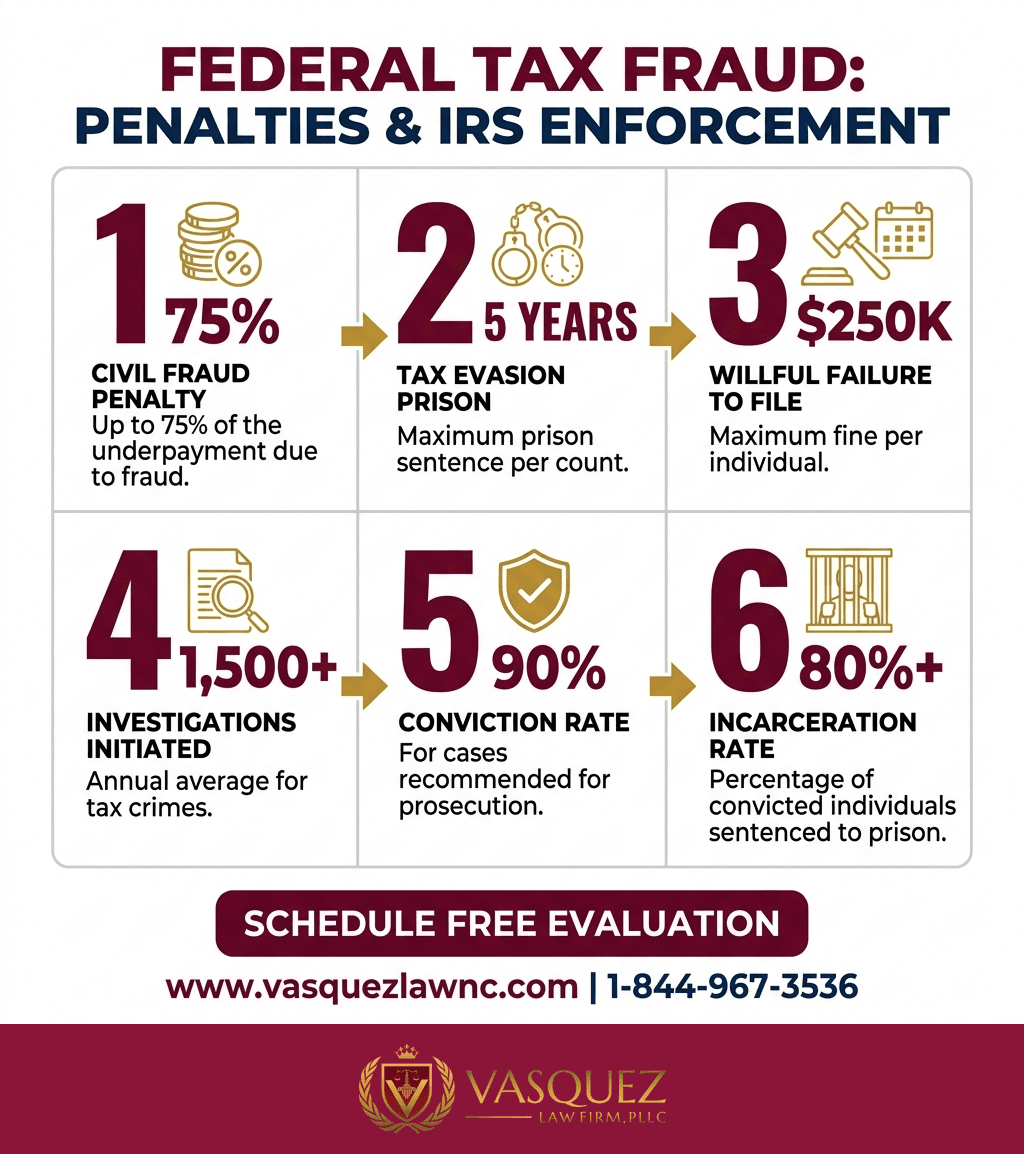
Tax fraud involves deliberately falsifying tax documents to avoid paying the correct taxes. It can result in fines, penalties, and jail time ranging up to five years. If charged in Charlotte or elsewhere in North Carolina or Florida, you need expert legal help to protect your rights.
- Common forms include underreporting income and false deductions
- IRS uses audits and data matching to detect fraud
- Penalties include hefty fines and possible prison sentences
- Proactive defense can reduce or avoid jail time
- Contact experienced criminal defense attorneys immediately
Understanding Tax Fraud
Imagine a taxpayer hiding thousands of dollars in income each year or claiming nonexistent expenses to reduce taxable income. These are typical examples of tax fraud. In 2026, tax fraud is still a major focus for federal and state governments because it undermines the tax system and cheats honest taxpayers.
Tax fraud means intentionally deceiving tax authorities like the IRS to lower your tax bill unlawfully. It is different from simple tax errors or miscalculations, which might be honest mistakes. Tax fraud cases commonly involve:
- Underreporting revenue from self-employment or cash sales
- Inflating deductions or exemptions that you do not qualify for
- Falsifying receipts or documents
- Claiming credits or refunds you are not entitled to
- Not filing tax returns when legally required
This criminal offense can occur in many ways, and the IRS uses advanced data analytics and cross-referencing to find discrepancies. Common tax fraud examples often come from small business owners, contractors, or people who get paid under the table.
In Charlotte and throughout North Carolina, the IRS works closely with state authorities and the Department of Justice to prosecute tax fraud aggressively. According to 26 U.S.C. § 7201 and § 7206, tax fraud is punishable by substantial fines and imprisonment.
Understanding these basics equips you to recognize warning signs and avoid serious consequences.
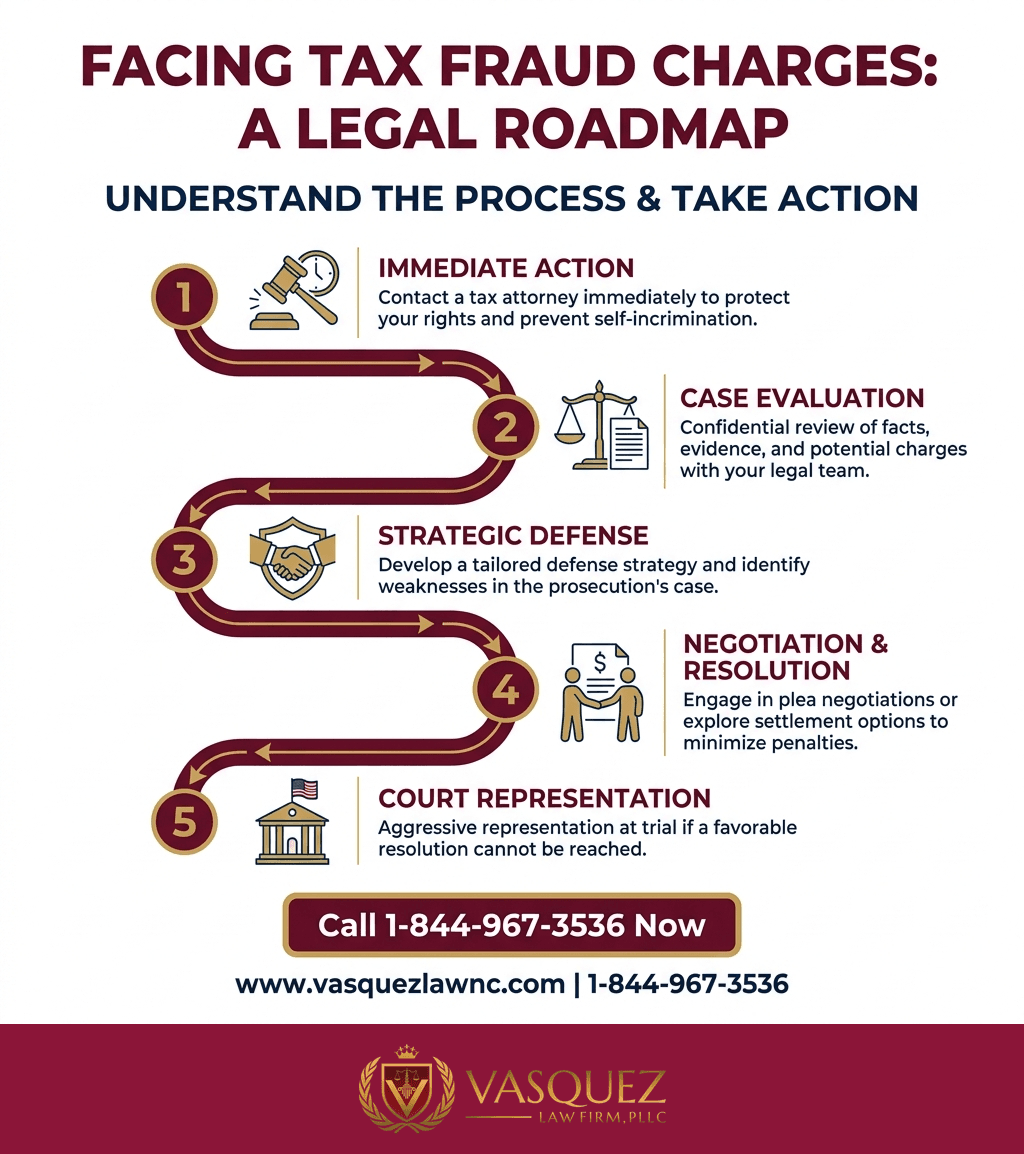
Step-by-Step: What to Do If Charged
- Remain calm and do not ignore notices. If the IRS or state tax authorities contact you about possible tax fraud, respond quickly but cautiously.
- Gather your tax documents. Collect all relevant filings, receipts, and related evidence to review with a lawyer.
- Contact an experienced criminal defense attorney who understands tax law in North Carolina and Florida. Early legal help can prevent missteps.
- Do not provide statements or sign documents without legal advice, as anything you say can be used against you in court.
- Prepare for possible audits or interviews with tax officials—your lawyer will help guide you.
- Explore options for settlement or defense strategies. This may include negotiation with prosecutors or demonstrating lack of intent.
- Follow your lawyer's advice and prepare for court if necessary to contest the charges or seek reduced penalties.
Contacting a criminal defense attorney early, such as Attorney Vasquez who has over 15 years of experience with tax fraud cases, can make a decisive difference in your case outcome.
Documents or Evidence Checklist
- Copies of all tax returns filed in the past 3 to 5 years
- Bank statements and deposit records related to taxable income
- Receipts, invoices, and expense records supporting deductions
- Correspondence with IRS or state tax authorities
- Employment forms like W-2s or 1099s
- Financial contracts or loan documents showing transactions
- Any notices or letters regarding audits or investigations
Organizing these materials will assist your attorney in building a defense and explaining your financial situation clearly.
Timeline: What to Expect During a Tax Fraud Case
- Weeks 1-4: Investigation begins with IRS or state review of tax returns and records.
- Months 2-6: Possible audit or formal inquiry. You may receive letters or be interviewed.
- Months 6-12: Prosecutors may file charges, and pretrial procedures start including evidence discovery.
- Months 12+: Trial preparation with your attorney or settlement discussions.
- Post-trial: Sentencing if convicted, or appeals process if necessary.
Every case is unique, so timelines can vary. Early legal representation steers the process as efficiently as possible while ensuring your rights are protected.
Costs and Fees: What Impacts Your Case Price
- Complexity of your tax situation: Multiple years or complicated finances take more attorney time.
- Stage of the case: Early defense efforts cost less compared to trial proceedings.
- Need for expert witnesses: Forensic accountants may be retained to analyze finances.
- Location and attorney experience: Charlotte-based criminal defense experts specializing in tax fraud may have higher fees but more effective strategies.
- Potential penalties and stakes: Higher risks may require aggressive defense which can add costs.
Vasquez Law Firm offers transparent consultations and flexible payment plans to help you manage legal fees.
Common Mistakes and How to Avoid Them
- Ignoring IRS notices: Always respond promptly to any communication.
- Attempting self-representation: Tax fraud cases require expert legal knowledge.
- Providing incomplete or false information: Be truthful and thorough with your lawyer.
- Missing deadlines: File responses and appeals on time to avoid default penalties.
- Failing to keep records: Maintain organized documentation of income and expenses.
- Settling without legal advice: Consult a lawyer before accepting any settlement offer.
- Discussing your case publicly: Limit detailed discussions to your attorney to avoid self-incrimination.
If you only remember one thing: seek professional guidance immediately to protect your rights and reduce possible punishments.
North Carolina and Nationwide Notes
North Carolina Notes
In North Carolina, tax fraud cases may be handled by state courts if related to state taxes, or federal courts for IRS-related fraud. The North Carolina courts website offers resources for criminal case processing and court locations. Penalties may also include state-specific fines or community service. Local prosecutors in Charlotte aggressively pursue tax crimes, making early legal help crucial.
Nationwide Concepts (General Only)
Tax fraud laws are federally governed under the Internal Revenue Code but states have their own tax codes. IRS Criminal Investigation division leads major enforcement efforts. Nationwide, penalties can include up to five years imprisonment for serious offenses as outlined by 26 U.S.C. § 7201 and § 7206. However, exact punishments and procedures vary by jurisdiction requiring local legal insight.
When to Call a Lawyer Now
- If you receive an IRS or state tax fraud investigation notice
- If you are questioned by tax authorities without an attorney present
- If you have been arrested or formally charged with tax fraud
- If you discover errors in your tax filings that could suggest fraud
- If you are offered a settlement or plea deal in a tax fraud case
- If you face jail time risks or large fines related to taxes
- If you have employer or third-party evidence contradicting your filings
- If you want to report suspected tax fraud safely and anonymously
About Vasquez Law Firm
At Vasquez Law Firm, we combine compassion with aggressive representation. Our motto "Yo Peleo®" (I Fight) reflects our commitment to standing up for your rights.
- Bilingual Support: Se Habla Español - our team is fully bilingual
- Service Areas: Criminal defense in Johnston and Harnett counties, NC; immigration nationwide, including Florida
- Experience: Over 30 years helping clients navigate complex legal matters including tax fraud
- Results: Thousands of successful cases across multiple practice areas
Attorney Trust and Experience
Attorney Vasquez holds a Juris Doctor degree and is admitted to practice in both the North Carolina State Bar and Florida Bar. With over 15 years of dedicated legal experience, he has built a reputation for providing personalized attention and achieving favorable outcomes for clients facing tax fraud charges.
Don't wait to get the help you deserve. Call us now for immediate assistance. Se Habla Español.
Frequently Asked Questions
What is the most common tax fraud?
The most frequent tax fraud is underreporting income or inflating deductions to pay less tax. Many cases involve hiding cash or exaggerating business expenses. This affects the IRS's ability to assess correct taxes and can lead to audits or prosecution. Understanding these helps individuals avoid unintentional fraud.
What are the signs of tax fraud?
Signs include inconsistent records, unusual deductions, or missing income reports. The IRS cross-checks your return with employer filings and bank data to spot discrepancies. If you receive audit notices or requests for extra documents, it could indicate tax fraud suspicion that requires legal help.
Do people usually go to jail for tax fraud?
Jail sentences depend on the offense's severity; minor cases may avoid prison while serious, intentional fraud can lead to up to 5 years or more behind bars. Repeat offenses and large dollar amounts increase jail risk. Legal representation is important to minimize these outcomes.
How does the IRS detect tax fraud?
The IRS uses automated data matching comparing your tax return to income reports and banking info. They also audit returns with suspicious deductions or patterns. Tips from whistleblowers and data analytics help flag fraudulent cases for investigation.
What are the legal consequences of tax evasion?
Tax evasion can include fines up to $250,000, imprisonment, loss of refunds, and civil penalties. It also damages your credit and reputation. Federal law imposes strict penalties under tax codes 26 U.S.C. §§ 7201 and 7206.
How long does a tax fraud case take in North Carolina?
Cases can last from several months to a year or more depending on investigation and court scheduling. Early attorney involvement can help speed proceedings and potentially resolve cases without trial.
Can I report suspected tax fraud anonymously?
Yes, the IRS offers a whistleblower program allowing confidential reporting of suspected tax fraud. Providing clear evidence helps the IRS investigate while protecting your identity.
What defenses exist against tax fraud charges?
Common defenses include lack of criminal intent, honest mistakes, or insufficient evidence. An attorney can analyze your case and develop a strategy to challenge accusations or negotiate reduced penalties.
Sources and References
- U.S. Citizenship and Immigration Services
- U.S. Department of Justice Civil Rights Division
- North Carolina Courts
Take the first step toward justice today. Our team is standing by to help. Se Habla Español.
Start Your Free Evaluation Now
Call us: 1-844-967-3536
Se Habla Español - Estamos aquí para ayudarle.
If you need legal assistance, learn more about speak with a criminal defense lawyer, or call us at 1-844-967-3536 for a free evaluation.


William Vasquez
Founder & CEO, Vasquez Law Firm, PLLC
William Vasquez is the founder and CEO of Vasquez Law Firm, PLLC, a results-driven firm specializing in immigration, criminal defense, personal injury, and workers' compensation. A U.S. Air Force veteran and recipient of the Joint Service Achievement Medal, William is dedicated to fiercely fighting for his clients' rights.
Related Legal Services
Need legal help? Learn more about speak with a criminal defense lawyer, or contact us for a free evaluation.
You can also visit North Carolina criminal defense lawyers for more information.