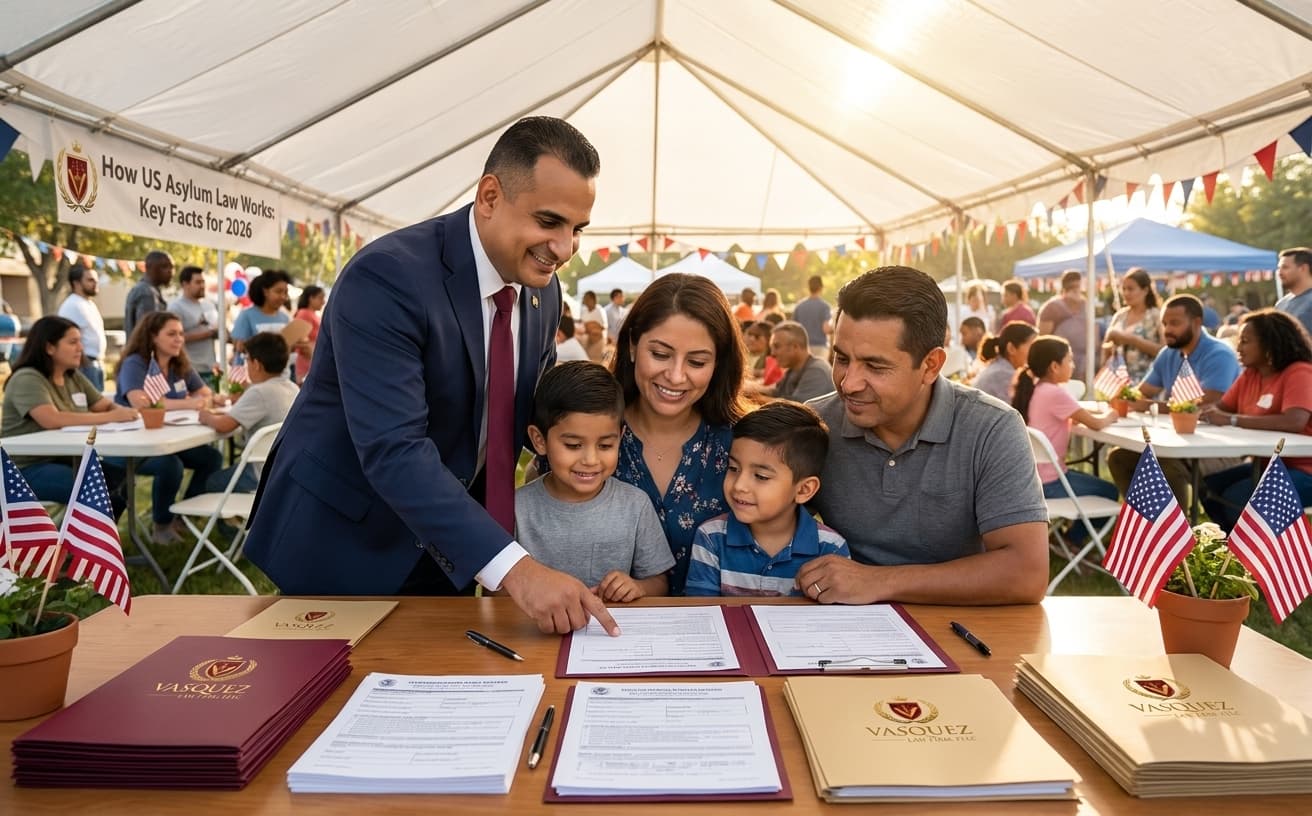
How US Asylum Law Works: Key Facts for 2026
Wondering how US asylum law works in 2026? Learn who qualifies, process times, and how to apply. Contact Vasquez Law for a free consultation today.
Published on April 29, 2026
Talk to an immigration attorney
Free call. A clear plan for your case.
Free & confidential · Se habla espanol · 24/7
Have questions? Talk to an attorney - free evaluation.
Call 1-844-967-3536Worried how the latest immigration news affects you?
Schedule a confidential case review with an immigration attorney - know exactly where you stand.
USCIS Case Status
Check your USCIS case status
Enter your receipt number and get the official status. Free, no registration.
How US Asylum Law Works: Key Facts for 2026
US asylum law provides protections for individuals fleeing persecution, but the process can be complex. In 2026, understanding the updated rules, who qualifies, and how long the U.S. asylum process takes is more important than ever for Dreamers and asylum seekers in Smithfield, NC, and Florida. This guide explains everything from eligibility to timelines, helping you navigate legal challenges with confidence.
Need help with your case? Our experienced attorneys are ready to fight for you. Se Habla Español.
Or call us now: 1-844-967-3536
Quick Answer
US asylum law protects people afraid to return home due to persecution. In 2026, the process remains strict but open. You must prove fear of harm over protected grounds and apply promptly. Processing times vary, but work permits may be available after 180 days.
- Asylum protects from persecution based on defined grounds
- Applicants must apply within one year of arriving in the U.S.
- Work permits can be issued after 180 days
- Process length varies, courts handle some cases
- Asylees may face deportation for serious crimes
Understanding US Asylum Law
Imagine fleeing your home country because of threats tied to your race or political beliefs. US asylum law offers a chance for refuge but requires careful proof of your case. The law is rooted in federal statute 8 U.S.C. § 1158, which defines who qualifies for asylum and outlines the application procedures regulated by 8 C.F.R § 1208.
In 2026, the legal framework continues to prioritize protecting genuine asylum seekers while improving processing efficiency amid high demand. Asylum seekers must demonstrate they face persecution based on race, religion, nationality, political opinion, or membership in a particular social group. This protects refugees from violence and oppression, but the burden of proof is significant.
In places like Smithfield, North Carolina, and throughout Florida, local immigration attorneys like those at Vasquez Law Firm handle the federal process with expertise. Our immigration attorneys help clients understand documentation requirements and strategy to meet federal criteria. The U.S. Citizenship and Immigration Services (USCIS) handles many affirmative asylum cases, while others may go before immigration courts within the Executive Office for Immigration Review for defensive asylum.
Learn more about our immigration services and how we help asylum seekers protect their rights under current laws.
U.S. Asylum Law History
Asylum has evolved in U.S. law over decades. Starting with the Refugee Act of 1980, the system aligned with international protection standards. Changes in policy have responded to shifting global crises and immigration trends. New rules in 2026 aim to streamline case processing and clarify eligibility requirements.
Who Qualifies for Asylum
The applicant must have a credible fear of persecution related to one of five protected grounds. Courts carefully evaluate the credibility of claims and evidence, looking for proof such as reports of human rights abuses or personal testimony of threats. Mere fear is insufficient without qualifying grounds and supporting details.
Agencies Involved in Asylum Cases
USCIS processes affirmative asylum claims filed by individuals physically present in the U.S., typically through an interview. Defensive asylum is offered to those defending removal proceedings in immigration court. This dual system requires expertise to navigate.
Don't wait to get the help you deserve. Call us now for immediate assistance.
Se Habla Español
Key Steps to Apply for Asylum
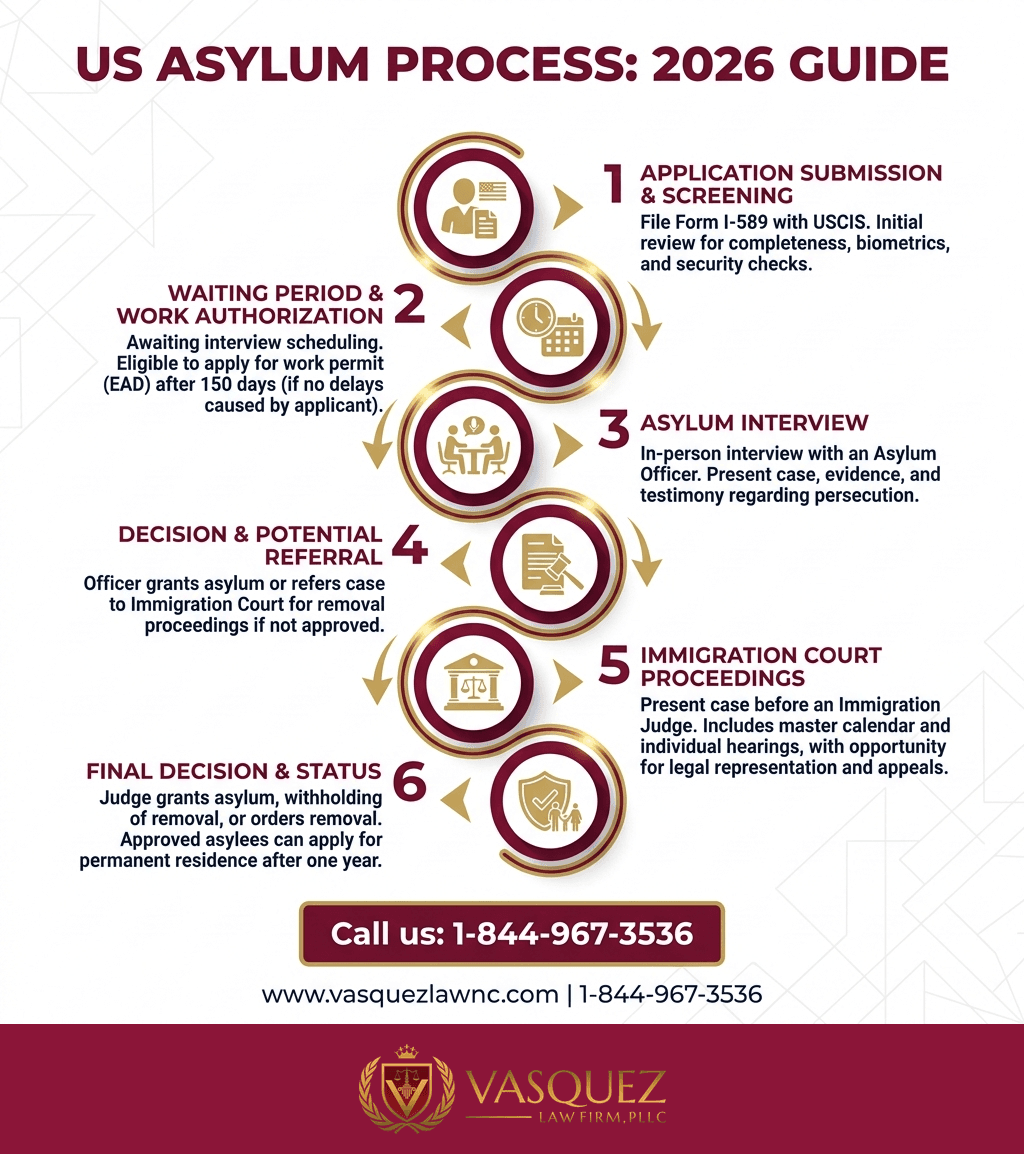
Applying for asylum involves several important steps to get your case properly heard. Missing deadlines or incomplete documents can result in denial. Here is a typical process you will face:
Step 1: File Form I-589
The core application for asylum is the Form I-589, Application for Asylum and for Withholding of Removal. It must be filed within one year of arrival in the U.S. Exceptions exist but are limited. Filing late can end eligibility.
Step 2: Attend Interview or Hearing
If you applied affirmatively, USCIS will schedule an interview to examine your claim. Defensive asylum seekers will have hearings in immigration court. Preparation with legal counsel improves success likelihood.
Step 3: Apply for Work Authorization
After 180 days from filing, you may apply for an Employment Authorization Document (EAD) to work legally. This can provide critical income while awaiting a decision.
Step 4: Asylum Decision
USCIS or the immigration judge will approve, deny, or refer your case. Denials may be appealed or reviewed, but take careful legal evaluation to pursue.
Common Mistakes to Avoid in Asylum Cases
- Missing the one-year deadline to file. Fix: File as soon as possible upon arrival.
- Failing to provide detailed evidence supporting your claims. Fix: Gather country reports, police reports, witness statements.
- Not hiring a qualified immigration attorney. Fix: Work with experienced legal counsel for strong cases.
- Giving inconsistent or contradictory statements. Fix: Prepare carefully and be truthful and consistent.
- Ignoring required updates or appointments. Fix: Stay organized and respond promptly to notices.
- Assuming the process is quick and simple. Fix: Understand timelines can be long and be patient.
- Overlooking possible legal relief options if denied. Fix: Discuss appeals or other protections with your attorney.
If you only remember one thing: Start your application early and get legal advice to avoid pitfalls that can end your chance at asylum.
Timeline and What to Expect in 2026
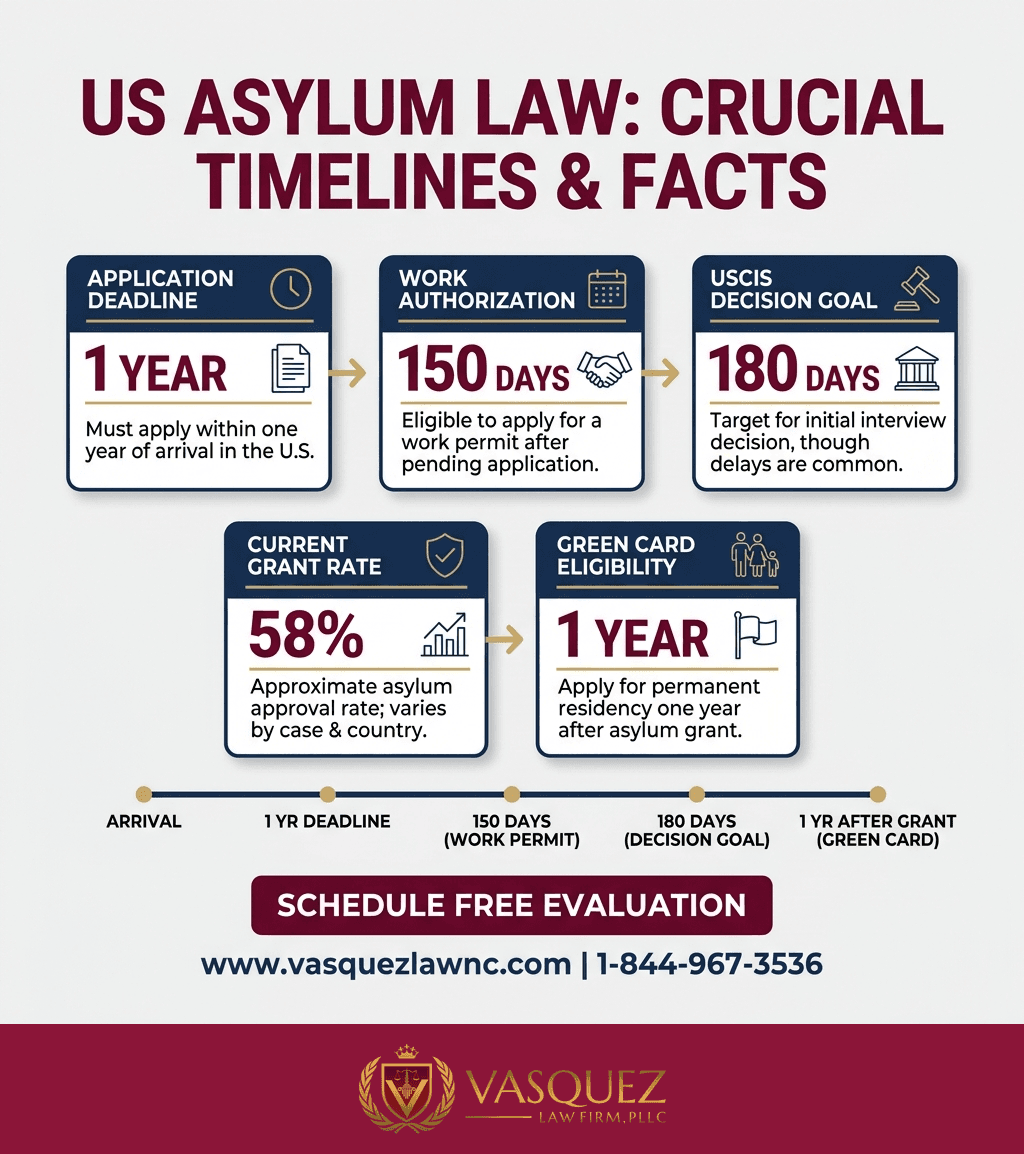
- Day 0: Arrive in U.S. or become physically present.
- Within 1 year: File form I-589 asylum application (mandatory deadline).
- 180 days post-filing: Eligible to apply for work permit.
- 6 months to 2+ years: USCIS interviews or immigration court hearings scheduled.
- Decision: Approval, referral, or denial within months or years depending on backlog and case complexity.
- Appeals: If denied, may request review or motions to reopen.
Costs and Fees: What Impacts the Price
- There is no government fee for filing Form I-589.
- Legal fees vary depending on case complexity and attorney experience.
- Costs may increase if appeals or lengthy proceedings are necessary.
- Fee waivers are available for those unable to pay.
- Additional costs include translations, medical exams, and document gathering.
NC, FL, and Nationwide Notes
North Carolina Notes
In Smithfield and across North Carolina, Vasquez Law Firm supports asylum seekers with local expertise. Immigration courts in Charlotte and Raleigh handle many cases, and local resources may be available to assist during the process.
Florida Notes
Florida hosts multiple immigration courts in cities like Miami and Orlando. The legal environment is busy with many asylum seekers. Local counsel familiar with Florida’s nuances improves chances for asylum success.
Nationwide Concepts (General Only)
US asylum law is federal, but local court procedures and processing times can vary greatly. National trends toward more efficient case handling continue in 2026, though backlogs remain substantial. Counsel experienced in multiple jurisdictions offers advantages.
When to Call a Lawyer Now
- If you just arrived and need to file your asylum application within one year.
- If you have missed the filing deadline.
- If you received a Notice to Appear for removal proceedings.
- If immigration officials detained you.
- If you fear deportation or denial.
- If you need to apply for work authorization.
- If your asylum interview or hearing is scheduled.
- If you want to appeal a denied case.
About Vasquez Law Firm
At Vasquez Law Firm, we combine compassion with aggressive representation. Our motto "Yo Peleo®" (I Fight) reflects our commitment to standing up for your rights.
- Bilingual Support: Se Habla Español - our team is fully bilingual
- Service Areas: North Carolina, Florida, and nationwide immigration services
- Experience: Over 30 years helping clients navigate complex legal matters
- Results: Thousands of successful cases across multiple practice areas
Attorney Trust and Experience
Attorney Vasquez holds a Juris Doctor degree and is admitted to practice in both the North Carolina State Bar and Florida Bar. With over 15 years of dedicated legal experience, he has built a reputation for providing personalized attention and achieving favorable outcomes for his clients.
Don't face your legal challenges alone. Our team is here to help you every step of the way.
Call today: 1-844-967-3536 | Se Habla Español
Frequently Asked Questions
What is the new rule for asylum seekers in the USA?
In 2026, the U.S. has updated asylum rules that streamline application processing and provide clearer eligibility criteria. While some changes affect how claims are reviewed, the country continues to accept asylum seekers who meet federal requirements. These updates aim to reduce backlogs and improve the fairness of asylum decisions.
Who qualifies for asylum under U.S. law?
Asylum is granted to those who prove a well-founded fear of persecution due to race, religion, nationality, political opinion, or membership in a particular social group. The applicant must demonstrate that returning to their country would threaten their safety or freedom.
How long does the U.S. asylum process take?
The asylum process time varies but can take anywhere from 6 months to several years due to backlogs. Applicants may receive work permits after 180 days of filing. The process involves interviews and sometimes court hearings before final decisions are made.
Can asylees be deported from the U.S.?
Yes, asylees can be deported if they commit serious crimes, fraudulently obtain asylum, or pose a security threat. Deportation is possible only after legal proceedings, where evidence and due process protect the individual’s rights.
Is the U.S. still accepting asylum seekers in 2026?
Yes. Despite policy changes, the United States continues to accept asylum seekers who meet eligibility criteria. Adjustments in processing aim to balance fairness with efficient case handling to manage the volume of claims.
How do asylum seekers apply for asylum from outside the U.S.?
Applying for asylum from outside the U.S. usually involves seeking refugee status through the United Nations or specific U.S. refugee programs. Applicants must register with the U.S. Refugee Admissions Program and meet eligibility requirements before they can enter the U.S. as refugees.
What benefits do asylum seekers receive in the USA?
Asylum seekers may receive work authorization, access to certain public benefits, and protection from deportation while their case is pending. Once granted asylum, they can apply for permanent residency and eventually citizenship.
What are common mistakes in applying for asylum?
Common mistakes include missing deadlines, failing to provide evidence, not using a qualified attorney, and misrepresenting facts. These errors can lead to denial or deportation. Careful preparation and legal help are essential to avoid these pitfalls.
Sources and References
- U.S. Citizenship and Immigration Services (USCIS)
- Executive Office for Immigration Review
- Legal Information Institute
Ready to take the next step? Contact Vasquez Law Firm today for a free, confidential consultation. We're committed to fighting for your rights and achieving the best possible outcome for your case.
Start Your Free Evaluation Now
Call us: 1-844-967-3536
Se Habla Español - Estamos aquí para ayudarle.


William Vasquez
Founder & CEO, Vasquez Law Firm, PLLC
William Vasquez is the founder and CEO of Vasquez Law Firm, PLLC, a results-driven firm specializing in immigration, criminal defense, personal injury, and workers' compensation. A U.S. Air Force veteran and recipient of the Joint Service Achievement Medal, William is dedicated to fiercely fighting for his clients' rights.
Related Legal Services
Need legal help? Learn more about learn about our immigration practice, or contact us for a free evaluation.
You can also visit statewide immigration attorneys for more information.