New York ICE Cooperation: What It Means for Immigrants in 2026
Wondering how New York ICE cooperation impacts immigration? Learn your rights and options in 2026. Contact Vasquez Law for a free consultation today.
Published on May 1, 2026
Talk to an immigration attorney
Free call. A clear plan for your case.
Free & confidential · Se habla espanol · 24/7
Have questions? Talk to an attorney - free evaluation.
Call 1-844-967-3536Worried how the latest immigration news affects you?
Schedule a confidential case review with an immigration attorney - know exactly where you stand.
USCIS Case Status
Check your USCIS case status
Enter your receipt number and get the official status. Free, no registration.
New York ICE Cooperation: What It Means for Immigrants in 2026
New York's approach to ICE cooperation has been a focus of debate and legislation in 2026. This affects how local law enforcement works with federal immigration agents and what immigrants need to know about their rights. Whether you are a permanent resident or a Dreamer, understanding New York ICE cooperation policies will help protect your status and guide your actions, especially if you're living in places like Orlando or North Carolina. Vasquez Law Firm offers bilingual support and experienced guidance to help you navigate these complex legal matters.
Need help with your case? Our experienced attorneys are ready to fight for you. Se Habla Español.
Or call us now: 1-844-967-3536
Quick Answer
New York ICE cooperation refers to the degree local police collaborate with federal immigration agents. In 2026, New York limits such cooperation, especially detainers without warrants. However, exceptions exist. Knowing your rights and what to do if ICE contacts you can protect your status and help avoid deportation.
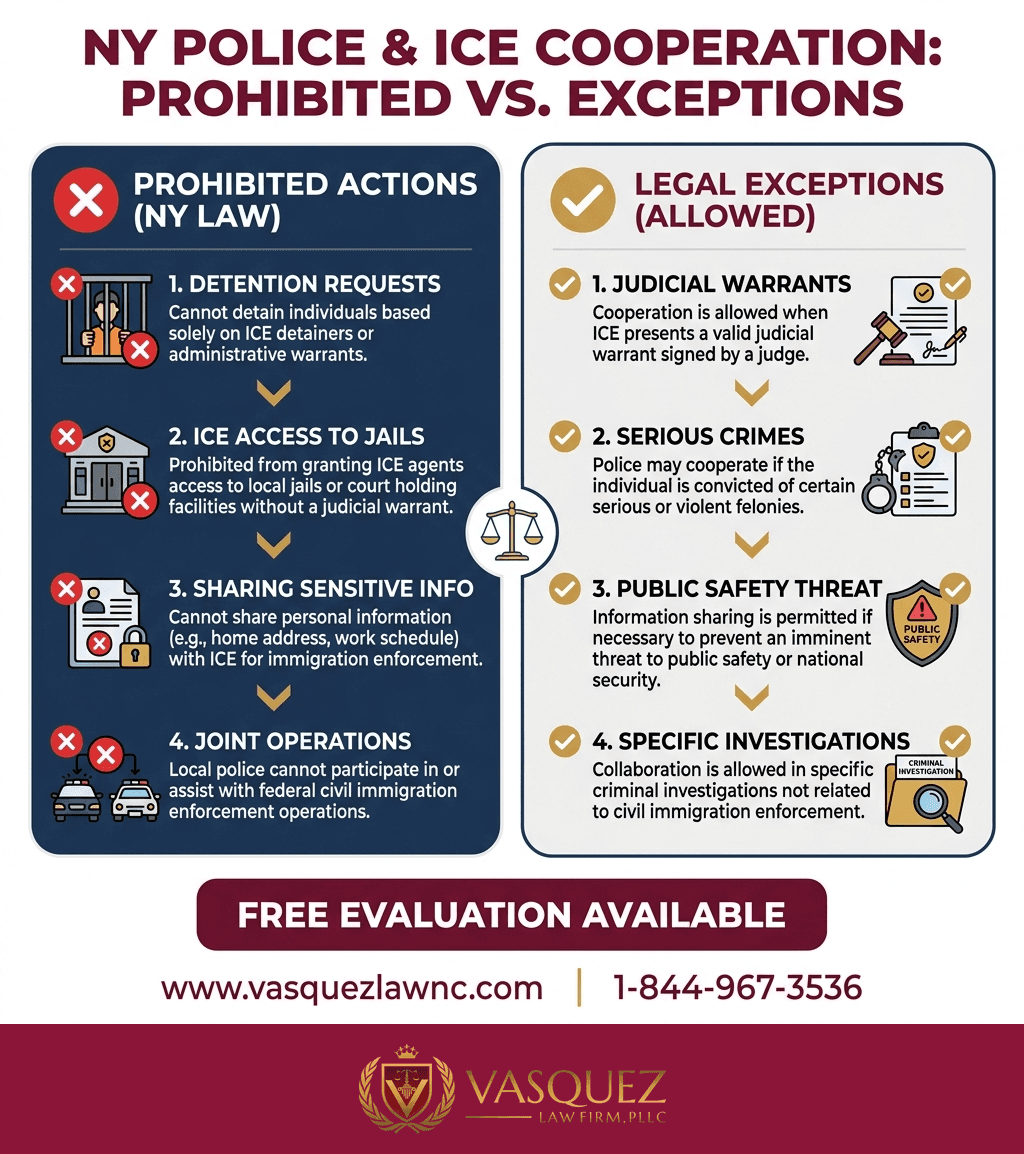
- New York law restricts police honoring ICE detainer requests without judicial warrants
- Some cooperation still happens involving serious crimes
- Immigrants have rights to remain silent and request legal representation
- Permanent residents can be deported under certain conditions
- Knowledge of local and federal policies is essential to stay protected
Understanding New York ICE Cooperation
In 2026, New York State continues to navigate the balance between local law enforcement and federal immigration agents from ICE (Immigration and Customs Enforcement). Police departments generally do not cooperate fully with ICE to avoid detaining immigrants for civil immigration violations alone. For example, New York’s 2019 laws prohibit many of the informal agreements police may have had with ICE agents, limiting actions such as honoring ICE detainers unless a judicial warrant is presented.
This means local police in New York do not routinely act as immigration agents. The policies aim to protect immigrant communities by restricting police-ICE collaboration. However, cooperation may occur in cases involving serious crimes, terrorism, or where federal warrants exist.
For immigrants, the key takeaway is that New York ICE cooperation policies provide some safeguards but do not eliminate ICE enforcement altogether. It is important to know when police may or may not be working with immigration agents and what legal protections apply to you.
Living in other states such as North Carolina or Florida, which have different laws regarding ICE cooperation, the rules can be more strict or permissive. For those in Orlando or North Carolina, understanding these differences is just as important as knowing New York policies.
Our immigration services team at Vasquez Law Firm can help clarify what these laws mean for your case whether you live in Florida, North Carolina, or any state.
When Do Police Cooperate Legally with ICE?
Police may cooperate with ICE when there is a judicial warrant or a signed detainer approved by the court. Cooperation is often limited to cases involving criminal suspects or national security risks. Informal or voluntary cooperation without proper legal authority is generally banned in New York.
Deportation Risks Under Cooperation Policies
Even under New York’s restrictions, ICE may arrest and deport individuals. This includes undocumented immigrants as well as permanent residents who have committed deportable offenses. Knowing your rights and having legal representation is critical to avoid wrongful detention or deportation.
How NY Lawmakers Reach an Impasse Over Police-ICE
Legislators in New York have debated for years about how much local police should cooperate with ICE. While some push for stricter sanctuary protections, others advocate for some level of collaboration for public safety. As of 2026, these debates continue and have led to partial compromises but no full repeal of cooperation rules. This impasse affects how enforcement is carried out on the ground.
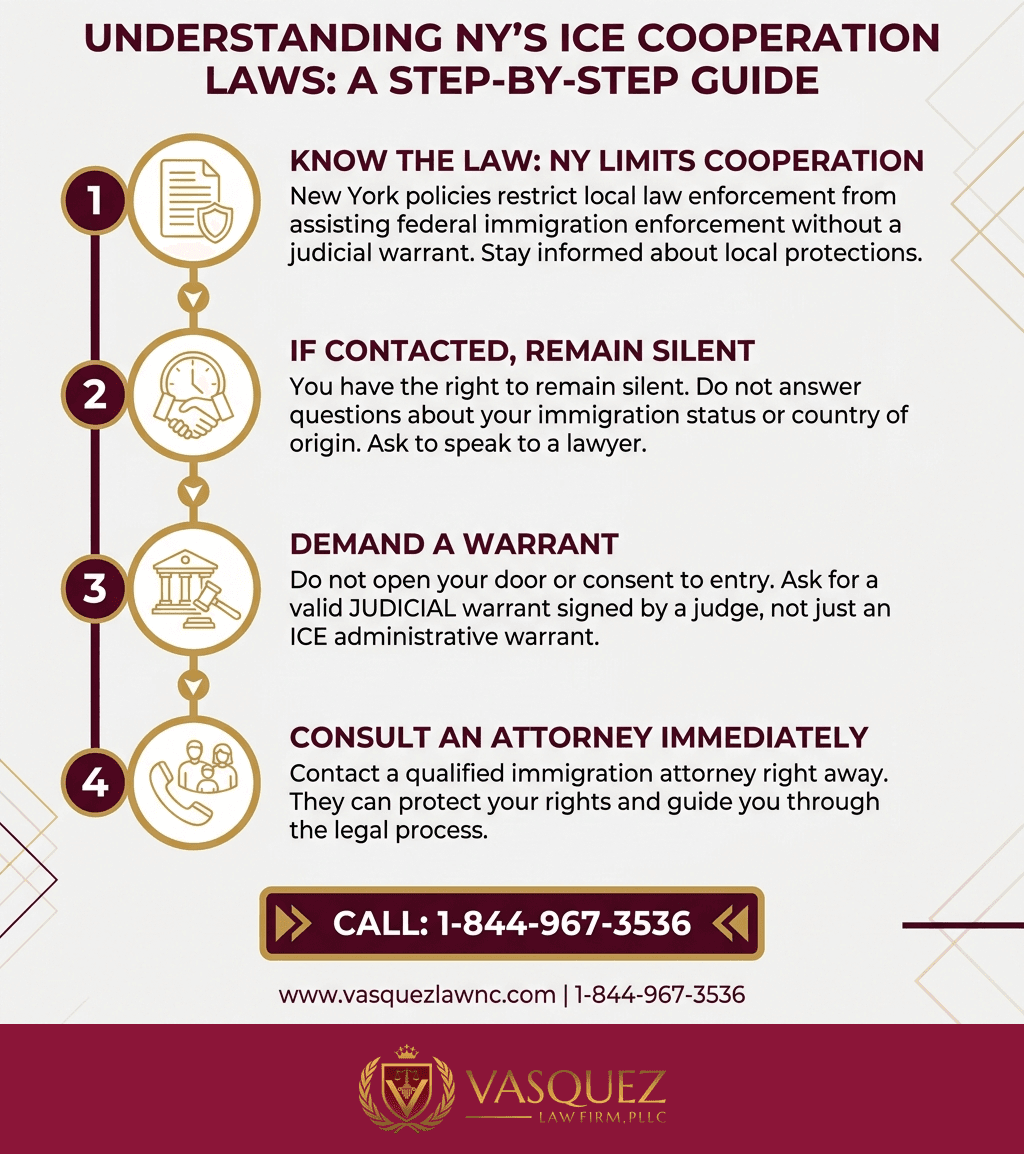
Key Steps to Take if Contacted by ICE
Imagine you are stopped by someone claiming to be an ICE agent or a police officer cooperating with ICE. What should you do? Here is a step-by-step guide on how to protect your rights:
- Stay Calm and Polite: Do not run or resist. Cooperation prevents escalation.
- Ask for Identification: Request to see the ICE agent’s badge and identification.
- Do Not Answer Questions Without a Lawyer: You have the right to remain silent. Politely say you want to speak to an attorney before answering.
- Do Not Sign Documents: Never sign any paperwork without your lawyer’s advice.
- Document the Encounter: If safe, take notes of names, badge numbers, and the time and place of interaction.
- Contact an Immigration Lawyer Immediately: Time is critical in immigration cases.
Our Attorney Vasquez, licensed in North Carolina and Florida, offers experienced legal counsel to help you navigate encounters with ICE. If you live in Orlando or North Carolina, we are ready to assist you.
Don't wait to get the help you deserve. Call us now for immediate assistance. Se Habla Español.
Documents and Evidence Checklist
- Any official notices or detainers received
- Identification and immigration papers (passport, Green Card)
- Receipts or records of any encounters with ICE or police
- Contact information of witnesses or anyone present during encounters
- Any communication from government agencies
Timeline and What to Expect During ICE Encounters
- Initial Contact: ICE or police may approach for questioning.
- Detention or Arrest: If detained, agents must follow legal procedures including notification.
- Removal Proceedings: The Executive Office for Immigration Review (EOIR) initiates hearing schedules within weeks.
- Court Hearings: You will have an opportunity to defend your case or apply for relief such as asylum or adjustment of status.
- Decision: Immigration judges issue rulings. Appeals are possible.
Throughout these steps, having an attorney is vital. EOIR provides official immigration court reviews as described on EOIR’s website.
Costs and Fees: What Impacts the Price of Legal Help
- Complexity of your immigration case or family situation
- Whether removal or defense is involved
- Legal filings and application fees require budgeting
- Experience level of your attorney can influence fees
- Location of representation (North Carolina, Florida, or nationwide)
Vasquez Law Firm offers clear fee structures and options for free case evaluations to help plan your case effectively.
Common Mistakes and How to Avoid Them
- Signing documents without legal advice — always consult first
- Talking to ICE agents without representation — exercise your right to remain silent
- Not knowing your local laws on ICE cooperation — stay informed about New York, North Carolina, and Florida differences
- Ignoring notices or missing court dates — attend all proceedings to avoid deportation by default
- Believing sanctuary laws fully protect you — ICE can still arrest under certain exceptions
- Failing to gather supporting evidence or documents before emergencies
- Sharing information on social media that can be used against you
If you only remember one thing: Always seek legal advice immediately if you have contact with ICE or local police cooperating with immigration enforcement.
NC, FL, and Nationwide Notes
North Carolina Notes
North Carolina law enforcement cooperates more fully with ICE compared to New York. Detainers and immigration arrests are common. Immigrants in NC should prepare for possible encounters and know local rights, available defenses, and legal options.
Florida Notes
Florida also tends to cooperate with ICE, with many operations targeting undocumented individuals. Orlando residents should be aware of local enforcement patterns and consult an immigration lawyer to protect their status.
Nationwide Concepts (General Only)
Nationally, ICE operates under federal laws outlined in 8 U.S.C. §§ 1226 and 1252, governing detention and removal proceedings. Policies vary state to state, but certain rights to due process and legal counsel are guaranteed federally.
When to Call a Lawyer Now
- If you are detained or questioned by ICE
- If you receive an ICE notice or detainer
- If you are facing deportation or removal hearings
- If police in your area cooperate with ICE and you have questions
- If you are a permanent resident facing criminal charges that could affect your immigration status
- If you want help to prepare legal protections or apply for relief
About Vasquez Law Firm
At Vasquez Law Firm, we combine compassion with aggressive representation. Our motto "Yo Peleo®" (I Fight) reflects our commitment to standing up for your rights.
- Bilingual Support: Se Habla Español - our team is fully bilingual
- Service Areas: North Carolina, Florida, and nationwide immigration services
- Experience: Over 30 years helping clients navigate complex legal matters
- Results: Thousands of successful cases across multiple practice areas
Attorney Trust and Experience
Attorney Vasquez holds a Juris Doctor degree and is admitted to practice in both the North Carolina State Bar and Florida Bar. With over 30 years of dedicated legal experience, he has built a reputation for providing personalized attention and achieving favorable outcomes for his clients.
Don't wait to get the help you deserve. Call us now for immediate assistance. Se Habla Español.
Frequently Asked Questions
Does NYC cooperate with ICE?
New York City generally limits cooperation with ICE to protect immigrant safety, especially from civil detainers without warrants. Some cooperation happens in criminal cases. Knowing local policies helps immigrants in New York and elsewhere understand their rights.
Can ICE legally ask for ID?
ICE can ask for ID but cannot force you to provide it without reasonable suspicion. You have rights that allow you to remain silent and consult a lawyer before answering. Understand your rights to avoid unnecessary complications.
Can ICE deport permanent residents?
Yes. Permanent residents can be deported if convicted of crimes that breach immigration laws or if they violate terms of their residency. Timely legal action is critical to protect your rights and status.
Can you just call ICE on someone?
You may report suspected immigration violations to ICE, but misuse can harm people and communities. It is advisable to seek legal guidance before involving immigration enforcement in any situation.
What does it mean when NY lawmakers reach an impasse over police-ICE cooperation?
An impasse means lawmakers cannot agree on the extent of police collaboration with ICE, affecting enforcement policies and immigrant protections. This situation can delay changes but does not end existing rules.
Are there laws banning immigration agents from cooperating with police in New York?
Yes, New York restricts ICE cooperation with police, especially requiring warrants for detainers. These laws aim to protect immigrants from unjust enforcement actions.
How can ICE cooperation policies affect immigrants in states like Florida or North Carolina?
Florida and North Carolina have different approaches, often cooperating more with ICE. This means immigrants in those states face different risks, making it important to know local laws and have legal support.
What should I do if contacted by ICE under New York cooperation laws?
Remain calm, do not answer questions without an attorney, ask for ID, do not sign documents, and contact a trusted immigration lawyer immediately to protect your rights and status.
Sources and References
- U.S. Citizenship and Immigration Services (USCIS)
- Executive Office for Immigration Review
- Legal Information Institute
Take the first step toward justice today. Our team is standing by to help you. Se Habla Español.
Start Your Free Evaluation Now
Call us: 1-844-967-3536
Se Habla Español - Estamos aquí para ayudarle.


William Vasquez
Founder & CEO, Vasquez Law Firm, PLLC
William Vasquez is the founder and CEO of Vasquez Law Firm, PLLC, a results-driven firm specializing in immigration, criminal defense, personal injury, and workers' compensation. A U.S. Air Force veteran and recipient of the Joint Service Achievement Medal, William is dedicated to fiercely fighting for his clients' rights.
Related Legal Services
Need legal help? Learn more about speak with an immigration lawyer, or contact us for a free evaluation.
You can also visit North Carolina immigration law firm for more information.