What the Tennessee Sanctuary Law Means for Immigrants in 2026
Is Tennessee's sanctuary law unconstitutional in 2026? Understand its impact on immigrants and local officials. Contact Vasquez Law for a free consultation.
Published on February 27, 2026
Talk to an immigration attorney
Free call. A clear plan for your case.
Free & confidential · Se habla espanol · 24/7
Have questions? Talk to an attorney - free evaluation.
Call 1-844-967-3536Worried how the latest immigration news affects you?
Schedule a confidential case review with an immigration attorney - know exactly where you stand.
What the Tennessee Sanctuary Law Means for Immigrants in 2026
The question of whether the Tennessee sanctuary law is unconstitutional has significant implications for immigrants, local governments, and law enforcement across the state. In 2026, recent legal challenges have brought this issue to the forefront, impacting how cities and counties can interact with federal immigration authorities. Understanding these developments is crucial for anyone living in or considering moving to Tennessee, as well as for those in North Carolina and Florida where similar debates may arise. Vasquez Law Firm is here to help you navigate these complex legal waters.
Need help with your case? Our experienced attorneys are ready to fight for you. Se Habla Español.
Schedule Your Free Case Evaluation
Or call us now: 1-844-967-3536
Quick Answer
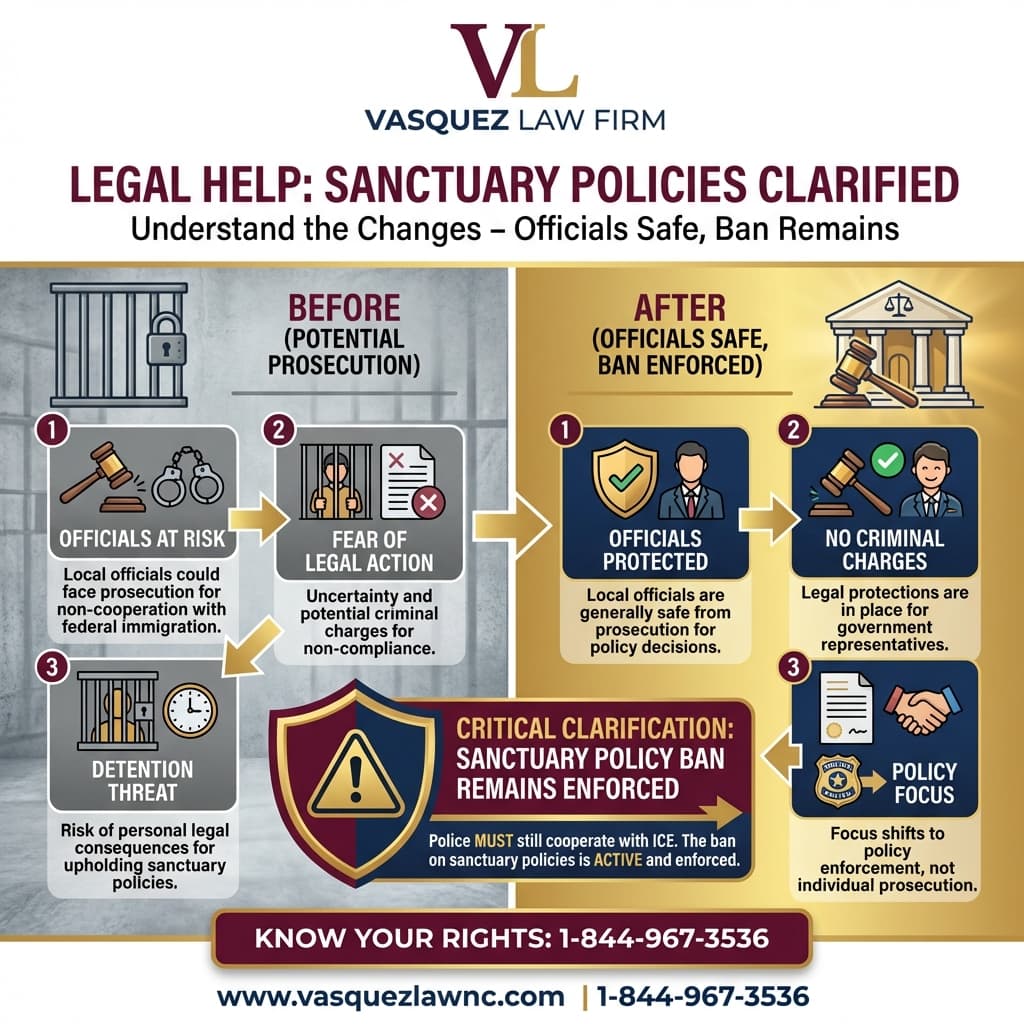
As of 2026, a federal court has ruled that Tennessee's law punishing local officials for adopting "sanctuary" policies is unconstitutional. This decision prevents the state from imposing penalties on cities or counties that choose not to fully cooperate with federal immigration enforcement, thereby impacting the legal landscape for immigrants in Tennessee.
- The law, initially passed in 2024, aimed to prohibit local sanctuary policies.
- A federal judge deemed it unconstitutional, citing First Amendment and due process concerns.
- This ruling offers local governments more autonomy in their interactions with immigration authorities.
- Impacts immigrant communities by potentially reducing fear of local law enforcement.
- The state may appeal the decision, leading to ongoing legal battles.
- This ruling does not create a "sanctuary city" but removes the state's ability to punish such policies.
Understanding the Tennessee Sanctuary Law Ruling
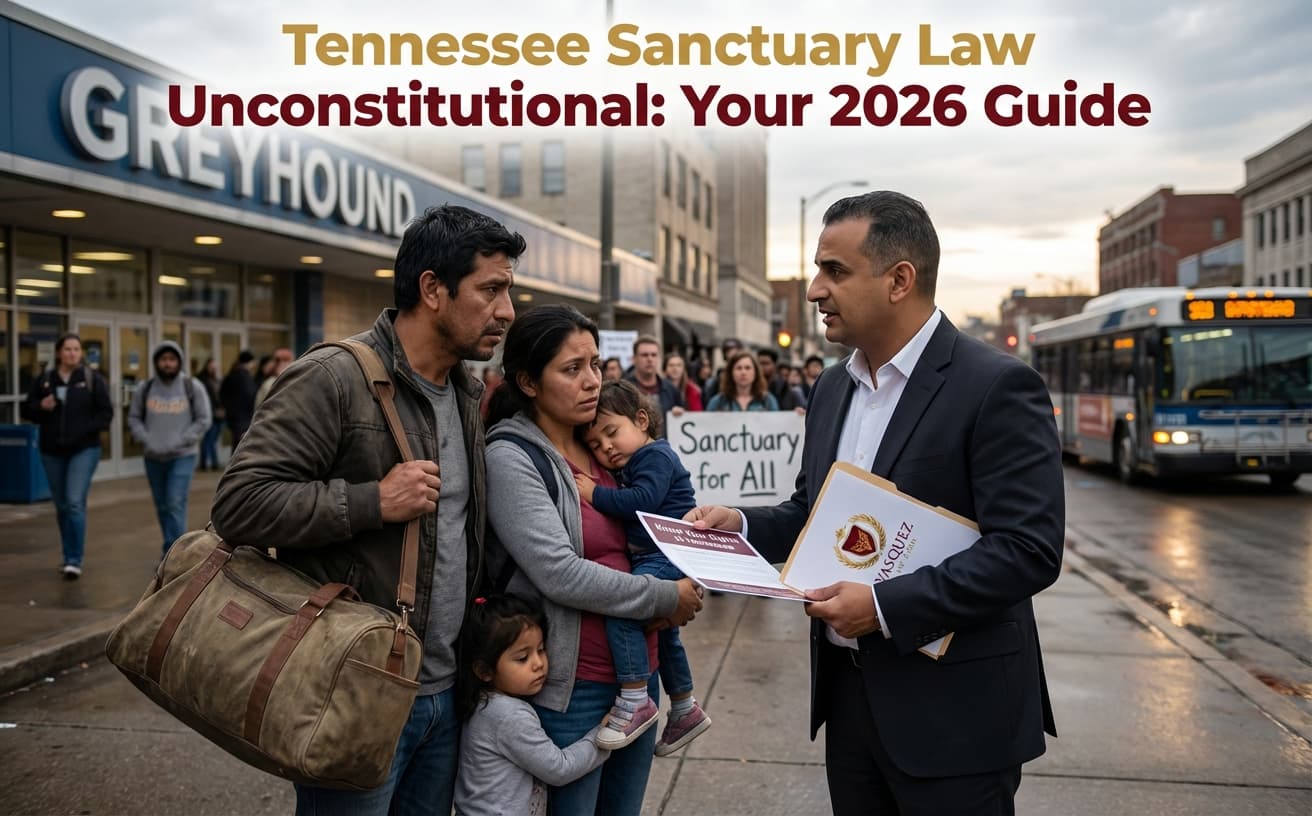
The recent federal court decision declaring the Tennessee sanctuary law unconstitutional marks a significant moment in the ongoing national debate over immigration enforcement at the local level. This law, passed by the Tennessee legislature, sought to prevent local governments from adopting policies that limit cooperation with federal immigration agencies, often referred to as "sanctuary city" policies. The ruling specifically targeted the provisions that threatened local officials with felony charges for voting on or adopting such policies.
The court's decision, issued in 2026, found that the state law infringed upon the First Amendment rights of free speech and association, as well as due process protections for local officials. This means that local governments in Tennessee now have greater freedom to determine their own level of cooperation with federal immigration enforcement without fear of state-imposed criminal penalties. This legal development is particularly relevant for immigrant communities, as it may reduce the likelihood of local police involvement in federal immigration matters, fostering greater trust between immigrants and local authorities.
While the ruling does not mandate that Tennessee cities become "sanctuary cities," it removes the state's ability to punish them for doing so. This distinction is important. It grants local municipalities the discretion to decide how they allocate their resources and whether they wish to dedicate them to federal immigration enforcement. This newfound autonomy allows for a more nuanced approach to public safety and community relations, potentially leading to varied policies across different cities and counties within Tennessee. The full implications of this ruling are still unfolding, but it undeniably shifts power dynamics in favor of local control over certain aspects of immigration policy, which could affect similar discussions in states like North Carolina and Florida.
Historical Context and Legal Challenges to Sanctuary Policies
The concept of "sanctuary" policies has a long history in the United States, evolving from religious-based movements to municipal ordinances. These policies generally aim to limit local law enforcement's involvement in federal immigration matters, often by prohibiting officers from inquiring about immigration status or from holding individuals solely based on immigration detainers without a judicial warrant. Proponents argue that such policies build trust between immigrant communities and local police, encouraging crime reporting and cooperation, which ultimately enhances public safety for everyone. Opponents, however, contend that these policies undermine federal immigration law and create safe havens for undocumented immigrants.
Tennessee's attempt to counter these local policies with a statewide ban is not unique. Many states have passed laws to prohibit or penalize "sanctuary cities," leading to numerous legal battles nationwide. These cases often involve fundamental constitutional questions, including states' rights versus federal authority, the separation of powers, and individual liberties. The legal challenge to the Tennessee sanctuary law unconstitutional ruling centered on whether a state can compel local governments to enforce federal law, particularly when it might violate constitutional rights or local autonomy. Courts have frequently grappled with the Tenth Amendment, which reserves powers not delegated to the federal government to the states or the people, and the Supremacy Clause, which establishes federal law as supreme.
The specific legal arguments against the Tennessee law included claims that it violated the First Amendment by chilling speech and association, and the Fourteenth Amendment's due process clause by imposing criminal penalties on officials for legislative actions. The federal court's decision in 2026 highlights the judiciary's role in balancing these complex constitutional principles. This ruling provides a precedent that could influence similar cases in other states, reinforcing the idea that local governments possess a degree of sovereignty in their policy-making, even on issues intertwined with federal authority. Understanding this historical and legal backdrop is essential for grasping the significance of the Tennessee ruling and its potential ripple effects.
Impact on Immigrant Communities and Local Officials
The ruling that the Tennessee sanctuary law is unconstitutional has immediate and profound implications for both immigrant communities and local government officials within the state. For immigrants, particularly those who are undocumented, the decision offers a sense of relief and potentially reduces the pervasive fear of interaction with local law enforcement. When local police are not compelled to act as immigration agents, immigrants may be more willing to report crimes, seek medical attention, or engage in community life without fear of deportation. This can lead to safer communities overall, as it fosters trust and open communication, which is crucial for effective policing and public health initiatives.
For local officials, the ruling restores a significant degree of local control and autonomy. Mayors, city council members, and county commissioners can now consider and enact policies that they believe best serve their constituents, without the threat of felony charges or other state-imposed penalties. This allows for tailored approaches to public safety and resource allocation, reflecting the unique needs and values of individual municipalities. It also means that local officials are no longer placed in the difficult position of choosing between state mandates and their community's well-being or constitutional principles. This legal clarity empowers them to make decisions that align with local priorities.
However, it is important to note that this ruling does not abolish federal immigration enforcement in Tennessee. Agencies like ICE (Immigration and Customs Enforcement) and USCIS (U.S. Citizenship and Immigration Services) continue to operate within the state. The decision simply means that local law enforcement agencies are not legally obligated by the state to assist in these federal efforts. Immigrants should still exercise caution and seek legal advice regarding their rights and status. The Vasquez Law Firm, serving clients in Smithfield, North Carolina, Florida, and nationwide, understands these nuances and can provide essential guidance on immigration matters, even as the legal landscape continues to evolve. Staying informed and seeking professional counsel is always the best approach.
What to Expect Moving Forward and Potential Appeals
While the federal court's ruling declaring the Tennessee sanctuary law unconstitutional is a significant victory for proponents of local autonomy and immigrant rights, the legal battle may not be over. It is highly probable that the State of Tennessee will appeal this decision to a higher federal court, such as the U.S. Court of Appeals for the Sixth Circuit. Such an appeal would prolong the legal uncertainty surrounding the law and could potentially lead to a different outcome. Appeals processes can be lengthy, often taking months or even years to resolve, during which time the current ruling typically remains in effect.
If the state appeals, the appellate court will review the lower court's decision, focusing on whether the judge correctly applied constitutional law. Depending on the outcome at the appellate level, the case could even be taken to the U.S. Supreme Court, especially if there are conflicting rulings from different circuit courts on similar state laws. This multi-layered judicial process means that the legal status of "sanctuary" policies in Tennessee could continue to evolve. For individuals and communities affected, this ongoing legal uncertainty underscores the importance of staying informed and seeking expert legal guidance.
In the interim, local governments in Tennessee are now free to consider and adopt policies that limit cooperation with federal immigration authorities without fear of state criminal penalties. This period of legal clarity, however temporary, allows communities to implement policies that they believe best serve their residents. Immigrants should continue to consult with legal professionals to understand their rights and how federal immigration laws are enforced, regardless of local policies. Vasquez Law Firm remains vigilant in monitoring these developments and is prepared to assist clients in North Carolina, Florida, and nationwide with any immigration-related concerns, ensuring they receive the most current and accurate legal advice available in 2026. Understanding U.S. immigration law changes in 2026 is essential.
Comparison with North Carolina and Florida Immigration Laws
The legal landscape surrounding immigration and local enforcement varies significantly from state to state. While Tennessee grapples with its unconstitutional sanctuary law, it's important to compare this situation with the approaches taken in North Carolina and Florida, states where Vasquez Law Firm also serves clients. Both North Carolina and Florida have passed laws that generally require local law enforcement to cooperate with federal immigration authorities, but the specifics and legal challenges differ.
North Carolina Immigration Laws
In North Carolina, state law generally prohibits local governments from enacting "sanctuary" policies and requires local law enforcement to honor immigration detainers from ICE. For example, N.C. Gen. Stat. § 162-62 mandates cooperation with federal immigration authorities. This means that if an individual is arrested for a state crime and ICE issues a detainer, local authorities are generally expected to hold that person for up to 48 hours to allow ICE to take custody. While there have been debates and local resistance, North Carolina's stance has largely remained one of mandatory cooperation. This contrasts sharply with the recent Tennessee ruling, which restores local discretion. For residents in Smithfield and across North Carolina, understanding these specific state requirements is vital for anyone facing immigration-related issues.
Florida Immigration Laws
Florida has also taken a strong stance against "sanctuary" policies. In 2019, Florida enacted Senate Bill 168, codified in Florida Statute § 908.105, which broadly prohibits sanctuary policies and requires state and local governmental entities to cooperate with federal immigration enforcement. This law mandates that local agencies use their best efforts to support the enforcement of federal immigration law and respond to detainer requests. The penalties for non-compliance can include fines and removal of officials from office. This aggressive approach makes Florida one of the strictest states regarding immigration enforcement at the local level, providing a stark contrast to the outcome of the Tennessee sanctuary law unconstitutional case. Our firm assists clients throughout Florida in navigating these strict legal requirements.
Nationwide Immigration Concepts (General Only, Rules Vary)
Across the United States, the debate over sanctuary policies continues, with a patchwork of state and local laws. Some states have actively embraced sanctuary policies, while others, like North Carolina and Florida, have enacted strict anti-sanctuary laws. The federal government, through agencies like USCIS and ICE, enforces immigration laws uniformly across the nation, but the degree of local assistance varies. The legal challenges often revolve around the Tenth Amendment, which addresses states' rights, and the Supremacy Clause, which establishes federal law as supreme. The Tennessee ruling contributes to a complex and evolving body of law that highlights the tension between federal authority and local autonomy. For nationwide immigration concerns, the federal framework is paramount, but local policies can significantly affect day-to-day interactions. You can learn more about our immigration services.
When to Call an Immigration Lawyer Now
The complexities surrounding immigration laws, particularly with evolving state and local policies, make it essential to seek legal counsel promptly. If you are an immigrant in Tennessee, North Carolina, Florida, or anywhere else in the U.S., and you have questions about your rights or legal status, do not hesitate to contact an experienced immigration attorney. The ruling on the Tennessee sanctuary law unconstitutional, while a positive step for some, does not eliminate the need for expert advice.
- You have been detained by ICE or local law enforcement: Immediate legal intervention is critical to protect your rights and explore options.
- You have received a Notice to Appear (NTA): This signifies the start of removal proceedings, and you need legal representation.
- You are unsure about how local policies affect your daily life: An attorney can clarify your rights and responsibilities.
- You are considering applying for a visa, Green Card, or citizenship: Navigating the application process correctly is crucial to avoid delays or denials.
- You have a family member facing deportation: Time is of the essence in these situations.
- You have concerns about your legal status due to changing laws: Stay informed and get personalized advice.
- You are a victim of a crime and fear reporting it due to immigration status: An attorney can help you understand U-visa or T-visa options.
- You are a local official seeking guidance on compliance: Legal advice can help your municipality navigate state and federal mandates.
Vasquez Law Firm is dedicated to providing aggressive and compassionate representation for all immigration matters. We understand the urgency of your situation and are ready to fight for you. Learn about ICE arrests in Tallahassee for more specific local information.
About Vasquez Law Firm
At Vasquez Law Firm, we combine compassion with aggressive representation. Our motto "Yo Peleo" (I Fight) reflects our commitment to standing up for your rights. We understand the stress and uncertainty that come with legal challenges, especially in complex immigration matters. Our dedicated team is here to provide the support and expert legal guidance you need, ensuring your voice is heard and your rights are protected.
- Bilingual Support: Se Habla Español - our team is fully bilingual, ensuring clear communication and understanding for all our clients.
- Service Areas: We proudly serve clients in North Carolina, Florida, and offer comprehensive immigration services nationwide. Whether you are in Smithfield or Tallahassee, we are here to help.
- Experience: With over 15 years of dedicated experience, Attorney Vasquez has a proven track record of helping clients navigate complex legal matters and achieving favorable outcomes.
- Results: We have successfully handled thousands of cases across multiple practice areas, demonstrating our commitment to fighting tirelessly for justice.
Attorney Trust and Experience
Attorney Vasquez holds a Juris Doctor degree and is admitted to practice in both the North Carolina State Bar and Florida Bar. With over 15 years of dedicated legal experience, he has built a reputation for providing personalized attention and achieving favorable outcomes for his clients. He is a veteran-founded leader who brings a unique perspective and unwavering commitment to every case. Our firm is built on a foundation of trust, integrity, and a relentless pursuit of justice for those we represent. Learn more about our team.
Don't face your legal challenges alone. Our team is here to help you every step of the way.
Call today: 1-844-967-3536 | Se Habla Español
Frequently Asked Questions
What does it mean for the Tennessee sanctuary law to be unconstitutional?
It means a federal court has ruled that the state law punishing local officials for adopting "sanctuary" policies violates the U.S. Constitution, specifically the First and Fourteenth Amendments. This prevents the state from imposing penalties on cities or counties that choose not to fully cooperate with federal immigration enforcement. The ruling gives local governments more autonomy in their immigration-related decisions, but it does not mandate specific sanctuary policies.
Will this ruling make Tennessee a "sanctuary state"?
No, this ruling does not automatically make Tennessee a "sanctuary state." It simply removes the state's ability to punish local governments for adopting policies that limit their cooperation with federal immigration authorities. Individual cities or counties now have the discretion to decide whether to implement such policies without state interference, but they are not required to do so. Federal immigration law still applies across the state.
How does this impact immigrants living in Tennessee?
For immigrants in Tennessee, this ruling may reduce the fear of local law enforcement involvement in federal immigration matters. It could foster greater trust between immigrant communities and local police, potentially encouraging crime reporting and access to public services. However, federal immigration agencies like ICE still operate, and immigrants should remain informed about their rights and seek legal counsel for any immigration concerns.
What are "sanctuary policies" for local governments?
Sanctuary policies are local government ordinances or practices that limit cooperation with federal immigration enforcement. This can include prohibiting local police from asking about immigration status, refusing to hold individuals on immigration detainers without a judicial warrant, or declining to use local resources to enforce federal immigration laws. The goal is often to build trust within immigrant communities and focus local law enforcement on state and local crimes.
Is this ruling final, or can it be appealed?
This ruling is not necessarily final. The State of Tennessee is likely to appeal the federal court's decision to a higher court, such as the U.S. Court of Appeals for the Sixth Circuit. The appeals process can be lengthy, and the legal status of the law could change again. While the appeal is pending, the current ruling, which declares the law unconstitutional, generally remains in effect. Vasquez Law Firm monitors these developments closely.
How does Tennessee's situation compare to North Carolina or Florida?
Tennessee's situation now differs significantly from North Carolina and Florida. Both NC and FL have state laws that generally require local law enforcement to cooperate with federal immigration authorities and prohibit "sanctuary" policies. The Tennessee ruling restores local discretion, contrasting with the stricter, mandatory cooperation laws in North Carolina and Florida. This highlights the varied approaches states take on immigration enforcement.
What should local officials in Tennessee do now?
Local officials in Tennessee should consult with their legal counsel to understand the full implications of this ruling for their specific municipality. They now have the discretion to consider and adopt policies that align with local priorities regarding immigration enforcement without fear of state-imposed criminal penalties. It's crucial to review existing policies and determine if any changes are desired or necessary in light of the court's decision.
Does this ruling affect federal immigration enforcement operations?
This ruling primarily affects the relationship between the State of Tennessee and its local governments regarding immigration enforcement. It does not directly stop federal immigration enforcement operations by agencies like ICE or USCIS. Federal agents can still conduct arrests and enforcement actions in Tennessee. However, local law enforcement is no longer compelled by state law to assist them, which can indirectly impact the scope and frequency of certain federal operations.
Where can I find reliable information on my immigration rights in 2026?
For reliable information on your immigration rights in 2026, it's best to consult directly with an experienced immigration attorney. Organizations like USCIS and the Executive Office for Immigration Review (EOIR) also provide federal guidelines. Be wary of unofficial sources or advice from non-legal professionals. Vasquez Law Firm offers free case evaluations to help you understand your specific situation and rights under current immigration laws.
Can I still be deported if I live in a city with a sanctuary policy?
Yes, even if you live in a city with a sanctuary policy, you can still be subject to deportation. Sanctuary policies primarily limit local law enforcement's involvement in federal immigration matters. They do not prevent federal immigration agencies like ICE from apprehending and deporting individuals. Your immigration status and any violations of federal immigration law are still grounds for removal, regardless of local policies. Always consult an attorney.
Sources and References
- U.S. Citizenship and Immigration Services (USCIS)
- Executive Office for Immigration Review (EOIR)
- Florida Statute § 908.105
- North Carolina General Statute § 162-62
Ready to take the next step? Contact Vasquez Law Firm today for a free, confidential consultation. We're committed to fighting for your rights and achieving the best possible outcome for your case.
Start Your Free Case Evaluation Now
Call us: 1-844-967-3536
Se Habla Español - Estamos aquí para ayudarle.


William Vasquez
Founder & CEO, Vasquez Law Firm, PLLC
William Vasquez is the founder and CEO of Vasquez Law Firm, PLLC, a results-driven firm specializing in immigration, criminal defense, personal injury, and workers' compensation. A U.S. Air Force veteran and recipient of the Joint Service Achievement Medal, William is dedicated to fiercely fighting for his clients' rights.
Related Legal Services
Need legal help? Learn more about speak with an immigration lawyer, or contact us for a free evaluation.
You can also visit our North Carolina immigration practice for more information.