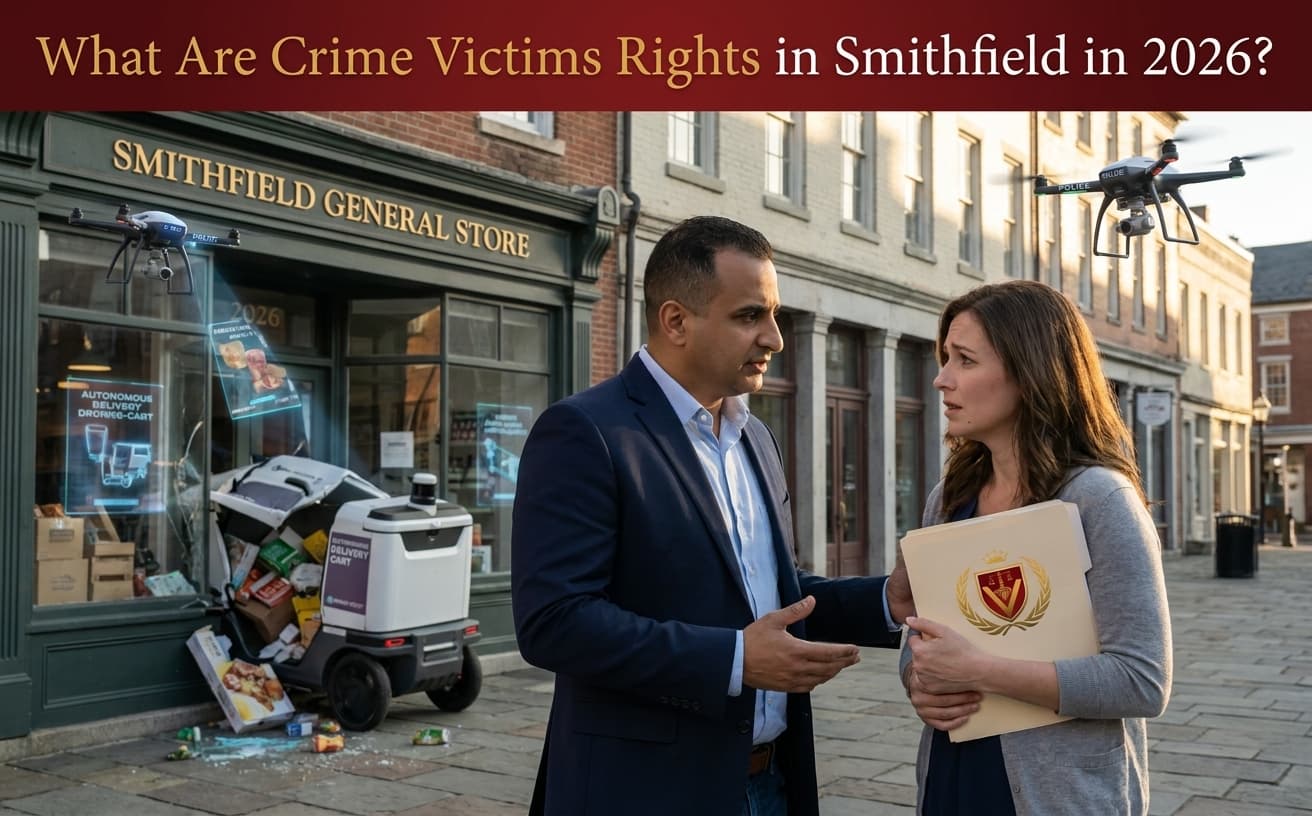
What Are Crime Victims Rights in Smithfield in 2026?
Learn about crime victims rights and how to protect them in Smithfield. Find out how to get help and pursue justice. Call Vasquez Law today.
Published on April 26, 2026
Protect your record and your freedom
Free, confidential review. 24/7.
Free & confidential · Se habla espanol · 24/7
Have questions? Talk to an attorney - free evaluation.
Call 1-844-967-3536Protect Your Record and Your Freedom
A confidential case review - available 24/7 for emergencies.
What Are Crime Victims Rights in Smithfield in 2026?
If you or a loved one has been harmed by a crime, knowing your crime victims rights is crucial in 2026. These rights ensure victims have a voice in the criminal justice process and access to necessary information and support. In Smithfield and across North Carolina and Florida, laws like the Crime Victims Rights Act protect those affected by crime. This article explains what rights victims should have, how to assert them, and what to do if those rights are violated. Vasquez Law Firm’s experienced criminal defense team is here to support victims seeking justice.
Need help with your case? Our experienced attorneys are ready to fight for you. Se Habla Español.
Or call us now: 1-844-967-3536
Quick Answer
Crime victims in Smithfield have rights guaranteed by the Crime Victims Rights Act and state laws. These include being informed about proceedings, attending court hearings, providing impact statements, receiving protection, and seeking restitution. Victims should register using forms such as the NC Victims Rights form to ensure they receive notices and legal support.
- Right to notification of case updates
- Right to attend court proceedings
- Right to provide victim impact statements
- Right to protection from offenders
- Right to seek restitution for losses
Understanding Crime Victims Rights
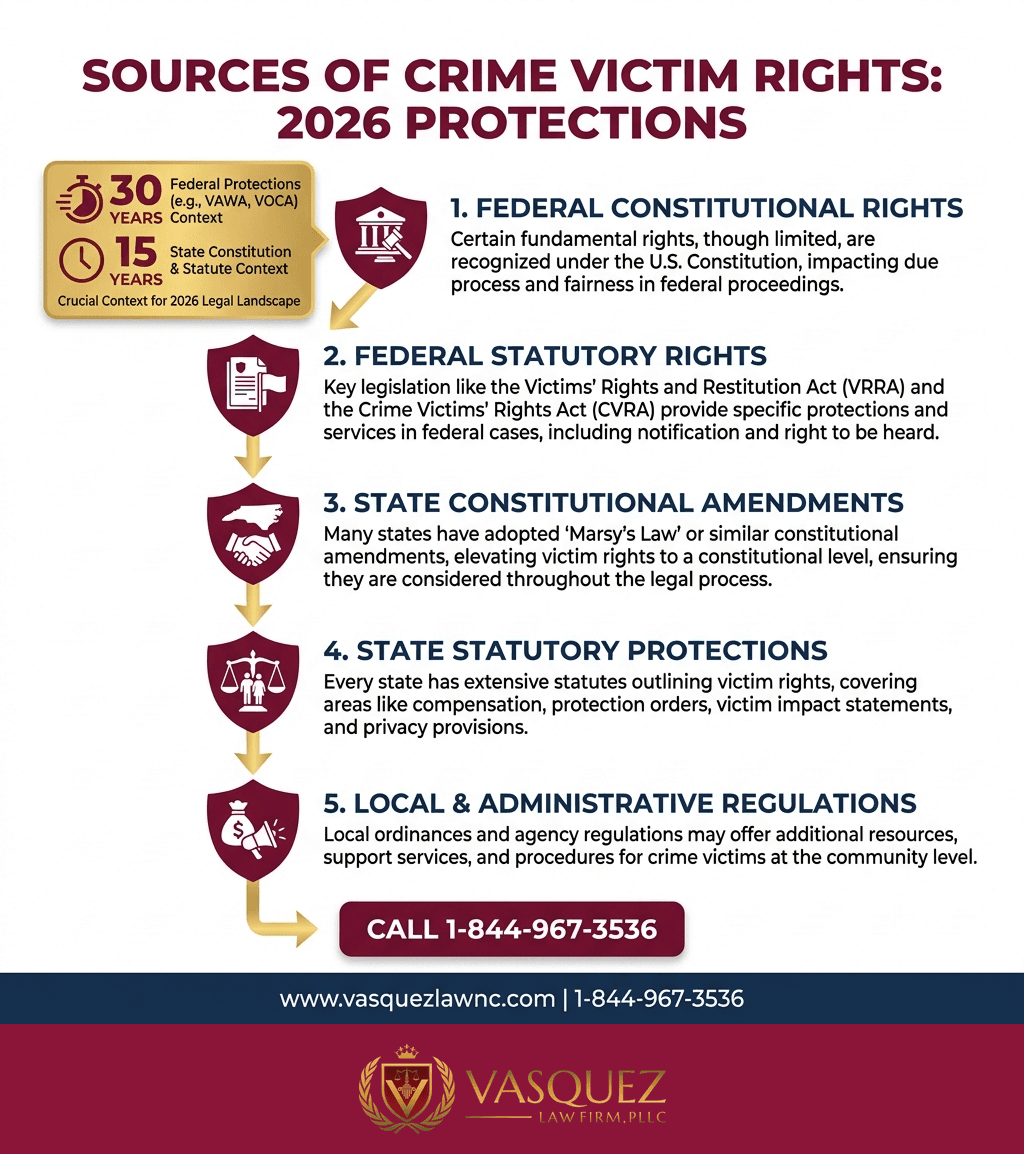
In Smithfield, North Carolina, and Florida, crime victims have legal rights designed to protect their interests during the criminal justice process. These rights come from both federal law, including the Crime Victims Rights Act of 2004, and state laws specific to North Carolina and Florida.
The Crime Victims Rights Act (CVRA) was passed in 2004 to guarantee victims’ rights in federal cases. Its main purpose is to give victims a voice and make sure they are treated with dignity. State laws, like N.C. Gen. Stat. § 15A-825, complement this by outlining rights and protections for victims in local prosecutions.
Victims should have several basic rights which include being notified about case developments like upcoming hearings, the right to attend trials, protections if they feel threatened by the accused, and the ability to submit impact statements describing how the crime affected their lives. Additionally, victims in North Carolina have the right to be present when pleas or sentencing are decided.
One important tool is the NC Victims Rights form, a registration form victims can submit to formally establish their status in the case. This registration ensures victims get notifications and can exercise their rights during prosecution.
Being informed of these rights helps victims participate actively in the justice system and seek compensation and support services they deserve.
Learn more about how our criminal defense services support victims navigating the legal process and asserting rights.
Federal Crime Victims Rights Act Summary
The CVRA is found at 18 U.S.C. § 3771 and guarantees crime victims the right to:
- Reasonable, timely notification of public court proceedings
- Be present at key stages like plea and sentencing hearings
- Notify the government of victim-related views
- Protection from the accused’s intimidation
- Get restitution ordered as part of sentencing
North Carolina Victims Rights
North Carolina law emphasizes victim dignity and participation. The statute N.C. Gen. Stat. § 15A-825 lays out rights including the right to be informed, present, and heard during trial and sentencing. The statute also allows victims to receive notifications about arrests, hearings, and release of the accused.
Victims can fill out an NC Victims Rights form to be officially recognized and receive communications from courts or prosecutors. Protection from intimidation or harassment can also be requested through legal channels.
Florida Victims Rights
Florida has similar victims rights laws that require prosecutors and courts to inform and protect victims. Victims must be provided with information about the case status and have opportunities to offer statements during sentencing. Florida also offers victim compensation programs to help cover financial losses.
Step-by-step: How to Assert Your Rights
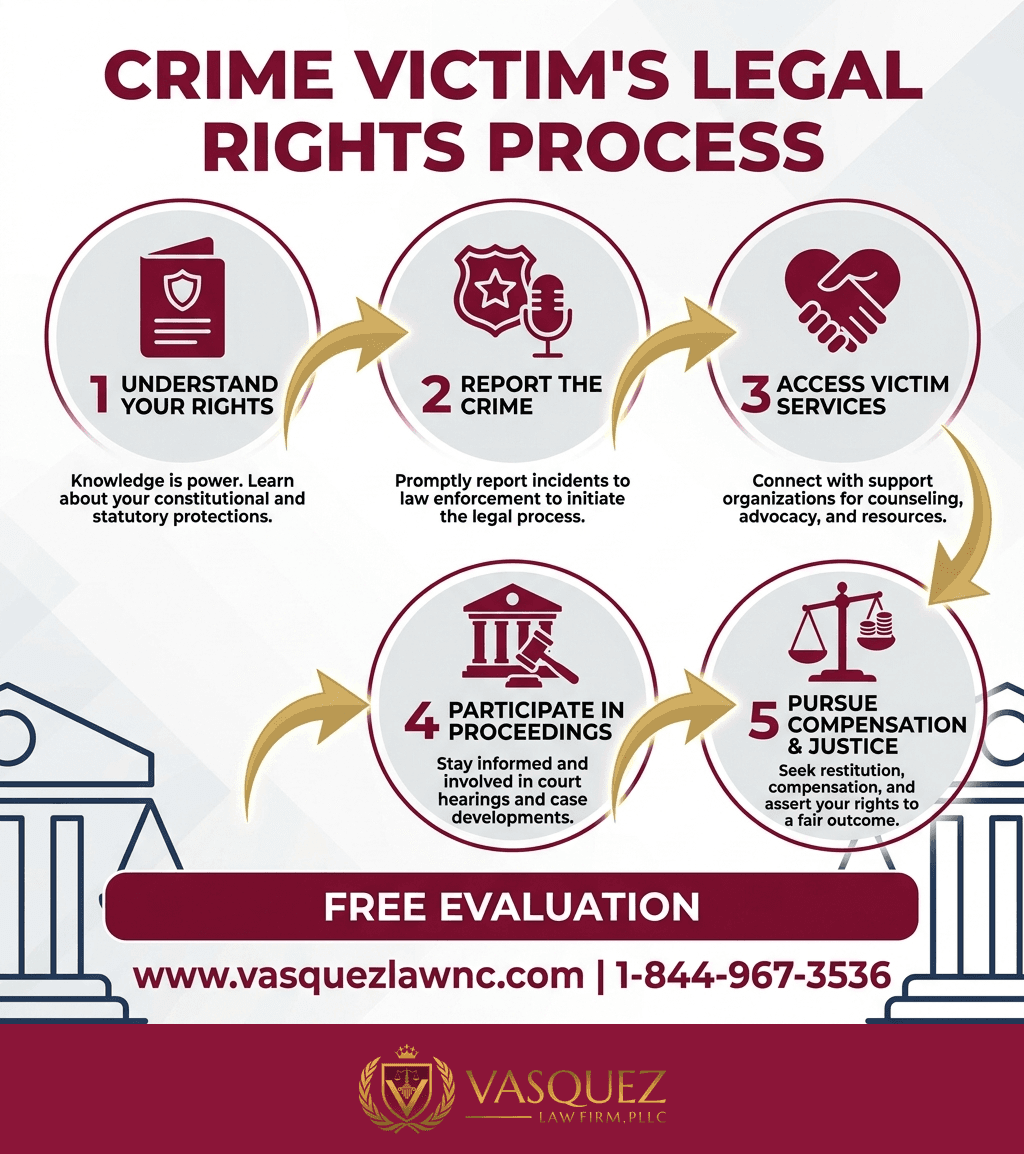
Understanding and asserting your rights as a crime victim involves several clear steps:
- Register as a Victim: Complete and submit the NC Victims Rights form or Florida equivalent to be entered into the victim notification system.
- Request Notifications: Ensure you receive timely updates about court dates and proceedings.
- Attend Hearings: Whenever possible, attend relevant court hearings to stay informed and present your interests.
- Provide Victim Impact Statements: Prepare and submit statements detailing the effect of the crime on your life. This can influence sentencing decisions.
- Seek Protection: If you fear retaliation or harassment, request protective measures from prosecutors or law enforcement.
- Request Restitution: Ask the court to order offenders to repay costs incurred because of the crime, such as medical bills or lost earnings.
- Consult an Attorney: Contact a criminal defense attorney like those at Vasquez Law Firm to understand and enforce your rights effectively.
Registering early and being proactive helps avoid missed opportunities to participate fully in the process.
Contact Attorney Vasquez for guidance on exercising your rights and protecting your interests in Smithfield.
How to Fill the NC Victims Rights Form
The form typically requires your personal details, contact information, and details about the crime. Submit it to the prosecutor's office or court clerk. Keep a copy and follow up if you don’t receive confirmation.
Submitting Victim Impact Statements
You can write a statement describing physical, emotional, or financial harm caused. These statements help judges understand the crime’s real effects when deciding sentences or restitution.
Protection Options for Victims
Victims can request no-contact orders or relocation assistance if they feel unsafe. Law enforcement and prosecutors can coordinate protective measures depending on the situation.
Common Mistakes Victims Make
- Not Registering as a Victim: Without submitting the proper form, victims may miss case updates or chances to participate.
- Failing to Attend Hearings: Missing court dates limits victim impact and the ability to monitor case progress.
- Not Providing Impact Statements: Judges rely on these statements. Omitting them can reduce consideration of victim harm.
- Assuming No Compensation is Available: Many victims are unaware of compensation programs they can apply for.
- Delaying Legal Help: Early consultation with lawyers like Vasquez Law Firm can protect rights better than waiting.
- Ignoring Protection Needs: Victims sometimes neglect available protective orders or support services.
- Failing to Follow Up: Staying in contact with prosecutors and courts ensures your rights are enforced throughout.
If you only remember one thing: Register as soon as possible and stay engaged with the case to fully exercise your crime victims rights.
Timeline: What to Expect After a Crime
- Within Days: Report the crime and consider registering as a victim; initial investigation starts.
- Weeks After: Arrest made or investigation continues; victims typically receive first notifications.
- Pre-Trial Stage: Victims notified of hearings, evidence reviews, may submit impact statements.
- Trial or Plea Hearing: Attending court; victims can provide statements and observe proceedings.
- Sentencing: Victims may speak and request restitution; offender sentenced.
- Post-Trial: Victims receive updates on offender incarceration or release and restitution payments.
Costs and Fees: What Impacts the Price
- Most legal assistance for victims is free or low-cost, especially through victim services programs.
- Hiring an attorney like Vasquez Law Firm may involve consultation fees but can significantly improve your advocacy.
- Compensation programs can cover medical, counseling, lost wages, but have eligibility requirements.
North Carolina and Nationwide Notes
North Carolina Notes
In North Carolina, victims have robust statutory rights including notification and the right to submit victim impact statements. The state court system supports enforcement of these rights through the NC Victims Rights form. Local victim advocacy groups also provide support services for those affected.
Nationwide Concepts (General Only)
While laws vary, the federal Crime Victims Rights Act sets minimum protections for victims in federal cases, influencing many state laws. Victims across the U.S. generally should have rights to notification, presence at proceedings, impact statements, restitution, and protection.
When to call a lawyer now
- If you have been a victim of a violent or serious crime and want to ensure your rights are protected.
- If you feel your rights as a victim are being ignored or violated by prosecuting authorities.
- If you need help filing victim registration or impact statements.
- If you are unsure how to request restitution or protective orders.
- If you want legal advice on victim compensation programs and benefits.
- If you fear intimidation or harassment from the accused or others related to the case.
- If you want to understand your rights related to plea bargains or sentencing hearings.
- If you need an advocate to communicate with prosecutors or law enforcement on your behalf.
About Vasquez Law Firm
At Vasquez Law Firm, we combine compassion with aggressive representation. Our motto "Yo Peleo®" (I Fight) reflects our commitment to standing up for your rights.
- Bilingual Support: Se Habla Español - our team is fully bilingual
- Service Areas: Criminal defense in Johnston and Harnett counties, NC; immigration nationwide, including Florida
- Experience: Over 30 years helping clients navigate complex legal matters
- Results: Thousands of successful cases across multiple practice areas
Attorney Trust and Experience
Attorney Vasquez holds a Juris Doctor degree and is admitted to practice in both the North Carolina State Bar and Florida Bar. With over 15 years of dedicated legal experience, he has built a reputation for providing personalized attention and protecting clients’ rights effectively.
Don't wait to get the help you deserve. Call us now for immediate assistance. Se Habla Español.
Frequently Asked Questions
What rights should crime victims have in North Carolina?
Victims have rights to receive notifications about case progress, attend hearings, provide impact statements, seek restitution, and receive protection from harassment. These rights help ensure victims are included and respected throughout the justice process.
What is the Crime Victims Rights Act of 2004?
The Act is a federal law ensuring victims in federal cases receive notification of proceedings, the right to be heard, protection from intimidation, and restitution. It strengthens victims’ voices in criminal prosecutions.
Can victims get money for being a victim of crime?
Yes, through victim compensation programs and court-ordered restitution, victims can recover some financial losses such as medical expenses or lost income caused by the crime.
What happens if victims rights are violated?
Victims can file complaints or request remedies through the court system. In some situations, violations may impact the case outcome or lead to official investigations.
How do I fill out the NC Victims Rights form?
The form requires your personal and crime details and is submitted to the prosecutor or court. It ensures you receive notifications and legal support as a victim.
What are the six types of crime victims?
They include primary victims, secondary victims, family members, witnesses, community victims, and institutional victims. Rights may vary based on these classifications.
Can victims participate in plea bargains?
Yes, victims usually have the right to give input during plea negotiations, which can affect the final terms and sentencing.
Where can crime victims get help locally in Smithfield?
Victims can seek help from Vasquez Law Firm, local victim advocacy organizations, and state victim compensation programs to get support and legal assistance.
Sources and References
- North Carolina Courts
- U.S. Department of Justice Civil Rights Division
- U.S. Citizenship and Immigration Services
Take the first step toward justice today. Our team is standing by to help. Se Habla Español.
Start Your Free Evaluation Now
Call us: 1-844-967-3536
Se Habla Español - Estamos aquí para ayudarle.


William Vasquez
Founder & CEO, Vasquez Law Firm, PLLC
William Vasquez is the founder and CEO of Vasquez Law Firm, PLLC, a results-driven firm specializing in immigration, criminal defense, personal injury, and workers' compensation. A U.S. Air Force veteran and recipient of the Joint Service Achievement Medal, William is dedicated to fiercely fighting for his clients' rights.
Related Legal Services
Need legal help? Learn more about get criminal defense help today, or contact us for a free evaluation.
You can also visit North Carolina criminal defense lawyers for more information.