Supreme Court Immigration Decisions: What They Mean in 2026
Understand how Supreme Court immigration decisions affect your status in 2026. Contact Vasquez Law for expert help and a free consultation today.
Published on March 21, 2026
Talk to an immigration attorney
Free call. A clear plan for your case.
Free & confidential · Se habla espanol · 24/7
Have questions? Talk to an attorney - free evaluation.
Call 1-844-967-3536Worried how the latest immigration news affects you?
Schedule a confidential case review with an immigration attorney - know exactly where you stand.
USCIS Case Status
Check your USCIS case status
Enter your receipt number and get the official status. Free, no registration.
Supreme Court Immigration Decisions: What They Mean in 2026
The Supreme Court immigration rulings in 2026 continue shaping the future for immigrants in Raleigh and beyond. These decisions affect asylum claims, green card eligibility, and deportation risk. Understanding what recent Supreme Court immigration decisions mean can help Dreamers and other immigrants protect their rights. Vasquez Law Firm offers guidance for North Carolina and Florida immigrants navigating these changes.
Need help with your case? Our experienced attorneys are ready to fight for you. Se Habla Español.
Schedule Your Free Case Evaluation
Or call us now: 1-844-967-3536
Quick Answer
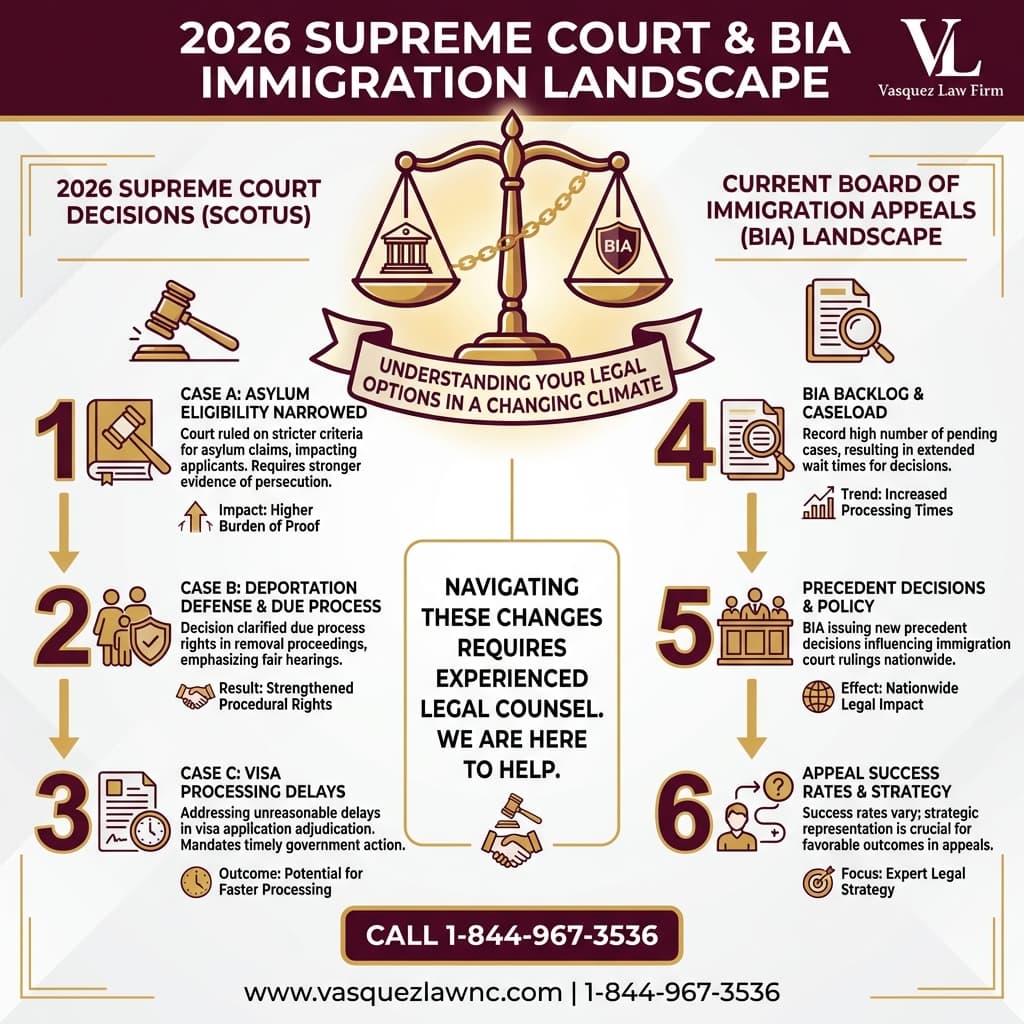
The Supreme Court immigration decisions of 2026 impact asylum policies, green card eligibility, and deportation enforcement nationwide. These rulings have tightened requirements, affecting many immigrants in Raleigh and Florida.
- Stricter asylum claim standards
- Expanded authority for immigration judges
- Increased evidence requirements for green cards
- Potentially higher deportation risks
- Ongoing debates on birthright citizenship
Overview of Supreme Court Immigration Decisions
In 2026, the U.S. Supreme Court issued several critical rulings that are influencing immigration law and policy. These decisions cover asylum procedures, eligibility for green cards through marriage, deportation protocols, and more. The Court’s majority, with stronger conservative leanings, has generally favored increased enforcement and stricter standards. For example, a recent ruling now requires more detailed evidence to prove a bona fide marriage for spousal green card petitions. Another decision restricts certain asylum claims previously allowed, requiring applicants to meet tougher criteria.
These rulings directly affect immigrants in Raleigh, North Carolina, and Florida, where federal immigration courts oversee removal proceedings and adjustments of status. Immigration judges have been granted greater discretion in denying cases without extended hearings. This shift makes it more important than ever for applicants to work with knowledgeable attorneys who understand these evolving standards.
For Dreamers—young immigrants protected under Deferred Action for Childhood Arrivals (DACA)—there are growing concerns after some Supreme Court decisions cast doubt on the permanence of these protections. While the Court has not formally ended DACA, changes to related immigration rules may affect renewal approvals.
What Is the Role of Immigration Judges?
Immigration judges preside over removal proceedings and immigration courts. They decide whether an immigrant can remain in the U.S. or should be deported based on current immigration laws and Supreme Court rulings. Their decisions are binding but can be appealed to higher courts. Recent Supreme Court rulings have expanded judges’ ability to deny cases when applicants fail to provide sufficient evidence.
Supreme Court News and Trends in 2026
Major Supreme Court developments this year include clarifications on birthright citizenship and limits on green cards through marriage fraud prevention. Justice Jackson's influence is also noted, though his tenure was decades earlier in 1952; current justices interpret the Constitution with evolving perspectives. Keep informed through USCIS and federal court updates to understand how these rulings affect you.
Key Steps Dreamers Should Take Now
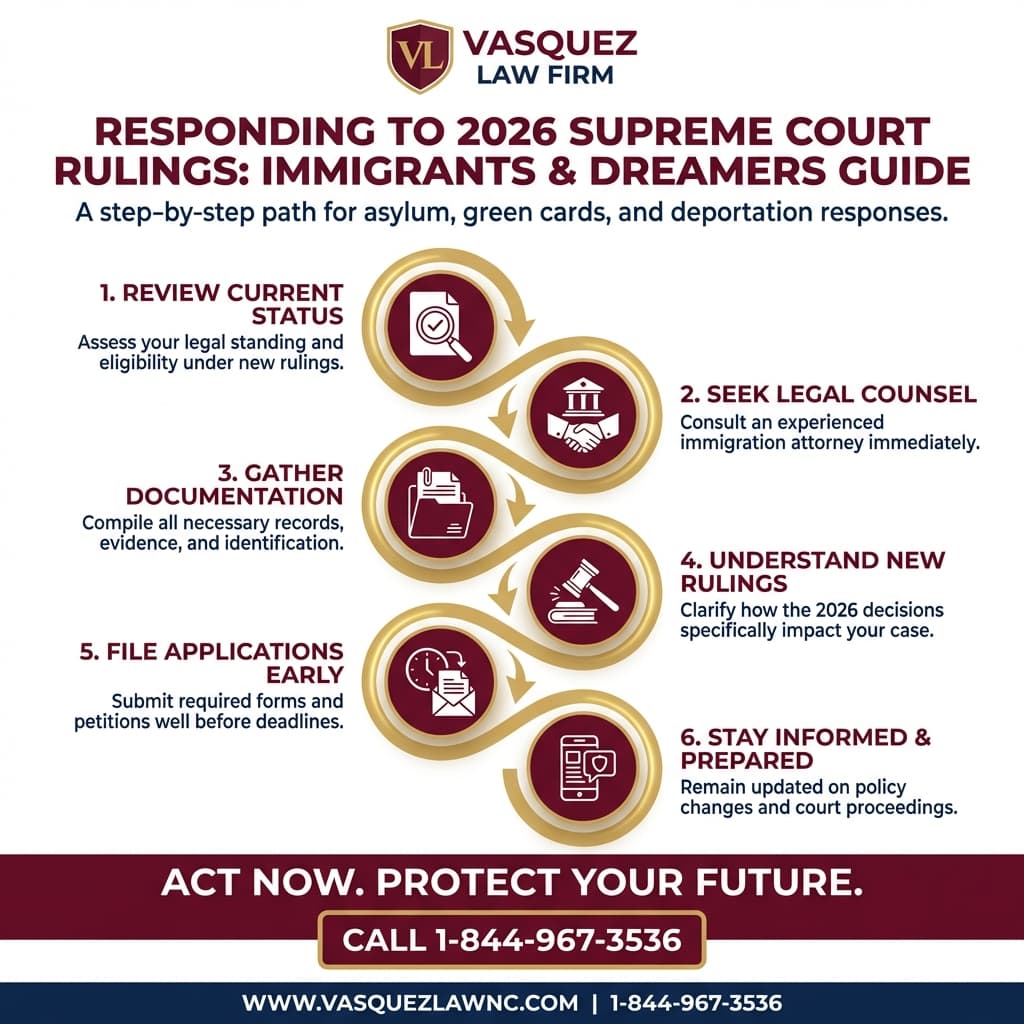
Given the changing landscape, Dreamers in Raleigh and Florida need to be proactive. First, ensure your DACA renewal applications are submitted well before expiration. Keep detailed records of residency, employment, and schooling to support your status. Second, consult with an immigration attorney familiar with 2026 Supreme Court decisions to evaluate your options for long-term relief or adjustment of status.
Some Dreamers may consider alternative pathways such as asylum or family-based petitions, but these require compliance with stricter evidentiary standards due to recent court rulings. Third, avoid unauthorized travel outside the U.S., which may jeopardize protections.
Steps to Protect Your Immigration Status
- Review your immigration documents and deadlines.
- Gather proof of continuous residence and good moral character.
- Consult an immigration lawyer for case evaluation.
- Prepare updated applications with strong evidence.
- Attend all immigration court or USCIS appointments.
Why Legal Guidance Matters
Supreme Court immigration rulings have raised the bar for documentation and eligibility. In Raleigh and Florida, local immigration laws operate under federal directives but enforcement may vary. Expert legal advice helps avoid pitfalls and maximizes your chance to maintain lawful status.
Important Documents and Evidence Checklist
Recent Supreme Court rulings emphasize detailed and credible evidence to support immigration claims. Here is a checklist of essential documents to gather:
- Passports and birth certificates proving identity and nationality
- Proof of lawful entry (I-94, visas, border crossing records)
- Marriage certificates, joint financial documents for spousal petitions
- Work authorization documents and tax records
- School records and proof of residence
- Police or court documents for any criminal history disclosures
- Affidavits or letters supporting your character and family ties
- Previous asylum applications or removal notices
Having these documents organized and ready is vital to meet new evidence standards set by Supreme Court decisions.
Additional Evidence Tips
Include original documents and certified translations if applicable. Submit recent documents showing ongoing ties to your community. Avoid gaps in residency proof. Prepare to answer questions about your relationship or asylum claims with detailed facts.
Timeline for Supreme Court Immigration Cases
Immigration proceedings influenced by Supreme Court rulings often follow a longer and more complex timeline:
- Weeks 1-4: Initial USCIS application or notice to appear in immigration court
- Months 2-6: Submission of evidence and preparation; immigration judge hearings may begin
- Months 6-12: Decisions on asylum, green cards, or removal orders are issued
- Beyond 12 months: Appeals to the Board of Immigration Appeals or federal courts
This timeline may vary depending on the case complexity and court backlog, often seen in busy jurisdictions like Raleigh and Miami. Early legal representation expedites preparation and increases likelihood of favorable outcomes.
Common Mistakes in Immigration Cases
- Incomplete documentation: Submit every requested document; insufficient evidence often leads to denial
- Missing deadlines: Stay aware of renewal and filing deadlines to avoid losing protections
- Ignoring court notices: Failure to appear leads to automatic deportation orders
- Incorrect or fraudulent information: Honesty is critical; false claims hurt your case
- Not hiring a lawyer: Navigating recent Supreme Court changes without legal help can be costly
- Unauthorized travel: Leaving the U.S. without permission can jeopardize status
- Failing to update address: Keep USCIS and courts informed to receive all communications
If you only remember one thing: Accurate, complete evidence and timely legal help are your strongest assets under new immigration rules.
When to Call a Lawyer
- You receive a Notice to Appear in immigration court
- Your asylum or green card application is denied or delayed
- You face criminal charges that could affect immigration status
- Your DACA status is expiring within 6 months
- You plan to travel outside the U.S.
- You want to file an appeal after a court decision
- You're unsure how recent Supreme Court rulings impact your case
- You need help gathering or preparing documentation
About Vasquez Law Firm
At Vasquez Law Firm, we combine compassion with aggressive representation. Our motto "Yo Peleo" (I Fight) reflects our commitment to standing up for your rights.
- Bilingual Support: Se Habla Español - our team is fully bilingual
- Service Areas: North Carolina, Florida, and nationwide immigration services
- Experience: Over 15 years helping clients navigate complex legal matters
- Results: Thousands of successful cases across multiple practice areas
Attorney Trust and Experience
Attorney Vasquez holds a Juris Doctor degree and is admitted to practice in the North Carolina State Bar. With over 15 years of dedicated legal experience, he has built a reputation for providing personalized attention and achieving favorable outcomes for his clients.
Don't wait to get the help you deserve. Call us now for immediate assistance.
Se Habla Español
Frequently Asked Questions
What did the Supreme Court decide about immigration in 2026?
In 2026, the Supreme Court issued rulings tightening asylum eligibility and adjusting green card requirements. These decisions empower immigration judges to closely scrutinize claims and require more evidence, impacting many immigrants in Raleigh and Florida.
Has the Supreme Court ruled on birthright citizenship?
The Supreme Court has not overturned birthright citizenship guaranteed by the 14th Amendment. However, it has narrowed some related immigration rights in recent cases, making legal updates essential for immigrants and Dreamers.
Who is at risk of being deported after recent Supreme Court rulings?
Immigrants with criminal convictions, visa overstays, or denied asylum face increased deportation risk. The Court’s rulings have limited some legal relief options, so consulting a lawyer in Raleigh or Florida is critical to assess your risk and protections.
Did the Supreme Court rule against green cards for spouses?
The Court clarified that applicants must prove genuine marriages with strong documentation. This has raised evidence standards, so spouses applying for green cards should prepare accordingly and seek legal advice to avoid delays.
How does the immigration court process work after Supreme Court rulings?
Immigration judges apply updated rules for asylum, deportation, and adjustment cases. The process may be faster or more restrictive, so understanding procedures is key. Legal counsel helps manage hearings, evidence submissions, and appeals.
What should Dreamers know about recent Supreme Court decisions?
Dreamers should know these rulings might impact DACA renewal approvals and related protections. Staying informed and working with an immigration attorney can help maintain your status and explore alternative relief.
Can Supreme Court decisions be appealed or changed?
Supreme Court decisions are final, but changes can come from Congress or the executive branch. Legal advice helps you understand the current landscape and explore options in light of these decisions.
What are critical documents needed after recent Supreme Court rulings?
Proof of identity, lawful entry, marriage, residence, and clean criminal records are vital. The Supreme Court emphasizes thorough documentation to support immigration claims successfully.
Sources and References
- U.S. Citizenship and Immigration Services (USCIS)
- Executive Office for Immigration Review
- 8 U.S.C. § 1255 - Adjustment of Status
Need immigration help? Our immigration attorneys can review your case.
Take the first step toward justice today. Our team is standing by to help.
Start Your Free Case Evaluation Now
Call us: 1-844-967-3536
Se Habla Español - Estamos aquí para ayudarle.

William Vasquez
Founder & CEO, Vasquez Law Firm, PLLC
William Vasquez is the founder and CEO of Vasquez Law Firm, PLLC, a results-driven firm specializing in immigration, criminal defense, personal injury, and workers' compensation. A U.S. Air Force veteran and recipient of the Joint Service Achievement Medal, William is dedicated to fiercely fighting for his clients' rights.
Related Legal Services
Need legal help? Learn more about speak with an immigration lawyer, or contact us for a free evaluation.
You can also visit our NC immigration team for more information.