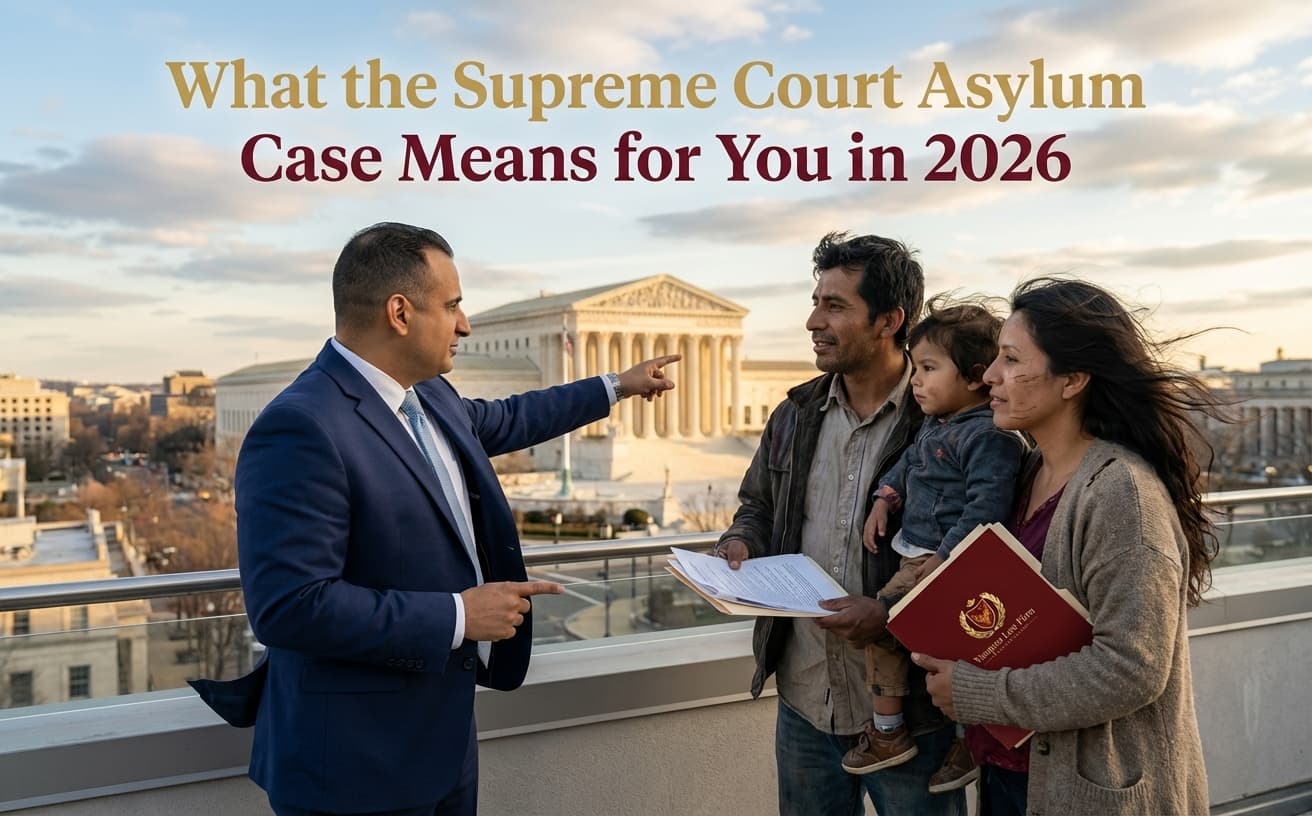
What the Supreme Court Asylum Case Means for You in 2026
Learn about the Supreme Court asylum case affecting immigration in 2026. Understand your rights and get help from Vasquez Law. Call for a free consultation.
Published on March 20, 2026
Talk to an immigration attorney
Free call. A clear plan for your case.
Free & confidential · Se habla espanol · 24/7
Have questions? Talk to an attorney - free evaluation.
Call 1-844-967-3536Worried how the latest immigration news affects you?
Schedule a confidential case review with an immigration attorney - know exactly where you stand.
USCIS Case Status
Check your USCIS case status
Enter your receipt number and get the official status. Free, no registration.
What the Supreme Court Asylum Case Means for You in 2026
The Supreme Court asylum case currently under review in 2026 has substantial implications for asylum seekers and immigration law enforcement in the U.S. If you're residing in Charlotte or anywhere in North Carolina or Florida, understanding this landmark case is critical. This article explains the details of the case, how it impacts immigration procedures, and what asylum seekers need to know to protect their rights. Vasquez Law Firm provides bilingual legal support to guide you through these complex changes.
Need help with your case? Our experienced attorneys are ready to fight for you. Se Habla Español.
Schedule Your Free Case Evaluation
Or call us now: 1-844-967-3536
Quick Answer About the Supreme Court Asylum Case
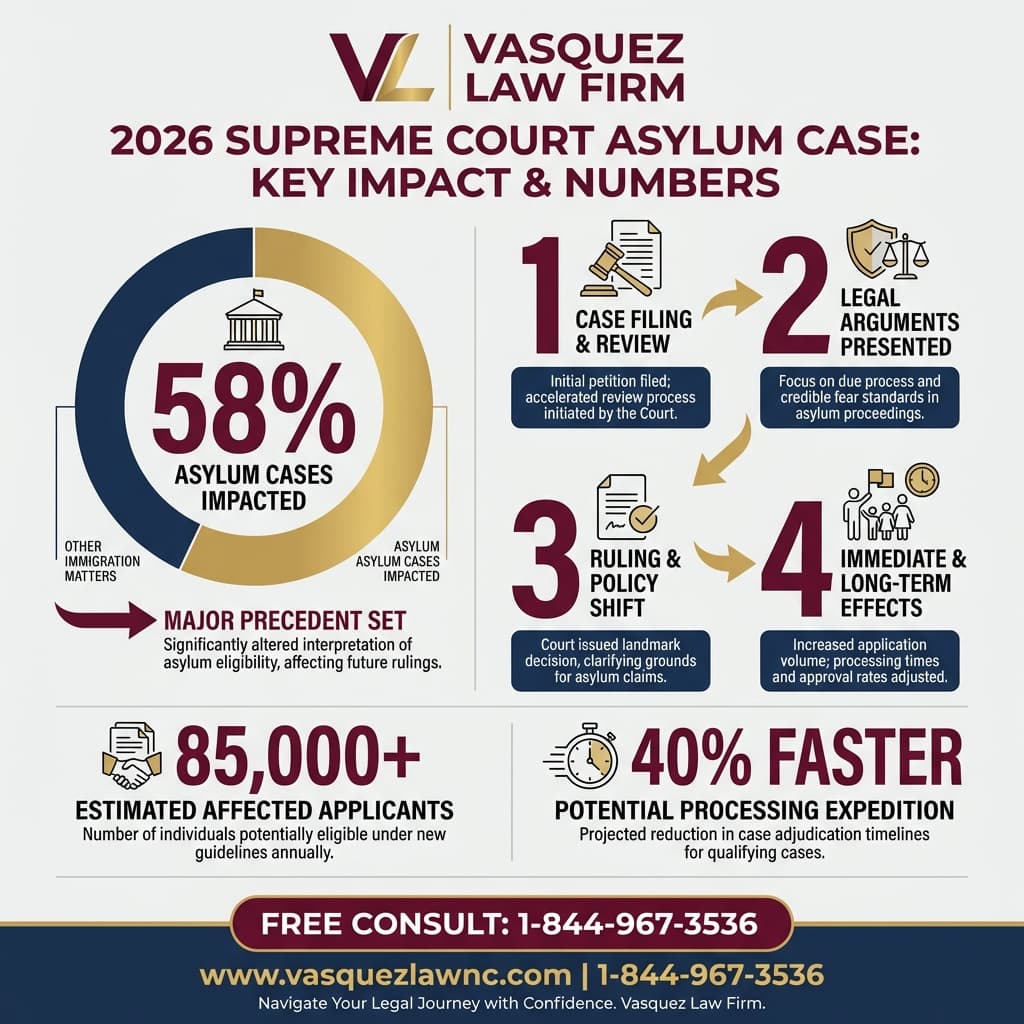
The Supreme Court's 2026 decision clarifies how immigration courts must evaluate asylum claims and the protections asylum seekers are entitled to. It sets procedural standards affecting filing timelines, evidence requirements, and hearing fairness. This ruling impacts how North Carolina and Florida immigration courts process cases, making legal guidance more important than ever for asylum applicants.
- Clarifies procedural rules for asylum hearings
- Affects eligibility requirements
- Guides immigration judges nationally
- Impacts timelines and evidence submission
- Reinforces due process protections
Background: What the Supreme Court Case Involves
On March 2026, the U.S. Supreme Court heard Urias-Orellana v. Bondi, a critical asylum case addressing procedural fairness for asylum seekers turned away at the border. The Court examined whether immigration judges properly followed legal standards when denying asylum claims without full merits hearings.
This case reflects ongoing debates over immigration enforcement and asylum law. It challenges how immigration courts balance government interests with protections guaranteed under U.S. immigration statutes and international refugee laws.
Justice Jackson's 1952 precedent was referenced, emphasizing the importance of fair adjudication processes. This case reaffirms that asylum seekers must receive meaningful opportunity to present their cases, which has direct impact on your rights if applying from Charlotte, NC or Florida.
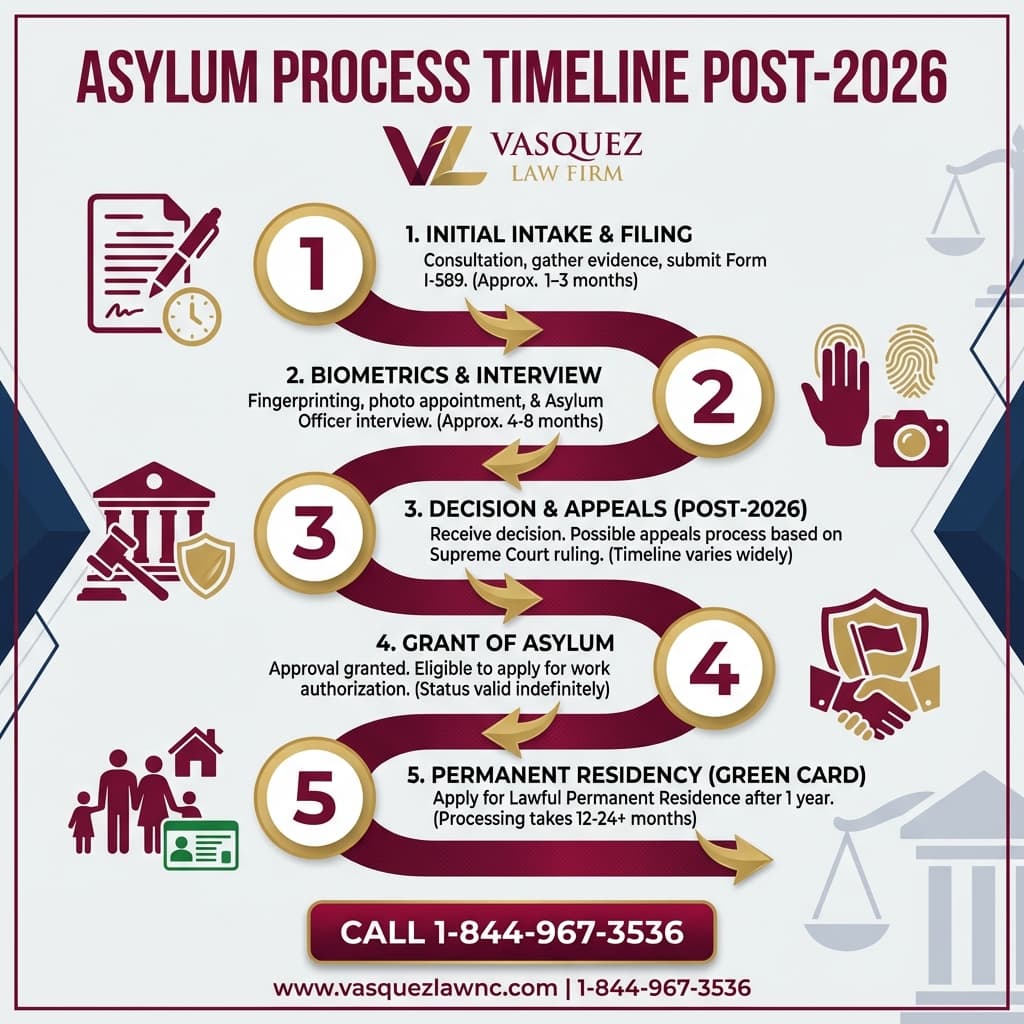
Step-by-Step Guide to Navigating the Asylum Process
- Gather Evidence: Collect documentation showing fear of persecution or harm, country conditions, and personal testimonies.
- File Form I-589: Submit your asylum application with USCIS within one year of arrival, unless exceptions apply.
- Attend Biometrics Appointment: USCIS will schedule fingerprinting and background checks.
- Prepare for Interview or Hearing: Immigration judges will review your case during a hearing; legal representation helps explain facts clearly.
- Receive Decision: Judges issue rulings; decisions can be appealed if denied.
- Appeal if Necessary: If denied, your attorney can file appeals with the Board of Immigration Appeals or federal courts.
Common Scenarios
A Charlotte resident fleeing political violence may use country reports and witness affidavits to support asylum claims. In Florida, applicants might face longer waiting times but federal rules apply equally. Knowing these steps helps prevent delays or denials.
Documents to Prepare for Your Asylum Claim
- Personal identity documents (passport, birth certificate)
- Proof of entry date to U.S.
- Evidence of persecution (police reports, medical records)
- Country condition reports from reliable sources
- Affidavits from witnesses or experts
- Previous asylum filings or immigration paperwork
Timeline: What to Expect in Your Case
- Week 1-12: File Form I-589 with USCIS and attend biometrics.
- Months 3-6: Receive interview or hearing notice.
- Month 6-18: Attend immigration court hearing, possible decision.
- Up to several years: Appeals or removals if denied.
Timelines vary, especially after the Supreme Court's 2026 ruling which ensures thorough review but could extend processing.
Costs and Fees Affecting Asylum Cases
- USCIS asylum application filing fee: Currently waived but subject to change.
- Legal representation fees: Often vary, some attorneys offer payment plans or pro bono help.
- Costs for gathering evidence, translations, and expert reports.
- Appeal and court fees if necessary.
Contact Vasquez Law Firm to discuss affordable options and fee structures for your asylum claim.
Common Mistakes Asylum Seekers Make and How to Avoid Them
- Missing Deadlines: Always file timely; exceptions are limited.
- Inadequate Evidence: Gather strong, consistent documentation.
- Self-Representation Risks: Legal help improves chances and navigation.
- Inconsistent Storytelling: Be truthful and consistent in testimonies.
- Failure to Attend Hearings: Always show up or risk denial.
- Ignoring New Court Rules: Stay informed of legal changes like the 2026 Supreme Court decision.
- Not Preparing for Interviews: Practice responses and review case thoroughly.
If you only remember one thing: Timely legal aid can prevent mistakes that jeopardize your asylum claim.
NC, FL, and Nationwide Notes on Immigration Law
North Carolina Notes
North Carolina asylum seekers file under federal immigration law with courts located in Charlotte and other cities. Vasquez Law Firm provides local expertise to guide residents through specific procedural nuances at the Charlotte immigration court.
Florida Notes
Florida also follows federal guidelines with multiple immigration courts. Local nuances include court backlogs and regional DHS enforcement priorities. Vasquez Law Firm offers bilingual support for Florida clients impacted by the Supreme Court case.
Nationwide Concepts
The Supreme Court asylum case sets procedural standards binding across all states. However, practical experiences vary between jurisdictions. Individual circumstances affect case outcomes. Always consult a qualified attorney familiar with both federal and local contexts.
When to Call a Lawyer About Your Asylum Case
- Received a notice to appear in immigration court
- Denied asylum at interview or hearing
- Facing deportation or removal proceedings
- Missing filing deadlines or need extensions
- Confused about new Supreme Court rules
- Need help gathering or submitting evidence
- Concerns about credibility or testimony
- Want to appeal a negative decision
About Vasquez Law Firm
At Vasquez Law Firm, we combine compassion with aggressive representation. Our motto "Yo Peleo" (I Fight) reflects our commitment to standing up for your rights.
- Bilingual Support: Se Habla Español - our team is fully bilingual
- Service Areas: North Carolina, Florida, and nationwide immigration services
- Experience: Over 15 years helping clients navigate complex legal matters
- Results: Thousands of successful cases across multiple practice areas
Attorney Trust and Experience
Attorney Vasquez holds a Juris Doctor degree and is admitted to practice in the North Carolina State Bar. With over 15 years of dedicated legal experience, he has built a reputation for providing personalized attention and achieving favorable outcomes for his clients.
Don't wait to get the help you deserve. Call us now for immediate assistance. Se Habla Español.
Frequently Asked Questions
What did the Supreme Court decide about immigration?
In 2026, the Supreme Court ruled on how immigration judges must handle asylum cases, especially regarding procedural fairness. This decision aims to provide clearer standards but may also create new challenges for asylum seekers depending on specific facts of their cases. Legal advice is crucial to understand its effect on individual claims.
What is the new law for asylum immigration?
The Supreme Court clarified certain evaluation procedures and eligibility criteria for asylum seekers in 2026, emphasizing stricter review processes but also safeguarding due process rights. This shifts how asylum claims are adjudicated, with potential impact on timelines and requirements.
Can asylum seekers in the U.S. be deported?
Yes. Asylum seekers who do not meet eligibility or who violate certain conditions can face deportation. The Supreme Court case reinforces procedural safeguards but does not eliminate the possibility of removal if claims are denied.
What is the new asylum rule?
The new rule requires immigration judges to carefully evaluate asylum claims with enhanced procedural guidelines set by the Supreme Court in 2026. It involves detailed consideration of evidence and claims' credibility, affecting how seekers prepare and present their cases.
How does the Supreme Court asylum case affect North Carolina?
North Carolina follows federal immigration law. The Supreme Court's 2026 ruling directly influences how local immigration courts in Charlotte and beyond handle asylum cases, setting binding precedent for judges and affecting claim outcomes.
What role do immigration judges play in asylum cases?
Immigration judges are responsible for hearing asylum cases, evaluating evidence, and deciding eligibility. After the Supreme Court decision, they must follow clarified procedural rules to ensure fairness in adjudication.
How long does the asylum process take?
Asylum cases can take several months to years. The Supreme Court decision emphasizes thorough review, which may affect timelines. Applicants should prepare for potential delays but also expect a more standardized process.
Can I represent myself in an asylum case?
While self-representation is allowed, asylum law is complex. The Supreme Court ruling highlights the importance of proper legal procedures, making professional representation highly recommended to protect your rights.
Sources and References
- U.S. Citizenship and Immigration Services (USCIS)
- Executive Office for Immigration Review (EOIR)
- U.S. Department of State
Need immigration help? Our immigration attorneys can review your case.
Take the first step toward justice today. Our team is standing by to help. Se Habla Español.
Start Your Free Case Evaluation Now
Call us: 1-844-967-3536
Se Habla Español - Estamos aquí para ayudarle.

William Vasquez
Founder & CEO, Vasquez Law Firm, PLLC
William Vasquez is the founder and CEO of Vasquez Law Firm, PLLC, a results-driven firm specializing in immigration, criminal defense, personal injury, and workers' compensation. A U.S. Air Force veteran and recipient of the Joint Service Achievement Medal, William is dedicated to fiercely fighting for his clients' rights.
Related Legal Services
Need legal help? Learn more about our immigration legal services, or contact us for a free evaluation.
You can also visit our North Carolina immigration practice for more information.