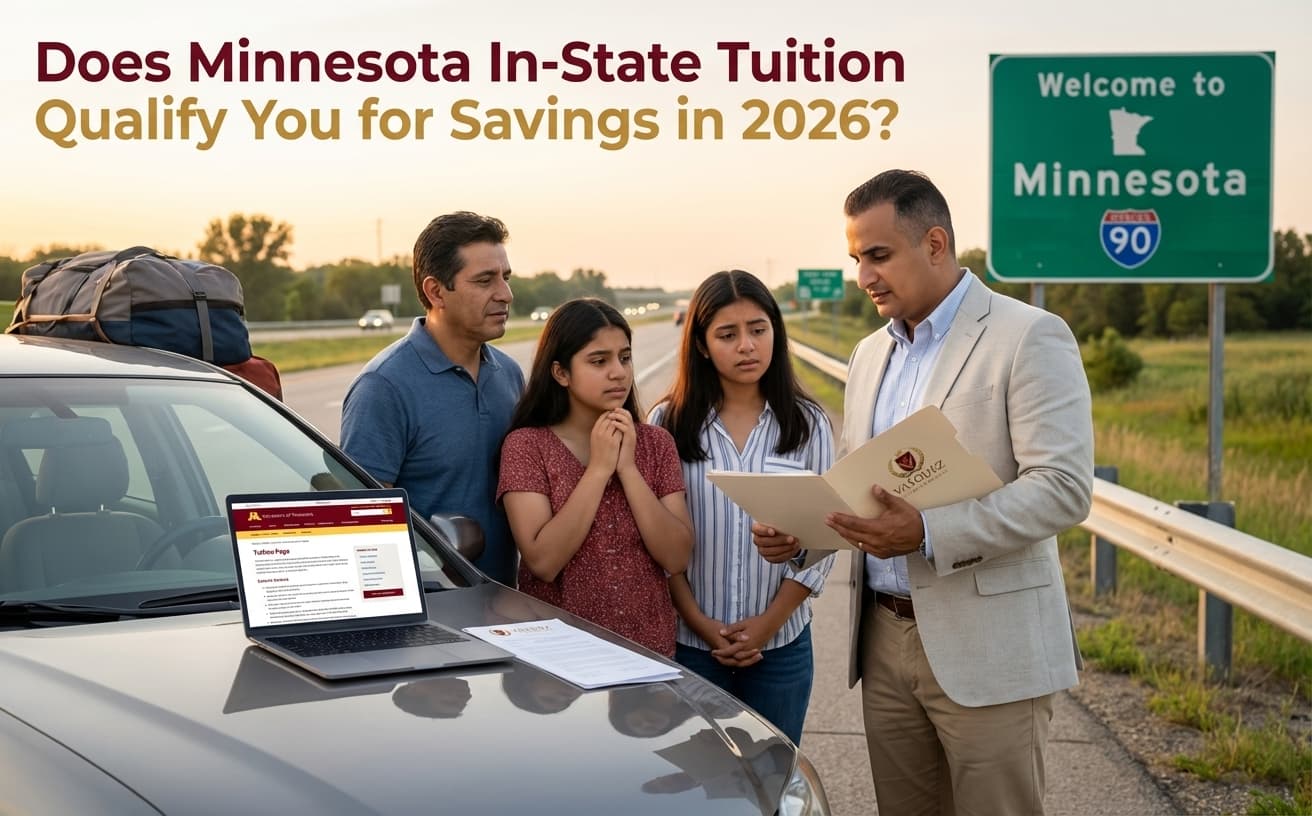
Does Minnesota In-State Tuition Qualify You for Savings in 2026?
Learn how Minnesota in-state tuition works in 2026. Find out who qualifies and how to start saving on tuition. Contact Vasquez Law for a free consultation.
Published on March 28, 2026
Talk to an immigration attorney
Free call. A clear plan for your case.
Free & confidential · Se habla espanol · 24/7
Have questions? Talk to an attorney - free evaluation.
Call 1-844-967-3536Worried how the latest immigration news affects you?
Schedule a confidential case review with an immigration attorney - know exactly where you stand.
USCIS Case Status
Check your USCIS case status
Enter your receipt number and get the official status. Free, no registration.
Does Minnesota In-State Tuition Qualify You for Savings in 2026?
Minnesota in-state tuition can significantly reduce college costs for eligible students. This 2026 guide explains how to qualify for in-state tuition in Minnesota, the requirements you need to meet, states sharing reciprocity, and what Dreamers should know to take advantage of these benefits. Whether you’re starting college in Minnesota or transferring, understanding in-state tuition may help you save thousands per year on tuition fees. Vasquez Law Firm provides bilingual immigration support to help you navigate complex eligibility rules, based on your residency or immigration status.
Need help with your case? Our experienced attorneys are ready to fight for you. Se Habla Español.
Schedule Your Free Case Evaluation
Or call us now: 1-844-967-3536
Quick Answer
Minnesota in-state tuition offers lower tuition rates for students meeting residency or state reciprocity requirements. Dreamers and other immigrants may qualify under state law. Proof of residency and immigration status is key. Different universities may have varying eligibility rules.
- Residency in Minnesota for 12+ months is often required
- Some nearby states share reciprocity for tuition benefits
- Immigration status like DACA affects eligibility
- Documentation such as IDs, tax returns, and leases help prove residency
- Deadlines to submit proof vary by school
Understanding Minnesota In-State Tuition
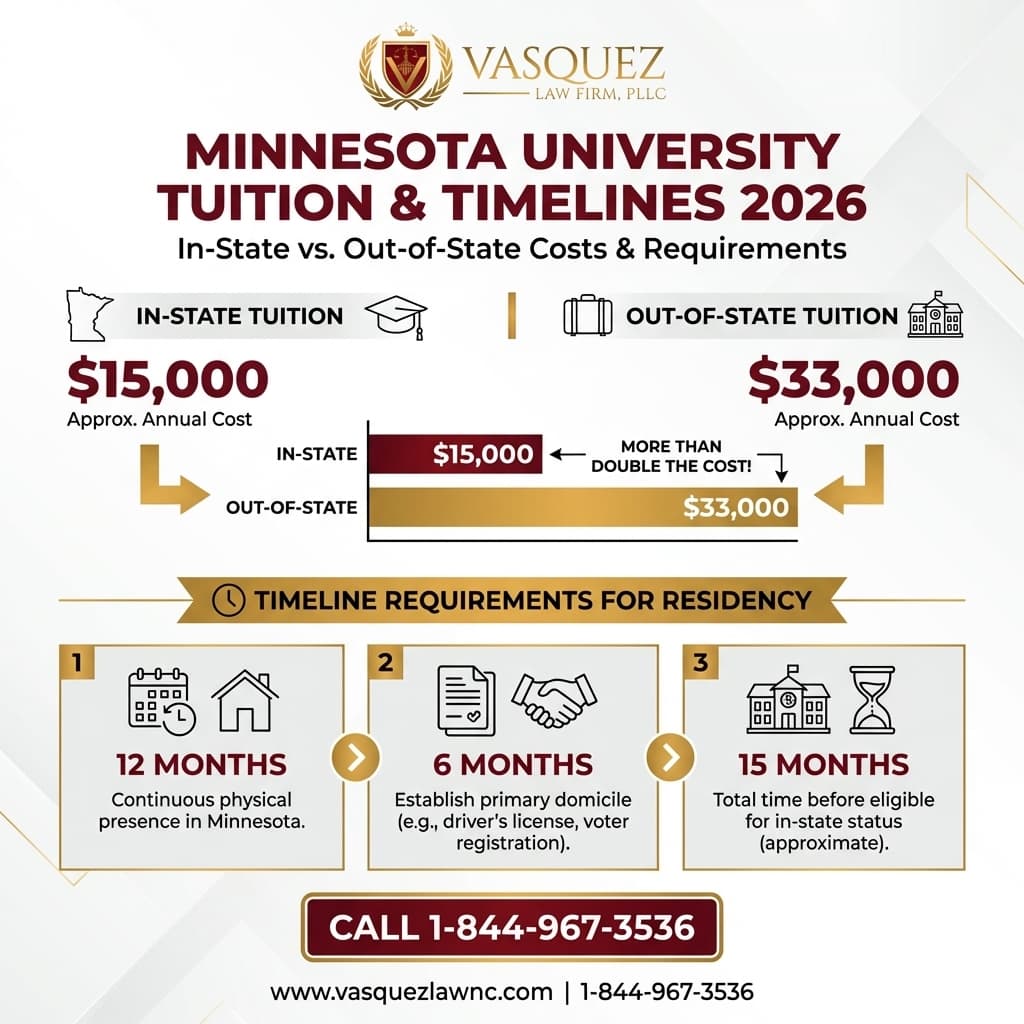
In-state tuition in Minnesota allows qualified students to pay the lower tuition fees reserved for residents. This can save thousands compared to out-of-state tuition, which often costs two to three times more. The University of Minnesota, one of the largest schools in the state, charges approximately $15,000 per year for in-state tuition, while out-of-state students may pay over $33,000 per year as of 2026.
Students must meet specific residency criteria, usually living in Minnesota for 12 months before enrollment. The state law defines residency as physical presence with intent to remain indefinitely and financial independence in some cases. Universities also consider immigration status, which can complicate eligibility, especially for non-citizens or undocumented students.
For immigrants and Dreamers attending from North Carolina or Florida, it is important to consult both local immigration laws and Minnesota state residency requirements. Our immigration services assist clients nationwide in understanding their rights and eligibility.
Tuition Differences Between In-State and Out-of-State
In Minnesota, tuition rates can differ drastically. For example, University of Minnesota's in-state tuition fees are roughly half or less of out-of-state fees. This cost difference can affect your total educational expenses by tens of thousands over four years. Saving on tuition is critical for many families and students who qualify.
Residency Requirement Breakdown
Residency for tuition purposes doesn’t simply mean living in Minnesota. It requires establishing domicile with intent to remain. This may involve obtaining a Minnesota driver’s license, registering to vote, and filing state taxes. Time spent as a full-time student does not count towards establishing residency in many cases unless accompanied by other intent evidence.
Immigration Status and Tuition
Immigration status impacts in-state tuition access. Students with Deferred Action for Childhood Arrivals (DACA) or certain visas may qualify if they meet residency requirements. Undocumented students benefit from Minnesota laws that permit in-state tuition for those who graduated from a Minnesota high school and meet additional criteria. Our legal team is skilled at guiding clients through eligibility based on immigration status.
How to Qualify for Minnesota In-State Tuition
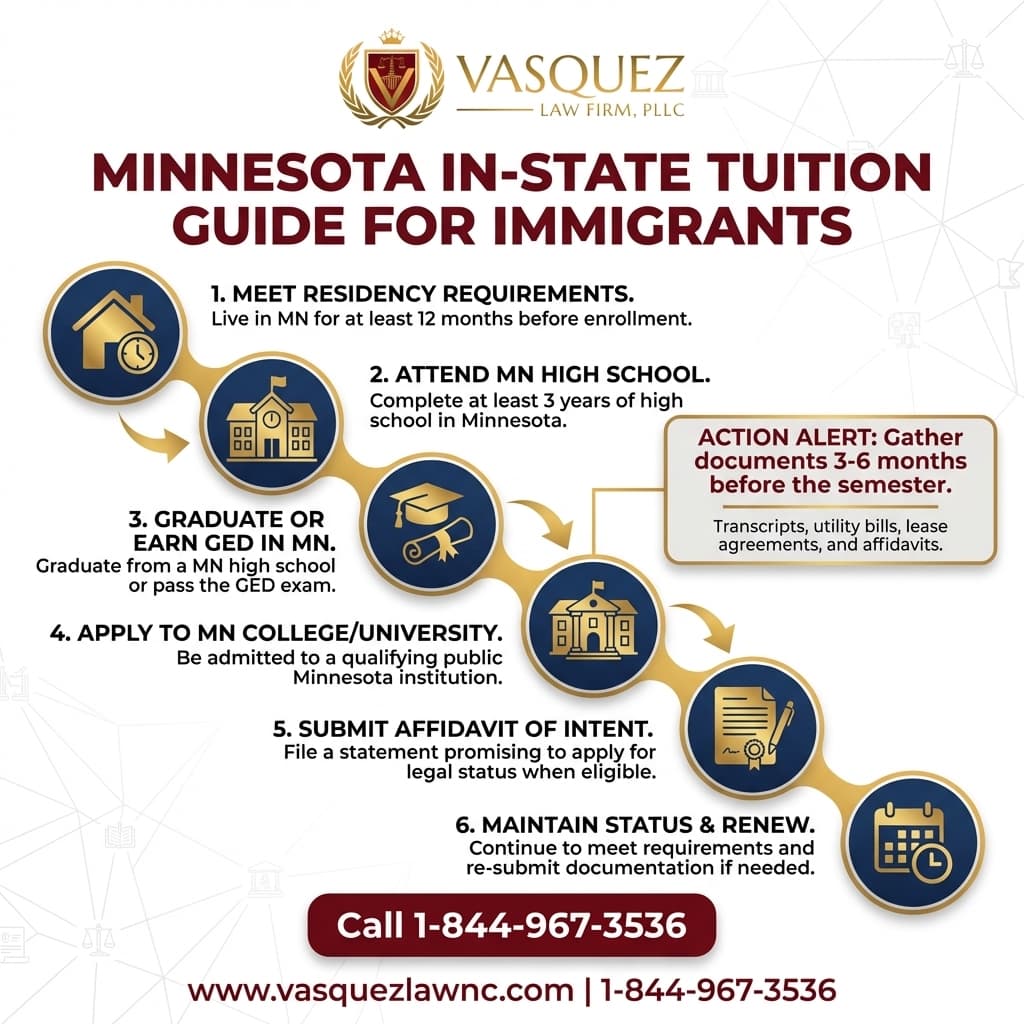
Qualification for in-state tuition requires meeting residency and sometimes immigration criteria. For most students, proving physical presence in Minnesota continuously for at least 12 months before enrollment and demonstrating intent to stay is required. This includes:
- Holding a Minnesota driver's license or state ID.
- Filing Minnesota income tax returns (if applicable).
- Having evidence of housing such as a lease or mortgage.
- Registering to vote in Minnesota.
Students whose parents claim residency may also qualify if dependent. Universities may have specific forms to fill out to apply for in-state tuition status. Immigration-related documentation, such as DACA approval or visa status, is often requested to confirm eligibility.
Those transferring from another state or returning residents may face additional reviews, especially concerning ties to Minnesota and financial independence. Attorney Vasquez can provide personalized advice based on your documents and situation.
Special Rules for Dreamers
For Dreamers, Minnesota offers some protections allowing access to in-state tuition if certain requirements are met. This usually includes graduating from a Minnesota high school and residing in the state for a specific amount of time. Unlike federal law, some states provide tuition benefits without requiring lawful permanent residency. However, these protections can change, so staying informed is critical.
Enrollment and Application Tips
Start preparing documents early. Submit your residency affidavit and other proofs within required deadlines. Check each school’s residency classification office requirements carefully. Missing deadlines can result in temporary out-of-state tuition charges until residency is established.
Minnesota Tuition Reciprocity and Shared States
Minnesota has tuition reciprocity agreements with neighboring states, including North Dakota, South Dakota, and Wisconsin, allowing residents of these states to qualify for in-state tuition at certain Minnesota institutions. These agreements usually apply to students living close to state borders who want to attend schools near home.
Reciprocity varies by institution and may have additional requirements like enrollment in specific programs or counties. Students from out-of-state should check university policies and state government official sites for up-to-date information on eligibility.
Reciprocity helps reduce costs for students moving between states and encourages regional enrollment. However, reciprocal tuition benefits are not automatic; they require careful adherence to deadlines and documentation.
Eligibility Conditions for Reciprocity
- Residency in a reciprocal state for a minimum period
- Enrollment in approved degree programs
- Proximity to border counties or cities
How to Apply for Reciprocity Tuition
Students should contact the admissions or residency office of the institution to understand specific procedures. Documentation proving residence in reciprocal states—like an ID or tax filings—is needed. Universities may require written applications or affidavits attesting to your residency status.
Common Mistakes When Applying for In-State Tuition
- Failing to establish residency at least 12 months before enrollment
- Ignoring deadlines for submitting residency proof
- Relying solely on student status to establish residency (schools often require stronger evidence)
- Not correctly proving intent to remain in Minnesota
- Failing to update or provide accurate immigration documentation
- Assuming reciprocity automatically applies without checking eligibility
- Missing specific university residency classification procedures
- Using out-of-date or expired IDs and documents
- Ignoring appeal rights when denied residency classification
- Neglecting to seek legal guidance when immigration status impacts eligibility
If you only remember one thing: start gathering your residency and immigration documents early and keep track of all deadlines.
Timeline and What to Expect When Applying
- 12+ Months Before Enrollment: Establish and maintain physical presence and intent to remain in Minnesota.
- 3-6 Months Before Semester: Begin gathering residency documentation like lease agreements, tax returns, and state IDs.
- During Admission Process: Submit residency affidavits and related documents by school deadlines.
- Registration Period: Confirm your in-state tuition status; appeal if denied.
- First Semester: Pay tuition at the determined rate; maintain residency documentation for future semesters.
Costs and Fees: What Affects Tuition Rates
The primary cost difference is the amount charged per credit or semester. Out-of-state tuition rates at public universities in Minnesota can be twice or three times the in-state rates. For example, the University of Minnesota charges around $15,000 annually for in-state tuition, compared to more than $33,000 for out-of-state students.
- Residency status is the biggest factor affecting tuition costs.
- Some programs may have differential rates regardless of residency.
- Reciprocity agreements can reduce costs for students from nearby states.
- Scholarships and financial aid can mitigate costs but often depend on residency status.
- Failing to prove residency on time can result in immediate higher charges.
When to Call a Lawyer for Tuition Issues
- If you are unsure about your legal residency status and how it affects tuition
- If your in-state tuition application is denied and you believe you qualify
- If you are a Dreamer or undocumented student seeking tuition relief
- If you face complex immigration or residency documentation challenges
- If you need help appealing school decisions on residency classifications
- If changing states affects your tuition eligibility and you need legal guidance
About Vasquez Law Firm
At Vasquez Law Firm, we combine compassion with aggressive representation. Our motto "Yo Peleo" (I Fight) reflects our commitment to standing up for your rights.
- Bilingual Support: Se Habla Español - our team is fully bilingual
- Service Areas: North Carolina, Florida, and nationwide immigration services
- Experience: Over 15 years helping clients navigate complex legal matters
- Results: Thousands of successful cases across multiple practice areas
Attorney Trust and Experience
Attorney Vasquez holds a Juris Doctor degree and is admitted to practice in the North Carolina State Bar. With over 15 years of dedicated legal experience, he has built a reputation for providing personalized attention and achieving favorable outcomes for his clients.
Don't wait to get the help you deserve. Call us now for immediate assistance. Se Habla Español.
Frequently Asked Questions
How do you qualify for in-state tuition in Minnesota?
To qualify for in-state tuition in Minnesota in 2026, students generally must prove residency in the state for at least 12 months before enrollment. This may include providing a state ID, tax returns, or proof of domicile. Immigration status can also affect qualification, especially for Dreamers or those with DACA. Each university may have specific requirements, so check directly.
What states share in-state tuition with Minnesota?
Minnesota participates in a tuition reciprocity program with nearby states such as North Dakota, South Dakota, and Wisconsin. These agreements allow qualifying students to pay in-state tuition rates at certain Minnesota institutions, especially if residing near state borders. Check official Minnesota resources for current details.
Who qualifies for free tuition in Minnesota?
Free tuition programs in Minnesota often depend on income, military service, or scholarships. Immigrants or Dreamers' eligibility varies, requiring residency and immigration criteria. Some local programs and private scholarships may assist. Contact university financial aid offices for specific options.
Does immigration status affect in-state tuition eligibility?
Yes. Immigration status can impact eligibility. Students with DACA or certain visas may qualify if they meet residency rules. Other undocumented students might qualify under specific state laws. Consult immigration attorneys to understand personal eligibility.
What documents are needed to prove Minnesota residency?
Documents such as a Minnesota driver’s license, tax returns, lease agreements, and voter registration help prove residency. Universities may request additional proofs based on their policies. Ensure documents are current and align with school requirements.
Can Dreamers qualify for in-state tuition in Minnesota?
Many Dreamers qualify if they meet Minnesota’s criteria, like graduating from high school in the state and residing there for a required time. Laws may change, so staying updated and consulting immigration lawyers is important.
What happens if you don’t qualify for in-state tuition?
Students not qualifying must pay higher out-of-state tuition, sometimes double the in-state rate. They can seek scholarships or appeal decisions but should be aware of financial implications before enrollment.
Are there deadlines to prove residency for tuition purposes?
Yes. Universities typically require residency proof during admissions or registration. Missing deadlines may lead to out-of-state tuition charges. Check university-specific deadlines and prepare documents in advance.
Sources and References
- U.S. Citizenship and Immigration Services (USCIS)
- Executive Office for Immigration Review
- Minnesota Tuition Reciprocity Program
Take the first step toward justice today. Our team is standing by to help. Se Habla Español.
Start Your Free Case Evaluation Now
Call us: 1-844-967-3536
Se Habla Español - Estamos aquí para ayudarle.

William Vasquez
Founder & CEO, Vasquez Law Firm, PLLC
William Vasquez is the founder and CEO of Vasquez Law Firm, PLLC, a results-driven firm specializing in immigration, criminal defense, personal injury, and workers' compensation. A U.S. Air Force veteran and recipient of the Joint Service Achievement Medal, William is dedicated to fiercely fighting for his clients' rights.
Related Legal Services
Need legal help? Learn more about our immigration law practice, or contact us for a free evaluation.
You can also visit immigration lawyers serving all of North Carolina for more information.