What Are the Latest Immigration Changes You Should Know in 2026
Learn about the latest immigration changes in 2026 and how they impact you. Contact Vasquez Law for help with your immigration case today.
Published on March 20, 2026
Talk to an immigration attorney
Free call. A clear plan for your case.
Free & confidential · Se habla espanol · 24/7
Have questions? Talk to an attorney - free evaluation.
Call 1-844-967-3536Worried how the latest immigration news affects you?
Schedule a confidential case review with an immigration attorney - know exactly where you stand.
USCIS Case Status
Check your USCIS case status
Enter your receipt number and get the official status. Free, no registration.
What Are the Latest Immigration Changes You Should Know in 2026
Immigration changes affect thousands of Dreamers and immigrants living in North Carolina and Florida every year. Staying informed about these shifts in immigration law is critical in 2026. Whether new policies affect DACA recipients, green card applicants, or asylum seekers, understanding recent updates can protect your rights. This article highlights essential 2026 immigration changes and practical tips for residents in Orlando and Charlotte. Contact Vasquez Law Firm for personalized bilingual support and legal help with immigration matters in North Carolina and Florida.
Need help with your case? Our experienced attorneys are ready to fight for you. Se Habla Español.
Schedule Your Free Case Evaluation
Or call us now: 1-844-967-3536
Quick Answer: What Are Immigration Changes in 2026
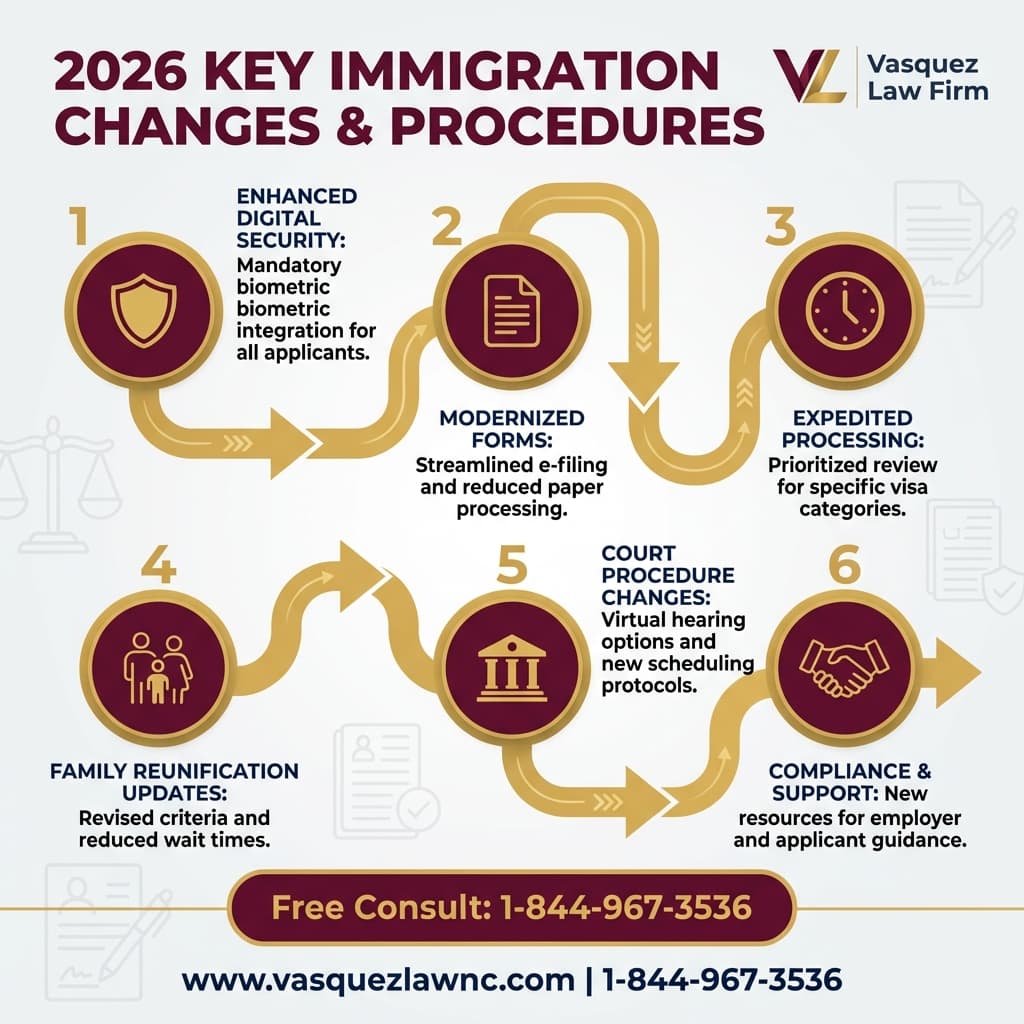
In 2026, immigration changes include revised rules for Dreamer protections, updates to green card and asylum processes, and new immigration bills affecting eligibility and enforcement. Staying updated is essential to protect your rights and maintain your legal status in North Carolina and Florida.
- DACA renewal guidelines updated
- New green card processing rules
- Revised asylum application procedures
- Recent immigration reform bills passed
- Increased enforcement but clearer rights
- Possible fee changes for applications
- Critical timelines updated for cases
Understanding the New Immigration Laws
Imagine Juan, a Dreamer living in Orlando, concerned about recent announcements concerning DACA renewals. In 2026, several immigration changes affect people like him. The government has updated DACA renewal procedures, including stricter background checks and documentation requirements. Additionally, green card applicants face revised eligibility rules, and asylum seekers encounter new processing timelines.
These changes are part of ongoing immigration reform efforts seeking to balance enforcement with humanitarian considerations. The shift also includes new bills passed by Congress aiming to adjust visa categories and streamline some application processes.
Key federal agencies involved in these changes include U.S. Citizenship and Immigration Services (USCIS), the Department of Homeland Security (DHS), and the Executive Office for Immigration Review (EOIR). Each agency has updated policies slated for 2026 implementation, impacting immigrants in North Carolina, Florida, and nationwide.
New DACA Renewal Regulations
DACA recipients must now submit more detailed documentation reflecting their original eligibility and ongoing compliance with program rules. USCIS has accelerated background screening standards to reduce fraud risks while emphasizing timely decisions on applications. Dreamers are advised to stay current and prepare thorough applications.
Green Card Eligibility Adjustments
For lawful permanent residents or those seeking adjustment of status, 2026 introduces tightened rules, such as more extensive scrutiny on employment-based petitions and family sponsorships. These modifications require careful preparation, as minor errors can lead to delays or denials.
Asylum Application Changes
Asylum seekers in Florida and North Carolina will notice altered procedural timelines and new evidentiary requirements making it vital to submit comprehensive documentation early in the process.
Learn more about these changes through USCIS official guidelines, which provide detailed policy information for 2026.
Step-by-Step Guide for Dreamers in Orlando
Maria, a DACA recipient in Orlando, feels anxious about how the new rules impact her status. Here is a clear, step-by-step path for Dreamers undergoing renewal or new applications under 2026 rules.
- Gather all necessary documents including proof of residency, identity, and prior USCIS approvals.
- Complete the updated DACA renewal application forms accurately following the latest instructions from USCIS.
- Schedule and attend biometrics appointment where fingerprints and photographs are taken for background checks.
- Submit the completed application with filing fees or fee waiver requests where applicable.
- Maintain copies of all submissions and correspondence for your records.
- Respond promptly to any USCIS Requests for Evidence (RFE) by providing additional documents or clarifications.
- Receive your DACA renewal approval or work permit and be aware of expiration dates to prepare for timely renewals.
Following these steps helps avoid common pitfalls and ensures you meet deadlines despite the evolving immigration landscape in 2026.
See the related process for green card applications in our immigration update blog.
Additional Tips for Orlando Dreamers
- Consult an immigration attorney early to confirm eligibility.
- Keep all personal documents organized and updated.
- Stay informed about federal announcements or local USCIS office changes.
Common Mistakes to Avoid in Immigration Cases
Many immigrants in North Carolina and Florida make avoidable errors that delay or jeopardize their cases. Here are typical mistakes and how to fix them:
- Incomplete applications: Always review all forms carefully before submission.
- Missing deadlines: Note USCIS and court deadlines and set reminders.
- Ignoring Requests for Evidence (RFE): Respond fully and quickly to avoid denials.
- Incorrect filing fees: Verify the updated 2026 fee schedule to avoid rejections.
- Failing to disclose criminal records: Be honest and provide counsel for appropriate waivers.
- Using outdated forms: Always download the latest versions from official sites.
- Not seeking legal help: Complex cases benefit from professional guidance.
If you only remember one thing: Careful preparation and prompt responses save time and protect your immigration status.
Timeline: What to Expect from Application to Decision
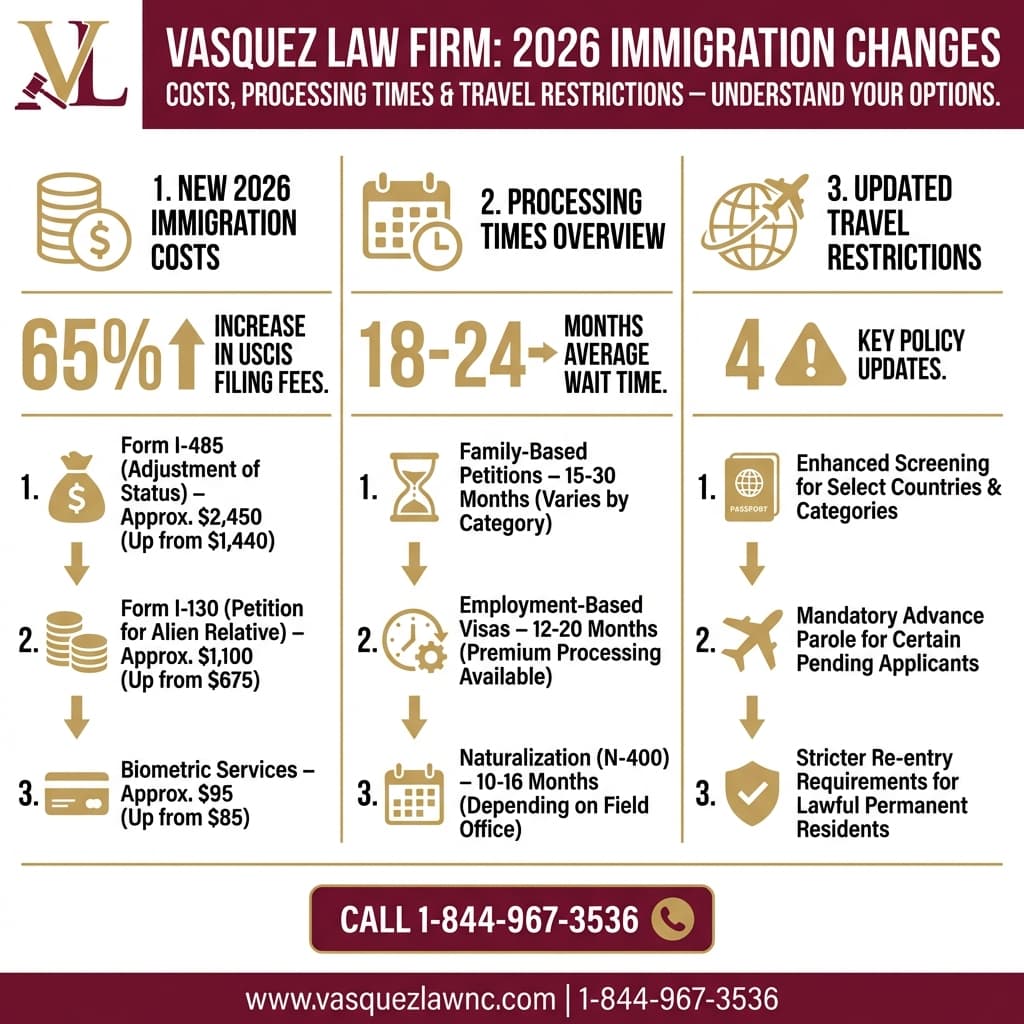
The immigration process can vary significantly. For example, DACA renewals now take approximately 6 to 8 months as of 2026 due to increased background check measures.
- Week 1-4: Application preparation and submission.
- Week 5-12: Initial review by USCIS.
- Week 13-16: Biometrics appointment scheduling and completion.
- Week 17-24: Additional security screening and background checks.
- Week 25-32: Final decision notification.
Green card applicants often face longer wait times, possibly 10 to 14 months or more depending on category and country of origin.
Asylum cases can experience even greater variability, sometimes stretching beyond 18 months due to court backlogs, especially in Florida and North Carolina immigration courts.
Costs and Fees Affecting Immigration Applications
Applicants in 2026 should budget carefully. Fees have changed for commonly used forms:
- Form I-765 (Work Permit): $550, with possible fee waivers.
- Form I-485 (Adjustment of Status): $1,225 for applicants 14-78 years old.
- Biometric services: $85, included with certain applications.
Legal representation costs vary based on case complexity. Free case evaluations with Vasquez Law Firm can clarify expected expenses and eligibility for fee waivers or assistance programs.
Jurisdiction Notes for North Carolina and Florida
North Carolina Notes
Immigration cases in North Carolina fall under federal jurisdiction with USCIS offices in Raleigh. Local immigration courts handle removals and asylum claims. NC residents with immigration concerns benefit from local counsel familiar with state nuances, such as community resources and legal aid networks.
Florida Notes
Florida's large immigrant population results in high USCIS and immigration court workloads, especially in Orlando and Miami. New immigration changes may affect standards differently due to evolving regional policies and enforcement priorities. Lawyers there must monitor federal and local enforcement developments closely.
Nationwide Concepts
Federal immigration law governs all states, but factors like processing office workload, backlog, and local enforcement priorities affect how laws operate practically. Monitoring federal agency websites ensures you receive accurate nationwide updates affecting your case.
When to Call an Immigration Lawyer
- Before submitting a complex immigration application
- If you receive a Request for Evidence from USCIS
- After a deportation or removal notice
- If your case involves criminal history or prior immigration violations
- When applying for DACA or green card renewal under updated rules
- If unsure about eligibility due to new immigration changes
- When facing a biometrics appointment or interview preparation
- If your application is delayed beyond normal timeframes
- To apply for waivers or appeals after denial
About Vasquez Law Firm
At Vasquez Law Firm, we combine compassion with aggressive representation. Our motto "Yo Peleo" (I Fight) reflects our commitment to standing up for your rights.
- Bilingual Support: Se Habla Español - our team is fully bilingual
- Service Areas: North Carolina, Florida, and nationwide immigration services
- Experience: Over 15 years helping clients navigate complex legal matters
- Results: Thousands of successful cases across multiple practice areas
Attorney Trust and Experience
Attorney Vasquez holds a Juris Doctor degree and is admitted to practice in the North Carolina State Bar. With over 15 years of dedicated legal experience, he has built a reputation for providing personalized attention and achieving favorable outcomes for his clients.
Don't wait to get the help you deserve. Call us now for immediate assistance.
Se Habla Español
Frequently Asked Questions
What are the new immigration changes in 2026?
In 2026, key immigration changes include new policies affecting DACA recipients, updates to green card eligibility, and adjustments to asylum procedures. These changes aim to streamline certain processes while tightening eligibility rules in others. Staying informed is essential for immigrants in North Carolina and Florida to protect their rights and ensure compliance with new laws.
How do the 2026 immigration changes impact Dreamers?
Dreamers may experience changes to DACA renewal processes and eligibility standards in 2026. These modifications could involve stricter background checks and documentation requirements. Dreamers in Orlando or Charlotte should work with an experienced lawyer to navigate these updates successfully and avoid application denials.
What documents are required for immigration case applications in 2026?
Applications generally require proof of identity, immigration status, and relevant supporting documents such as birth certificates, passport copies, and evidence of continuous residency. Depending on the case, additional documents like affidavits or financial information may be necessary. Keeping all documents updated saves processing time and reduces delays.
How long does the immigration process take in 2026?
Processing times vary based on case type and USCIS workload but typically range from several months to over a year. For example, adjustment of status cases may take 8 to 14 months, while asylum cases may take longer depending on court dockets. Staying proactive and submitting complete applications can shorten wait times.
Are there new fees related to immigration applications in 2026?
Yes, USCIS has updated some application fees for 2026, affecting forms like Form I-765 and Form I-485. The exact fees depend on the specific immigration benefit sought. Fee waivers may be available for qualifying applicants. Always check USCIS official pages or consult an attorney to confirm current fees.
What is the 7-year rule for immigrants mentioned in 2026 policies?
The '7-year rule' refers to certain residency or presence requirements impacting eligibility for adjustment of status. For example, applicants with unlawful presence over 7 years may face bars to re-entry. Understanding how this rule applies is critical when filing petitions and waivers to avoid inadmissibility.
Do immigrants have to show ID to ICE agents under new rules?
Federal immigration law requires individuals to provide identification when lawfully requested by immigration officers, but rights vary by situation. New 2026 guidelines emphasize respectful treatment and clarify ID requests during enforcement actions. Knowing your rights and obligations helps protect you during encounters.
What new immigration reform bills were passed recently?
Recent 2025-2026 congressional sessions passed bills focusing on border security, visa employment options, and DACA protections. Some bills ease pathways to citizenship for eligible immigrants while proposing stricter enforcement in other areas. Tracking bill status helps immigrants and lawyers plan strategies accordingly.
Sources and References
- U.S. Citizenship and Immigration Services (USCIS)
- Executive Office for Immigration Review (EOIR)
- U.S. Department of State Visa Information
Need immigration help? Our immigration attorneys can review your case.
Take the first step toward justice today. Our team is standing by to help.
Start Your Free Case Evaluation Now
Call us: 1-844-967-3536
Se Habla Español - Estamos aquí para ayudarle.

William Vasquez
Founder & CEO, Vasquez Law Firm, PLLC
William Vasquez is the founder and CEO of Vasquez Law Firm, PLLC, a results-driven firm specializing in immigration, criminal defense, personal injury, and workers' compensation. A U.S. Air Force veteran and recipient of the Joint Service Achievement Medal, William is dedicated to fiercely fighting for his clients' rights.
Related Legal Services
Need legal help? Learn more about get immigration legal help today, or contact us for a free evaluation.
You can also visit our North Carolina immigration practice for more information.