HR Immigration Compliance: What Employers Must Know in 2026
Understand HR immigration compliance requirements in 2026, including I-9 and E-Verify rules. Protect your business and employees. Contact Vasquez Law Firm for a free consultation.
Published on March 10, 2026
Talk to an immigration attorney
Free call. A clear plan for your case.
Free & confidential · Se habla espanol · 24/7
Have questions? Talk to an attorney - free evaluation.
Call 1-844-967-3536Worried how the latest immigration news affects you?
Schedule a confidential case review with an immigration attorney - know exactly where you stand.
HR Immigration Compliance: What Employers Must Know in 2026
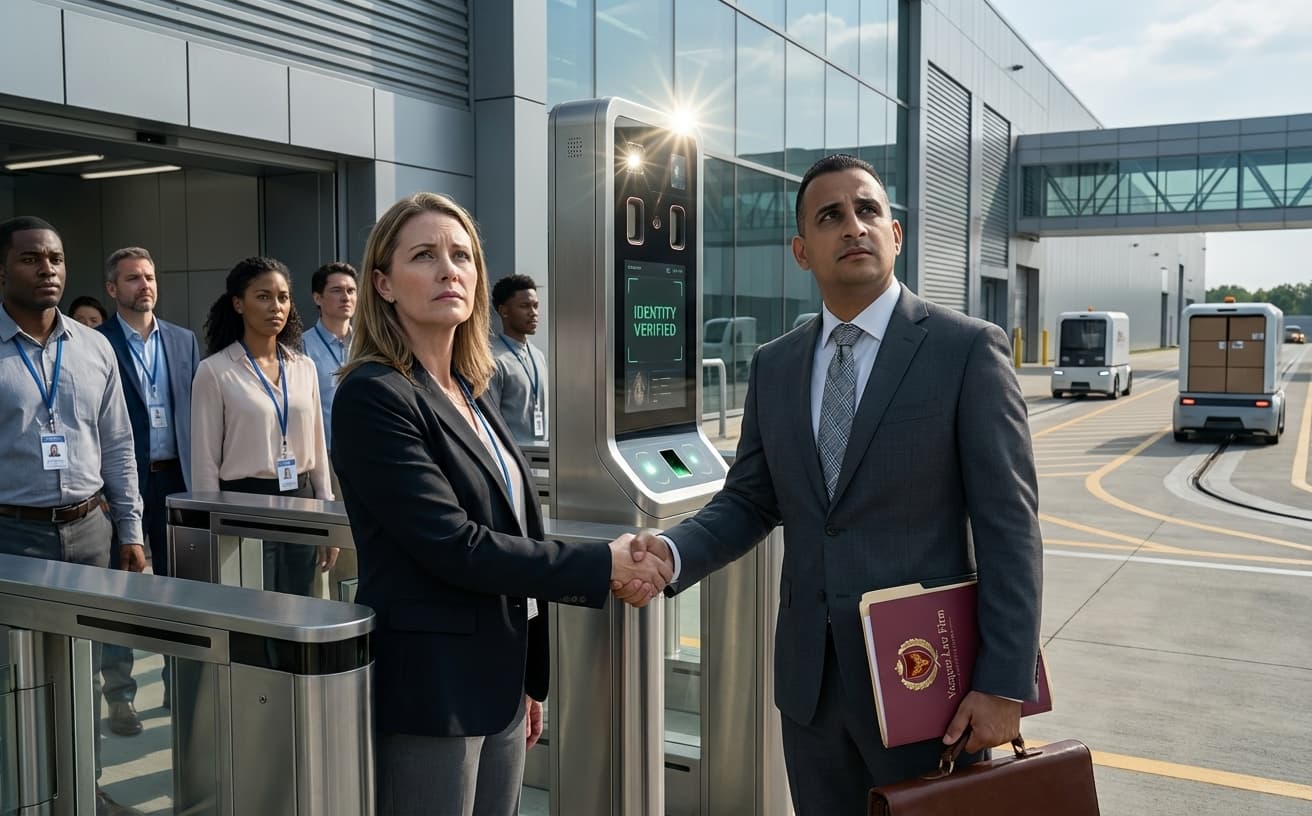
Ensuring HR immigration compliance is a critical responsibility for businesses operating in North Carolina, Florida, and across the United States. In 2026, employers face evolving regulations and heightened enforcement, making it essential to understand federal requirements like I-9 verification and E-Verify. Failing to comply can lead to significant fines, legal penalties, and reputational damage. This guide outlines key aspects of HR immigration compliance, offering practical steps to safeguard your business and maintain an authorized workforce. From initial hiring procedures to ongoing record-keeping, staying informed and proactive is paramount to avoiding costly mistakes and ensuring operational integrity.
Need help navigating complex HR immigration compliance? Our experienced attorneys are ready to fight for you. Se Habla Español.
Schedule Your Free Case Evaluation
Or call us now: 1-844-967-3536
Quick Answer
HR immigration compliance involves adhering to federal laws governing the employment of foreign nationals and ensuring all employees are authorized to work in the U.S. This includes proper completion of Form I-9, participation in E-Verify where required, and maintaining accurate records. Employers must stay updated on changing regulations to avoid penalties.
- Complete Form I-9 for every new hire.
- Verify employee identity and work authorization.
- Enroll in E-Verify if federal contractor or state-mandated.
- Maintain I-9 records for required periods.
- Conduct regular internal I-9 audits.
- Address discrepancies promptly and correctly.
Why HR Immigration Compliance Matters for Employers in 2026
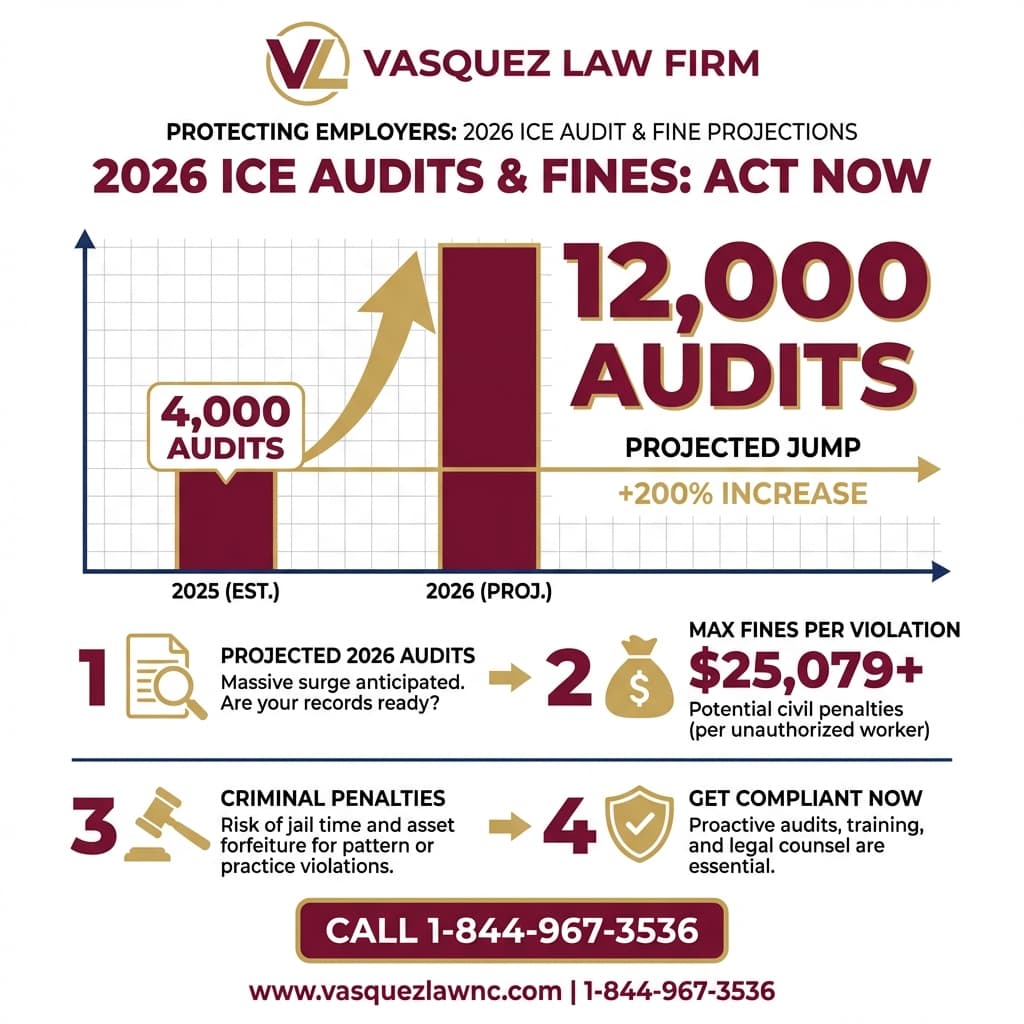
In 2025, U.S. Immigration and Customs Enforcement (ICE) conducted over 4,000 I-9 audits, resulting in millions of dollars in fines for non-compliant businesses. This demonstrates a clear trend of increased enforcement regarding HR immigration compliance. For employers, understanding and adhering to these regulations is not just a legal obligation, but a critical component of risk management. Non-compliance can lead to severe civil and criminal penalties, including fines ranging from hundreds to thousands of dollars per violation, debarment from federal contracts, and even criminal charges for knowing violations, as outlined in the Immigration and Nationality Act (INA).
Beyond the direct financial and legal repercussions, poor HR immigration compliance can also damage a company's reputation. Public perception of a business that knowingly employs unauthorized workers can lead to boycotts, loss of consumer trust, and difficulty attracting new talent. Maintaining a compliant workforce ensures fair competition and upholds ethical business practices. Proactive measures, such as comprehensive training for HR staff and regular internal audits, are essential to mitigate these risks and ensure that your company is prepared for any government scrutiny in 2026.
Key Components of HR Immigration Compliance: I-9 and E-Verify
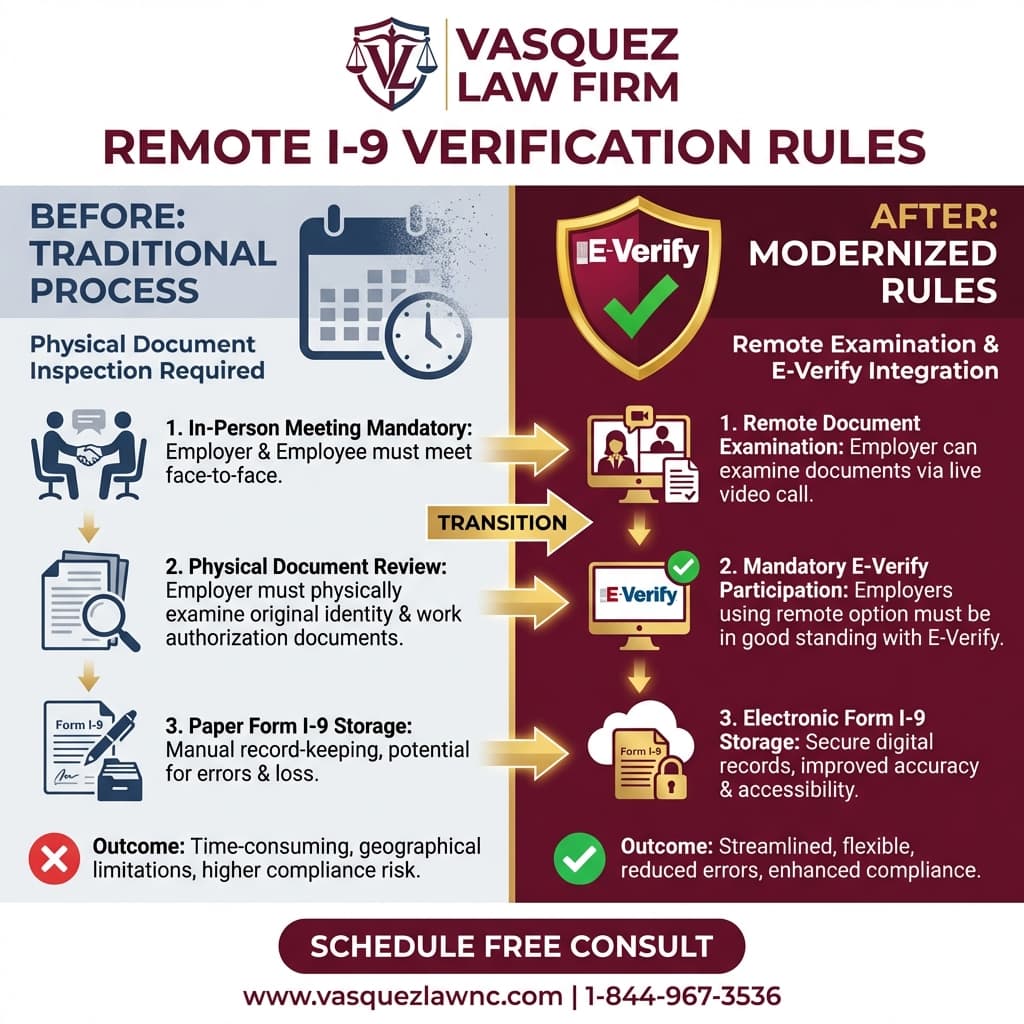
At the core of HR immigration compliance are two fundamental processes: Form I-9 verification and, for many employers, participation in E-Verify. Every employer in the United States must complete and retain a Form I-9, Employment Eligibility Verification, for each individual they hire, regardless of the individual's citizenship or national origin. This form verifies the identity and employment authorization of new employees. The process involves the employee completing Section 1 upon hire, and the employer completing Section 2 by physically examining documents and certifying their authenticity within three business days of the employee's first day of employment.
E-Verify, on the other hand, is an internet-based system operated by USCIS that allows employers to confirm the eligibility of their employees to work in the United States. While E-Verify compliance is voluntary for most employers, it is mandatory for federal contractors with certain contracts and for employers in specific states, including North Carolina and Florida, under certain conditions. For example, North Carolina generally requires state agencies and certain private employers to use E-Verify. Florida also mandates E-Verify for public employers and certain private employers. Employers must understand their obligations regarding both I-9 and E-Verify to ensure full HR immigration compliance.
I-9 Compliance Rules and Best Practices
Proper completion of Form I-9 is more complex than it might appear. Employers must ensure that Section 1 is completed by the employee on or before the first day of employment, and Section 2 is completed by the employer within three business days of the hire date. Crucially, employers cannot complete Section 2 of an I-9 before the employee's start date; doing so is a violation. Employers must also accept any valid document from the Lists of Acceptable Documents (List A, or a combination of List B and List C) presented by the employee, provided the documents appear genuine and relate to the employee. Discrimination based on national origin or citizenship status during the I-9 process is strictly prohibited under federal law.
Maintaining an I-9 policy that outlines clear procedures for completion, storage, and retention is a best practice. Employers must retain I-9 forms for three years after the date of hire, or one year after the date employment ends, whichever is later. Regular training for HR staff on I-9 requirements, including how to handle reverifications for employees with temporary work authorization, is essential. Additionally, conducting internal I-9 audits periodically can help identify and correct errors before a government audit, minimizing potential E-Verify fines and penalties. For assistance with I-9 compliance, consider seeking guidance from an attorney.
E-Verify Regulations and Requirements
E-Verify compliance adds another layer of responsibility for many employers. When an employer is required to use E-Verify, they must initiate a case for each new hire after the employee has accepted the job offer and completed Form I-9. The E-Verify check must be performed no later than the third business day after the employee's first day of employment. If E-Verify returns a Tentative Nonconfirmation (TNC), the employer must inform the employee and provide them with an opportunity to contest the finding. Employers cannot take adverse action against an employee based on a TNC unless and until the employee receives a Final Nonconfirmation.
E-Verify rules for employers also prohibit pre-screening job applicants through the system or using it to reverify existing employees who were not initially run through E-Verify. Violations of E-Verify regulations can lead to penalties, including fines and potential loss of the ability to participate in the program. Staying current with E-Verify regulations, especially for businesses in states like North Carolina and Florida where its use is often mandated, is vital for maintaining HR immigration compliance in 2026. Employers should regularly check the USCIS website for updates and guidance on E-Verify procedures.
Infographic: I-9 & E-Verify Compliance Checklist
This infographic provides a visual checklist for essential I-9 and E-Verify compliance steps, helping employers ensure they meet federal requirements and avoid common pitfalls.
Common HR Immigration Compliance Issues and How to Avoid Them
Many employers face challenges when it comes to maintaining strict HR immigration compliance. One of the most frequent issues is incorrect or incomplete I-9 forms. A U.S. Department of Justice (DOJ) report from 2025 indicated that over 60% of I-9 forms reviewed in audits contained at least one technical error, such as missing dates, incorrect fields, or unacceptable documents. These seemingly minor errors can still lead to substantial fines, even if the employee is legally authorized to work. Another common issue is failing to reverify employees whose work authorization has expired, which is critical for maintaining ongoing compliance.
To avoid these pitfalls, establish a clear, written I-9 policy and conduct regular, documented training for all personnel involved in the hiring process. Implement a tickler system or calendar reminders for reverification dates. Also, ensure that all documents presented for I-9 verification are carefully reviewed for authenticity; while employers are not required to be document experts, they must act in good faith. If an employer has knowledge that a document is fraudulent, they must not accept it. Regularly auditing your I-9 records, ideally with external legal counsel, can help identify and correct issues proactively before an official inspection.
Don't face your legal challenges alone. Our team is here to help you every step of the way.
Call today: 1-844-967-3536 | Se Habla Español
What to Expect During an ICE I-9 Audit
If your business receives a Notice of Inspection (NOI) from ICE, it signals the start of an I-9 audit. This notice typically gives employers at least three business days to produce their Forms I-9. During this period, it's crucial to immediately contact legal counsel experienced in HR immigration compliance. Attempting to correct I-9 forms after receiving an NOI is considered a violation and can lead to increased penalties. ICE agents will meticulously review each I-9 form for technical errors, substantive violations (such as employing unauthorized workers), and any signs of discrimination.
Following the review, ICE will issue a Notice of Technical or Procedural Failures, a Warning Notice, or a Notice of Intent to Fine (NIF). An NIF outlines the specific violations found and the proposed monetary penalties. Employers have the right to contest these findings and proposed fines through administrative hearings. Having legal representation during an ICE audit is invaluable, as an attorney can help review your I-9s, respond to ICE, negotiate penalties, and represent you in any administrative or court proceedings. Proactive HR immigration compliance helps minimize the risk and impact of an audit.
HR Immigration Compliance in North Carolina and Florida
While federal law dictates the core of HR immigration compliance, states like North Carolina and Florida have their own specific requirements, particularly concerning E-Verify. In North Carolina, state agencies, local government entities, and private employers with 25 or more employees must use E-Verify for all newly hired employees. This requirement, outlined in N.C. Gen. Stat. § 64-26, significantly impacts businesses in areas like Smithfield and across the state. Failure to comply can result in loss of state contracts and other penalties.
Similarly, Florida has robust E-Verify mandates. Public employers are required to use E-Verify for all new hires. Private employers in Florida are also mandated to use E-Verify if they contract with a public employer or if they have 25 or more employees, as per Florida Statute § 448.095. These state-specific requirements add a layer of complexity to HR immigration compliance, making it crucial for businesses in both North Carolina and Florida to understand and adhere to local mandates in addition to federal law. Consulting with a legal professional familiar with both state and federal regulations is often the best approach to ensure comprehensive compliance.
When to Call an Immigration Lawyer for HR Compliance
Navigating the intricacies of HR immigration compliance can be overwhelming, and even minor missteps can lead to significant consequences. If your business receives an NOI for an I-9 audit, immediate legal consultation is imperative. Similarly, if you discover potential I-9 or E-Verify violations, proactively seeking legal guidance can help you implement corrective actions and mitigate future penalties. Our immigration services at Vasquez Law Firm can help businesses in North Carolina and Florida understand their obligations.
Consider contacting an immigration lawyer if you are: expanding your workforce, hiring foreign nationals, merging with another company (which often triggers I-9 review), or if you have specific questions about E-Verify rules for employers. An attorney can also assist with developing robust HR immigration compliance policies, conducting internal audits, and providing training for your HR team. Proactive legal support ensures your business remains compliant and protected in the evolving immigration landscape of 2026.
About Vasquez Law Firm
At Vasquez Law Firm, we combine compassion with aggressive representation. Our motto "Yo Peleo" (I Fight) reflects our commitment to standing up for your rights and protecting your business interests. With over 15 years of dedicated experience, Attorney Vasquez understands the critical importance of meticulous HR immigration compliance for businesses of all sizes, from local enterprises in Smithfield to companies operating across North Carolina and Florida.
- Bilingual Support: Se Habla Español - our team is fully bilingual, ensuring clear communication and understanding.
- Service Areas: We provide comprehensive immigration services across North Carolina, Florida, and nationwide. We also handle Personal Injury, Workers' Compensation, Criminal Defense, Family Law, and Traffic cases exclusively in North Carolina.
- Experience: With more than 15 years in the legal field, Attorney Vasquez has a proven track record of guiding clients through complex legal matters.
- Results: Our firm is dedicated to achieving the best possible outcomes, fighting tirelessly for our clients' rights and success.
Attorney Trust and Experience
Attorney Vasquez holds a Juris Doctor degree and is admitted to practice in both the North Carolina State Bar and Florida Bar. With over 15 years of dedicated legal experience, he has built a reputation for providing personalized attention and achieving favorable outcomes for his clients. He is committed to helping businesses navigate the complexities of HR immigration compliance, ensuring they meet their legal obligations and avoid costly penalties. For more information, please visit our attorney profile.
Frequently Asked Questions
What are the primary HR immigration compliance requirements in 2026?
The primary requirements include completing Form I-9 for all new hires, verifying employment eligibility, and, for many employers, participating in E-Verify. Employers must also maintain accurate records, adhere to anti-discrimination laws during the hiring process, and stay updated on any changes to federal or state immigration regulations. Compliance helps avoid fines and legal issues.
How long do employees have to provide I-9 documents?
Employees must complete Section 1 of Form I-9 on or before their first day of employment. They then have three business days from their first day of employment to provide acceptable documents from the Lists of Acceptable Documents (List A, or a combination of List B and C) to the employer for verification.
Can an employer complete Section 2 of I-9 before the start date?
No, an employer cannot complete Section 2 of Form I-9 before the employee's actual start date. Section 2 must be completed by the employer within three business days of the employee's first day of employment, after physically examining the identity and work authorization documents presented by the employee.
What are the E-Verify rules for employers in North Carolina?
In North Carolina, state agencies, local government entities, and private employers with 25 or more employees are generally required to use E-Verify for all newly hired employees. This is mandated by state law and is crucial for HR immigration compliance within the state to avoid penalties.
What are common HR compliance issues related to immigration?
Common issues include incomplete or incorrectly filled-out I-9 forms, failure to timely reverify expiring work authorizations, accepting fraudulent documents, and discriminatory practices during the I-9 process. Not understanding E-Verify regulations or failing to enroll when mandated also poses significant compliance risks.
What is the role of HR in immigration compliance?
HR's role is crucial in ensuring the company adheres to all federal and state immigration laws related to employment. This includes managing I-9 forms, handling E-Verify processes, maintaining employee records, conducting internal audits, and staying informed about immigration policy changes to protect the company from legal repercussions.
What are the penalties for I-9 and E-Verify non-compliance?
Penalties can range from civil monetary fines for technical errors to substantial fines and even criminal charges for knowingly employing unauthorized workers. Fines for I-9 violations can be hundreds to thousands of dollars per form, and E-Verify non-compliance can lead to loss of program participation and other penalties.
How can Vasquez Law Firm help with HR immigration compliance?
Vasquez Law Firm assists businesses in North Carolina, Florida, and nationwide with HR immigration compliance by providing legal guidance on I-9 and E-Verify requirements, conducting internal audits, developing compliance policies, and representing employers during government inspections or audits. We help mitigate risks and ensure legal adherence.
Are there any recent changes to HR immigration compliance in 2026?
As of 2026, continuous monitoring of federal and state legislative updates is essential. While specific new laws may vary, there is generally an increased focus on enforcement and accountability. Employers should consult USCIS and state labor department websites regularly and seek legal counsel for specific updates impacting their operations.
What is the difference between I-9 compliance and E-Verify compliance?
I-9 compliance is a federal mandate for all U.S. employers to verify every new hire's identity and work authorization using Form I-9. E-Verify is an online system that electronically confirms work eligibility with federal databases; it is mandatory for federal contractors and some state-specific employers, but voluntary for others.
Sources and References
- U.S. Citizenship and Immigration Services (USCIS) - I-9 Central
- U.S. Department of Justice - Office of the Chief Administrative Hearing Officer (OCAHO)
- North Carolina General Statutes § 64-26 - E-Verify Requirements
- Florida Statute § 448.095 - Employment of Unauthorized Aliens
Ready to take the next step? Contact Vasquez Law Firm today for a free, confidential consultation. We're committed to fighting for your rights and achieving the best possible outcome for your case.
Start Your Free Case Evaluation Now
Call us: 1-844-967-3536
Se Habla Español - Estamos aquí para ayudarle.

William Vasquez
Founder & CEO, Vasquez Law Firm, PLLC
William Vasquez is the founder and CEO of Vasquez Law Firm, PLLC, a results-driven firm specializing in immigration, criminal defense, personal injury, and workers' compensation. A U.S. Air Force veteran and recipient of the Joint Service Achievement Medal, William is dedicated to fiercely fighting for his clients' rights.
Related Legal Services
Need legal help? Learn more about our immigration legal services, or contact us for a free evaluation.
You can also visit North Carolina immigration lawyers for more information.