A Complete Guide to Denver ICE Policy for Immigrants in 2026
Understand the Denver ICE policy and its impact on immigration in 2026. Learn your rights and how local enforcement works. Contact Vasquez Law for help.
Published on February 27, 2026
Talk to an immigration attorney
Free call. A clear plan for your case.
Free & confidential · Se habla espanol · 24/7
Have questions? Talk to an attorney - free evaluation.
Call 1-844-967-3536Worried how the latest immigration news affects you?
Schedule a confidential case review with an immigration attorney - know exactly where you stand.
A Complete Guide to Denver ICE Policy for Immigrants in 2026
Navigating immigration enforcement can be complex, especially when local policies intersect with federal directives. In Denver, the local approach to federal immigration enforcement, often referred to as the Denver ICE policy, has drawn significant attention. This policy outlines how local law enforcement agencies interact with U.S. Immigration and Customs Enforcement (ICE), aiming to protect city residents while adhering to legal mandates. Understanding these nuances is crucial for immigrants, their families, and advocates in 2026. Vasquez Law Firm is dedicated to providing clarity and legal support in these challenging situations.
Need help with your immigration case? Our experienced attorneys are ready to fight for you. Se Habla Español.
Schedule Your Free Case Evaluation
Or call us now: 1-844-967-3536
Quick Answer: Denver ICE Policy in 2026
The Denver ICE policy, formalized by mayoral executive orders, generally limits local law enforcement cooperation with federal ICE agents in 2026. This means Denver police typically do not proactively engage in immigration enforcement, nor do they hold individuals solely based on ICE detainer requests without a judicial warrant. The policy aims to foster trust between immigrant communities and local authorities.
- Local police do not ask about immigration status.
- ICE detainers require a judicial warrant for local compliance.
- Focus is on public safety, not federal immigration enforcement.
- Protects vulnerable populations from undue fear of local police.
- The policy has been reinforced in recent years to strengthen protections.
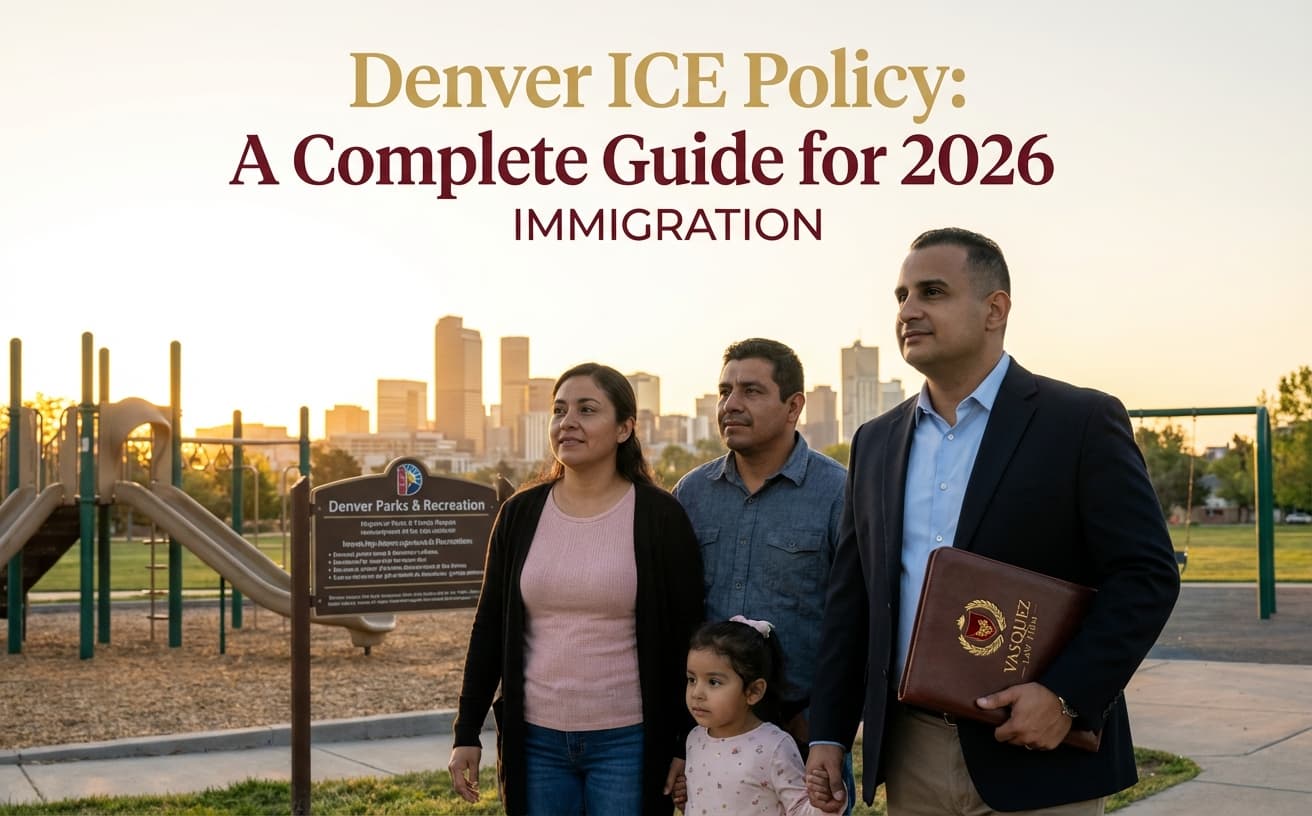
Infographic: Denver ICE Policy Overview
This infographic illustrates the core principles and protections provided by Denver's local policies regarding ICE interactions. It highlights key aspects that differentiate Denver's approach from other jurisdictions and emphasizes the city's commitment to its residents.
Key Elements:
- Limited Cooperation: Denver police generally do not assist ICE in civil immigration enforcement.
- Warrant Requirement: Judicial warrants are typically necessary for local authorities to honor ICE detainer requests.
- Trust Building: Aims to encourage immigrant communities to report crimes without fear of deportation.
- Resident Protection: Prioritizes the safety and well-being of all Denver residents, regardless of immigration status.
Call Vasquez Law Firm today for guidance on local immigration policies. Se Habla Español.
Understanding Denver's ICE Policy and Local Enforcement
The city of Denver has taken a distinct stance on immigration enforcement, establishing policies that limit the involvement of local law enforcement in federal immigration matters. This approach is rooted in the belief that local police should focus on community safety and crime fighting, rather than acting as extensions of federal immigration agencies. As of 2026, the Denver ICE policy reflects a commitment to protecting its diverse residents and fostering trust within immigrant communities.
Historically, cities like Denver have implemented these policies to ensure that individuals, regardless of their immigration status, feel safe reporting crimes or seeking assistance from local authorities without fear of being turned over to ICE. This is a critical distinction from jurisdictions that might have more extensive cooperation agreements with federal immigration agencies, such as 287(g) agreements. These local policies can significantly impact how immigration enforcement plays out on the ground.
For individuals residing in Denver, understanding the specifics of these local policies is vital. It influences what to expect if you encounter local police and clarifies the boundaries of their involvement in immigration-related situations. While federal law always supersedes local ordinances, Denver's policies create a layer of protection and specific operational guidelines for its police force. This can provide a degree of reassurance for those concerned about their immigration status.
Executive Orders and Their Impact on Local Police
A cornerstone of Denver's approach to immigration enforcement is a series of executive orders issued by the Denver mayor. These orders specifically instruct local police departments on how to interact with ICE. For example, the mayor's orders often stipulate that Denver police will not hold individuals solely based on an ICE detainer request unless a criminal judicial warrant is also presented. This is a key difference from a civil detainer, which is not issued by a judge and therefore does not compel local law enforcement to hold someone.
These executive orders aim to prevent local resources from being diverted to federal immigration tasks and to ensure that local police maintain their primary focus on community policing and public safety. The goal is to avoid situations where residents, fearing immigration consequences, might hesitate to call 911 or report crimes. The impact of these orders is seen in daily interactions, where Denver police are generally not asking about immigration status or actively participating in ICE operations within the city limits.
Navigating ICE Interactions in Denver: What to Expect
Even with protective local policies, federal immigration law enforcement operates independently. ICE agents can still conduct operations in Denver, including arrests and detentions, as long as they adhere to federal law. However, the Denver ICE policy means that local police are generally not assisting these federal operations. This creates a different landscape for individuals compared to areas without such local protections. Knowing your rights is paramount when encountering any law enforcement officer, federal or local.
If you are approached by someone identifying as an ICE agent in Denver, it's important to understand your rights, such as the right to remain silent and the right to speak with an attorney. You are generally not required to open your door if agents do not have a warrant signed by a judge. The legal landscape surrounding immigration enforcement is constantly evolving, making it essential to stay informed about both federal regulations and local directives. Vasquez Law Firm can provide up-to-date guidance on these matters.
For those living in Smithfield, North Carolina, or anywhere in Florida, it's crucial to remember that local policies can differ significantly from Denver's. While the federal framework is consistent, how ICE operates and interacts with local authorities varies by jurisdiction. This highlights the importance of consulting with an immigration attorney who understands the specific nuances of your local area and can provide tailored advice. Our firm handles immigration cases across North Carolina, Florida, and nationwide.
Know Your Rights: A Checklist for Encounters
- Remain Silent: You have the right to remain silent. You can say, "I do not wish to speak with you without my attorney present."
- Do Not Open Your Door: If ICE agents are at your home, do not open the door unless they have a warrant signed by a judge. Ask them to slide the warrant under the door or hold it up to a window.
- Ask for a Warrant: If agents claim to have a warrant, ask to see it. A warrant for arrest or search must be signed by a judge, not just an administrative warrant from ICE.
- Do Not Sign Anything: Do not sign any documents without first speaking to an attorney.
- Record the Interaction: If it is safe to do so, you have the right to film or record public interactions with law enforcement.
- Contact an Attorney Immediately: If you or a loved one is detained, contact an immigration attorney as soon as possible.
Challenges and Controversies of Denver ICE Policy
The implementation of Denver's ICE policy has not been without its challenges and controversies. While proponents argue that these policies protect human rights and enhance public safety by encouraging community cooperation, critics often contend that they hinder federal immigration enforcement and create "sanctuary" environments. These debates reflect broader national discussions about federalism, state and local sovereignty, and immigration reform in the United States. The tension between federal and local authority is a constant theme in immigration law.
One of the main points of contention revolves around ICE detainers. Federal immigration authorities often issue detainers requesting that local law enforcement hold individuals for up to 48 hours after they would otherwise be released, to allow ICE to take them into custody. Denver's policy, by requiring a judicial warrant for compliance, challenges this practice, leading to occasional disagreements and legal battles between the city and federal agencies. These disputes underscore the complex legal landscape that defines immigration enforcement in 2026.
Furthermore, the practical application of these policies can sometimes be confusing for both law enforcement officers and the public. There's a fine line between respecting local directives and complying with federal mandates. This complexity is why having clear legal counsel is so important. Vasquez Law Firm is adept at explaining these intricate legal frameworks and advocating for clients affected by these policies, whether in Denver, North Carolina, Florida, or elsewhere.
Don't face your legal challenges alone. Our team is here to help you every step of the way.
Call today: 1-844-967-3536 | Se Habla Español
Impact on Immigrant Communities in Denver
The Denver ICE policy has a profound impact on immigrant communities within the city. By limiting local police cooperation with ICE, the policy aims to reduce fear and build trust, encouraging immigrants to engage with local government services and report crimes without fear of immigration consequences. This can lead to safer communities for everyone, as crime goes unreported when residents are afraid of law enforcement. For many Dreamers and other undocumented residents, these policies offer a vital sense of security.
However, it is crucial to understand that these local policies do not grant immunity from federal immigration law. ICE still conducts operations, and individuals can still be subject to arrest and deportation proceedings. The policy primarily defines the role of local police, not federal agents. Therefore, while the policies offer certain protections, they do not eliminate the need for vigilance and legal preparedness. Immigrant rights organizations and legal aid groups in Denver often work to educate the community on these distinctions.
For families with mixed immigration statuses, the Denver ICE policy can provide some peace of mind regarding interactions with local authorities, but the underlying federal immigration challenges remain. This dual reality means that while local protections are valuable, comprehensive legal strategies are still essential for navigating the broader immigration system. Vasquez Law Firm understands these complex dynamics and provides compassionate yet aggressive representation to help clients achieve their immigration goals.
Resources for Denver Immigrants
- Legal Aid Organizations: Many non-profits offer free or low-cost legal services for immigrants in Denver.
- Community Organizations: Local groups provide support, education, and advocacy for immigrant rights.
- Know Your Rights Workshops: Regularly offered by advocacy groups to inform residents about their legal protections.
- Immigration Attorneys: Consulting with a private immigration lawyer is crucial for personalized advice and representation.
NC, FL, and Nationwide Immigration Context
While this article focuses on the Denver ICE policy, it's important to understand how immigration enforcement varies across the United States. Immigration law is primarily federal, meaning the U.S. Citizenship and Immigration Services (USCIS), U.S. Department of State, and ICE operate under federal statutes like the Immigration and Nationality Act (INA). However, the implementation and local interactions of these federal agencies can differ significantly based on state and local policies, as seen in Denver.
North Carolina Immigration Enforcement
In North Carolina, the landscape of ICE policy and local law enforcement cooperation can be quite different from Denver. Many counties and cities in North Carolina have varying levels of cooperation with ICE, including some with 287(g) agreements. These agreements allow deputized local officers to perform certain immigration enforcement functions. This means that in Smithfield, NC, and other areas, local police may have more direct involvement in identifying and detaining individuals for immigration violations. It is crucial for residents in North Carolina to be aware of their specific local policies, which can impact encounters with law enforcement. Vasquez Law Firm serves clients throughout North Carolina, providing critical legal guidance.
Florida Immigration Enforcement
Florida's approach to immigration enforcement also differs significantly from Denver. Florida has enacted state laws that mandate cooperation with federal immigration authorities. For instance, some Florida laws require local law enforcement agencies to use their best efforts to support the enforcement of federal immigration laws and to comply with ICE detainer requests. This can lead to more frequent transfers of individuals from local custody to ICE custody. For those in Florida, understanding these state-level mandates is essential, as they can directly affect interactions with local police and sheriffs. Vasquez Law Firm assists clients across Florida with a wide range of immigration matters.
Nationwide Immigration Overview (General Concepts)
Across the nation, the federal government maintains ultimate authority over immigration matters. However, the patchwork of local and state policies creates a complex environment. Some jurisdictions are considered 'sanctuary cities' with policies similar to Denver's, while others have strict cooperation mandates. This variability underscores the need for individuals to seek legal counsel specific to their location and circumstances. Understanding the general principles of federal immigration law, such as due process under the INA, is universal, but local enforcement practices can introduce significant differences in practical outcomes. Our firm provides immigration services nationwide, helping clients navigate these diverse legal landscapes.
When to Call an Immigration Lawyer for Denver ICE Policy Concerns
Understanding the Denver ICE policy is a good first step, but navigating immigration challenges requires expert legal guidance. There are specific situations where contacting an immigration attorney immediately is critical to protect your rights and ensure the best possible outcome. Vasquez Law Firm specializes in immigration law, offering compassionate yet aggressive representation.
- If you or a loved one has been detained by ICE in Denver or elsewhere: Time is of the essence in detention cases.
- If you have received a Notice to Appear (NTA) in Immigration Court: This means formal deportation proceedings have begun.
- If you are facing removal or deportation proceedings: An attorney can explore all available defenses and relief options.
- If you are concerned about an ICE raid or enforcement action in your community: Proactive legal advice can prepare you.
- If you have questions about your immigration status or eligibility for benefits: An attorney can provide clear, accurate information.
- If you believe your rights have been violated by law enforcement: An attorney can help you understand your options for recourse.
- If you are applying for a visa, green card, or naturalization and encounter complications: Expert guidance can prevent costly mistakes.
- If you need to understand the interaction between local police and federal immigration agents in your specific area: Local policies vary greatly.
About Vasquez Law Firm
At Vasquez Law Firm, we combine compassion with aggressive representation. Our motto "Yo Peleo" (I Fight) reflects our commitment to standing up for your rights and those of your family. We understand the anxieties and complexities that come with immigration challenges, and we are here to provide dedicated legal support every step of the way.
- Bilingual Support: Se Habla Español - our team is fully bilingual, ensuring clear communication and understanding.
- Service Areas: We proudly serve clients in North Carolina, Florida, and provide nationwide immigration services.
- Experience: With over 15 years of dedicated experience, Attorney Vasquez has a proven track record of helping clients navigate complex legal matters.
- Results: We are committed to achieving favorable outcomes, handling thousands of successful cases across multiple practice areas, with a strong focus on immigration.
Attorney Trust and Experience
Attorney Vasquez holds a Juris Doctor degree and is admitted to practice in both the North Carolina State Bar and Florida Bar. With over 15 years of dedicated legal experience, he has built a reputation for providing personalized attention and achieving favorable outcomes for his clients. He understands the nuances of federal immigration law and how local policies, like the Denver ICE policy, can affect individuals. Our firm stands ready to be your advocate, fighting tirelessly for your future.
Need immigration help? Our immigration attorneys can review your case.
Ready to take the next step? Contact Vasquez Law Firm today for a free, confidential consultation. We're committed to fighting for your rights and achieving the best possible outcome for your case.
Start Your Free Case Evaluation Now
Call us: 1-844-967-3536
Se Habla Español - Estamos aquí para ayudarle.
Frequently Asked Questions About Denver ICE Policy
What exactly is the Denver ICE policy?
The Denver ICE policy refers to a set of local executive orders and guidelines that limit how Denver city agencies, including local police, cooperate with federal immigration enforcement (ICE). It generally prohibits local police from honoring ICE detainer requests without a judicial warrant and from inquiring about immigration status. This policy aims to build trust within immigrant communities and focus local resources on public safety rather than federal immigration matters.
Does the Denver ICE policy mean ICE cannot operate in Denver?
No, the Denver ICE policy does not prevent federal ICE agents from operating within the city. ICE is a federal agency and can conduct arrests, investigations, and enforcement actions in Denver, provided they comply with federal law and constitutional protections. The policy primarily restricts the involvement and assistance of local Denver law enforcement in these federal operations, creating a layer of local protection.
What is an ICE detainer, and how does Denver handle it?
An ICE detainer is a request from ICE asking local law enforcement to hold an individual suspected of an immigration violation for an additional 48 hours after they would otherwise be released, allowing ICE to take custody. Under the Denver ICE policy, local police generally do not honor these civil detainer requests unless accompanied by a criminal warrant signed by a judge, ensuring due process.
How does Denver's policy differ from other cities in North Carolina or Florida?
Denver's policy is generally more protective of immigrant rights compared to many jurisdictions in North Carolina and Florida. NC and FL have varying levels of cooperation with ICE, with some counties and the state of Florida mandating cooperation with federal immigration enforcement and honoring ICE detainers. This means local police in NC or FL might have more direct involvement in immigration enforcement than in Denver.
What should I do if ICE agents come to my home in Denver?
If ICE agents come to your home, you are generally not required to open your door unless they have a warrant signed by a judge. Ask them to show you the warrant through the window or slide it under the door. Do not open the door if they only have an administrative warrant (not signed by a judge) or no warrant. You have the right to remain silent and should contact an immigration attorney immediately.
Does the Denver ICE policy protect individuals from deportation?
While the Denver ICE policy limits local police cooperation, it does not prevent or stop federal deportation proceedings. If ICE initiates removal proceedings, you will still need to defend your case in immigration court. The policy primarily affects initial encounters with local law enforcement, potentially reducing the likelihood of being transferred to ICE custody through local channels. Legal representation is crucial for deportation defense.
Can Denver police ask about my immigration status?
Under the Denver ICE policy, local police officers are generally prohibited from inquiring about an individual's immigration status. Their focus is on enforcing local laws and maintaining public safety, not on federal immigration enforcement. This is a key aspect designed to encourage all residents, regardless of status, to trust and cooperate with local law enforcement without fear.
Where can I find legal help for immigration matters in Denver or elsewhere?
For legal help with immigration matters in Denver, North Carolina, Florida, or nationwide, you should contact an experienced immigration attorney. Law firms like Vasquez Law Firm specialize in immigration law and can provide personalized advice, represent you in court, and help you navigate complex policies. Community legal aid organizations also offer assistance and resources for immigrants.
What is the goal of Denver's ICE policy?
The primary goal of Denver's ICE policy is to enhance public safety by fostering trust between immigrant communities and local law enforcement. By limiting local police involvement in federal immigration enforcement, the city aims to ensure that residents feel comfortable reporting crimes, seeking emergency services, and engaging with city programs without fear of immigration consequences, ultimately making the city safer for everyone.
Are there any legal challenges to Denver's ICE policy?
Yes, policies like Denver's often face legal challenges, typically from federal agencies or state governments that argue such policies impede federal immigration law enforcement. These challenges usually involve debates over federal preemption and the extent of local authority in immigration matters. The legal landscape is dynamic, with ongoing court cases shaping how these policies are implemented and enforced across the country.
Sources and References


William Vasquez
Founder & CEO, Vasquez Law Firm, PLLC
William Vasquez is the founder and CEO of Vasquez Law Firm, PLLC, a results-driven firm specializing in immigration, criminal defense, personal injury, and workers' compensation. A U.S. Air Force veteran and recipient of the Joint Service Achievement Medal, William is dedicated to fiercely fighting for his clients' rights.
Related Legal Services
Need legal help? Learn more about speak with an immigration lawyer, or contact us for a free evaluation.
You can also visit immigration lawyers serving all of North Carolina for more information.