How Cuba Immigration Works: What to Know in 2026
Curious about Cuba immigration in 2026? Learn key steps, policies, and how to immigrate. Contact Vasquez Law for a free consultation in Orlando.
Published on May 4, 2026
Talk to an immigration attorney
Free call. A clear plan for your case.
Free & confidential · Se habla espanol · 24/7

Have questions? Talk to an attorney - free evaluation.
Call 1-844-967-3536Worried how the latest immigration news affects you?
Schedule a confidential case review with an immigration attorney - know exactly where you stand.
USCIS Case Status
Check your USCIS case status
Enter your receipt number and get the official status. Free, no registration.
How Cuba Immigration Works: What to Know in 2026
Cuba immigration remains a vital topic for many seeking to move to the United States, especially residents of Orlando and across Florida. In 2026, the process of immigrating from Cuba involves navigating complex federal regulations shaped by decades of policy changes. Understanding the history and current landscape of Cuba immigration can help Dreamers and other aspiring immigrants know their rights and options. This guide covers Cuba immigration policies, key steps to apply, common pitfalls, and what to expect during the process. Whether you want to apply for asylum, family reunification, or other programs, our experienced immigration attorneys at Vasquez Law Firm are here to support you with bilingual services and personalized attention.
Need help with your case? Our experienced attorneys are ready to fight for you. Se Habla Español.
Or call us now: 1-844-967-3536
Quick Answer
Cuba immigration involves applying through federal programs such as asylum or family reunification, following current policies that have evolved since the 1960s. Applicants in Orlando should prepare documents carefully and consider legal assistance.
- Federal law governs Cuban immigrant eligibility
- Policies changed significantly after the 1990s
- Family and humanitarian grounds are main pathways
- Legal help improves chances of success
- Prepare for interviews and background checks
- Expect processing times from months to years
Overview of Cuba Immigration History
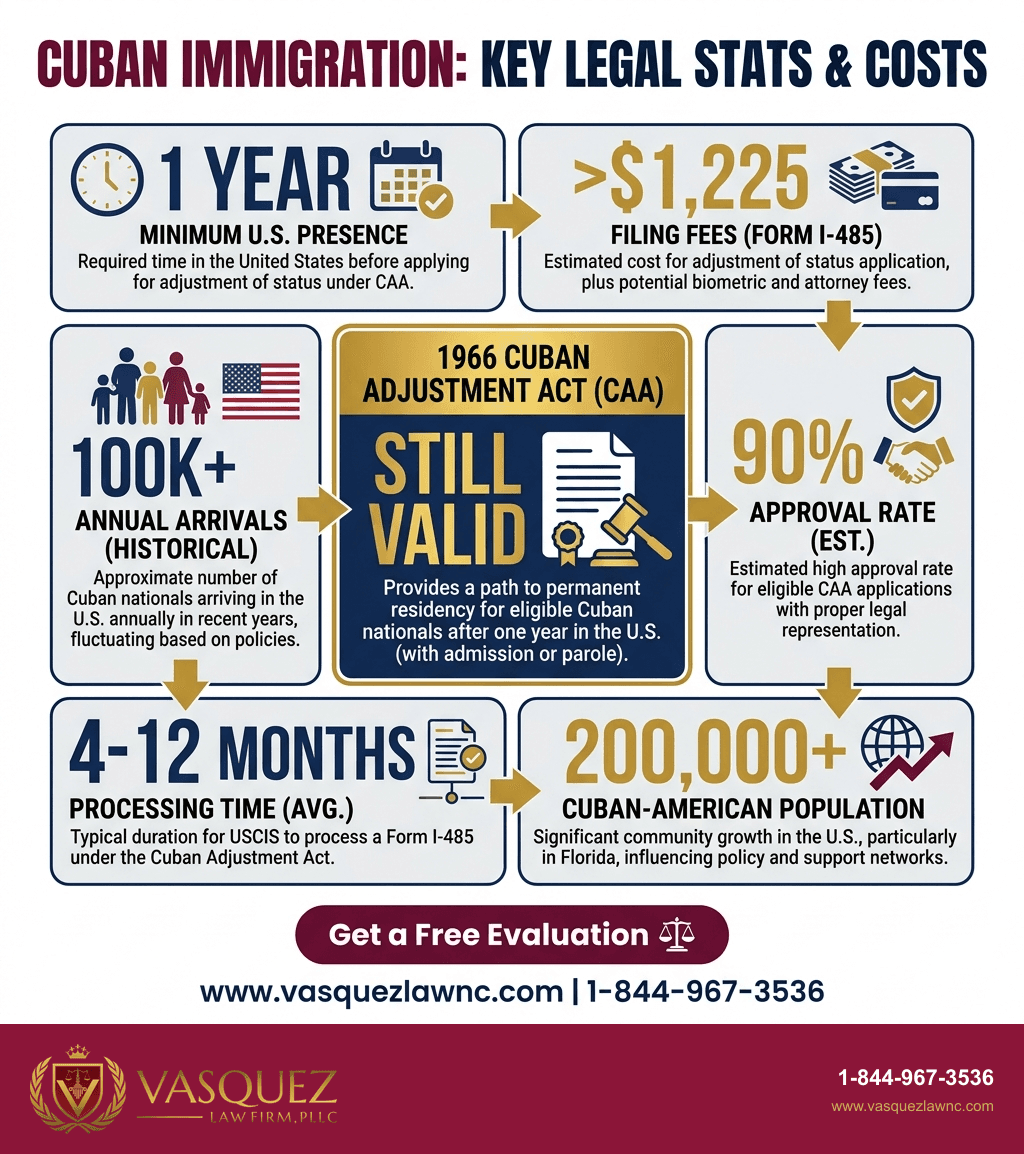
The major waves of Cuba immigration to the United States started in the early 1960s after the Cuban Revolution. Over a million Cubans have emigrated through various forms of legal and humanitarian pathways. The 1960s saw thousands fleeing political oppression under Castro's regime. Later events like the 1994 Balsero crisis brought attention to dangerous sea crossings. Policies such as the Cuban Adjustment Act of 1966 allowed Cuban natives a special path to permanent residency. However, in 2017, some of these privileges were modified, affecting new immigration flows.
Understanding this history clarifies why Cuba immigration policies remain uniquely complex. The political relationship between the U.S. and Cuba shapes many federal rules. For Orlando residents with Cuban roots or connections, knowing this background helps understand your rights and options under current law.
Understanding Cuba Immigration Policies Today
The current Cuba immigration policy governs who qualifies for refugee status, asylum, or permanent residency. Unlike other immigrant groups, Cubans have historically received certain preferential treatments such as parole entry and adjustment rights. However, those policies have tightened in recent years. As of 2026, to qualify for immigration benefits from Cuba, applicants must meet strict eligibility under U.S. Citizenship and Immigration Services (USCIS) rules.
Common pathways include:
- Refugee or asylum status based on persecution fears
- Family-sponsored visas for relatives in the U.S.
- Humanitarian parole under specific conditions
Knowing the latest policy updates ensures you understand the necessary requirements to immigrate legally. Cuban immigrants in Florida or North Carolina must also plan for local challenges, such as filing deadlines and interview locations.
Step-by-Step: How to Immigrate from Cuba
- Determine Your Eligibility: Review the specific immigration category that fits your situation—whether asylum, family reunification, or refugee status.
- Gather Required Documents: Collect birth certificates, passports, police clearances, and evidence supporting your case.
- Apply Through USCIS or Refugee Programs: Complete necessary forms like Form I-589 for asylum or Form I-130 for family petitions, submitting them properly.
- Attend Interviews and Biometrics: USCIS schedules appointments to verify identity and eligibility.
- Wait for Decision: Processing times vary from months to years depending on case specifics and immigration category.
- Adjust Status If Approved: Eligible applicants may file to adjust status to lawful permanent resident under 8 U.S.C. § 1255.
Documents Checklist
- Valid Cuban passport and identity documents
- Proof of residence and family ties
- Evidence of persecution or humanitarian need
- Police and medical clearances
- Previously approved USCIS notices, if any
Common Mistakes to Avoid in Cuba Immigration
- Incomplete Applications: Not filling out forms fully can delay or deny your case. Make sure every section is complete and true.
- Missing Deadlines: USCIS enforces strict filing dates. Late submissions can lead to dismissal.
- Failing to Provide Evidence: Lack of proof for asylum claims or family relations undermines your chances.
- Ignoring Legal Updates: Changes after 2017 require applicants to check current laws carefully.
- Not Hiring an Attorney: Navigating policy and court proceedings alone risks costly mistakes.
- Failing to Attend Interviews: Skipping USCIS appointments without notice results in denial.
- Incorrect Information: Discrepancies can be grounds for visa refusal or removal proceedings.
If you only remember one thing: Getting accurate legal advice early significantly improves your Cuba immigration outcome.
Timeline and What to Expect in the Process
- Month 1-3: Eligibility assessment and document gathering.
- Month 4-6: Application filing with USCIS or refugee agencies.
- Month 6-12: Biometrics appointment and security checks.
- Month 12-24: Interview scheduling and completion.
- Month 18-36: Decision issuance and status adjustment if granted.
Timeline varies by program and backlog. Active monitoring and timely response to USCIS requests help avoid delays.
Costs and Fees for Cuba Immigration
- USCIS filing fees range from $50 for asylum applications to over $1,000 for permanent resident processing.
- Medical examination fees vary depending on provider location.
- Legal representation fees depend on case complexity; many firms offer consultation fee waivers.
- Translation and document certification costs are additional factors.
- Travel expenses for interviews may apply especially for applicants outside major cities like Orlando.
Vasquez Law Firm can provide a free case evaluation to review fee estimates specific to your case. Understanding costs upfront helps prevent surprises.
When to Call a Lawyer for Assistance
- Facing visa denial or request for evidence
- Applying for asylum with complex persecution claims
- Dealing with removal or deportation proceedings
- Needing help with family-based visa petitions
- Experiencing delays without status updates
- Confused by changes in Cuba immigration policy
- Unsure about eligibility or required documentation
- Preparing for USCIS interviews or hearings
About Vasquez Law Firm
At Vasquez Law Firm, we combine compassion with aggressive representation. Our motto "Yo Peleo®" (I Fight) reflects our commitment to standing up for your rights.
- Bilingual Support: Se Habla Español — Spanish-speaking attorneys and staff available
- Service Areas: North Carolina, Florida, and nationwide immigration services
- Experience: Over 30 years helping clients navigate complex legal matters
- Results: Thousands of successful cases across multiple practice areas
Attorney Trust and Experience
William J. Vásquez is admitted to the North Carolina State Bar (2011) and to the U.S. Courts of Appeals for the 4th, 5th, 6th, and 11th Circuits. Florida-jurisdiction matters at the firm are handled by Florida Bar attorney Alekssandra Lopez. The firm has provided dedicated legal representation since 2011, with personalized attention to each client's case.
Don't wait to get the help you deserve. Call us now for immediate assistance.
Se Habla Español
Frequently Asked Questions
Can someone immigrate to Cuba?
Cuba generally does not have an open immigration policy for foreigners, except in very limited cases such as diplomats or special business arrangements. Most immigration to Cuba is tightly controlled by the government. Those interested should consult Cuban consulate resources for current rules.
What fruit is Cuba known for?
Cuba is widely known for tropical fruits like mangoes, guavas, and the Cuban pineapple. These fruits are part of the island's agricultural heritage and often associated culturally with Cuba.
Is $100 dollars a lot in Cuba?
Due to the economic conditions and average income on the island, $100 can be a significant amount for many Cubans. However, prices and purchasing power differ greatly between tourist areas and local communities.
Why do most Cubans identify as white?
Demographic surveys show a majority of Cubans classify themselves as white due to the island’s historical and ethnic mix. This identity reflects a complex interplay of ancestry, culture, and social classifications unique to Cuba.
What is the current Cuban immigration policy for refugees?
Currently, Cuban nationals seeking refugee status must meet U.S. criteria for asylum or refugee admission, proving fear of persecution based on protected grounds. The policy has evolved since the Cuban Adjustment Act, with USCIS evaluating each claim carefully.
How does the Cuban Adjustment Act affect immigrants?
The Cuban Adjustment Act allows Cuban natives or citizens who have been physically present in the U.S. for at least one year to apply for permanent residency. Changes since 2017 have modified some benefits, but it remains a key avenue.
Where can I find the official Cuba immigration website?
The U.S. federal government immigration information for Cubans is available at the official USCIS website uscis.gov. For Cuba-specific diplomatic matters, visit the U.S. Department of State.
How to immigrate legally from Cuba to the U.S. in 2026?
You must file the appropriate immigration petition, gather required documents, and meet eligibility criteria for asylum, family visas, or parole. An experienced immigration attorney can help navigate procedure complexities and avoid common mistakes.
Sources and References
- U.S. Citizenship and Immigration Services
- Executive Office for Immigration Review
- Legal Information Institute
Take the first step toward justice today. Our team is standing by to help.
Start Your Free Evaluation Now
Call us: 1-844-967-3536
Se Habla Español - Estamos aquí para ayudarle.
If you need legal assistance, learn more about get immigration legal help today, or call us at 1-844-967-3536 for a free evaluation.

William Vasquez
Founder & CEO, Vasquez Law Firm, PLLC
William Vasquez is the founder and CEO of Vasquez Law Firm, PLLC, a results-driven firm specializing in immigration, criminal defense, personal injury, and workers' compensation. A U.S. Air Force veteran and recipient of the Joint Service Achievement Medal, William is dedicated to fiercely fighting for his clients' rights.
Related Legal Services
Need legal help? Learn more about get immigration legal help today, or contact us for a free evaluation.
You can also visit North Carolina immigration lawyers for more information.