Carpal Tunnel Syndrome Claims in Smithfield NC 2026: What to Know
Carpal tunnel syndrome workers comp claims in Smithfield NC can be complex. Learn your rights and get help from Vasquez Law. Free consultation available.
Published on March 24, 2026
Hurt on the job?
Free review of your workers' comp claim.
Free & confidential · Se habla espanol · 24/7

Have questions? Talk to an attorney - free evaluation.
Call 1-844-967-3536Hurt on the Job? Claim What You Are Owed
A review of your workers' comp claim - we handle the fight.
Carpal Tunnel Syndrome Claims in Smithfield NC 2026: What to Know
Carpal tunnel syndrome is a common workplace injury in Smithfield, NC, leading to many workers compensation claims every year. If you or a loved one experience wrist pain, numbness, or weakness, it could be carpal tunnel syndrome. Understanding how carpal tunnel syndrome affects workers' compensation claims in North Carolina can protect your rights and ensure you get the benefits you deserve. This article explains the causes, symptoms, legal requirements, and steps to take if you suspect work-related carpal tunnel syndrome in 2026. Vasquez Law Firm is here to guide you through the claim process with bilingual support and expert experience.
Need help with your case? Our experienced attorneys are ready to fight for you. Se Habla Español.
Schedule Your Free Case Evaluation
Or call us now: 1-844-967-3536
Quick Answer
Carpal tunnel syndrome is caused by pressure on the median nerve inside the wrist, often because of repetitive work tasks. In Smithfield, NC workers compensation law generally covers this if the injury arises from your job duties. Timely diagnosis, medical treatment, and proper claim filing are essential for receiving benefits.
- Symptoms include numbness, tingling, and wrist pain
- Diagnosis involves physical exam and nerve tests
- Workers comp covers medical treatment and wage replacement
- Claims must show work connection to nerve damage
- Legal help improves claim success rates
Understanding Carpal Tunnel Syndrome
Carpal tunnel syndrome (CTS) results from compression of the median nerve inside the carpal tunnel, a narrow passage formed by bones and ligaments in the wrist. This nerve controls feeling and muscle movement in parts of the hand and fingers. When swollen tissues or repetitive motions press on this nerve, symptoms develop.
Common Causes
Workplace activities that involve repetitive wrist movements or frequent flexion can cause CTS. For example, assembly line jobs, extensive typing, cash register use, or operating vibrating hand tools can all increase risk. Injury can also develop or worsen over time due to tendon inflammation.
Beyond the workplace, certain hobbies or daily activities can exacerbate CTS symptoms. Activities such as playing musical instruments, gardening, or frequent use of smartphones and tablets may contribute to nerve pressure. For instance, a Smithfield factory worker assembling small parts for hours a day might experience gradual onset of CTS symptoms due to repetitive hand motions.
Additionally, other factors like wrist anatomy, pregnancy, obesity, and certain medical conditions such as diabetes or rheumatoid arthritis can increase susceptibility. It is important to consider these when evaluating whether work conditions are the primary cause of carpal tunnel syndrome in any claim.
Symptoms
Individuals with carpal tunnel syndrome often report numbness, tingling, burning sensations, or weakness in the thumb, index, middle, and ring fingers. Symptoms may worsen at night or during repetitive tasks. Early symptoms can be mild but tend to progressively interfere with work and daily activities.
For example, a cashier in Smithfield may notice dropping items or difficulty gripping merchandise as CTS advances. Office workers might experience wrist pain when typing or using a mouse for extended periods. These symptoms often start intermittently but can become constant if left untreated, severely impacting the ability to perform job duties.
Moreover, some people experience symptoms radiating up the arm, including forearm pain or shoulder discomfort, which can complicate diagnosis. Recognizing these signs early is crucial to prevent permanent nerve damage and disability, making timely medical evaluation essential.
Diagnosis
Doctors rely on a physical exam including specific tests like Tinel's or Phalen's tests that elicit symptoms. Electrodiagnostic tests such as nerve conduction velocity or electromyography confirm median nerve compression and measure severity. Early diagnosis improves treatment outcomes and claim credibility.
In practical terms, a Smithfield worker complaining of wrist numbness might undergo a Phalen’s test, where bending the wrist forward for a minute triggers tingling sensations. Nerve conduction studies then objectively measure the speed of electrical impulses through the median nerve, helping doctors assess the extent of compression.
Accurate diagnosis is vital not only for treatment but also for establishing a work-related connection in compensation claims. Delays or misdiagnosis can weaken a claim or result in inadequate medical care, underscoring the importance of consulting specialists familiar with occupational injuries.
Step-by-Step Process for Claims
- Recognize Symptoms: Notice signs of CTS early and seek medical evaluation promptly.
- Report Injury to Employer: Inform your employer as soon as possible. This is a legal requirement under NC workers compensation rules.
- Get Medical Documentation: Obtain records from your healthcare provider diagnosing CTS and linking it to work duties.
- File a Claim: Submit a workers compensation claim with the North Carolina Industrial Commission or relevant Florida agency if applicable.
- Attend Medical Evaluations: Follow through with independent medical examinations and recommended treatments.
- Track Your Case: Monitor claim progress, respond to requests, and work with your lawyer if needed.
It is important to keep detailed notes of your symptoms, medical visits, and communications with your employer throughout the process. For instance, if a Smithfield warehouse employee notices worsening pain but delays reporting it, their claim might be jeopardized. Prompt reporting helps establish a clear timeline linking symptoms to workplace activity.
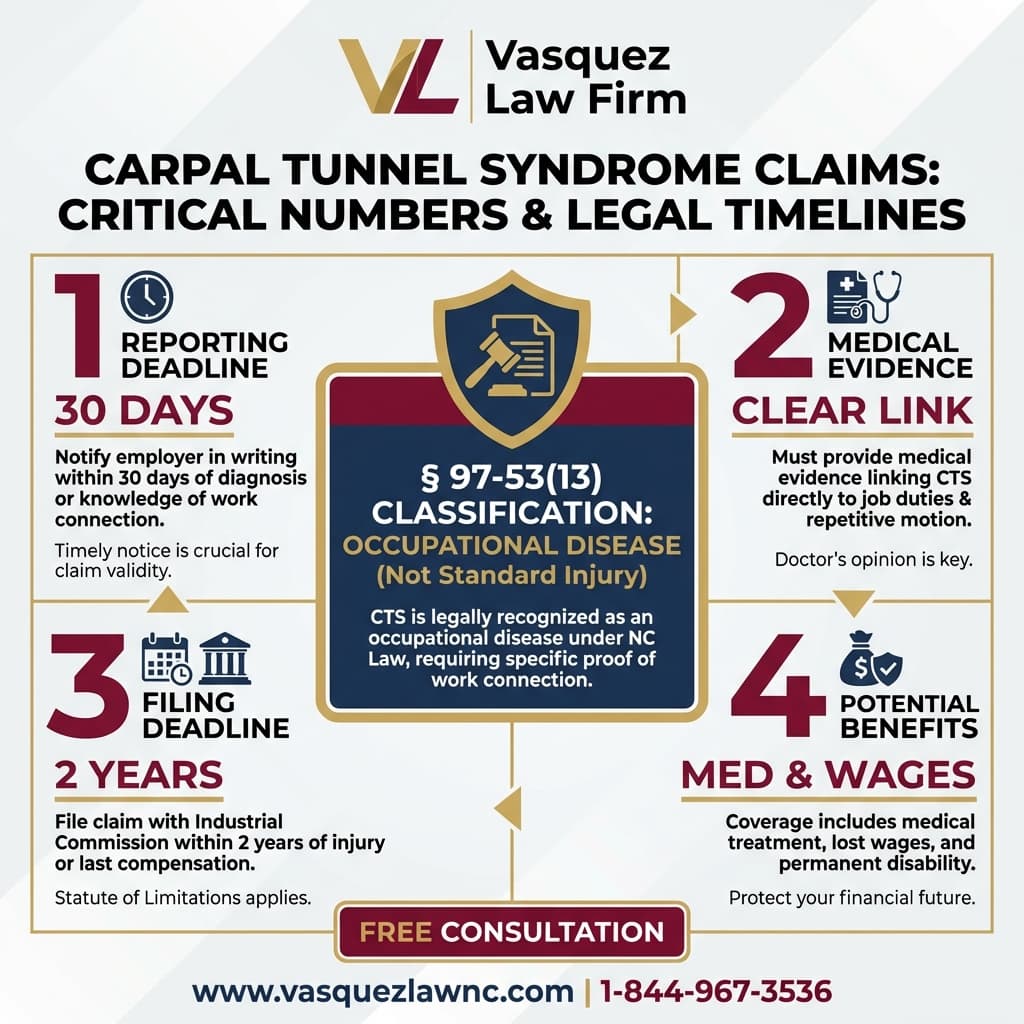
Also, filing deadlines are critical. In North Carolina, workers typically have 30 days to report their injury and two years to file a claim. Missing these deadlines can result in denial. An experienced attorney can help navigate these timelines and ensure all paperwork is correctly submitted.
Finally, cooperating with independent medical evaluations requested by insurance carriers or the Industrial Commission is essential. These evaluations can confirm your condition and support your claim, so attending all appointments and providing honest information is key to success.
Infographic: Workers Compensation Claims Process Timeline
Common Mistakes to Avoid
- Delaying Symptom Reporting: Waiting to tell your employer can hurt your claim. Report symptoms early.
- Ignoring Medical Advice: Skipping treatments may worsen the condition and your case.
- Lack of Documentation: Without detailed medical evidence and work history, claims lack strength.
- Self-Diagnosis: Only a licensed doctor should diagnose CTS; self-diagnosis risks errors.
- Not Consulting A Lawyer: Legal guidance improves claim success and navigates procedural barriers.
- Returning to Work Too Soon: This can prolong injury or cause relapse affecting benefits.
- Failing to Appeal Denials: Many claims are initially denied; appeals are often successful with proper representation.
If you only remember one thing: Early reporting and documentation are critical to a successful workers compensation claim for carpal tunnel syndrome.
Another frequent mistake is underestimating the importance of ergonomic adjustments at the workplace. Employers in Smithfield are often required to provide reasonable accommodations, such as ergonomic keyboards or scheduled breaks, which can help prevent worsening of CTS. Failing to request these accommodations early on might negatively affect recovery and the claim.
Additionally, some claimants fail to follow up with their medical providers regularly or do not complete prescribed therapy sessions, which can create gaps in treatment records. Insurance carriers may interpret this as lack of genuine injury, leading to claim denials or disputes.
Timeline and What to Expect
- Week 1: Symptom onset, seek medical care, report injury to employer.
- Weeks 2-4: Diagnostic testing and beginning treatment such as wrist splints or therapy.
- Month 1-3: File claim, attend medical evaluations, provide evidence to insurance or commission.
- Month 3-6: Claim investigation; approval or denial decisions often issued.
- 6 months+: Possible appeals, ongoing treatment, or return to work with accommodations.
This timeline can vary based on individual circumstances. For example, a Smithfield postal worker who adheres closely to medical advice and promptly reports symptoms may see a faster claim resolution. Conversely, a delay in reporting or incomplete documentation can extend the process considerably.
During the initial months, workers should expect multiple medical appointments and possible restrictions on job duties. Employers are legally required to provide modified work if feasible, which can help maintain income while healing occurs. Understanding these expectations helps reduce stress and prepares claimants for the journey ahead.
After six months, some workers may require permanent modifications or disability ratings if symptoms persist. Legal counsel can assist in negotiating settlements or benefits reflecting long-term impacts of CTS, ensuring fair compensation for ongoing limitations.
Frequently Asked Questions
How do you diagnose carpal tunnel syndrome?
Doctors diagnose carpal tunnel syndrome through a combination of physical exams and diagnostic tests. Physical tests like Tinel's and Phalen's provoke symptoms by tapping or flexing the wrist. Additionally, nerve conduction studies measure the speed and strength of electrical signals in the median nerve, confirming compression and assessing severity. Early and accurate diagnosis is crucial for effective treatment and strengthening workers compensation claims.
What workplace activities cause carpal tunnel syndrome?
Repetitive wrist motions such as typing, assembly line work, operating vibrating tools, and frequent wrist flexion or extension increase the risk of carpal tunnel syndrome. Jobs in manufacturing, clerical work, retail, and construction commonly involve these motions. For instance, a Smithfield factory worker using hand tools daily or an office employee typing for long hours are both at risk of developing CTS due to repetitive strain on the median nerve.
Can carpal tunnel syndrome claims be denied?
Yes, carpal tunnel syndrome claims can be denied if there is insufficient medical evidence, failure to prove the injury is work-related, or delays in reporting symptoms. Insurance carriers may question whether the condition is pre-existing or due to non-work factors. Having legal assistance helps gather proper documentation and navigate the appeals process, increasing the chances of claim approval and fair compensation.
What treatments are covered under workers compensation?
Treatments typically covered under workers compensation for carpal tunnel syndrome include wrist splints, physical or occupational therapy, anti-inflammatory medications, corticosteroid injections, and surgery if conservative measures fail. Coverage may also extend to diagnostic tests and follow-up care. Early treatment under workers compensation helps prevent worsening of symptoms and supports quicker return to work.
How long does the carpal tunnel syndrome claims process take?
The claims process for carpal tunnel syndrome usually takes several months, depending on the complexity of the case, quality of medical evidence, and responsiveness of involved parties. Prompt medical evaluation, timely reporting, and thorough documentation can speed up decisions. Some cases requiring appeals or surgical intervention may take longer, but legal representation can help manage expectations and expedite outcomes.
Can carpal tunnel syndrome heal on its own?
Mild cases of carpal tunnel syndrome may improve with rest, wrist splints, and activity modification. However, without proper treatment, CTS often progresses, leading to permanent nerve damage and weakness. Medical intervention such as therapy or surgery is commonly needed to relieve pressure on the median nerve and restore hand function, especially in work-related cases.
What evidence is needed for a successful claim?
Successful carpal tunnel syndrome claims require comprehensive medical records documenting diagnosis and treatment, statements from treating physicians linking the condition to workplace activities, and detailed work history showing repetitive wrist motions. Employer reports and witness testimony can also support claims. This evidence collectively establishes the injury’s work-related cause and severity, crucial for workers compensation approval.
When should I contact a workers compensation lawyer?
You should contact a workers compensation lawyer as soon as you notice symptoms of carpal tunnel syndrome or if your claim is delayed, denied, or complicated. Early legal help ensures proper documentation, protects your rights, and guides you through the claims process. Experienced attorneys can also negotiate settlements or represent you in appeals to secure the benefits you deserve.
About Vasquez Law Firm
At Vasquez Law Firm, we combine compassion with aggressive representation. Our motto "Yo Peleo" (I Fight) reflects our commitment to standing up for your rights.
- Bilingual Support: Se Habla Español - our team is fully bilingual
- Service Areas: Workers compensation in North Carolina; immigration nationwide, including Florida
- Experience: Over 15 years helping clients navigate complex legal matters
- Results: Thousands of successful cases across multiple practice areas
Attorney Trust and Experience
Attorney Vasquez holds a Juris Doctor degree and is admitted to practice in the North Carolina State Bar. With over 15 years of dedicated legal experience, he has built a reputation for providing personalized attention and achieving favorable outcomes for his clients.
His extensive knowledge of workers compensation law, particularly in cases involving repetitive strain injuries like carpal tunnel syndrome, allows him to anticipate challenges and advocate effectively. Clients in Smithfield and beyond trust his expertise to navigate complex claim procedures and secure just compensation.
Attorney Vasquez also prioritizes clear communication and client education, ensuring that every individual understands their rights and options throughout the legal process. His bilingual capabilities further enhance accessibility for Spanish-speaking clients, reinforcing the firm’s commitment to inclusive and comprehensive legal support.
Don't wait to get the help you deserve. Call us now for immediate assistance. Se Habla Español.
Sources and References
- North Carolina Industrial Commission
- OSHA on Carpal Tunnel Syndrome
- CDC Ergonomics and Workplace Safety
Hurt at work near Smithfield? Our Smithfield workers' compensation lawyers handle these claims.
Take the first step toward justice today. Our team is standing by to help. Se Habla Español.
Start Your Free Case Evaluation Now
Call us: 1-844-967-3536
Se Habla Español - Estamos aquí para ayudarle.

William Vasquez
Founder & CEO, Vasquez Law Firm, PLLC
William Vasquez is the founder and CEO of Vasquez Law Firm, PLLC, a results-driven firm specializing in immigration, criminal defense, personal injury, and workers' compensation. A U.S. Air Force veteran and recipient of the Joint Service Achievement Medal, William is dedicated to fiercely fighting for his clients' rights.
Related Legal Services
Need legal help? Learn more about speak with a workers comp lawyer, or contact us for a free evaluation.
You can also visit our NC work injury attorneys for more information.