What Happens During Warrantless Immigration Arrests in 2026
Learn about warrantless immigration arrests in 2026 and your rights. Contact Vasquez Law for a free consultation to protect yourself today.
Published on March 19, 2026
Talk to an immigration attorney
Free call. A clear plan for your case.
Free & confidential · Se habla espanol · 24/7
Have questions? Talk to an attorney - free evaluation.
Call 1-844-967-3536Worried how the latest immigration news affects you?
Schedule a confidential case review with an immigration attorney - know exactly where you stand.
USCIS Case Status
Check your USCIS case status
Enter your receipt number and get the official status. Free, no registration.
What Happens During Warrantless Immigration Arrests in 2026
Warrantless immigration arrests can happen unexpectedly, especially in cities like Charlotte. Understanding what they involve and your rights is crucial in 2026. This article explains the situations when U.S. Immigration and Customs Enforcement (ICE) agents can arrest without a warrant, what steps to take if you're stopped, and how local laws in North Carolina and Florida may affect you. Stay informed to safeguard your rights and know when to call a trusted immigration attorney like those at Vasquez Law Firm.
Need help with your case? Our experienced attorneys are ready to fight for you. Se Habla Español.
Schedule Your Free Case Evaluation
Or call us now: 1-844-967-3536
Quick Answer
Warrantless immigration arrests happen when ICE agents detain someone without a judicial warrant under specific federal legal authority. These arrests may occur in public places if ICE suspects the person is removable from the U.S. Always remain calm, know your rights, and seek legal counsel immediately.
- ICE can arrest without a judicial warrant in public for immigration violations.
- Administrative warrants differ from judicial warrants and have less oversight.
- Detentions without warrants inside homes have stricter rules.
- Knowing your rights reduces risks during interactions with ICE.
- Experienced legal help is vital for defending against improper arrests.
Understanding Warrantless Immigration Arrests
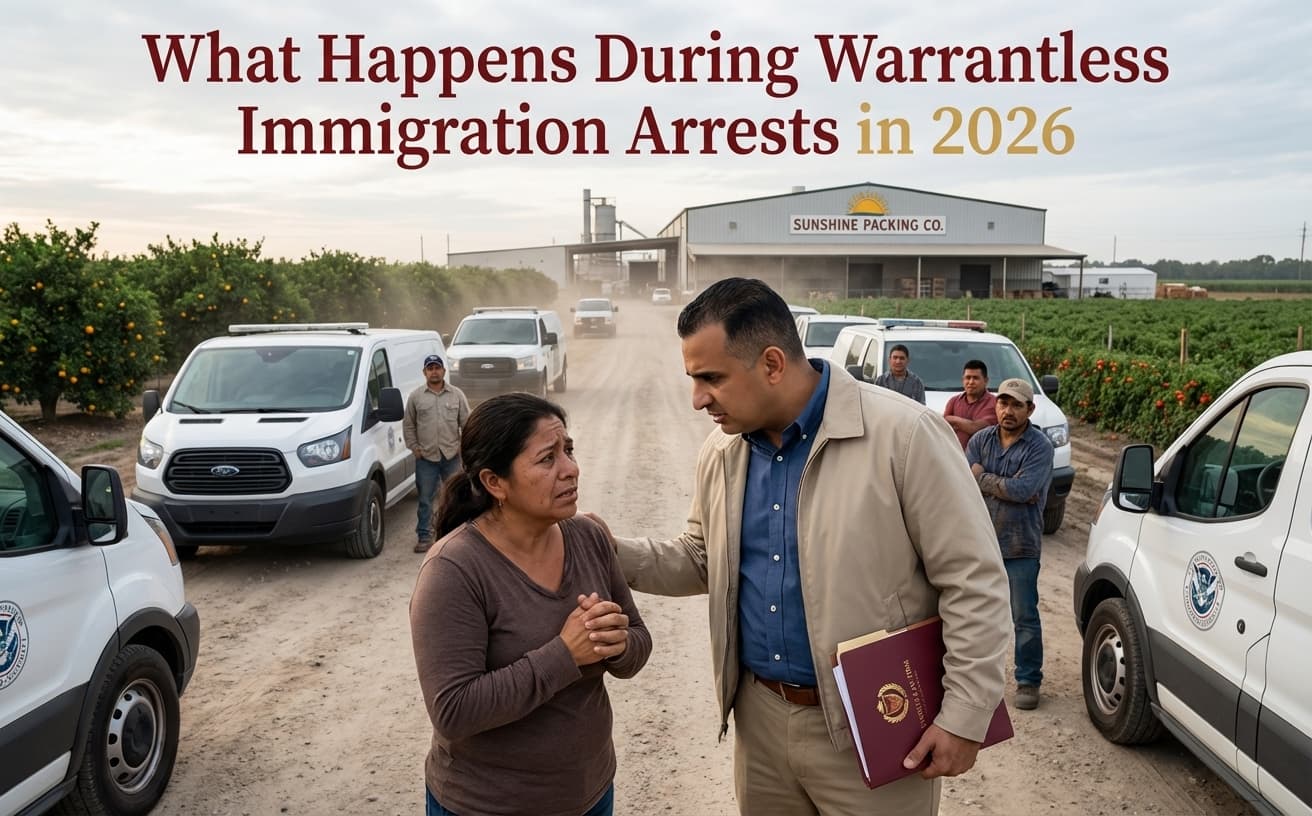
In 2026, U.S. immigration law allows ICE agents to arrest individuals suspected of violating immigration laws without a judicial warrant in certain limited scenarios. For example, if ICE officers find someone in a public place and have reasonable cause to believe the person is in the country illegally, they may proceed with a warrantless arrest.
These warrantless arrests derive legal authority from federal statute 8 U.S.C. § 1357. This law permits immigration officers to arrest and detain certain individuals without a warrant under specific conditions. However, the line between warrantless arrests and arrests requiring a judicial warrant is often contested in courts.
Administrative Warrants vs Judicial Warrants
ICE often uses what are called administrative warrants, signed internally by ICE officials rather than by judges. These administrative warrants authorize immigration enforcement but lack the judicial oversight present in traditional warrants. Critics argue that administrative warrants may violate constitutional protections, especially when ICE agents use them to enter private homes without judicial approval.
Legal Limits on Warrantless Arrests
Warrantless arrests inside private residences generally require a judicial warrant. ICE officers must abide by Fourth Amendment protections against unreasonable searches and seizures, meaning forced entries without a warrant into homes are typically unlawful, except under exigent circumstances. In public spaces, ICE has more leeway, but legal safeguards still apply.
Charlotte and Local Context
Charlotte residents should understand that while federal immigration laws govern these arrests, local police cooperation with ICE varies. North Carolina does not have sanctuary city laws, so local authorities may collaborate with ICE. Meanwhile, Florida similarly aligns with federal immigration enforcement policies. Knowing how local practices intersect with federal law is critical.
Step-by-Step: What to Do if You Are Arrested
- Stay calm and do not resist. Agitated reactions can worsen your situation. Remain polite but do not volunteer information.
- Ask if you are free to leave. ICE agents should clarify whether you are under arrest or free to go.
- Do not consent to searches. You have the right to refuse searches unless ICE presents a judicial warrant.
- Ask to speak to a lawyer. You have legal rights to counsel, even before formal proceedings begin.
- Provide only your name and basic identifying information. Avoid answering detailed immigration questions without a lawyer present.
- Write down details. If possible, note the names and badge numbers of agents and what they say or do.
- Contact your immigration attorney immediately. Early legal help can protect your rights and improve outcomes.
When Family or Friends are Involved
Make sure your loved ones know the best contact to reach and request their support. They can help arrange legal representation and gather necessary documents.
Handling Administrative Warrants
If ICE shows an administrative warrant, understand that it is not a judicial warrant. Know this has legal implications, and contesting its validity may be possible through a lawyer.
Know Your Rights Card
Keep a card handy with key rights and your lawyer’s contact details. This reminder can help during stressful interactions.
Common Mistakes to Avoid During Immigration Arrests
- Resisting arrest. This can lead to criminal charges; stay calm and compliant.
- Providing false information. Giving false documents or lying can harm your case.
- Not asking for a lawyer. Early legal advice is critical; always request counsel immediately.
- Volunteering immigration status details. Avoid answering questions about your status without your attorney.
- Signing documents without understanding them. Never sign anything without legal review.
- Ignoring court dates. Attend all hearings to avoid automatic deportation orders.
- Failing to gather evidence or witnesses. Document everything while it’s fresh for legal defense.
- Not knowing local laws. Immigration enforcement varies; learn Charlotte-specific information.
If you only remember one thing: remain calm, request a lawyer, and do not consent to searches or answer questions without legal help.
Timeline and What to Expect After Arrest
- Day 1 to 3: Detention and initial ICE processing, including fingerprinting and interviews.
- Week 1: Appearance before an immigration judge for removal proceedings initiation.
- Weeks 2 to 4: Filing of applications for relief or bond hearings if eligible.
- Month 1 to 3: Immigration court hearings continue; legal arguments and evidence presented.
- Month 3+: Final rulings or appeals; possible release, removal, or adjustment of status depending on case.
These timelines vary significantly depending on court backlogs, detention facility, and case complexity. Timely legal advocacy can help speed the process or explore other options.
Costs and Fees: What Impacts the Price
- Complexity of your case and legal issues.
- Whether your case involves bond hearings or appeals.
- Experience and expertise of your attorney.
- Urgent representation needs.
- Additional services like document preparation or expert witnesses.
Vasquez Law Firm offers transparent fee structures and free case evaluations so you understand costs upfront.
NC, FL, and Nationwide Notes
North Carolina Notes
North Carolina cooperates with ICE enforcement under federal agreements. Knowing local police policies on immigration is important. Legal services from local immigration lawyers, like those at Vasquez Law Firm, are tailored to Charlotte residents.
Florida Notes
Florida similarly supports ICE enforcement operations statewide. Immigrants there should understand collaborations between local law enforcement and federal ICE agents. Vasquez Law also serves Florida clients with extensive immigration experience.
Nationwide Concepts (General Only, Rules Vary)
Federal immigration law applies across the U.S., but state and local cooperation varies. Sanctuary policies, enforcement priorities, and access to legal resources can differ widely. It is vital to understand your local environment and consult a knowledgeable attorney.
When to Call a Lawyer Now
- If ICE detains you or a family member without a clear warrant.
- After any ICE interaction that causes confusion or fear.
- If you are unsure about your rights during immigration enforcement.
- Before signing documents or waiving rights.
- When preparing for immigration court hearings after arrest.
- If arrested without being informed of charges or court dates.
- When you receive a notice to appear from immigration authorities.
- If you believe your constitutional rights were violated during arrest.
About Vasquez Law Firm
At Vasquez Law Firm, we combine compassion with aggressive representation. Our motto "Yo Peleo" (I Fight) reflects our commitment to standing up for your rights.
- Bilingual Support: Se Habla Español - our team is fully bilingual
- Service Areas: North Carolina, Florida, and nationwide immigration services
- Experience: Over 15 years helping clients navigate complex legal matters
- Results: Thousands of successful cases across multiple practice areas
Attorney Trust and Experience
Attorney Vasquez holds a Juris Doctor degree and is admitted to practice in the North Carolina State Bar. With over 15 years of dedicated legal experience, he has built a reputation for providing personalized attention and achieving favorable outcomes for his clients.
Don't wait to get the help you deserve. Call us now for immediate assistance. Se Habla Español.
Frequently Asked Questions
Can ICE arrest someone without a warrant?
Yes. ICE agents may perform warrantless immigration arrests under specific conditions, including when the person is suspected of being removable and is found in a public place or when probable cause exists. However, warrantless arrests inside homes generally require a judicial warrant, making the rules complex.
What is an administrative warrant?
An administrative warrant is a document signed by an ICE official authorizing an immigration arrest or search. Unlike judicial warrants, these do not require a judge’s approval and have different legal standards, often leading to debate about their legality and scope.
Can a U.S. citizen be detained by ICE?
Generally, ICE targets unauthorized immigrants, but mistakes happen. If a U.S. citizen is wrongly detained, they can seek legal help immediately to challenge the detention, as they have full constitutional protections against illegal arrest or detention.
What should I do if stopped by ICE agents?
Stay calm and polite. Do not consent to any searches or answer questions about your immigration status without a lawyer present. You can ask if you are free to leave and request to speak to a lawyer. Keep your contact information handy.
Are ICE administrative warrants legal?
The legality of ICE administrative warrants is debated. Courts often differentiate them from judicial warrants. While they allow arrests and searches, they have faced scrutiny regarding constitutional protections, especially concerning entries into private homes without a judicial warrant.
What is the difference between administrative and judicial warrants?
Judicial warrants are issued by a judge based on probable cause and have strict legal standards. Administrative warrants are issued by ICE officials with fewer requirements, which allows ICE to conduct warrantless arrests within certain limits.
Can I file a lawsuit if ICE detains me without a warrant?
Yes. If ICE arrests or detains someone unlawfully without a proper warrant or probable cause, affected individuals may have grounds to sue for illegal detention. Legal advice is crucial to assess specific circumstances and file claims.
Do ICE agents need probable cause to arrest?
ICE generally requires reasonable suspicion or probable cause to arrest someone. In some cases, administrative warrants lower the threshold, but U.S. constitutional protections still limit unlawful arrests.
Sources and References
- U.S. Citizenship and Immigration Services (USCIS)
- Executive Office for Immigration Review
- North Carolina Courts
Need immigration help? Our immigration attorneys can review your case.
Take the first step toward justice today. Our team is standing by to help. Se Habla Español.
Start Your Free Case Evaluation Now
Call us: 1-844-967-3536
Se Habla Español - Estamos aquí para ayudarle.


William Vasquez
Founder & CEO, Vasquez Law Firm, PLLC
William Vasquez is the founder and CEO of Vasquez Law Firm, PLLC, a results-driven firm specializing in immigration, criminal defense, personal injury, and workers' compensation. A U.S. Air Force veteran and recipient of the Joint Service Achievement Medal, William is dedicated to fiercely fighting for his clients' rights.
Related Legal Services
Need legal help? Learn more about speak with an immigration lawyer, or contact us for a free evaluation.
You can also visit North Carolina immigration law firm for more information.