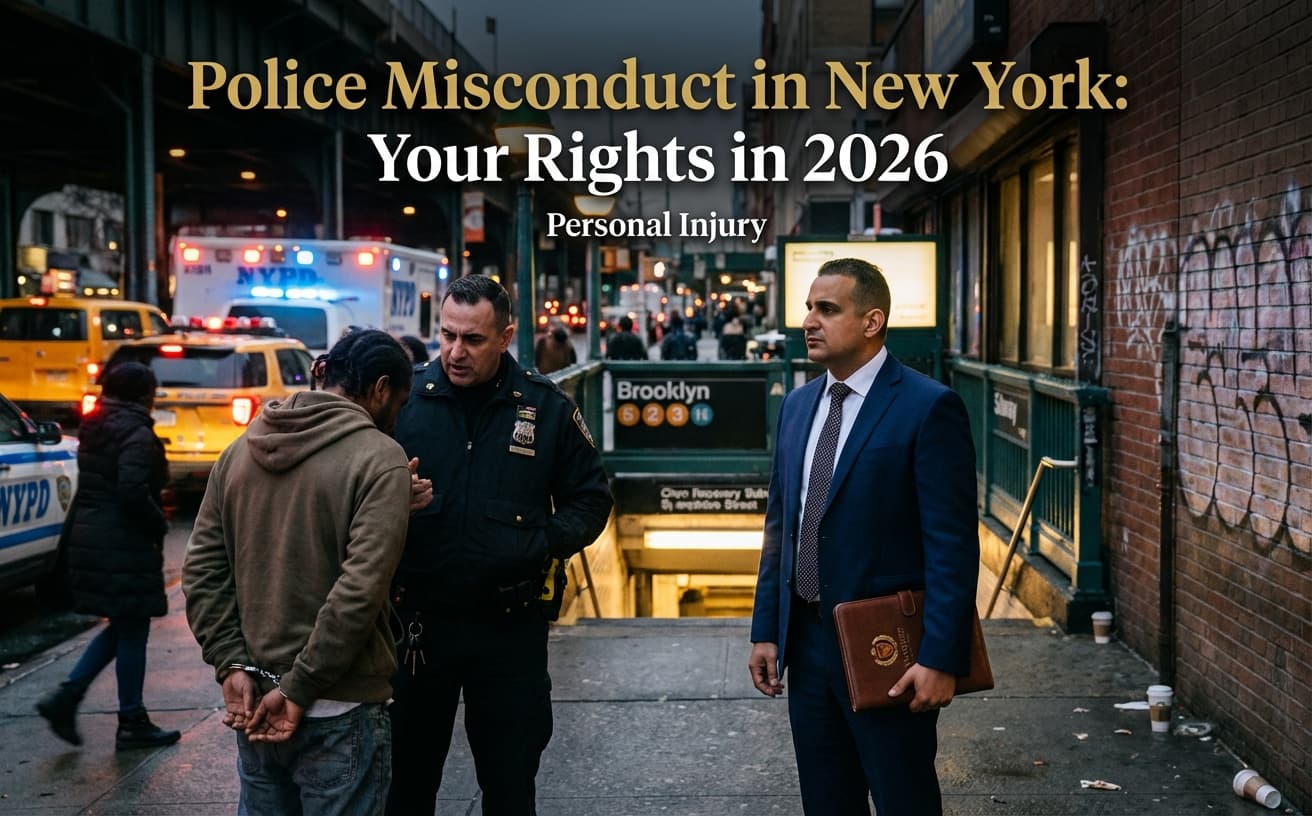
Know Your Rights After Police Misconduct in New York in 2026
Facing police misconduct in New York? Understand your rights and how to report incidents. Contact Vasquez Law for a free consultation today.
Vasquez Law Firm
Published on March 3, 2026
Have questions? Talk to an attorney — free evaluation.
Call 1-844-967-3536Know Your Rights After Police Misconduct in New York in 2026
Instances of police misconduct in New York can be deeply distressing, violating the trust between law enforcement and the communities they serve. From excessive force to unlawful arrests and discriminatory practices, understanding your rights is crucial if you believe you have been a victim. As of 2026, New York State law provides various avenues for recourse, but navigating these complex legal processes requires precise knowledge and often the guidance of an experienced legal professional. This guide will outline what constitutes police misconduct, how to report it effectively, and the steps you can take to protect your rights and seek justice.
Need help with your case? Our experienced attorneys are ready to fight for you. Se Habla Español.
Injured? You May Be Owed Compensation
No fee unless we win. Our personal injury team fights for maximum recovery.
Schedule Your Free Consultation
Or call us now: 1-844-967-3536
Quick Answer
Police misconduct in New York encompasses a range of unlawful actions by law enforcement, including excessive force, false arrest, and racial profiling. If you experience such an incident in 2026, document everything, seek medical attention if injured, and promptly report the misconduct to the appropriate authorities. Consulting with an attorney is vital to understand your legal options and pursue a claim effectively.
- Document the incident with photos, videos, and witness contacts.
- Seek medical attention for any injuries and preserve records.
- File a formal complaint with the police department's internal affairs or an oversight agency.
- Consult with a civil rights attorney to explore legal remedies.
- Be aware of statutes of limitations for filing claims.
Understanding Police Misconduct and Your Rights
Police misconduct refers to illegal or inappropriate actions carried out by law enforcement officers while on duty. These actions can range from minor procedural violations to serious criminal offenses, all of which erode public trust and can cause significant harm to individuals. In New York, victims of police misconduct have specific rights protected under both state and federal law. It is essential to recognize these actions so you can respond appropriately and protect your legal standing.
Common forms of police misconduct include excessive use of force, which goes beyond what is reasonably necessary to control a situation, and false arrest or imprisonment, where an individual is detained without probable cause. Other serious issues involve racial profiling, discriminatory practices, and the destruction of property. Understanding these categories is the first step toward recognizing a potential violation of your rights. The legal landscape surrounding police misconduct in New York is constantly evolving, with new legislation and court decisions shaping how these cases are handled in 2026.
Common Types of Police Misconduct in New York
There are several specific types of police misconduct that individuals in New York may encounter. Excessive force is a prevalent issue, where officers use more physical force than objectively reasonable given the circumstances. This can lead to severe injuries or even death. Another common form is false arrest, where an individual is taken into custody without a valid legal reason, such as a warrant or probable cause that a crime was committed.
Racial profiling and other forms of discrimination are also serious concerns, where law enforcement targets individuals based on their race, ethnicity, religion, or other protected characteristics. Furthermore, some officers might engage in unlawful searches and seizures, violating an individual's Fourth Amendment rights by searching property or persons without a warrant or valid exception. These actions are not only illegal but can have lasting psychological and financial impacts on victims. Knowing these distinctions is vital for anyone considering a claim related to police misconduct in New York.
Reporting Police Misconduct in New York City
If you have experienced police misconduct in New York, knowing how and where to report it is crucial for seeking justice. The reporting process can be complex, involving multiple agencies depending on the nature and severity of the incident. It is important to act promptly, as delays can weaken your case and make evidence harder to obtain. Gathering all available information before making a report will strengthen your complaint.
In New York City, the Civilian Complaint Review Board (CCRB) is an independent agency that investigates complaints of misconduct against NYPD officers, including excessive force, abuse of authority, discourtesy, and offensive language. You can file a complaint with the CCRB online, by phone, or in person. For more serious allegations, such as criminal behavior by an officer, you might need to contact the District Attorney's office or the New York State Attorney General. The Attorney General's office has specific jurisdiction over certain types of criminal investigations involving law enforcement. Additionally, if the misconduct involves civil rights violations, federal agencies like the Department of Justice may also become involved.
Steps to Filing a Formal Complaint
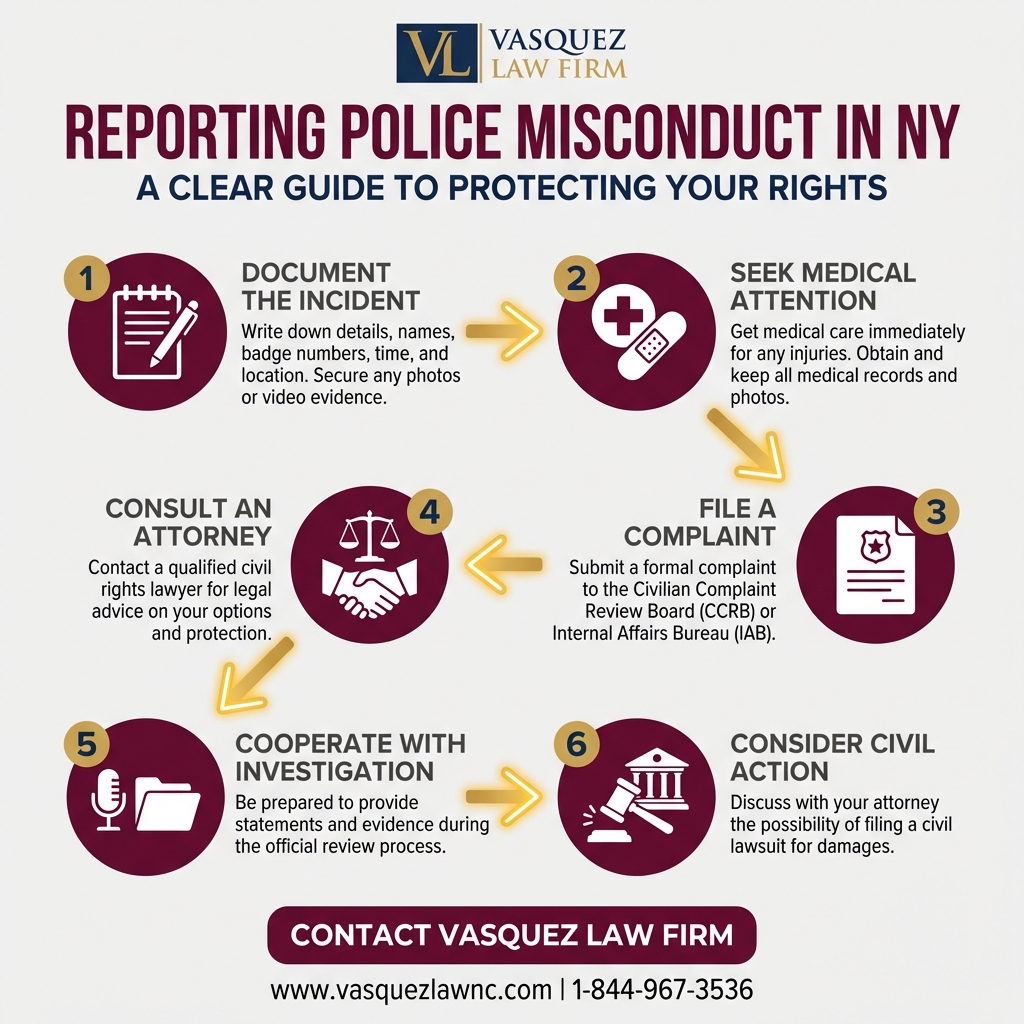
- Document the Incident: Immediately after the event, write down everything you remember. Include dates, times, locations, names of officers (if known), badge numbers, and specific details of what happened. Take photos or videos if safe to do so.
- Gather Evidence: Collect any physical evidence, such as torn clothing or damaged property. Obtain contact information for witnesses who saw the incident. If you sustained injuries, seek medical attention and keep all medical records, bills, and photographs of your injuries.
- Contact the CCRB: For complaints against NYPD officers, file a complaint with the Civilian Complaint Review Board. You can do this online through their website, by calling their hotline, or visiting one of their offices. Be prepared to provide a detailed account of the incident.
- Notify the Police Department: While the CCRB is independent, you can also file a complaint directly with the internal affairs bureau of the police department involved. This ensures the department is formally aware of the allegations and must conduct its own internal investigation.
- Consult an Attorney: Before or after filing a complaint, it is highly advisable to speak with a civil rights attorney experienced in police misconduct cases. An attorney can help you navigate the reporting process, preserve evidence, and evaluate potential legal claims.
Legal Remedies and Compensation for Victims
Victims of police misconduct in New York have several legal avenues to pursue compensation and justice. These remedies can range from administrative actions against the officers involved to civil lawsuits seeking monetary damages. The specific path you take will depend on the nature of the misconduct, the evidence available, and your desired outcome. It is important to understand that pursuing legal action can be a lengthy and challenging process, but one that can hold officers and departments accountable.
One primary legal remedy is filing a civil lawsuit under federal law, specifically 42 U.S.C. § 1983, which allows individuals to sue state government employees and others acting "under color of state law" for civil rights violations. These lawsuits can seek compensation for medical expenses, lost wages, pain and suffering, emotional distress, and even punitive damages in cases of egregious misconduct. Additionally, New York State law provides for claims against municipalities and individual officers. For example, the New York Court of Claims Act allows certain claims against the state. 42 U.S.C. § 1983 is a critical tool for those seeking justice for civil rights violations.
New York City Police Misconduct Settlements
New York City has paid substantial sums in police misconduct settlements over the years. According to recent reports, the city has paid hundreds of millions of dollars to settle claims of police misconduct since 2019. These settlements cover a wide range of abuses, from wrongful arrests to excessive force, and reflect the city's liability in such cases. While settlements provide financial relief to victims, they also highlight the systemic issues that continue to plague law enforcement. These settlements often come after lengthy legal battles, demonstrating the need for persistent and skilled legal representation. The sheer volume of these payouts underscores the ongoing problem of police misconduct in New York City.
Common Mistakes and How to Avoid Them
Navigating a police misconduct claim can be challenging, and mistakes can significantly jeopardize your case. Being aware of these pitfalls can help you protect your rights and improve your chances of a favorable outcome. From failing to document the incident to missing deadlines, each error can have serious consequences. It is crucial to approach the process with diligence and a clear understanding of what is required.
- Failing to Document Everything: Not taking photos, videos, or detailed notes immediately after the incident can weaken your claim. Always document everything, including injuries, officer details, and witness information.
- Delaying Reporting: Waiting too long to report the misconduct can make it harder to gather evidence and may even exceed the statute of limitations for filing a claim. Report incidents as soon as it is safe to do so.
- Not Seeking Medical Attention: If you sustained injuries, failing to get prompt medical care not only affects your health but also creates a gap in your medical records, making it harder to prove damages.
- Speaking to Internal Affairs Without Legal Counsel: While you should report the incident, providing statements to internal affairs without consulting an attorney first can inadvertently harm your case. An attorney can advise you on your rights during questioning.
- Deleting Evidence: Never delete photos, videos, or messages related to the incident, even if you think they are not relevant. This could be seen as tampering with evidence.
- Not Identifying Officers: If possible, try to get badge numbers, names, or clear descriptions of the officers involved. This information is critical for filing a formal complaint.
- Failing to Follow Up: After filing a complaint, it is important to follow up with the CCRB or other agencies to check the status of your investigation.
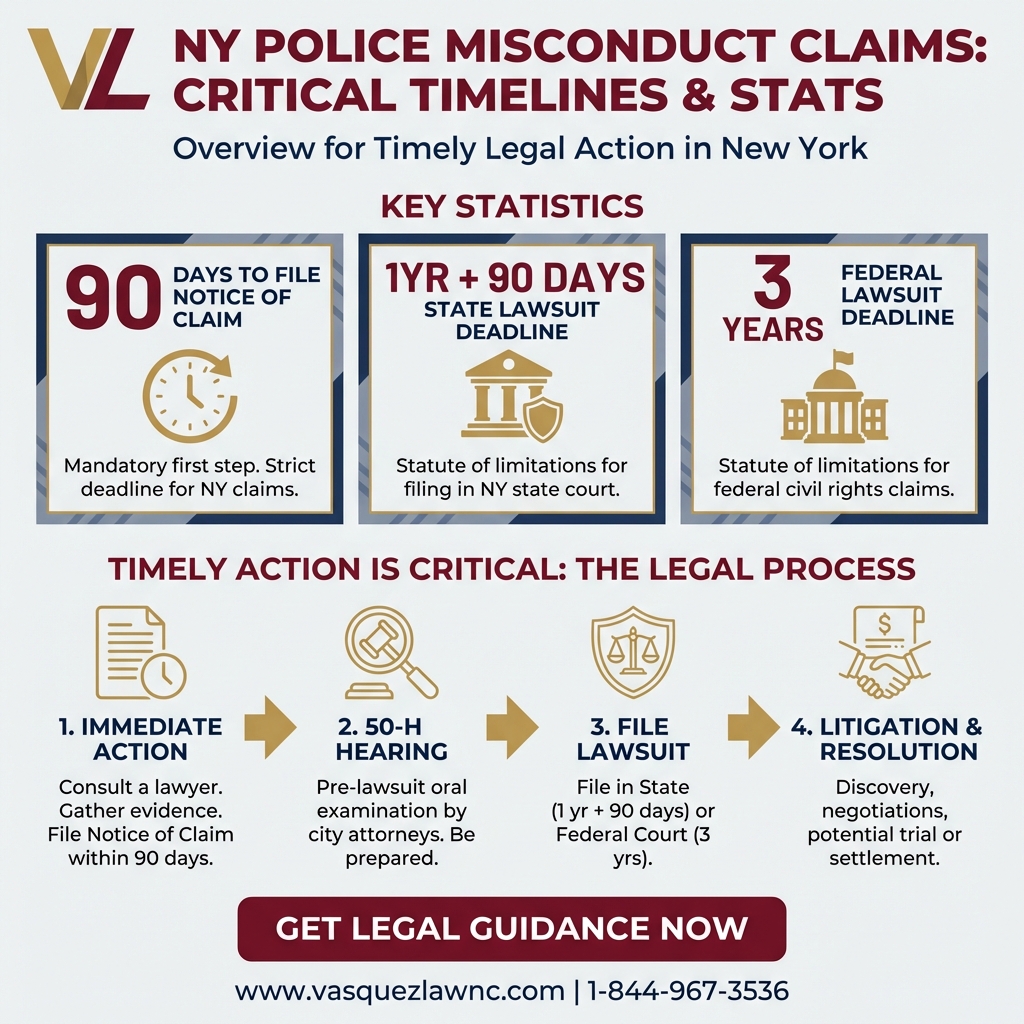
- Missing Statutes of Limitations: There are strict deadlines for filing lawsuits and other claims. Missing these deadlines can permanently bar you from seeking justice. An attorney can help you understand these critical timelines.
If you only remember one thing: Document everything immediately and consult with an attorney to understand your options and protect your rights.
NC, FL, and Nationwide Notes
While the focus of this article is police misconduct in New York, it is important to understand that laws and procedures vary significantly by state. Vasquez Law Firm is primarily focused on serving clients in North Carolina and Florida for personal injury matters, but the general principles of civil rights and accountability for law enforcement are universal, though their application differs.
North Carolina Notes
In North Carolina, victims of police misconduct can also pursue legal action under federal civil rights laws, such as 42 U.S.C. § 1983. Additionally, state tort claims may be available, though these often involve specific notice requirements and immunities for government entities. The North Carolina General Statutes outline various provisions related to law enforcement conduct and accountability. If you experience police misconduct in Raleigh or anywhere in North Carolina, documenting the incident and seeking legal counsel promptly is equally important. The State Bureau of Investigation (SBI) may also investigate certain allegations of misconduct. For more information, you can refer to the North Carolina Courts website.
Florida Notes
Similarly, in Florida, individuals subjected to police misconduct can file civil rights lawsuits under federal law. Florida state law also provides avenues for relief, though governmental entities often benefit from sovereign immunity, which can complicate claims. Specific statutes and case law govern how claims against police departments and individual officers are handled in Florida. Reporting mechanisms may include internal affairs divisions of local police departments and potentially the Florida Department of Law Enforcement (FDLE) for more serious allegations. Understanding these state-specific nuances is critical for any successful claim.
Nationwide Concepts (General Only, Rules Vary)
Across the United States, the fundamental principles governing police misconduct are rooted in the U.S. Constitution, particularly the Fourth, Fifth, and Fourteenth Amendments, which protect against unreasonable searches and seizures, ensure due process, and guarantee equal protection under the law. Federal laws like 42 U.S.C. § 1983 provide a nationwide framework for civil rights lawsuits against government officials. However, the specifics of reporting, investigation, and available remedies can vary significantly from state to state and even city to city. Each jurisdiction has its own police oversight bodies, internal review processes, and statutes of limitations. Therefore, while federal law provides a baseline, local and state laws dictate the practical steps and potential outcomes.
When to Call a Lawyer Now
Recognizing when to seek immediate legal counsel can significantly impact the outcome of your police misconduct case. The sooner you involve an experienced attorney, the better equipped you will be to protect your rights and gather crucial evidence. Don't hesitate to reach out if any of the following situations apply to you:
- You or a loved one sustained injuries due to police actions.
- You were falsely arrested or imprisoned without probable cause.
- You believe you were subjected to excessive force.
- You were a victim of racial profiling or discriminatory police practices.
- Your property was unlawfully searched or seized.
- You were threatened or intimidated by law enforcement.
- You are facing criminal charges that you believe stemmed from police misconduct.
- You have been denied access to legal counsel after an arrest.
- You are concerned about potential retaliation after reporting an incident.
- You need help understanding the complex legal process in New York.
About Vasquez Law Firm
At Vasquez Law Firm, we combine compassion with aggressive representation. Our motto "Yo Peleo" (I Fight) reflects our commitment to standing up for your rights. We understand the profound impact that police misconduct can have on individuals and communities, and we are dedicated to holding responsible parties accountable. Our team works tirelessly to investigate claims, gather evidence, and build strong cases for our clients.
- Bilingual Support: Se Habla Español - our team is fully bilingual and ready to assist clients in both English and Spanish, ensuring clear communication and understanding throughout your legal journey.
- Service Areas: We proudly serve clients across North Carolina, Florida, and provide nationwide immigration services. While this article focuses on police misconduct in New York, our expertise in civil rights and personal injury can be applied to similar cases in our primary service areas.
- Experience: With over 15 years of dedicated legal experience, Attorney Vasquez has a proven track record of helping clients navigate complex legal matters and achieve favorable outcomes.
- Results: We have successfully handled thousands of cases across multiple practice areas, providing personalized attention and a relentless pursuit of justice for every client.
Attorney Trust and Experience
Attorney Vasquez holds a Juris Doctor degree and is admitted to practice in both the North Carolina State Bar and Florida Bar. With over 15 years of dedicated legal experience, he has built a reputation for providing personalized attention and achieving favorable outcomes for his clients. His commitment to justice and his aggressive advocacy make him a formidable ally for those seeking to challenge police misconduct. Our firm is dedicated to ensuring that your voice is heard and your rights are protected.
Don't face your legal challenges alone. Our team is here to help you every step of the way.
Call today: 1-844-967-3536 | Se Habla Español
Frequently Asked Questions
What are three examples of police misconduct?
Three common examples of police misconduct include excessive force, where an officer uses more force than necessary, false arrest or unlawful detention without probable cause, and racial profiling, which involves targeting individuals based on their race or ethnicity. Other examples include unlawful searches, property damage, and verbal abuse. These actions violate an individual's constitutional rights and can lead to serious legal consequences for the officers and departments involved.
What is considered police misconduct?
Police misconduct is any illegal or inappropriate action by law enforcement officers while performing their duties. This can encompass a wide range of behaviors, from minor procedural violations to serious criminal acts. Key categories include physical abuses like excessive force, verbal abuses like harassment or intimidation, and civil rights violations such as discriminatory practices, false arrests, or illegal searches. It undermines public trust and can cause significant harm to individuals.
How do I report police misconduct in NYC?
To report police misconduct in New York City, you can file a complaint with the Civilian Complaint Review Board (CCRB). The CCRB is an independent agency that investigates complaints against NYPD officers. You can submit a complaint online, by phone, or in person. For criminal allegations against an officer, you might also contact the District Attorney's office or the New York State Attorney General. Documenting your experience thoroughly before reporting is crucial.
Who pays for police misconduct settlements?
Police misconduct settlements are typically paid by the municipality or governmental entity that employs the officers involved, such as New York City or the State of New York. These payments often come from taxpayer funds, either directly from the city's budget or through liability insurance policies held by the government entity. This financial burden underscores the significant cost of police misconduct to communities and highlights the need for accountability.
Do I Have a Personal Injury Case?
Answer 3 quick questions to find out
Question 1 / 3
What happened to you?
Keep Reading
Are police disciplinary records public in New York?
As of 2026, police disciplinary records in New York are generally more accessible to the public than in previous years, following the repeal of Civil Rights Law Section 50-a. This change has increased transparency, allowing for greater public scrutiny of officer conduct. However, the extent of public access can still vary based on the nature of the records and ongoing investigations. An attorney can help you navigate requests for specific disciplinary information.
What is a Brady List in New York?
A Brady List, sometimes referred to as a police misconduct registry, is a list of law enforcement officers who have a history of misconduct that could affect their credibility as witnesses in court. These lists are maintained by prosecutors' offices and are disclosed to defense attorneys as part of their constitutional obligation under Brady v. Maryland. In New York, such lists help ensure fair trials by revealing potential issues with officer testimony.
Can I sue for emotional distress due to police misconduct?
Yes, you can potentially sue for emotional distress caused by police misconduct in New York. Emotional distress is a recognized form of damages in civil rights lawsuits filed under 42 U.S.C. § 1983 and state tort claims. To succeed, you must generally demonstrate that the officer's actions were extreme and outrageous and that your emotional suffering was severe and proximately caused by the misconduct. Medical documentation and expert testimony can strengthen such a claim.
What is the statute of limitations for police misconduct claims in New York?
The statute of limitations for police misconduct claims in New York can vary depending on the type of claim. For federal civil rights lawsuits under 42 U.S.C. § 1983, the general statute of limitations is three years from the date of the incident. However, state law claims against municipalities often have much shorter notice requirements, sometimes as little as 90 days to file a Notice of Claim. It is crucial to consult an attorney immediately to ensure deadlines are met.
What should I do if I am stopped by the police in New York?
If stopped by the police in New York, remain calm and remember your rights. You have the right to remain silent and do not have to answer questions beyond providing identification if legally required. You can refuse consent to a search. Do not resist arrest, even if you believe it is unlawful. Document the encounter if possible, and as soon as you are safe, write down all details and contact an attorney. Remember, your actions can significantly impact any future legal claim.
What role does the New York Attorney General play in police misconduct cases?
The New York Attorney General's office has significant authority in police misconduct cases, particularly concerning criminal investigations of deaths involving law enforcement officers. They can also investigate patterns of misconduct or civil rights violations by police departments statewide. The Attorney General's office acts as an independent prosecutor in certain circumstances, providing an additional layer of oversight and accountability beyond local district attorneys. Their involvement is critical for ensuring impartial justice.
Sources and References
- 42 U.S. Code § 1983 - Civil action for deprivation of rights
- Cornell Law School - Legal Information Institute: Excessive Force
- New York City Civilian Complaint Review Board (CCRB)
Ready to take the next step? Contact Vasquez Law Firm today for a free, confidential consultation. We're committed to fighting for your rights and achieving the best possible outcome for your case.
Start Your Free Consultation Now
Call us: 1-844-967-3536
Se Habla Español - Estamos aquí para ayudarle.
Vasquez Law Firm
Legal Team
Our experienced attorneys at Vasquez Law Firm have been serving clients in North Carolina and Florida for over 30 years. We specialize in immigration, personal injury, criminal defense, workers compensation, and family law.
Related Legal Services
Need legal help? Learn more about personal injury lawyers in North Carolina, or contact us for a free evaluation.
You can also visit personal injury lawyers across North Carolina for more information.