How NC Workers Compensation Reforms Affect You in 2026
Understand North Carolina Workers Compensation Reforms in 2026 and how they impact your claim. Contact Vasquez Law Firm for a free consultation today. Se Habla Español.
Published on February 13, 2026
Hurt on the job?
Free review of your workers' comp claim.
Free & confidential · Se habla espanol · 24/7

Have questions? Talk to an attorney - free evaluation.
Call 1-844-967-3536Hurt on the Job? Claim What You Are Owed
A review of your workers' comp claim - we handle the fight.
How NC Workers Compensation Reforms Affect You in 2026
Navigating the complexities of workers' compensation can be challenging, especially with ongoing legislative updates. In 2026, North Carolina has seen significant NC Workers Compensation Reforms that directly affect injured workers and their rights. These changes aim to streamline processes, clarify eligibility, and update benefits, making it crucial for anyone involved in a workplace injury to understand their implications. At Vasquez Law Firm, we are dedicated to keeping you informed and ensuring your rights are protected under the latest regulations. Our team is ready to help you navigate these reforms with expert legal guidance.
Need help with your workers' compensation case? Our experienced attorneys are ready to fight for you. Se Habla Español.
Schedule Your Free Case Evaluation
Or call us now: 1-844-967-3536
Quick Answer: What are the NC Workers Compensation Reforms for 2026?
The 2026 NC Workers Compensation Reforms primarily focus on updating benefit calculations, refining the claims process, and addressing specific types of injuries like psychological trauma. These changes aim to improve clarity and fairness for both employees and employers, while also seeking to reduce litigation times. Injured workers should be aware of new deadlines and documentation requirements.
- Updated benefit calculation methods for temporary and permanent disability.
- Streamlined procedures for filing claims and responding to employer denials.
- New provisions for psychological injury claims and mental health support.
- Enhanced transparency requirements for claim settlements.
- Revisions to medical treatment approval processes.
Understanding the 2026 NC Workers Compensation Reforms
The landscape of workers' compensation in North Carolina is continually evolving, and 2026 has brought several significant NC Workers Compensation Reforms. These legislative changes are designed to address various aspects of the system, from initial claim filing to long-term benefits and dispute resolution. Understanding these updates is critical for any worker who experiences a job-related injury or illness in the state.
One of the core areas impacted by these reforms is the calculation of weekly wage benefits. The new legislation introduces adjustments to how average weekly wages are determined, potentially affecting the amount of compensation an injured worker receives. Furthermore, there are updated guidelines for what constitutes a compensable injury, particularly concerning cumulative trauma and occupational diseases, which can be complex.
The reforms also place a stronger emphasis on early intervention and return-to-work programs. Employers may now have clearer mandates or incentives to facilitate an injured employee's return to suitable employment, even if it's light duty. This shift aims to reduce the duration of disability and support the worker's recovery process more actively. Our firm closely monitors these developments to provide the most current advice.
It is important to note that while these reforms aim for greater efficiency, they can also introduce new hurdles for claimants. Strict adherence to updated timelines and documentation requirements is more crucial than ever. Missing a deadline or failing to provide proper medical evidence could jeopardize your claim. This is why having experienced legal representation from Vasquez Law Firm is invaluable as you navigate these changes.
Key Changes to Benefits and Eligibility in North Carolina
The 2026 NC Workers Compensation Reforms have brought specific adjustments to both the types of benefits available and the criteria for eligibility. These changes are vital for injured workers to understand, as they directly impact the financial and medical support they can receive following a workplace accident or illness. It's no longer enough to know the old rules; staying current is key.
For temporary disability benefits, there are refinements to the maximum weekly rates and the duration for which these benefits can be received. These adjustments reflect current economic conditions and aim to ensure benefits remain adequate while also balancing employer costs. Permanent partial disability ratings, which compensate for lasting impairments, also see updated schedules and calculation methodologies, potentially altering the final settlement amount.
Eligibility for certain types of injuries has also been clarified. For instance, the reforms may provide more explicit guidance on how psychological injuries, such as PTSD resulting from a traumatic workplace event, are evaluated and compensated. This is a significant development, as mental health impacts of workplace incidents are increasingly recognized. However, proving these types of claims still requires robust medical evidence and expert legal advocacy.
Furthermore, the reforms may introduce stricter rules regarding pre-existing conditions and their impact on a new workers' compensation claim. While a pre-existing condition doesn't automatically bar a claim, the new legislation might require more detailed medical assessments to determine the extent to which the workplace injury aggravated the prior condition. This makes early and thorough medical documentation paramount for any claim.
The Claims Process and How Reforms Impact It
The procedural aspects of filing and managing a workers' compensation claim in North Carolina have also been affected by the 2026 NC Workers Compensation Reforms. These changes are designed to either streamline the process or introduce new requirements that claimants must follow. Understanding the updated steps is essential for a successful claim and avoiding unnecessary delays or denials.
One notable reform relates to the initial reporting of an injury. While the 30-day notice period to the employer generally remains, the new legislation may emphasize the importance of written notice and detailed incident reports more strongly. Prompt and accurate reporting is always critical, but the reforms could make it even more so, with potential penalties for non-compliance. You can find more information on official NC reporting requirements from the NC Industrial Commission.
The dispute resolution process has also seen adjustments. While mediation and hearings before the NC Industrial Commission remain central, there might be new procedures for submitting evidence, scheduling conferences, or appealing decisions. These procedural changes can significantly impact the timeline and complexity of contested claims, making legal representation even more vital.
Moreover, the reforms could introduce new requirements for medical evaluations and independent medical examinations (IMEs). Insurers may have more specific rights or procedures for requesting additional medical opinions, which can add layers to the claims process. Navigating these requests effectively requires a deep understanding of the law and a strategic approach, something our attorneys at Vasquez Law Firm excel at.
What to Expect in a Workers' Compensation Claim in 2026
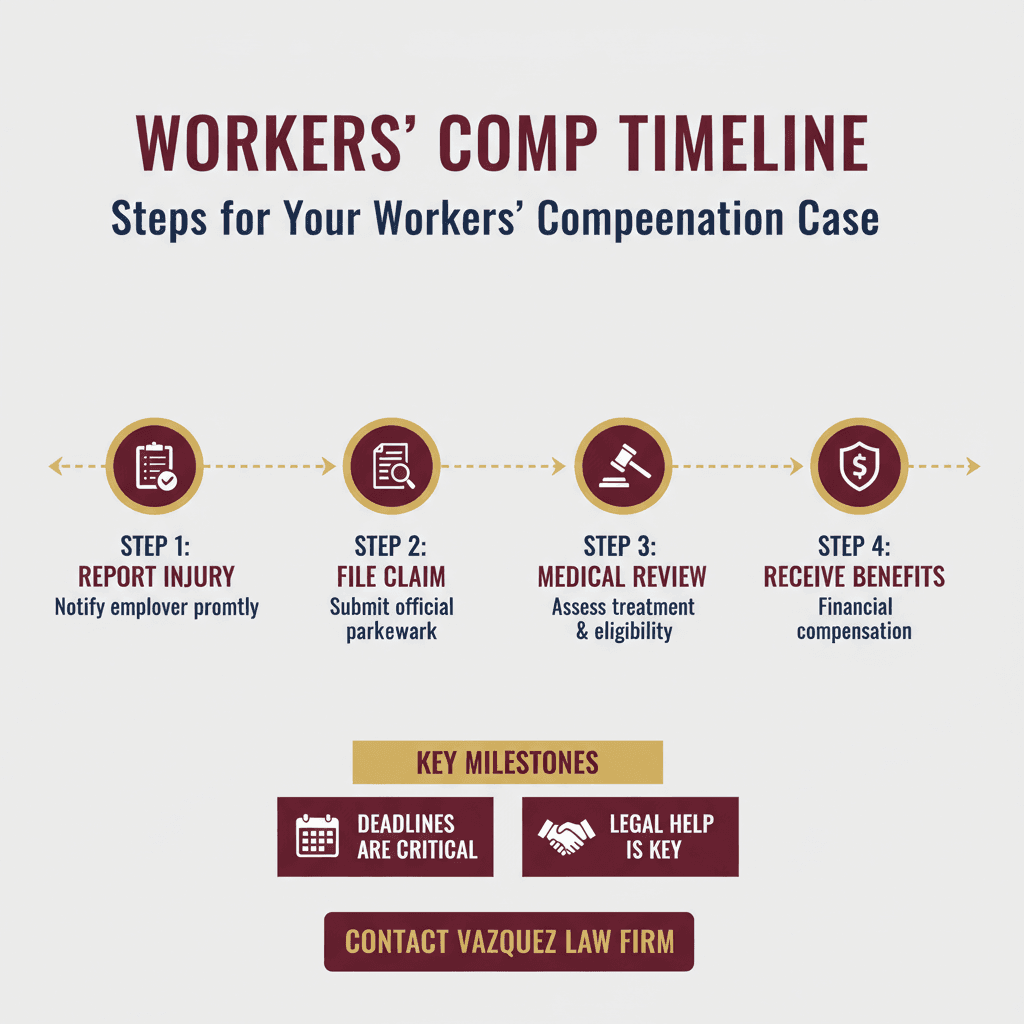
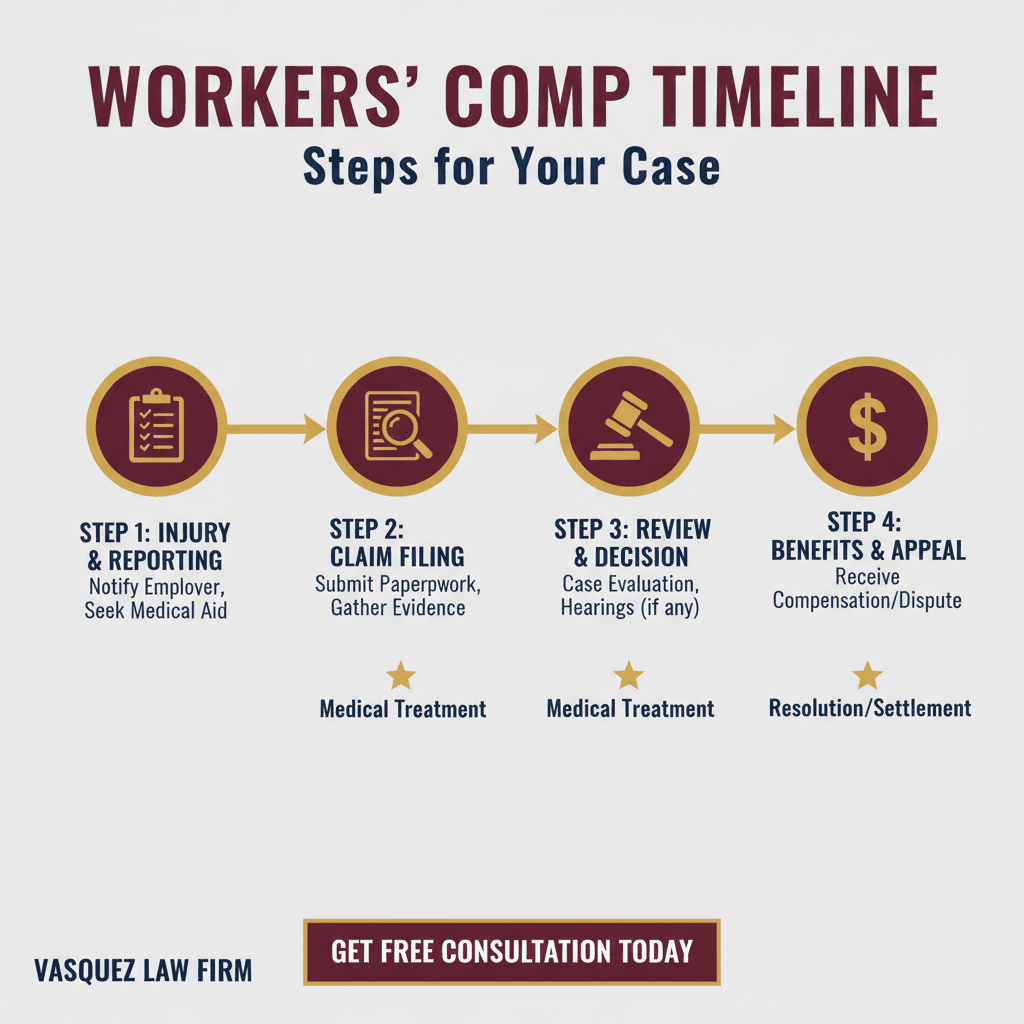
As of 2026, navigating a workers' compensation claim in North Carolina involves several critical steps, each influenced by the recent reforms. Initially, you must report your injury to your employer immediately and seek medical attention. This prompt action is crucial for documenting the injury and linking it to your work environment.
Following the report, your employer will notify their insurance carrier, and you will likely begin receiving medical treatment. During this phase, it's important to attend all appointments and follow your doctor's recommendations precisely. The insurance company may also request an Independent Medical Examination (IME) to assess your condition, and understanding your rights during this process is key.
If your claim is accepted, you will receive benefits for medical treatment and lost wages. If denied, you have the right to appeal through the North Carolina Industrial Commission. This involves filing specific forms and potentially attending mediation or a hearing. Throughout this entire process, securing experienced legal representation from Vasquez Law Firm can significantly improve your chances of a favorable outcome, especially with the latest NC Workers Compensation Reforms in effect.
Common Mistakes to Avoid Under New Legislation
With the 2026 NC Workers Compensation Reforms, avoiding common pitfalls is more important than ever for injured workers. These legislative updates can create new traps for the unwary, potentially jeopardizing your ability to receive deserved benefits. Being proactive and informed can save you significant stress and financial hardship.
- Delaying Injury Reporting: Failing to report your workplace injury to your employer within the statutory timeframe (usually 30 days) can lead to an automatic denial of your claim. Report it in writing as soon as possible.
- Neglecting Medical Treatment: Skipping doctor's appointments or failing to follow prescribed treatment protocols can be seen as non-compliance, weakening your claim and suggesting your injury isn't serious.
- Providing Inconsistent Statements: Any inconsistencies between your initial injury report, medical records, and statements to the insurer can be used against you to dispute the validity or extent of your injury.
- Not Documenting Everything: Keep meticulous records of all communications, medical visits, prescriptions, and out-of-pocket expenses related to your injury. Documentation is your strongest ally.
- Accepting a Quick Settlement Without Legal Review: Insurance companies may offer a lowball settlement early on. Accepting it without understanding your full rights and future medical needs can leave you undercompensated.
- Returning to Work Against Medical Advice: If your doctor has you on restricted duty or recommends time off, do not push yourself to return to full duties, as this can worsen your injury and complicate your claim.
- Failing to Seek Legal Counsel: Navigating the workers' compensation system, especially with new reforms, is complex. Trying to handle it alone often leads to mistakes and a less favorable outcome.
If you only remember one thing: Always prioritize your health and seek legal advice immediately after a workplace injury, especially with the new NC Workers Compensation Reforms in place. An attorney can guide you through every step, ensuring your rights are protected.
When to Call a Lawyer Now for Your NC Workers Compensation Claim
While some workers' compensation claims may seem straightforward, the 2026 NC Workers Compensation Reforms mean that even seemingly simple cases can become complex. Knowing when to seek legal counsel is crucial for protecting your rights and ensuring you receive the maximum benefits you are entitled to. Don't wait until it's too late; early intervention from an attorney can make a significant difference.
- Your Claim Has Been Denied: This is a clear signal that you need legal help. An attorney can review the denial, identify the reasons, and build a strong appeal.
- Your Employer Disputes Your Injury: If your employer denies the injury occurred at work or questions its severity, legal representation is essential to gather evidence and advocate on your behalf.
- You Are Not Receiving Timely Benefits: Delays in medical treatment or wage replacement payments can be financially devastating. A lawyer can push the insurance company to act.
- You Have a Pre-Existing Condition: If your injury aggravated a prior condition, the insurance company may try to deny your claim. An attorney can argue that the workplace injury is still compensable.
- Your Doctor's Recommendations Are Being Disputed: If the insurance company is refusing to approve necessary medical treatments or pushing you back to work against medical advice, legal intervention is needed.
- You Are Offered a Settlement: Never sign a settlement agreement without an attorney reviewing it. They can ensure the offer is fair and covers all your present and future needs.
- You Have a Permanent Disability: If your injury results in a permanent impairment, calculating the appropriate compensation is complex. A lawyer can ensure you receive what you deserve.
- Your Case Involves a Third Party: If someone other than your employer caused your injury (e.g., a defective product, another contractor), you might have a third-party claim in addition to workers' comp.
- You Are Facing Retaliation: If your employer is threatening to fire you or has taken adverse action because you filed a claim, a lawyer can protect you from illegal retaliation.
Don't face your legal challenges alone. Our team is here to help you every step of the way.
Call today: 1-844-967-3536 | Se Habla Español
About Vasquez Law Firm
At Vasquez Law Firm, we combine compassion with aggressive representation. Our motto "Yo Peleo" (I Fight) reflects our commitment to standing up for your rights and ensuring justice prevails. We understand the physical, emotional, and financial toll a workplace injury can take, especially with the complexities introduced by the latest NC Workers Compensation Reforms. That's why we fight tirelessly for our clients in Raleigh and across North Carolina.
- Bilingual Support: Se Habla Español - our team is fully bilingual, ensuring clear communication and understanding throughout your legal journey.
- Service Areas: Workers compensation in North Carolina; immigration nationwide, including Florida
- Experience: With over 15 years helping clients navigate complex legal matters, Attorney Vasquez has a proven track record of success.
- Results: We have secured thousands of successful outcomes across multiple practice areas, demonstrating our dedication to achieving the best possible results for those we represent.
Attorney Trust and Experience
Attorney Vasquez holds a Juris Doctor degree and is admitted to practice in the North Carolina State Bar. With over 15 years of dedicated legal experience, he has built a reputation for providing personalized attention and achieving favorable outcomes for his clients. His deep understanding of North Carolina workers' compensation law, including the recent 2026 reforms, ensures that clients receive expert guidance. He is committed to fighting for your rights, embodying the "Yo Peleo" spirit in every case.
Frequently Asked Questions About NC Workers Compensation Reforms
What specific types of benefits have been updated by the 2026 reforms?
The 2026 NC Workers Compensation Reforms have updated temporary total disability (TTD) and permanent partial disability (PPD) benefit calculations. There are also new guidelines for medical mileage reimbursement and vocational rehabilitation services. These changes aim to reflect current costs of living and treatment, ensuring benefits remain relevant for injured workers across North Carolina. Consult an attorney to understand your specific benefit entitlements.
How do the new reforms affect claims involving psychological injuries?
The 2026 reforms include clearer provisions for psychological injury claims, recognizing the impact of workplace trauma. While criteria for proving these injuries may be more defined, it often still requires extensive medical documentation and expert testimony. This is a positive step towards broader coverage, but also means claimants need strong legal support to navigate the specific requirements and overcome potential challenges from insurers.
Are there new deadlines for reporting a workplace injury in 2026?
While the general 30-day notice requirement to your employer remains, the 2026 NC Workers Compensation Reforms may emphasize stricter adherence to reporting procedures, including written documentation. Failing to provide timely and proper notice could jeopardize your claim. It's always best to report an injury immediately, regardless of how minor it seems, and always in writing to create a clear record.
How will the reforms impact my choice of doctor for treatment?
The reforms in 2026 might introduce slight adjustments to the process of selecting a treating physician, or how changes in medical providers are approved. Typically, your employer or their insurer has the initial right to direct medical treatment. However, you retain rights to request a change of physician, which an attorney can help facilitate if your current care is inadequate or if you seek a second opinion.
Can I still appeal a denied workers' compensation claim under the new rules?
Yes, the right to appeal a denied workers' compensation claim remains intact under the 2026 NC Workers Compensation Reforms. The appeal process, handled by the NC Industrial Commission, may have updated procedural rules or forms. It's crucial to file your appeal within the specified timeframe and present a compelling case, often requiring legal assistance to navigate the complexities effectively.
Do the reforms affect workers with pre-existing conditions?
The 2026 reforms may include updated guidelines on how pre-existing conditions are considered in workers' compensation claims. While a pre-existing condition doesn't automatically disqualify you, the insurer might scrutinize whether the workplace injury significantly aggravated it. Strong medical evidence linking the work incident to the exacerbation of your condition is vital, making legal counsel particularly beneficial in these cases.
What if my employer retaliates against me for filing a claim under the new reforms?
North Carolina law continues to protect workers from retaliation for filing a workers' compensation claim. The 2026 NC Workers Compensation Reforms do not diminish these protections. If you experience adverse actions like demotion, reduced hours, or termination after filing a claim, you may have grounds for a retaliation lawsuit. Contact an attorney immediately to discuss your rights and potential legal recourse.
How long can an employee be on workers compensation in North Carolina?
In North Carolina, temporary total disability benefits generally last for up to 500 weeks, but can be extended in cases of permanent total disability. Medical benefits can last for the duration of the injury, potentially for life. The 2026 NC Workers Compensation Reforms have not substantially altered these overall timeframes, but specific eligibility criteria and benefit calculations might affect individual cases. An attorney can help clarify your maximum benefit duration.
Sources and References
- North Carolina Industrial Commission
- Legal Information Institute, Cornell Law School - Workers' Compensation
- North Carolina General Statutes
Ready to take the next step? Contact Vasquez Law Firm today for a free, confidential consultation. We're committed to fighting for your rights and achieving the best possible outcome for your case.
Start Your Free Case Evaluation Now
Call us: 1-844-967-3536
Se Habla Español - Estamos aquí para ayudarle.


William Vasquez
Founder & CEO, Vasquez Law Firm, PLLC
William Vasquez is the founder and CEO of Vasquez Law Firm, PLLC, a results-driven firm specializing in immigration, criminal defense, personal injury, and workers' compensation. A U.S. Air Force veteran and recipient of the Joint Service Achievement Medal, William is dedicated to fiercely fighting for his clients' rights.
Related Legal Services
Need legal help? Learn more about NC workers compensation legal team, or contact us for a free evaluation.
You can also visit workers compensation services throughout NC for more information.