What You Need to Know About Workers Comp for Psychosocial Injuries in NC in 2026
Understanding workers compensation for psychosocial injuries in NC is essential for employees dealing with workplace stress and mental health conditions.
Published on December 8, 2025· Updated February 9, 2026
Hurt on the job?
Free review of your workers' comp claim.
Free & confidential · Se habla espanol · 24/7
Have questions? Talk to an attorney - free evaluation.
Call 1-844-967-3536Hurt on the Job? Claim What You Are Owed
A review of your workers' comp claim - we handle the fight.
What You Need to Know About Workers Comp for Psychosocial Injuries in NC in 2026
Understanding Workers Compensation Psychosocial Injury in North Carolina
Need legal help?
Immigration in NC and FL. Personal injury and workers compensation across NC. Criminal defense in Johnston and Harnett counties, and traffic tickets in 10 NC counties. Tell us your county and we will tell you exactly what we can do.
Workers compensation psychosocial injury refers to mental health conditions or disorders that arise directly from workplace experiences. These injuries include stress, anxiety, depression, post-traumatic stress disorder (PTSD), and other psychological impairments caused or aggravated by work-related incidents or environments.
In North Carolina, recognizing psychosocial workplace injury under workers compensation law can be complex. The state’s workers compensation system traditionally focuses on physical injuries. However, occupational illness mental health claims are increasingly acknowledged, especially when there is clear evidence linking the mental health condition to employment conditions.
North Carolina employees in cities such as Charlotte, Raleigh, Durham, and Greensboro can seek compensation benefits if they suffer a workers comp stress injury. The NC Industrial Commission (IC) oversees these claims and ensures that injured workers receive appropriate medical care and wage replacement benefits.
Despite challenges in proving causation, workers comp benefits NC may cover counseling, psychiatric treatment, and disability payments for psychosocial injuries. Early reporting and legal guidance are crucial to navigating this process successfully.
If you or a loved one suffers from a workplace mental health condition, contact Vasquez Law Firm today at 1-844-967-3536 for a free case evaluation. Se Habla Español.
Legal Framework for Psychosocial Injuries in NC Workers Compensation
The North Carolina workers compensation system is governed by Chapter 97 of the North Carolina General Statutes, available at ncleg.gov. While the statute primarily addresses physical injuries, it also recognizes occupational illness mental health conditions under specific circumstances.
The NC Industrial Commission defines occupational illness as any condition produced by causes and conditions characteristic of and peculiar to a particular trade, occupation, process, or employment. Psychosocial workplace injury claims require proving that the mental health condition was caused by the work environment or events.
Workers compensation psychosocial injury claims must meet the same standards of evidence as physical injury claims. This often includes medical documentation from mental health professionals establishing a diagnosed condition, its work-related origin, and the extent of disability.
According to the NC Industrial Commission’s guidelines, workplace mental health claims NC are typically accepted when the stressor is a sudden, extraordinary event such as workplace violence or a traumatic accident. Chronic stress or general work dissatisfaction may be more difficult to prove.
Relevant Statutory Provisions
- NC General Statute § 97-53 – Defining occupational diseases
- NC General Statute § 97-2(6) – Definition of disability including mental impairment
- NC General Statute § 97-25 – Medical treatment and benefits
Common Types of Psychosocial Injuries Accepted in North Carolina
Workers comp stress injury claims often involve various mental health diagnoses linked to workplace conditions. Commonly recognized psychosocial injuries include:
- Post-Traumatic Stress Disorder (PTSD): Often linked to workplace violence, accidents, or witnessing traumatic events.
- Depression and Anxiety Disorders: Resulting from harassment, bullying, or significant job-related stress.
- Adjustment Disorders: Mental health conditions triggered by sudden changes or traumatic experiences at work.
For example, emergency responders in Charlotte or hospital staff in Raleigh who experience violent incidents on the job may develop PTSD qualifying for workers compensation benefits NC.
In some cases, work-related stress may exacerbate pre-existing mental health conditions. If medical evidence shows that the workplace substantially contributed to the condition, claims may be compensable under occupational illness mental health provisions.
Psychosocial Workplace Injury Challenges
Psychosocial injuries can be difficult to quantify because symptoms are subjective and may not manifest immediately. The NC Industrial Commission requires substantial medical and factual evidence to approve such claims.
Employers and insurers often dispute these claims, arguing that the mental health issues are due to personal, non-work-related causes. Legal representation is vital to gather necessary evidence and advocate for the worker’s rights.
Filing a Workers Compensation Psychosocial Injury Claim in NC
Workers in North Carolina who believe they have suffered a psychosocial workplace injury must follow specific procedures to file their claim.
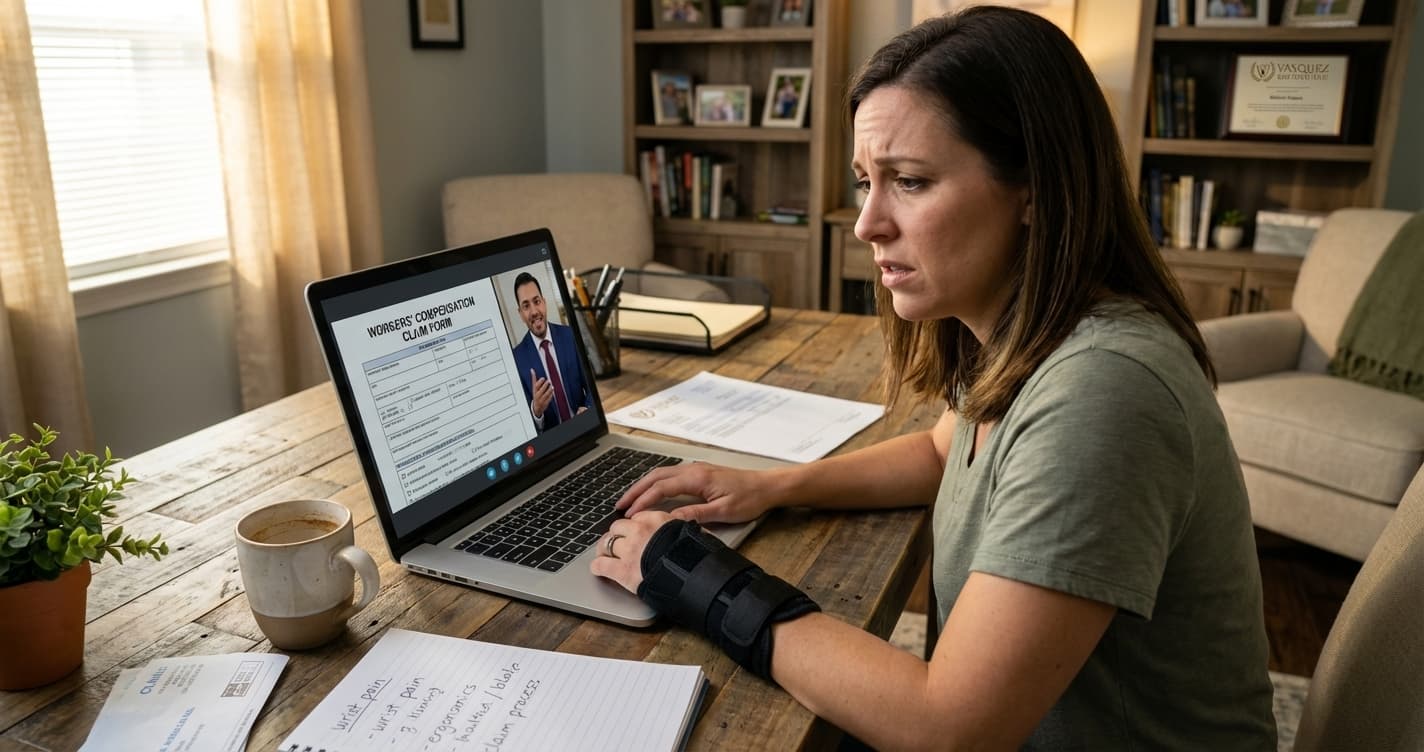
First, notify your employer immediately about your mental health condition and its work-related cause. Written notice is recommended to create a paper trail. Timely notification is critical because North Carolina requires claims to be filed within two years from the date the injury is discovered, pursuant to NCGS § 97-24.
Next, obtain medical evaluation from a licensed mental health professional who can diagnose and document your condition. This documentation is essential when submitting your claim to the NC Industrial Commission.
Workers compensation psychosocial injury claims must be filed using Form 18, the "Notice of Accident to Employer and Claim of Employee," available through the NC Industrial Commission’s website at ic.nc.gov.
Once submitted, the employer’s insurance carrier will investigate the claim. If denied, an injured worker can request a hearing before the Industrial Commission to dispute the decision.
Need assistance filing a workers comp stress injury claim? Speak with attorney Jessica Vasquez today for expert guidance. Call 1-844-967-3536 or visit our free case evaluation page.
Workers Compensation Psychosocial Injury Benefits in North Carolina
Workers comp benefits NC for psychosocial injuries are designed to cover medical treatment, rehabilitation, and wage replacement related to the mental health condition caused by the workplace.
Medical benefits include psychiatric care, counseling, medication, and therapy sessions recommended by treating mental health professionals. The NC Industrial Commission requires that treatments be reasonable and necessary for the condition.
Compensation for wage loss or disability depends on the severity of the injury. If the psychosocial injury results in temporary total disability, the worker may receive weekly indemnity benefits equal to two-thirds of their average weekly wage, subject to statutory maximums.
Permanent partial or total disability benefits may also be awarded if the mental health condition causes lasting impairment. The degree of disability must be established by medical evidence and evaluated by the Commission.
Workers with psychosocial workplace injury may also be eligible for vocational rehabilitation services to assist with returning to work or retraining for alternative employment.
Limits and Exclusions
Claims based on general workplace stress or non-specific mental strain without a sudden traumatic event are less likely to be approved. Additionally, pre-existing mental health conditions not aggravated by work often do not qualify for benefits.
Role of NC Industrial Commission in Psychosocial Injury Claims
The NC Industrial Commission (IC) administers and adjudicates workers compensation claims, including those involving psychosocial workplace injuries. The Commission investigates claims, reviews medical evidence, and holds hearings to resolve disputes.
The IC employs medical experts and psychologists to assess occupational illness mental health claims. Their evaluations help determine the validity and extent of the mental health injury.
Workers and employers may appear before an Industrial Commission Deputy Commissioner or the Full Commission for contested claims. The Commission’s decisions are binding unless appealed to the North Carolina Court of Appeals.
Guidance for psychosocial injury claims is evolving as the Commission recognizes the importance of mental health in workplace safety and compensation.
Am I Eligible for Workers' Comp?
3 quick questions to check your eligibility
Question 1 / 3
Where were you injured?
Keep Reading
Preventing Psychosocial Workplace Injuries in North Carolina
Employers in NC are increasingly aware of the need to address mental health risks to reduce workers compensation psychosocial injury claims. Prevention strategies include:
- Implementing workplace violence prevention programs
- Providing employee assistance programs (EAPs) for counseling
- Training supervisors on recognizing and mitigating work-related stress
- Creating a respectful workplace culture to minimize harassment and bullying
- Complying with OSHA mental health and workplace safety guidelines (osha.gov/workplace-stress)
These measures help protect employees’ mental well-being and reduce the incidence of disabling psychosocial injuries.
How Vasquez Law Firm Can Help With Psychosocial Injury Claims
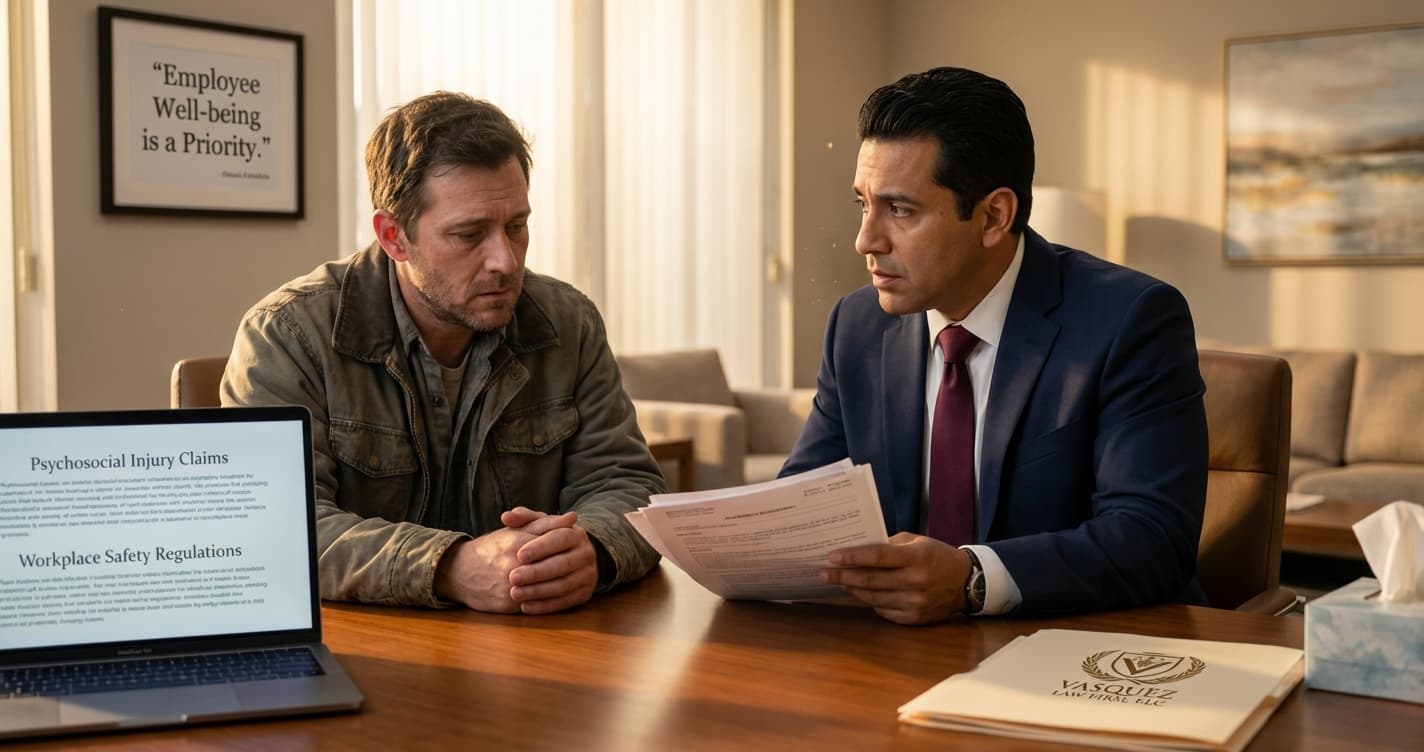
Workers compensation psychosocial injury claims require experienced legal representation to navigate North Carolina’s complex laws and evidentiary requirements. The attorneys at Vasquez Law Firm specialize in workplace mental health claims NC and understand how to build strong cases for our clients across Charlotte, Raleigh, Durham, Greensboro, and beyond.
Our legal team works closely with mental health professionals to document the injury, gather employment records, and advocate for maximum benefits. We assist with claim filing, hearings before the NC Industrial Commission, and appeals if necessary.
When facing the challenges of a workers comp stress injury, you do not have to go it alone. Contact us for compassionate and knowledgeable support.
Contact Vasquez Law Firm now at 1-844-967-3536 for your free case evaluation. Protect your rights to workers comp benefits NC. Se Habla Español.
What qualifies as a workers compensation psychosocial injury in North Carolina?
A psychosocial injury qualifies if it is a mental health condition caused or aggravated by work conditions, such as PTSD from workplace violence or anxiety from a traumatic job event. The injury must be documented by a medical professional and linked to employment.
Can general workplace stress be a basis for a workers comp claim in NC?
Generally, no. North Carolina requires a sudden, extraordinary event or condition directly related to work. Chronic stress or dissatisfaction alone rarely qualifies for workers compensation benefits.
How soon should I report a psychosocial workplace injury?
Report your injury to your employer as soon as possible. North Carolina law requires filing within two years of discovering the injury. Early reporting helps preserve your right to benefits.
What benefits are available for workers comp psychosocial injuries?
Benefits include medical treatment, counseling, medication, wage replacement for disability, and potentially vocational rehabilitation if the injury affects your ability to work.
Who decides if my psychosocial injury claim is accepted?
The NC Industrial Commission reviews evidence and makes determinations. They consider medical records, employer reports, and hearing testimonies before approving or denying claims.
Can I receive benefits if I have a pre-existing mental health condition?
Yes, if you can show that your work environment significantly aggravated your pre-existing condition, you may be eligible for workers comp benefits in North Carolina.
What should I do if my psychosocial injury claim is denied?
You can request a hearing before the NC Industrial Commission to dispute the denial. An experienced attorney can help you prepare your case.
Is Vasquez Law Firm experienced in handling mental health workers comp claims?
Yes, our attorneys specialize in workplace mental health claims and have successfully represented clients across North Carolina, including Charlotte, Raleigh, Durham, and Greensboro.
How can I contact Vasquez Law Firm for help with my claim?
You can call us at 1-844-967-3536, visit our contact page, or schedule a free case evaluation online. Se Habla Español.
Disclaimer: This blog post is for informational purposes only and does not constitute legal advice. Laws and regulations may change. Consult a qualified attorney for advice related to your specific situation.
Hurt at work? Our workers' compensation attorneys can review your claim.
Related Topics

William Vasquez
Founder & CEO, Vasquez Law Firm, PLLC
William Vasquez is the founder and CEO of Vasquez Law Firm, PLLC, a results-driven firm specializing in immigration, criminal defense, personal injury, and workers' compensation. A U.S. Air Force veteran and recipient of the Joint Service Achievement Medal, William is dedicated to fiercely fighting for his clients' rights.
Related Legal Services
Need legal help? Learn more about NC workers compensation legal team, or contact us for a free evaluation.
You can also visit statewide workers compensation attorneys for more information.